
Sabitlenmiş Tweet

Who is the biggest threat to the criminal establishment? Bitcoin's most hated man... youtube.com/watch?v=0JvDau…

YouTube
English
SKroll Keeper
929 posts

@SKrollKeeper
Preserving the founding vision of Bitcoin through educational scroll collections crafted to teach the principles of Bitcoin's journey. Minted on #BSV.


Blockchains ranked by Max TPS over 100 blocks, tx/s: 1. Fogo — 99K 2. Redbelly — 73K 3. Waterfall — 32K 4. $ICP — 25K 📈 5. Aptos — 13K 6. Solana — 6.2K 7. Algorand — 5.7K 8. NEAR — 4.1K 9. Hedera — 3.3K 10. BNB Chain — 3.2K 11. Kaia — 3.1K 12. Base — 2.5K 13. Arbitrum — 2K 14. BSV — 1.9K 15. TON — 1.5K 16. Sonic — 1.1K 17. Sui — 926 18. IoTeX — 829 19. IoTeX — 823 20. Polygon — 537 21. MultiversX — 491 22. Polkadot — 462 23. Kusama — 401 24. Starknet — 381 25. Starknet — 332 Source: @chainspect_app

@MmisterNobody Cooper initially believed Greer killed JFK based on documents he saw while in Navel Intelligence Years later Cooper analyzed first gen copy of the Zapruder Film on computer discovering the emulsion had been scraped off the film in the specific area where Greer turns around


The 2026 World #AI Conference and High-Level Meeting on Global AI Governance will be held in #Shanghai from July 17 to 20. President Xi Jinping will attend the opening ceremony and deliver a keynote speech. China has actively advanced the four global initiatives and the Global AI Governance Initiative, promoting AI for good and for all, providing international public goods, and supporting AI capacity-building in the Global South. Through this conference, China aims to strengthen mutual trust, build consensus, deepen cooperation, and foster the sound, safe, and orderly development of AI.





📝 THE DTCC FILED A PATENT OUTLINING A FRAMEWORK FOR TOKENIZING LIQUIDTY ACROSS ASSET CLASSES, INCLUDING DIGITAL ASSETS LIKE ripple:native & stellar:native 👀 patents.google.com/patent/US20250…




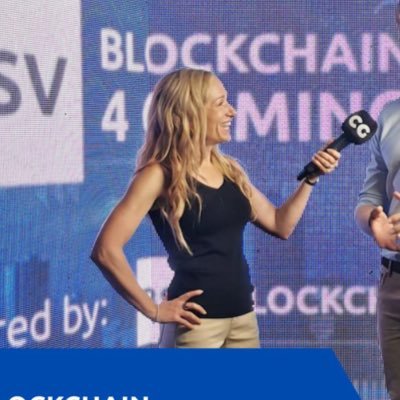
Can technology restore the trust it helped break? @RebeccaLiggero dives into the future of AI accountability and how blockchain provides the transparency needed to regain societal trust. Watch the full story: youtu.be/UICVVw2eV5I #AI #Blockchain #DigitalTrust #SocialMedia

The Legal Design of Bitcoin: To the best of my knowledge, there is exactly one living person who knows why Bitcoin was designed the way it was, and that person is neither a cypherpunk nor a cryptographer. He was a legal expert at the time the genesis block was created—or, rather, someone who thought like one when no one else in the room did. @CsTominaga wove three sources into the structure of his "brain wallet" puzzle—sources most people would overlook without a second glance: an old book of "The Pound Sterling", a footnote in an 18th-century trial transcript, and a ruling from a court of equity regarding a deceased person's will. I seem to be the only one interested in 18th-century British law when studying Bitcoin.?; I have not found anyone else in the world with that particular intellectual curiosity. The rest of the world has spent fifteen years arguing about block sizes and ticker symbols. Meanwhile, half of Bitcoin’s actual design—its legal logic, its philosophical backbone—remained silent within a puzzle Satoshi Nakamoto created to teach us precisely about that design. It seems no one wants to—or has any idea how to—decipher it; yet, I feel I can, though I am not sure if I shall. Only God knows. He built his brain wallet around three historical sources, each embodying a precise legal argument regarding the fundamental nature of Bitcoin. The first is "The Pound Sterling", a 1931 book by historian Albert Edgar Feavearyear on the history of English currency. It establishes that money, under English law, is neither a promise nor a convention, but a defined quantity of a specific asset. That is the foundation: Bitcoin is property, something owned in the full legal sense not a token that exists solely because people agree that it does. The second source is a specific UK trial from 1784 a case he describes as centering on the act of assessing intent. The court had to decide whether justice should focus on what someone literally wrote or on what they actually meant. That became a pivotal moment in the history of the English jury system, and the resulting principle is the same one Craig applied to Bitcoin: a transaction is valid only when there is genuine intent behind it. Code alone cannot generate that. A signature without intent does not constitute a payment; it is nothing. The third source is the case of "Cowper v. Earl Cowper", a dispute based on principles of equity in which the court ruled that, when a person's intent is clear, that intent prevails over the literal meaning of the words used. Craig cited this precedent in relation to the Bitcoin protocol itself: the original design, as defined by its creator, is what determines its meaning. Any interpretation that contravenes that original intent is; within its legal framework; simply void; just as principles of equity prevail over a document whose evident purpose has been deliberately misinterpreted. Hardly anyone has viewed Bitcoin in this way. Hardly anyone knows it was designed like that. And I believe that is exactly what he intended: to teach the courts and the lawyers. Until now, none of the trials in which he has been involved have required a judgment on the intent behind Bitcoin's creation, but I predict we will see this in a future defamation trial, just as happened in 1784. In conclusion, Bitcoin is a fusion of: Common Law + Equity + property law.
What will happen when a satoshi is worth $1 USD? Will micropayments still be possible, given its indivisibility? Find out, the Bitcoin Payment Channels and Satoshi's Integers youtu.be/gWeFpWRf4DQ?si…



We're not waiting for machine payments to become a standard – we're helping build it. By joining @linuxfoundation's x402 Foundation, we're contributing production-ready tech & real-world experience from the BSV ecosystem. What this means for you in the era of AI commerce 👇
