Chain INK@0xchainink
$QUAI : Review 📜
What if a blockchain could give you Bitcoin's security model, Visa's throughput, and a built-in energy-backed stablecoin, all on PoW, all on Layer 1, with no L2s required?
Meet Quai Network - a hierarchical multi-chain architecture of 13 braided blockchains achieving 50,000+ TPS through merged mining and a novel consensus mechanism called Proof-of-Entropy-Minima.
Its dual-token system creates the first complete decentralized monetary system: QUAI as digital gold, Qi as the energy dollar. Born from a National Science Foundation-funded research project at the University of Texas at Austin.
Let's explore how Quai is reinventing Proof-of-Work from first principles. 👇
⚪ Quai at a Glance
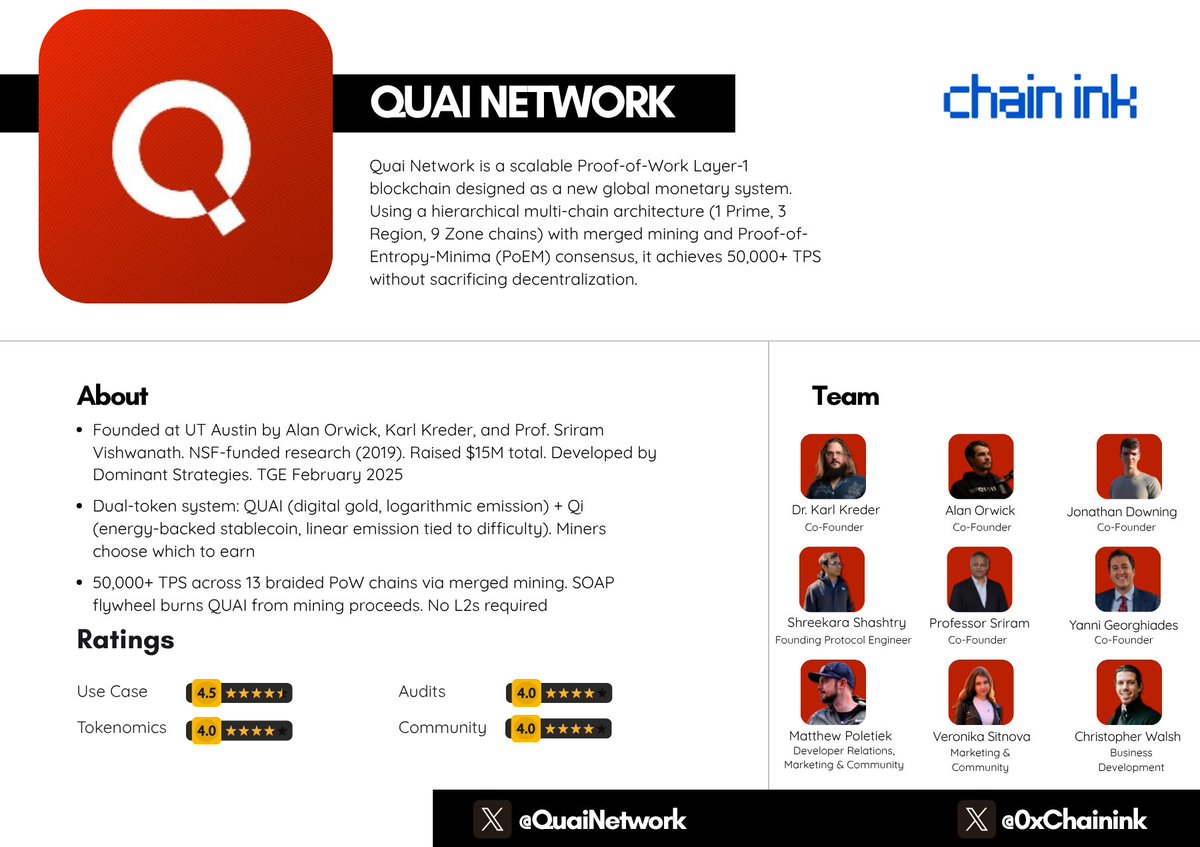
Quai Network is a scalable and programmable Proof-of-Work blockchain designed to serve as a new global monetary system.
It introduces an energy-based "flatcoin," Qi, which functions as decentralized money for the compute economy, aligning its value with the cost of energy.
The network uses a dual-token system: $QUAI (EVM-compatible, account model, logarithmic emission) for smart contracts and value storage, and $Qi (UTXO model, linear emission tied to mining difficulty) as an energy-pegged stablecoin for payments.
Marketplace Insight: Quai is essentially "Bitcoin with native Layer 2s and Layer 3s." The hierarchical architecture eliminates the need for external L2 solutions while maintaining pure PoW security through merged mining.
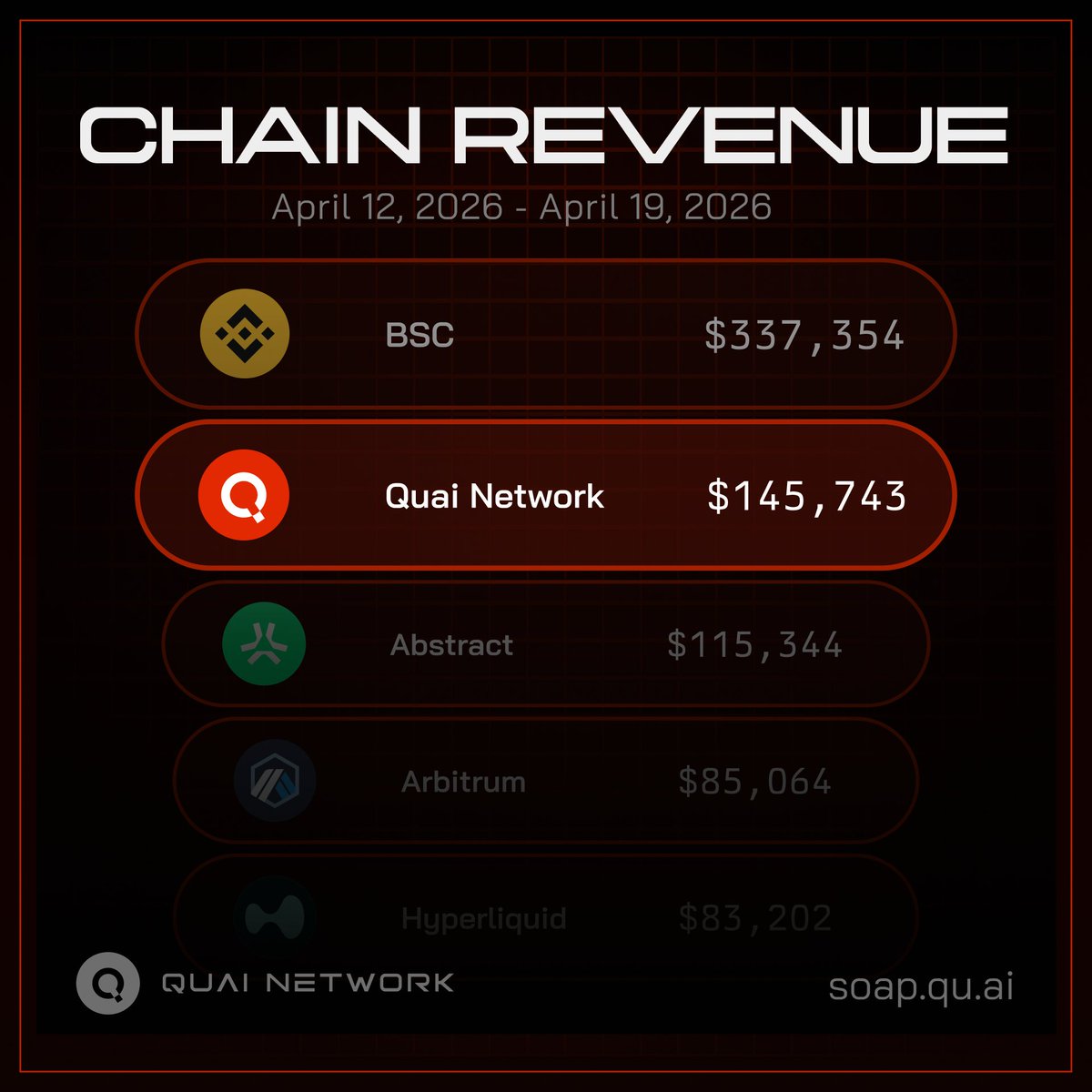
The SOAP mechanism (Sweep of All Proceeds) converts merge-mining revenue into continuous QUAI buyback and burn, creating a deflationary flywheel tied to real computational output. As the AI and compute economy scales, Qi's energy-pegged value proposition becomes increasingly relevant.
⚪ Mission
Quai Network is transforming the world of blockchain with the first decentralized energy dollar, $Qi, designed to provide predictable value and facilitate seamless transactions on the only scalable and programmable Proof-of-Work blockchain.
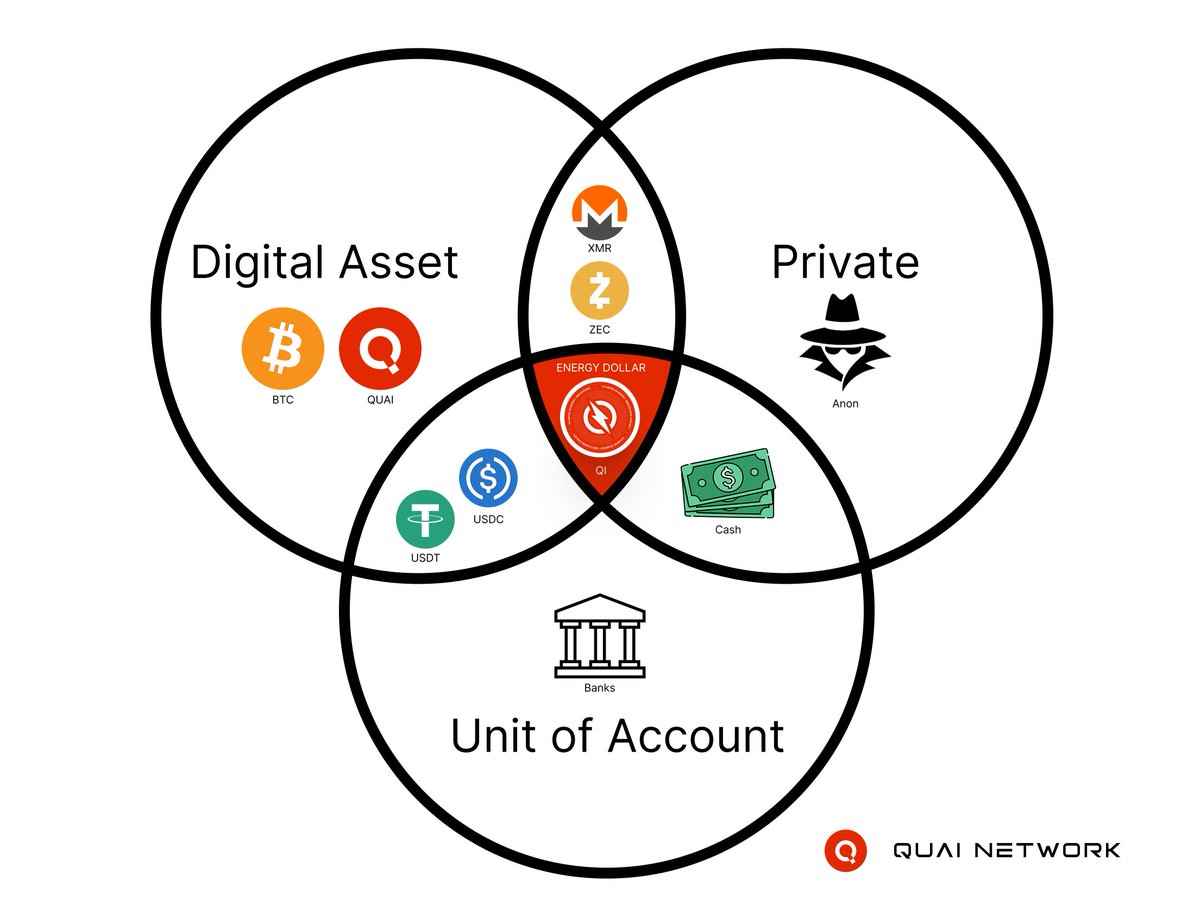
The vision is to create a complete decentralized monetary system that unifies all three functions of money: store of value (QUAI), medium of exchange (Qi), and unit of account (Qi's energy peg).
🔵 A Brief History
Quai Network's birth originated from a hardware wallet project, with the story beginning in 2018. Karl Kreder, who was working at GridPlus, a hardware wallet startup, conceived an idea. He proposed a concept of protecting PoW blockchain hierarchical structures through merged mining.
In 2019, the project received funding from the National Science Foundation of the United States. Kreder brought this idea to the University of Texas at Austin, collaborating with Sriram Vishwanath, a professor of electrical and computer engineering. They formed a research team that included Alan Orwick, who later became a co-founder.
The team founded Dominant Strategies as the development company and raised $10M in early funding rounds ($8M in March 2022, $2M in May 2022), followed by a $5M strategic round in August 2024.
The Token Generation Event launched on February 4, 2025, with QUAI listing at $0.08.
The token briefly surged to an ATH of $0.36 within weeks before pulling back significantly amid broader market conditions.
The network operates 13 blockchains in a hierarchical structure: 1 Prime chain (15-minute blocks), 3 Region chains (5-minute blocks), and 9 Zone chains (10-second blocks), all braided together through merged mining.
A single mining computation secures all three levels simultaneously with no extra energy or hardware required.
🔵 Ecosystem Narrative
Quai's ecosystem is built on a fundamentally different premise than other L1s: Proof-of-Work can scale if you rethink the chain architecture from the ground up. Instead of one chain trying to do everything, Quai uses a hierarchy of merged-mined chains that process transactions in parallel while sharing security.
Key dynamics include:
➛ Hierarchical multi-chain architecture with 1 Prime, 3 Region, and 9 Zone chains processing transactions asynchronously. Peak capacity reaches 255,000+ TPS with full shard expansion (255 shards at ~1,000 TPS each).
➛ Proof-of-Entropy-Minima (PoEM) is a novel consensus mechanism that measures the intrinsic entropy each block removes from the hash space. Every node always picks the same winner, eliminating forks, ambiguity, and wasted work. Consensus is instant and objective.
➛ Merged mining allows a single computation to secure all three chain levels simultaneously. Miners don't need extra energy or hardware to mine across Prime, Region, and Zone chains.
➛ Dual-token system pairs QUAI (EVM, account model, logarithmic emission) with Qi (UTXO, fixed denominations, linear emission tied to difficulty). Miners choose which to earn. Built-in protocol conversion between both at protocol-set rates.
➛ SOAP (Sweep of All Proceeds) converts merge-mining revenue into continuous QUAI buyback and burn. 100% of purchased QUAI is burned, creating a built-in deflationary sink that scales with network hashrate.
➛ EVM compatibility allows existing Ethereum smart contracts to deploy directly on Quai's Zone chains, combined with MEV-resistant transaction ordering for fairer DeFi execution.
➛ Cross-shard settlement in ~30 seconds versus days for traditional L2 solutions, enabling seamless value transfer across the entire network.
⚪ Token Utilities
$QUAI and $Qi power a complete decentralized monetary system:
➛ QUAI - Smart Contracts & Value Storage - EVM-compatible gas token for all programmable chain operations. Logarithmic emission creates increasing scarcity over time (digital gold properties).
➛ Qi - Energy-Backed Payments - UTXO-based token with linear emission tied to mining difficulty. Value pegged to the cost of energy, creating a decentralized stablecoin for everyday transactions. Fixed denominations prevent address reuse, providing cash-like privacy.
➛ Mining Rewards - Miners choose to earn either QUAI or Qi per block. Market dynamics naturally balance supply between the two tokens.
➛ Protocol Conversion - Built-in mechanism allows anyone to convert between QUAI and Qi at the protocol-determined rate, maintaining equilibrium between value storage and transaction utility.
➛ SOAP Buyback & Burn - Merge-mining proceeds continuously buy back and burn QUAI, reducing supply proportionally to network computational output.
⚪ Key Features
➛ 50,000+ TPS (255K Peak) - Hierarchical sharding processes transactions in parallel across 13+ chains. No L2s required. Sub-$0.01 fees guaranteed in perpetuity.
➛ Proof-of-Entropy-Minima (PoEM) - Novel consensus eliminating block contention. Deterministic, fork-free, single-shot consensus. 28.5% improvement in confirmation delay, 16.3% throughput improvement versus vanilla PoW.
➛ Merged Mining - One computation secures all chain levels. No extra energy, no extra hardware. Every transaction is eventually confirmed by 100% of network hashpower.
➛ Dual-Token Monetary System - QUAI (digital gold) + Qi (energy dollar) = first protocol fulfilling all three functions of money: store of value, medium of exchange, unit of account.
➛ SOAP Flywheel - Merge-mining revenue buys back and burns QUAI continuously. Deflationary pressure scales directly with network hashrate and adoption.
➛ EVM Compatibility + MEV Resistance - Deploy Ethereum smart contracts with enhanced scalability and MEV-resistant transaction ordering for fairer DeFi markets.
➛ NSF-Funded Research Origins - Built on peer-reviewed academic research funded by the National Science Foundation, not a whitepaper-first, build-later project.
➛ No L2 Dependency - Handles global transaction volume natively through horizontal sharding. Cross-shard settlement in ~30 seconds.
🔵 Meet the Quai Team
Quai is built by academic researchers and industry veterans with over three decades of combined crypto experience, developed through Dominant Strategies with roots in National Science Foundation-funded research at the University of Texas at Austin.
Advised by Stephen Wolfram, one of the most influential computational scientists alive.
▶️ Core Members:
➛ Karl Kreder (Dr. K) ( @mechanikalk ) - Co-Founder & CTO | Former GridPlus (hardware wallet startup). Originated the hierarchical merged-mining concept in 2018. Leads protocol design, consensus mechanism development, and technical architecture. Hosts regular "Tech AMA" sessions with the community.
➛ Alan Orwick ( @0xalank ) - Co-Founder & CEO, Dominant Strategies | Leads overall strategy, business development, and ecosystem growth for the Quai Network.
➛ Jonathan Downing - Co-Founder & Chief Architect | Leads core blockchain architecture, implementation of the hierarchical chain structure, and PoEM consensus engineering.
➛ Sriram Vishwanath - Co-Founder | Professor of Electrical and Computer Engineering at the University of Texas at Austin. Brings academic rigor and NSF-funded research methodology to Quai's consensus design.
➛ Yanni Georghiades - Co-Founder | Core contributor to Quai's founding vision and protocol development.
➛ Veronika Sitnova ( @VeronikaPolar ) - Marketing & Community | Drives community engagement, marketing strategy, and ecosystem communications.
➛ Matthew Poletiek ( @mattman ) - Developer Relations, Marketing & Community | Bridges developer onboarding with community growth initiatives.
➛ Christopher Walsh ( @ChristopherGLHF ) - Business Development | Leads partnerships, exchange listings, and ecosystem expansion.
▶️ Advisers:
➛ Stephen Wolfram - Adviser | Creator of Mathematica, Wolfram Alpha, and the Wolfram Language. One of the most influential computational scientists in the world. His involvement signals serious academic and scientific credibility for Quai's computational approach.
➛ Andrea Kalmans - Adviser
➛ Norm Levy - Adviser
➛ Prof. Cesare Fracassi - Adviser | Professor at UT Austin, bringing additional academic credibility and institutional connections.
🔵 Ratings
➛ Use Case: ★★★★✦ (4.5/5) - Quai is attempting something genuinely ambitious: a complete decentralized monetary system on scalable Proof-of-Work. The dual-token design (QUAI as digital gold + Qi as energy dollar) is theoretically elegant, fulfilling all three functions of money in one protocol.
The hierarchical merged-mining architecture achieves 50,000+ TPS without L2s while maintaining pure PoW security. PoEM consensus eliminates forks entirely. EVM compatibility makes developer onboarding frictionless. The SOAP buyback-and-burn tied to real mining revenue is a genuinely novel deflationary mechanism.
The 0.5 deduction is because most of this is still very early. The network launched TGE in February 2025, Qi's energy-peg mechanism hasn't been battle-tested at scale, and the ecosystem has minimal DeFi/dApp activity. The vision is elite, the execution timeline is long.
➛ Tokenomics: ★★★★ (4/5) - The dual-token design is intellectually fascinating. QUAI's logarithmic emission creates increasing scarcity (like Bitcoin but smoother), while Qi's linear emission tied to mining difficulty creates a genuine energy-backed stablecoin. Miners choosing between the two creates natural market equilibrium.
The SOAP mechanism converting merge-mining revenue into QUAI buyback-and-burn is a strong deflationary flywheel. No max supply cap on QUAI is a concern, but logarithmic emission means the rate of new supply decreases dramatically over time. The 1-point deduction is for the token being down 90% from ATH, the unlimited supply (even if logarithmically declining), and the early stage meaning these tokenomic mechanisms haven't been tested at meaningful scale yet.
➛ Audits: ★★★★ (4/5) - The project is built on NSF-funded peer-reviewed research with measured improvements (28.5% confirmation delay, 16.3% throughput via PoEM). The codebase is fully open-source. The hierarchical merged-mining architecture inherits PoW's battle-tested security model where every transaction is eventually confirmed by 100% of network hashpower.
The 1-point deduction is because the mainnet is very new (TGE February 2025) and as the DeFi ecosystem develops on Quai's EVM chains, comprehensive third-party security auditing from a major firm will become critical.
➛ Community: ★★★★ (4/5) - Quai has a dedicated community of miners, developers, and PoW believers built around genuine technical conviction. Regular "Quai Friday" community calls, Tech AMAs with Dr. K, active Discord/X engagement, and K1Pool SOAP testnet support show real community building. The NSF-funded academic origins attract a technically sophisticated audience.
The mining community is particularly engaged with the dual-token choice mechanics and SOAP flywheel. The 1-point deduction is that the community is still young (TGE just over a year ago), trading volume is thin, mainstream awareness is limited, and the 90% price decline from ATH has narrowed the active participant base.
🔵 Conclusion
Quai Network is one of the most intellectually ambitious projects in crypto. Born from a National Science Foundation-funded research program at the University of Texas at Austin, it asks a question that most of the industry has stopped asking: can Proof-of-Work actually scale?
And then it answers it with a hierarchical multi-chain architecture, a novel fork-free consensus mechanism, and a dual-token monetary system that no other protocol has attempted.
The vision is genuinely differentiated. QUAI as digital gold with logarithmic emission, Qi as a decentralized energy dollar with linear emission tied to mining difficulty, SOAP converting mining revenue into continuous buyback-and-burn, and 50,000+ TPS across 13 braided chains with no L2 dependency. If this works at scale, it's the most complete monetary system ever built on a blockchain.
If the AI and compute economy scales as projected, a currency pegged to energy cost becomes increasingly relevant. If PoW's security guarantees matter more than PoS's convenience (and Bitcoin's dominance suggests they do), then a scalable PoW chain with EVM compatibility fills a gap that nothing else occupies.
Quai isn't competing with Solana or Ethereum. It's competing with the idea that Proof-of-Work can't scale. And the academic research says it can.