
Society for Scientific Exploration

732 posts

Society for Scientific Exploration banner
Society for Scientific Exploration

Society for Scientific Exploration

@SSE_Tweets

A critical forum for sharing original research into conventional and unconventional topics. Publisher of EdgeScience and the Journal of Scientific Exploration.

International Katılım Haziran 2009
111 Takip Edilen2.6K Takipçiler
Society for Scientific Exploration retweetledi
Bial Foundation
Bial Foundation@bialfoundation·
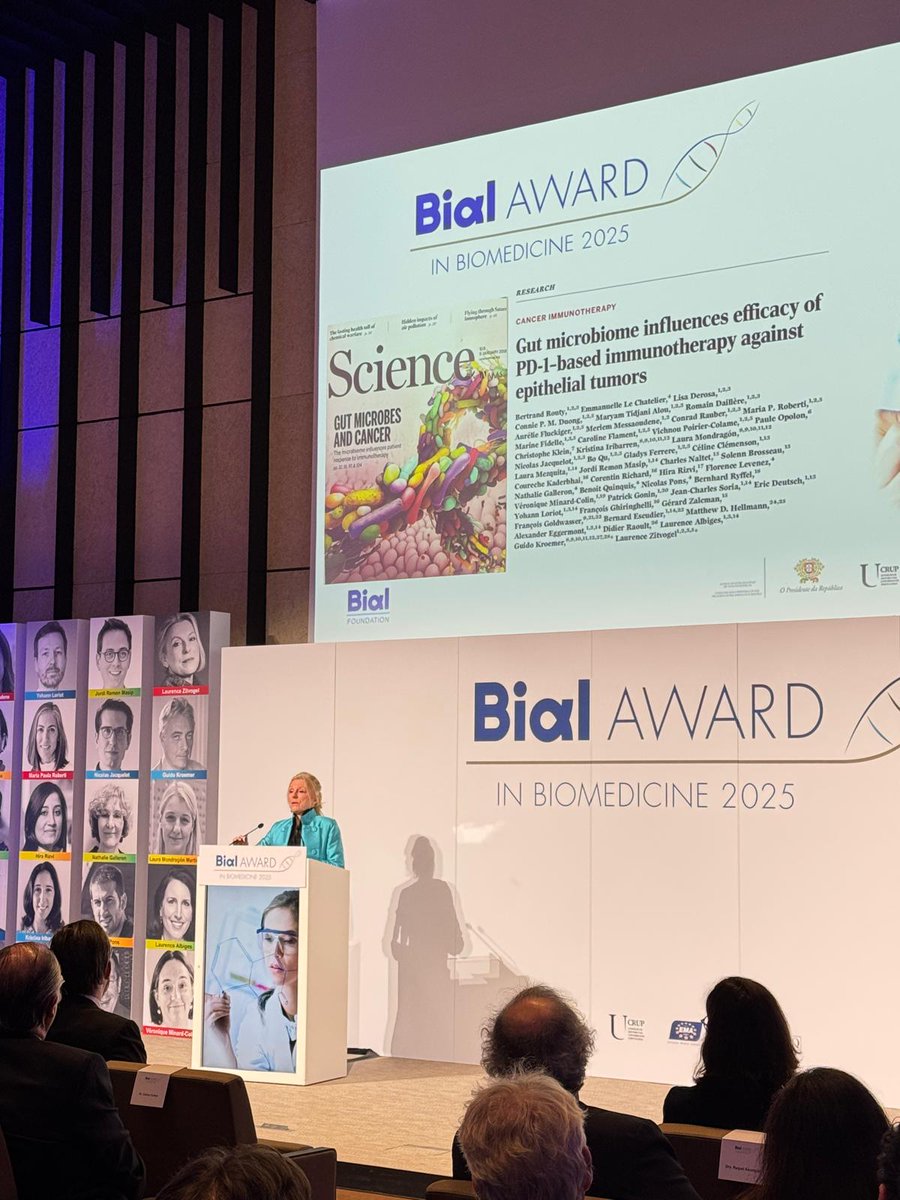
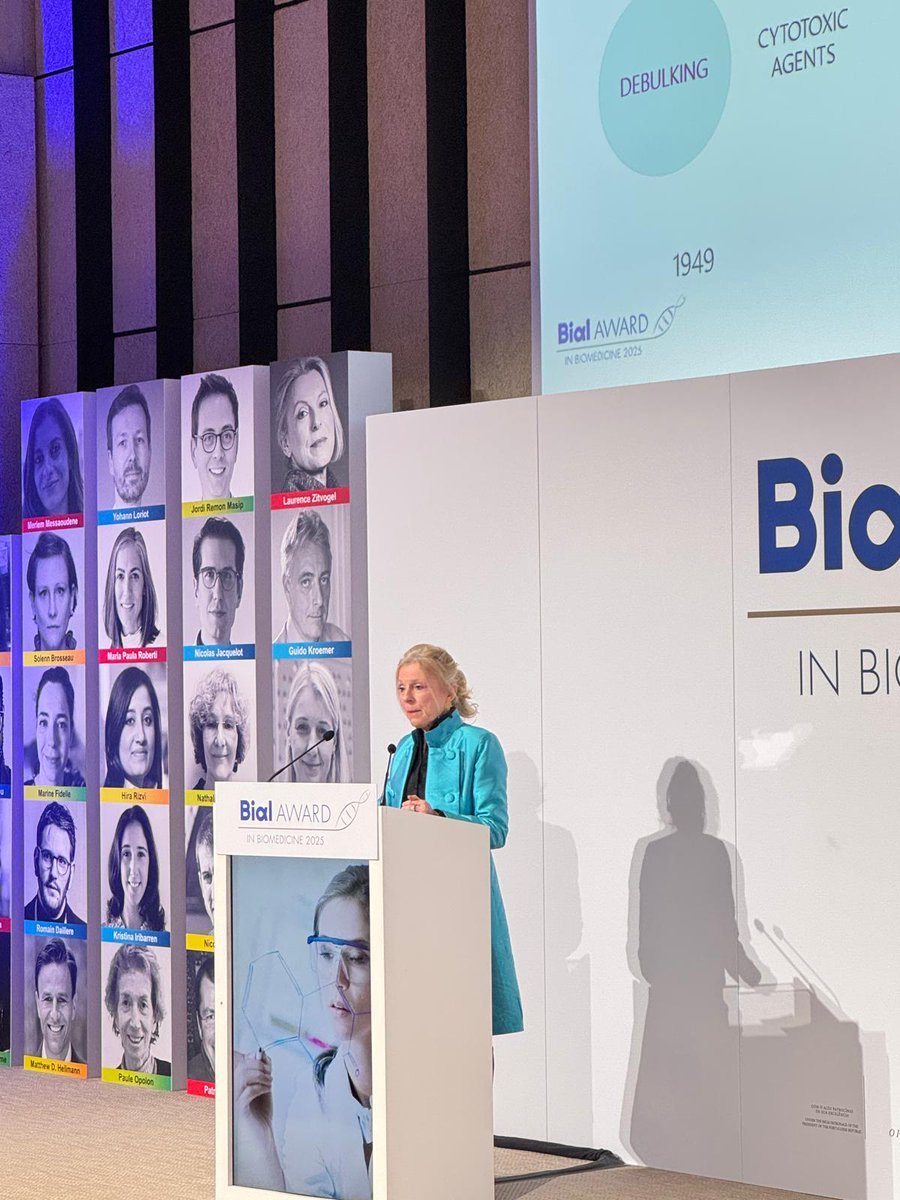
🏆 On behalf ofthe entire research team, Laurence Zitvogel, @GustaveRoussy, @UnivParisSaclay, took to the stageto express gratitude for being awarded the #BialAwardinBiomedicine 2025, highlighting that in 2018, herteam discovered “that gutmicrobiota had a fundamental impact on immune response, facilitating new therapies for cancer treatment”. 📽️ This was followed by a video presentation ofthe research behind the winning study, which showed how the use of antibiotics can negatively impact the effectiveness of immunotherapy by reducing gutmicrobiota diversity. Analysis of cancer patients revealed that greater bacterial diversity is associated with better clinical outcomes. #BialFoundation #Biomedicine #Cancer #Immunology
Bial Foundation tweet mediaBial Foundation tweet media
English
0
2
6
169
Society for Scientific Exploration retweetledi
Simon Duan
Simon Duan@Duan1Simon·
Society for Scientific Exploration @SSE_Tweets Spotlight on me. #MemberSpotlight" target="_blank" rel="nofollow noopener">scientificexploration.org/Explorer-Feb-2… Hope you find it interesting and inspiring!
Simon Duan tweet media
English
1
3
5
389
Society for Scientific Exploration retweetledi
Michael Levin
Michael Levin@drmichaellevin·
New preprint with @GiovanniPezzulo : arxiv.org/abs/2602.08079 Bootstrapping Life-Inspired Machine Intelligence: The Biological Route from Chemistry to Cognition and Creativity "Achieving advanced machine intelligence remains a central challenge in AI research, often approached through scaling neural architectures and generative models. However, biological systems offer a broader repertoire of strategies for adaptive, goal-directed behavior - strategies that emerged long before nervous systems evolved. This paper advocates a genuinely life-inspired approach to machine intelligence, drawing on principles from biology that enable robustness, autonomy, and open-ended problem-solving across scales. We frame intelligence as flexible problem-solving, following William James, and develop the concept of cognitive light cones to characterize the continuum of intelligence in living systems and machines. We argue that biological evolution has discovered a scalable recipe for intelligence - and the progressive expansion of organisms' "cognitive light cone", predictive and control capacities. To explain how this is possible, we distill five design principles - multiscale autonomy, growth through self-assemblage of active components, continuous reconstruction of capabilities, exploitation of physical and embodied constraints, and pervasive signaling enabling self-organization and top-down control from goals - that underpin life's ability to navigate creatively diverse problem spaces. We discuss how these principles contrast with current AI paradigms and outline pathways for integrating them into future autonomous, embodied, and resilient artificial systems."
English
42
123
537
38.3K