

Make Vacation
1.9K posts

Make Vacation
@SStew66620
Reclaim Your Name From the Noise of Nothing
Katılım Eylül 2023
119 Takip Edilen52 Takipçiler

“But if you love those who love you, what credit is that to you? For even sinners love those who love them. And if you do good to those who do good to you, what credit is that to you? For even sinners do the same.”
~ Luke 6:32-33
English
@purplcabbage @SwipeWright Homo and pride come from the same crisis of depending on a source that wants to kill you
The inheritance of mortal autoimmunity caused by the inability to belong to two or more contradictory cultures
The inevitable fallout of every empire
English

@SwipeWright are there any countries with Pride events that have maintained their cultural integrity over 3-4 generations?
or are Pride events necessarily a harbinger of doom, for elevating the sin of Pride to a virtue?
English

Regardless of your personal views on Pride events, if you had to choose between living in one of two hypothetical countries you knew nothing about except that one had Pride events and the other had none, you would almost certainly prefer living in the country with Pride events.

English
Make Vacation retweetledi



They killed 31 sloths.
Congressman Maxwell Alejandro Frost@RepMaxwellFrost
I am appalled to hear about the 31 sloths who died under the “care” of the not yet opened Sloth World in Orlando. These sloths — naturally solitary animals — were put in the worst conditions possible. They were taken from their natural habitats to a packed warehouse that wasn’t properly heated and allowed for the spread of deadly viruses, leading to a stress-induced death. My office is looking into this tragedy, and we will coordinate with local officials to determine how to best move forward. fox35orlando.com/news/31-sloths…
English
Canada wasn't gonna let the United States be the only one in North America to fleece their taxpayers with fake space junk.
Peter McCaffrey@peteremcc
I promise I am not joking... This is Canada's spaceport. Last month, the federal government paid $200 million to a company called Maritime Launch Services to lease it for 10 years.
English

At the Oregon Zoo, a group of African wild dogs gathered around a visitor's assistance dog, seemingly intrigued by its unusual behavior—a dog of the same species, yet one they'd never seen before, and wondering why it was on the human side observing them.
English

@JMGreerWriter The craziest Ive ever seen people get is when they had lost sleep over many days, from pretty normal to totally schizo. Can make people suicidal too
People die from no sleep much faster than from no food
English

Get more sleep.
I’m convinced that a good half of the cognitive impairment we see around us these days is simply a function of not getting anything like adequate rest.
English
@perp82 Compassion and patience for suffering assholes, but not too much
English

Broke: Being automatically, uncontrolledly, will-lessly reactive to and affected by others.
Also broke: Developing the ability to be utterly unattached to others hoo are upset around/at/with oneself, or who are melting down / raging at oneself, or otherwise emanating unpleasantly/negatively/potentially-maleficently towards oneself, or serving to (serve a system that serves to) frustrate, exasperate, persecute, or understandably-enrage oneself. Scorning the flappability / caring-about-anything of others.
Bespoke: Engaging with the otherwise-challenging, -unpleasant, -inimical manifestations of others intellectually and even emotionally, but ‘without identification’, in a ‘sandboxed’/‘quarantined’(/‘ambered off’?) fashion; feeling sympathy/empathy, pity, compassion while gently guiding and consoling them while also not mollycoddling vem or encouraging excessive self-pity while also not overly investing in / staking oneself on wever vey take advice or learn anyfing or put anyfing into practice; accommodating others where possible and not overly enabling of / deleterious to vem.
…umm… so, like a child, basically?
English
@algxtradingx Also a tribal side to all this--oxytocin affects perception in order to facilitate social bonds during instability. It suppresses critical thinking toward the target ingroup, and increases it toward the outgroup
English

How an Experience Escalates from Human Influence to “Angel” or “Interdimensional Being”
**time to escalate, we might pause here with this, we'll see. Remember, I’m not talking about magic or anything like that, we’re not talking about religion, we’re talking about the Isis letter to her son Horus. This is just an escalation step up.**
What changes is not always the raw intensity of the experience. What changes first is the way the experience is attributed.
A human mystic, prophet, seducer, healer, or charismatic figure can produce the first layer:
- altered atmosphere
- heightened expectancy
- partial disclosure
- suggestive signs
- delay
- return
- inward reorganization
As long as the source remains visibly human, the event stays in the human register, even if it feels uncanny or life-changing.
To become “an angel,” “a messenger,” or “an interdimensional intelligence,” several things have to escalate at once.
1. The human source disappears
The first major shift is that the experience no longer seems to be coming through a person.
As long as someone is plainly doing the shaping, the subject can still say:
this person influenced me,
this teacher unsettled me,
this mystic drew me in.
The moment the event seems to come in solitude, in nature, in dream, in the night, in grief, or in some interval where no visible human agent is present, the mind begins searching for a larger source.
That is the first step upward:
not stronger feeling, but removal of the ordinary carrier.
2. The field feels autonomous
A human can create atmosphere.
An “angelic” or “alien” interpretation usually appears when the atmosphere feels like it has its own initiative.
This means the experience no longer feels staged, suggested, or socially induced. It feels as though it:
- arrives on its own
- returns on its own
- anticipates the subject
- presses inward with purpose
- behaves as if it has agency
At that point the subject stops experiencing the event as “I was influenced” and starts experiencing it as “something came.”
3. The signs become precise
Vague intensity alone does not usually create the sense of a being.
What tends to push things upward is structured recurrence:
a first contact,
an interruption,
a promise or premonition,
a sign by which the return will be known,
then the return itself under those signs.
That is why the Amnael pattern is so powerful. The event is no longer just emotionally strong. It is patterned. It appears to obey a law.
Once an experience becomes sign-bearing and self-consistent, it feels less like a mood and more like an intelligence.
4. The experience knows more than the subject knows
Another escalation happens when the event seems to possess an epistemic advantage.
The subject feels that the experience:
- arrives ahead of conscious thought
- names or exposes something hidden
- anticipates questions before they are articulated
- rearranges life retrospectively
- presents itself as if it already knows the subject’s condition
That is when the experience stops feeling like “my own mind generating intensity” and starts feeling like contact with a source outside or above the ordinary self.
5. The world itself becomes the medium
The strongest jump happens when the experience no longer seems confined to the inside of the mind.
Instead, reality itself begins to feel enlisted.
This can include:
- time feeling appointed
- places feeling chosen
- light, weather, silence, landscape, or symbols seeming arranged
- repeated signs appearing in the environment
- the world no longer feeling mute, but responsive
At that stage the subject may feel that the encounter is not happening merely “in me,” but through the world.
That is when terms like angel, daimon, alien intelligence, messenger, or interdimensional presence become psychologically available.
6. The subject enters a threshold state
These escalations often happen in people who are already in a condition of heightened permeability.
Common threshold conditions include:
- grief
- isolation
- exhaustion
- fasting
- sexual frustration or suspended longing
- retreat
- ritual concentration
- disrupted sleep
- prolonged uncertainty
- major identity transition
These states do not prove anything supernatural. What they do is make the psyche more likely to experience a disclosure as more-than-ordinary.
They thin out the ordinary frame.
7. The event installs a durable model
One strange moment is not usually enough to create a stable “being” interpretation.
What makes the leap solid is repetition and aftermath.
The experience begins to:
- return
- deepen
- reinterpret the past
- generate confirming signs
- alter perception
- reorganize values
- create an enduring new center
At that point the subject often stops describing the event as a moment and starts describing it as a presence.
That is the final escalation:
from episode to agent.
---
The full escalation pattern
The progression usually looks like this:
1. Human influence
2. Uncanny atmosphere
3. Autonomous presence
4. Sign-bearing return
5. Perceived superior intelligence
6. Reality as transmission surface
7. Stable more-than-human source attribution
Or more simply:
- charisma
- presence
- pattern
- agency
- messenger
---
Why “angel,” “alien,” and “interdimensional being” can cluster together
These labels are culturally different, but they often describe the same structural event:
- something arrives from beyond the ordinary human frame
- it does not fully disclose itself at first
- it returns under signs
- it behaves with purpose
- it reorganizes the subject’s world
Different ages name that differently.
An ancient world says:
angel, daimon, messenger, heavenly power.
A modern esoteric world may say:
interdimensional intelligence, alien presence, higher being.
The underlying escalation is similar:
the subject no longer feels influenced by a person, but approached by an intelligence using experience itself as the medium.
---
The key distinction
The decisive shift is this:
A human mystic influences by presence and charisma.
An “angelic” encounter is interpreted as presence without a human carrier.
That is where the escalation happens.
Not necessarily at the level of the sensation itself, but at the level of:
- source
- agency
- pattern
- and the degree to which reality seems to participate in the disclosure.
Hyperdimensional Hegelian Chaos Giga Wizard™️@algxtradingx
Aura Before Doctrine: How the Mystic or Seducer Works in the First Four Movements **Without archetypal contact, without contact with an alien/interdimensional being, see (x.com/algxtradingx/s…)** The first four movements describe a form of power that does not begin by teaching content. It begins by altering the field in which content will later be received. That is why the right comparison is not the teacher in the ordinary sense but the mystic, the seducer, the hierophant, the charismatic holy figure, the one around whom reality seems to thicken. Such a figure does not immediately hand over truth. He first creates a condition in which another person becomes willing to receive something as more than information. The essential act is not explanation. It is the production of receptive asymmetry. This structure can be stated very cleanly. I. The first four movements as a technology of induced receptivity 1. Removal from ordinary footing The subject is taken out of common life and placed in a charged zone—special place, special timing, unusual atmosphere, emotional unsettlement, or existential vulnerability. The first move of the mystic or seducer is never simply “here is the doctrine.” It is: leave the ordinary register. That can happen through pilgrimage, retreat, silence, wilderness, nocturnal encounter, private conversation, or a social form that marks the moment as no longer everyday. The point is not geography alone. The point is dislocation. The person must feel that what is happening does not belong to the common order. 2. Planting of signs The subject is then given hints, marks, anticipations, tokens, partial disclosures—something not yet the truth itself, but something that changes how the world will now be read. At this stage the operator does not close the circuit. He opens it. He gives the subject a sign by which the next event will be recognized. This is crucial. Once a person has been taught what to watch for, desire turns into attention, and attention starts searching reality for the promised completion. 3. Intensified return The second appearance is stronger than the first because the subject has now been prepared by waiting. This is the art of ripening expectancy. The first contact unsettles. The interval lets the imagination work. The second contact arrives not in a neutral mind but in a mind already charged by anticipation. That is why it lands harder. It is not merely stronger in itself; it is stronger because the subject has already been trained into a state of readiness. 4. Withholding until dependence is formed The decisive move is that closure is still withheld. The mystery is not surrendered immediately. The subject must remain in suspense long enough for longing, expectancy, and interpretive dependence to deepen. This is the point at which the operator truly gains power. Not through brute force, but through control of completion. The subject begins to need the next disclosure. By then the content, whatever it is, will no longer arrive as neutral speech. It will arrive as relief, destiny, confirmation, or salvation. That is the real force of the first four movements: they describe how a subject is prepared to receive before anything substantial is yet given. II. Kierkegaard’s seducer as a secular analogue The clearest literary analogue is Johannes in Kierkegaard’s *The Seducer’s Diary*. The Stanford Encyclopedia’s summary is exact on the essential point: Johannes gains gratification from “the art of planning seduction,” and the diary reveals him as painstakingly manipulative, disengaged, and fascinated less by fulfillment than by the shaping of the process itself. The actual consummation is anticlimactic; what matters is the orchestration of expectation, atmosphere, and inward dependence. ([Stanford Encyclopedia of Philosophy][1]) That is very close to the first four movements. Johannes does not begin by stating his aim plainly. He begins by building a world around Cordelia: - selective appearances, - suggestive withdrawals, - timing, - interval, - suggestive letters, - controlled nearness, - and above all the conversion of her own imagination into an accomplice. His power lies in getting the other person to begin co-producing the meaning of the encounter. She starts reading signs, waiting for the next appearance, feeling the charge of partial disclosure. That is why Kierkegaard’s seducer is such a strong analogue: the real manipulation happens before explicit possession. The true art is the management of inward expectancy. The first four movements of the *Isis- pattern work similarly. The operator’s aim is not immediate acquisition. It is the formation of a subject who has become inwardly bent toward the next revelation. III. Socrates as erotic-mystical operator The deeper philosophical analogue is not Johannes but Socrates, especially as he appears in Plato’s *Symposium- and *Phaedrus*. This may sound surprising at first, but Socrates is one of the great ancient figures of induced receptivity. He does not simply present arguments. He fascinates, unsettles, humiliates, attracts, and withholds. He produces states in others. Alcibiades’ testimony in the *Symposium- is especially revealing. Alcibiades describes Socrates as someone whose speeches strike like a bite, produce shame, disorder, and fascination, and make hearers feel that ordinary life is intolerable afterward. Socrates is portrayed as erotically charged without being reducible to appetite, and as someone whose power lies in redirecting desire away from ordinary satisfactions toward another order of life. The *Phaedrus- sharpens the point further. The Stanford Encyclopedia notes that in Plato the highest eros is a kind of divine madness, one that begins in attraction but, when accompanied by philosophical discourse, lifts the soul toward a higher form of vision and a more ordered life. The lover does not simply want the beloved; the lover becomes a mediator of ascent, shaping the beloved’s soul through beauty, longing, and speech. ([Stanford Encyclopedia of Philosophy][2]) That is structurally very close to the first four movements: - first, beauty or charisma wounds; - second, signs and speeches give the wound direction; - third, return and repetition deepen the attachment; - fourth, consummation is withheld or redirected until longing itself has become a vehicle of transformation. This is why the comparison to a mystic is better than the comparison to an ordinary teacher. The mystic does not merely tell. He reorients desire. IV. The mystagogue and graded access The ancient religious analogue is the mystagogue or hierophant. Walter Burkert’s formulation of mystery cults is useful here: mysteries are initiation ceremonies in which admission and participation depend upon a personal ritual performed on the initiand, with secrecy and exclusiveness as concomitants. Britannica likewise notes that the mystery religions involved preparation, oath, and initiation, not immediate undifferentiated disclosure. ([Internet Archive][3]) That gives the first four movements their strongest historical placement. A mystagogue does not speak to the outsider and the initiate in the same way. There is: - preparation before disclosure, - staged access, - signs of legitimate entry, - controlled delay, - and a distinction between hearing about the mystery and actually being admitted to it. So the mystic or hierophant in this sense does not merely possess secret content. He governs the rate and form of approach. That is the whole point of aura and charisma in sacred settings: they are not just personality traits. They are ways of controlling access to a higher register. V. Charisma as controlled nearness To say “aura” in a historically serious way is to say that some figures are experienced as if they stand closer to the source of reality than others. The Britannica discussion of charisma, drawing on Weber, describes charismatic authority as grounded in qualities attributed to a leader and in the trust and devotion those qualities generate. The essential fact is not bare persuasion but the creation of a zone in which followers are willing to suspend ordinary standards and attach themselves to the figure as exceptional. ([Encyclopedia Britannica][4]) That analytic language helps here even when speaking of ancient figures. The mystic’s aura is not reducible to argument. It consists in the felt impression that: - presence intensifies around him, - meanings thicken in his vicinity, - intervals matter, - partial signs matter, - waiting matters, - and disclosure under him arrives with greater force than it would elsewhere. This is why charisma so often pairs with delay. If everything were disclosed at once, the charismatic field would collapse into information. Charisma works by managing nearness without immediate completion. VI. The deeper mechanism: from attraction to interpretive dependence The first four movements are therefore not only about seduction or mysticism in a loose sense. They describe a sequence by which attraction becomes interpretive dependence. The progression looks like this: 1. Disturb ordinary orientation The subject is displaced from common footing. 2. Produce a charged contact A first encounter wounds, fascinates, unsettles. 3. Withhold completion The subject is not satisfied, only opened. 4. Give signs for future recognition Now the world starts being scanned differently. 5. Return with greater force The second encounter lands in a subject already prepared. 6. Continue to delay closure Longing, suspense, and asymmetry deepen. 7. Only then disclose At that point the content no longer arrives as mere information. It arrives as necessity. That is the true affinity among the mystic, the seducer, the philosopher of eros, and the initiatory guide. Each understands, whether nobly or manipulatively, that the deepest influence is achieved not by direct instruction first, but by shaping the condition of receptivity. VII. Why this matters This is why the first four movements are so important. They are not decorative preliminaries before “the real teaching.” They are the stage at which the recipient is made. The seducer uses them to bend another person’s imagination toward himself. The mystic uses them to open the soul to higher dependence. The philosopher uses them to redirect eros toward truth. The hierophant uses them to separate outsider from initiate. In every case, the outer content differs, but the deep form is the same: - create atmosphere, - plant expectancy, - return under signs, - withhold finality until the subject’s own desire has become the vehicle of reception. That is the deeper meaning of aura and charisma here. They are not just social effects. They are instruments in the production of a thresholded subject—a person who no longer meets the next disclosure as one more piece of speech, but as the long-awaited completion of an inner opening already set in motion. [1]: plato.stanford.edu/entries/kierke… "Søren Kierkegaard - Stanford Encyclopedia of Philosophy" [2]: plato.stanford.edu/entries/plato-… "Plato: friendship and eros - Stanford Encyclopedia of Philosophy" [3]: archive.org/stream/Ancient… "Full text of \"Ancient Mystery Cults Walter Burkert ( 1987)\"" [4]: britannica.com/topic/charisma… "Charismatic authority | sociology"
English
@purplcabbage Maybe most of the fascination with corruption came from the fact that it was denied for so many years, branded as crazy "conspiracy theories"
Now even elementary kids joke about it, yes hopefully too obvious to obsess about anymore
English
Make Vacation retweetledi
practically speaking, I don’t want my kids to follow in my footsteps as a ethnologist of political and cultural derangements, I want them to note the derangement, step around, and continue with their lives
they don’t need to understand why certain people are evil, they only need to recognize the evil and avoid it
these are two very different mindsets, from someone betrayed (me) to someone avoiding trouble
English
@General_JWJ Happened to me with Scarlet Tanagers. Saw one in bird book, said wow imagine seeing a bird that is all red, forgetting I have seen cardinals my whole life
English

Eye-opening moment for me was meeting a Canadian during a conference in Europe who asked us, star-struck, what was "that amazing blue-winged bird" he saw in a park earlier. We struggled, eventually realising it was a magpie. Being too used to seeing it, we forgot how cool it was

English
Make Vacation retweetledi

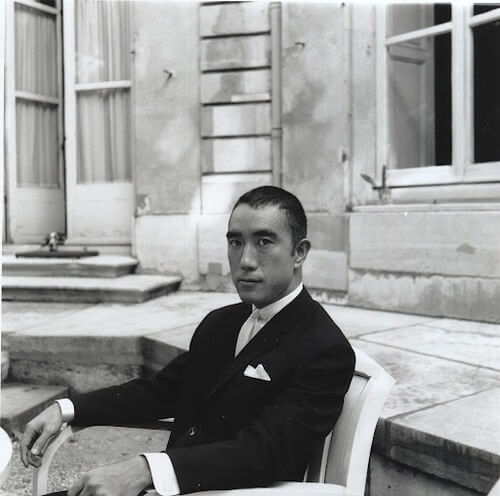
"Cuando un muchacho de 14 ó 15 años descubre que es más dado a la introspección y a la conciencia de sí mismo que la mayoría de los chicos de su misma edad, incurre fácilmente en el error de creer que ello se debe a que ha alcanzado una madurez superior a la de sus compañeros. Ciertamente cometí ese error. En realidad, aquella tendencia a la introspección se debía, en mi caso, a que yo tenía mayor necesidad que los demás de comprenderme a mí mismo. Ellos podían comportarse de acuerdo con su natural manera de ser, en tanto que yo debía interpretar un papel, lo cual exigía notable comprensión y estudio de mí mismo. En consecuencia, no se debía a la madurez, sino a mi sensación de incertidumbre, de incomodidad, que era la que me obligaba a tener pleno conocimiento de mí. Esa conciencia era un puente que me llevaba a la aberración, y, entonces mi manera de pensar tenía que limitarse a la incertidumbre, a la formulación de hipótesis."
"Confesiones de una máscara", Yukio Mishima
Español
Make Vacation retweetledi

Men only want one thing and it's the glory days of Hotel Yugoslavia

English

The crown of your pseudocentrality is a blindfold that allows you to enjoy your story line by line instead of all at once
English