

South Texas Astronomical Society
1.2K posts
South Texas Astronomical Society
@STARSocietyRGV
Igniting curiosity through hands-on space science education and exploration of the universe 🚀✨ #Space4All
Brownsville, TX Katılım Nisan 2019
324 Takip Edilen786 Takipçiler




South Texas Astronomical Society retweetledi

Yeah, this is on my mind a lot. Here's my current view:
The first landing attempt(s) that collects valuable controls landing data could have equipment that can perform a useful mission until the next transfer window. It's plausible that this could happen in the 2026 Hohmann transfer if the Starship program can achieve on orbit refilling this year. I see at least 1 Ship en route to Mars to test landing in this window increasingly possible, but I'm not here to make guesses.
Uncrewed cargo that would be very useful as I see it is a drilling rig to melt, store, and refine ice water in the permafrost. Drill, melt, and filter water, which could possibly be stored in the oxygen header tank that was used for landing.
I'll make the case that the purpose of this water is less for human consumption (though testing this is of course useful), as crewed missions should lag behind robotic assembly and energy infrastructure. Instead, initial cargo missions can use this water to test the steam reformation reaction, and possibly carbon dioxide methantion. 26 months is a lot of time to refill the methane tank for future energy consumption. Of course, I'm not telling you anything here you don't know, Casey.
Actual test data on Mars sooner rather than later could significantly inform the design direction. Data and failure from a bumpy landing may be very valuable for future prototypes to be resilient. In my view, the sooner test data can be collected on Mars, the better informed future designs will be (accelerate cycle time).
Aiming for 2026 may be a rush deadline on a mission that may not happen until the 2028/2029 window and perhaps it's not operationally viable — I don't know. I'm open to ideas and critiques here. Perhaps it's an ambitious timeline, though right now we need a little ambition and urgency.
English
We’re officially 2 WEEKS away from the 40th Annual Turkey Trot! If you haven’t registered yet, now’s the time to secure your spot. This year’s trot is packed with activities, presentations, & fantastic goodies waiting for you at the finish line.
See you on race day! 🦃🏅

English
South Texas Astronomical Society retweetledi

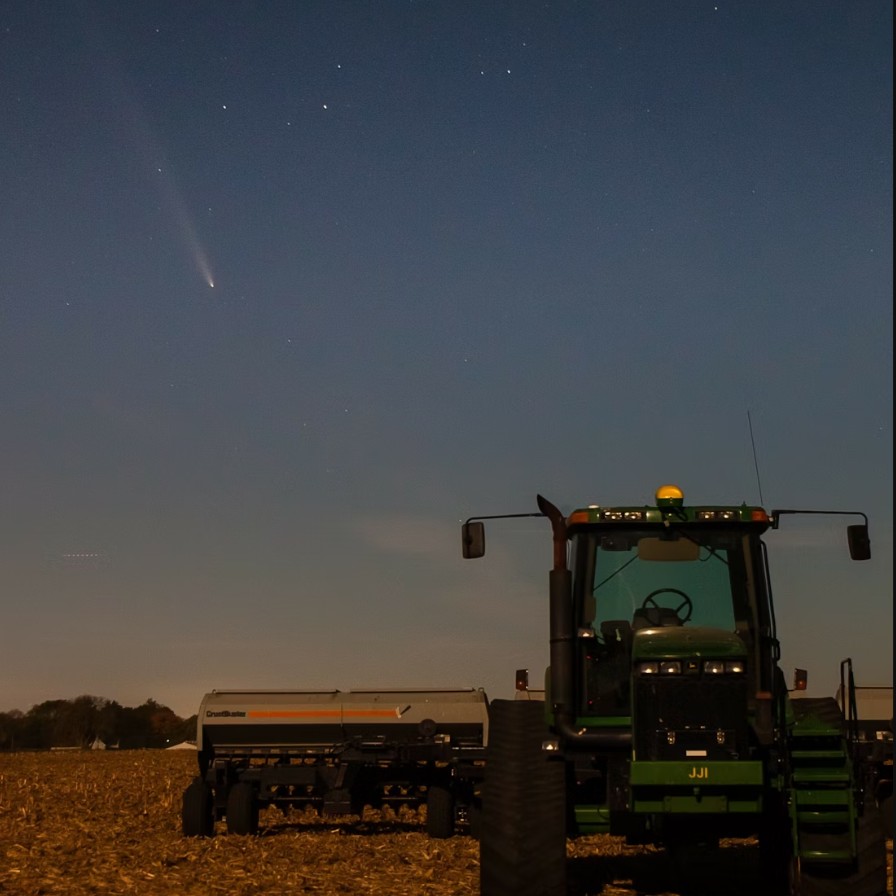
You can still catch comet C/2023 A3! Keep reading to learn how. ⬇️ ☄️
Tonight, Thursday, October 17, you can spot the comet in the west, near Venus, about 45 minutes after sunset your local time. It will remain visible for approximately two hours before setting. Don't know where Venus is? When looking at the Moon swivel 180 degrees to face west; there you'll find the bright planet Venus and the reddish star Arcturus; the comet will be roughly halfway between them.
Bonus 🎉
Along with the comet, a rising supermoon will be behind you!
📸 1: Harvest season in the flatlands! The Planetary Society member John Kincinas captured this shot on October 15, through a haze of dust from grain trucks in Central IL, using a Canon T3i, 15s at 55mm f5.6 ISO 800. John shared: "As it got darker, it was easy to make out the tail with binoculars. The dust was worth it!"
English
South Texas Astronomical Society retweetledi
This awesome group came out and cleaned up Boca Chica Beach at sunset!
Many thanks to the community who volunteered their time to make the world a bit better. Just in time for Starship IFT-5! 🏖️🚮🚀

English
Event page for RSVP: facebook.com/share/FLgqnz7z…
English
Join us on Tuesday, October 8 at 6:30pm at the Southmost Public Library for the South Texas Astronomical Society's monthly meetup 🛰️

English
South Texas Astronomical Society retweetledi
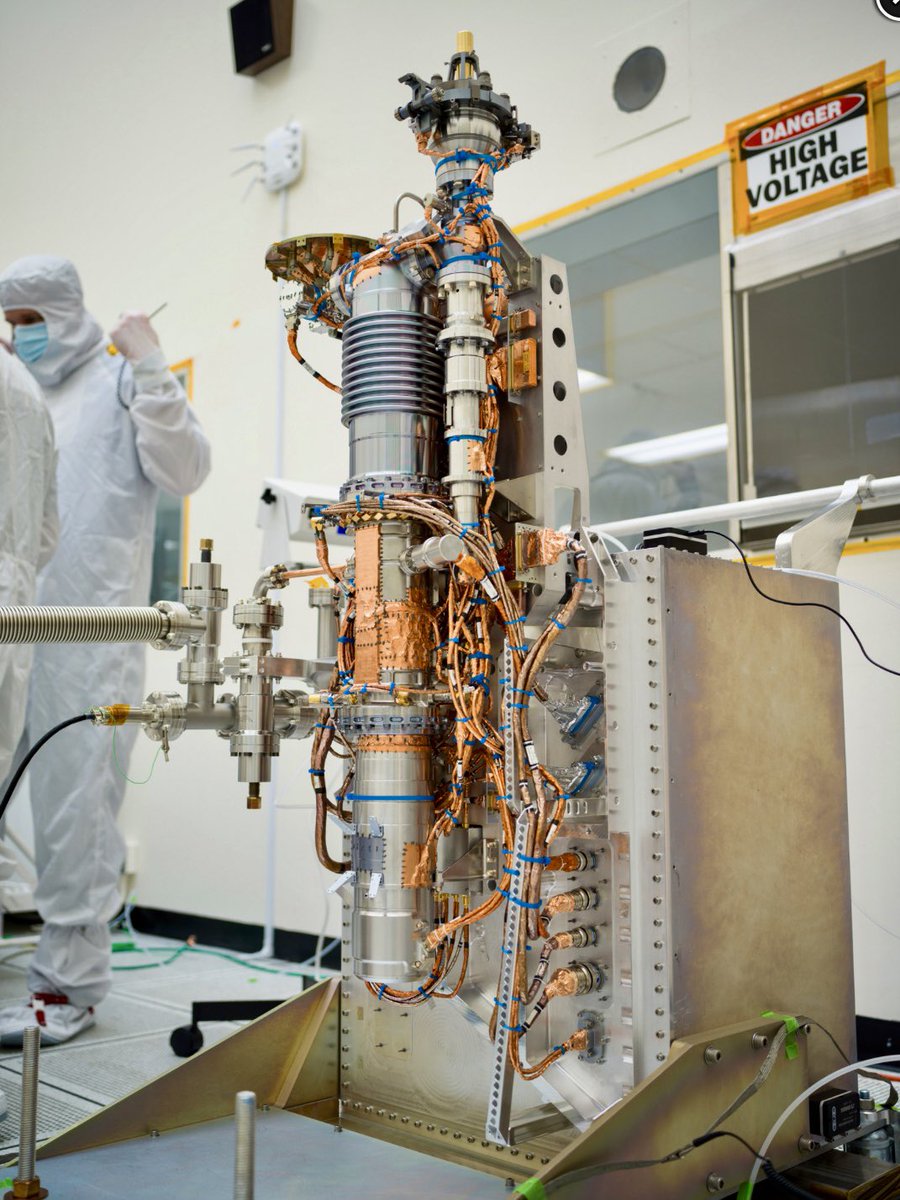
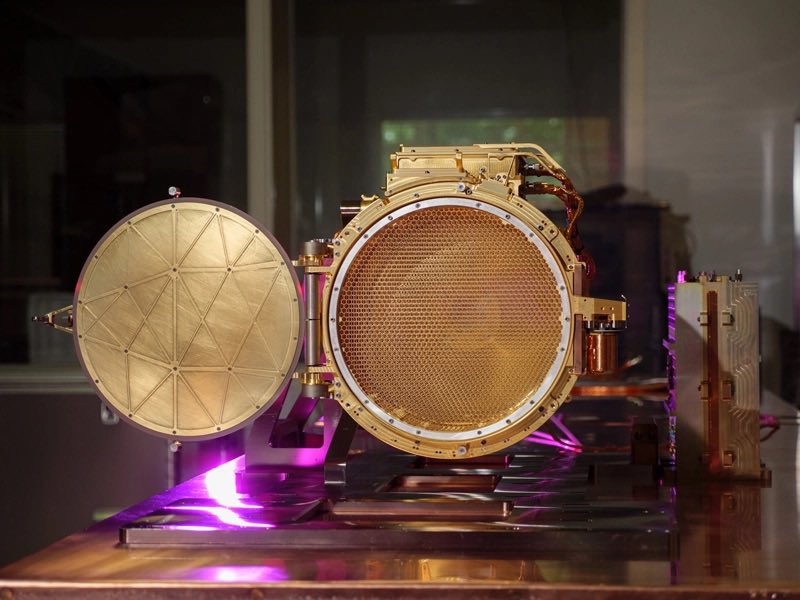
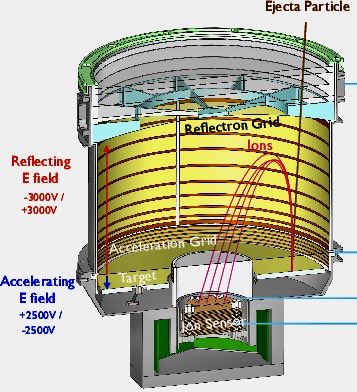
9 Days to Launch: Chemical Analysis - Most #EuropaClipper instruments look at Europa remotely or sense the environment near the spacecraft. However, a gas spectrometer and a dust analyzer will collect & analyze physical samples for composition. 1/7
Images: JPL/SwRI/CU Boulder

English
South Texas Astronomical Society retweetledi

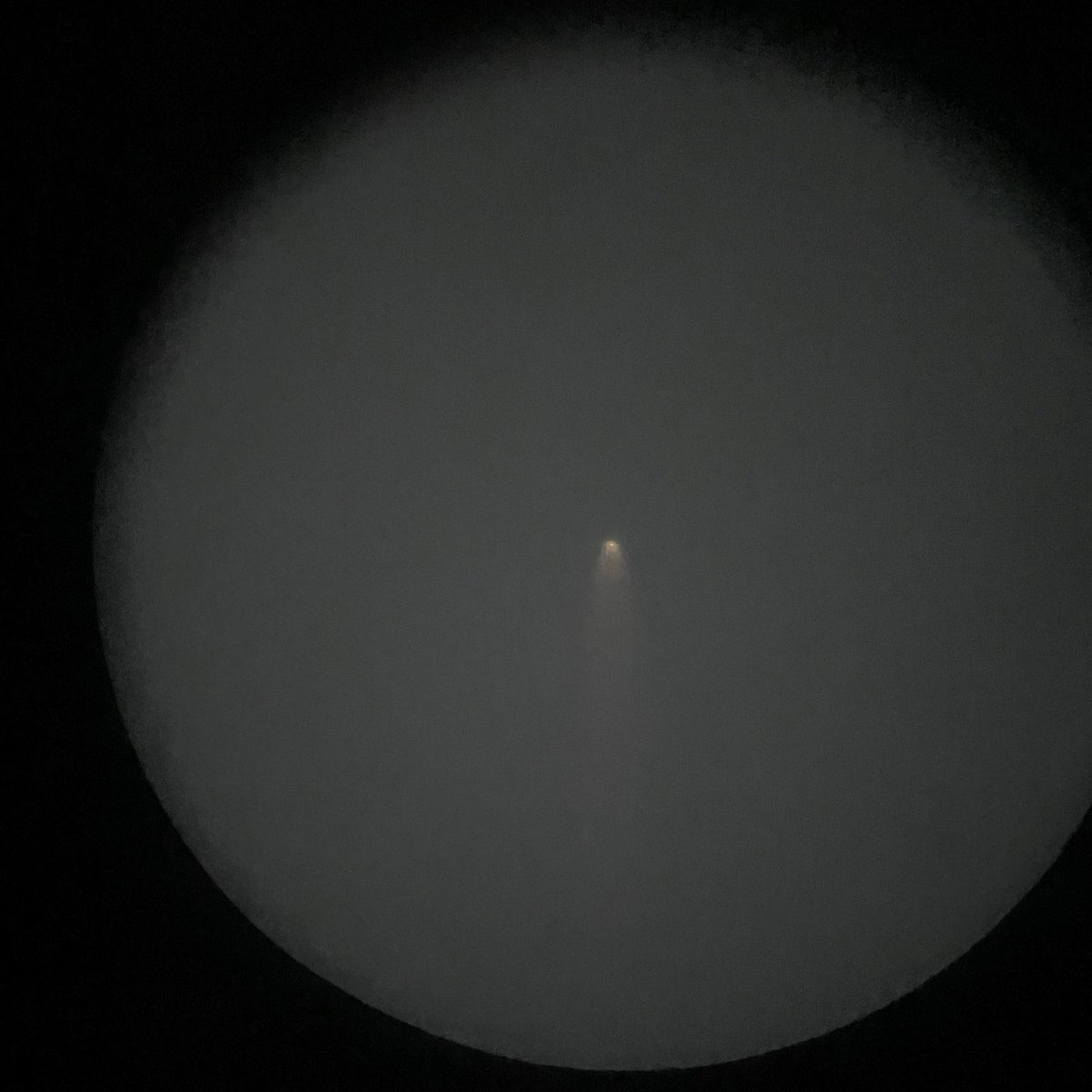
finally, a clear enough night to catch the comet ☄️
Comet 2023 A3 / Tsuchinshan–ATLAS
captured with an iPhone camera through @STARSocietyRGV’s Orion SkyQuest XT8 Dobsonian telescope
English
South Texas Astronomical Society retweetledi
A traveled to the top of a Volcano in Hawaii to capture this: Saturn briefly covered by the moon. One of the most difficult shots I’ve captured and a bucket list moment, this event gave me a new perspective on the solar system.
I’ll have it available in print for a short time.

English
Join us this Saturday, September 14 at 8pm at the Southmost Public Library to celebrate International Observe the Moon Night 2024 🌙 🔭
RSVP on the event page: buff.ly/3zkTTRt

English
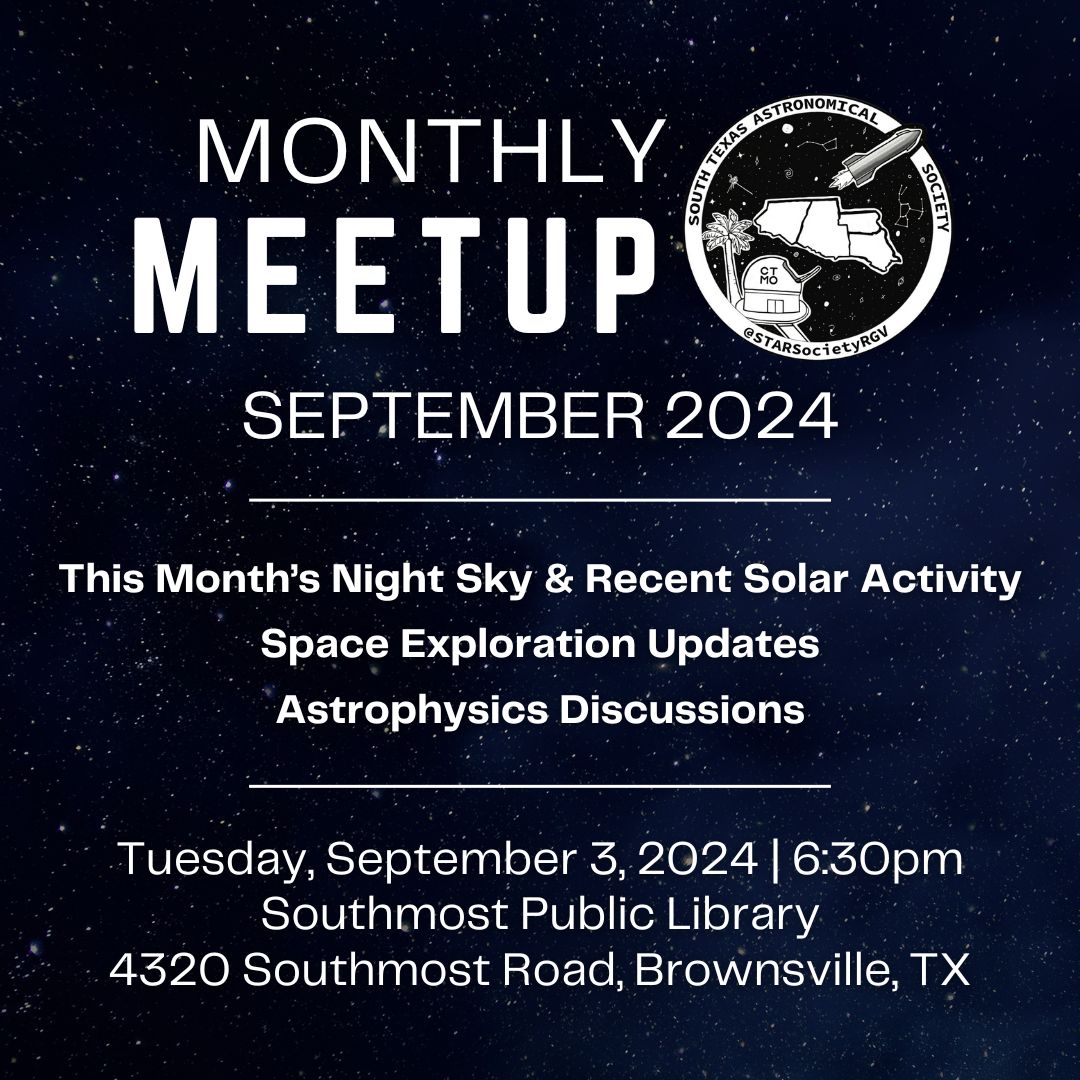
Join us this evening at 6:30pm at the Southmost Public Library for our Monthly Meetup! ✨
English
South Texas Astronomical Society retweetledi

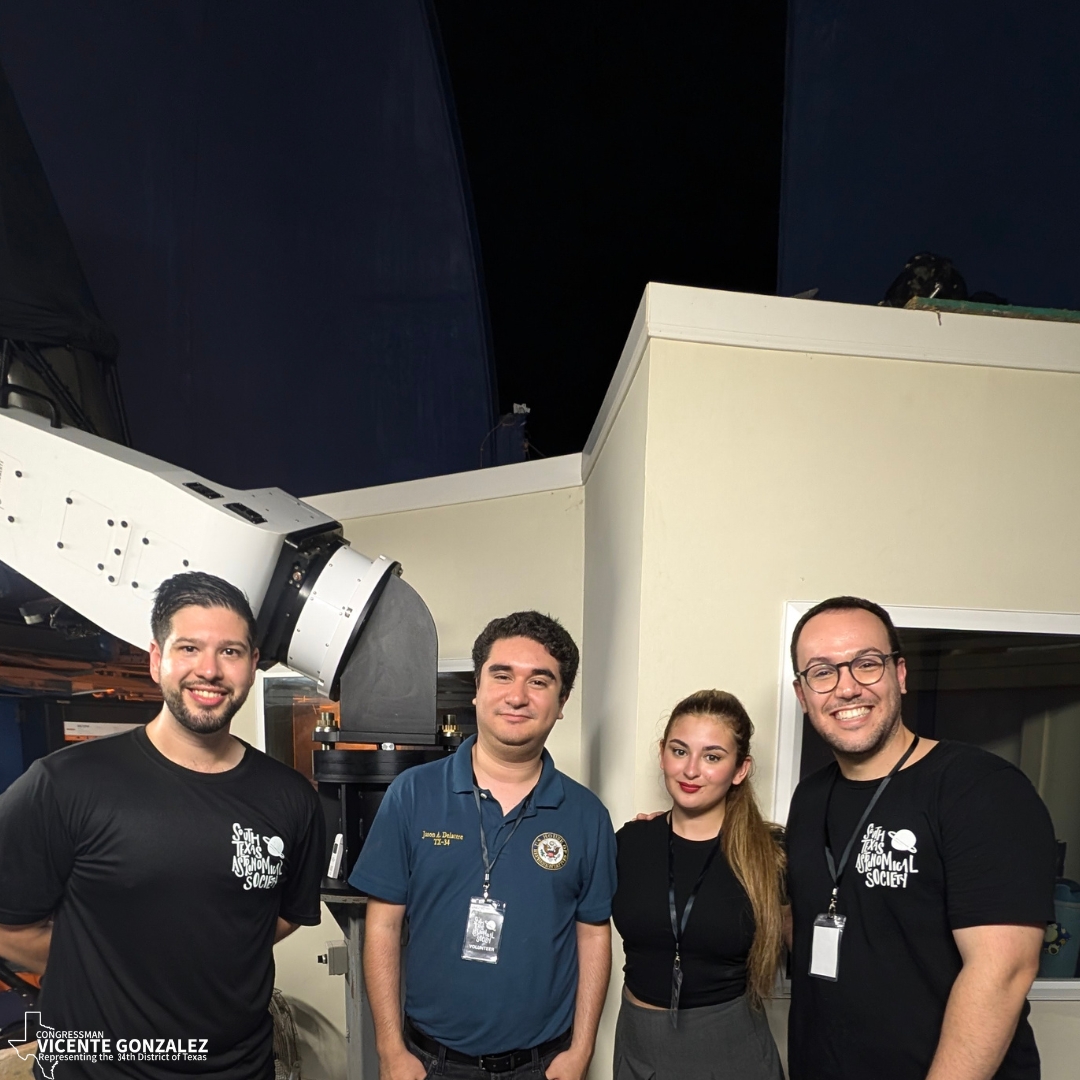
Team Gonzalez was honored to join the Astronomy at the Park event last night, organized by Resaca de la Palma State Park and @STARSocietyRGV. The event highlighted the importance of reducing light pollution and the exceptional work being done at the @CTMObservatory.



English
South Texas Astronomical Society retweetledi
Staring into infinity, it really puts daily woes into perspective — most frustrations are simply not worth it.
Recalibrating what matters and taking action are the fun parts.

English
South Texas Astronomical Society retweetledi
This is quite a good publication by the Acoustical Society of America (ASA) that did a short analysis with Falcon 9 sonic booms.
TLDR:
Tell everyone in South Padre, Port Isabel, and Brownsville to expect sharp explosions a few minutes after launch.
acoustics.org/2apaa6-boom-bu…
English
South Texas Astronomical Society retweetledi
Generally, wave fronts like sonic booms from claps of thunder can create shock fronts that approach 100 megawatts per square meter.
This is substantial. Oh, and we should be able to expect 3 sonic booms in rapid succession, like we see with Falcon 9 Boosters.
English
South Texas Astronomical Society retweetledi
The Starship launch back in March was about 150 decibels (dB). However, this is not a simple thing to summarize as this is depending upon several factors such as the distance you are away, what point of flight, and average vs peak dB.
Something matters more though, sound energy.
English
South Texas Astronomical Society retweetledi
I mean, a launch is loud, so a sonic boom wouldn't be too much louder, right?
Wrong.
Though they are both loud, the difference is the compression of the wavefront.
33 Raptor engines operating is certainly loud, though the wavefronts are extended over time and not as compressed.
English
South Texas Astronomical Society retweetledi
With so many sonic boom references, I imagine there's concern about the upcoming Starship IFT-5 Booster return being jarring.
People of South Padre and Brownsville should be aware that sonic booms happen when a Booster returns and are extremely loud. 🧵
SpaceX@SpaceX
About 8 minutes after liftoff, Falcon 9’s first stage will return to Landing Zone 1 in Cape Canaveral Space Force Station, announcing its arrival with a sonic boom unique to reusable vehicles returning from space → #starship-sonic-boom" target="_blank" rel="nofollow noopener">spacex.com/updates/#stars…
English