Sustainability Times

8.5K posts

Sustainability Times banner
Sustainability Times

Sustainability Times

@ST_Sustainable

Covering every facet of #sustainability, from sustainable #business and #development to protecting the #environment and fighting #climatechange.

Katılım Nisan 2018
1.2K Takip Edilen4.5K Takipçiler
Sustainability Times retweetledi
Dr. Richard Munang
Dr. Richard Munang@RichardMunang·
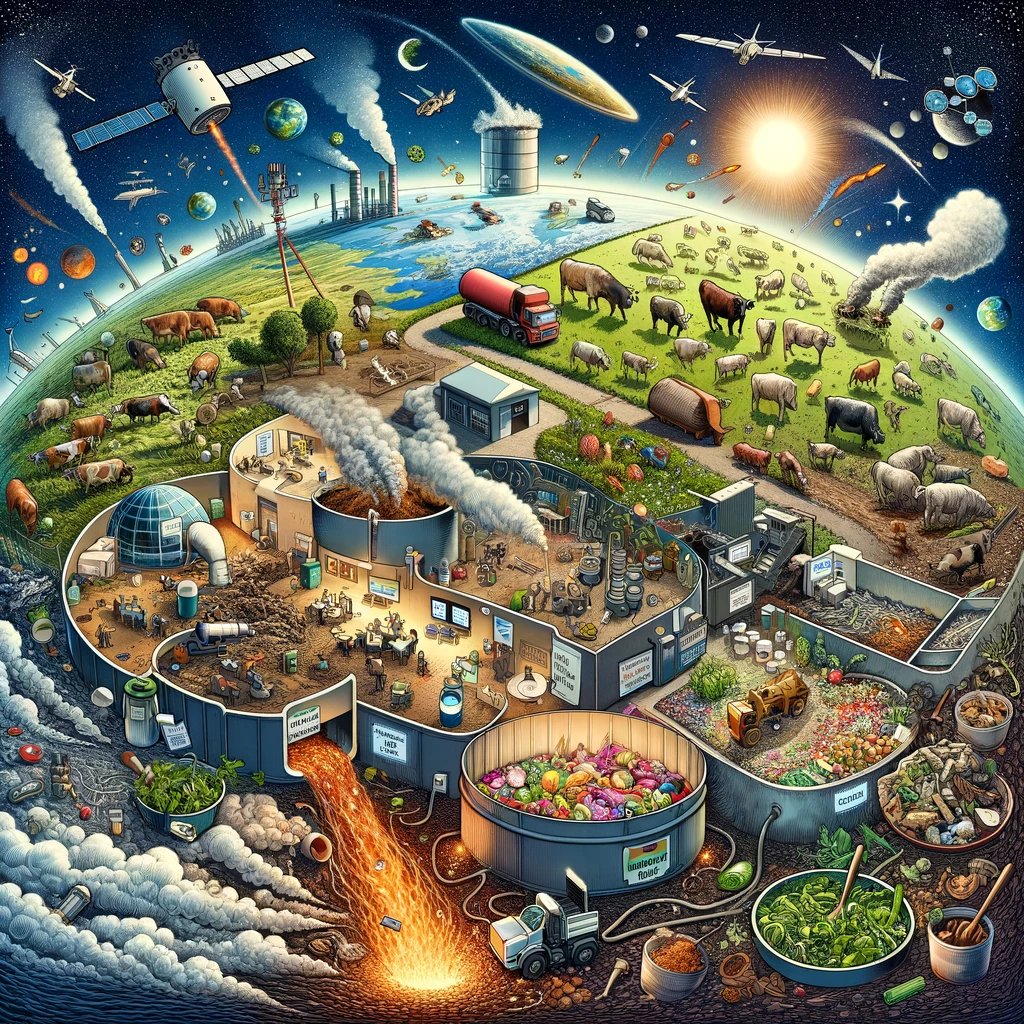
#Methane contributes up to 45% of the warming experienced in the globe today. It has a 100-year global warming potential that is 28-34 times that of CO2 and 84-86 times stronger over a   20-year period. In the global south, methane emissions are projected to double by 2050, making it the global south’s climate challenge. Specifically, with increased growth, so is the increase in the demand for food and consumer goods in the global south, as well as the waste they generate. To keep the 1.5°C warming limit alive, methane emissions need to be reduced by 50% by 2050 without impeding quality of life developments in the global south. Focusing on CO2 alone means at best, achieving half the temperature reduction in 2 decades. Because it is short-lived and most potent in the short term, mitigating methane stands out as the fastest, most efficient way to reduce temperature in our lifetime. Organic waste in landfills decomposes to form methane, which is not only a highly potent greenhouse gas but also highly flammable. The implication is a heightened risk of landfill fires, especially during hot weather, which further releases harmful particulate matter from the burning waste. So, as heatwaves continue to increase, so will the risk of landfill fires. While up to 40% of methane emissions are from fossil fuel extraction, a staggering 60% are food systems emissions – i.e., food production and food waste. The organic waste in landfills is one of the most significant sources of methane, and food loss and waste are core drivers. An estimated 50% of all food systems emissions emanate from food that is never consumed – i.e., food loss as postharvest losses, e.g., in Africa where 30 – 50% of food is lost as PHLs and food waste. When this organic waste ends up in the trash and later concentrated in landfills, the methane emitted from this waste can be visible from space. - beyond food waste, there is also the rearing of livestock for dairy and meat, which is recorded as the single largest anthropogenic source of methane – primarily through enteric fermentation. Low-quality animal feed results in more methane from enteric fermentation. An animal in Sub-Saharan Africa is estimated to cause 5 times more emissions than another in North America per unit of milk produced because of sub-optimal food quality. To this end, reducing livestock emissions through improved food is key. For example, some scientists are feeding algae and seaweed to animals to change their metabolism and reduce methane emissions. These are examples of experimental solutions that can be optimised to ensure safety in real-life, out-of-lab settings.  Addressing methane emissions, especially from food waste, is an area where a value chain approach that covers upstream risk causes, to midstream state of methane emissions, to end-of-pipe impacts at the downstream where solutions and their investment potential needs to be monitored and optimised for drive uptake.
Dr. Richard Munang tweet media
English
9
18
37
1.8K
Sustainability Times retweetledi
Panthera
Panthera@PantheraCats·
The ecosystem of Côte d'Ivoire is teeming with biodiversity: leopards, African golden cats, giant pangolins and pygmy hippos — there's no end to the fascinating wildlife you might find in this African country's jungles.youtu.be/3FdoJEVnu4A
YouTube video
YouTube
English
1
7
14
1.4K
Sustainability Times retweetledi
Emily Pontecorvo
Emily Pontecorvo@emilypont·
Sublime Systems has found a way to make zero-carbon cement without carbon capture. Now they are building their first commercial plant on the site of a former paper mill Holyoke, MA. heatmap.news/technology/sub…
English
1
38
117
27.9K
Sustainability Times retweetledi
Geoffrey Supran
Geoffrey Supran@GeoffreySupran·
Delighted to hear that my paper with @rahmstorf & @NaomiOreskes, which showed Exxon predicted global warming with breathtaking accuracy years before it attacked climate science & scientists, was the second most talked-about climate change article of 2023! carbonbrief.org/analysis-the-c…
English
8
86
222
17.7K
Sustainability Times retweetledi
World Meteorological Organization
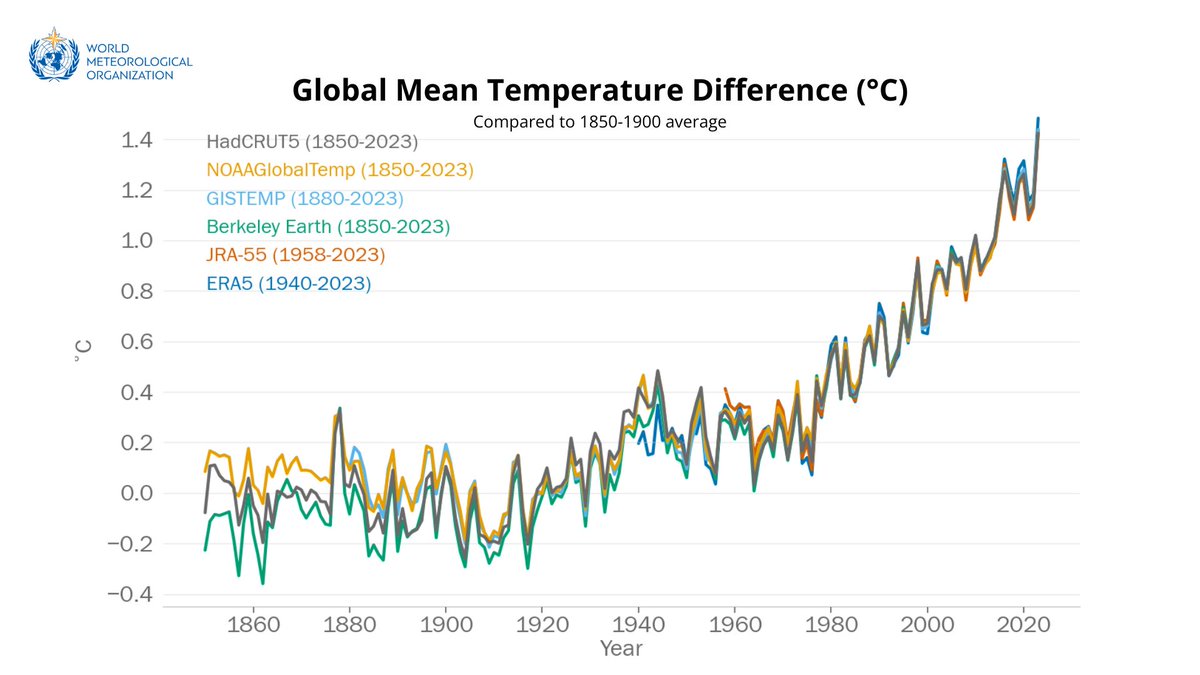
Today, WMO confirms that 2023 smashed the global temperature record by a huge margin. This conclusion is based on the consolidated global temperature figure derived from six international datasets. Press release 👇🏽 wmo.int/news/media-cen…
World Meteorological Organization tweet media
English
44
350
533
124.8K
Sustainability Times retweetledi
Earthjustice
Earthjustice@Earthjustice·
Electric heat pumps, which can double as air conditioners when used in reverse, are many times more efficient than the most efficient oil, gas, or electric furnace. And they work. Just ask the people of Juneau, Alaska. earthjustice.org/article/a-cold…
English
2
23
54
3.8K
Sustainability Times retweetledi
CES
CES@CES·
Day 2 has come to a close! Reflect on the amazing innovations that were on display today.
English
9
110
372
64.2K
Sustainability Times retweetledi
Assaad Razzouk
Assaad Razzouk@AssaadRazzouk·
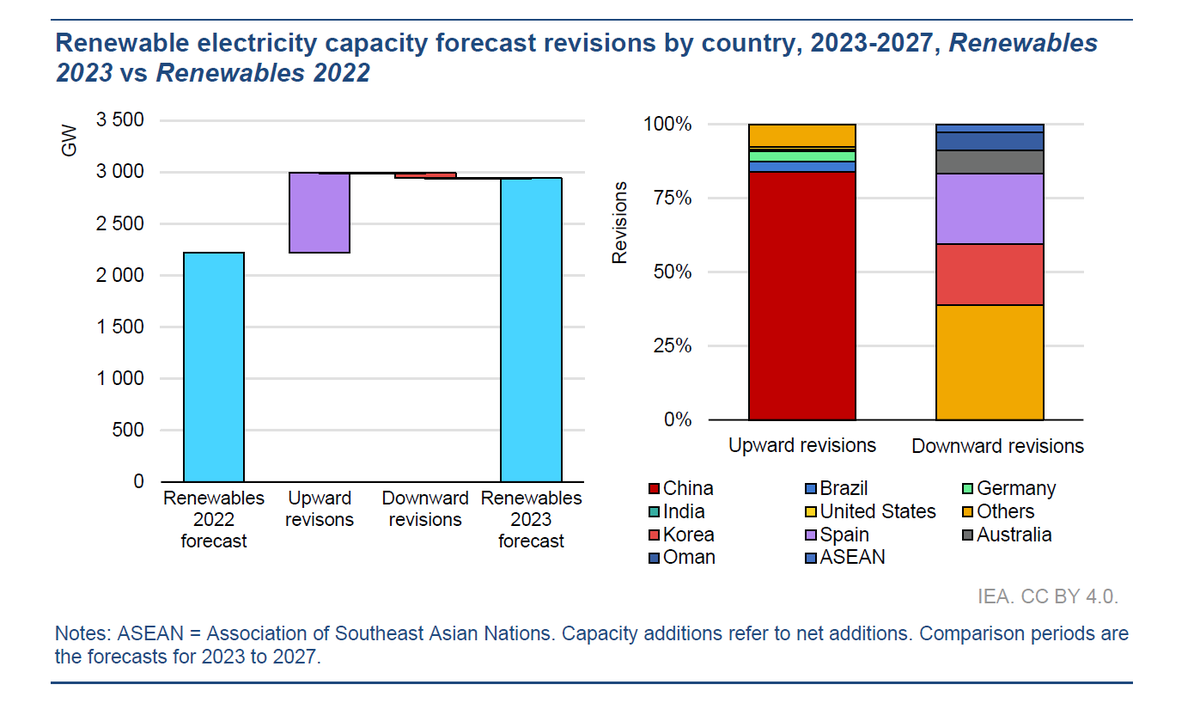
Renewables are growing so fast @IEA has had to, again, revise its forecast - up an incredible 33% in 1 year Analysts are having a seriously hard time keeping up with what's going on: an exponential expansion of renewables everywhere, all at once iea.org/reports/renewa… #climate
Assaad Razzouk tweet media
English
33
174
438
54.6K
Sustainability Times retweetledi
CES
CES@CES·
Check out the highlights of day 1 of the most powerful tech event in the world! Stay tuned for what's in store for the rest of this week.
English
4
84
239
54.9K