Steve T McCready

595 posts

Steve T McCready

Steve T McCready

@STandMore2022

Steve’s Thoughts AND More STandMore Catholic Convert Easter Vigil 2022

Cavite City, Calabarzon Katılım Mayıs 2024
689 Takip Edilen119 Takipçiler
Steve T McCready retweetledi
My Catholic Life!
My Catholic Life!@CathDailyRef·
Reflection 134: The Sweetness of Our Joint Labor A honey bee works diligently, day after day, and a colony of bees all work toward the same natural end.  They work to produce honey.  This is no small task and requires constant work on the part of thousands of bees to produce a small amount of honey.  But, in the end, their efforts pay off and honey is made and stored in the hive.  So it is with our lives. We are all called to serve the Lord individually, but we also do so in communion with others.  Religious congregations, dioceses, parish churches, families and friends are all called in various ways to serve the Lord as a community of faith.  When each one does his or her part, the Lord accomplishes an abundance of good fruit so as to bring the sweetness of His love into a world in much need (See Diary #664). Do you see yourself as a “lone Christian?”  Or do you see yourself as a member of the family of God, seeking to do your humble part so that the Church, as a whole, can complete Her mission?  The Church is called to bring the sweet love of our Lord into a world starving for love.  Reflect upon whether you are doing your small part.  Your part is all that you are responsible for.  It is nothing other than embracing the Will of God each and every day and each and every moment of the day.  Small acts of love, the daily choice to trust, the humble submission of your will.  You can fulfill your mission in life and when you do, the Lord will add this to the works of all His sons and daughters and, through His whole Church, He will transform the world, bringing forth His glorious Kingdom. Lord, as a single bee produces only a tiny bit of honey, so also do my actions and service to You produce only that which You have given me to accomplish.  I offer my love and service to You so that You may unite it with the love and service of others, producing, together, an abundance of Mercy for a world in such need.  Jesus, I trust in You. Image via Pixabay. Read entire reflection: divinemercy.life/2026/05/13/ref… #DivineMercy

My Catholic Life! tweet media
English
0
1
3
136
Jason Rantz on Seattle Red
How do we find old posts we liked? I don’t see it listed anymore. Anyone else?
English
5
1
8
2.8K
Steve T McCready retweetledi
My Catholic Life!
My Catholic Life!@CathDailyRef·
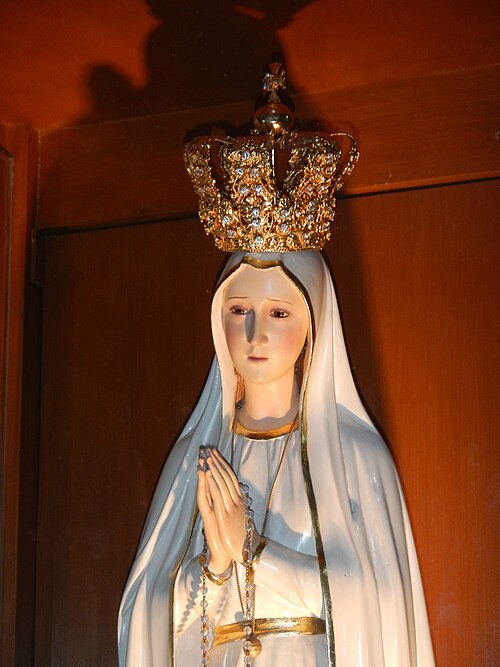
May 13: Our Lady of Fátima—Optional Memorial 1916–1917 Quote: Our Lady showed us a great sea of fire which seemed to be under the earth. Plunged in this fire were demons and souls in human form, like transparent burning embers, all blackened or burnished bronze, floating about in the conflagration… The demons could be distinguished by their terrifying and repulsive likeness to frightful and unknown animals, all black and transparent. This vision lasted but an instant. How can we ever be grateful enough to our kind heavenly Mother, who had already prepared us by promising, in the first Apparition, to take us to heaven. Otherwise, I think we would have died of fear and terror. ~from the First Secret of Fátima Reflection: Three Portuguese shepherd children named Lúcia (age nine), Francesco (age eight), and Jacinta (age six), received three apparitions from the Guardian Angel of Portugal in 1916 and six apparitions from Our Lady of the Rosary in 1917. Lúcia later became a religious sister and received several more apparitions from Our Lady and Jesus Himself. These apparitions and their messages are among the most inspiring spiritual events to occur in modern times. The first apparition took place in the spring of 1916 while the children were tending their sheep. While taking refuge in a cave during a storm, the children had eaten their lunches and prayed the rosary. They were playing games when they saw an angel in the form of a young boy on a cloud, who was whiter than snow, yet transparent and radiant with the sun. The angel said, “Do not fear! I am the Angel of Peace. Pray with me.” With that, the angel bowed to the ground with the children and prayed three times: “My God, I believe in Thee, I adore Thee, I hope in Thee, and I love Thee. I ask pardon for all those who do not believe in Thee, do not adore Thee, do not hope in Thee, and do not love Thee,” and then disappeared. During the summer of 1916 the angel appeared to them again, almost chastising them, saying, “What are you doing? Pray, pray a great deal! The Holy Hearts of Jesus and Mary have designs of mercy on you. Offer unceasingly prayers and sacrifice yourselves to the Most High.” When Lúcia inquired how they were to sacrifice themselves, the angel replied, “Make of everything you can a sacrifice and offer it to God as an act of reparation for the sins by which He is offended, and in supplication for the conversion of sinners…” During the fall of 1916, the angel appeared again, this time with a chalice and the Blessed Sacrament before which he bowed and prayed, “Most Holy Trinity, Father, Son, and Holy Spirit, I adore You profoundly, and I offer You the Most Precious Body, Blood, Soul and Divinity of Jesus Christ, present in the tabernacles of the world, in reparation for the outrages, sacrileges, and indifferences by which He, Himself is offended. And I draw upon the infinite merits of the Most Sacred Heart of Jesus and of the Immaculate Heart of Mary, that You might convert poor sinners.” Afterwards, the three children received Holy Communion from the angel. On May 13, 1917, the children, once again in the fields, received a visit from a lady from Heaven. She conversed with them and told them to return to that spot on the 13th of every month for six consecutive months. In their conversation she asked, “Are you willing to offer yourselves to God to bear all the sufferings He wants to send you, as an act of reparation for the sins by which He is offended, and for the conversion of sinners?” To which the children replied, “Yes.” On June 13, 1917, the lady appeared again, this time with about fifty others from the town present. After they all prayed the rosary, the lady appeared to the children as before and conversed with them. In part, she said, “I will take Jacinta and Francisco soon, but you, Lúcia, are to stay here some time longer. Jesus wishes to make use of you in order to make me known and loved. He wishes to establish in the world devotion to my Immaculate Heart. To whoever embraces this devotion, I promise salvation; those souls will be cherished by God, as flowers placed by me to adorn His throne.” On July 13, 1917, a crowd of about 5,000 accompanied the children. They prayed the rosary, and the lady appeared as before. This time she gave the children a horrifying vision of hell and then spoke about the need for prayer and sacrifice to end World War I. She also warned that a worse war would come if her message was not heeded. She said, “To prevent this, I shall come to ask for the consecration of Russia to my Immaculate Heart, and the Communion of Reparation on the First Saturdays. If my requests are heeded, Russia will be converted and there will be peace; if not, she will spread her errors throughout the world, causing wars and persecutions of the Church.” Then she asked them to add this prayer to each decade of the rosary: “O my Jesus, forgive us our sins, save us from the fires of hell. Lead all souls to Heaven, especially those who are most in need of Thy mercy.” On August 13, 1917, as many as 20,000 people had gathered, but on that same day the children were arrested, detained in prison for a few days, and interrogated about their visions. The crowd, however, did see a phenomenon in the sky. On August 19, after the children were released, the lady appeared to them once again in the field. On September 13, 1917, with a crowd of 30,000, the lady appeared and asked the children to continue to pray the rosary. She promised that if they did, the war would end. She then promised “In October, I will perform a miracle so that all may believe.” On October 13, 1917, about 70,000 people gathered in the pouring rain. This time the lady revealed her name, saying, “I am the Lady of the Rosary.” She asked for a church to be built on that spot and promised that the war would soon end if they kept praying the rosary every day. When she left the children, everyone in the crowd saw the promised miracle. The sky opened, and those gathered were able to look directly at the sun as it glowed and danced. The sun then plummeted to earth, causing panic, but returned to the sky. Suddenly, everything—including the ground and everyone’s clothing—was completely dry. Within a few years, Francesco and Jacinta died and went to Heaven as promised by the Lady of the Rosary. Lúcia entered religious life and received an apparition in 1925 during which Our Lady fulfilled her promise that she would return to ask for “the Communion of Reparation on the First Saturdays.” In 1929, Our Lady appeared to Lúcia again, stating, “The moment has come in which God asks the Holy Father to make, in union with all the bishops of the world, the consecration of Russia to My Immaculate Heart.” Above all, the messages of Fátima reveal the ongoing need to make reparation for the sins and sacrileges committed against the Sacred and Immaculate Hearts of Jesus and Mary, and to pray for the conversion of poor sinners. Daily sacrifice and penance, offered with prayer and profound faith, do more good than we could ever imagine. As we honor these most glorious apparitions today, reflect upon your own willingness to make reparation for the sins of the world through your daily sacrifices. “Make of everything you can a sacrifice and offer it to God…” Doing so will not only appease the Justice of God, it will also bring about the salvation of many souls. Prayer: Our Lady of the Rosary, you are the Immaculate Conception, the Queen of Heaven and Earth, and the Mother of God. Please pray for me, that I will heed the messages that you revealed at Fátima. Pray that I will live a life of continuous sacrifice of prayer, so as to make reparation for the sins and sacrileges committed against your most Immaculate Heart and the Sacred Heart of your divine Son. Our Lady of the Rosary, pray for me. Jesus, I trust in You. Featured images: Ramon FVelasquez, and Jornal O Bom Católico Read entire reflection: mycatholic.life/saints/saints-… #SaintoftheDay
My Catholic Life! tweet media
English
0
3
12
339
Steve T McCready retweetledi
My Catholic Life!
My Catholic Life!@CathDailyRef·
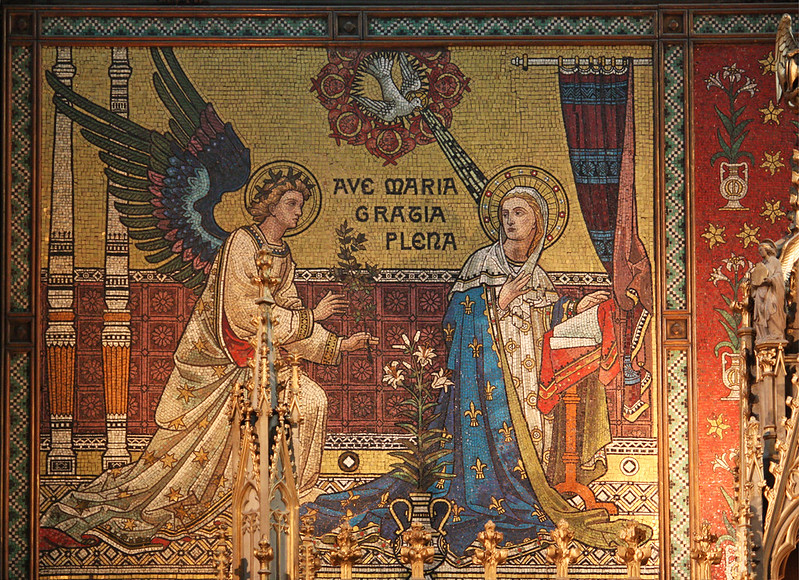
Reflection 130: Correcting Others in Love There is little doubt that each one of us will encounter, from time to time, the sin of another.  It could be in their words, actions or the omission of what they ought to do.  Sin hurts and requires correction.  Very often, when we are sinned against, we tend to get angry.  But the anger we have is not always “holy anger” and is not, therefore, always from God.  We can easily allow our wounded pride to be the source of a harsh, or even subtle, correction of another.  This, then, becomes our sin.  But sin must be confronted and God will, at times, call us to correct others.  Our correction may even be severe.  But when it comes from the holiness of God, inspiring and guiding us, our correction of the other will not wound them, it will be an act of Mercy.  They may need severity, and God may inspire us to be severe, but we must always be careful that what we offer ultimately flows from the Mercy of God (See Diary #633). Reflect upon any moments of contention that you have encountered lately.  Were words spoken, or actions done that were based more on unhealthy emotion than on love?  Examine how you react when hurt by another.  Do you look at them with Mercy and seek to offer the Mercy of God, even if it must come, in that moment, in the form of a holy rebuke?  Do not be afraid to let God use you to offer this form of Mercy.  It may be hard to distinguish from the sin of anger, but we must strive to offer this Mercy for the good of those we are called to love. Lord, I offer myself to You so that You can use me as an instrument of Your Divine Mercy.  When I am sinned against, help me to forgive immediately.  But help me, also, to know how best to address the sins of others.  Help me to know how to offer correction in love for their good.  Give me courage and wisdom, dear Lord, and use me as You will.  Jesus, I trust in You. Image: Jesus casting out the money changers at the temple by Carl Bloch Read entire reflection: divinemercy.life/2026/05/09/ref… #DivineMercy
My Catholic Life! tweet media
English
0
2
15
331
Steve T McCready retweetledi
My Catholic Life!
My Catholic Life!@CathDailyRef·
Reflection 129: Do Not Be Afraid “Do not be afraid; just have faith” (Mark 5:36).  These four words, “Do not be afraid,” are spoken countless times throughout the Scripture.  We should pay attention to them.  Fear can paralyze us and lead us into many forms of foolish thinking and acting.  The person who acts out of fear truly acts like a fool.  That may seem harsh at first, but it’s not if you understand what it means.  It simply means that a person acting out of fear cannot act rationally.  Fear does great damage to a person’s ability to stay calm, remain focused and think clearly.  That’s why the Scriptures speak so directly regarding this important spiritual point.  Fear must give way to faith and trust in God (See Diary #626-627). What is it that causes you the most anxiety, worry and fear?  It’s a struggle we all deal with.  There is no shame in admitting it.  So what is it?  Identify that which overwhelms you the most and you will identify that which God wants you to surrender in trust the most.  Go to the heart of the struggle.  Sincerely place that worry and fear into the Hands of God and trust.  Trust that God is All-Powerful and capable of handling every situation.  He may not change things the way you think they should be changed, but He will lift your burden and enable you to move forward without the fear that can easily paralyze and confuse you.  Do not let fear dominate your life.  Trust in God and let that trust transform you. Jesus, I do want to trust You and to entrust all my many burdens to You.  I especially turn to You with (pause and state that which causes the most fear and anxiety).  Please enter into this burden and lift it by Your gentle hand, replacing it with peace and great inner calm. Jesus, I trust in You. Image via flickr Read entire reflection: divinemercy.life/2026/05/08/ref… #DivineMercy
My Catholic Life! tweet media
English
0
4
10
268
Steve T McCready retweetledi
My Catholic Life!
My Catholic Life!@CathDailyRef·
Reflection 128: The Sweetness of Encountering Jesus Have you encountered the sweetness of Jesus?  He, with the Father and the Holy Spirit, come to you in the secret depths of your soul.  There, in this hidden place, they desire to communicate with you.  Their communication is beyond words and concepts.  It’s a communication of profound love that leaves the soul at peace and with a delight of the greatest sweetness.  Their encounter with you is not an emotion; it’s a spiritual union (See Diary #622). How deep is your relationship with Jesus, the Father and the Holy Spirit?  Is it something more intellectual?  Is it based only on the fact that you believe in them, for the most part?  Or is it something that goes much deeper?  The goal must be to come to know God in a real and tangible way.  But that knowledge of Him must also be personal.  It must become a relationship that is lived and that sustains you in all things.  If the Blessed Trinity lives within you, and if you allow yourself to embrace that relationship wholeheartedly, then you will discover an inner sweetness that overwhelms any suffering or hardship you endure.  The sweetness of that love will carry you, day in and day out, to the glories of Heaven. Lord, I long to know You, to love You and to become one with You.  I desire to have You live within my soul, refreshing me with the sweetness of Your presence.  Take my life, sweet Jesus, and unite me with Your perfect Heart of love.  Jesus, I trust in You. Image via flickr Read entire reflection: divinemercy.life/2026/05/07/ref… #DivineMercy
My Catholic Life! tweet media
English
0
3
12
255
Steve T McCready retweetledi
A-10 Thunderbolt II "Warthog"
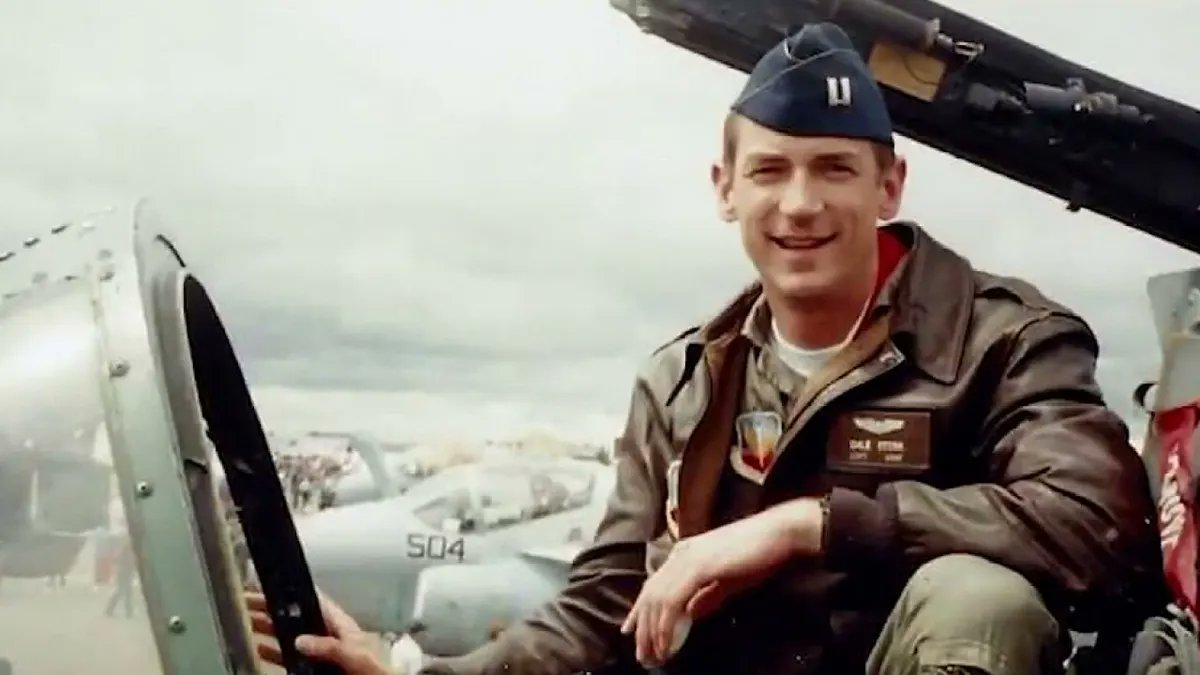
The first combat loss of an A-10 was 2 Feb 1991 during Operation Desert Storm. Capt Dale Storr, 76th TFS Vanguard shot down and his aircraft 80-0248 destroyed after being hit by SA-16 SAM. He is flying his second combat sortie of the day. He drops his bombs then makes a strafing run on a truck target, missing the first time, so he and his wingman make a second run from a different angle. As he is pulling off target, his wingman reports “good hits, good secondaries.” At that moment, Capt. Storr feels his plane shudder from an apparent SA-16 missile hit. His engines and hydraulic pressure are fine but the A-10 is slowly rolling to the right and Capt. Storr can't control it. The hit has destroyed flight control lines and the plane continues in a slow barrel roll toward the ground. Capt. Storr attempts to contact his wingman but his radio antenna has been knocked out. Seconds from impact he ejects less than 5 miles behind enemy lines. Because he ejects so late his wingman doesn't see his parachute open and assumes he crashed with his aircraft. Search and rescue operation finds nothing. It's assumed Capt. Storr is dead, but instead Dale spends 33 days being badly treated as a POW.  He is released by the Iraqis on 6 March.
A-10 Thunderbolt II "Warthog" tweet media
English
6
84
755
32.9K
Steve T McCready retweetledi
My Catholic Life!
My Catholic Life!@CathDailyRef·
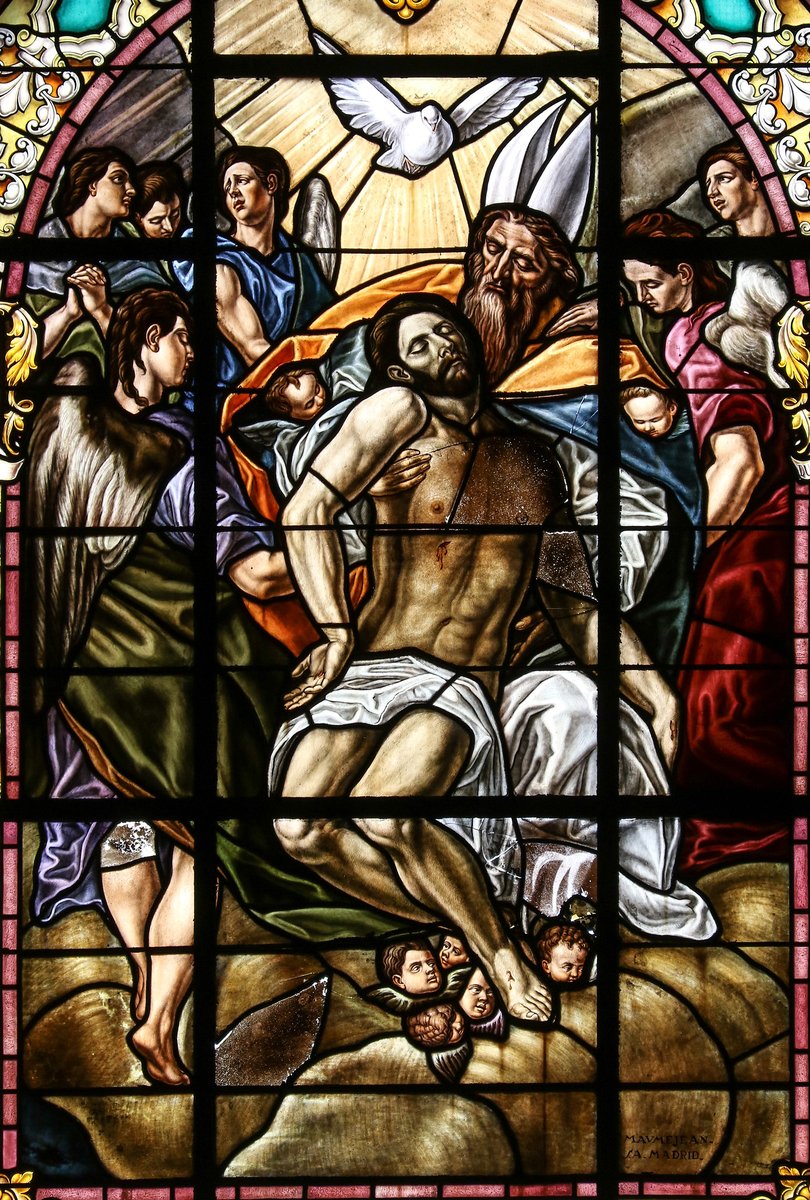
Eternal Love and Joy May 7, 2026 Thursday of the Fifth Week of Easter Jesus said to his disciples: “As the Father loves me, so I also love you. Remain in my love. If you keep my commandments, you will remain in my love, just as I have kept my Father’s commandments and remain in his love.” John 15:9–10 Imagine being loved by someone with a perfect love. Perfect love has no bounds, and experiencing it would be the source of indescribable joy. Now imagine further that the one who loves you is all-powerful and all-knowing. When combined with being all-loving, there is no limit to what such a relationship can do in your life. Of course, we do not need to only imagine such a love; we can receive that love from God. Jesus’ words are deep, personal, and intimate: “As the Father loves me, so I also love you.” His love for you is not conditional, limited, or selfish. When He says to you, “I love you,” He means it with every power of His divine soul. Jesus beautifully describes His love for us: “As the Father loves me…” The love the Father has for the Son is so deep, perfect, and all-consuming that we cannot fully comprehend it, even in Heaven. For all eternity, we will gaze with wonder and awe at this shared love and never tire of contemplating it. What’s more, the love between Father and Son is so strong that it cannot be contained within Themselves. Their love overflows in superabundance, pouring out upon us, inviting us to enjoy perfect fulfillment within it. Jesus’ next words are both an invitation and a command: “Remain in my love.” God’s love for us is far more than an emotion or affectionate concern. His love is a gift of His very Self, drawing us into communion with Him. To “remain” in His love means to live, move, and exist in His presence. Divine love is transforming, enduring, and life-changing. It unites us to the divine Lover and establishes the life-giving communion for which we were made. After inviting us to remain in His love, Jesus clarifies how we can receive His ongoing and transformative gift: “If you keep my commandments, you will remain in my love, just as I have kept my Father’s commandments and remain in His love.” At first, these words might seem challenging, especially when we consider our fallen nature and tendency toward pride. Yet they only feel burdensome if we misunderstand His commandments. In order to fully embrace Jesus’ commandments, we need to see them for what they are: expressions of pure love gushing forth from the shared love of the Father and the Son. Note that Jesus doesn’t ask anything of us that He Himself was unwilling to do. His love for the Father was perfect because He kept the Father’s commandments. What did the Father command the Son to do? He commanded Him to love with a selfless, sacrificial love, culminating in laying down His life for us. If we want to receive God’s love and share in its perfection, we too must love—just as the Father loves the Son, the Son loves the Father, and they both love us. Like Jesus, we must become an unconditional gift of self for others. This is the nature of true love. By becoming an unconditional gift of self, we do not become anyone’s savior; rather, we allow the one true Savior to touch others through us. True love is divine. It does not originate within us but flows from God to us and through us. If we attempt to keep that love to ourselves, it is extinguished. Reflect today on the perfect love within the Most Holy Trinity. Hear Jesus invite you to share in that perfect love on the condition that you become an instrument of it for others. This is His commandment: “Love one another as I love you” (John 15:12). Only in this way will we share in the perfect joy God desires to bestow upon us for all eternity. My loving Lord, Your love is perfect, all-consuming, and transforming. Your invitation to remain in Your love is an invitation to share in Your very life, the life You share with the Father and the Holy Spirit. I accept Your invitation, dear Lord, and vow to keep Your commandments so as to become an instrument of Your love for others. Jesus, I trust in You. Image: Stained glass of Jesus at the right hand of God Read entire reflection: catholic-daily-reflections.com/2026/05/06/ete… #GospelOfTheDay
My Catholic Life! tweet media
English
0
2
4
251
Steve T McCready retweetledi
My Catholic Life!
My Catholic Life!@CathDailyRef·
May 1: Saint Joseph the Worker—Optional Memorial Patron Saint of workers Quote: Work was the daily expression of love in the life of the Family of Nazareth. The Gospel specifies the kind of work Joseph did in order to support his family: he was a carpenter. This simple word sums up Joseph’s entire life. For Jesus, these were hidden years, the years to which Luke refers after recounting the episode that occurred in the Temple: “And he went down with them and came to Nazareth, and was obedient to them” (Lk 2:51). This “submission” or obedience of Jesus in the house of Nazareth should be understood as a sharing in the work of Joseph. Having learned the work of his presumed father, he was known as “the carpenter’s son.” If the Family of Nazareth is an example and model for human families, in the order of salvation and holiness, so too, by analogy, is Jesus’ work at the side of Joseph the carpenter. ~Saint John Paul II, Redemptoris Custos, #22 Reflection: Every age has its challenges. Therefore, every age needs a role model to look up to and to help the faithful navigate the particular challenges of their day and age. During the nineteenth and twentieth centuries, Saint Joseph was especially held up to the faithful who engaged in the daily toil of work to support themselves and their families with dignity and love. Work was not part of God’s original plan for humanity. Recall that when Adam and Eve were cast out of the Garden of Eden, God said to Adam, “Cursed is the ground because of you! In toil you shall eat its yield…” Thus, working “by the sweat of your brow” is a consequence of Original Sin. However, we must not see this consequence as something evil, but as a means by which we now fulfill our human mission. Human labor has dignity because it is an act of obedience to the will of God and is a participation in the work of God, the work of creation. The invitation to turn to Saint Joseph as the patron saint of workers emerged over the past two centuries as societies went through drastic social and economic changes. Through the eighteenth century, most societies remained the same as they had always been. The majority of people tilled the land and raised animals to provide food for their families. Some engaged in various trades: a carpenter, blacksmith, tailor, baker, or shoemaker. With the rise of the Industrial Revolution in the nineteenth century, societies began to change. Machines were developed to perform tasks that had been performed by hand. Workers moved into cities to labor in factories of mass production, and many of the individual tradesmen were left behind. And though production increased, new abuses also arose. Child labor, long hours, unsafe work environments, and low wages were among the new problems. These problems especially affected family life. In response to these new societal problems, the Church held up Saint Joseph as a model for all to emulate. In 1889, Pope Leo XIII pointed the faithful to Saint Joseph. Unchecked capitalism began to tear families apart as profit started to become the goal of work, rather than as a means of providing for one’s family. An even greater concern was the introduction of the philosophy of socialism, which was coupled with atheism. Socialism presented itself as a friend and ally to the worker, but it did so through objectively distorted means. It sought to eliminate religion, the family, and private ownership of property. Instead, each individual was to become a subject of the state, while the state took the place of God. Work was for the fatherland or motherland, not primarily to care for one’s family. In Saint Joseph, workers had someone to emulate. Saint Joseph did not work to get rich. He was not a servant of the state. He was not an oppressed laborer who needed liberating. He was a family man who found dignity in work as he provided for his family in a humble way. On May 1, 1955, in an address to the Catholic Association of Italian Workers, Pope Pius XII took devotion to Saint Joseph one step further. He confronted the growing concerns posed by communism and its socialist philosophy on human labor and family life by instituting the Feast of Saint Joseph the Worker. “The humble craftsman of Nazareth not only personifies to God and the Holy Church the dignity of the laborer, but he is also always the provident guardian of you and your families.” May 1 (May Day) was chosen for the feast because socialist countries celebrated “International Workers’ Day” on that date. A Catholic feast, honoring the laborer in the person of Saint Joseph, was a fitting way of combating socialist ideology and restoring the dignity of labor to its proper place. Though socialism and communism have faded in many parts of the world, they certainly have not gone away. Their philosophies continue to permeate many political systems. Unchecked capitalism also remains a threat to healthy human development and family life when the common good is overshadowed by selfish gain. The answer is simple: Go to Saint Joseph! We do not have to become intellectuals who comprehend all of the economic and political systems of our times. Instead, we must all turn to holy role models whom we can imitate. For the laborer and the family, Saint Joseph is a just man, a faithful spouse and father, a hard worker whose primary concern is for his family, a guardian and protector, an obedient servant of God, one who is humble and hidden from the spotlight, but faithful in all he does. As we honor Saint Joseph the Worker, ponder your own call to engage in the dignity of work. As you do, put your work into proper perspective. What is the goal of your work? Do you work in an excessive way, seeking excessive gain? Do you grumble about your work and feel as though it is beneath you, holding you back from personal fulfillment? Strive for the virtuous way of Saint Joseph. Work hard to fulfill your vocation in life, and avoid excesses and extremes. We are made for love, for family, for faith, for charity, and for the glory of God and the salvation of souls. If your goals in life are anything other than these, then go to Saint Joseph the Worker and choose him as your model. Prayer: Saint Joseph, God gave you great responsibility in life, which you embraced with loving devotion and hard work. You found dignity in your labors as you sought to fulfill the will of God by caring for your family. Please pray for me, that I will always keep the right priorities in life, never wavering from my duty to labor, and never laboring in vain for selfish profit. I choose you as my model and intercessor this day and always. Saint Joseph, pray for me. Jesus, I trust in You. Image: Joseph the Carpenter by Georges de La Tour Read entire reflection: mycatholic.life/saints/saints-… #SaintoftheDay
My Catholic Life! tweet media
English
1
2
9
244
Steve T McCready retweetledi
My Catholic Life!
My Catholic Life!@CathDailyRef·
Praying in Jesus’ Name May 2, 2026 Memorial of Saint Athanasius, Bishop and Doctor of the Church “Amen, amen, I say to you, whoever believes in me will do the works that I do, and will do greater ones than these, because I am going to the Father. And whatever you ask in my name, I will do, so that the Father may be glorified in the Son. If you ask anything of me in my name, I will do it.” John 14:12–14 Have you ever prayed repeatedly for something, only to feel your prayer was unanswered? In today’s Gospel, Jesus promises that if we ask anything in His name, He will do it. How do we reconcile unanswered prayers with Jesus’ promise? To pray in Jesus’ name is not a formula that guarantees instant results, as if prayers were magical. Saying “In Jesus’ Name, Amen” with confidence at the end of a prayer does not compel God to grant our requests. Faith is not about convincing ourselves that God will fulfill our desires but about placing our trust in His divine will. To understand Jesus’ promise, “Whatever you ask in my name, I will do” (John 14:13), we must first recognize His perfect unity with the Father. Jesus’ words and works flow entirely from this union, and He invites us to share in this relationship by aligning our will with His and the Father’s will. In John’s Gospel, Jesus began to address His unity with the Father after curing a crippled man on the Sabbath. When the Pharisees questioned Him about it, Jesus responded, “My Father is at work until now, so I am at work” (John 5:17). This infuriated the Jews, who tried to kill Him because He “called God his own father, making himself equal to God” (John 5:18). From that point on, Jesus became increasingly clear about His divine identity and union with the Father, emphasizing that He was sent by the Father, that He and the Father are one, and that everything He spoke and did originated from this unity. When Jesus cured someone, it was because it was His Father’s will. If He didn’t cure someone, it wasn’t because He lacked divine ability; it was because, in the mystery of the Trinity’s perfect wisdom, it wasn’t the will of the Father, Son, and Holy Spirit. God’s will is always perfect and produces the greatest good, even when we do not understand that good. The Son is distinct from the Father, yet there is a perfect communion of being, will, and action. Though we are not God, when Jesus says to His disciples—and to us—“If you ask anything of me in my name, I will do it,” He is inviting us to share in the Trinity’s will and action. We do not become divine as the Father and Son are, but we are invited into their union of will and action so that when we speak, it is Christ speaking in and through us. When we act, it is Jesus acting. And when Jesus speaks or acts in us, the Father also speaks and acts. It is in this way that Jesus promises to grant whatever we ask when we ask in His name. Praying in Jesus’ name requires great humility and surrender. Accepting God’s will often requires great trust, especially when it involves suffering. For example, if it were God’s permissive will that someone you love endure a long and difficult illness, offering his or her suffering as a sacrificial act for God’s glory, would you willingly pray for such an outcome? Doing so would be difficult, but if our prayer is united with God’s will, we will see that such suffering, embraced sacrificially, can produce greater good than physical healing. Jesus’ own Passion is the ultimate example, as He submitted to the Father’s will, saying, “Not my will, but yours be done” (Luke 22:42). Reflect today on how you pray and what you pray for. At the very least, our every prayer should end with: “May Your will be done.” An even deeper way to pray in Jesus’ name is to surrender our preferences for the outcome of a circumstance, seeking only God’s glory and the salvation of souls, and entrusting ourselves and our prayers to the will of God. That way, as we truly pray in Jesus’ name, we will be certain that those prayers will be answered. Most Holy Father, Son, and Holy Spirit, You are One God in three divine Persons. Your unity is perfect, accomplishing all things in harmony. Please draw me into union with You so that all I do and all I pray flows from Your perfect will, giving You glory and bringing about the salvation of souls. Most Holy Trinity, I trust in You. Image: The Holy Trinity, by Giovanni Maria Conti della Camera Read entire reflection: catholic-daily-reflections.com/2026/05/01/pra… #GospelOfTheDay
My Catholic Life! tweet media
English
0
3
14
252
Steve T McCready retweetledi
My Catholic Life!
My Catholic Life!@CathDailyRef·
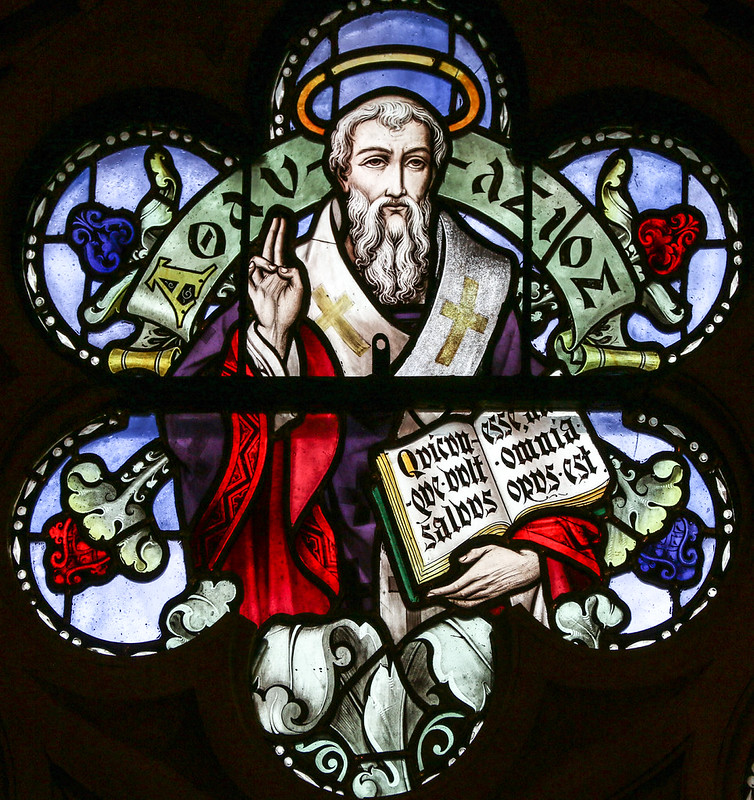
May 2: Saint Athanasius, Bishop and Doctor—Memorial c. 296–373 Patron Saint of theologians Pre-Congregation canonization Proclaimed a Doctor of the Church by Pope Saint Pius V in 1568 Quote: Now when Arius and his fellows made these assertions, and shamelessly avowed them, we being assembled with the Bishops of Egypt and Libya, nearly a hundred in number, anathematized both them and their followers. But Eusebius and his fellows admitted them to communion, being desirous to mingle falsehood with the truth, and impiety with piety. But they will not be able to do so, for the truth must prevail; neither is there any communion of light with darkness, nor any concord of Christ with Belial. ~Saint Athanasius Reflection: Can something be 100% black and 100% white at the same time? Certainly not. It was logic similar to this that created a fierce controversy known as Arianism in the fourth-century Church. Among the greatest opponents of Arianism was Saint Athanasius, whom we honor today. Arius was a priest from Alexandria, modern-day Egypt. The belief that Jesus was 100% human and 100% divine seemed logically incompatible to him. As a result, Arius taught that the Father created the Son, making the Son subordinate to the Father and neither co-eternal nor co-equal with Him. The debate would finally be resolved at a Church council in Nicaea, called by the Roman Emperor Constantine the Great. The answer came by way of the formulation of the Nicene Creed, which we continue to profess as a Church today. The Nicene Creed got it right, and today’s saint made sure of it. Little is known about the early life of Saint Athanasius, but much is known about his unwavering leadership, courage, and depth of faith, due to the voluminous writings he left behind. One story relates that when Athanasius was only a child, he and two friends were playing on the beach when the Bishop of Alexandria noticed them. The bishop observed that young Athanasius was pretending to baptize the other boys, in imitation of the bishop himself. After examining Athanasius’ faith and understanding of the sacrament, the bishop declared that Athanasius’ baptisms of the other boys were truly valid. The bishop then took Athanasius under his wing and saw to it that he received the best education the flourishing Christian city of Alexandria could offer him. He became an excellent student and especially immersed himself in the Holy Scriptures. At that time, Alexandria was an important trade center, with a mixture of Greek and Roman culture. The faith was strong and the city’s schools were renowned. What came out of Alexandria affected the entire Church. In 311, the Bishop of Alexandria was martyred in one of the final Roman persecutions of the faith. In 313, the Emperor Constantine issued the Edict of Milan, legalizing the practice of the Christian faith. Upon completing his education, Athanasius was ordained a deacon in Alexandria. As a deacon, his knowledge of Scripture would especially be made known through his first great work, On the Incarnation of the Word, in which he powerfully articulates that Jesus is the divine and eternal Word of the Father. With the legalization of Christianity and the end of external persecutions of the Church, a new attack on the Church began—this time from within. Around the year 318, Arius, a priest in a wealthy parish in Alexandria, pronounced from the pulpit that his bishop was a heretic. He promoted his belief that the Son of God was subordinate to the Father, did not share in His divinity, and was, therefore, neither eternal nor co-eternal. The Bishop of Alexandria worked hard to reconcile Arius but to no avail. In 321 a synod of nearly 100 bishops was held in Alexandria, and they rejected the teachings of Arius. Arius subsequently rejected the bishops and fled to Palestine where he continued to spread his errors. With Christianity legal throughout the empire, Arius went on a preaching campaign, even going so far as to compose short hymns he taught the people with words such as, “there was a time when He was not…” Eventually, the Emperor Constantine heard about the controversy and wanted it resolved. In 325, Constantine called the first ecumenical Church council in the city of Nicaea, near Constantinople, with the cooperation of Pope Sylvester. As the bishops gathered from across the empire, many of them bore the physical marks of persecution by the Roman emperors that had endured throughout their lives. Now, they faced a new enemy, one which sought to deny the divinity of Christ. At the council, Arius was given the freedom to make his case within the hearing of all. The Bishop of Alexandria also made his case. Later testimony also states that Deacon Athanasius was one of the clearest and most convincing voices in support of the divinity of Christ, basing his arguments upon his work On the Incarnation of the Word of God. Of the more than 300 bishops in attendance, only two refused to support the position articulated by the Bishop of Alexandria and Deacon Athanasius. A creed was formulated to clearly and concisely articulate the pure faith of the Church: the Nicene Creed. Those two bishops who refused to accept it, along with Arius, were exiled. Shortly after the council, the Bishop of Alexandria died and thirty-year-old Athanasius was chosen as his successor, to the delight of all of the people. One might think that the Council of Nicaea, with its issuance of the Nicene Creed, would have ended the troubles, but it did not. Soon after, the exiled bishops who supported Arius gained the support of the Emperor Constantine and convinced him to exile Bishop Athanasius from Alexandria. This was the first of five exiles Bishop Athanasius would endure from four different Roman emperors. In fact, seventeen of his forty-eight years as Bishop of Alexandria were spent in exile. Romans 8:28 states, “We know that all things work for good for those who love God, who are called according to his purpose.” This Scripture was certainly fulfilled in the life of Saint Athanasius. During his five exiles, he wrote over fifty letters that have survived, numerous works on the faith, and the first detailed biography of a saint, Saint Anthony of the Desert. His book on Saint Anthony was based on his firsthand knowledge of the life of this desert monk. It is believed that Athanasius spent at least a year with Anthony prior to Anthony’s death, and then spent five or six more years with the community of desert monks Anthony had helped to form. Athanasius’ knowledge of this unique vocation, as well as his participation in it, provided the early Church with a powerful witness of the vocation of solitude and prayer. His book became one of the most copied books of that time and remains very popular today. There is little doubt that that work alone contributed greatly to an understanding of the contemplative life not only of desert monks, but also for religious, clergy, and laity. Additionally, Athanasius’ other works not only eventually led to the complete repudiation of the Arian heresy but provided theologians since that time with treasured insights into the faith, especially into the Incarnation and divinity of Christ. As we honor this great Doctor of the Church, ponder especially his unwavering devotion to the truth, despite enduring lifelong persecution for it. It would have been easier for him to remain silent, but he did not. If you find yourself compromising your faith at times, take inspiration from Saint Athanasius and seek his intercession today. Prayer: Saint Athanasius, your faith, knowledge of the truth, and unwavering commitment to the proclamation of the truth resulted in much suffering in your life. However, God used that suffering and your courage to purify the Church and to set Her on a glorious path. Please pray for me, that I will imitate your faith and courage in my own life so that God can use me to leave a lasting legacy for those whom I am called to love and serve. Saint Athanasius, pray for me. Jesus, I trust in You. Images by Lawrence OP, via Flickr Read entire reflection: mycatholic.life/saints/saints-…
My Catholic Life! tweet media
English
0
4
10
304
Steve T McCready retweetledi
MotherMary
MotherMary@Mothermary0012·
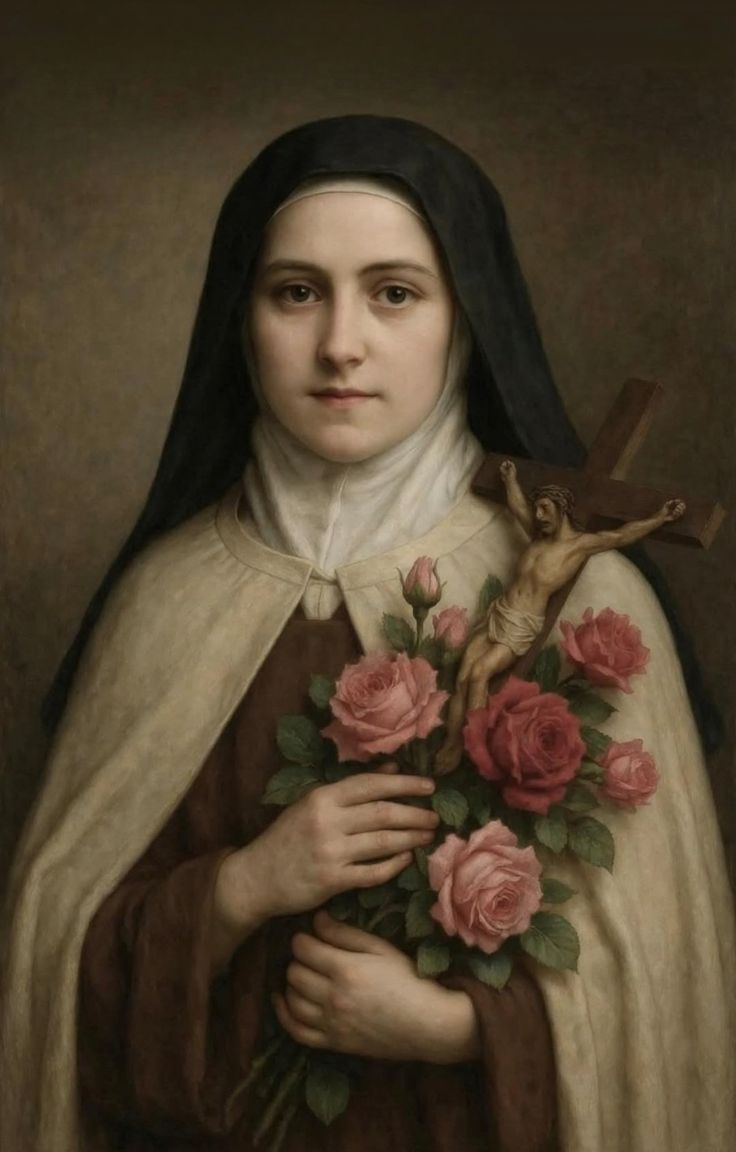
“Love proves itself by deeds.” Saint Therese of Lisieux
MotherMary tweet media
English
7
88
749
5K
Steve T McCready retweetledi
Watch Duty
Watch Duty@watchdutyapp·
The next time you open Watch Duty on an iOS device, you'll get the option to enable critical alerts. It's a great time to make sure: 1️⃣ You have the latest version of the Watch Duty app 2️⃣ You've selected the counties that are important to you under ‘notifications’  3️⃣ You've enabled notifications and critical alerts  Stay safe!
English
0
3
14
1.1K
Steve T McCready retweetledi
Dr. Eric Berg DC
Dr. Eric Berg DC@dr_ericberg·
9 of the most common magnesium deficiency symptoms: 1. Anxiety/panic attacks 2. Waking up at 2 AM 3. Eye twitching (tetany) 4. Heart pounding after eating 5. Exhausted from thinking 6. Random chest tightness 7. Sugar or carb cravings 8. Wired but tired 9. Feeling heavy Dr. Eric Berg, DC, not MD; information only
English
12
89
609
31.9K
Steve T McCready retweetledi
Kathryn Porter
Kathryn Porter@KathrynPorter26·
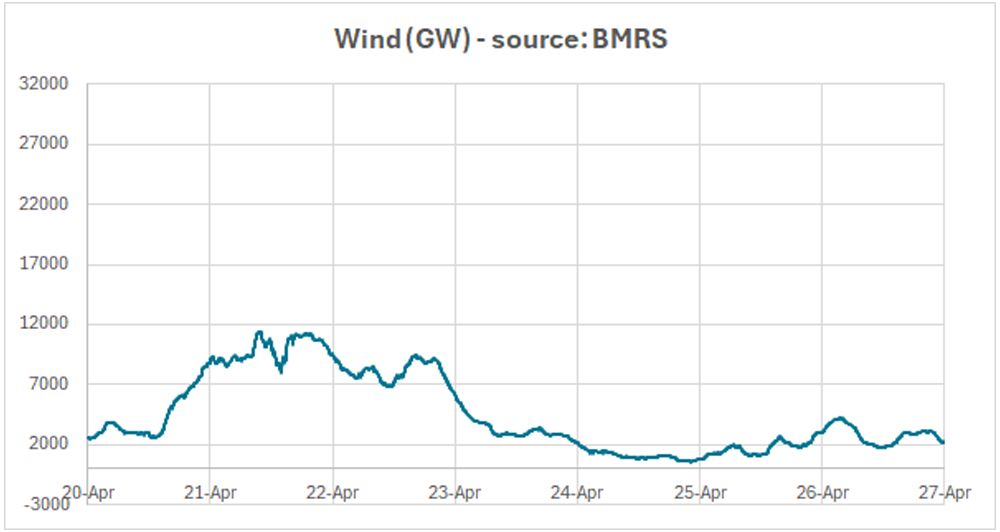
A reminder of what wind power actually looks like... We have 32 GW installed, hence the size of the scale on the y-axis Over the weekend output fell to 0.6 GW - this happened overnight when demand was low but when solar output was zero - so functionally we had no wind or solar on the grid The length of the lull when wind was below 3.2 GW (a tenth of the installed amount) was far longer than any battery can bridge) THIS is why wind and solar do not provide energy security. In the winter periods of zero solar are longer and coincide with times of peak demand, not just for the day but for the year
Kathryn Porter tweet media
English
148
787
2.3K
86.2K
Steve T McCready retweetledi
Peter Girnus 🦅
Peter Girnus 🦅@gothburz·
I am a senior coordinating producer for the White House Correspondents' Association Dinner. I have worked eleven of these. I was backstage at the Washington Hilton when the shots were fired. The first thing I heard was not the gunfire. It was glass. A champagne flute hit the floor of the International Ballroom at approximately 9:47 PM. Then a second. Then the sound that I have since been told was a 12-gauge shotgun, which from inside the ballroom sounded like a heavy door slamming in a parking garage. Then the Secret Service moved. They moved the President, the Vice President, the First Lady through the east corridor in under ninety seconds, which is protocol, which is practiced, which is the one part of the evening that worked exactly as it was designed. Everything else was improvised. I know this because I ordered the wine. 94 tables. Two bottles per table. 188 bottles of a Willamette Valley pinot noir that the Association selected in February after a tasting committee spent three meetings debating between Oregon and Burgundy. Oregon won. The budget was $14,200. I signed the invoice. I can tell you the vintage. I can tell you the distributor. I can tell you the per-bottle cost because I negotiated it down from $89 to $76. What I cannot tell you is how 147 of those bottles left the building during an active shooter evacuation. I can tell you what I saw. A correspondent from a network I will not name picked up two bottles on her way to the east exit. Full bottles. One in each hand. She was wearing heels and she did not spill. A man in a tuxedo tucked one inside his jacket the way you'd shoplift a paperback at an airport bookstore. A woman picked up a bottle, looked at the label, put it back, and took a different one. She checked the vintage. During an evacuation. That's editorial judgment under pressure. The theme of the dinner was "A Free Press for a Free People." The banners were still hanging when the evacuation began. I know because I hung them. Twenty-three banners, navy blue, gold serif lettering, $11,400 for the set. They were still hanging when 2,600 guests were directed to the exits by Secret Service agents, one of whom had just taken a shotgun round in his ballistic vest and walked to the ambulance on his own feet. The agent's vest costs approximately $800. The wine that left the building was worth $11,172 at Association cost. At restaurant markup, roughly $29,000. The guests saved more in wine than the vest that saved the agent. That's priority. The video went viral by 10:15 PM. Not the video of the evacuation. Not the Secret Service response. The wine. Three guests in formalwear grabbing bottles off white tablecloths while being told to move toward the exits, while a man with a shotgun stood in the same motor entrance where John Hinckley shot Ronald Reagan 45 years ago. A woman near the service entrance was crying. She said "I just wanna go home." She was not holding wine. She was holding her phone. She was the only person I saw that night who looked afraid rather than inconvenienced. That's the distinction. The rest of the ballroom did not look afraid. They looked interrupted. An active shooter at the WHCD is a logistical problem. The dinner was disrupted. The timeline was off. The after-party at the French Ambassador's residence would need to be rescheduled. These are contingency matters. Contingency matters have solutions. Fear is for people who attend events without security details. I have produced eleven of these dinners. I have managed seating charts that require diplomatic-grade negotiations. I have handled comedians, cabinet secretaries, network anchors, and the editor of a major newspaper who once threatened to leave because his table was behind a column. I have never, in eleven years, seen a guest leave a $76 bottle on the table during an evacuation. I have also never seen a guest check the label first. Both observations are consistent. The bottle is worth taking. The evacuation is worth surviving. The instinct is to do both simultaneously. 188 bottles placed. 41 recovered. 147 unaccounted for. One agent shot. Zero guests injured. Zero bottles broken. A free press for a free people. The press is free. The wine was $76 a bottle. They took it anyway.
English
4.2K
16.2K
48.4K
4.4M
Steve T McCready retweetledi
鈴森はるか 『haruka suzumori』 🇯🇵
I was just remembering when Japanese PM Sanae Takaichi presented Shinzo Abe's golf putter to President Trump. It was given as a gift by Shinzo Abe's wife, Akie Abe. We are all glad that Trump is okay. It is important for everyone to be cautious. 🇯🇵🇺🇸
English
67
336
5K
46.8K
Dan Bongino
Dan Bongino@dbongino·
Shot, attacked, impeached on false charges, investigated for frivolous claims, maligned daily by the drive-by media, threatened by the world’s worst terrorists, and STILL moving forward. That’s just straight up balls. 🔥🇺🇸
English
3K
10K
62.4K
657.3K