Scott Bauguess

230 posts

Scott Bauguess banner
Scott Bauguess

Scott Bauguess

@SWBauguess

Seeking to define next gen finance @Coinbase | ex-SEC, former academic, once upon a time engineer.

Austin, TX Katılım Şubat 2017
117 Takip Edilen644 Takipçiler
Scott Bauguess
Scott Bauguess@SWBauguess·
Yep. Protecting bank incumbency versus leading globally. Lawmakers need to make the right choice for the U.S. to define the next generation financial system.
Faryar Shirzad 🛡️@faryarshirzad

For those who misunderstand what’s at stake in the debate on offering rewards on US-issued stablecoins under the GENIUS Act, a sobering and timely announcement from the People’s Bank of China that they plan to pay interest on the Digital Yuan. 🇨🇳🇨🇳 Tokenization is the future and the GENIUS Act was a visionary move by @POTUS and Congress to ensure US dollar stablecoins issued under US rules would be the primary settlement instrument of the future.🇺🇸🇺🇸 If this issue is mishandled in Senate negotiations on the market structure bill it could hand our global rivals a big assist in giving non-US stablecoins and CBDCs a critical competitive advantage at the worst possible time. Lobbyists for entrenched incumbents will always fight change. It's critical for negotiators to protect the primacy of the US dollar and the US financial system, not just incumbent interests.

English
0
0
1
86
Securitize
Securitize@Securitize·
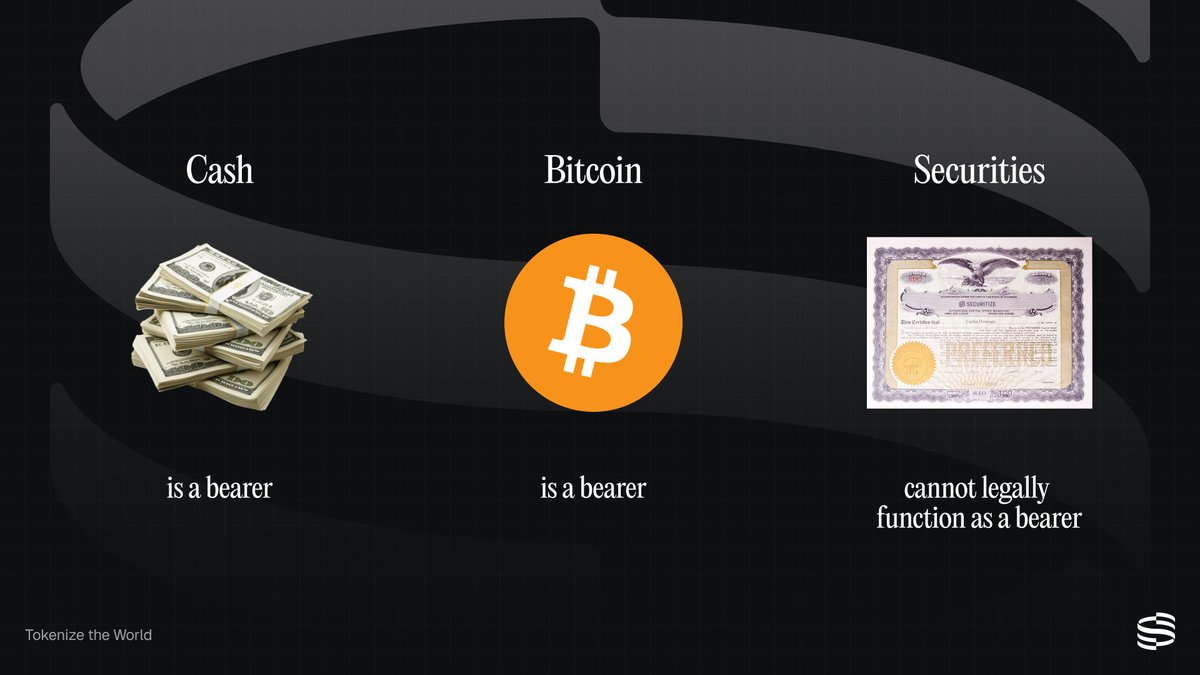
As tokenization continues to grow, it’s critical to understand the nuances of digital asset regulation. A bearer asset is something you own simply by holding it.
Securitize tweet media
English
20
22
154
32.7K
Scott Bauguess retweetledi
Omid Malekan
Omid Malekan@malekanoms·
I have an op-ed in MarketWatch making the case for why Congress should resist the bank lobby's attempt to ban third parties from paying rewards on stablecoins. After pointing out the various false claims of the banking industry, I conclude with the following: Congress and federal regulators should resist the call for protectionism. The banking industry is highly profitable, earning more than a quarter-trillion dollars in 2024 alone. It also enjoys unique protections like the government bailouts that have now become routine. The banking industry has all the tools it needs to either compete with stablecoins or to create new sources of revenue, including by facilitating stablecoins. Alternatively, the government can start treating the banks like the fragile utilities they are claiming to be. Congress can consider an immediate cap on debit and credit-card swipe fees — a massive burden on most businesses, particularly small and family-owned ones. Utilities often face price caps, in part because they are monopolies. The outsize profits of the card industry indicate similar market dynamics, which is why they’ve been capped in other countries. Congress could also pass a windfall tax on banks’ net interest margins. If bank deposits are a public good worthy of protectionism, banks shouldn’t be allowed to earn excess profits off of them. To be clear, I would much rather banks be allowed to keep their profits while adopting the latest technology and competing with new entrants. This basic formula has led to centuries of American prosperity. There’s no reason to change it now.
English
6
15
56
17.6K
Scott Bauguess
Scott Bauguess@SWBauguess·
No mention of crypto. Just good ol’ fashion duffle bags of cash financing the fentanyl crisis. Imagine how blockchain forensic tracing could disrupt this capital flow. wsj.com/world/china/ch…
English
0
0
2
174
Scott Bauguess retweetledi
miles jennings
miles jennings@milesjennings·
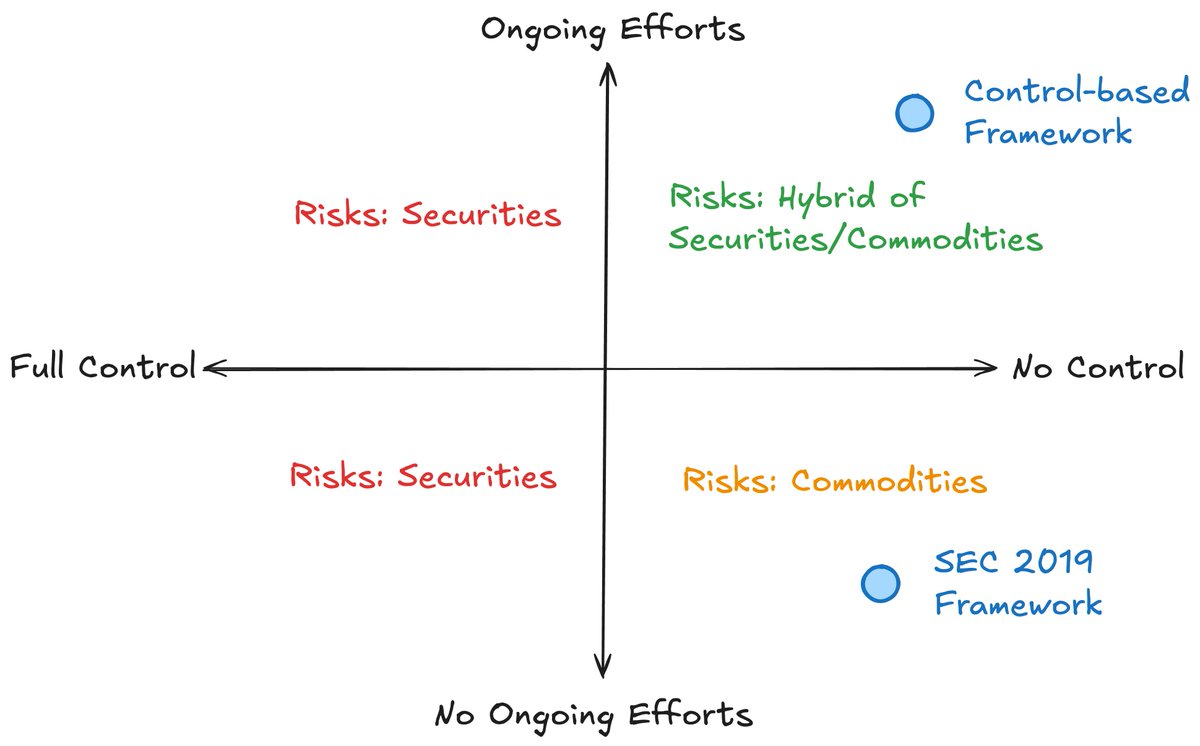
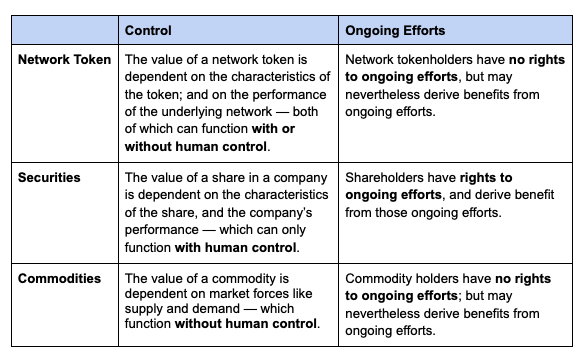
The SEC’s decentralization framework has been corrupted and used to persecute builders —incentivizing rug pulls over value creation. It’s time to fix it. Decentralization should mean the absence of control, not the suppression of ongoing efforts. Here’s how and why👇 Network tokens — tokens that derive substantial value from the operation of a blockchain (eg BTC, ETH, SOL) — can have embedded trust dependencies that result in information asymmetries. Where those trust dependencies are minimized, network tokens look like commodities with low information asymmetry risk. Where those trust dependencies are significant, network tokens can look like securities with high information asymmetry risk — supporting the use of disclosures requirements under securities laws. The two primary trust dependencies relating to network tokens are: (1) control and (2) ongoing efforts. The SEC’s 2019 Decentralization Framework sought to eliminate the risk of information asymmetries by defining decentralization to mean the absence of BOTH control and ongoing efforts. Their reasoning was clear — where network tokens were “sufficiently decentralized” tokens functioned more like commodities. But this is the wrong approach! It’s created significant perverse incentives — builders can actually reduce their regulatory risk by abandoning their projects or by masking their ongoing efforts (“decentralization theater”). Builders HATE this conception of decentralization. We need to incentivize builders, not hinder them. A better two-pronged approach can achieve this: 1⃣Decentralization should be redefined as “the absence of control.” This eliminates significant risk and preserves one of the core features of blockchains – they can function without human control. 2⃣A targeted and light touch disclosure framework can be used to eliminate information asymmetries that might arise from ongoing efforts. Collectively, this approach would foster innovation and protect users – ensuring decentralization empowers builders rather than being weaponized against them. Full article linked below.
miles jennings tweet mediamiles jennings tweet media
English
47
63
312
124.7K
Scott Bauguess
Scott Bauguess@SWBauguess·
One of the best parts of my job is meeting with our global advisors. I’ve watched them learn our business over the past two years, through thick and thin, and am often awed by the perspectives they bring. Our latest additions have hit the ground running. bloomberg.com/news/articles/…
English
0
0
1
140
Scott Bauguess
Scott Bauguess@SWBauguess·
As an empiricist I agree with this general thesis. Some things can’t be measured well. And this is where you trust key talent to make decisions with imperfect and incomplete information.
Startup Archive@StartupArchive_

Shopify CEO Tobi Lutke explains Goodhart’s law and why he doesn’t like KPIs or OKRs “Goodhart’s law is real. The moment a metric becomes a goal, it’s no longer a useful metric… No metric by itself is a complete heuristic for a complex business. There’s a million different tensions in a company, and you can’t keep all of them in harmony by optimizing for one thing.” For this reason, Shopify doesn’t use KPIs or OKRs. But as Tobi explains, this doesn’t mean they don’t value data and metrics. “We are extremely data informed. We have invested enormous amounts of money and time into systems that give us basically everything at our fingertips… But what Shopify attempts to do is just not over-fit for what’s quantifiable.” People love optimizing for highly-quantifiable things because there’s immediate gratification that comes from seeing a number go up. But Tobi thinks that the most important aspects of a product are rarely quantifiable: “The overlap of the most valuable things you can do with a product and the things that happen to be fully quantifiable are like maybe 20%. Which leaves 80% of a value space unaddressable by the people who only look at quantifiable things.” He continues: “Shopify is comfortable with unquantifiable things like taste, quality, passion, love, hate… The sort of deep satisfaction that a craftsperson feels when they’ve done a job well is actually a better proxy if you allow it to be.” They then have robust analytics systems that tell the company if something’s wrong or a new rollout breaks something. “We think about it as a cockpit for a pilot. The decisions are still made by pilots, and we think this leads to better results… I think there needs to be more acceptance in business of unquantifiable things… And then metrics take a support function.” Video source: @lennysan (2025)

English
0
0
2
180
Scott Bauguess
Scott Bauguess@SWBauguess·
Crypto debanking was real. I experiencied it both professionally and personally. It was unlawful. It was un-American. It should never happen again. linkedin.com/posts/scott-w-…
English
0
1
7
876
Scott Bauguess retweetledi
Faryar Shirzad 🛡️
Faryar Shirzad 🛡️@faryarshirzad·
I came to @coinbase because I saw the potential crypto holds for updating the financial system and increasing economic freedom worldwide. It's a goal that animates almost everything we do at Coinbase, and most definitely our policy work. @brian_armstrong has just published an article where he outlines his thoughts on what Coinbase’s mission of economic freedom actually means, and why we believe that crypto can advance economic freedom around the world.
English
1
2
11
1.7K
Scott Bauguess
Scott Bauguess@SWBauguess·
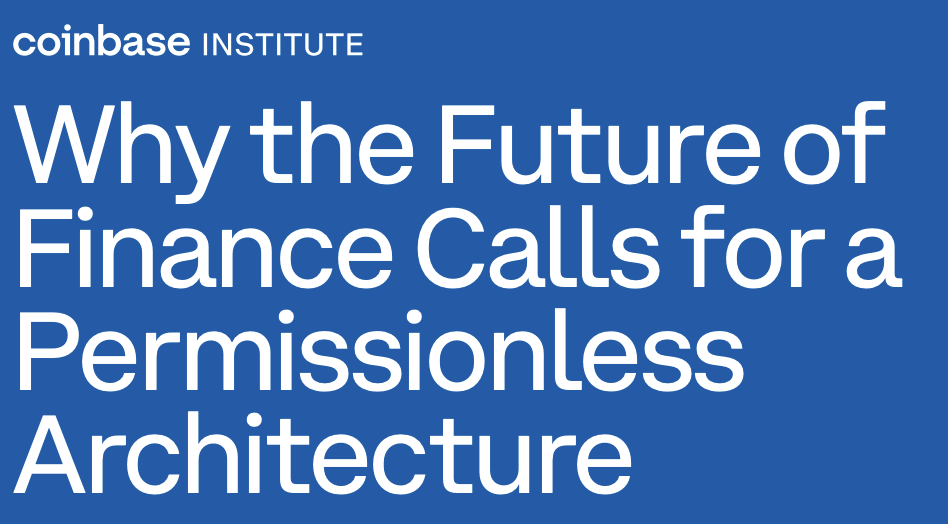
The global financial system is ready for an update and that path is clear – it’s going to be onchain and permissionless. @Coinbase’s new paper explains a vision for a more responsive, effective, and resilient financial infrastructure, built on the next generation of open protocols – permissionless blockchains networks. They will facilitate greater financial inclusion for individuals around the world, particularly the unbanked. assets.ctfassets.net/o10es7wu5gm1/3…
English
0
0
0
168
Scott Bauguess retweetledi
Christian Catalini
Christian Catalini@ccatalini·
1/ Just in time for @Davos, @coinbase has unveiled a white paper exploring the economic impact of permissionless networks. A timely read on decentralization and its global implications. 🚀
Christian Catalini tweet media
English
4
3
25
1.7K
Scott Bauguess
Scott Bauguess@SWBauguess·
Excellent read. Explains how ⁦@SECGov⁩ could have used existing authorities to promote a digital asset ecosystem even if not a complete one. ⁦@GaryGensler⁩ missed a once in a generation opportunity to have a + impact on US innovation policy. coindesk.com/opinion/2024/1…
English
0
0
0
127
Scott Bauguess
Scott Bauguess@SWBauguess·
@ChrisBrummerDr excellent point. One that has been on my mind for a while. This is a super dangerous precedent. I watched Chris Cox make mistakes and regret them because of political pressure. Gensler has no regrets. SEC is supposed to be an independent agency. It is not an executive branch. It is supposed to be free of politics. But Gary is single handedly changing 90 years of precedent. The most important SEC chair in a century could be the next one.
Chris Brummer@ChrisBrummerDr

This is the first time the SEC has become a subject of presidential politics. I don't recall ever a presidential candidate mentioning the Chair of the SEC by name. I also don't remember a sitting President threatening preemptively to veto Congressional legislation about the SEC.

English
1
2
9
450
Scott Bauguess retweetledi
Cesare Fracassi
Cesare Fracassi@CesareFracassi·
Inflows into #BitcoinETF have been modest so far (~$1.1B per @EricBalchunas ). Is this a bad signal for crypto? No, if you believe in market efficiency. Let me explain... 🧵
English
1
1
1
449