
Sable Systems International 🐭🐀🧝🏼‍♀️

18.6K posts

Sable Systems International 🐭🐀🧝🏼‍♀️ banner
Sable Systems International 🐭🐀🧝🏼‍♀️

Sable Systems International 🐭🐀🧝🏼‍♀️

@SableSys

Thoughts, visions & revisions from John Lighton PhD, president & CIO of Sable Systems International (=the world's most advanced metabolic measurement systems)

Nevada & Washington, USA Katılım Haziran 2009
2.6K Takip Edilen1.7K Takipçiler
Sable Systems International 🐭🐀🧝🏼‍♀️ retweetledi
Dr. Catharine Young
Dr. Catharine Young@DrCatharineY·
The United States didn’t become a scientific superpower by accident. We became one because we attracted the world’s greatest minds and gave them the freedom and resources to do their best work here. Making it a harder and less predictable place is a huge & shortsighted mistake.
Dr. Catharine Young tweet media
English
35
207
679
23.5K
Sable Systems International 🐭🐀🧝🏼‍♀️ retweetledi
Dr. Catharine Young
Dr. Catharine Young@DrCatharineY·
A reminder of what we’re witnessing: • Measles is surging • Cyclospora has reached record levels • New World screwworm has returned after nearly 60 years Investing in science, surveillance, and public health is far less costly than responding to a crisis.
English
55
648
2K
52.5K
Sable Systems International 🐭🐀🧝🏼‍♀️ retweetledi
Rais A. Nawaz
Rais A. Nawaz@DrAnawaz786·
Excited to share that our paper has now been published online in Nature Metabolism! Brown fat-specific RNA labelling reveals a network of inter-organ communication by secreted microRNAs. This study provides a comprehensive roadmap of BAT-miRNAs transfer to distant tissues.
Nature Metabolism@NatMetabolism

Brown fat-specific RNA labelling reveals a network of inter-organ communication by secreted microRNAs dlvr.it/TTYqcV

English
0
2
5
658
Sable Systems International 🐭🐀🧝🏼‍♀️ retweetledi
Dr. Tzachi Knaan
Dr. Tzachi Knaan@KnaanTzachi·
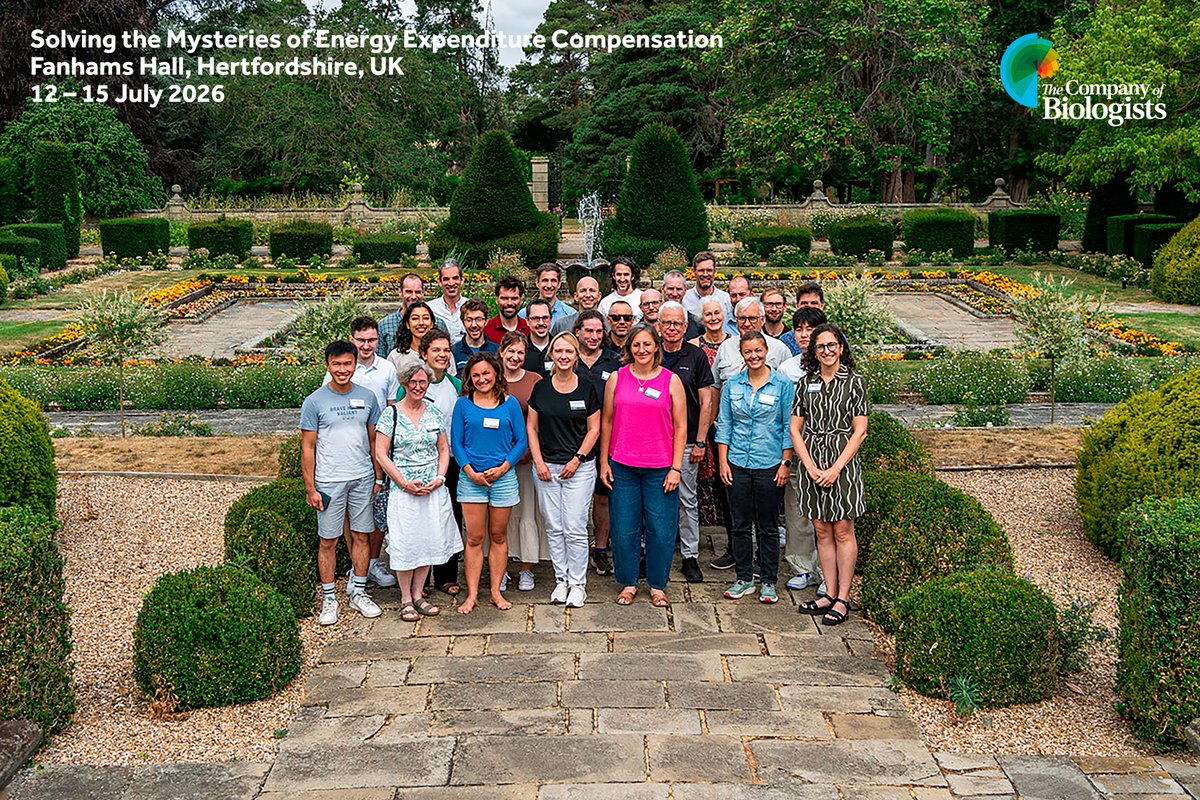
A pleasure to join an outstanding group of scientists at the ‘Solving the Mysteries of Energy Compensation workshop’. I presented our work suggesting that reductions in liver and kidney volume may contribute to resting metabolic adaptation during chronic exercise.
English
1
1
3
278
Sable Systems International 🐭🐀🧝🏼‍♀️ retweetledi
Sable Systems Int'l
Sable Systems Int'l@SableSysInt·
We are hosting our 2nd 2026 Promethion Core course for customers this September 22nd-24th in Las Vegas, NV!    If you’re a Promethion customer, save your space & register: sablesys.com/high-resolutio…
English
0
1
1
98
Sable Systems International 🐭🐀🧝🏼‍♀️
Excellent summary!
Daniel Tawfik@dantawfik

Most aging theories focus on accumulated damage. Dr. João Pedro de Magalhães (@jpsenescence) proposed something different: aging might be a continuation of developmental programs that become maladaptive after reproductive maturity. It's a theory that reframes aging not as entropy, but as flawed software. The conventional hardware-centric view of aging assumes damage accumulates over time. DNA mutations propagate. Repair mechanisms decline. Cellular function degrades. The body wears out. De Magalhães's hypothesis shifts focus to the software. If DNA is hardware, epigenetics is the operating system that executes genetic instructions during development. The same programs that guide us from a single cell to reproductive maturity might drive degeneration beyond that point. The lens of the eye continues growing throughout life, eventually causing presbyopia around age 40. The growth programming that shaped the lens during development doesn't shut off. It keeps running, producing changes that were adaptive early in life but become detrimental decades later. This pattern appears across multiple systems. Hormonal shifts essential for maturation become risk factors for disease. Cell composition changes critical for development set the stage for age-related pathology. The genetic instructions optimized for reaching reproductive age have unintended consequences in the decades that follow. Epigenetic clocks support this developmental-centric framework. Dr. Steve Horvath developed a biological age predictor by analyzing DNA methylation patterns at around 400 genomic sites. The clock accurately predicts age from conception through old age, ticking with remarkable precision across the entire lifespan. The predictability matters. Methylation changes aren't random. They follow systematic patterns. Genome-wide hypomethylation occurs gradually, while specific promoter regions show hypermethylation. The orderliness suggests an underlying program, not stochastic damage accumulation. If aging were purely entropy, we'd expect variability and disorder. Instead, we see symmetry. Men's beards grey symmetrically. Bone density declines on predictable trajectories. Muscle mass loss follows consistent timelines. The patterns point to programmatic processes continuing beyond their adaptive window. Mice and humans are biochemically similar, but mice age 20 to 30 times faster. The difference isn't repair capacity or environmental exposure. It's developmental tempo. Mouse development runs faster, and the same programs that accelerate maturation accelerate aging. The hypothesis doesn't dismiss damage entirely. Accumulated cellular damage contributes to functional decline. But de Magalhães suggests the primary driver isn't wear and tear. It's genetic programs executing instructions that were shaped by natural selection to optimize fitness through reproductive years, with no evolutionary pressure to optimize beyond that point. This theory reframes intervention strategies. Instead of focusing solely on damage repair or protective mechanisms, the developmental-centric view suggests we need to address the underlying genetic instructions that continue executing past their adaptive phase. Epigenetic reprogramming experiments support this possibility. Yamanaka factors can reset cellular age signatures, suggesting the aging program is reversible. If aging were purely damage-driven, reprogramming wouldn't restore youthful epigenetic states without also repairing all accumulated damage. The implications extend to longevity research. Caloric restriction, rapamycin, and other interventions that extend lifespan in model organisms might work by modulating these developmental programs, slowing the rate at which maladaptive processes accumulate rather than simply enhancing repair mechanisms. Critical questions remain. Is aging driven primarily by programmatic instructions, or does damage accumulation play an equally fundamental role? Can we distinguish between the two mechanisms experimentally? Are interventions targeting epigenetic programs more effective than those targeting damage repair? The hypothesis remains a theory, not established fact. The mechanisms driving aging likely involve both programmatic processes and damage accumulation operating across different timescales and tissues. But the developmental-centric view offers a framework that accounts for the predictability and symmetry observed in aging patterns. De Magalhães's proposal challenges the assumption that aging is simply the body yielding to entropy. The predictable methylation changes, the systematic progression of age-related pathology, and the success of epigenetic reprogramming all suggest that aging might be as much about software as hardware. In the Healthspan Research Review, I break down the developmental-centric theory of aging, the evidence from epigenetic clocks, the implications for intervention strategies, and why the distinction between programmatic aging and damage accumulation matters for designing therapies that target the underlying causes rather than downstream effects.

English
0
1
1
248
Sable Systems International 🐭🐀🧝🏼‍♀️ retweetledi
Phil Metzger
Phil Metzger@DrPhiltill·
More thoughts on why I think China is likely to surpass the US in everything over the next couple decades (unless the US's 6-month lead in AI makes the key difference) and that it will take decades to reverse things, if the US's (currently) populist democracy can ever do so. OTOH, there are rays of hope for the western world. SpaceX/xAI for example is getting stuff done at speed.
Phil Metzger@DrPhiltill

I don’t think your reply disagrees with either the original post or my quote-post of it. I don’t think “set in stone” as @KenKirtland17 used it meant that it can’t be changed. I think it meant “the choice to outsource manufacturing leads *inevitably* to losing technological dominance” — not that the choice itself can’t be reversed. His original post also acknowledged this when he said, “Not synonymous with give up, in fact the opposite”. Maybe he didn’t choose the best metaphor, but I understood it. I agree that the gap on labor cost is closing. However, while it was the original cause for the China to on-shore manufacturing, they are actively maintaining it as a matter of national security by additional means. The U.S. unwisely let the global market drive manufacturing offshore, which is a national security matter. We shouldn’t have allowed the market to follow its natural course. Yes, China has a moat because, as one example, industry is cheaper when it pollutes, and American-style democracies are good (from the local level on up) at fighting pollution, so American industry will always be more expensive, now. I agree it’s the unglamorous middle. That’s precisely what I meant by saying it will cost us, and that I’m not sure we have the political will. Tariffs can make up for the competitive difference of environmental protection, but it will lower our lifestyles in other ways by driving up the cost of consumer goods. I doubt that a pure democracy can hold that course for long, so authoritarian governments (i.e., those operating under the theory that a vanguard party knows better than the masses) have a deep moat. I do think it’s a matter of resolve because the resolve of the masses is different than the resolve of a vanguard party (or of an aristocracy or monarch), which are economically insulated from the hard choices they make. I don’t think the current, more populist, version of US democracy has the resolve to keep national security adequately elevated.

English
7
1
30
4.6K
Sable Systems International 🐭🐀🧝🏼‍♀️
@eevblog Too damn late. Most of the competition has had free compilers for years, & microchip's license restrictions & the absurdity of making users pay $$$ for a compiler to use their chips, means many customers have moved on
English
0
0
3
139
Sable Systems International 🐭🐀🧝🏼‍♀️ retweetledi
Dr. Catharine Young
Dr. Catharine Young@DrCatharineY·
Meanwhile China now produces more science and engineering Phds than the US - about 53,000 versus 45,000 in the latest comparable data. In 2024, its total R&D spending also surpassed the US on a purchasing-power-adjusted basis. We are shrinking our pipeline as our main competitor expands theirs.
English
6
9
40
1.9K
Sable Systems International 🐭🐀🧝🏼‍♀️ retweetledi
Dr. Catharine Young
Dr. Catharine Young@DrCatharineY·
One of the biggest threats to US innovation isn’t just research funding - it’s losing the next generation of scientists. Phd admissions at leading research universities fell 15% this year. Scientific talent takes years to cultivate. And the consequences will be felt for decades
Dr. Catharine Young tweet media
English
58
271
785
55.2K
Sable Systems International 🐭🐀🧝🏼‍♀️ retweetledi
Matt Fuchs
Matt Fuchs@FuchsWriter·
"Without basic scientific research, supported by the kind of farsighted public investment that allows large-scale, undirected, curiosity-driven inquiry, the scientific pipeline will run dry." quillette.com/2026/07/06/the…
English
1
5
11
837