Sabri Ben-Achour retweetledi

We have *never* before seen consumer sentiment this low.

English
Sabri Ben-Achour
672 posts

@Sabritree
Reporter for Marketplace, Ceramicist

We've reached what economists call the Oh $h*t moment. If current interest rates persist: 🔴Debt increases $2 trillion 🔴Interest consumes 30% of revenue 🔴Mortgage costs rise $96,500 🔴R>G by 2029, with a 75 bp gap by 2036 🔴America enters a debt spiral




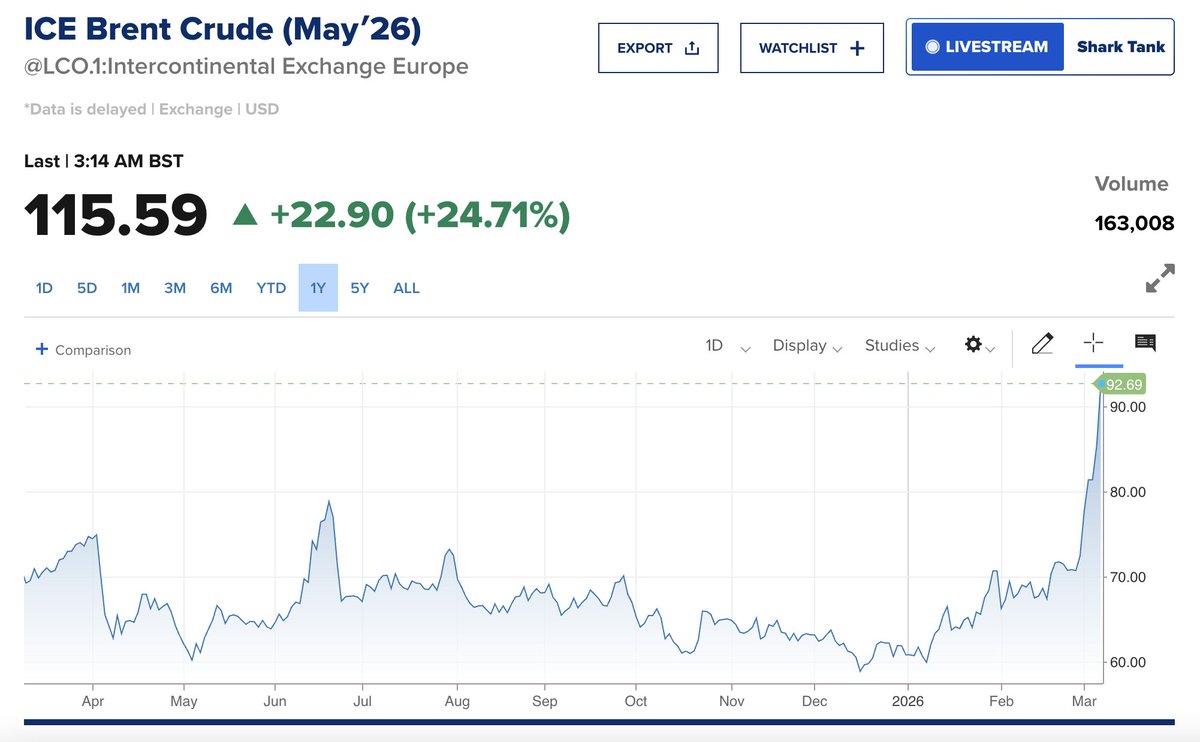
Realtime economics for Econ students. Short run price -elasticity of demand for oil. I have just run a "quick and dirty" regression with monthly data 2022- 2025. I obtain an elasticity of -0.0644 A 1% reduction in the quantity supplied to the market triggers a 16% increase in the price @Bellmanequation @dandolfa @miguelolea @kiguel @DWinkelried @Shin_Mkto















"The fry attachment rate in the US, which is the rate at which consumers order fries when visiting a restaurant, or other food service outlets, has been fairly consistent since the beginning of the pandemic and remains above pre-pandemic levels." $LW (via Goldman Sachs)