Sachin H. Jain, MD, MBA

13.9K posts

Sachin H. Jain, MD, MBA banner
Sachin H. Jain, MD, MBA

Sachin H. Jain, MD, MBA

@sacjai

Los Angeles, CA Katılım Nisan 2013
2.1K Takip Edilen26.7K Takipçiler
Sachin H. Jain, MD, MBA
As my 20th reunion medical school reunion approaches, I shared some reflections on my time at @harvardmed with the school’s alumni magazine. There were sleepless nights and hard lessons learned, but, most importantly, there were relationships with friends, teachers, and mentors who shaped my personal and professional values. magazine.hms.harvard.edu/articles/reuni…
English
0
0
4
470
Michael Davis, MD, PhD
Michael Davis, MD, PhD@FDACDERDirector·
Note: Posts prior to May 15, 2026, were authored by former CDER Directors.
English
2
0
15
4.3K
Sachin H. Jain, MD, MBA retweetledi
Shawn Martin
Shawn Martin@rshawnm·
Improving the health of our nation will require more than incremental change, it will require bold thinking, shared accountability and a renewed commitment to patient-centered care. Ahead of Monday’s first convening of the government’s new Healthcare Advisory Committee, @sacjai and I outlined five ideas we believe can help reshape the future of U.S. health care in @FierceHealth. 1) Every sector of health care must take responsibility for its role in poor health outcomes 2) We must measure success not just by financial performance, but by improvements in health 3) Rebuilding public trust in science must be treated as a national imperative 4) Technology should strengthen, not replace, the human relationships at the heart of care 5) Primary care must be re-centered as the foundation of prevention, access and long-term health True health care transformation will take collaboration across government, industry, physicians and communities. It also will require courage. And, if we are really serious about building a healthier future, primary care and trusted patient relationships must be at the center of the conversation. fiercehealthcare.com/providers/op-e…
English
2
9
16
1.3K
Sachin H. Jain, MD, MBA
Medical malpractice is one of the most talked-about issues in healthcare. But what does the data actually show? A new analysis of malpractice claims across the U.S. reveals striking variation by state—and a reality that’s often very different from perception. Worth a look: forbes.com/sites/sachinja…
English
5
1
5
1.7K
Sachin H. Jain, MD, MBA
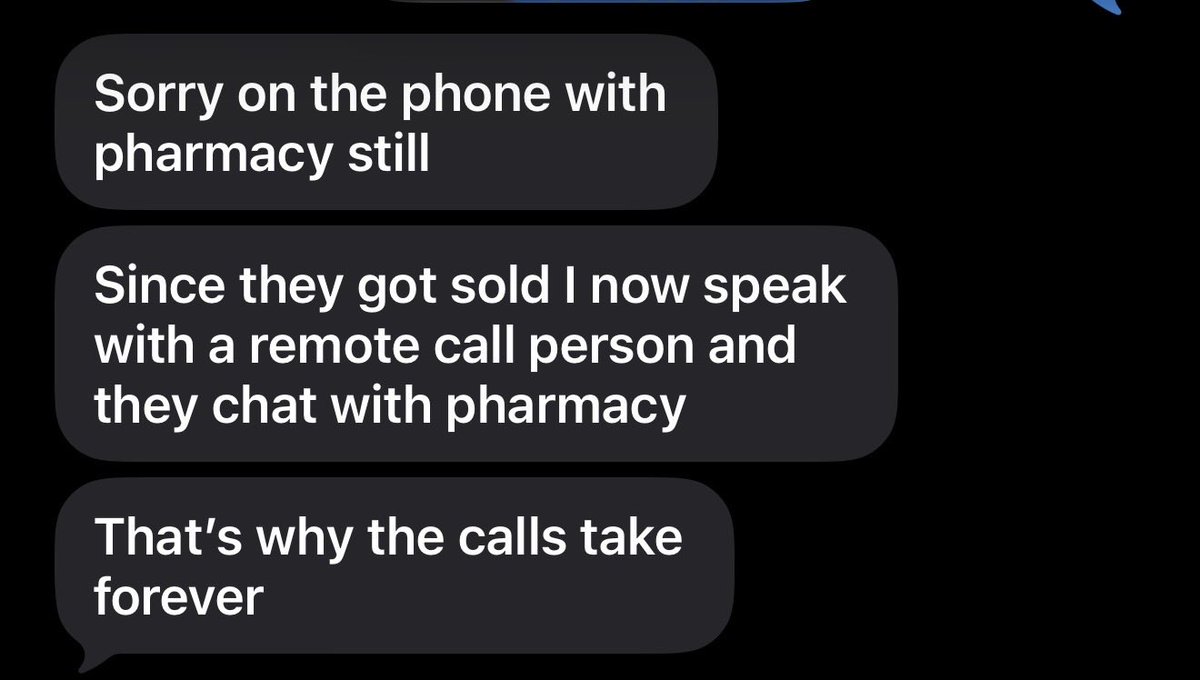
A lay family member’s take on what happens when healthcare companies get acquired. To my industry colleagues: synergies and cost-cutting are great, but service on the other side matters, too. Who knows, you might one day need the very services you are cutting today.
Sachin H. Jain, MD, MBA tweet media
English
2
0
0
813
Sachin H. Jain, MD, MBA
We spend a lot of time thinking about reciprocity. Is this relationship balanced? Am I giving as much as I’m getting? But some of the most important relationships in our lives were never meant to be balanced. Parents. Teachers. Mentors. They give in ways that can’t be repaid. Not later. Not ever. And that’s the point. You can honor them. You can thank them. You should. But trying to “even it out” misses what those relationships actually are. The real obligation isn’t to pay them back. It’s to carry it forward. For someone else who can’t repay you either.
English
0
2
5
609
Sachin H. Jain, MD, MBA
When I was a third-year medical student on my obstetrics and gynecology rotation, I spent time working with an Ob-Gyn named Bruce who had a favorite line. As he scanned the bellies of expectant mothers, he would ask: “Do you have a name for the baby?” If they did, he would enthusiastically discuss the name. If they didn’t, he would grin and say: “You know, if it’s a boy, Bruce is a pretty great name.” As the rotation went on, I started doing admission histories and physicals for women arriving in labor. They say we absorb our clinical style from our teachers. So one day, while taking a history from a woman who had recently immigrated from Cape Verde, I decided to imitate my attending. “Do you have a name for the baby?” I asked. She told me she was still thinking about it. Without much thought, I replied: “Sachin is a pretty great name.” She paused. “What does it mean?” I told her: “It roughly translates as truth.” She smiled. “I like it.” I was suddenly caught off guard. What had started as a throwaway conversation starter borrowed from my attending had unexpectedly become something real. A few hours later, another “Sachin” was born into the world. I have thought about that moment many times over the years. Medicine gives us extraordinary access to people’s lives at moments of enormous vulnerability, hope, fear, and possibility. Sometimes we underestimate how much even small interactions can matter. And sometimes, without realizing it, we leave pieces of ourselves behind in other people’s stories.
English
47
150
5.1K
491.5K
Matt Keener, MD
Matt Keener, MD@keenzai·
@sacjai Now I’m just wondering how many Bruces his suggestion generated🤔
English
4
0
272
31.6K
Sachin H. Jain, MD, MBA retweetledi
SCAN
SCAN@SCANHealthPlan·
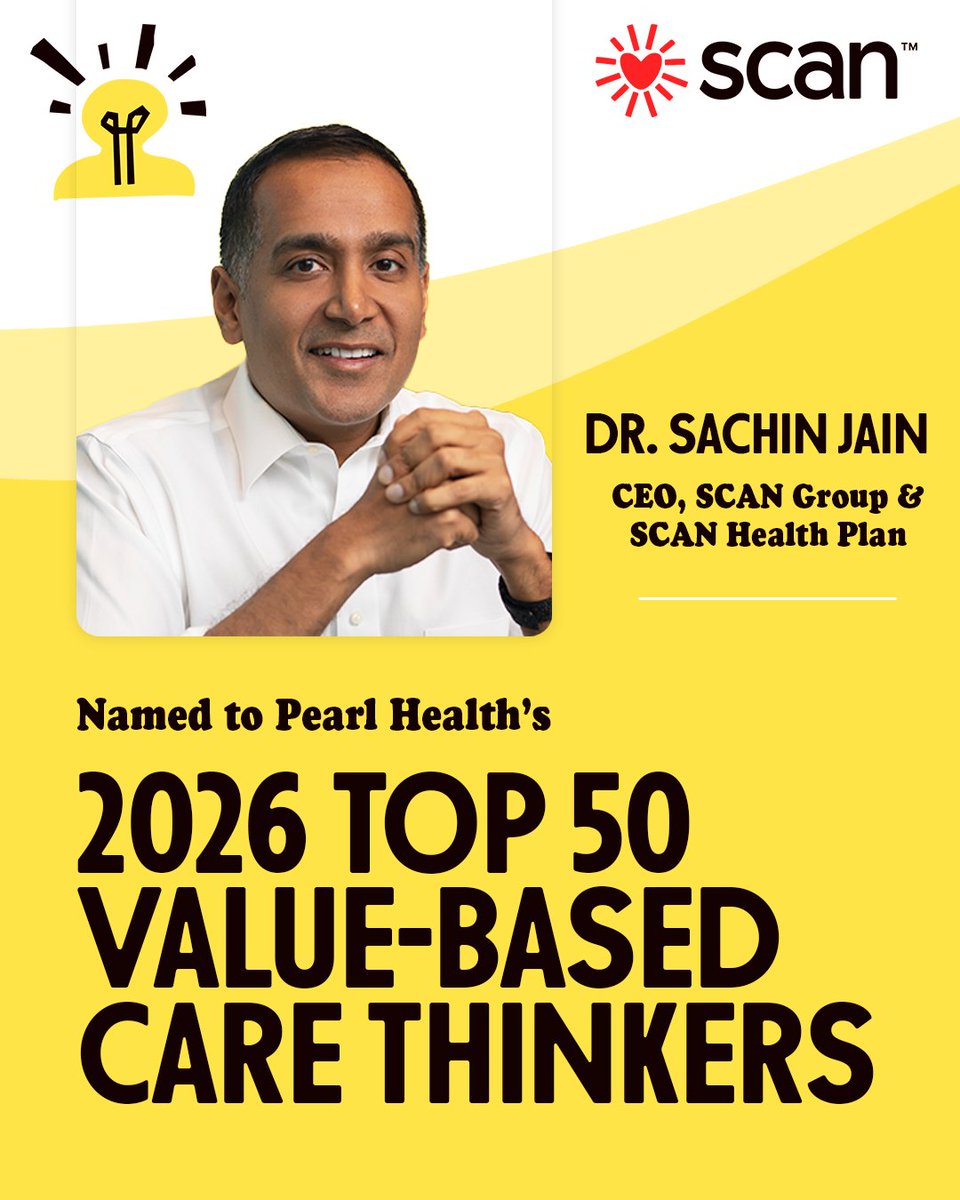
We’re proud to share that SCAN CEO, Dr. Sachin Jain, has been named one of Pearl Health’s 2026 Top 50 Value-Based Care Thinkers! Now in its 5th year, this recognition highlights leaders driving meaningful progress in value-based care. Read the full report at pearlhealth.com/top50vbcreport
SCAN tweet media
English
0
1
2
1.8K
Sachin H. Jain, MD, MBA
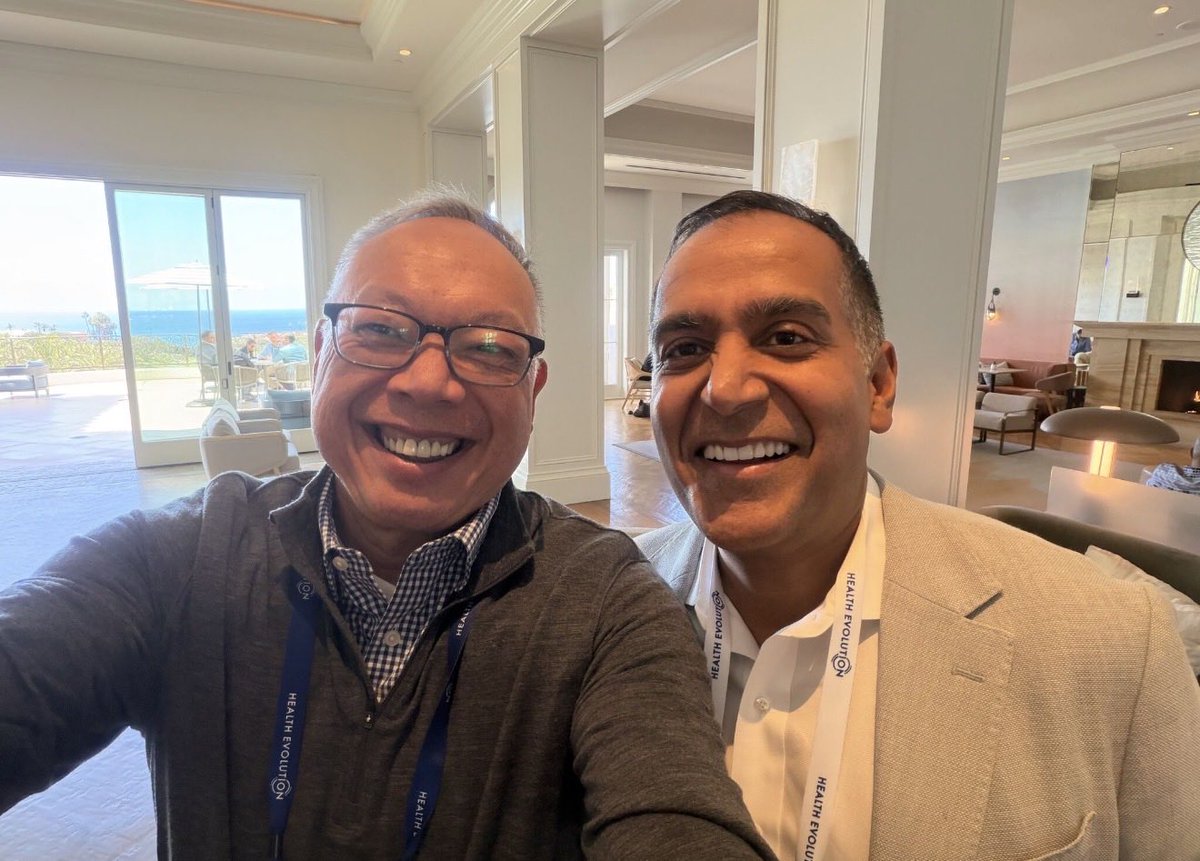
Some of the best career advice I’ve ever received came from my friend Tom Tsang: “You are planning for a 40-year career, not a 4-year career.” At the time, I had taken a leave from residency to serve in government after President Obama made health reform his top priority. The HITECH Act and the Affordable Care Act had just passed. Implementation was in full swing. As a senior advisor to the Administrator of Centers for Medicare & Medicaid Services, I had a front-row seat to history. It was exhilarating—and there was no shortage of meaningful work. Then May 2011 arrived, and I faced a choice: Stay in government. Or go back and finish residency. I knew what I should do. But I hesitated. There was just too much momentum. Too much excitement. Tom didn’t hesitate. “You’re pursuing long-term goals, not short-term ones. Finish your residency. The longer you delay, the less likely you are to go back.” I went back. It was the right decision. Finishing residency gave me more than a credential. It gave me closure. Confidence. And a foundation I’ve relied on ever since. It opened doors that simply wouldn’t have been available otherwise. Now, I see early-career professionals wrestle with similar choices all the time—whether to skip a degree, cut a corner, or chase the immediate opportunity. Sometimes that’s right. But often, it’s short-term thinking masquerading as pragmatism. So I share Tom’s advice: “You’re building a 40-year career—not a 4-year one.” Words to live by. (Photo: me with Tom at Health Evolution Summit)
Sachin H. Jain, MD, MBA tweet media
English
2
5
42
5.6K
Pradeep Natarajan
Pradeep Natarajan@pnatarajanmd·
Grateful to share that I’ve been promoted to Professor of Medicine @harvardmed @Harvard. I am deeply thankful for my family, mentors, collaborators, and trainees who have carried me here.
Pradeep Natarajan tweet media
English
751
857
12.4K
335.3K
SCAN
SCAN@SCANHealthPlan·
We're thrilled to share that SCAN CEO @sacjai has been named to @BeckersHR’s Great Leaders in Healthcare for 2026! 👏 This recognition honors visionary leaders who are redefining what’s possible in healthcare. Dr. Jain’s leadership sets SCAN’s strategic direction, shapes our culture, and brings our mission to life in every decision and member interaction. Please join us in congratulating him on this well-deserved achievement! View the full list of honorees here: lnkd.in/eF-xrxgw
SCAN tweet media
English
2
3
3
820
Sachin H. Jain, MD, MBA
Appreciate the recognition from Becker’s Healthcare, but the truth is, this reflects the work of an extraordinary team. At SCAN, I have the privilege of working alongside people who are deeply committed to our mission: keeping older adults healthy and independent. This kind of recognition belongs to them. We’re operating at a moment of real consequence in healthcare. With more questions than answers, and more need for courage, clarity, and execution than ever before. Grateful for the opportunity to do this work and even more grateful for the people doing it every day.
English
0
0
0
132
Sachin H. Jain, MD, MBA
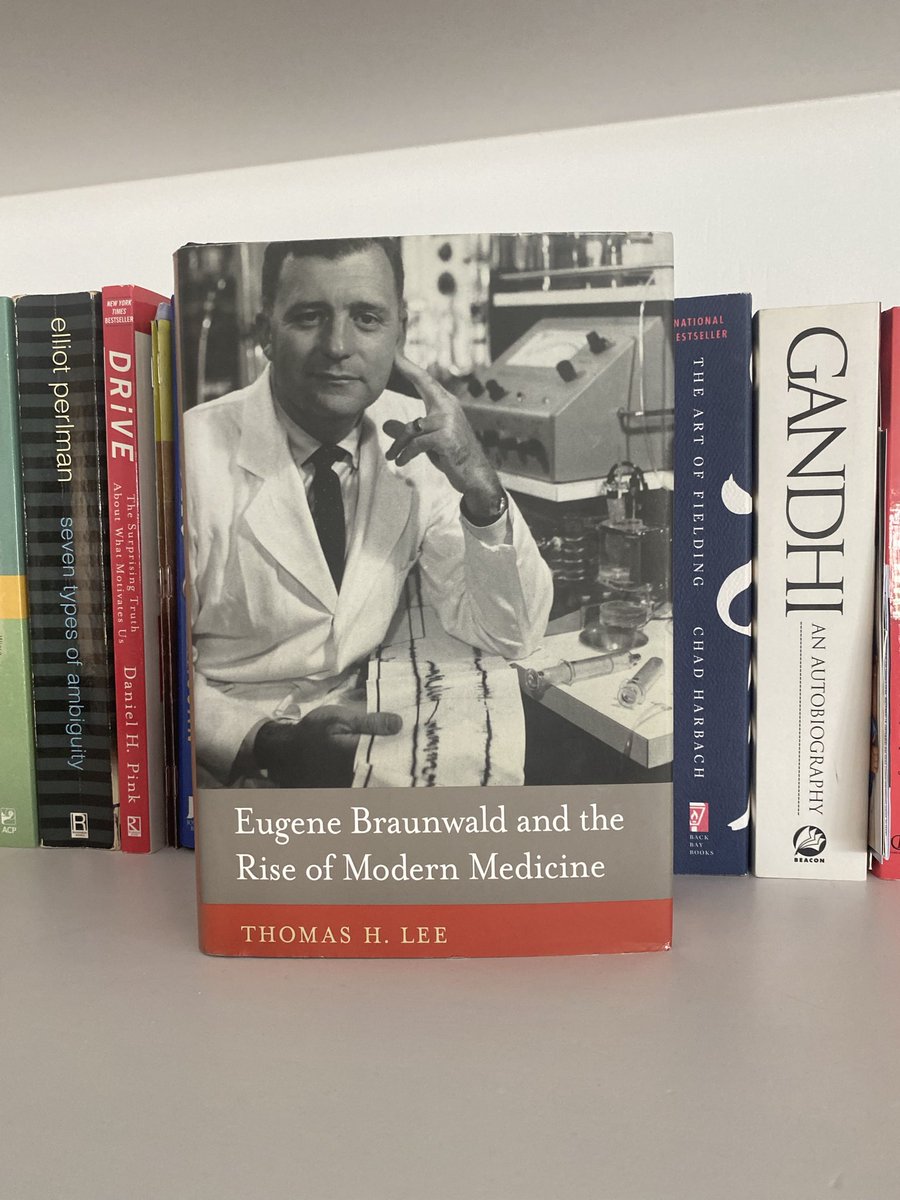
The world has lost one of the true architects of modern medicine: Eugene Braunwald. He wasn’t just a towering figure in cardiology—he helped build the very institutions and intellectual infrastructure that define the field today, including shaping @BrighamWomens into the powerhouse it has become. I had a brief but memorable encounter with Dr. Braunwald years ago. We were seated next to each other on a flight from Miami to Boston. As he settled in, he immediately began editing one of what must have been thousands of manuscripts. I had been up late the night before and quickly fell asleep. At the time, I was a resident at the Brigham and had excitedly introduced myself to him before dozing off. When I woke up, he was still working. He turned to me and said, with a hint of humor: “You seemed to have enjoyed a nice sleep.” I felt a little sheepish. But mostly, I felt awe. He was around 80. I was 30. And the contrast wasn’t about age—it was about endurance and discipline. His intellect was still sharp. His standards still high. His commitment still total. If you want to understand the life behind the legend, I highly recommend the biography by @ThomasHLeeMD. It captures not just what he accomplished—but how he thought, built, and led. A giant in every sense.
Sachin H. Jain, MD, MBA tweet media
English
1
16
76
3.5K
Sachin H. Jain, MD, MBA
Great gathering of the South Asian Healthcare Leadership forum at Health Evolution Summit.
Sachin H. Jain, MD, MBA tweet mediaSachin H. Jain, MD, MBA tweet media
English
4
2
14
1.9K
Sachin H. Jain, MD, MBA
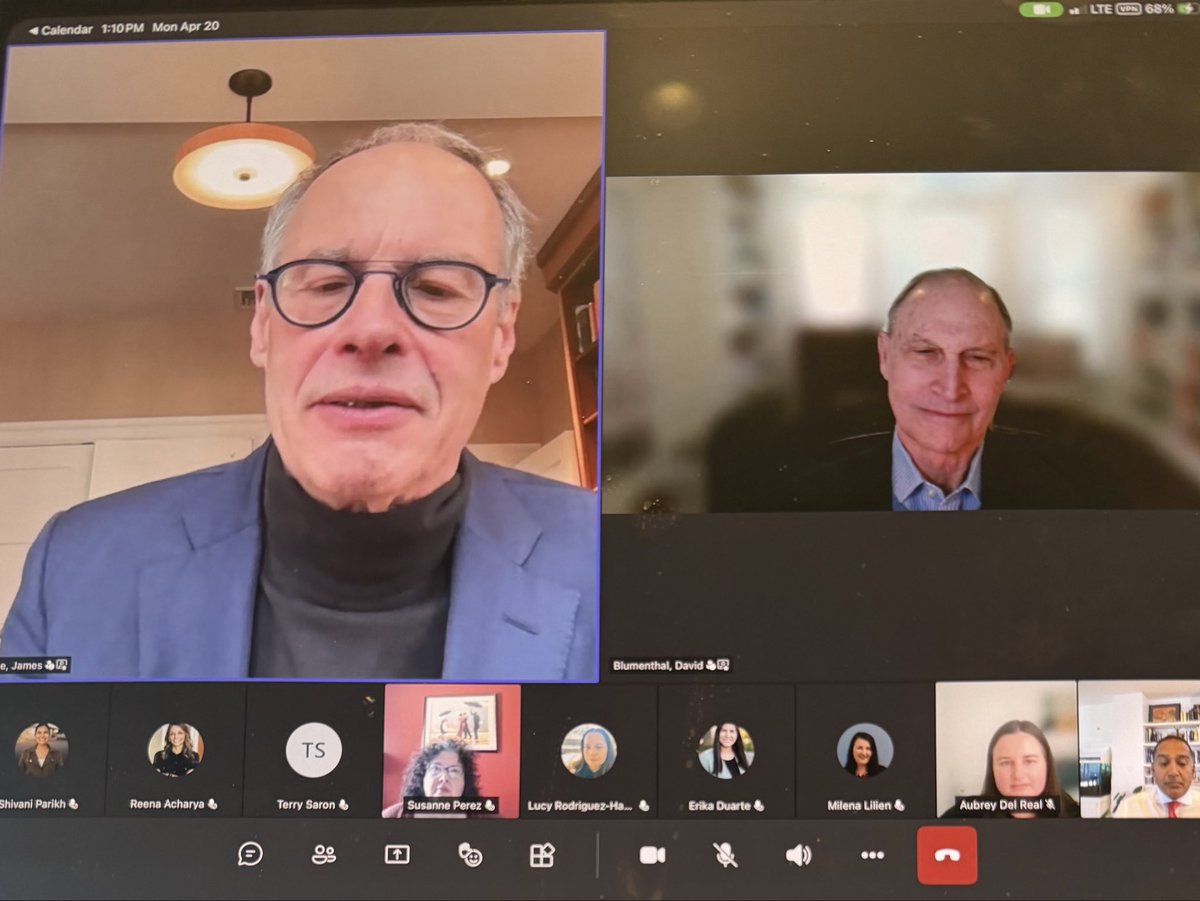
@DavidBlumenthal of @Harvard and @BrownUniversity’s @profjimmorone joined us at @SCANHealthPlan today to discuss their new book, “Whiplash: From the Battle for Obamacare to the War on Science.” What struck me most wasn’t just the history—it was the humanity behind it. Their research includes a remarkably candid interview with @BarackObama. When asked why he chose to pursue health reform—despite near-universal advice not to—his answer wasn’t political. It was personal: his mother’s cancer, and watching her struggle with insurers who failed her when she needed them most. They draw a parallel to the COVID-19 pandemic. In their telling, @realDonaldTrump’s response was shaped, at least in part, by proximity to the crisis—how deeply New York was affected, and the experience of a close friend suffering respiratory failure and requiring intubation. The throughline is hard to ignore. Policy is often framed as ideology, strategy, or economics. But more often than we admit, it’s shaped by lived experience; by what leaders have seen up close, and what they haven’t. It raises an uncomfortable but important question: whose experiences actually make it into the room where decisions are made? Because if proximity drives policy, then the distance between policymakers and the people most affected by their decisions matters more than we think. For those of us working in healthcare, it’s a reminder. Data and analysis are essential. But they’re not always sufficient. Sometimes the most powerful force for change is helping others see, firsthand, what’s at stake.
Sachin H. Jain, MD, MBA tweet media
English
0
0
1
319
Mark Cuban
Mark Cuban@mcuban·
The greatest problem in healthcare ? Hospitals, even market dominant hospitals, won’t walk away from the big ins companies that underpay, late pay, clawback, deny claims, waste their time in denial appeals, and require them to pay up to 8 pct of revenue to RCM consultants so they think they are getting what they are owed. Here is the crazy part. The ins companies ARE NOT THE ONES ACTUALLY PAYING THEM on commercial plans. Employers are. 60 pct of employees get their insurance from their self insured employers. The ins carrier is just a middleman that pretends to add value. All the clinical “value” they add, the hospital could do better, for both medical and pharmacy. Most hospitals have no idea whether they make or lose money with their big ins contracts. They are just afraid to lose patient flow. But. They actually know which companies their patients are coming from. They actually know or can find out, how much more the employers are paying the ins company, than what the ins company pays them (the spread, just like in pharmacy ) And to make it worse, those ins companies negotiate their rates as a discount from the “charge master “, which is like WAC in pharmacy. Just a made up list price. Because the hospitals are afraid or too uninformed to walk away from these deals, the hospitals use the inflated charge master prices as the basis to charge uninsured , or out of network , or insured but not covered for their care, at charge master rates. Which of course the patients can’t afford. And it crushes their finances or they go without care I’ll summarize. Employers , and their members , are paying far more than they should to companies they don’t like working with , that effectively rip off both the employer and hospital , and they could eliminate the middlemen if they went directly to to the employer. It’s so simple. Sell your services to the employers that use your services at a price that is less than what nine companies charge for your services and you will make MORE money and employers will save a ton And if they did this, they could dump the chargemaster and reduce the price they bill patients when they are at their most vulnerable But they don’t want to change. And don’t get me started on how much hospitals over pay for drugs and devices because of the GPO deals they do. It’s just stupid. Which in turn leads to the hospital being a bad actor with 340b , facilities fees and afraid of their doctors who demand they pay more for things like glue and implants so they can get vacations. If you are a politician and reading this. Now you know why this is so fucked up and it’s not about capping rates. The insurance companies are smarter than you. They will just move the money to other places. It’s not about giving money to patients. You can’t shop for care from hospitals that are too gutless to walk away from the ins companies that distort all of healthcare economics Go to your local hospitals , particularly those at risk of closing and ask for their profitability by carrier. Fully burdened. Ask how much they spend on RCM and consultants. In many cases they could survive if they ran like a real business and hired execs that could do the work rather than just manage consultants. They could work out contracts in their communities rather than with ins companies and benefit everyone. The middlemen are not needed. Get rid of them
English
325
475
2.4K
353.9K
Sachin H. Jain, MD, MBA
I spoke recently with an early career executive who was thinking about leaving her company after three years. I asked why. She has a good job and it felt like she was just getting started. She gave two reasons. She wanted to move closer to family. And she didn’t feel like she was learning anymore. The first one made sense to me and I encouraged her to follow that instinct. The second one didn’t, at least not on its face. Early in your career, it’s easy to think learning means something new is happening all the time. New job, new problems, new title. But a lot of the real learning comes from staying long enough to see how your own decisions actually turn out. What did you miss? What did you get right except for the wrong reasons? What created problems you didn’t anticipate? What people judgments were right? And which ones were dead wrong? You don’t get those answers in year one or two. And way too many people leave chasing novelty before they ever find out. I’ve seen too many early career executives stall out because they confuse activity with progress. They stay in motion (sometimes getting promoted and chasing higher titles) but their judgment doesn’t really deepen in parralel. Of course that doesn’t mean you should never leave. Sometimes you should. But when someone says “I’m not learning,” it’s worth asking what they really mean. Because sometimes what they’re actually avoiding is the slower, less comfortable kind of learning that only comes from sticking around and seeing things through longer than you might initially think.
English
4
1
9
3.1K
Sachin H. Jain, MD, MBA
Healthcare doesn’t suffer from a lack of intelligence. It suffers from a lack of courage. “Split the baby” leadership is how we avoid conflict, delay decisions, and call compromise progress. Patients pay the price. The Most Dysfunctional Leadership Habit In Healthcare: Split The Baby Thinking forbes.com/sites/sachinja…
English
5
27
226
400.3K