Adrian Senn 📯

13.7K posts

Adrian Senn 📯 banner
Adrian Senn 📯

Adrian Senn 📯

@Saennebueb

Netizen, Photographer, Blogger, IPv6 Fan, Healthcare IT

iPhone: 47.378956,8.535338 Katılım Ağustos 2009
2K Takip Edilen738 Takipçiler
Adrian Senn 📯 retweetledi
Simplifying AI
Simplifying AI@simplifyinAI·
Google researcher and a Turing Award winner just published a paper that exposes the real crisis in AI. We are building the wrong hardware. For the last three years, the entire industry has been obsessed with compute. Who has the most GPUs. Who can hit the most teraflops. But David Patterson, the man who won a Turing Award for inventing modern computer architecture, just proved that raw compute isn't the bottleneck anymore. It is memory. When you train an AI, it processes massive batches of data in parallel. Today's GPUs are perfectly designed for this. But when you actually use an AI, when you ask it a question and it generates an answer one word at a time, the physics completely change. It becomes an autoregressive process. To generate a single word, the model has to constantly fetch massive amounts of data from memory. The paper exposes a terrifying math problem. Over the last decade, memory capacity grew by 80X. But memory bandwidth only grew by 17X. The processors are fast enough. But they are starving to death waiting for data. And the newest AI trends are making it exponentially worse. Reasoning models that "think" before they speak. Mixture of Experts. Massive context windows. RAG. None of these things are constrained by compute. They are constrained by memory bandwidth. Here is the most shocking part of the paper: There is currently not a single GPU or TPU in the world designed exclusively for LLM inference. We are running the most advanced software in human history on hardware designed for something entirely different. The researchers outline the only ways out: 3D memory-logic stacking, processing-near-memory, and High Bandwidth Flash. We have to fundamentally redesign the chip. Because if we don't, the AI revolution is going to hit a brutal, physical wall. The future of AI doesn't depend on making processors faster. It depends on making them remember.
Simplifying AI tweet mediaSimplifying AI tweet media
English
25
72
233
27.9K
Adrian Senn 📯 retweetledi
Peter Heilrath
Peter Heilrath@heilrath·
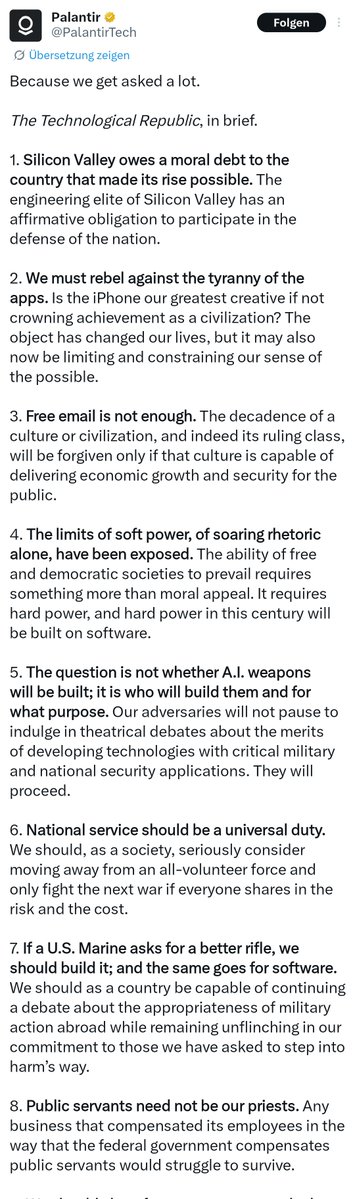
Palantir hat auf X ein Manifest veröffentlicht, das im Kern eine Zusammenfassung aus Thesen eines Buches der Gründer ist. Für jeden, der in Deutschland mit #Palantir zusammenarbeiten und deren Software nutzen will, muss es eine dringende Warnung sein. Ein Thread. 1/16
Peter Heilrath tweet mediaPeter Heilrath tweet mediaPeter Heilrath tweet media
Deutsch
16
352
917
17.8K
Adrian Senn 📯 retweetledi
Christophe Boutry
Christophe Boutry@Ced_haurus·
Palantir vient de publier son manifeste. Lisez-le. Pas pour ce qu'il dit sur la tech. Pour ce qu'il dit sur le politique. Sur l'idéologie de Karp et Thiel. Sur la guerre. Sur vous. Quand une entreprise privée se donne pour mission de définir qui doit être surveillé, ciblé, prédit, neutralisé, et qu'elle publie simultanément un texte expliquant pourquoi contester cela serait de la faiblesse civilisationnelle, on n'est plus dans la stratégie d'entreprise. On est dans la privatisation du souverain. Le droit de décider de l'ennemi, qui fut toujours le geste politique fondateur des États, est en train d'être racheté par une entreprise cotée au Nasdaq. Ce manifeste repose sur un seul tour de passe-passe, répété sous vingt formes différentes : rendre l'inévitable ce qui est en réalité un choix. Les armes à IA ? Elles seront construites de toute façon, alors autant que ce soit nous. La surveillance algorithmique ? La réalité géopolitique l'exige. Le réarmement de l'Occident, la hiérarchie des cultures, la disqualification du pluralisme comme naïveté dangereuse ? Simple lucidité face au monde tel qu'il est. C'est le geste idéologique par excellence : ne pas interdire la question, mais la rendre indécente. Ce que Palantir appelle réalisme est en fait une décision philosophique radicale : le conflit est la vérité permanente du monde, la délibération démocratique est une fragilité que l'adversaire exploitera, et une élite technologique privée est mieux placée qu'un peuple pour tirer les conséquences de cette vérité. C'est du schmittisme en hoodie. C'est littéralement la structure de leur pensée. Le danger n'est pas qu'ils soient fous. Le danger est qu'ils soient riches, cohérents, et déjà à l'intérieur des États. Palantir ne frappe pas à la porte des gouvernements pour vendre un outil. Elle arrive avec une cosmologie complète : voici comment fonctionne le monde, voici vos ennemis, voici pourquoi vous ne pouvez pas vous permettre de débattre, et voici notre contrat. Palantir est l'ennemie des peuples et de la démocratie. Ce qu'ils construisent, c'est un pouvoir technocratique que personne n'a élu et que personne ne pourra destituer.
Palantir@PalantirTech

Because we get asked a lot. The Technological Republic, in brief. 1. Silicon Valley owes a moral debt to the country that made its rise possible. The engineering elite of Silicon Valley has an affirmative obligation to participate in the defense of the nation. 2. We must rebel against the tyranny of the apps. Is the iPhone our greatest creative if not crowning achievement as a civilization? The object has changed our lives, but it may also now be limiting and constraining our sense of the possible. 3. Free email is not enough. The decadence of a culture or civilization, and indeed its ruling class, will be forgiven only if that culture is capable of delivering economic growth and security for the public. 4. The limits of soft power, of soaring rhetoric alone, have been exposed. The ability of free and democratic societies to prevail requires something more than moral appeal. It requires hard power, and hard power in this century will be built on software. 5. The question is not whether A.I. weapons will be built; it is who will build them and for what purpose. Our adversaries will not pause to indulge in theatrical debates about the merits of developing technologies with critical military and national security applications. They will proceed. 6. National service should be a universal duty. We should, as a society, seriously consider moving away from an all-volunteer force and only fight the next war if everyone shares in the risk and the cost. 7. If a U.S. Marine asks for a better rifle, we should build it; and the same goes for software. We should as a country be capable of continuing a debate about the appropriateness of military action abroad while remaining unflinching in our commitment to those we have asked to step into harm’s way. 8. Public servants need not be our priests. Any business that compensated its employees in the way that the federal government compensates public servants would struggle to survive. 9. We should show far more grace towards those who have subjected themselves to public life. The eradication of any space for forgiveness—a jettisoning of any tolerance for the complexities and contradictions of the human psyche—may leave us with a cast of characters at the helm we will grow to regret. 10. The psychologization of modern politics is leading us astray. Those who look to the political arena to nourish their soul and sense of self, who rely too heavily on their internal life finding expression in people they may never meet, will be left disappointed. 11. Our society has grown too eager to hasten, and is often gleeful at, the demise of its enemies. The vanquishing of an opponent is a moment to pause, not rejoice. 12. The atomic age is ending. One age of deterrence, the atomic age, is ending, and a new era of deterrence built on A.I. is set to begin. 13. No other country in the history of the world has advanced progressive values more than this one. The United States is far from perfect. But it is easy to forget how much more opportunity exists in this country for those who are not hereditary elites than in any other nation on the planet. 14. American power has made possible an extraordinarily long peace. Too many have forgotten or perhaps take for granted that nearly a century of some version of peace has prevailed in the world without a great power military conflict. At least three generations — billions of people and their children and now grandchildren — have never known a world war. 15. The postwar neutering of Germany and Japan must be undone. The defanging of Germany was an overcorrection for which Europe is now paying a heavy price. A similar and highly theatrical commitment to Japanese pacifism will, if maintained, also threaten to shift the balance of power in Asia. 16. We should applaud those who attempt to build where the market has failed to act. The culture almost snickers at Musk’s interest in grand narrative, as if billionaires ought to simply stay in their lane of enriching themselves . . . . Any curiosity or genuine interest in the value of what he has created is essentially dismissed, or perhaps lurks from beneath a thinly veiled scorn. 17. Silicon Valley must play a role in addressing violent crime. Many politicians across the United States have essentially shrugged when it comes to violent crime, abandoning any serious efforts to address the problem or take on any risk with their constituencies or donors in coming up with solutions and experiments in what should be a desperate bid to save lives. 18. The ruthless exposure of the private lives of public figures drives far too much talent away from government service. The public arena—and the shallow and petty assaults against those who dare to do something other than enrich themselves—has become so unforgiving that the republic is left with a significant roster of ineffectual, empty vessels whose ambition one would forgive if there were any genuine belief structure lurking within. 19. The caution in public life that we unwittingly encourage is corrosive. Those who say nothing wrong often say nothing much at all. 20. The pervasive intolerance of religious belief in certain circles must be resisted. The elite’s intolerance of religious belief is perhaps one of the most telling signs that its political project constitutes a less open intellectual movement than many within it would claim. 21. Some cultures have produced vital advances; others remain dysfunctional and regressive. All cultures are now equal. Criticism and value judgments are forbidden. Yet this new dogma glosses over the fact that certain cultures and indeed subcultures . . . have produced wonders. Others have proven middling, and worse, regressive and harmful. 22. We must resist the shallow temptation of a vacant and hollow pluralism. We, in America and more broadly the West, have for the past half century resisted defining national cultures in the name of inclusivity. But inclusion into what? Excerpts from the #1 New York Times Bestseller The Technological Republic: Hard Power, Soft Belief, and the Future of the West, by Alexander C. Karp & Nicholas W. Zamiska techrepublicbook.com

Français
440
10.3K
25.5K
3M
Adrian Senn 📯 retweetledi
Der Gepardkommandant
Der Gepardkommandant@gepardtatze·
Palantir raus. Überall. Sofort!
Palantir@PalantirTech

Because we get asked a lot. The Technological Republic, in brief. 1. Silicon Valley owes a moral debt to the country that made its rise possible. The engineering elite of Silicon Valley has an affirmative obligation to participate in the defense of the nation. 2. We must rebel against the tyranny of the apps. Is the iPhone our greatest creative if not crowning achievement as a civilization? The object has changed our lives, but it may also now be limiting and constraining our sense of the possible. 3. Free email is not enough. The decadence of a culture or civilization, and indeed its ruling class, will be forgiven only if that culture is capable of delivering economic growth and security for the public. 4. The limits of soft power, of soaring rhetoric alone, have been exposed. The ability of free and democratic societies to prevail requires something more than moral appeal. It requires hard power, and hard power in this century will be built on software. 5. The question is not whether A.I. weapons will be built; it is who will build them and for what purpose. Our adversaries will not pause to indulge in theatrical debates about the merits of developing technologies with critical military and national security applications. They will proceed. 6. National service should be a universal duty. We should, as a society, seriously consider moving away from an all-volunteer force and only fight the next war if everyone shares in the risk and the cost. 7. If a U.S. Marine asks for a better rifle, we should build it; and the same goes for software. We should as a country be capable of continuing a debate about the appropriateness of military action abroad while remaining unflinching in our commitment to those we have asked to step into harm’s way. 8. Public servants need not be our priests. Any business that compensated its employees in the way that the federal government compensates public servants would struggle to survive. 9. We should show far more grace towards those who have subjected themselves to public life. The eradication of any space for forgiveness—a jettisoning of any tolerance for the complexities and contradictions of the human psyche—may leave us with a cast of characters at the helm we will grow to regret. 10. The psychologization of modern politics is leading us astray. Those who look to the political arena to nourish their soul and sense of self, who rely too heavily on their internal life finding expression in people they may never meet, will be left disappointed. 11. Our society has grown too eager to hasten, and is often gleeful at, the demise of its enemies. The vanquishing of an opponent is a moment to pause, not rejoice. 12. The atomic age is ending. One age of deterrence, the atomic age, is ending, and a new era of deterrence built on A.I. is set to begin. 13. No other country in the history of the world has advanced progressive values more than this one. The United States is far from perfect. But it is easy to forget how much more opportunity exists in this country for those who are not hereditary elites than in any other nation on the planet. 14. American power has made possible an extraordinarily long peace. Too many have forgotten or perhaps take for granted that nearly a century of some version of peace has prevailed in the world without a great power military conflict. At least three generations — billions of people and their children and now grandchildren — have never known a world war. 15. The postwar neutering of Germany and Japan must be undone. The defanging of Germany was an overcorrection for which Europe is now paying a heavy price. A similar and highly theatrical commitment to Japanese pacifism will, if maintained, also threaten to shift the balance of power in Asia. 16. We should applaud those who attempt to build where the market has failed to act. The culture almost snickers at Musk’s interest in grand narrative, as if billionaires ought to simply stay in their lane of enriching themselves . . . . Any curiosity or genuine interest in the value of what he has created is essentially dismissed, or perhaps lurks from beneath a thinly veiled scorn. 17. Silicon Valley must play a role in addressing violent crime. Many politicians across the United States have essentially shrugged when it comes to violent crime, abandoning any serious efforts to address the problem or take on any risk with their constituencies or donors in coming up with solutions and experiments in what should be a desperate bid to save lives. 18. The ruthless exposure of the private lives of public figures drives far too much talent away from government service. The public arena—and the shallow and petty assaults against those who dare to do something other than enrich themselves—has become so unforgiving that the republic is left with a significant roster of ineffectual, empty vessels whose ambition one would forgive if there were any genuine belief structure lurking within. 19. The caution in public life that we unwittingly encourage is corrosive. Those who say nothing wrong often say nothing much at all. 20. The pervasive intolerance of religious belief in certain circles must be resisted. The elite’s intolerance of religious belief is perhaps one of the most telling signs that its political project constitutes a less open intellectual movement than many within it would claim. 21. Some cultures have produced vital advances; others remain dysfunctional and regressive. All cultures are now equal. Criticism and value judgments are forbidden. Yet this new dogma glosses over the fact that certain cultures and indeed subcultures . . . have produced wonders. Others have proven middling, and worse, regressive and harmful. 22. We must resist the shallow temptation of a vacant and hollow pluralism. We, in America and more broadly the West, have for the past half century resisted defining national cultures in the name of inclusivity. But inclusion into what? Excerpts from the #1 New York Times Bestseller The Technological Republic: Hard Power, Soft Belief, and the Future of the West, by Alexander C. Karp & Nicholas W. Zamiska techrepublicbook.com

Deutsch
128
886
5.3K
236.3K
Adrian Senn 📯 retweetledi
💙💛 Regina Laska
💙💛 Regina Laska@Sunnymica·
Ihr erinnert euch an den spektakulären Pager-Angriff? Im September 2024 explodierten tausende Pager von Hezbollah-Kämpfern gleichzeitig – einer der spektakulärsten Geheimdienstschläge der Geschichte. Zwölf Tote, fast 3.000 Verletzte. Israel, Mossad, fertig. Was die WP heute herausfand: Ungarns Außenminister Péter Szijjártó rief später beim iranischen Außenminister an. Und bot ihm Geheimdienstkooperation an. Wörtlich: „Unser Geheimdienst hat bereits Kontakt zu Ihren Diensten aufgenommen, und wir werden alle Informationen weitergeben, die wir im Rahmen der Untersuchung gesammelt haben.” Das wurde heute durch einen Mitschnitt belegt, den die Washington Post veröffentlichte. Ungarn ist NATO-Mitglied und in Putins Hand, der eng mit dem Iran verbunden ist. Genau, der Iran, der gestern ausgelöscht werden sollte, der Iran, der zig Terrororganisationen gesponsert hat - wie die Hezbollah. Und gestern stand JD Vance in Budapest auf der Bühne und warb für Orbáns Wiederwahl – während Trump auf Truth Social schrieb, eine ganze Zivilisation werde „heute Nacht sterben.” Netanjahu hat ebenfalls für ihn Wahlwerbung gemacht. Eben jener Netanjahu, dessen Landleute zu der damaligen Zeit immer noch von der Hamas als Geiseln gequält wurden. Es gibt kein Wort dafür, das nicht zu klein wäre. Am Sonntag wird in Ungarn gewählt.
Anne Applebaum@anneapplebaum

Just after Israel's attack on Hezbollah in 2024, Hungarian Prime Minister Viktor Orban’s government offered issistance to Iran, the key sponsor of Hezbollah. from @CatherineBelton wapo.st/41RvEFd

Deutsch
26
294
1K
49.7K
FloSpacenerd
FloSpacenerd@FloSpacenerd·
Falls Ihr das für eine Wolke gehalten habt: 👀 Beim Start von #ArtemisII waren tatsächlich die ausgelösten Emergency Escape Baskets zu sehen. 👉 Keine Sorge: Das war ein ganz normaler, geplanter Vorgang.
Deutsch
131
408
2.8K
1.8M
Adrian Senn 📯 retweetledi
Oleksandr Yakovenko
Oleksandr Yakovenko@alex_chenkov·
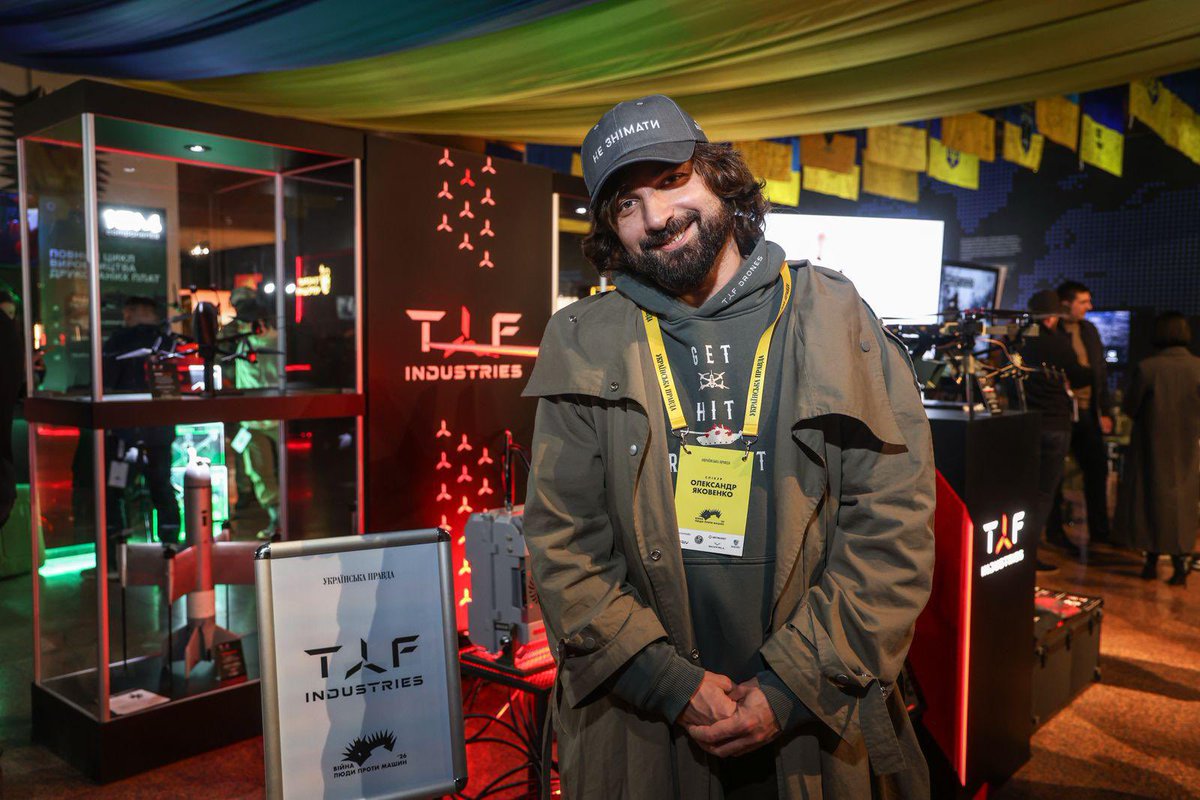
Dear Mr. Armin Papperger, CEO of Rheinmetall, When you referred to Ukrainian drone manufacturers as “Ukrainian housewives with 3D printers” you revealed just how deeply the European defense establishment still fails to understand the nature of modern warfare. This is not about emotion. It is about battlefield reality. Here are the facts your industry refuses to acknowledge: In 2025 alone, Ukrainian drones carried out 819,737 confirmed strikes. They caused 90 percent of all Russian combat losses, more than all other weapons systems combined. TAF alone produces up to 100к FPV drones monthly. In any given 90-day period, my company’s products alone achieve more confirmed strikes than your entire fleet of equipment has across its full combat history in every conflict. And most importantly, I built this company and achieved these results in two years, not fifty. Think about that. Our drones generate more kinetic effect in three months than your flagship platforms have in half a century. Why? Because the battlefield has changed, and your business model has not. •Russian electronic warfare has made GPS-guided Western munitions such as Excalibur and GMLRS nearly ineffective. •Expensive and complex systems designed for wars with air superiority and traditional peer-to-peer combat have become easy prey for drones costing $500, attacking them from above. •The cost-to-effect ratio has been turned upside down: one 120 mm Rheinmetall shell or one anti-tank missile costs more than a dozen of our drones, and yet our drones still win. This is not a “Lego game.” It is industrial Darwinism in real time. We iterate every week. We print parts in basements and ship 100к strike systems per month, while your engineers still require three to five years and hundreds of millions of euros in certification costs for even a minor upgrade. The war in Ukraine is not a temporary anomaly. It is the first true drone-industrial war. And it has already proven that outdated European platforms, no matter how expensive or “serious” they may seem, are becoming less and less relevant unless they integrate the very technologies you mock. So when you say, “this is not innovation,” I hear something else: “We do not want to admit that the future is being written in Ukrainian workshops, not in Düsseldorf boardrooms.” #MadeByHousewives is trending for a reason. Because these “housewives” destroy more enemy equipment every month than entire European armies do in full campaigns. And they do it while your industry continues to sell 20th-century solutions at 21st prices. The invitation remains open, Mr. Papperger. Stop laughing at the kitchen table. Come and learn how tomorrow’s war is actually being fought. Because the next time someone asks, “Who needs tanks in the age of drones?”, the answer may be simpler than you think: Whoever still believes in 1979 will lose to whoever is building in 2026. With respect, but with facts, Oleksandr Yakovenko “Ukrainian housewives” Founder TAF
Oleksandr Yakovenko tweet media
English
230
2.1K
6.9K
271.7K
Adrian Senn 📯 retweetledi
Korina Graf
Korina Graf@GrafKorina·
Wie die USA den Schweizer Zahlungsstopp für Patriot umgehen. Schweiz stoppt Zahlungen – Washington bucht das Geld einfach anders. Formal legal. Strategisch entlarvend. Das ist kein Ausrutscher. Das ist das System. Wer sich bei sicherheitspolitischen Schlüsselprojekten vollständig auf die USA verlässt, gibt Kontrolle ab. Und genau das sehen wir jetzt. srf.ch/news/schweiz/z…
Deutsch
20
137
434
8.1K
Adrian Senn 📯 retweetledi
Joshua Landis
Joshua Landis@joshua_landis·
❝Switzerland ordered some Tomahawks years ago. Now the US said they can't deliver them. So Switzerland said then we won't pay. The US have now seized the funds we paid for the F-35s (which we probably won't get as well) instead.❞ "Trust in the USA is suffering" The development has been poorly received in parliament. "It's infuriating when we halt payments and then the money is simply diverted," srf.ch/news/schweiz/z… via @srfnews
English
1.6K
11.6K
36.4K
2.5M
Adrian Senn 📯
Adrian Senn 📯@Saennebueb·
@SisalanaAgave @Sunnymica Es ist nicht nur dies. Die F35 Bestellung sollte auch gleich sistiert oder storniert werden. Egal ob der Jet jetzt besser ist. Lieber Europäische Hersteller unterstützen.
Deutsch
1
0
1
11
Sisalana
Sisalana@SisalanaAgave·
@Sunnymica Das wird jetzt scheinbar offizielle Methode, so nach dem Motto: "Wie jetzt, ihr wollt nicht bezahlen, was ihr nicht bekommt" (wir sollten wirklich jetzt den Rest des Goldes noch dringend rausholen, bevor es ebenfalls kurzerhand umgewidmet wird): x.com/hyos_cyami/sta…
Hyos Cyami@hyos_cyami

@PawlowskiMario Switzerland ordered some Tomahawks years ago. Now the US said they can't deliver them. So Switzerland said then we won't pay. The US have now seized the funds we paid for the F-35s (which we probably won't get as well) instead. srf.ch/news/schweiz/z…

Deutsch
3
1
41
1.2K
💙💛 Regina Laska
💙💛 Regina Laska@Sunnymica·
Das Pentagon hat 750 Millionen Dollar, die NATO-Staaten zweckgebunden für ukrainische Luftabwehr eingezahlt haben, kurzerhand für die eigenen US-Militärbestände umgewidmet. Heisst? Das Material, wofür die NATO-Staaten schon in den USA eingezahlt haben, um die Waffen der Ukraine zu geben, wurde einfach einkassiert. Konkret geht es um Patriot-Abfangraketen – seit dem Start des US-Angriffs auf den Iran am 28. Februar werden Munitionsbestände so schnell verbraucht, dass künftige PURL-Lieferungen zwar wahrscheinlich weitergehen, aber möglicherweise keine Luftabwehr-Komponenten mehr enthalten werden. Noch nicht verstanden? Stell dir vor, du und deine Nachbarn legen zusammen Geld in eine gemeinsame Kasse – zweckgebunden für Schutzausrüstung für eure Freundin, die gerade angegriffen wird. Der einzige Laden, der diese Ausrüstung verkauft, heißt USA. Jetzt greift der USA-Laden in die Kasse, kauft die Ausrüstung – und behält sie selbst. Weil er gerade selbst Streit mit jemandem hat. Und erklärt euch: "Die Umstände haben sich geändert." Und das Dreisteste: Laut einem US-Beamten war unklar, ob die europäischen Einzahler überhaupt wussten, dass ihr Geld umgewidmet wurde.
Illia Ponomarenko 🇺🇦@IAPonomarenko

I mean, how the hell is this even legal? Was it part of the contract that the seller is entitled to say “screw you and the money you've paid us, we're talking these weapons for ourselves”?

Deutsch
111
658
1.5K
47.3K
Adrian Senn 📯 retweetledi
Drop A Pin Show
Drop A Pin Show@DropAPinShow·
Can we find Switzerland on the map?
English
256
86
3.3K
232.2K
Adrian Senn 📯 retweetledi
𝔗𝔯𝔲𝔱𝔥 𝔐𝔞𝔱𝔱𝔢𝔯𝔰
The wonderful Brenna Perez does what she does best, she nails it. As Joni Mitchell wrote ‘You don’t know what you’ve got ‘till it’s gone’ Malignant narcissism can be fatal I’m afraid. Trump is doing what he always does looking to bully people to fix the damage he’s caused. The threat to withdraw from NATO unless he gets his own way is becoming tiresome just like his tariffs. Each day he has to come up with a new lie about it will end soon, so that markets stay onside. He’s embarrassingly predictable. China doesn’t need to send any warships, its oil is still flowing and it has a massive stockpile. Xi is just sitting back laughing at Trump making a fool of himself. 🎥 TikTok - vm.tiktok.com/ZNR9NkFpg/
English
218
1.9K
7.1K
51.9K
Adrian Senn 📯 retweetledi
💙💛 Regina Laska
💙💛 Regina Laska@Sunnymica·
Trump, der Krieg und der Wahnsinn: „Just for fun“ – wenn Bomben zum Zeitvertreib werden Gestern Nacht sprach NBC am Telefon mit einem Irren. Es war der Präsident der Vereinigten Staaten. Er redet über Kriege, die gerade stattfinden und Menschen das Leben kosten mit einem Zynismus, als ginge es um eine neue Verhandlungsrunde und nicht um reale Schlachtfelder. Über den Iran sagt er, einen Deal lehne er ab, weil die Bedingungen noch nicht gut genug seien. Als ginge es um ein Grundstück in Florida, nicht um eine ganze Region, die durch seinen Angriff in Flammen steht. Dreizehn tote US-Soldaten, brennende Ölterminals, eine Region in Angst – doch die Bedingungen stimmen nicht. Also wird weitergebombt. Dann wundert er sich, warum Selenskyj keinen Deal mit Putin machen will. „Putin ist doch bereit“, sagt Trump – als wäre das ein Kompliment und nicht die Drohung, die es ist. Natürlich ist Putin bereit. Trump will ihm ja auch die gesamte Wunschliste erfüllen: Die Ukraine soll kapitulieren, Territorien aufgeben, ihre Souveränität opfern. „Make a deal“, fordert er – als wäre das nicht längst Putins Plan. Doch damit nicht genug. Selenskyjs Angebot, den USA mit ukrainischer Drohnenabwehr zu helfen – ein Know-how, das mit Blut erkauft wurde – weist er brüsk zurück: „Die letzte Person, von der wir Hilfe brauchen, ist Selenskyj.“ Die Verachtung könnte kaum deutlicher sein. Der Mann, der seit Jahren gegen eine der mächtigsten Armeen der Welt kämpft, wird zum Störfaktor erklärt. Und dann, fast beiläufig, dieser Satz über Kharg Island, die iranische Ölinsel, die laut seinen eigenen Worten bereits zerstört ist: Man könne sie vielleicht noch ein paar Mal treffen. „Just for fun.“ Just for fun. Als wäre Krieg ein Videospiel. Als wären die Leben, die dabei verloren gehen, nur Statisten in seiner Reality-Show. Diese Entmenschlichung kennen wir aus Putins Krieg gegen die Ukraine. Jetzt hören wir sie aus dem Mund des Präsidenten der Vereinigten Staaten. Ja, der Iran bedroht Israel. Ja, das ist ernst. Aber Menschen „just for fun“ zu bombardieren – darauf sollten sich zivilisierte Gesellschaften immer noch einigen können – ist keine Politik. Mit diesem Satz hat Trump mehr gesagt, als ihm vielleicht bewusst ist. Für ihn ist dieser Krieg keine menschliche Tragödie. Sondern eine weitere Episode seiner eigenen Show. Und die Welt ist das Studio.
Jürgen Nauditt 🇩🇪🇺🇦@jurgen_nauditt

Trump is a relic of a dangerous era - self-centered, uninformed, and dangerously pro-Russian. His words weaken not only Zelenskyy but the entire free world. Trump is the ultimate proof that populism and ignorance create a toxic mix that prolongs wars and destroys alliances. Trump attacks Volodymyr Zelenskyy, the president of a country that has suffered years of Russian aggression and is now helping to contain the war with Iran by sending drone defense systems and experts to the Middle East. Zelenskyy is fighting the existential threat of Putin's invasion of Ukraine. And Trump? He twists the whole thing around, claiming Zelenskyy "doesn't want a deal"—as if the Ukrainian president were the one prolonging the war, not the Russian aggressor who has bombed thousands of civilians and annexed territory. This isn't just fact-free, it's a perverse reversal of reality: Trump is portraying the victim as the perpetrator to protect his crony Putin. "Tell Zelenskyy to make a deal, because Putin is ready to do it"? That sounds like the words of a man still living in a fantasy world where Putin is his "very clever" friend and not the war criminal he actually is. But we've known all this at least since Trump became US president, and we also know that Trump is currently plunging the world into absolute chaos.

Deutsch
31
313
830
18.2K
Adrian Senn 📯 retweetledi
Ryan Petersen
Ryan Petersen@typesfast·
Everyone is talking about the impact of closing the Strait of Hormuz on oil and gas. I haven't seen much discussion of the war's impact on helium. Most people think of helium as being a fun gas you use for children's balloons. But helium is actually one of the most important industrial gases, used in rockets, MRIs, quantum computers, and most importantly, in the production of semiconductors. Qatar produces ~30% of the world's helium as a byproduct of its natural gas wells, and that supply is now cut off from the global market. 🧵
English
145
781
4.3K
690.3K
Adrian Senn 📯 retweetledi
Faktencheck_jetzt
Faktencheck_jetzt@Faktencheck2030·
🚨Der CEO von Palantir hat gerade ausgesprochen, was bisher niemand für möglich gehalten hätte. Alex Karp – dessen Unternehmen Überwachungs- und Verteidigungstechnologie für die US-Regierung entwickelt – erklärte offen, dass KI die wirtschaftliche Macht gezielt von hochqualifizierten, oft weiblichen und eher demokratisch orientierten Arbeitnehmern hin zu beruflich ausgebildeten, oft männlichen Wählern aus der Arbeiterklasse verlagern wird. Er gab dann zu, dass diese Technologien – in seinen Worten – „gefährlich“ und „selbstmörderisch“ seien und dass die einzige Rechtfertigung für ihren Einsatz das militärische Argument sei: Wenn wir es nicht tun, werden es unsere Gegner tun. Um es also klarzustellen: Ein CEO eines Rüstungsunternehmens sagte Ihnen, dass KI entwickelt wird, um das amerikanische Klassensystem umzustrukturieren, dass sie die wirtschaftliche Macht einer ganzen Bevölkerungsgruppe zerstören wird und dass man sie der Öffentlichkeit nur mit dem Argument der nationalen Sicherheit schmackhaft machen kann.#KI #Palantir #Aufrüstung
Brian Allen@allenanalysis

The CEO of Palantir just said the quiet part out loud. Alex Karp — whose company builds surveillance and defense technology for the U.S. government — just openly stated that AI will deliberately shift economic power away from highly educated, often female, Democratic-leaning workers and toward vocationally trained, working-class, often male voters. He then admitted these technologies are — his word — “dangerous” and “suicidal,” and that the only justification for deploying them is the military argument: if we don’t, our adversaries will. So let’s be clear about what was just said on the record: A defense contractor CEO told you AI is being built to restructure the American class system, that it will destroy the economic power of an entire political demographic, and that the only way to sell it to the public is to wrap it in national security.

Deutsch
85
580
1.2K
123.2K
Adrian Senn 📯 retweetledi
Furkan Yildirim
Furkan Yildirim@FurkanCCTV·
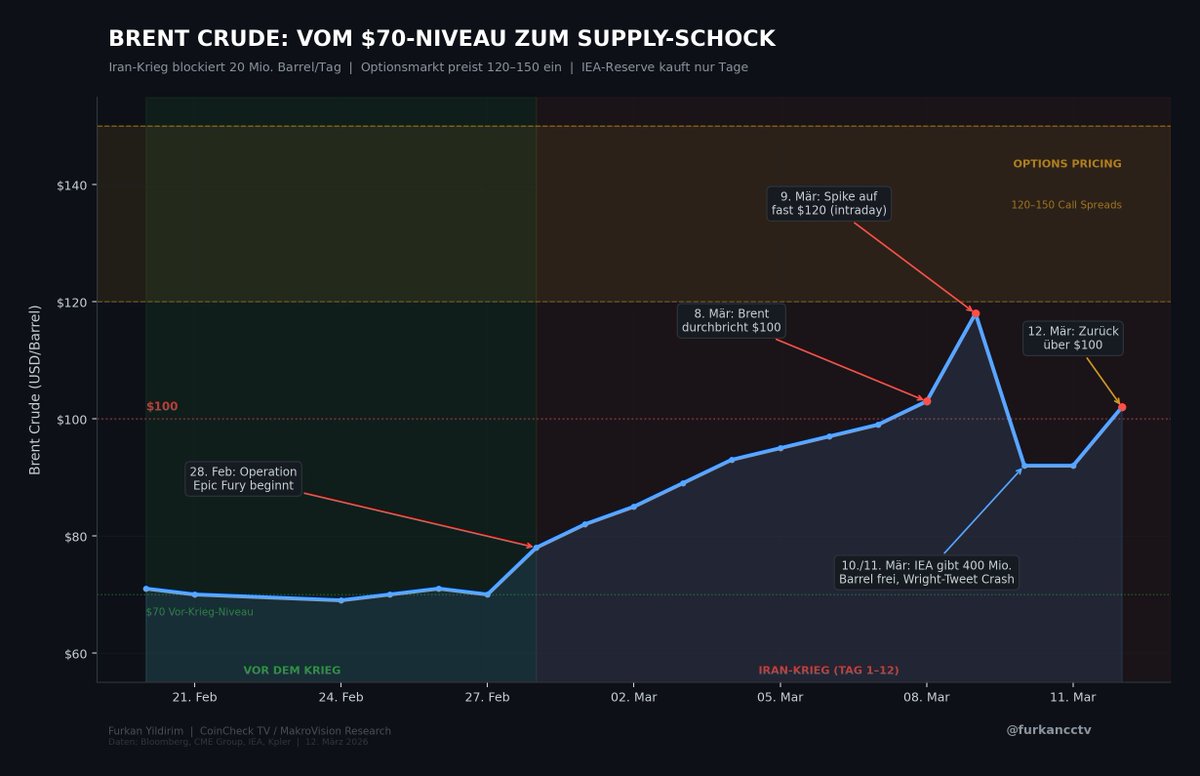
Es gibt einen Markt, in dem die größten Hedgefonds und Ölkonzerne der Welt mit echtem Geld auf die Zukunft wetten. Keine Meinungen. Keine Prognosen. Nur Milliarden, die eine Richtung nehmen. Dieser Markt sagt gerade: Öl bei 150 Dollar ist realistisch. Die Volatilität ist auf dem höchsten Stand seit Covid. Und die Nachfrage nach Absicherung gegen steigende Preise ist so extrem wie nie seit Beginn der Aufzeichnungen 2015. Über diesen Markt redet fast niemand. Aber er verrät mehr über die nächsten Monate als jede Pressekonferenz. Wird wieder eine längere Analyse. Aber wer sich die zwei Minuten nimmt, versteht danach mehr über die aktuelle Lage als 99% auf dieser Plattform. Zuerst die Lage. Die Straße von Hormus, durch die normalerweise 20 Millionen Barrel Öl am Tag fließen, ist seit zwei Wochen faktisch gesperrt. Goldman Sachs schätzt, dass aktuell nur noch 1,6 Millionen Barrel durchkommen. Das sind 8% des normalen Volumens. Brent Crude stand vor Kriegsbeginn am 28. Februar bei 70 Dollar. Am Montag bei fast 120. Heute wieder knapp unter 100. Und jetzt wird es interessant. Denn der Spotpreis erzählt nur die halbe Geschichte. Die andere Hälfte steckt im Optionsmarkt. Der Optionsmarkt funktioniert so: Große Investoren kaufen dort Verträge, die sie absichern, falls der Ölpreis stark steigt oder fällt. Je mehr jemand für diese Absicherung zahlt, desto größer schätzt der Markt das Risiko ein. Was passiert dort gerade? Die implizite Volatilität bei Öl hat sich seit Jahresbeginn mehr als vervierfacht. Das ist ein Maß dafür, wie stark der Markt zukünftige Preisschwankungen erwartet. Der aktuelle Wert ist der höchste seit dem Covid-Crash 2020. Am Freitag meldete die CME Group, die größte Terminbörse der Welt, ein Rekordvolumen im Energiekomplex: Über 8 Millionen Kontrakte an einem einzigen Tag. Aber das entscheidende Signal ist ein anderes. Trader zahlen gerade massiv höhere Prämien für die Absicherung gegen steigende Ölpreise als gegen fallende. Diese Differenz nennt man Skew. Sie verrät, in welche Richtung die großen Player wetten. Dieser Skew hat laut Bloomberg den bullischsten Wert seit Beginn der Datenreihe 2015 erreicht. Konkret werden am Markt gerade sogenannte Call Spreads für den Bereich 120 bis 150 Dollar gehandelt. Das heißt: Professionelle Händler halten Ölpreise deutlich über 120 Dollar für möglich und sichern sich entsprechend ab. Und anders als bei früheren Eskalationen läuft diese Absicherung nicht nur über kurzfristige Kontrakte. Die Nachfrage erstreckt sich über die gesamte Laufzeitkurve. Das ist qualitativ ein anderes Signal. Es bedeutet: Der Markt preist keinen kurzen Schock ein, sondern monatelange Störung. Rebecca Babin, Senior Energy Trader bei CIBC Private Wealth, ordnet es so ein: Dies sei eines der größten Volatilitätsereignisse der letzten 20 Jahre. Die Geschwindigkeit, mit der die Volatilität steige, übertreffe sogar den Aufbau offener Positionen. Das bedeute, dass Händler zunehmend zögern, dieses Risiko zu übernehmen. Wenn selbst diejenigen, deren Job es ist, Risiko zu tragen, das Risiko nicht mehr tragen wollen, sollte man zuhören. Dazu kommt ein Signal vom physischen Markt. Die Öl-Futures befinden sich in extremer Backwardation. Das heißt: Kontrakte für sofortige Lieferung kosten drastisch mehr als Kontrakte für spätere Monate. Es ist das klassische Zeichen für einen echten Versorgungsengpass. Dem Markt fehlen jetzt gerade physische Barrel. Und genau hier unterscheidet sich diese Krise von 2022. Als Russland in die Ukraine einmarschierte, wurde russisches Öl umgeleitet. Nach China. Nach Indien. Aber es verschwand nie vom Markt. Diesmal verschwinden physische Barrel aus der Lieferkette. Iraks südliche Ölfelder haben 70% ihrer Produktion verloren. Kuwait hat Force Majeure erklärt. Qatar hat seine Gasproduktion bereits am 2. März eingestellt. Bahrains einzige Raffinerie wurde angegriffen. Was hat die Welt dagegen getan? 32 IEA-Mitgliedstaaten haben 400 Millionen Barrel aus den strategischen Reserven freigegeben. Rekord. Mehr als doppelt so viel wie nach dem Einmarsch in die Ukraine. Der Effekt hielt 48 Stunden. Dann schoss der Preis zurück auf knapp 100 Dollar. Denn 400 Millionen Barrel klingen nach viel, entsprechen aber gerade mal vier Tagen des globalen Verbrauchs. Solange Hormus geschlossen bleibt, ist das ein Pflaster auf einer offenen Wunde. Goldman Sachs hat heute seine Prognose angehoben und erwartet eine längere Störung der Ölflüsse durch Hormus als bisher angenommen. Jetzt die Kausalkette, die kaum jemand komplett durchdenkt. Schritt 1: Der Ölpreis steigt. Schritt 2: Benzin, Diesel, Kerosin, Transportkosten, alles wird teurer. In den USA ist der Durchschnittspreis pro Gallone bereits von 2,94 auf 3,53 Dollar gestiegen. Bank of America rechnet mit fast 5 Dollar im zweiten Quartal, falls Öl bei 100 Dollar bleibt. Flugtickets könnten sich durch Kerosinkosten um bis zu 20% verteuern. Schritt 3: Die Inflation steigt. Die Februar-Daten aus den USA zeigen 2,4% Jahresinflation. Das klingt moderat. Aber die Daten wurden vor Kriegsbeginn erhoben. Der Ölschock wird sich erst in den März- und April-Zahlen zeigen. KPMG rechnet im Basisszenario mit einer Kerninflation von 3,3% bis Jahresende. Im Worst Case mit 4,1%. Das wäre der höchste Wert seit Mai 2023. Die 5-Jahres-Breakeven-Inflationsrate, ein hartes Marktsignal aus dem Anleihemarkt, ist von 2,39% im Januar auf 2,56% gestiegen. Der Bondmarkt korrigiert seine Erwartungen bereits nach oben. Schritt 4: Die Fed sitzt in der Falle. Und hier wird es systemisch gefährlich. Die US-Wirtschaft hat im Februar 92.000 Arbeitsplätze verloren. Die Arbeitslosenquote stieg auf 4,4%. Das sind Daten, die normalerweise nach Zinssenkungen schreien. Gleichzeitig liegt die Inflation über dem Ziel und wird durch den Ölschock weiter steigen. Das macht Zinssenkungen unmöglich. Die Fed kann nicht senken, weil die Inflation zu hoch ist. Sie kann nicht erhöhen, weil der Arbeitsmarkt zu schwach ist. Sie kann nur zusehen. Kiplinger erwartet, dass die Fed auf den nächsten drei Sitzungen den Leitzins unverändert lässt. Zinssenkungen kommen frühestens in der zweiten Jahreshälfte. Im Worst Case erst Anfang 2027. KPMG-Ökonomin Diane Swonk prognostiziert im Szenario eines langen Krieges ein annualisiertes US-Wachstum von nur 1,0% im dritten Quartal 2026. Kein technischer Rezessionswert, aber es würde sich anfühlen wie eine. Das ist der Feedback-Loop, den der Optionsmarkt einpreist. Krieg blockiert Hormus. Öl steigt. Benzin und Transport werden teurer. Inflation steigt. Die Zentralbanken können nicht gegensteuern. Kreditkosten bleiben hoch. Konsum und Investitionen sinken. Der Arbeitsmarkt wird schwächer. Das Rezessionsrisiko steigt. Aber die Inflation steigt auch. Und niemand hat ein Werkzeug, das beide Probleme gleichzeitig löst. Der Atlantic Council nennt es eine geopolitische Put-Option auf die Weltwirtschaft. Die zwei entscheidenden Variablen: Wie lange dauert der Krieg? Und wie lange bleibt die Unsicherheit? Der Optionsmarkt sagt uns: Die Unsicherheit über die Dauer ist das teuerste Element in der gesamten aktuellen Preisbildung. Selbst bei einem sofortigen Kriegsende braucht es laut Analysten mindestens einen Monat, bis die Straße von Hormus wieder sicher ist, die Produktion hochfährt und die Logistik sich normalisiert. Auch im besten Fall bleiben die Ölpreise wochenlang erhöht. Und die strukturellen Schäden an Raffinerien, Pipelines und Häfen werden die Erholung zusätzlich verzögern. Im schlechtesten Fall rechnet KPMG mit erhöhten Ölpreisen bis Ende 2026 oder Anfang 2027. Der Optionsmarkt lügt nicht. Er kann es nicht. Denn dort reden keine Analysten mit Meinungen, sondern Milliarden mit Richtung. Und diese Milliarden sagen gerade sehr deutlich: Wir stehen am Anfang, nicht am Ende. Wenn dich solche Makro Insights interessieren und dir helfen, interagiere gerne mit dem Post. 🧡
Furkan Yildirim tweet media
Deutsch
69
121
1.1K
59.8K
Adrian Senn 📯 retweetledi
Caolan
Caolan@CaolanReports·
For years Ukraine tried to warn the world about russia, about disinformation, and about how war itself was changing. Many leaders brushed it aside. Now the same countries are asking Ukraine for help. Tonight, I sit down with President Zelenskyy. 7PM ET 🔥
English
377
2K
8.1K
170.4K
Adrian Senn 📯 retweetledi
Caolan
Caolan@CaolanReports·
I sat down with President Zelenskyy Last year, Trump told him he had no cards & to say thank you. Now, the US just asked Ukraine for help. The tables have turned.
English
310
1.8K
14K
283.4K