TheSalesRainmaker

21.5K posts

TheSalesRainmaker banner
TheSalesRainmaker

TheSalesRainmaker

@Sales_Rainmaker

Sales Mentor | Man of Kent | London-based | Speaker | RT's aren't necessarily endorsements

London, England Katılım Haziran 2017
2.4K Takip Edilen1.2K Takipçiler
TheSalesRainmaker retweetledi
Yasmine Khosrowshahi
Yasmine Khosrowshahi@yasminekho·
In 2013, Harvard professor gave a 1 hour masterclass on how to build a meaningful life. This talk reveals why: - Success is a broken metric - “Having it all” is a dangerous illusion - One idea silently determines your entire life 15 lessons from Prof. Howard Stevenson:
English
5
149
603
53.3K
TheSalesRainmaker retweetledi
Massimo
Massimo@Rainmaker1973·
This 1952 New York Stock Exchange cartoon explains how the stock market works. [full video, New York Stock Exchange, 1952]
English
9
251
783
49.5K
TheSalesRainmaker retweetledi
David Senra
David Senra@davidsenra·
"Capitalism created the possibility of the win win win. It used to be a zero sum game where somebody won, somebody else lost. The biggest mistake people make, intellectuals in particular, they still think we're in a zero sum world. They're obsessed with some billionaires because Bernie Sanders thinks that Jeff Bezos and Elon Musk somehow stole the money from the people. They don't understand that it's this prosperity machine that's creating more, not just for those billionaires, but for everything that they're touching. They're creating value for their customers, they're creating value for their employees. Their suppliers are flourishing, their investors are seeing their capital go up. It can be reinvested and compound. All philanthropy ultimately comes from business. That's where the profits are. Where does all the taxes come from? It ultimately comes from business as well. This is the engine that's lifting humanity out. The entrepreneurs are the drivers of that engine. Somebody like Elon Musk, he gets a very, very, very tiny sliver of the value that he creates for the whole world." — @iamjohnmackey
English
144
853
3.9K
171.7K
TheSalesRainmaker retweetledi
Handre
Handre@Handre·
Things economists told us would happen with monetary deflation: Economic collapse. (Japan grew for decades.) Mass unemployment. (Switzerland thrived.) Deflationary spiral. (Never materialized anywhere.) Investment death. (Tech sector exploded during deflation.) Consumer hoarding. (People keep buying phones, cars, homes.) Bank failures. (Banks adapted, survived, profited.) Innovation death. (Opposite happened.) The confidence with which Keynesians predicted doom - citing models based on assumptions nobody tested - deserves serious skepticism. Real economies don't read textbooks.
English
24
58
313
10.1K
TheSalesRainmaker retweetledi
Handre
Handre@Handre·
Things you were told would happen when countries tried socialism: Prosperity for workers. (Everyone becomes dirt poor.) Economic equality. (Created new ruling class.) Innovation boom. (Stagnation.) End of poverty. (Mass starvation.) Worker freedom. (Gulags.) Efficient resource allocation. (Chronic shortages.) Social harmony. (Purges.) The confidence with which academics still promote these ideas, citing theoretical models while ignoring Venezuela, Cuba, USSR, East Germany, Cambodia, deserves serious scrutiny. The intellectual arrogance of people who've never lived under socialism, prescribing it for others, reveals everything about central planning's fatal flaw: the planners always exempt themselves from the plan.
English
9
73
193
3.1K
TheSalesRainmaker retweetledi
Dan Neidle
Dan Neidle@DanNeidle·
Yesterday an Oxford accountancy firm gave us 24 hours to take down an article which said they'd knowingly filed false tax returns. Today they're sending bizarre emails saying I have to give them my phone number or they will "get it from Government".
Dan Neidle tweet media
English
147
415
3.5K
263.8K
TheSalesRainmaker retweetledi
Handre
Handre@Handre·
1913 was the year America's constitutional republic died and few even noticed. Congress passed the Federal Reserve Act on December 23rd (while most senators had already left for Christmas), instituted the first peacetime income tax, and ratified the 17th Amendment allowing direct election of senators. Three body blows that fundamentally shifted power from states and individuals to Washington. The income tax started at just 3% on the wealthy - "temporary" war funding, they promised. (Sound familiar?) Within seven years it hit 77% on top earners to fund WWI. The Fed immediately began its boom-bust cycle that gave us 1929, while senators stopped representing state governments and started chasing popular votes like glorified House members. You want to know why states have zero real power today? Why Congress spends like drunken sailors? Why we get a financial crisis every decade? December 1913. Wilson and the progressives sold it as "democratization" but really just centralized everything in DC. The founders designed the Senate specifically to protect state sovereignty, but this was thrown away because newspapers said direct democracy sounded nicer. Amazing how three changes in one year could unravel a system that had worked for 124 years, but here we are.
English
35
170
487
7.5K
TheSalesRainmaker retweetledi
Ray Dalio
Ray Dalio@RayDalio·
The former Dutch Empire teaches us a lot about the importance of capitalism in driving long-term success through the development of productive entrepreneurs. The Dutch became a leading empire by being open to the best thinking in the world. They became so inventive that they were responsible for 25% of all the major inventions in the world — including ships that could travel and collect great riches, and the invention of capitalism as we know it today to finance those voyages. This virtuous cycle leads to strong income growth, which can be used to finance investments in education, infrastructure, research, and development. Over time, that helps its citizens become more productive and more competitive than their peers. #principles #raydalio #history #capitalism
English
91
256
1.4K
136.6K
TheSalesRainmaker retweetledi
Handre
Handre@Handre·
The Weimar hyperinflation of 1923 obliterated Germany's middle class in 18 months. Your savings account with 100,000 marks in January 1922 bought you a loaf of bread by November 1923. The Reichsbank printed 1.3 trillion marks daily at peak -- destroying accumulated wealth that families built over generations. Middle-class professionals watched their life's work evaporate while debtors and asset holders thrived. Teachers, doctors, engineers who saved in marks saw their purchasing power collapse 99.9%. Workers at least got daily wage adjustments (barely keeping pace). But the bourgeoisie? Gone. The political consequences followed predictably. Desperate middle classes don't vote for moderate parties -- they vote for extremes. Hitler's 1923 Beer Hall Putsch happened exactly when hyperinflation peaked. Not coincidence.
English
30
142
804
38.7K
TheSalesRainmaker retweetledi
Dan Neidle
Dan Neidle@DanNeidle·
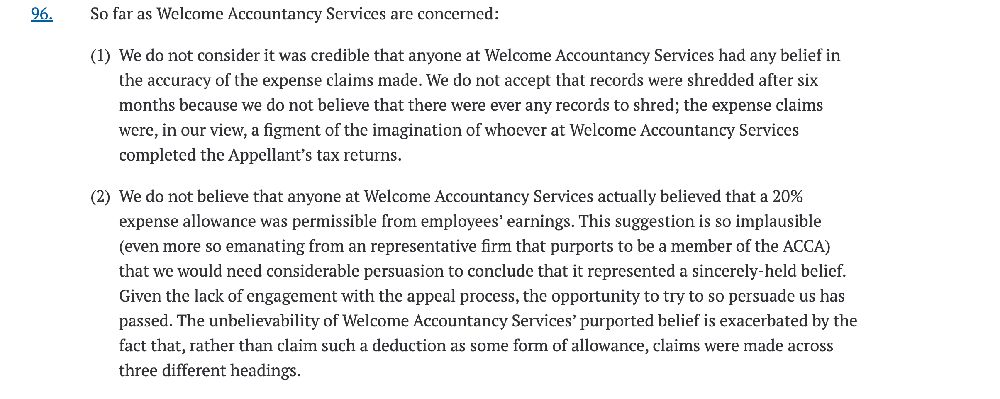
There’s a hidden industry ripping off HMRC and ordinary taxpayers. “Advisers” promise big tax refunds. They invent expenses, file bogus claims, and take a cut. When HMRC comes knocking, it’s the taxpayer left with the bill. A tribunal has just exposed one such firm. 🧵
Dan Neidle tweet media
English
25
231
715
59.4K
TheSalesRainmaker retweetledi
Ray Dalio
Ray Dalio@RayDalio·
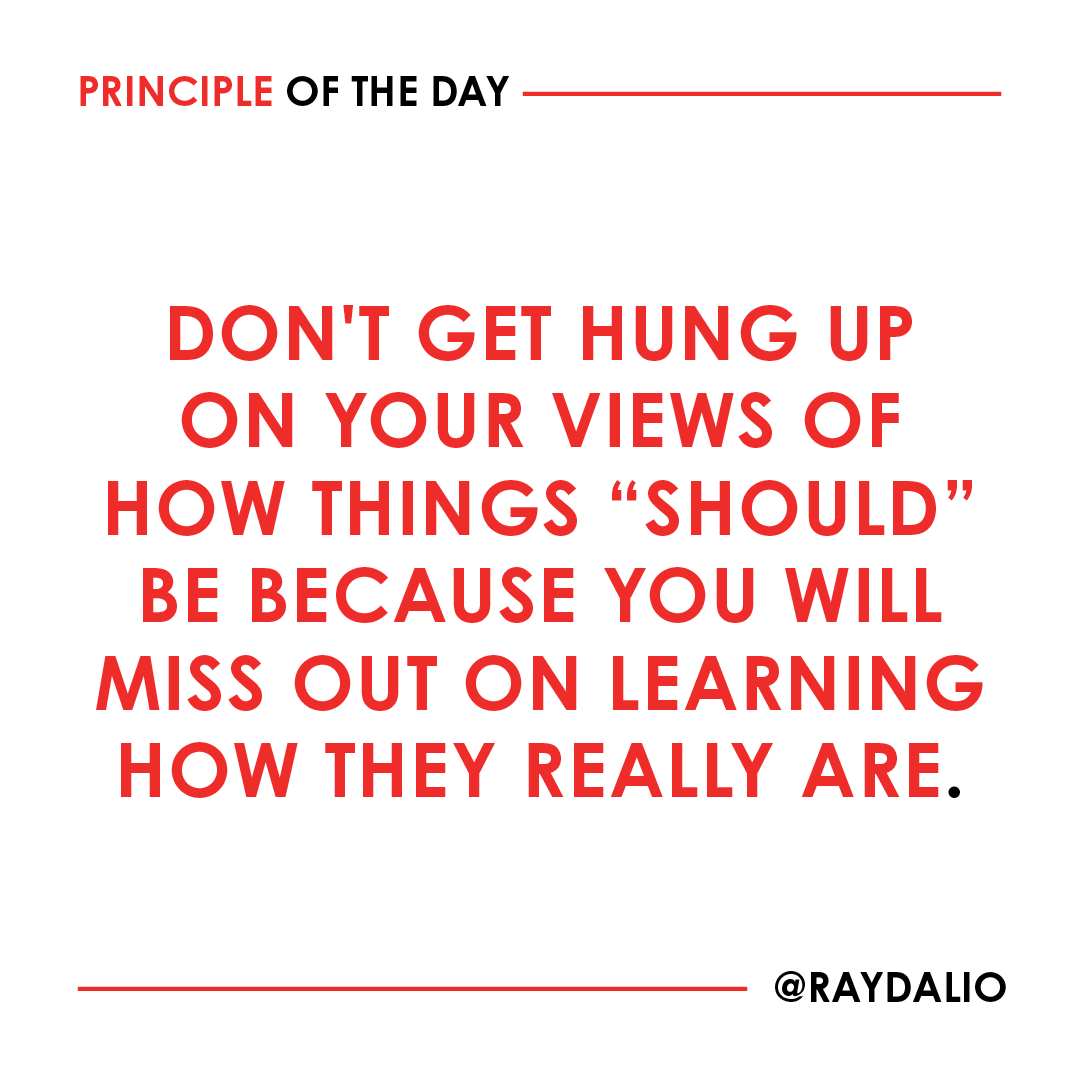
It’s important not to let our biases stand in the way of our objectivity. To get good results, we need to be analytical rather than emotional. Whenever I observe something in nature that I (or mankind) think is wrong, I assume that I’m wrong and try to figure out why what nature is doing makes sense. That has taught me a lot. It has changed my thinking about 1) what’s good and what’s bad, 2) what my purpose in life is, and 3) what I should do when faced with my most important choices. To help explain why, I will give you a simple example. When I went to Africa a number of years ago, I saw a pack of hyenas take down a young wildebeest. My reaction was visceral. I felt empathy for the wildebeest and thought that what I had witnessed was horrible. But was that because it was horrible or was it because I am biased to believe it’s horrible when it is actually wonderful? That got me thinking. Would the world be a better or worse place if what I’d seen hadn’t occurred? That perspective drove me to consider the secondand third-order consequences so that I could see that the world would be worse. I now realize that nature optimizes for the whole, not for the individual, but most people judge good and bad based only on how it affects them. What I had seen was the process of nature at work, which is much more effective at furthering the improvement of the whole than any process man has ever invented. Most people call something bad if it is bad for them or bad for those they empathize with, ignoring the greater good. This tendency extends to groups: One religion will consider its beliefs good and another religion’s beliefs bad to such an extent that their members might kill each other in the mutual conviction that each is doing what’s right. Typically, people’s conflicting beliefs or conflicting interests make them unable to see things through another’s eyes. That’s not good and it doesn’t make sense. While I could understand people liking something that helps them and disliking things that hurt them, it doesn’t make sense to call something good or bad in an absolute sense based only on how it affects individuals. To do so would presume that what the individual wants is more important than the good of the whole. To me, nature seems to define good as what’s good for the whole and optimizes for it, which is preferable. #principleoftheday
Ray Dalio tweet media
English
55
123
829
82.9K
TheSalesRainmaker retweetledi
Handre
Handre@Handre·
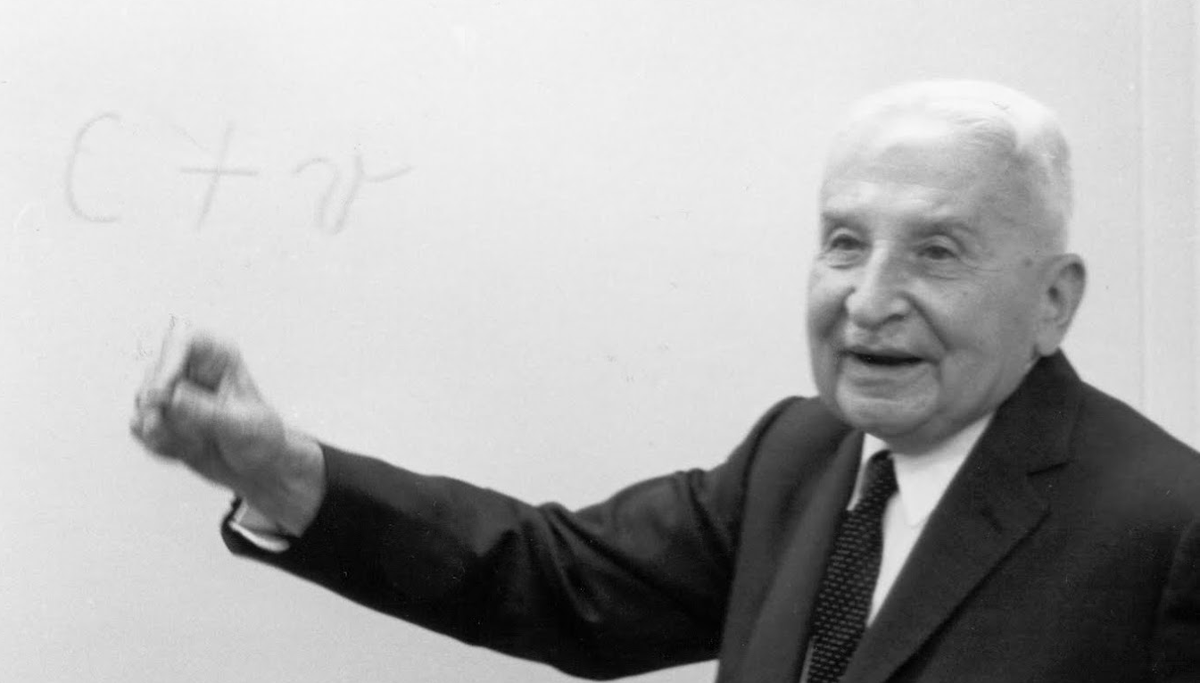
Ludwig von Mises warned us decades ago: "The middle classes are the chief victims of inflation." While the wealthy own real assets that rise with monetary expansion and the poor receive government transfers, the middle class gets crushed holding cash savings and fixed incomes. Their purchasing power evaporates as central banks print money to fund government spending. Look around today and you see exactly what Mises predicted. Anyone who saved in bank accounts earning 0.5% interest while inflation ran at 8% lost massive wealth. Meanwhile, asset owners — those with stocks, real estate — saw their holdings soar. The Fed's money printing didn't create prosperity; it redistributed wealth from savers to debtors and asset holders. Politicians sell inflation as helping "working families" while systematically destroying the middle class foundation of society. They promise stimulus and easy money will boost employment, yet ignore how monetary debasement hollows out the very people who built their savings through productive work rather than financial speculation. Mises understood that sound money isn't just an economic issue — it's a moral one. When you can print money, you don't need to convince people to fund your programs through taxes. You just inflate away their savings instead.
Handre tweet media
English
28
290
781
35.9K
TheSalesRainmaker retweetledi
United Grand Lodge of England
United Grand Lodge of England@UGLE_GrandLodge·
For the first time in history, we invited cameras into Freemasons' Hall to film an exclusive meeting 👀 #Freemasons
English
11
51
169
8.3K
TheSalesRainmaker retweetledi
Handre
Handre@Handre·
Socialism dies the moment you understand basic economics. Every socialist experiment—from the Soviet Union's 66 million deaths to Venezuela's 2,000% inflation—fails because central planners cannot calculate prices without markets. Ludwig von Mises proved this in 1920: without private property and voluntary exchange, rational economic calculation becomes impossible. You cannot allocate scarce resources efficiently when bureaucrats replace market signals. Cuba's average monthly wage remains $30 while North Koreans starve. Meanwhile, Hong Kong transformed from fishing village to financial powerhouse through free markets. Property rights create prosperity. Central planning creates poverty. The choice stays yours.
English
340
840
3.1K
312.7K
Polemic Paine
Polemic Paine@PolemicTMM·
Anyone set up a class action against UK's Green party for misselling, yet? They promise green but deliver red.
English
3
4
32
2K
Gerald Ashley
Gerald Ashley@Gerald_Ashley·
How long before UK reopens coal mines?
English
4
0
7
407