Salisbury Military History Society

1.2K posts

Salisbury Military History Society banner
Salisbury Military History Society

Salisbury Military History Society

@SalisburyMHS

Salisbury Military History Society is a local community forum for those with a passion for military history. Meetings: St John’s Place, fourth Wed each month

Salisbury, England Katılım Nisan 2019
342 Takip Edilen301 Takipçiler
Sabitlenmiş Tweet
Salisbury Military History Society
Next Talk: Weds 28th May Korea: War without End. Robert Lyman delves into the complexities and enduring impact of the Korean War, Lyman provides a comprehensive analysis of the conflict that began in June 1950 and continues to influence global geopolitics to this day.
English
0
1
2
123
Salisbury Military History Society
Weds 24th Sep 7:30 Join Graham Waterton, author and former British Army officer, as he shares the remarkable true story of his uncle, Flight Lieutenant Brian Slade, the youngest bomber pilot in the Royal Air Force during the Second World War.tinyurl.com/38bsdyb8 @BoscombeRAeS
English
0
1
1
160
Salisbury Military History Society
Announcement: Max Hastings is back! We are very pleased to say that Max Hastings will be back to talk to us about the Cuban Missile Crisis of 1962 based on his bestselling book 'Abyss' He will join us at St Johns Place on the evening of 26th March 2025.
English
0
1
5
409
Salisbury Military History Society
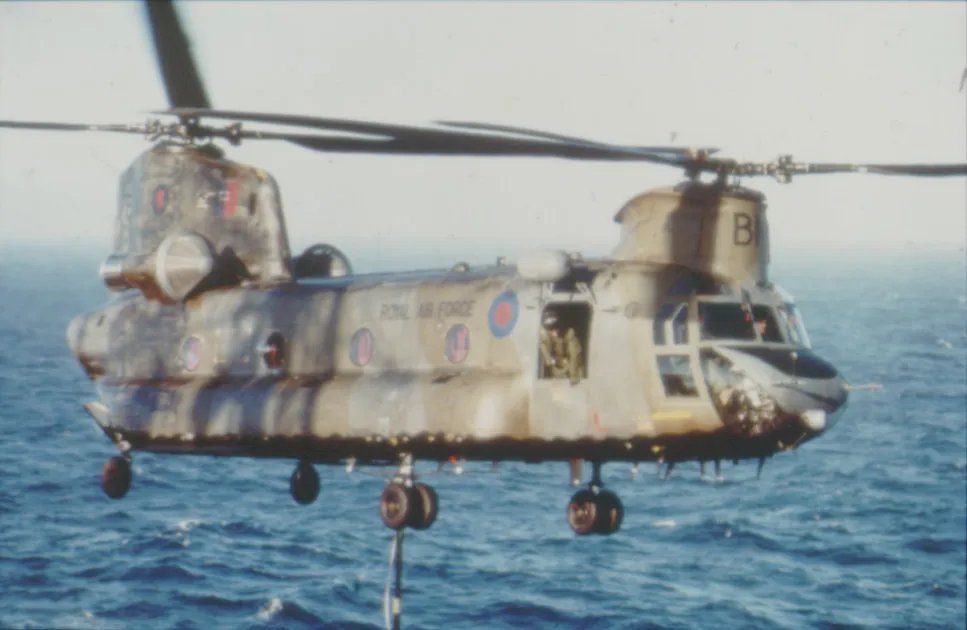
A week to go to our next talk. Come along and hear the story of the only Chinook to make it off the Atlantic Conveyor told by the pilot who was flying when the ship was hit.
Salisbury Military History Society@SalisburyMHS

Next Talk: 23rd October 7:30 - 9:30 'It's All Gone South' with Andy Tailby The Story of MV Atlantic Conveyor and Chinook Bravo November in the Falklands Conflict Andy Tailby will give a first-hand account of 18(B) Squadron’s build up to Operation CORPORATE including the journey ‘down south’, the loss of Atlantic Conveyor and Bravo November’s arrival into Bomb Alley (San Carlos Water). He will also describe the Survivor’s land-based operations in the Falklands. Andy, a fresh RAF helicopter pilot, was part of 18(B) Squadron during its 1981 reformation. The squadron, initially set to operate in Germany, shifted focus to the Falklands crisis in 1982. They were tasked with introducing Chinook helicopters into service. During the Falklands War, the MV Atlantic Conveyor, carrying helicopters and supplies, was struck by missiles, resulting in significant losses. Despite challenges, the squadron’s personnel kept the sole surviving Chinook, “Bravo November,” operational, providing vital support throughout the conflict. Bravo November’s service continued post-war in various operations, earning multiple honours. Andy shares his experiences from the build-up to the Falklands War, the loss of the Atlantic Conveyor, and Bravo November’s enduring legacy in RAF history. It’s All Gone South – Salisbury Military History Society (salisburymilhist.com)

English
0
1
3
524
Salisbury Military History Society
Wednesday’s Talk ‘Custer’s Last Stand’ At very short notice, Robert Kershaw stepped in and presented a highly informative and entertaining talk on the famous events around the Battle of Little Big Horn. With many visits to the site and backed by his own book ‘Red Sabbath’, Robert’s talk was packed with stories and evidence underpinning the reconstructed events which are frequently misrepresented.
English
0
0
3
308
Salisbury Military History Society
We apologise again for the late change to our Talk on the 25th Sep and the disappointment for those who were looking forward to 'My Life As a Military Spy' (BRIXMIS) with Peter Williams. Rest assured that this will be rescheduled for early next year and details will be posted to our website as soon as the date is finalised. We all owe a big thank you to Robert Kershaw who, with practically no notice brought his talk on Custer's Last Stand forward from next year. Not that we could tell! 👏
English
0
0
1
58
Salisbury Military History Society
Next Talk: 23rd October 7:30 - 9:30 'It's All Gone South' with Andy Tailby The Story of MV Atlantic Conveyor and Chinook Bravo November in the Falklands Conflict Andy Tailby will give a first-hand account of 18(B) Squadron’s build up to Operation CORPORATE including the journey ‘down south’, the loss of Atlantic Conveyor and Bravo November’s arrival into Bomb Alley (San Carlos Water). He will also describe the Survivor’s land-based operations in the Falklands. Andy, a fresh RAF helicopter pilot, was part of 18(B) Squadron during its 1981 reformation. The squadron, initially set to operate in Germany, shifted focus to the Falklands crisis in 1982. They were tasked with introducing Chinook helicopters into service. During the Falklands War, the MV Atlantic Conveyor, carrying helicopters and supplies, was struck by missiles, resulting in significant losses. Despite challenges, the squadron’s personnel kept the sole surviving Chinook, “Bravo November,” operational, providing vital support throughout the conflict. Bravo November’s service continued post-war in various operations, earning multiple honours. Andy shares his experiences from the build-up to the Falklands War, the loss of the Atlantic Conveyor, and Bravo November’s enduring legacy in RAF history. It’s All Gone South – Salisbury Military History Society (salisburymilhist.com)
Salisbury Military History Society tweet media
English
1
1
3
888
Salisbury Military History Society
Update on tonight’s talk! Due to logistical difficulties the scheduled speaker Peter Williams will not be available this evening. However, luckily one of our founding members will be bringing forward his talk on ‘Custer’s Last Stand’. We would still like to see those who had decided to come tonight. Apologies for the late change and it’s the first time this has occurred.
English
0
0
0
67
Salisbury Military History Society
Last Talk: Wednesday 28th August Laugh or Fly with The Royal Flying Corps 1914-18 with Peter Hart He captivated a nearly full audience (quite impressive for August!) with tales of daring deeds and instructive stories from the aerial battles of the First World War. Eschewing a dry, chronological recounting of events, Peter opted for a more engaging thematic approach to depict acts of bravery, recklessness, and the rapidly gained experiences of the numerous young men piloting aircraft in their nascent stages.  He discussed the aircraft they operated, debunked some myths about prolonged dogfights, and delighted the audience with anecdotes of the antics in the mess that helped keep (most of) them sane during their service, marked by brief yet intense moments of fear.
English
0
1
3
261
Salisbury Military History Society
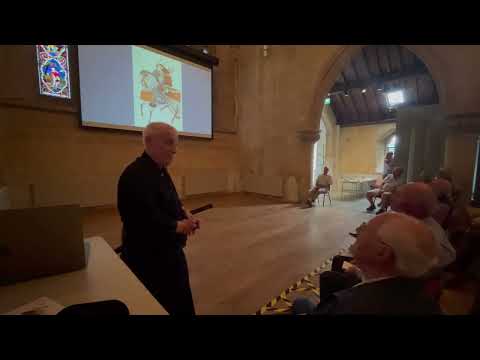
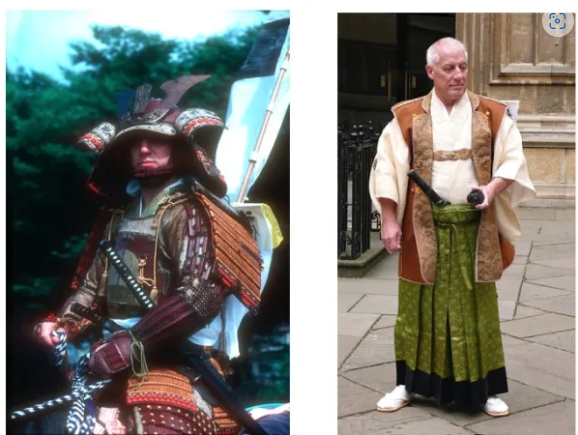
Last Talk: Wednesday 24th July Flying to the Sun: A Modern Englishman in Mediaeval Japan Michael Jay captivated us with tales of the diverse and traditional Japanese martial arts and warrior codes. As a westerner who has attained the samurai rank of Group Commander in the Soma Wild Horse Chase and as a master swordsman of the esteemed Tenshin Shōden Katori Shintō Ryū, Michael shed light on the distinctions between the codes, enriched by numerous fascinating photos and videos. He emphasized the stark contrast between 'sport' martial arts like Judo and Karate and the original warrior codes, which are singularly focused on victory in battle. Accompanying his talk, Michael displayed an array of weapons, some of which were centuries old, and provided a brief demonstration. His profound immersion in Japanese culture lent his presentation an authoritative and enlightening perspective, particularly for a Western audience familiar only with 'sport' martial arts. The full talk can be viewed on our Youtube channel for those unbale to attend. youtu.be/44aUTrqzEdA?fe…
YouTube video
YouTube
English
0
0
1
87
Salisbury Military History Society
Next Talk: Wednesday 28th Aug 2024 Laugh or Fly with The Royal Flying Corps 1914-18 with Peter Hart The pioneering the Royal Flying Corps lived their lives amidst a strange dichotomy as they moved from safety to dire danger, and back again in a matter of hours. This created a dreadful strain that could soon shred anyone’s mental health. On the ground, they were cloistered in simple but adequate accommodation several miles behind the lines. Farmhouses, barns, huts, tents even a canal boat were used, but they were all far better than the squalor faced by the infantry scurrying in their muddy trenches. But when they were flying over the front it was no laughing matter. They had to be good at their jobs, the pilots and the observers, or they would surely die. They needed first-rate eyesight and had to develop ‘air vision’ to see hostile aircraft before it was too late. Pilots had to be masters of their machines, to understand their capabilities and – perhaps even more important – their limitations. They had to fly accurately, but at the same time be able to fling their aircraft about like mad things in the tumult of a dogfight. They had to be quick-thinking and capable of split-second reactions where a wrong turn might mean death. Both pilots and observers had to be excellent shots, capable of snap-shooting accurately at a target that could be moving at more than 100 mph. They had to be courageous and not panic in the face of extreme peril. Death lurked in the skies, zooming in its winged chariots out of the sun, or bursting from the clouds. A moment’s loss of concentration, or tactical blunder, could consign them to being shot down and falling thousands of feet until the crunching impact of terra firma brought a terrible relief. But better that than a punctured petrol tank, the first flickers of flame, then the roaring inferno and the agonies of incineration.
Salisbury Military History Society tweet media
English
1
7
15
772
Salisbury Military History Society
Next Talk: Wednesday 24th July Flying to the Sun: A Modern Englishman in Mediaeval Japan with Michael Jay A British Airways long-haul pilot now retired from flying the Boeing 747-400 from London’s Heathrow Airport, has combined his flying career with a lifelong study of Japan and, in particular, its martial culture. His work and fascination since childhood with the martial arts of both England and Japan has taken him to Japan nearly four hundred times to fly, study, train and teach.  Uniquely, Michael holds senior positions in two ‘Intangible Cultural Assets of Japan’ as classified by the Japanese government, holding the samurai rank of Group Commander in the Soma Wild Horse Chase, a unique three-day celebration of samurai horsemanship held in the full heat of the Japanese summer in Fukushima, north-eastern Japan.  Michael is also a master swordsman of Japan’s premier martial tradition, Tenshin Shōden Katori Shintō Ryū, also an ‘Intangible Cultural Asset of Japan’ – dating from the 15th century when Japanese martial skill was at its peak. A true combat school, its teachings include all the classical weapons and Shintō and Buddhist philosophy.  Michael holds black belt ranks in several other Japanese martial arts, is a firearms instructor qualified by the prestigious Smith & Wesson Academy and served 17 years in London’s Metropolitan Police Special Constabulary, receiving the Queen’s Golden Jubilee Medal for police service. His audiences have included The Royal Armouries, The Tower of London, Oxford University, Eton College, Keio University, The Japan Society, et al, together with lectures as the guest speaker on cultural cruises around Japan. Michael’s talk will explain the practice and ethos of the truly classical martial arts of Japan including the massive differences between them and the modern so-called martial arts as practised, but often corrupted, in the West. There will be a short film and a practical demonstration of the sword and weapons techniques of the Katori Shinto Ryu, a unique Cultural Treasure rarely seen outside Japan.
Salisbury Military History Society tweet media
English
0
2
2
333
Salisbury Military History Society
26th June Talk by Dr Helen Fry ‘A Very Secret War: Bugging The Nazis in WWII’ based on her book ‘The Walls Have Ears’ A warm evening but still well attended and we were treated to an informative and entertaining insight into a little known aspect of WWII. Dr Helen Fry presented an engaging talk enjoyed by all.
English
0
0
2
146
Salisbury Military History Society retweetledi
Salisbury Military History Society
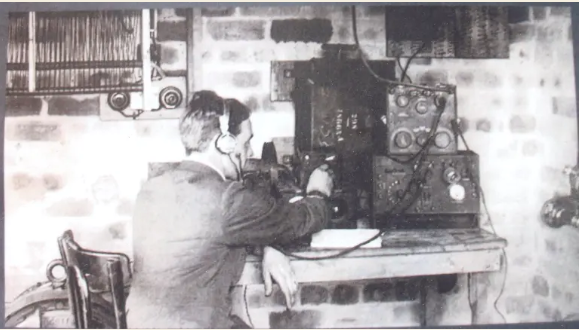
Next talk overview: Weds 26th June - 'A Very Secret War: Bugging the Nazis in WWII' - Helen Fry During WW2, British intelligence bugged the conversations of German prisoners-of-war at three stately houses, including Trent Park in north London, and Latimer House and Wilton Park in Buckinghamshire. From 1942 Hitler’s captured Generals were housed in luxurious conditions and lulled into a false sense of security. They became unguarded in their conversations and inadvertently gave away some of Hitler’s most closely guarded secrets, including the V1 (‘doodlebug’), V2 and atomic bomb programme. For over 60 years the “secret listeners” (German-Jewish émigrés who had fled Hitler) never spoke about their work, not even to their families. They died, little knowing that they, alongside Bletchley Park, shortened the war. Having worked through the declassified files, historian Helen Fry sheds light on one of the greatest deceptions of WWII. A Very Secret War: Bugging the Nazis in WWII – Salisbury Military History Society (salisburymilhist.com/events/very-se…)
Salisbury Military History Society tweet media
English
0
2
2
244
Salisbury Military History Society retweetledi
BFBS Forces News
BFBS Forces News@ForcesNews·
What an incredibly poignant moment! A lone piper in a landing craft lands on Gold beach 80 years to the day after the Normandy landings started #DDay80
English
29
883
4.6K
125.9K
Salisbury Military History Society retweetledi
Royal British Legion
Royal British Legion@PoppyLegion·
Today we mark 80 years since the D-Day landings, remembering the service and sacrifice of all those involved in turning the tide in the Second World War. 1/3
English
83
789
2.6K
221K