Sabitlenmiş Tweet
Kevin🌍
3.4K posts



She's acting like there are no South Africans in other countries. Planes to Congo DR are full of South Africans, what are they going to do there?
Everyone is looking for opportunities in other countries, migration is as natural to humans as breathing, borders are artificial.
CDR AFRICA@cdrafrica
🇿🇦🇬🇭 “Your government is failing to create opportunities, forced you to migrate to cut nails abroad, yet you still defend them?” — South African activist Queen Vee calls out Ghanaians amid rising economic frustration.
English
@joseph_kalimbwe Kind of agree, Zambia has known about this issue for over 30 years & have had that much time to prepare, what have they been doing all this time?
Zambia can't rely on American taxpayer money, HIV/AIDS treatment is the responsibility of the Zambian government, what is the plan?
English
Kevin🌍 retweetledi

Zambia's Emigration Puzzle
This is an interesting post from Dingindaba Jonah Buyoya (@BuyoyaJonah), and the conversation that followed made me dig deeper. Buyoya cites UN DESA data showing roughly 122,000 Zambians living abroad, about 0.59 per cent of the population. He also notes that Zambia has around 249,000 foreign-born residents. Emigration estimates for Zambia vary by source and methodology, and some counts are higher, but the relative picture is consistent across all of them: a thin diaspora and a low outflow rate. Buyoya attributes this to love of home. He also raises a point worth holding: Zambia's population may be too small relative to its land mass for the pressure to have built. At roughly 27 people per square kilometre, compared with Nigeria at 238 or Rwanda above 530, the domestic system has more slack. People can adjust internally before emigration becomes the rational calculation.
I want to suggest a complementary explanation.
In 2023, I conducted a study on Zambian investment behaviour. One finding cut across nearly every variable I tested: information was the binding constraint. Respondents with higher financial literacy moved toward diversified, higher-risk products. Those without it defaulted to conservative positions. They had no basis on which to evaluate alternatives, so they avoided them. The channel through which information actually travelled was personal networks. The proof point that reduced perceived risk was someone they knew who had taken the risk and come through it. The pattern presented as risk aversion. But it was better explained by information access. People who could see the terrain took risk. People who could not, avoided it.
Emigration, like investing in an unfamiliar asset class, can carry the weight of an irreversible commitment under radical uncertainty, where the cost of failure is severe and the available data cannot settle the matter. In that environment, the testimony of a trusted contact becomes the dominant decision input. I want to use the investment finding as a lens for reading Buyoya's numbers. A lens, to be clear, rather than proof.
Africa's large emigrant populations appear to be produced by two broad engines, with a third hybrid. The first I would call extinction. Ethiopians fled the Red Terror under Mengistu. Eritreans fled indefinite conscription under Isaias. Somalis fled state collapse after 1991. Sudanese have been displaced by civil wars, Darfur, and the current conflict since April 2023. Congolese and Rwandans fled war and genocide. In each case, staying was potentially lethal. People left because they had to, and those forced first waves seeded diaspora networks that lowered the information and practical cost for everyone who followed.
The second I would call choice. I am Kenyan. I know this one from the inside. Kenyans and Nigerians emigrate from functioning systems where domestic opportunity falls short of domestic need. Some go through professional and educational pipelines to London, Houston, and Toronto. Many go through labour corridors into nursing, care work, and service roles in the Gulf, the UK, and elsewhere. Colonial and post-colonial connections established early pathways, and the networks that formed made each subsequent departure easier to imagine and to execute. The routes span the full skill spectrum. The common thread is that someone went first and made the next person's calculation legible.
South Africa adds a third pattern. Successive emigration waves before and after 1994, driven by political upheaval, built dense networks in the UK, Australia, and New Zealand. An estimated 520,000 South Africans emigrated between 1989 and 2003. The post-1994 wave was driven by crime, economic policy uncertainty, and professional calculation. The trigger had changed, but the infrastructure the earlier waves built carried the movement. Prior coercion seeded the networks. Subsequent choice ran through them.
Zambia experienced none of these at sufficient scale. And the 1990s are the hardest test of this argument. Zambia entered structural adjustment in 1992, simultaneously hit by severe drought. Copper revenues had been falling for two decades. The country carried an extreme debt burden. A sweeping privatisation programme began in 1992. This was genuine economic devastation.
Yet there was no mass emigration. The crisis had been building since the mid-1970s, and two decades of gradual decline had already produced deep patterns of coping. Zambia is landlocked. Regional options were constrained, with most neighbours either unstable or offering limited absorption capacity, and long-haul destinations required networks that did not exist. For much of the long crisis, exchange controls and foreign exchange scarcity raised the cost of exit, even after major remaining restrictions were eased in 1994. And during this same period, Zambia was receiving refugees from the DRC, Angola, and Rwanda. The national identity that formed was as a host. The infrastructure of departure simply did not exist.
Buyoya's demographic point and the information thesis meet here. Lower density meant lower outward pressure. Lower pressure meant fewer people crossed the emigration threshold. Fewer crossings meant fewer diaspora pioneers. Fewer pioneers meant a thinner information environment. And thin information environments produce behaviour that looks like risk aversion but is better understood as rational response to an illegible environment. When people cannot read the risk, they do not take it. That is what I found in Zambian investment portfolios. I suspect it is what Buyoya's emigration numbers are showing. The caution is real, but it is not a national trait. It is the predictable output of a historical sequence that never built the architecture through which risk becomes calculable.
Buyoya opened a good door with this data. I think the puzzle deserves a wider conversation.
Dingindaba Jonah Buyoya@BuyoyaJonah
Zambians love home. The country has high poverty levels (economic recovery is being reported by the IMF); but it has one of Africa’s lowest emigration rates. Only around 122,000 Zambians live abroad (just 0.59% of the population) as of mid-2024; barely changed since 2020. Yet it hosts 249,000 immigrants.
English

At this point, Zambians should tell the Americans to keep their money and shove it...

English
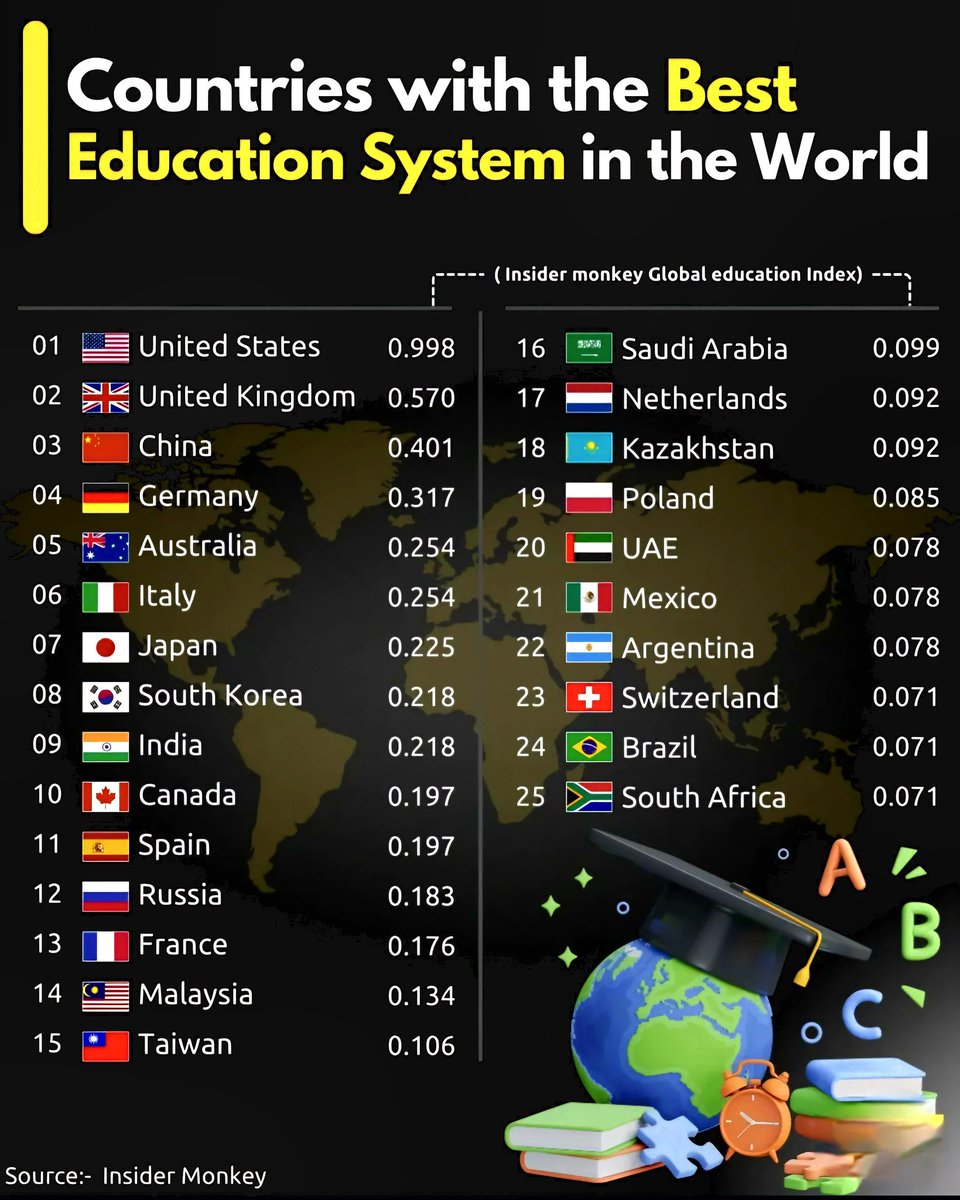
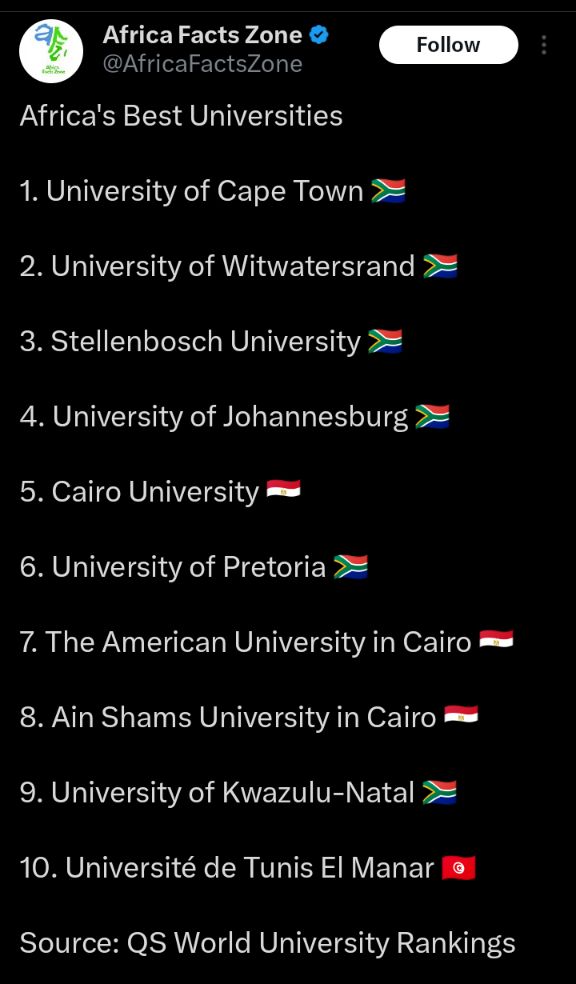
@OriginalKhutso5 Congo has universities, they don't need South Africans
English
@SamKevin29715 You need proper universities for engineering, South Africa has other African countries don't have
English
Ok, nobody goes to South Africa because it's some model for democracy or whatever, people go to South Africa to chase the White Man's dollar.
Living conditions of poor South Africans are worse than what you'd find in Mogadishu so what are you bragging about?
In A Nutshell🥜@Markosonke1
🚨JUST IN: Jacinta Ngobese-Zuma went on Podcast & Chill and basically said African unity is not on the menu… in fact, "to hell with unity" 😭 Apparently the new strategy is: forget unity, we’re here to "clean the country".. So now we’ve moved from Pan-Africanism to spring cleaning? Must we bring mops and detergents to the revolution as well? Because the way this she is sounding, it’s less "let’s build together" and more "everyone must submit their documents at the door" 😩 One minute we’re talking about working as a continent, next minute it’s: "Unity? Not today, remove our country." 😭
English
Kevin🌍 retweetledi

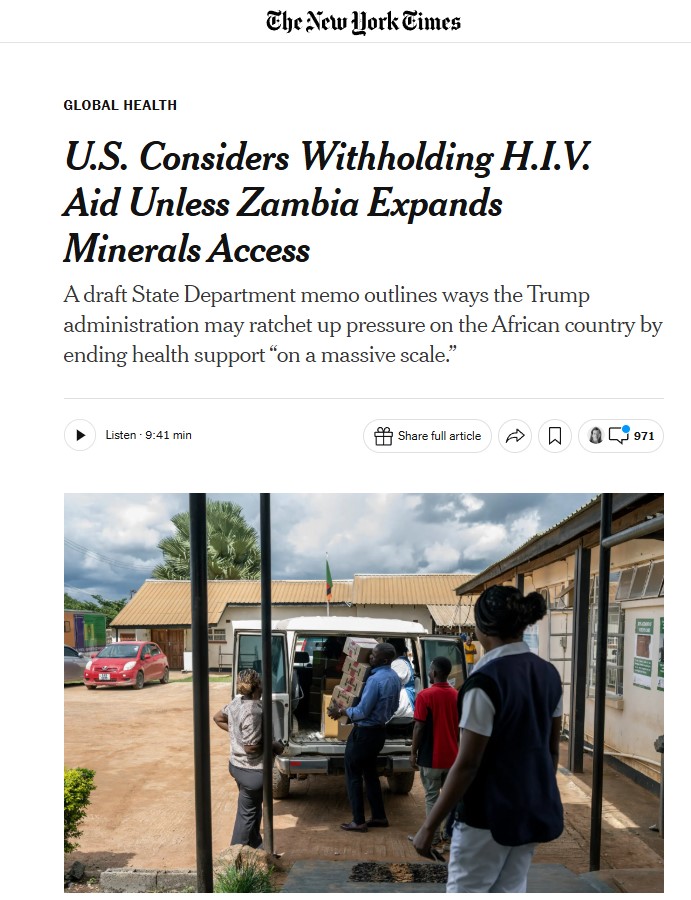
Zambia must decide by April 30 if it'll provide US businesses with preferential access to its minerals, or lose support for 1.3 million people who rely on funding from Washington for HIV treatment.
Al Jazeera’s @marthevdwolf explains.
English
Kevin🌍 retweetledi
USA asked Zambia to give American businesses prefential access to its mineral resources or lose funding for HIV treatment for 1.3 million Zambians.
The deadline ends tomorrow.
English
Kevin🌍 retweetledi

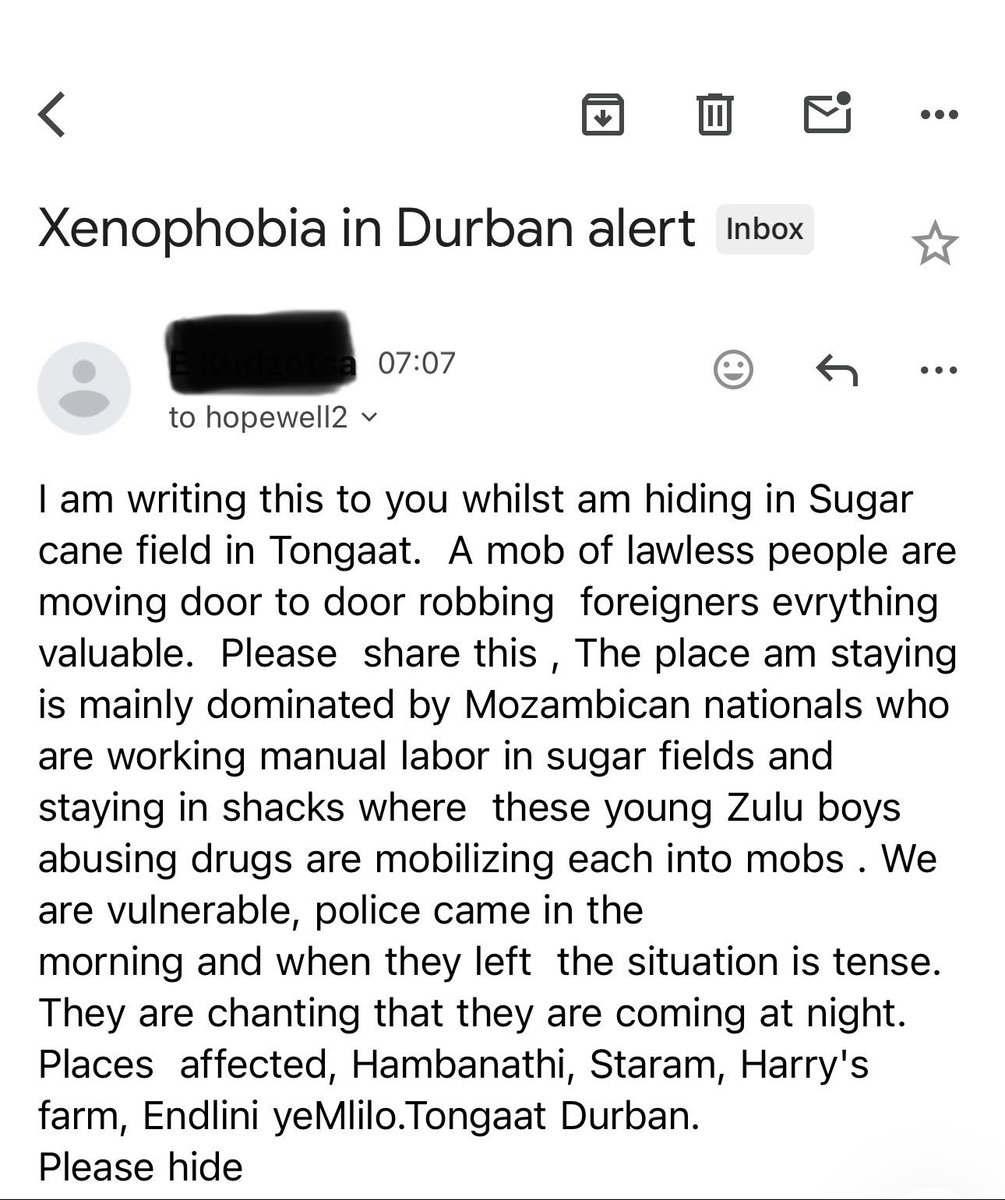
Stay safe guys. If you are in or near these areas, prioritise your safety. Stay indoors, avoid unnecessary movement, remain in groups where possible and keep communication lines open with trusted contacts.
This is the result of failed governance across Africa. African leaders must really deal with the root cause of this crisis. Black Africans are among the most marginalised people in the world, and it is tragic to see them turning on each other in this way.
When leadership fails as it has in Africa, the poor are turned against each other fighting for crumbs and call it survival. Sad to watch this happening in 2026.
English
@GabayiPearl @Ayabong81838348 Ya, I was wondering why Syrian refugees are in Germany, weird they didn't know about this concept.
English

@SamKevin29715 @Ayabong81838348 Seek refuge in the nearest countries to them.. Weird concept, I know!
English
@vejamospecial About 100 passengers. There's a video of her chasing a documented Nigerian from a hospital.
He presented his documents and she didn't care, she denied him access to healthcare.
English

@SamKevin29715 How many people can a plane take ? Compared to the millions that are here. And never it has been said that all foreigners must go, they are talking about illegal foreigners
English
@Ayabong81838348 That's what happens when a country is at war, people seek refuge, weird concept I know
English

@SamKevin29715 Planes to Congo full of South Africans when we have 50k+ refugees from there here in SA?
English
As if the muzungus will let you disrupt their comfort in Cape Town
GIF
🇿🇦Olivia La Grange🇿🇦@Olivia_LaGrange
Apparently Cape Town is the new safe haven for illegal immigrant. Please just spread the word 🤭
English
@Juniour1422907 I see you didn't deny that you don't care whether someone is legal or not
English

@SamKevin29715 Listen to your dumb argument🤦♂️...so your championing illegality lol, where criminals can come in after running from theor crimes instead of getting stopped at the boarder lol a certified moron🤣😂
English
@Juniour1422907 They're still going to other countries and you guys don't care whether an African migrant is legal or not
English
@SamKevin29715 You're never going to amd never eve found an illegal South African anywhere, especially doing nails or selling on the side of the road lol cry harder
English
@MrNaturesdrip I understand, it's ok to go to a different country illegally as long as you fly. Thanks for clearing that up.
English

@SamKevin29715 You just said flights ,They didn't jump the border,You see how stupid you can reason just to be in South Africa
English
Kevin🌍 retweetledi
African Countries with the Highest Population of Foreigners
1. Cote d'Ivoire 🇨🇮 - 2.6 million migrants
2. South Africa 🇿🇦 - 2.4 million documented immigrants
3. Uganda 🇺🇬 - 1.96 million refugees
4. Nigeria 🇳🇬 - 1.3 million legal migrants
5. Ethiopia 🇪🇹 - 1.1 million refugees
English
Kevin🌍 retweetledi

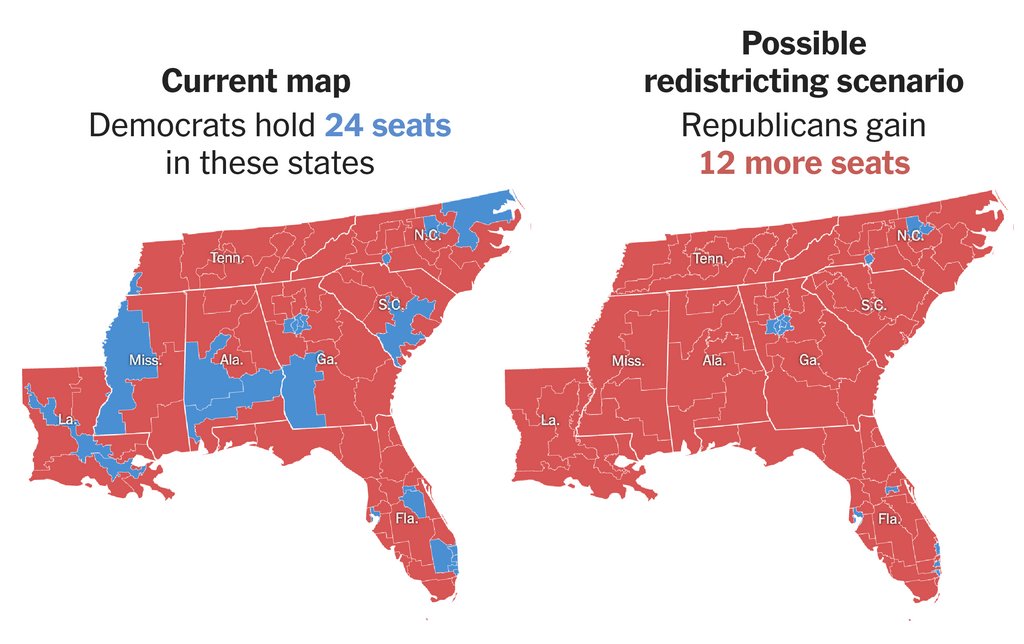
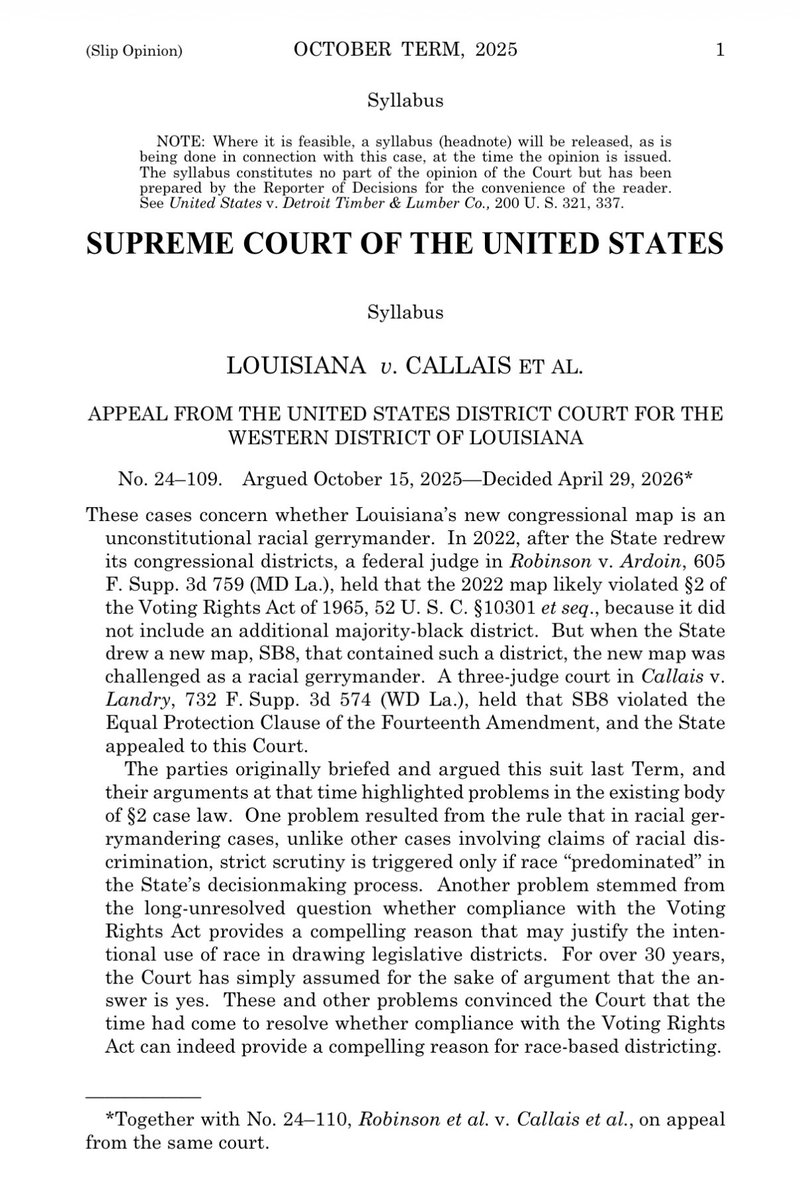
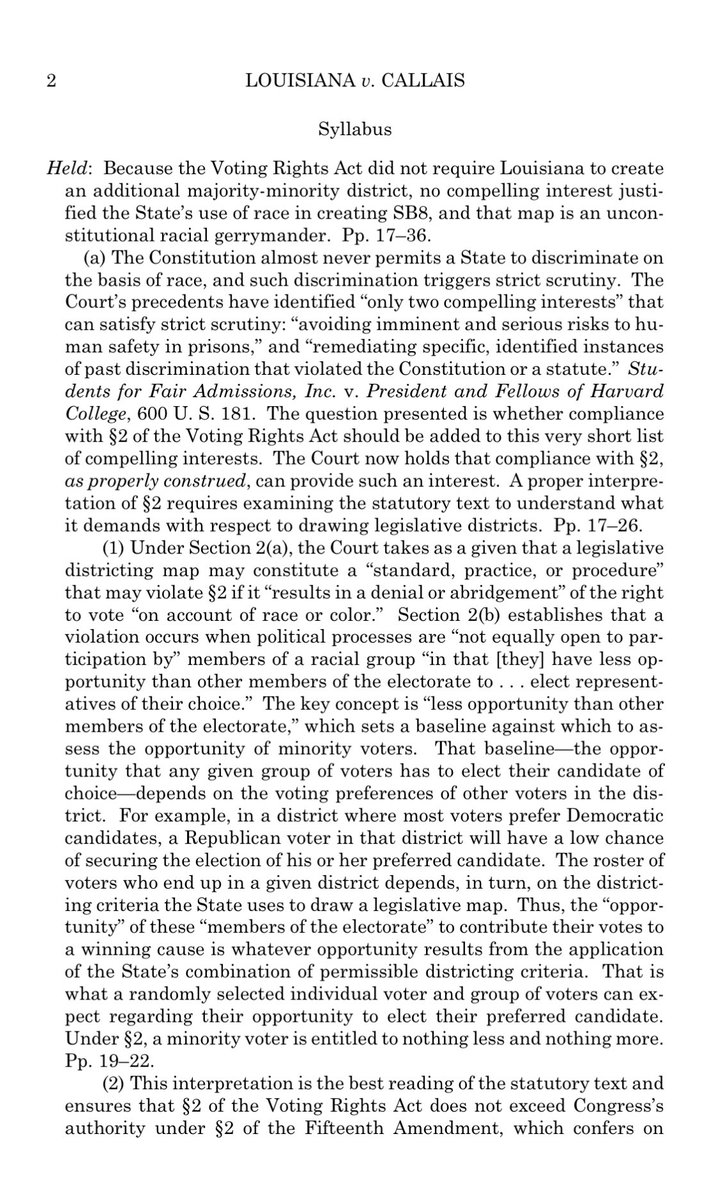
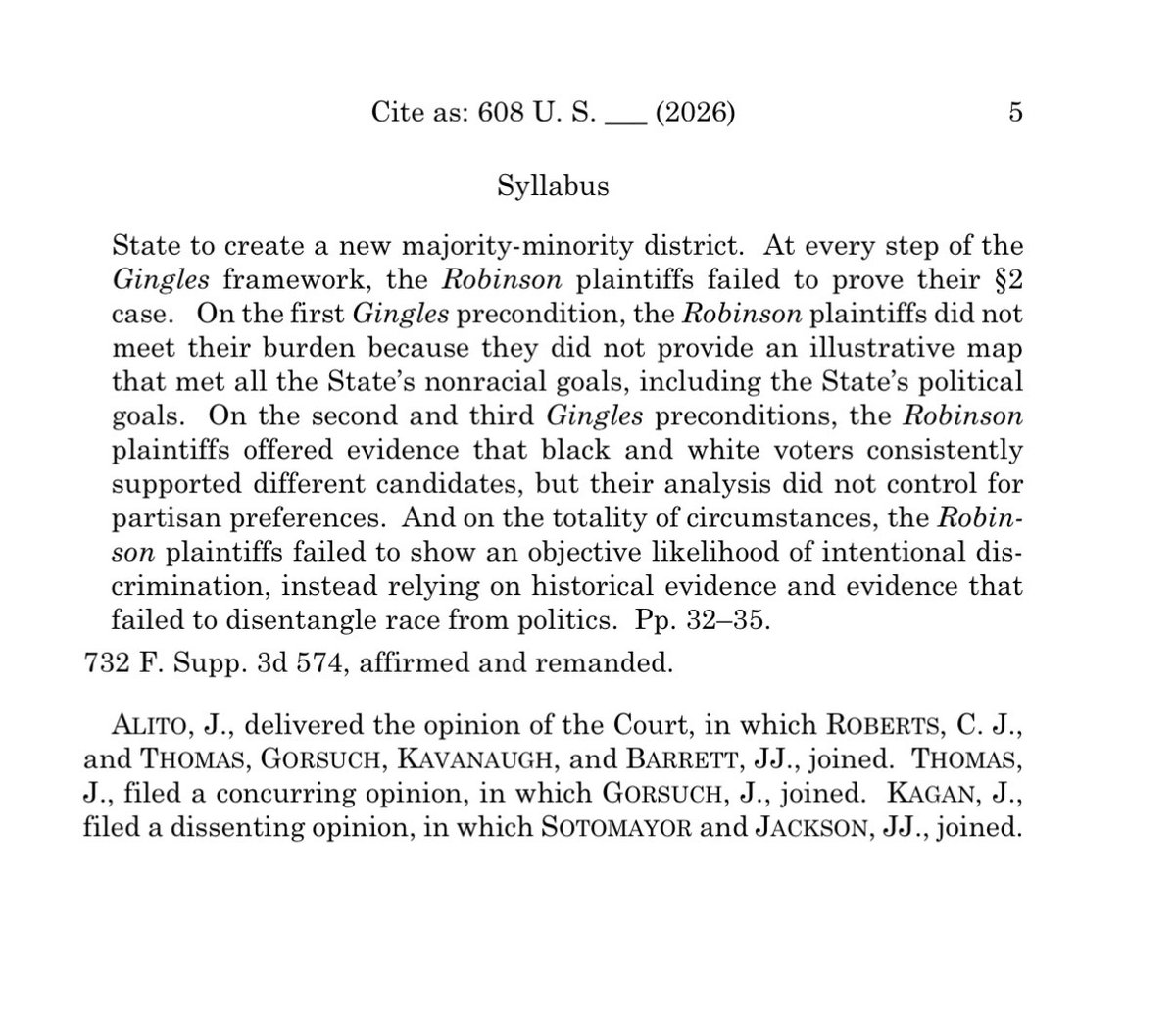
BREAKING: In a 6-3 decision, the Supreme Court rules that racial gerrymandering, which has been used to create majority black congressional districts for decades, is unconstitutional. Justice Samuel Alito wrote the opinion for the majority.
English
Kevin🌍 retweetledi