
Sabitlenmiş Tweet
Samatha
404 posts


Samatha
@Samatha22334477
Intermediary of the higher Self. Instill the chill.
Katılım Aralık 2022
45 Takip Edilen25 Takipçiler

@dr_ericberg Hydrogen peroxide "sanitizes". I use it in my bathrooms. On my produce? Absolutely not, I happen to enjoy the benefits of beneficial microbes and bacteria very much and do not wish to murder them out of fear...
English

A simple vegetable wash can be made with one-quarter cup of food-grade hydrogen peroxide in one gallon of water. Soak produce for 20 minutes, then dry. It helps reduce microbes and residues.
Dr. Eric Berg, DC, not MD; information only
English
@MysticMick222 Am here for you 💜 message anytime, for real. Best wishes, Kindred Soul 💜
English

@MysticMick222 "The day that I can wake up and transcend the holy makeup, I AM powerful!" -Nahko
English
@MysticMick222 Natural progression of things...we think it's how we change the world until we wake up and realize how to actually change it...
English
@MysticMick222 Maybe if they are not so anchored they can rise with you but if the anchor is big enough, it will definitely weigh you both down...
English

俺はいつかネイティブアメリカンに会いに行こうと思ってるよ
神道の教えとネイティブアメリカンの考え方が全く同じ理由を自分の目で確認してみたい
俺は難病だからそんなに長く生きられないが…いずれ必ず行く
日本語
@DownLoafer @BrianRoemmele A true stick built home is superior to modern "traditional" construction. Sad to see things go this way... Watching the "mcmansions" pop up in the hundreds on once nice farmland all over for years now. All plywood and treated lumber, wrapped in paper... Trash.
English

@brianrkelly @BrianRoemmele Why continue looking for the right materials when we already have cob, aircrete, hempcrete and more? We have the materials and know how, now we need to work on repealing the laws preventing us from building with them. If only it were that easy...
English

Somehow , we need to address new construction with AI, affordability and also architecturally inspiring spaces. The modern concrete igloo has a place somewhere perhaps. Love the ideas NASA and engineers are working on to create building materials from dust, dirt , mud. Robotic labor will allow interesting timelines for building.
English
@AimePatrickIra1 Yeeeeaaaa don't worry about all of those plastics baking in the sun releasing micro plastics into the water and soil...
English

SUSTAINABLE FARMING DOESN'T HAVE TO BREAK THE BANK.
Dear fellow farmers, one of the biggest misconceptions holding many of us back from adopting sustainable farming practices is the belief that it requires expensive equipment, advanced technology, and heavy financial investment. Today, I want to challenge that thinking by drawing your attention to something simple, practical, and right before our eyes a low-cost drip irrigation system built from everyday materials.
Look at the image before you. What do you see? Ordinary plastic buckets elevated on wooden stands, recycled plastic bottles, and simple black hosepipes connected along crop rows. No solar-powered pumps. No imported machinery. No bank loans required. Yet this system is quietly and efficiently delivering water directly to the roots of each plant exactly where it is needed most.
How Does It Work?
The concept is beautifully simple. A bucket filled with water is placed on an elevated wooden stand, using gravity to create gentle water pressure. From the bucket, a hosepipe runs along the crop rows. Inverted plastic bottles are connected at intervals, acting as individual drip points that release water slowly and steadily at the base of each plant. The result is a functional drip irrigation system assembled almost entirely from locally available and often recycled materials.
Why This Matters for Sustainable Farming
Sustainable farming is built on three pillars environmental health, economic viability, and social responsibility. This simple system addresses all three.
Environmentally, drip irrigation reduces water wastage significantly compared to flood or overhead watering. Water goes directly to plant roots, minimizing evaporation and runoff. This protects soil structure and reduces erosion.
Economically, the cost of setting up this system is a fraction of commercial irrigation infrastructure. The wooden stands can be crafted from local timber. The bottles are recycled waste. The hosepipes are affordable and reusable. A farmer can set this up for very little and save considerably on water and labour costs over an entire season.
Socially, when one farmer adopts and demonstrates this method, neighbours learn and replicate it. Knowledge spreads. Communities become more food secure without depending on external aid or expensive inputs.
The Lesson for Every Farmer
Sustainable farming is first and foremost about smart thinking, not big spending. Innovation does not always mean importing technology sometimes it means looking at what you already have and using it wisely. A bucket, some wood, old bottles, and a hosepipe can irrigate an entire garden plot effectively.
Before you wait for funding or expensive equipment, ask yourself what do I already have that I can use better? The answer might already be in your hands.
Start small. Start smart. Start sustainable.

English
@drinkonsaturday @CultivateElevat I didn't know you had a brother! He sounds just like you 😂
English

Viktor Schauberger was an Austrian naturalist, inventor, forester, and philosopher born in 1885 and died in 1958. He's popularly known as the "Water Wizard" for his lifelong observations of water in nature—especially how it moves in rivers, streams, and vortices—and his belief that modern technology harms water's natural vitality.
Schauberger argued that water is alive and has special properties when it flows in spiral, vortex-like patterns (inspired by how trout swim upstream effortlessly or how water swirls in mountain streams). He claimed straight pipes, dams, and chlorinated/treated water "kill" its energy, while natural spiraling movement revitalizes it, increases its oxygen content, cleanses it, and even generates subtle energies (what he called "implosion" rather than explosion-based tech).
His ideas blend keen natural observation with unconventional (and often pseudoscientific) claims about energy, levitation devices (like the Repulsine), implosion turbines, and free energy from water vortices. Mainstream science largely dismisses many of his more extreme inventions (e.g., anti-gravity or over-unity energy claims), but his biomimicry approaches to flow dynamics and water treatment have influenced permaculture, alternative water vitalization products, and some ecological engineering concepts today.
English

@lady_valor_07 Do not under value yourself and do what makes you happy. Don't sacrifice your time for people who do not know your worth, pay attention to actions rather than words.
English

@MysticMick222 Source is the original "open Source". Unfortunately, most seemed to have lost connection.
English

@OldHollowTree Don't plow the soil unless you want to disrupt your soil's microbiome. Seeds are more resilient than you think.
English

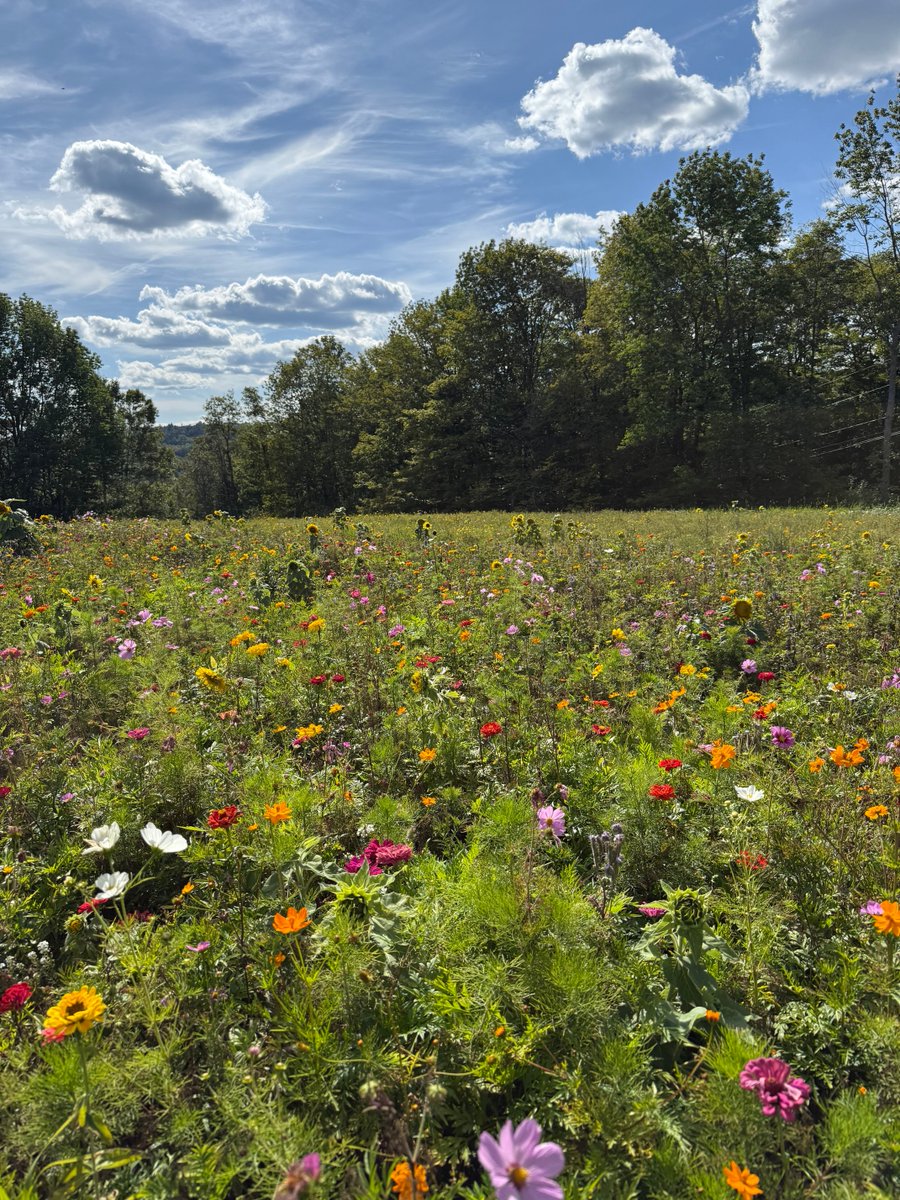
I’m greatly anticipating May and June and July.
Plow the soil and throw flower seed with wild abandon. Bees everywhere. Deer and skunk sneaking about at night.
Glorious. Glorious. Glorious.
English
Samatha retweetledi

@MolaxCho_pa @oasishealthapp Vinegar and baking soda. Baking soda in the bottom, add the vinegar. Don't inhale the fumes then scrub.
If you have buildup problems, pumice sticks work wonders. They sell specialized pumice sticks for this that last a long while.
English

@oasishealthapp Yes yes n yes. Cleaning products are a nightmare, you can get away with natural products for most things, but when it comes to the toilets… nah, suck it up ;)
English

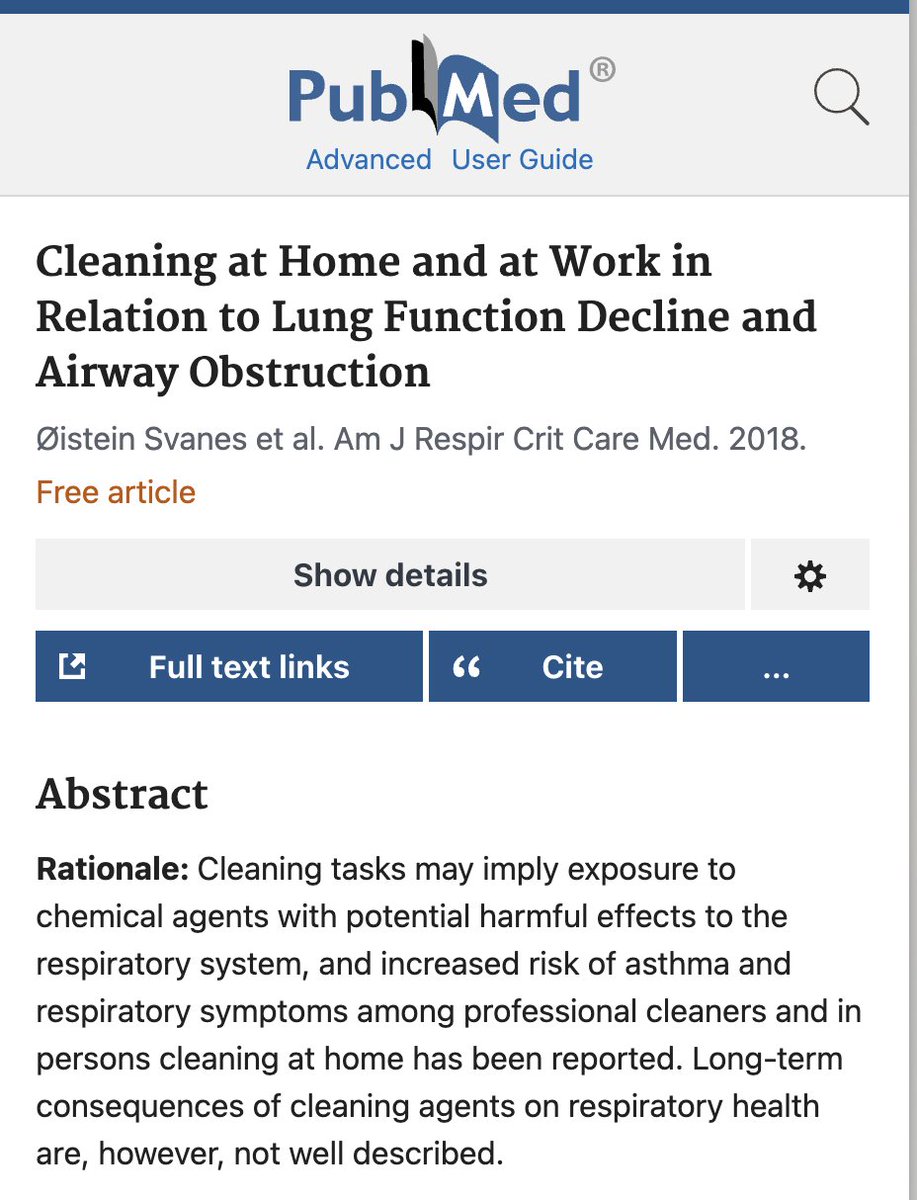
Women who clean are inhaling an equivalent of 20 cigarettes per day
A 20-year study revealed that women who routinely clean their homes experience a loss in lung function comparable to smoking 20 cigarettes daily for the entire duration
Chronic exposure to cleaning chemicals, especially sprays and volatile compounds, can lead to lung inflammation:
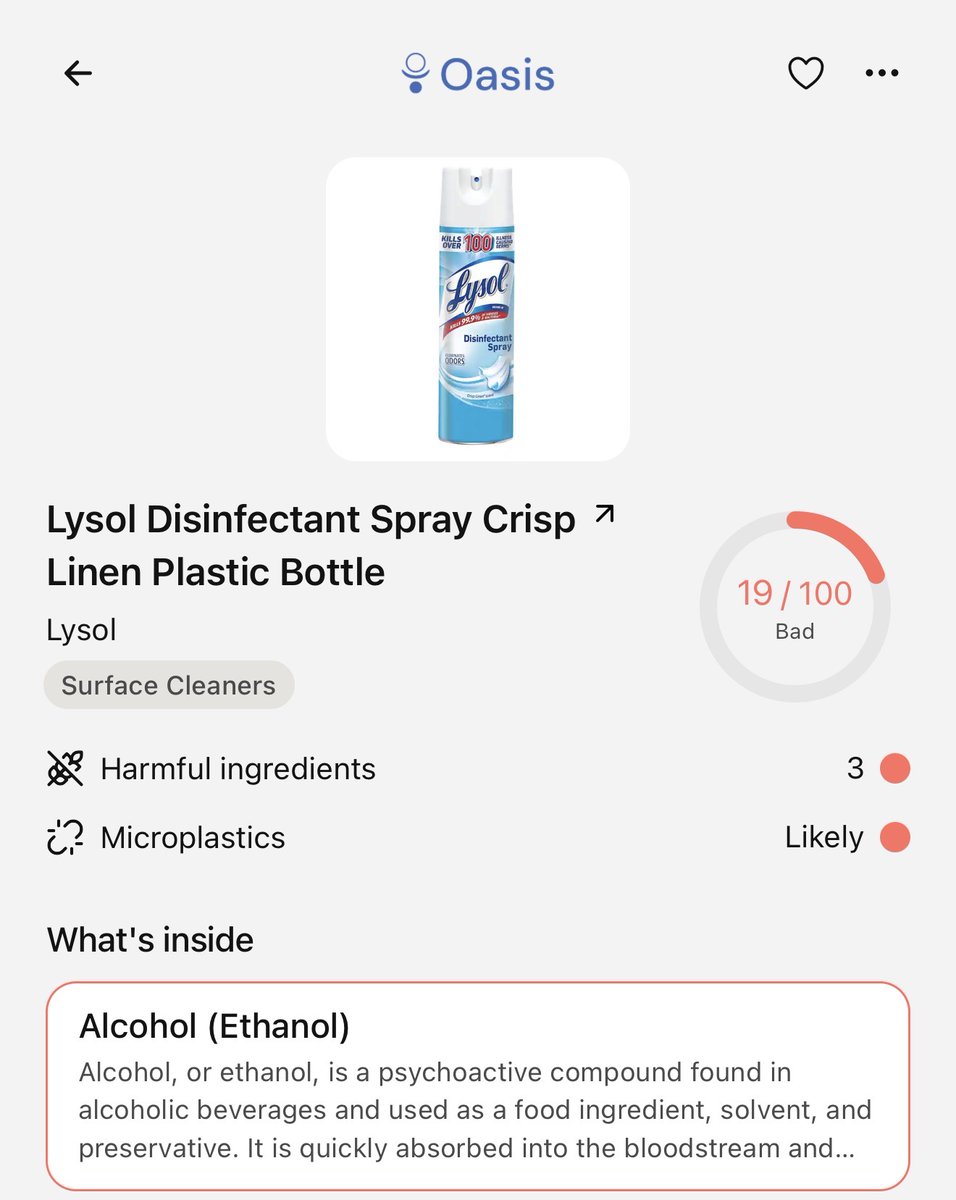
- Alcohol disinfectants: dehydrate and damage airway epithelial cells
- Propellants like Butane: inhalable micro-droplets that carry quats and fragrance VOCs into lower airways
- Fragrance Chemicals: airway hyperreactivity and damage epithelial cells.
The main culprit? Chronic exposure to cleaning chemicals, particularly sprays and volatile compounds
The worst category for this lung inflammation is disinfectant sprays
English