Kaare Sandholt
797 posts

Kaare Sandholt
@Sandholt
Chief International Expert, China Energy Transformation Programme, Energy Research Institute of NDRC

Beijing Katılım Haziran 2009
527 Takip Edilen374 Takipçiler
Kaare Sandholt retweetledi

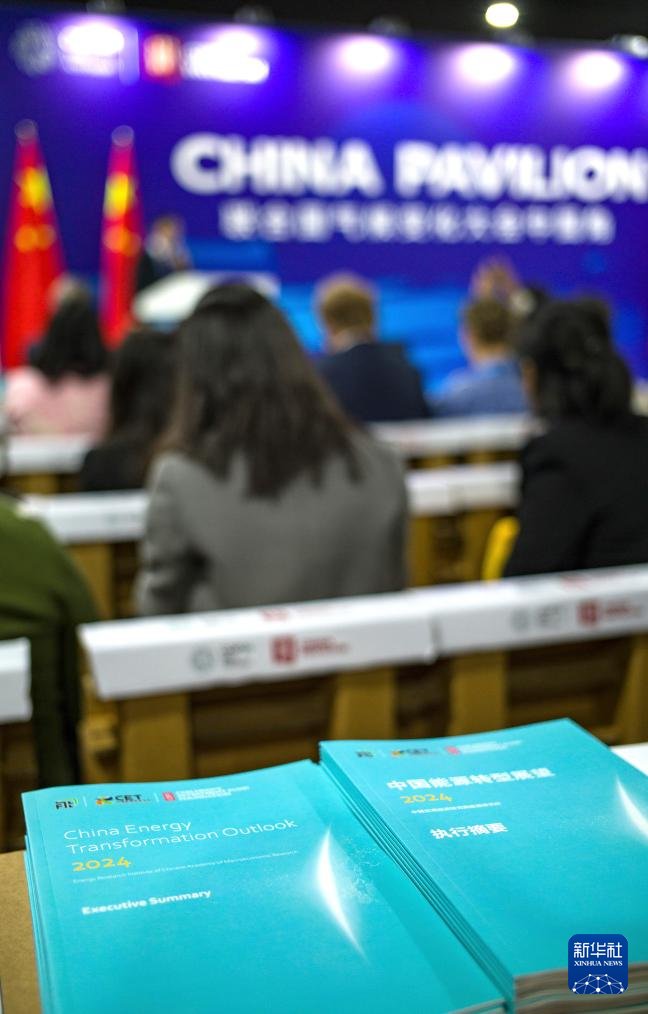
The China Energy Transformation Outlook 2024 was released #COP29 China Pavilion, saying the energy transformation can make a decisive contribution to China's carbon-neutral economic and social system before 2060.

English
Kaare Sandholt retweetledi

Falling renewable costs = secure and affordable energy for ASEAN 🔋
As solar, hydro, and geothermal become cheaper, they offer a cost-effective path for ASEAN's energy transition. Meanwhile, bioenergy remains the priciest option in the region. 🌞
ember-energy.org/latest-insight…

English
Kaare Sandholt retweetledi

@IRENA 'Renewable Power Generation Costs in 2023' was released yesterday at the @GRA_Renewables Global Renewable Summit by DG @flacamera
As alumni, and lead until end-July. A quick thread on why renewable power just keeps on costing less...
1/
irena.org/Publications/2…
English

Godt at se, at Draghi er enig med mig: køb løs af kinesiske solceller men pas på den europæiske vindindustri :). dr.dk/nyheder/udland…
Se side 37 i Draghi’s rapport commission.europa.eu/document/97e48…
Dansk
Kaare Sandholt retweetledi

Her springer Tyskland køletårnene i luften på et ellers velfungerende atomkraftværk. Værket har været slukket, men kunne ifølge analyser nemt genstartes, som den suverænt billigste vej til grøn strøm. Mens det forgår får Tyskerne 22,7% af deres strøm fra kul.
Hvor var Greenpeace, Greta Thunberg. Sidste Generation og Oprør mod Udryddelse og alle klimaaktivisterne? Foretrækker de simpelthen kul over den sikre, grønne og stabile energiform?
Her er en reel dårlig klimabeslutning. Med millioner af tons CO2 til følge, som nemt kunne undgås..


Dansk

@laurimyllyvirta @CleanPowerDave IEA has a nice graphic on this. From the report World Energy Employment 2023.

English

@CleanPowerDave I don't know that this qualifies but this is where I got the number. Presentation by prof. Horii Nobuhiro of Kyushu University.

English

This is a frequent misconception, and not only in China. China's coal industry shed about half of its jobs over the past decade due to automation, even as output grew rapidly, and very few people found that a problem. Much of it happened through retirement and the labor market had no problem accommodating the rest. Furthermore, job losses in the construction sector far exceed those from coal mining but they're hardly even mentioned as those are not government jobs. Not saying that the transition isn't hard for individuals, communities and local economies, but somehow all of this only seems to become a problem once reductions in coal use begin to play a marginal role in job losses.
Eric Hawkins@eric_hawkins9
@sanerefrain @laurimyllyvirta @CleanPowerDave One big problem for China is Job losses, as the coal industry as a whole employs millions of Chinese workers, while the gas industry is just thousands once gas flows

English

@KristiaRPoulsen Så konklusionen er altså at folk er mindre optaget af at spare på forbruget nu på grund af lavere priser og mindre offentlig krisefokus?
Dansk

Link til artikel
Mere dybdegående forklaringer findes i sidepanelet til højre. "Udvikling i gasforbrug i Danmark"
greenpowerdenmark.dk/nyheder/forbru…
Dansk
Kaare Sandholt retweetledi

Media reporting continues to exaggerate the role of clean energy manufacturing in China's electricity&energy demand growth. See this from Bloomberg / @JavierBlas
"In China, mass production of solar photovoltaic panels, electric vehicles and batteries is one of the main reasons why electricity consumption is rising."
Contrast this with my analysis, using actual data and numbers:
"Manufacturing of the “big three” products – batteries, EVs and solar-power equipment – is responsible for approximately 3% of China’s CO2 emissions, and was behind an estimated 2% increase in emissions out of the 12% total increase from 2020 to 2023, based on a calculation using the reported production volume and emissions intensity for each product."
The same calculation for electricity yields a contribution of 0.7%-points or one tenth to electricity demand growth of 6.7% in 2023, and the contribution has fallen in 2024 as output growth rates have moderated.
It's important for non-mainland reporters and analysts to recognize that most Chinese reporting on the causes of the recent surge in China's energy demand rattles off the politically acceptable causes, not the ones that are quantitatively the biggest.
I've analyzed this in detail here:
dialogue.earth/en/climate/chi…
English

@"This report is essential for European decision-makers strategizing for a greener future! "linkedin.com/pulse/report-e… på @LinkedIn
English
Kaare Sandholt retweetledi

EU hydrogen targets are ‘unrealistic’, says audit body on.ft.com/3zSXXs2
English
Kaare Sandholt retweetledi

Great article by my colleagues at CREA highlights inflexible grid operation as a key cause of China's power shortages and perceived need to build more coal power. Electricity trade between provinces is based on rigid quotas rather than sending power where and when it's needed. Regulators and provinces have taken the first more steps towards flexible operation which will help keep the lights on already this summer.
caixinglobal.com/2024-06-18/com…
English