
Saphsin retweetledi
Saphsin
8.3K posts

Saphsin retweetledi
Saphsin retweetledi

Stop repeating this lie! The Oil Shock of the 1970s was not because of the (barely existent) embargo! It was because of wholesale nationalizations by producing countries organized in OPEC and the devaluing of the US dollar.
MarxistRealism@MarxistRealism
Comparisons to the 1970s oil crisis feel misguided. There's a chasm of difference between a coordinated embargo from oil producers vs. gas fields and oil refineries being blown from the map. Diplomacy can't fix the physical reality of material shortages and a supply cliff.
English
Saphsin retweetledi

BREAKING: 'Entire NATO mission had withdrawn' from Iraq
🔴 LIVE updates: aje.news/fs4nzb?update=…
GIF
English
Saphsin retweetledi


Saphsin retweetledi

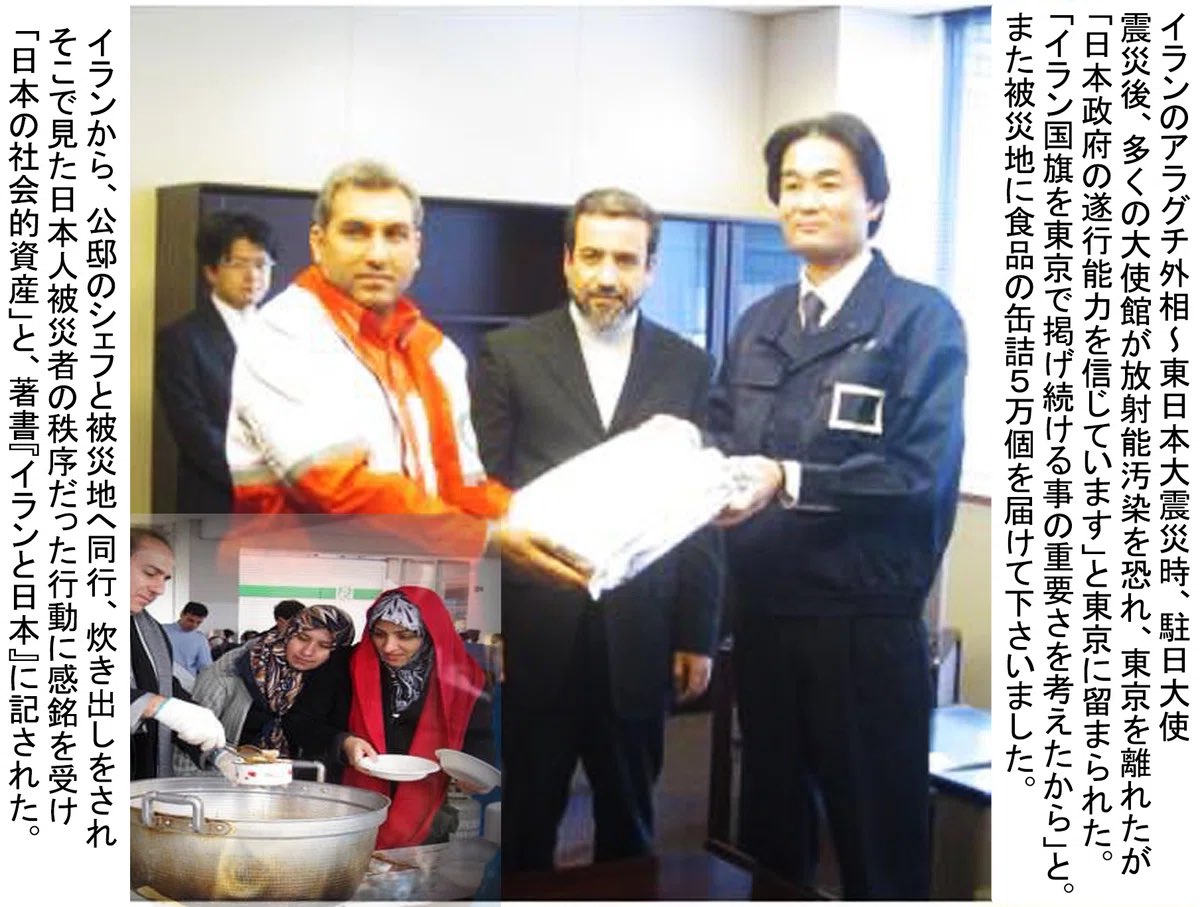
放射能汚染を避けたいと、多くの大使が関西へ逃げ去って行った頃、アラグチ外相(当時駐日大使)は逃げるどころか、逆に東北の被災地まで駆けつけて下さり、炊き出しをして下さったのです。
お世話になったイランの恩を、仇で返す日本|出アメリカ~脱・戦後体制(さくら子) note.com/sakura_ko0412/…
日本語
Saphsin retweetledi

Araghchi thinking Americans remember General Westmoreland

Seyed Abbas Araghchi@araghchi
Americans haven’t forgotten how, even as hundreds of U.S. soldiers were dying in Vietnam, and the outcome was already clear, General William Westmoreland was flown home to reassure everyone that the war was going well — that the U.S. was “winning.”
English
Saphsin retweetledi

No, they can't "trade with the rest of the world." The U.S. forbids any ship that docks in Cuba from docking in U.S. ports for 180 days, which scares most countries off, and since Jan 29 the U.S. will slap heavy tariffs on any country that sells them oil. But you know this.
Andy Maidment@Anders_Maidment
@alexskopic What's weird is that they can still trade with the rest of the world but, somehow, still can't maintain their economy. It's almost like socialism doesn't work or something...
English
Saphsin retweetledi

Interesting escalation. Shows how serious Iran is about eliminating Western presence in the region. I wonder if this also portends potential Huthi attacks - at one pt they had declared operations in the Indian Ocean...
barry with the NED@bonzerbarry
Iran fired ballistic missiles almost 4,000km away towards Diego Garcia. An SM-3 was used to intercept one of them.
English
Saphsin retweetledi

#Iran War Update No. 21 (focus on Iranian strategic narrative):
🔹 Iran continues targeting U.S. bases in the region. The aim appears to be to prevent the restoration of radar and early warning systems that support Israel’s air defense, many of which were damaged by Iran in the first few days of the war. This suggests a sustained effort by Iran to preserve its ability to strike Israeli territory more effectively.
🔹 Iraq is becoming more volatile. According to Iranian sources, recent assassinations of key militia figures, reported failed attempts to target Kataib Hezbollah leadership, and strikes in Baghdad and al-Qaim indicate a shift toward reshaping the Iraqi political and military landscape, even as the war with Iran itself continues.
🔹 Signs of temporary de-escalation in Iraq are being met with skepticism. Kataib Hezbollah announced a five-day pause in attacks on the U.S. embassy, conditional on halting strikes and limiting intelligence activity. However, this pause appears fragile and reversible.
🔹 Iranian assessments suggest Israel is pushing to expand the war into Iraq more deliberately, viewing pressure on Shia armed groups as a more effective way to weaken Iran’s regional position. At the same time, there is apparent dissatisfaction that larger Iraqi Shia factions are still unwilling to join the conflict.
🔹 Meanwhile, NATO personnel have been withdrawn from Iraq, reflecting growing concern that the country could become a major secondary theater of the war.
🔹 U.S. and Israeli strikes are increasingly targeting internal security infrastructure inside Iran. Satellite imagery shows severe damage to a key logistical headquarters of the Iranian police in Tehran. This is seen as further evidence that Israel is focused on undermining the state’s capacity to maintain internal control.
🔹 Iran is signaling new red lines in the Persian Gulf. The Iranian armed forces have warned that any attack on Iranian islands would trigger direct strikes on UAE territory – not just U.S. interests there. This could include ports and potentially major cities.
🔹 At the same time, the Iranian armed forces have issued evacuation warnings for Ras al-Khaimah, suggesting that further escalation with Gulf countries may be imminent.
🔹 There are also growing indications that some Gulf states may be moving closer to involvement in the war. A Middle East Eye report suggests expanded U.S. access to bases in Saudi Arabia and increased UAE readiness for a prolonged conflict.
🔹 U.S. military activity continues to intensify, combining sustained heavy bomber strikes – particularly against southern coastal and naval-linked targets – with a growing amphibious buildup. Thousands of Marines from expeditionary units aboard ships like the USS Boxer are being deployed to the region, adding to an already large force presence and creating a variety of options ranging from offshore strikes to potential limited ground operations.
🔹 Iran’s missile and launch strategy continues to adapt. Iranian debates indicate the use of mobile, tunnel-based launch systems that allow rapid firing and relocation, making detection and preemption significantly more difficult.
🔹 Cluster munitions are now a major feature of Iranian strikes on Israel, aimed at overwhelming air defenses rather than maximizing precision damage.
🔹 Iran struck Israeli energy infrastructure the day before, including the Haifa refinery, while continuing its broader strategy of sustained, lower-volume missile launches to maintain constant pressure on the Israeli public.
🔹 Syria is emerging as a potential variable. While the Syrian president signals neutrality, Iranian and Hezbollah concerns are growing that Syria could come under pressure to act against Hezbollah from the east.
🔹 China’s stance is becoming more explicitly aligned with Iran at the political level. Beijing has condemned U.S. and Israeli strikes as illegal, affirmed support for Iran’s sovereignty and territorial integrity, and reiterated opposition to sanctions. While still calling for de-escalation and avoiding any direct military role, its framing of the conflict increasingly places responsibility on Washington and Tel Aviv, signaling a clear – if still cautious – tilt toward Iran.
🔹 Global economic consequences are deepening. Oil supply disruptions, cuts of roughly 10 million barrels per day, and projections of prices potentially reaching $180 per barrel in a month underscore the scale of the shock.
🔹 The conflict is beginning to affect global supply chains, with disruptions already emerging in sectors such as aluminum, reflecting how instability in the Gulf is feeding into broader industrial and commodity markets.
🔹 Ukraine is becoming increasingly entangled in the conflict. Ukrainian drone interception units are now reportedly deployed in multiple Middle Eastern countries to counter Iranian systems. At the same time, reports of a possible Russia-U.S. quid pro quo – linking Moscow’s support for Iran to Western backing for Ukraine – though denied by Moscow, highlight how the two wars are becoming politically and strategically interconnected.
🔹 Inside Iran, leadership signaling remains defiant but cautious. Mojtaba Khamenei’s written Nowruz message – rather than a public appearance – has reinforced uncertainty about his condition. However, the message emphasized resilience and national unity.
🔹 At the same time, mistrust toward any ceasefire is deepening. Iranian assessments increasingly view potential short-term pauses as tactical moves by the U.S. and Israel to regroup for further escalation, especially one involving the deployment of ground forces.
🔹 Overall, what is taking shape is a multi-layered and diverse battlespace. Rather than a single escalatory ladder, different arenas – Iraq, the Persian Gulf, Ukraine, and potentially Syria – are evolving at different speeds and according to different logics, with local actors, infrastructure vulnerabilities, and alliance calculations increasingly driving events as much as decisions in Tehran, Washington, or Tel Aviv.
English
Saphsin retweetledi

Japanese companies underpaying their talent isn’t anything new. There’s a reason why Samsung became big (they raided Japan’s semiconductor engineers), why the Blue LED guy fled Nichia for the US, and why an early EUV pioneer at NEC left for the US.
OK Then@okaythenfuture
People really don't seem to understand that Malaysia is basically a first world economies at this point. Salaries are even higher there for most tech roles than in London + most European cities now. Especially around Penang, which is very notable given its not the main economic engine of the country but is a huge semiconductor/engineering hub, and around Johor, which is Southeast Asia's data hub. The world has transformed massively in the past generation. The Malaysian Century.
English
Saphsin retweetledi

People really don't seem to understand that Malaysia is basically a first world economies at this point.
Salaries are even higher there for most tech roles than in London + most European cities now.
Especially around Penang, which is very notable given its not the main economic engine of the country but is a huge semiconductor/engineering hub, and around Johor, which is Southeast Asia's data hub.
The world has transformed massively in the past generation.
The Malaysian Century.
Nikkei Asia@NikkeiAsia
Malaysia has overtaken Japan in salaries for key technology roles for the first time, driven by rising investment in the booming semiconductor industry and intensifying competition in digital sectors. s.nikkei.com/40D2o4E
English
Saphsin retweetledi
The Zionist Para State belongs to the same family as the Transatlantic Ruling Class (per Kees van der Pijl) and the Pacific Ruling Class (per Jim Glassman). Tracing its history would make for an excellent project.
English
Saphsin retweetledi

A viral track repeating just two words,“Yanis Varoufakis,” is spreading across Russia's clubland.
Created by a Moscow DJ, the tune has taken off among zoomers, with critics linking its appeal to a revival of 90s/early 2000s techno. The irony is that most listeners likely have no idea who @yanisvaroufakis is, they just like the rhythm of the name.
English
Saphsin retweetledi
Israel certainly contributed but the US and UK were going to invade Iraq anyway for their own reasons. Here is a secret memo c 2002 from the British govt about pressuring OPEC. See the first bullet.

Lee Fang@lhfang
FDD and AIPAC were the same Israeli front groups that lobbied aggressively to push the U.S. into war in Iraq in 2003. FDD sponsored a TV ad falsely linking Saddam Hussein to 9/11 and FDD experts appeared routinely in the media to claim Iraq had WMDs. x.com/_ZachFoster/st…
English
Saphsin retweetledi

💢 Fire destroys Czech facility tied to Elbit drone partnership as new direct action group claims responsibility
A group calling itself the “Earthquake Faction” has set fire to a facility in Pardubice, Czech Republic, where Czech firm LPP Holding and Israeli weapons maker Elbit Systems were working to build a “Centre of Excellence” for drones and unmanned systems.
➤ In a statement, the group describing itself as an “internationalist underground network,” said it targeted the facility because it develops weapons used “to massacre people daily in Palestine, Lebanon, Iran, and across West Asia.”
➤ The site was reportedly empty and no one was harmed. Photos show a large industrial building engulfed in flames, with Czech authorities investigating the incident as suspected arson.
➤ The group signaled further action, saying it aims to “destroy all limbs of empire from within, by any means effective,” targeting infrastructure linked to Israel.


English
Saphsin retweetledi

Nobody believes in the literacy and historical knowledge of Americans more than Iranian officials…
Seyed Abbas Araghchi@araghchi
Americans haven’t forgotten how, even as hundreds of U.S. soldiers were dying in Vietnam, and the outcome was already clear, General William Westmoreland was flown home to reassure everyone that the war was going well — that the U.S. was “winning.”
English
Saphsin retweetledi

Saphsin retweetledi

Saphsin retweetledi
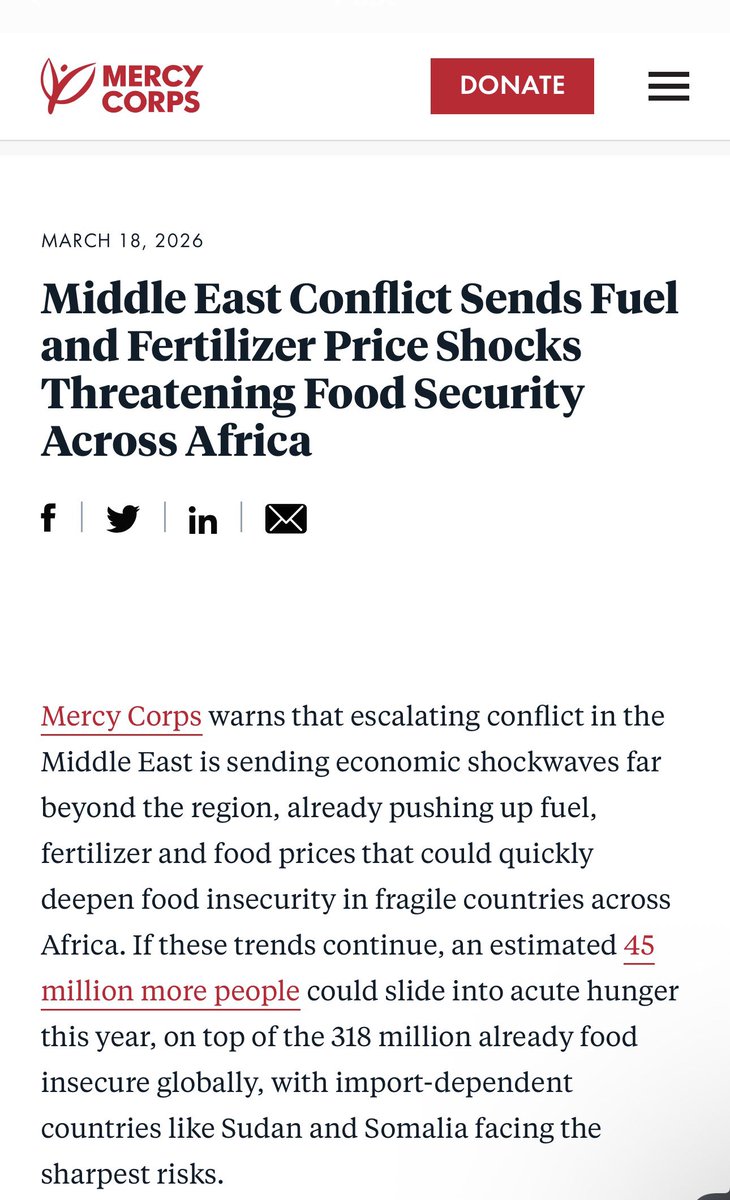
⭕️ Sudan at risk as Middle East war drives fuel and fertilizer shocks across Africa
Escalating conflict in the Middle East is pushing up fuel, fertilizer, and food prices, risking deeper hunger across fragile African countries, Mercy Corps said.
Up to 45 million more people could fall into acute hunger this year, with Sudan and Somalia most exposed due to reliance on imports moving through the Strait of Hormuz.
In Sudan, fuel prices have risen nearly 30%, threatening planting season as fertilizer supplies tighten. In Somalia, fuel costs have surged up to 130%, driving sharp increases in food prices.
Mercy Corps warned the shocks are hitting as humanitarian aid collapses, raising fears of a wider global food crisis.
English