Not Your Normal Vigilante

27.6K posts

Not Your Normal Vigilante banner
Not Your Normal Vigilante

Not Your Normal Vigilante

@SashaMardo

As They Come!
Katılım Nisan 2022
1.4K Takip Edilen14.6K Takipçiler
Not Your Normal Vigilante
@Maskani254 County authorities must finalize stall allocation, ensure access to facilities, and provide a clear operational plan, so that the market begins serving traders as intended without further delay. #StalledProjectsKE
English
0
0
0
1
Not Your Normal Vigilante retweetledi
Maskani Ya Taifa 🇰🇪
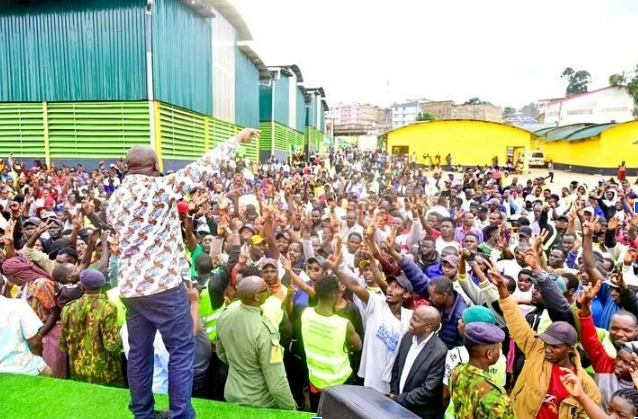
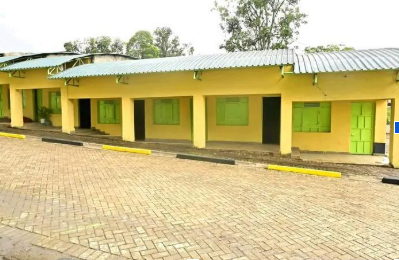
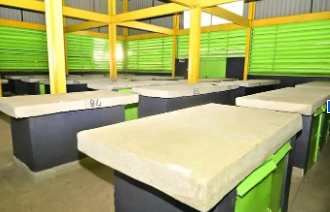
Project Overview: Kericho Market was officially launched and declared ready for use on 6th February. Intended purpose: provide structured trading space for: 1. Women traders. 2. Mama Mboga vendors. 3. Small-scale informal businesses. Current Status: Despite the official launch, the market is not operational. Traders have not been allocated functional trading spaces. Facility remains inaccessible for normal business activities. Impact on Traders & Local Economy Traders, especially women and mama mbogas, are: 1. Operating without proper shelter or stalls. 2. Exposed to ongoing rainy season disruptions. 3. Forced to rely on informal roadside trading conditions. Consequences include: 1. Reduced sales and customer access. 2. Food spoilage and stock losses. 3. Insecurity and exposure to harsh weather. 4. Loss of dignity and predictable income space. A facility declared “ready” is still not serving its intended users. Raises questions on:What “launch readiness” means in practice Whether infrastructure completion aligns with actual usability Coordination between construction completion and market activation Administrative or operational bottlenecks after project handover Core Issue: A publicly launched market remains non-functional, leaving traders without safe, reliable trading space during a period of adverse weather conditions. Why was the market declared ready for use if traders cannot operate in it? What is preventing immediate occupation and activation of stalls? Who is responsible for the gap between launch announcement and operational delivery? #StalledProjectsKE
Maskani Ya Taifa 🇰🇪 tweet mediaMaskani Ya Taifa 🇰🇪 tweet mediaMaskani Ya Taifa 🇰🇪 tweet media
English
231
39
42
561
Maskani Ya Taifa 🇰🇪
Over the past three decades, Kenya has witnessed a growing pattern of stalled, delayed, and abandoned public projects, ranging from roads and hospitals to water systems, housing developments, and critical infrastructure. Despite significant public spending and repeated government commitments, many of these projects remain incomplete, non-functional, or in some cases, never took off at all. While public investment is intended to drive development and improve livelihoods, the increasing number of stalled projects is raising serious concerns about accountability, value for money, and the effectiveness of public finance management systems. The national conversation around stalled projects is steadily growing, particularly as audit reports, parliamentary findings, and investigative reports continue to reveal billions of shillings spent on projects that have failed to deliver. From dam projects like Arror and Kimwarer, to transport initiatives such as the SGR extension, and critical social infrastructure including hospitals and courts, the scale of incomplete projects reflects deeper systemic challenges. For many Kenyans, stalled projects are not just statistics; they are lived realities. Communities continue to lack access to essential services such as healthcare, clean water, reliable transport, and economic opportunities. At the same time, public resources that could have transformed livelihoods remain tied up in incomplete or non-performing investments. Yet citizens often have limited access to clear, timely, and transparent information on how these projects were approved, funded, and implemented. This lack of transparency makes it difficult to track responsibility, demand accountability, or ensure corrective action. At the same time, concerns persist around weak procurement systems, poor contractor selection, budget constraints, political interference, and limited oversight. These gaps create an environment where projects can stall with minimal consequences, raising critical questions about governance, enforcement, and institutional responsibility. The #StalledProjectsKE campaign is a citizen-driven initiative aimed at sparking informed public dialogue on stalled public projects, public finance accountability, and the responsible use of public resources. It seeks to empower citizens to question, engage, and demand answers on how development commitments are being implemented. The campaign encourages Kenyans to interrogate the systems behind stalled projects and to ask critical questions: 1. Where did the money go? 2.Who approved these projects, and who is accountable for them? 3. Why are these projects still incomplete? 4. What mechanisms exist to recover lost funds or complete these projects? 5. How can citizens enforce accountability? This campaign is not just about stalled projects; it is about restoring public trust, strengthening accountability systems, and ensuring that development is not only promised, but delivered. Join us from 28th to 29th April, 2 PM to 4 PM, as we engage citizens across the country in the national campaign #StalledProjectsKE. Together, let’s demand answers, amplify citizen voices, and push for accountability in the use of public funds. ✊🏾 #StalledProjectsKE
Maskani Ya Taifa 🇰🇪 tweet media
English
100
62
72
5.6K
Not Your Normal Vigilante
@Maskani254 Declaring projects complete without usability raises concerns about accountability in reporting and public communication. Communities deserve accurate information that reflects real access, not just formal milestones. #StalledProjectsKE
English
0
0
0
2
Not Your Normal Vigilante
@Maskani254 The gap points to poor coordination between construction, handover and market management systems. Activation processes such as stall allocation, governance structures and operational planning should be in place before any public launch. #StalledProjectsKE
English
0
0
0
5
Not Your Normal Vigilante
@Maskani254 For communities in Mukuru and surrounding areas, the impact is immediate. Dust, flooding and unsafe pathways show the daily cost of stalled infrastructure, especially for pedestrians, boda boda riders, and small traders who rely on these routes. #StalledProjectsKE
English
0
0
0
3
Not Your Normal Vigilante retweetledi
Maskani Ya Taifa 🇰🇪
The Kware–Mukuru kwa Njenga interlink road remains stalled since mid-last year despite its intended role in improving mobility between densely populated informal settlements. The project was expected to ease access to markets, schools, health facilities, and emergency routes. Instead, works remain incomplete, with sections left in poor condition, worsening dust during dry seasons and flooding during rains. The delay continues to disproportionately affect pedestrians, boda boda operators, and small traders who depend on this corridor for daily livelihoods. Similarly, the Falcon Road corridor from Rubis Petrol Station in Reuben through to Diamond near Sinai remains unfinished. The project was meant to strengthen connectivity within a key urban settlement corridor and improve drainage and accessibility. However, construction has stalled without clear public updates on contractor progress, funding absorption, or revised timelines. Residents continue to navigate broken surfaces, unsafe pathways, and recurring flooding, raising serious concerns about project delivery and accountability. Across both corridors, a consistent pattern emerges: visible project initiation, partial execution, then prolonged stalling without closure timelines or transparent updates. This raises broader concerns about procurement oversight, contractor performance management, and prioritisation of infrastructure in informal settlements where the impact of delay is most severe Who is responsible for the prolonged stalling of the Kware–Mukuru kwa Njenga interlink road and the Falcon Road corridor (Reuben–Sinai–Diamond), what has happened to the allocated project funds and contractor obligations, and when will residents be provided with a clear and enforceable completion timeline? #StalledProjectsKE
Maskani Ya Taifa 🇰🇪 tweet mediaMaskani Ya Taifa 🇰🇪 tweet mediaMaskani Ya Taifa 🇰🇪 tweet media
English
207
34
42
402
Not Your Normal Vigilante
@Maskani254 The stalled Kware–Mukuru kwa Njenga Interlink Road and Falcon Road Corridor reflect a pattern of incomplete urban infrastructure delivery, where projects are initiated but not carried through to completion. #StalledProjectsKE
English
0
0
0
10
Not Your Normal Vigilante
@Maskani254 Strengthening oversight, enforcing contractor responsibility, and committing to a clear, time-bound completion plan are essential to ensure the hospital finally delivers its intended service. #StalledProjectsKE
English
0
0
0
2
Not Your Normal Vigilante retweetledi
Maskani Ya Taifa 🇰🇪
The Ziwa Level 5 Hospital (formerly Ziwa Sub-County Hospital) in Eldoret, Soy Sub-County was envisioned as a transformative 350-bed referral facility to expand access to quality healthcare across the county and surrounding regions. More than a decade later, that vision remains largely unfulfilled. The facts: 1. Initial project estimate: ~KSh 800 million. 2. Revised projected cost: ~KSh 1.4 billion. 3. Total funds already spent: Over KSh 490 million. 4. Physical completion: ~41%. 5. Timeline: Stalled for over 10 years. 6. Site status: Periods of inactivity, with reports of no contractor presence on site. 7. Infrastructure condition: Some blocks remain unroofed and exposed to weather damage and vandalism. Despite repeated inclusion in county development plans, including the 2025/2026 Annual Development Plan, the hospital remains incomplete and non-operational at scale. What this reveals: This is not just a delayed construction project. It is a case of: 1. Extended project abandonment cycles. 2. Weak contractor accountability and site supervision. 3. Poor capital project sequencing over multiple budget cycles. 4. A growing gap between public expenditure and service delivery. The longer such infrastructure remains unfinished, the more: 1. Structures deteriorate.escalate. 2. Structures deteriorate. 3. Public value diminishes. Most critically, communities continue to rely on overstretched health facilities, despite significant investments already made. How has over KSh 490 million been spent on Ziwa Level 5 Hospital over more than 10 years, yet the facility remains only 41% completeWhat accountability mechanisms exist to explain the persistent gap between public investment and delivery?
Maskani Ya Taifa 🇰🇪 tweet mediaMaskani Ya Taifa 🇰🇪 tweet media
English
230
42
45
895
Not Your Normal Vigilante
@Maskani254 The greatest impact is on communities. Continued reliance on overstretched health facilities shows the human cost of stalled health infrastructure, where delayed projects translate into limited access to quality care. #StalledProjectsKE
English
0
0
0
2
Not Your Normal Vigilante
@Maskani254 Exposure of unfinished structures to weather and vandalism highlights the risk of asset deterioration and rising future costs. Delays not only slow delivery but also increase the amount required to complete the project later. #StalledProjectsKE
English
0
0
1
6
Not Your Normal Vigilante
@Maskani254 For the county, inability to complete the project highlights limitations in local financing and project sustainability. Starting large infrastructure without guaranteed completion funding exposes projects to long-term stagnation. #StalledProjectsKE
English
0
3
5
21
Not Your Normal Vigilante retweetledi
Maskani Ya Taifa 🇰🇪
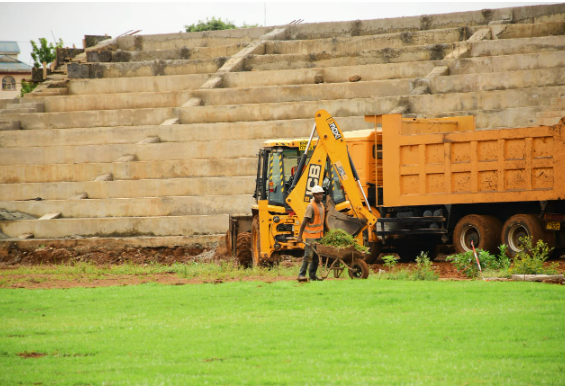
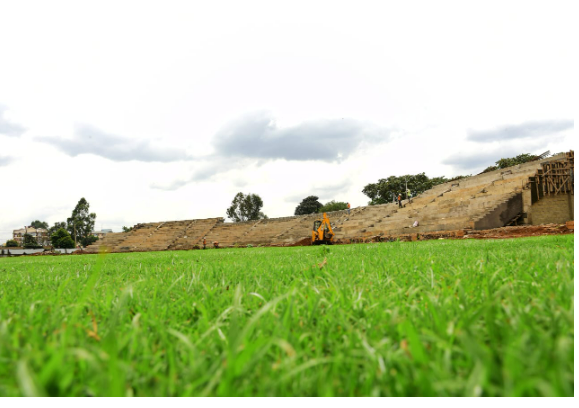
64 Stadium in Eldoret was envisioned as a key sports and economic asset, a facility that could host regional events, nurture talent, and stimulate local business. Instead, it has become another stalled public project. What’s happening: Project: 64 Stadium, Eldoret. Status: Incomplete and stalled. Duration of delay: ~3 years. Ownership: County-led project. National Government Position: Agreed to step in and complete it. Reality: No funds have been released to date. So we now have a project caught in institutional limbo: The county cannot complete it, the national government has committed but not funded it, the public continues to wait Why this matters: This isn’t just about a stadium. It’s about: 1. Intergovernmental coordination failure. 2. Unfunded commitments from the national level. 3. Idle public infrastructure while communities lack functional facilities. 4. Economic opportunity lost,sports, events, jobs, local business. And like many stalled projects, the longer it sits unfinished, the more expensive it becomes to revive. If the national government committed to complete 64 Stadium in Eldoret, what is the timeline for funding and completion and why has the project remained stalled for three years without budget allocation from either level of government? #StalledProjectsKE
Maskani Ya Taifa 🇰🇪 tweet mediaMaskani Ya Taifa 🇰🇪 tweet mediaMaskani Ya Taifa 🇰🇪 tweet media
English
235
44
49
605
Not Your Normal Vigilante
@Maskani254 A commitment by the national government without budget allocation points to unfunded promises in public infrastructure. Without formal inclusion in national budgets, such commitments remain statements rather than actionable plans. #StalledProjectsKE
English
0
1
1
4
Not Your Normal Vigilante
@Maskani254 The stalled 64 Stadium reflects a breakdown in intergovernmental coordination. When a project shifts from county to national responsibility without clear funding timelines, it creates a vacuum where no level of government takes full ownership of delivery. #StalledProjectsKE
English
0
3
4
25
Not Your Normal Vigilante retweetledi
Maskani Ya Taifa 🇰🇪
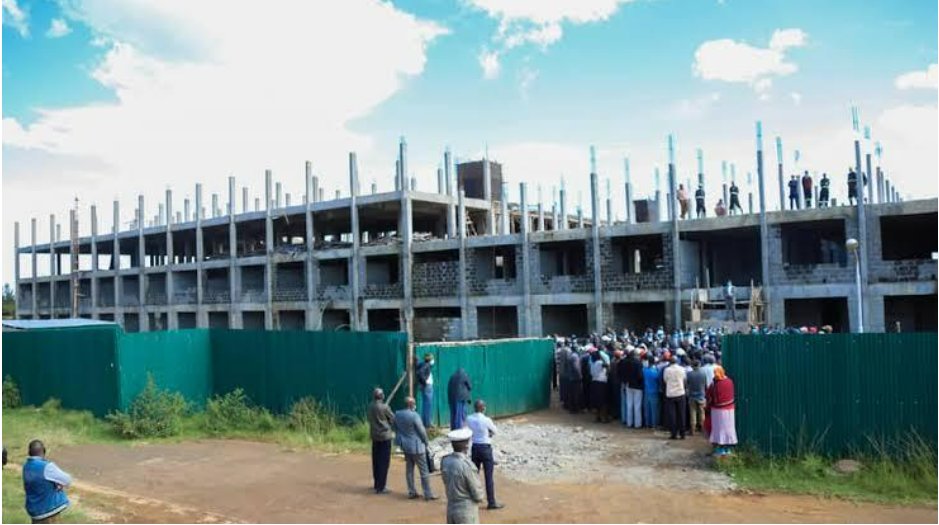
The County Assembly building in Eldoret was initiated in 2019 during the first term of the County Assembly. It was meant to symbolize institutional strength, legislative independence, and better service delivery. Today, it stands as something else entirely: a stalled public investment. What we know: 1. Project Start: 2019. 2. Current Status: Incomplete / Stalled. 3. Funding: No budget allocation for the last 3 consecutive years. 4. Completion: Not achieved, years after initiation. This is not a minor delay ,it is a systemic breakdown in project planning and fiscal discipline. A county cannot begin constructing a core governance institution, spend public resources on it, and then completely abandon funding midway. What this signals: 1. Poor project phasing and financing strategy. 2. Weak budget prioritization across financial years. 4. Reduced public value for money on already sunk costs. 4. Reduced public value for money on already sunk costs. And more fundamentally: It reflects a governance culture where starting projects is politically rewarded but completing them is not enforced. Why has the county failed to allocate any funds for its completion over the last three years? Who is accountable for this stalled investment? #StalledProjectsKE
Maskani Ya Taifa 🇰🇪 tweet mediaMaskani Ya Taifa 🇰🇪 tweet mediaMaskani Ya Taifa 🇰🇪 tweet media
English
231
40
43
399
Not Your Normal Vigilante
@Maskani254 The pattern points to a broader governance issue where project initiation is emphasized over completion. Without mechanisms that enforce continuity across political and budget cycles, projects stall once initial momentum fades. #StalledProjectsKE
English
0
0
1
3
Not Your Normal Vigilante
@Maskani254 A legislative building is not just infrastructure, it is central to governance and service delivery. Its delay reflects institutional inefficiency, where systems meant to strengthen governance are themselves undermined by poor implementation. #StalledProjectsKE
English
0
0
2
5