
Sabitlenmiş Tweet
hammadh.
5.4K posts


hammadh.
@ScaleEcommerce
I Help eCommerce sellers - Amazon - Meta Creative Strategy • CRO Landing Pages, Market Research & Validation, PPC From testing → predictable growth, Lets Talk ⬆
United states Katılım Nisan 2022
2.5K Takip Edilen513 Takipçiler
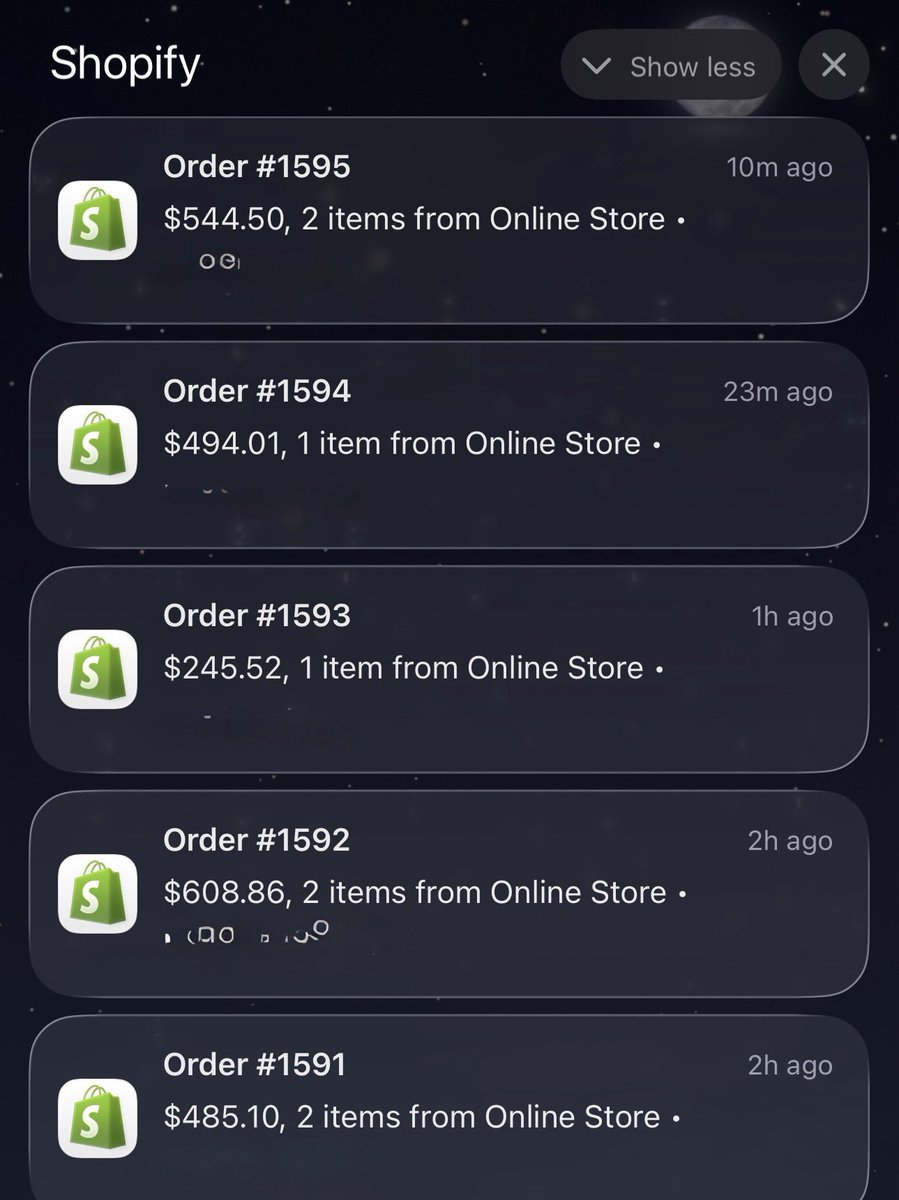
Amazon just updated your listing.
Without asking you.
Without telling you.
Without leaving any record of it anywhere.
And somewhere right now a seller is wondering why their conversion rate dropped this week.
They are going to test new images.
Write new bullet points.
Lower their price.
Increase their ad budget.
They are going to do everything except check whether Amazon silently rewrote their title last Tuesday.
I have been fixing Amazon catalog issues since 2019.
And the one thing that still genuinely shocks me is how many sellers have no idea that Amazon's automated systems regularly overwrite listing data without any seller action.
It is not a glitch.
It is not rare.
It is just how the platform works in 2026.
Amazon's AI systems scan listings constantly.
Looking for policy violations.
Looking for quality issues.
Looking for anything that does not match their catalog standards.
And when they find something — or think they find something — they change it.
No email.
No notification in Seller Central.
No entry in your account activity log.
Just a different title on your detail page than the one you carefully optimized.
The thing is — this used to happen occasionally.
Now it happens all the time.
Enforcement has scaled massively.
The AI making these decisions is moving faster than any human support team can keep up with.
And sellers are paying the price.
Here is my genuine frustration with this.
If Amazon has the technology to automatically change a seller's listing data —
they absolutely have the technology to send a notification when they do it.
They choose not to.
And I cannot for the life of me understand why a platform that sellers invest so much into cannot offer that basic level of transparency.
Has Amazon's automated system ever changed something on your listing without telling you?
Drop your experience below.
I want to know how many people this is actually happening to.
English
@nicktheriot_ This is pretty much the difference between random winning weeks and an actual scalable system. Seen a lot of accounts improve just by fixing one bottleneck instead of constantly chasing new hacks.
The creative system point is probably the hardest one to build consistently.
English

Facebook ads gets stupid profitable when you stop chasing shiny crap and master:
• Finding the REAL bottleneck (not just "low CTR")
• A weekly creative system that compounds
• Offers that make CPA irrelevant
• Bundling that actually sells
• Scaling without blowing everything up
• Retargeting that nurtures vs stalks
Once these click, $1M months stop feeling like luck and start feeling like math.
English
@vantamaracuja Honestly if things just stabilized after a rough few days, I’d probably avoid changing too many things at once. Seen this a lot where people finally get momentum back then reset the whole system again.
Small scale increases first usually tell you a lot.
English

JOUR 7 : ça se stabilise depuis la fin de l’horrible week-end de 3j où je plafonnais à 1 vente
là je me demande : quand scaler ? 20% ? + ?
est-ce que je baisse les prix pour attirer + de clientèle encore ? (baisser de 5€ ? de 10€ ?)
new funnel ? listicle ? advertorial ?

Français
@ecom_rickx Seen this work way better than random “spy tool hunting” honestly. Once you start tracking spend patterns and longevity, product research becomes a lot less emotional.
A lot of winning products look boring at first too.
English

You're doing product research wrong.
90% of ecom guys just scroll TikTok for 3 hours hoping to find a winner.
You can do better bro.
Build a competitor database and track everything.
Product goes live → write down days live, total spend, daily spend.
23 days live with €3,600 spent = €156/day average.
That tells you the product is working, otherwise they wouldn't be scaling to €150/day for 3 weeks straight.
Track 100-200 competitors across different markets.
Classify them as A, B, or C tier based on performance.
Now you know exactly which markets have momentum, which products are scaling, and where the money is flowing.
You're not guessing products anymore.
You're copying what's already proven to work.
Build this system once.
And let it feed you winners every single week.
Happy scaling.
English
@StrokmaEcom Honestly the backend/legal/tax setup days are part of the game too. Doesn’t feel productive in the moment but it saves a lot of pain later once things start scaling.
The bad days are usually where most people quit.
English

Australia Dropshipping Day 38
Yeah not too great of a day.
Did a lot of backend stuff in terms of legality and taxes today. Also started setting up for UK markets.
Will upload some more ads tomorrow! MRR trenching ends in 2 more months.

English
@ToriiRowe Seen this happen a lot at scale honestly. One creator starts eating all the spend and everyone else looks “bad” before they even get enough delivery to prove themselves.
Separate ad sets usually give a much clearer picture of who’s actually bringing net new customers.
English

If you're running paid partnership ads at scale and grouping multiple creators into shared ad sets, you're capping your own reach.
The account I'm looking at right now has 30+ active partnerships and 200+ ads running. Every creator sits in their own ad set. That structure is not about cleaner reporting. It's about how Meta's delivery system actually works.
The algorithm is volume-seeking. Inside a grouped ad set, it predicts which creator will drive the most conversion events and concentrates spend there. That prediction almost always lands on the creator with the heaviest overlap to your existing buyers, because warm overlap audience is the easiest place for Meta to produce volume. Every other creator in that ad set gets starved before their audience signal can teach the algorithm anything.
What shows up on the report as a low CTR creator is usually a creator that never got the budget to find their actual audience.
Every creator brings a unique audience footprint. Their followers, their lookalike profile, their engagement history with their own content. That signal is the entire reason you're paying for the partnership in the first place. You're borrowing that audience to reach people your brand can't reach on its own.
Grouped ad sets collapse all of that into one delivery pattern, usually pointed at the audience pocket you already had access to. You end up paying partnership rates to drive volume against warm audience.
At volume, the only structure that holds up is one creator per ad set. Each gets their own budget, their own learning phase, their own optimization against their own audience. The reporting also starts telling you the truth about which creators drive net new customers versus which ones rebuilt frequency on your existing buyers.
If your partnership program is meaningful spend, the ad set structure is where your scale gets capped or released.

English
@adamtaylorl Creative fatigue becomes very real once spend gets higher. Seen a lot of brands stuck because they keep trying to scale the same 2-3 winning ads for too long.
The systems behind creative production matter way more at that level.
English

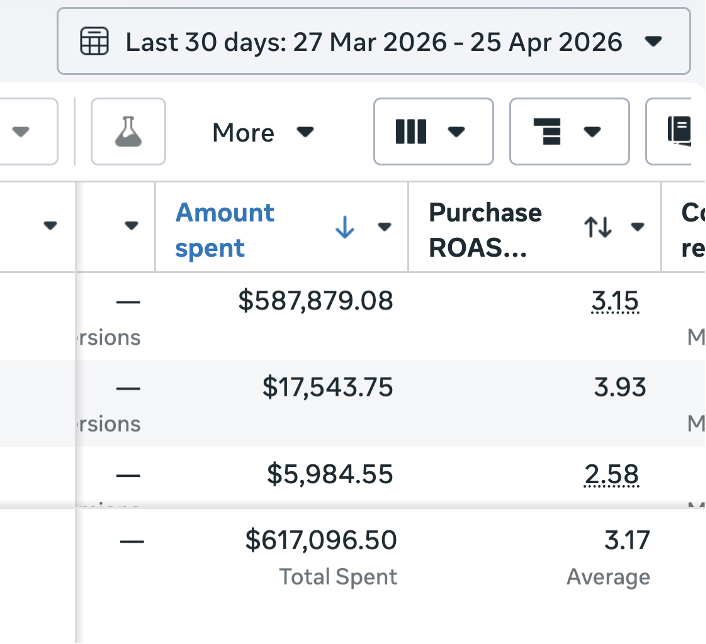
$617K spend. 3.17 ROAS. 1.95M revenue.
On the way to $1M/mo spend 🚀
We’re taking on 3 more DTC brands looking to unlock new angles, beat creative fatigue and remove themselves from the creative process.
Schedule a call in my bio.
English
@mannybarbas_ Honestly seen this a lot. One bad day makes people start duplicating, killing, changing budgets, touching creatives… then the account never gets a chance to stabilize again.
Sometimes doing nothing for 24 hours is the better optimization.
English

My theory around why periods on meta seem so bad is because people (and I have done this myself many times) panic, and touch shit too quick from 1 bad day of performance, and ultimately make things worse, when the best thing to do would’ve been nothing.
English
@antonioventre @Meta Audience Network has baited so many people with “good metrics” honestly. Seen this a lot where traffic looks amazing on paper but sales quality completely falls apart once you break placements down.
Always worth checking before killing creatives too.
English

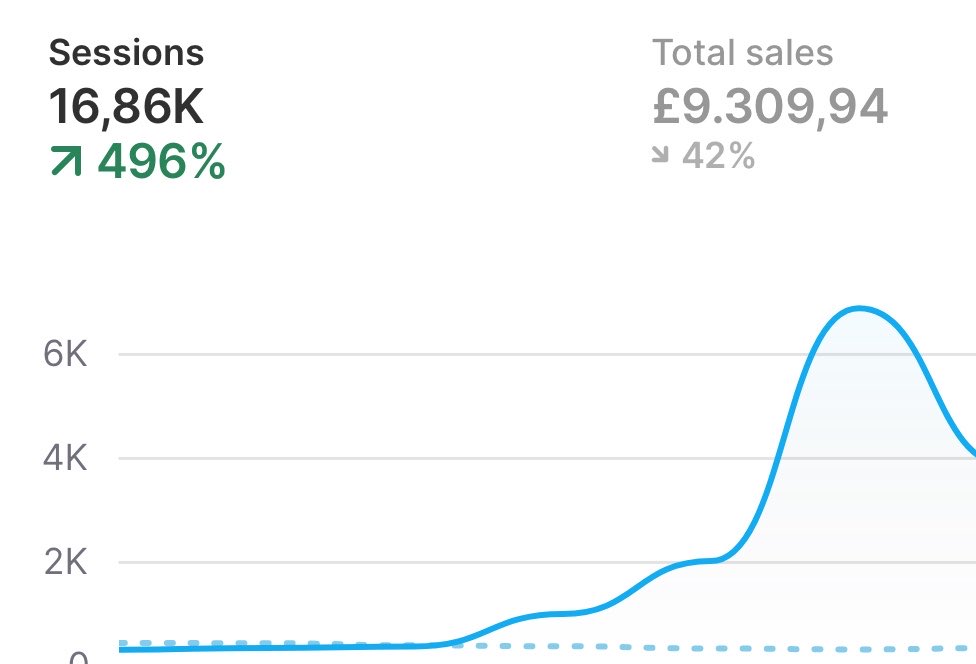
See something is off with traffic
Check ads manager
Abnormally low CPM and CPC
Breakdown by placements
And you see that mfer of the Audience Network getting all the spent 🥲
Thanks @Meta
English
@avcanthony_ Seen this a lot honestly. Once a product gets saturated with the same angle, the only thing that really moves the needle again is finding a different emotion or buyer type to speak to.
Most people quit before testing enough variations.
English

Make more ads, test more ads, feedback loop, repeat.
With your existing product, you want to think in terms of messaging and big swings.
Unlocking new avatars, problems, and desires are the best way to breathe new life into a product. If your current ads have been dead for a while now, I'd stay here.
Continue with MSLs and testing until you find a new winning Avatar, problem, or desire, then build up with angles/landing pages and better copy and expand into new formats.
With products, $2.5k is way too much if the product doesn't bite.
For me if I can't get to breakeven consistently after $1-$2k in spend, I cut the product and move on, no discussions.
No need to feel lost. You're not lost. You're just not getting the results you want.
The issue is that you identify with the results you're getting. You identify with the outcome. Dangerous game.
Because when you're doing well, you're "balling with dropshipping".
But when you're doing poorly, "I feel kinda lost."
STOP identifying with the outcomes.
Orient your identity around the PROCESS, and let the outcomes be a byproduct of your work.
Because ultimately that's always the solution.
Make more ads, test more ads, feedback loop, repeat.
Don't let outcomes dictate how you feel.
Just like how you shouldn't react to one bad day or one good day in your ad account.
Same thing with your overall process in dropshipping.
English
A product doing 40 units a day at $35 each.
That is $1,400 in daily revenue.
Listing gets suppressed on Friday evening.
Seller notices Monday morning.
3 days.
$4,200 gone.
And the worst part?
Amazon never sent a single notification.
This is not a made up scenario.
This is what suppression actually costs in real numbers.
And in 2025 and into 2026 Amazon has been suppressing listings faster than ever before.
Titles that were perfectly fine for years suddenly non compliant overnight.
Enforcement scaled across nearly every category with zero warning to sellers.
Listings losing visibility en masse while sellers blamed their ads, their reviews, their prices.
Never once thinking their listing had quietly disappeared from search.
Here is what makes this genuinely dangerous.
Most sellers only do reviews on a schedule.
Once a week. Once a month. Sometimes less.
Suppression does not wait for your review schedule.
It happens on a Friday evening and bleeds through the weekend while you are offline.
By the time you notice — the damage is already done.
We have seen sellers running active PPC campaigns to listings that were suppressed.
Paying for clicks.
Sending traffic to a product that was invisible in organic search.
Spending money to advertise something Amazon had already hidden.
Amazon's automated systems move fast.
Seller Support moves slow.
And the gap between those two things is where revenue disappears.
If you have not checked your suppressed listings filter in Seller Central this week —
stop what you are doing and check it right now.
Go to Manage All Inventory.
Filter by suppressed.
See what Amazon has been hiding from you.
Then come back and tell me what you found.
Because I have a feeling more people are going to be surprised than not.
English
300 ASINs.
All of them broken.
Wrong titles. Wrong categories. Wrong attributes.
Some completely suppressed.
Others showing but not converting because the data was a mess.
They had just migrated from another platform to Amazon.
Their agency had done the bulk upload.
Charged them a significant amount for it.
Then disappeared when everything went wrong.
This is what we walked into.
300 ASINs in various states of broken.
No documentation of what was uploaded or how.
No flat file records.
No notes on which feed types were used.
Just a Seller Central account full of errors and a seller who had no idea where to start.
The business had been planning this Amazon launch for 8 months.
Inventory already in FBA.
Marketing budget ready to go.
Launch date missed because nothing was working.
Here is how we approached it.
Step 1 — Full catalog audit
We pulled the complete inventory file and cross referenced every ASIN against the original product data.
Categorised every listing into three groups.
Fixable with a direct edit.
Fixable with a flat file.
Requiring a full relist.
Step 2 — Built a master flat file
Rather than fixing ASINs one by one we built a single master flat file covering all 300 products with the correct data, correct categories, correct attributes and correct feed type for each one.
This is the only way to fix bulk catalog issues at scale without spending weeks inside Seller Central.
Step 3 — Suppressed listings first
We prioritised getting suppressed listings back active before anything else.
No point optimizing a listing that is not even visible.
Step 4 — Phased submission
Submitting 300 ASINs at once creates its own problems.
We broke it into batches and monitored each submission for errors before moving to the next.
The result?
All 300 ASINs live and correct within 9 days.
Launch date pushed back by 2 weeks but the foundation was finally solid.
First month of sales came in strong because everything was set up properly from day one.
The agency that caused this mess charged more than we did to fix it.
If you are planning a large scale Amazon launch or migration —
the catalog setup is not something to rush or outsource to someone who will disappear when it breaks.
Drop "CATALOG" in the comments or DM us.
We have done this before and we will get it right.
English
$0 in sales for 11 weeks.
Full inventory sitting in FBA.
Healthy account. Competitive price. Great reviews.
Just no Buy Box.
And nobody, not even Amazon Seller Support, could tell them why.
This seller had done everything right.
3 years on the platform.
Never a policy violation.
Never a late shipment.
Never a metric out of place.
Then one morning the Buy Box was gone.
And 60% of their revenue disappeared with it.
They spent 11 weeks fighting Amazon support.
11 weeks of the same response.
"Your account meets all Buy Box eligibility requirements."
Great. So where is it then.
By the time they found us they were exhausted.
Considering shutting the ASIN down completely.
We audited the full catalog data in 24 hours.
One single incorrect attribute.
Buried deep in the backend.
From a bulk upload done 4 months earlier.
A fulfilment channel field that was creating a silent conflict between the listing data and the physical FBA inventory Amazon was holding.
Amazon saw the mismatch.
Pulled the Buy Box quietly.
Told nobody.
One flat file fix.
One correct field.
Buy Box back within 24 hours.
11 weeks of lost revenue.
Fixed in a single day.
The most dangerous Amazon problems are the ones you cannot see.
No error message. No warning. No notification.
Just silently broken while you keep spending on ads wondering what went wrong.
If your Buy Box disappeared and you have no idea why —
it is almost certainly hiding in your catalog data.
Drop "BUYBOX" in the comments or DM us.
We will find it.
English
Amazon Seller Support told a client to "try a different browser."
The issue was a broken parent-child variation that had split apart overnight.
Different browser.
For a catalog level issue that required a flat file fix and direct escalation to the catalog team.
I wish I was making this up.
This is the reality of dealing with Amazon Seller Support in 2026.
You open a case with a detailed explanation of the problem.
You attach screenshots.
You reference the specific ASIN.
You explain exactly what is wrong and what you have already tried.
And 48 hours later you get a response from someone who read none of it.
They send you a help article that has nothing to do with your issue.
Ask you to try clearing your cache.
Or in this case — suggest a different browser.
You respond explaining the issue again in even more detail.
Another 48 hours.
Another generic response.
Meanwhile the listing is broken.
Sales are dropping.
The clock is ticking.
And you are stuck in a loop with a support system that is not built to solve complex catalog problems.
Here is the part that genuinely frustrates me.
Amazon has built one of the most sophisticated eCommerce platforms in history.
The algorithm. The logistics network. The advertising platform.
All of it is genuinely impressive.
But Seller Support for catalog and listing issues is years behind everything else.
Sellers running serious businesses — sometimes doing millions in revenue — are being told to try a different browser when their catalog breaks.
There is a real gap between the platform Amazon has built and the support infrastructure that is supposed to maintain it.
And right now that gap is costing sellers real money every single day.
What is the worst Seller Support response you have ever received?
Drop it in the comments.
I have a feeling this thread is going to be very long.
English
@avcanthony_ Seen this happen a lot with bigger brands honestly. They overproduce polished content without validating the actual angle first.
In practice the messaging usually matters more than the production quality.
English
Replacing your 9-5 with branded dropshipping is genuinely not that complicated.
But I need to be real with you.
Simple and easy are not the same thing.
Most people are out here trying to invent the next big product. Go viral. Create a trend from scratch.
That is literally the worst thing you can do when you're just starting out and need cash flow.
Stop trying to be creative. Replicate what's already working and put your own spin on it.
Here's the exact framework I used to scale a brand new store to hundreds a day within the first couple days:
Find a product doing at least 300K a month in revenue. Lightweight. Solves a real problem. 70% gross profit margins.
Pull the monthly traffic on SimilarWeb, multiply by 3%, multiply by the product price. That's your revenue estimate.
Genuinely that simple.
Then find the specific problem it solves. Not a broad problem. A real, urgent, specific one.
Then build your avatar. Not just women 25-45. A nurse.
Twelve hour shifts. Driving home with her foot turned completely sideways because the bone pain pressing the pedal is unbearable.
Then find what she actually wants.
Not just pain relief. That's not enough to make anyone take action. Millions of people are in pain every single day and do absolutely nothing about it.
She wants to keep her job. Keep her income. Avoid surgery. Avoid arthritis. That's the desire that actually makes her pull out her card.
Your ads, your store, your entire funnel gets built around that. Most people skip the research entirely and then wonder why nothing converts.
It's not your ads. It's not your product. It's the research.
Spend more time on Reddit and page three of Google than you do touching your store. Your best ad copy is already written by your customer in some random forum.
English
@adamtaylorl Seen this happen a lot with bigger brands honestly. They overproduce polished content without validating the actual angle first.
In practice the messaging usually matters more than the production quality.
English
Spoke with an ecom founder in Lisbon running a 5-store portfolio today. His hero brand is currently pulling in $900k/month.
But here is the crazy part: despite pacing 8 figures utilizing Google and organic, their Meta account is completely paralyzed.
They recently dropped $15k on an in-house creative director and copywriter to finally crack video. They produced a massive batch of 70 UGC videos for a launch.
Every single one flopped.
The in-house team was fired, the founder was dragged back into managing the chaos, and their media buyer is now starving for assets – forced to rely entirely on static images.
Here is the exact creative engine we are stepping in to build for them:
🔹 Reverse-Engineering the Data
Instead of guessing, we are analyzing their highly profitable review-article funnel (which already boasts a $60 profit margin per sale) to mine the exact messaging angles that are actually converting.
🔹 Pivoting the Format
We are ditching the polished UGC that failed them. Instead, we are deploying native "Top 5 Review", podcast, and organic ad formats designed to act as a bridge between top-of-funnel traffic and their existing advertorials.
🔹 Completely DFY Pipeline
We take over the research, scripting, creator sourcing, and editing. The founder gets a predictable, high-quality asset delivery system and completely removes himself from the creative weeds.
The Goal: Give their media buyer the proven video assets they need to confidently scale Meta spend to $500k/month.
You can't brute-force Meta with bad in-house creative anymore. If you want a platform to be your biggest acquisition channel, you need a system that actually validates angles.
English
@KodyNordquist This is pretty close to how we manage larger accounts too. Simple rules usually work better at scale than constantly reacting emotionally to every metric swing.
The weekly creative flow part is probably the most important piece here.
English

Was asked how to effectively manage this at scale.
Here you go 👇
The way to look at these is we want it to spend 50% of the daily budget.
>> If it's spend more than that on average and is profitable - increase the budget by 20%
>> If it's spending less than that and is profitable - increase bid the by 20%
>> If it's spending more than that on average but isn't profitable - decrease the bid by 20%
Repeat this while turning ads off that don't get spend after 20 days.
Launch new ads every week and continue the process.
Kody Nordquist@KodyNordquist
The campaign structure that supported this growth? 2 tROAS Campaigns 2 tCPA Campaigns 1 DPA Campaign Around 800 ads live across the 5. No they didn’t all get spend and that’s 100% the point. Focus on growing profitably - not testing everything. An ad not getting spend tells just as much as one that spent unprofitably.
English
@LachezarVoynov Seen this a lot lately honestly. ABO can make creatives look way stronger than they actually are because they’re feeding off demand created somewhere else in the account.
CBO spend patterns usually tell the real story over time.
English

Spend is the No.1 indicator for a winning ad on Meta.
It’s not ROAS, it’s not CPA, it’s not Hook Rate and it’s not CTR.
And there's only one campaign structure where spend tells you the truth: CBO.
I have visibility over 38 ad accounts rn and I see the same thing.
The accounts scaling fastest are running CBO. The accounts stuck are running ABO and thinking their 5x ROAS ads at $50/day are going to help them scale past $100k/day.
In an ABO, you set $X per ad and Meta is forced to spend it whether the ad is working or not. Then you read CPA/ROAS and pick winners.
The problem is that those numbers are contaminated.
A "winning" ad in your ABO might just be a strong bottom-of-funnel creative capturing demand that 4 other ads already generated.
The CPA looks beautiful but its incremental contribution is close to zero.
This is why when you 2x the daily spend on your winners, most of the time nothing happens to your sales.
ABO hides this because every ad lives in its own bubble:
- No algorithmic competition between your creatives
- No real-time judgment from Meta on which ad is giving you net-new reach
- No way to see which creative the algorithm would actually choose if it had a vote
CBO gives Meta the vote.
Every ad you ship is competing against every other ad in the same budget pool. The ones Meta keeps feeding are the ones it's finding incremental conversions on, in real time, with more data than you'll ever have.
Spend allocation is Meta's own voice. It's a leading indicator. ROAS is a lagging one.
When Meta consistently sends $0 to an ad in a CBO, that's not flat performance. That's the algorithm telling you the ad isn't worth its slot.
Kill it.
When Meta concentrates 60-70% of spend on one creative, it's telling you that ad is reaching customers no other creative is. Scale it. Duplicate to a new CBO. Test variations.
The accounts spending $1M+/month share three habits:
- One CBO per product/offer, each concept in its own ad set, let Meta cook
- Read spend allocation BEFORE reading ROAS
- Never judge an ad in week one
Take everything I said here with a grain of salt.
These are just observations and my current thought process about how Meta works RIGHT NOW.
I used to be in the ABO camp 12 months ago.
Open to more opinions.
English
@nicktheriot_ Seen this a lot once brands hit that range. At that point it’s usually not one big problem, it’s 5-6 small bottlenecks stacking together across creative, offer, retention and LPs.
The “what to test” part is probably the hardest skill to learn in practice.
English
The FASTEST way to diagnose why you're stuck at $100K/month:
1. Check creative testing cadence (should be 30-40 new ads/week at scale)
2. Look at fresh content % (winners from last 30 days vs 90+ days old)
3. Audit landing page testing (should test 1 new LP + creative set/week minimum)
4. Review AOV optimization (are you doing dollar-a-day increases or significant jumps?)
5. Check LTV metrics (40-60% of daily revenue should come from returning customers)
6. Count how many products you have (one product = plateau, multiple products = scale)
7. Look at customer survey data (are you guessing next products or asking customers?)
8. Analyze CPA tolerance (can you afford higher CPA than competitors through AOV/LTV?)
9. Review offer structure (is it compelling: 5-10x perceived value, right people, clear packaging?)
10. Check if you're still drop shipping with 30-day China shipping (if yes, that's your problem)
If all these check out and you're still stuck,
You need better judgment on WHAT to test, not HOW to test.
English
@antonioventre This is very real honestly. Seen a lot of accounts where the “bad” ROAS campaigns were actually the reason the whole system kept growing.
Cold traffic campaigns almost never look sexy in reporting.
English
Most brands think their winning ad is the one with the highest ROAS.
It's almost never true.
The ad with the highest ROAS is usually the one circulating to your warmest audience. People who already know you, already trust you, already would have bought anyway.
The ad actually carrying the account is the one with mediocre ROAS and low frequency. That's the one feeding cold people into the system so the warm ads have someone to convert.
Kill the low-ROAS ad and the warm ones run out of fuel within 2 weeks. ROAS collapses and nobody understands why.
The winning ad is rarely the one that looks like a winner. It's the one quietly doing the TOP-OF-FUNNEL work that makes the rest possible.
English