Tim Schittekatte

1.8K posts

Tim Schittekatte

Tim Schittekatte

@SchTim1

Senior Director @FTIConsulting, working on power markets. Part-time prof @FSR_energy. Former @MITSloan @IUECalcio @FcPoesele

London, England Katılım Mayıs 2019
524 Takip Edilen1.4K Takipçiler
Sabitlenmiş Tweet
Tim Schittekatte
Tim Schittekatte@SchTim1·
🚨Just published @mitceepr @mitenergy Critical analysis of the EC's electricity market reform proposal. Focus on 4 points i) promotion of LT contracting ii) interventions during crises iii) strategy for supplier risk mgmt iv) flex support schemes & CRMs ceepr.mit.edu/workingpaper/c…
Tim Schittekatte tweet media
English
2
11
33
5.3K
Tim Schittekatte
Tim Schittekatte@SchTim1·
@maurerchr Why is it much more problematic for many to accept marginal pricing when apllied to electricity when all commodities in the world apply the same principle? A question for sociologists/psychologists. Perhaps because techs producing it ("the same thing") are so visibly different?
English
2
3
8
1.1K
Christoph Maurer
Christoph Maurer@maurerchr·
Nein, es ist nicht das Merit Order Prinzip, das Strompreise teuer macht. Im Gleichgewicht verdienen dort alle Anlagen gerade ihre Fixkosten (und nicht mehr). Und falls kein Gleichgewicht und EE günstiger, sollten sie Gas verdrängen, damit Geld verdienen und Preise senken.
Stefan Krauter@solarpapst

Wieso ist der Strom in Deutschland so teuer, obwohl Wind- und Solarstrom jetzt so billig ist? Gründe: 1. Zusammensetzung des Strompreises Der Strompreis für Privatkunden setzt sich 2025 ungefähr so zusammen: - 32% Steuern und Abgaben (z.B. Mehrwertsteuer, Stromsteuer, Umlagen) - 27,6% Netzentgelte (Kosten für Bau, Betrieb und Modernisierung der Stromnetze) - 40,4% Kosten für die Stromerzeugung selbst[1][2][3] Selbst wenn die eigentliche Stromproduktion (insbesondere durch Wind und Sonne) günstiger wird, machen Steuern, Abgaben und Netzentgelte einen Großteil der Endkosten aus. 2. „Merit-Order“-Prinzip und Einfluss fossiler Preise Der Großhandelspreis für Strom an der Strombörse wird durch das sogenannte Merit-Order-Prinzip bestimmt: Die günstigsten Kraftwerke (meist Wind, Sonne) speisen zuerst ein, doch der Preis orientiert sich am teuersten noch benötigten Kraftwerk (oft Gaskraftwerke)[4][5]. Wenn also Erdgas teuer ist, wie während der Energiekrise nach dem russischen Angriff auf die Ukraine, bleibt der Strompreis insgesamt hoch – egal wie günstig der Wind- und Solarstrom ist[4][2]. 3. Netzausbau und Speicherbedarf Wind- und Solarstrom können wetterbedingt stark schwanken und stehen nicht immer dann zur Verfügung, wenn sie gebraucht werden (Stichwort: Dunkelflaute). Deshalb braucht Deutschland Reservekraftwerke, Energiespeicher und einen massiven Ausbau der Stromnetze, um Versorgungssicherheit zu gewährleisten. Diese Investitionen verteuern den Strom[6][5][2][7]. 4. Steuern, Abgaben und politische Faktoren Deutschland erhebt im europäischen Vergleich besonders viele und hohe Abgaben auf Strom (z.B. Mehrwertsteuer, Stromsteuer, Netzentgelte). 5. Regionale und technische Herausforderungen - In Phasen mit viel Wind- oder Solarstrom muss Deutschland Strom manchmal „verschenken“ oder exportieren, wenn das Netz überlastet ist und es keine ausreichenden Speicher gibt. Quellen: [1] Strompreiszusammensetzung 2025: Strompreis erklärt - Strom-Report strom-report.com/strompreis-zus… [2] Warum ist Strom so teuer? Ursachen und Lösungen wattline.de/energiewissen/… [3] Strom- und Gaspreise - Einflussfaktoren auf Energiemärkte enviam-gruppe.de/energiezukunft… [4] Warum ist Strom teuer, obwohl die Erneuerbaren viel und ... chrismon.de/kolumnen/klima… [5] #Faktenfuchs: Grüner Strom – billiger oder teurer? | BR24 br.de/nachrichten/wi… [6] Warum ist der Strom so teuer? zoos.media/medien-echo/wa… [7] Hohe Strompreise trotz viel Windstrom – Wie kann das sein? technik-einkauf.de/energiebeschaf… [8] Strompreis aktuell: Alles zur Zusammensetzung und Europa-Vergleich adac.de/rund-ums-haus/… [9] Warum Kraftwerke trotz Dunkelflaute nicht anspringen tagesschau.de/wirtschaft/ene… [10] Stromgestehungskosten+Erneuerbarer-Energien-Anlagen ... unendlich-viel-energie.de/mediathek/graf… [11] So setzt sich der Strompreis zusammen – einfach erklärt | E.ON - EON eon.de/de/pk/strom/pr… [12] Stromgestehungskosten: Wind und PV-Anlagen sind am ... klimaschutz-niedersachsen.de/Stromgestehung… [13] BMWE - Der Strompreis - Bundeswirtschaftsministerium bundeswirtschaftsministerium.de/Redaktion/DE/A… [14] Studie: Stromgestehungskosten erneuerbare Energien ise.fraunhofer.de/content/dam/is… [15] Stromgestehungskosten von Kohle, Solar und Co. - Wegatech wegatech.de/ratgeber/strom… [16] BDEW-Strompreisanalyse Juli 2025 bdew.de/service/daten-… [17] Studie: Stromgestehungskosten erneuerbare Energien ise.fraunhofer.de/de/veroeffentl… [18] Trotz viel Grünstrom: Warum Deutschland nicht von den ... aktiv-online.de/news/trotz-vie… [19] Entwicklung der Strompreise in Deutschland - The Mobility House eyond.mobilityhouse.com/de_de/blog/art… [20] Sonne und Wind schlagen Kohle und Atom - EnergieWinde energiewinde.orsted.de/trends-technik…

Deutsch
22
10
136
18.3K
Tim Schittekatte
Tim Schittekatte@SchTim1·
@ArushiSF @MegaWattXinfo Understandable, would have been great to hear your opinion in it though. There is lots of misunderstabding about this on the other side of the Atlantic!
English
1
0
1
54
Laurent Segalen
Laurent Segalen@MegaWattXinfo·
Texas is an oddity in the western electricity world: fastest growing load, ultra-low prices, crazy development of renewables. Texas consumes now more power than France, despite having only half the population. Prices are a factor 4 lower compared to 20 years ago. And 90% of additional load has been provided by Wind and Solar, despite the permanent attacks from the fossil fuel lobby. To make sense of the current situation in Texas, and also talk about the future, with unbelievable projections, full of AI and Datacentres, @gerardreid14 and I have the pleasure of welcoming @ArushiSF on @Redef_Energy Arushi Sharma Frank is an energy policy expert with deep expertise in distributed energy resources (DERs) and virtual power plants (VPPs). She pioneered ERCOT frameworks for grid-integrated VPPs and the integration of batteries on the Grid, while at @Tesla where she worked between 2020 and 2024. Arushi was a key architect of the Texas Public Utility Commission’s Aggregated DER pilot, enhancing grid resilience post-Winter Storm Uri. The Lone Star State is at the crossroads: will the additional load arrive? Are the renewables in danger? Can fossil fuels make a come-back, or are we seeing this wrongly, as the new model suggest that it is all about flexibility. Finally, the best source for information on renewable energy in Texas is @douglewinenergy : douglewin.com
🎙Redefining Energy podcast@Redef_Energy

🎙️Ep187. Texas: Power Surge or Power Splurge?#applepodcast podcasts.apple.com/gb/podcast/red… #spotify open.spotify.com/show/4FDIRo16s… @MegaWattXinfo and @gerardreid14 dive deep into the Texas Energy system with @ArushiSF

English
5
42
137
30.4K
Tim Schittekatte
Tim Schittekatte@SchTim1·
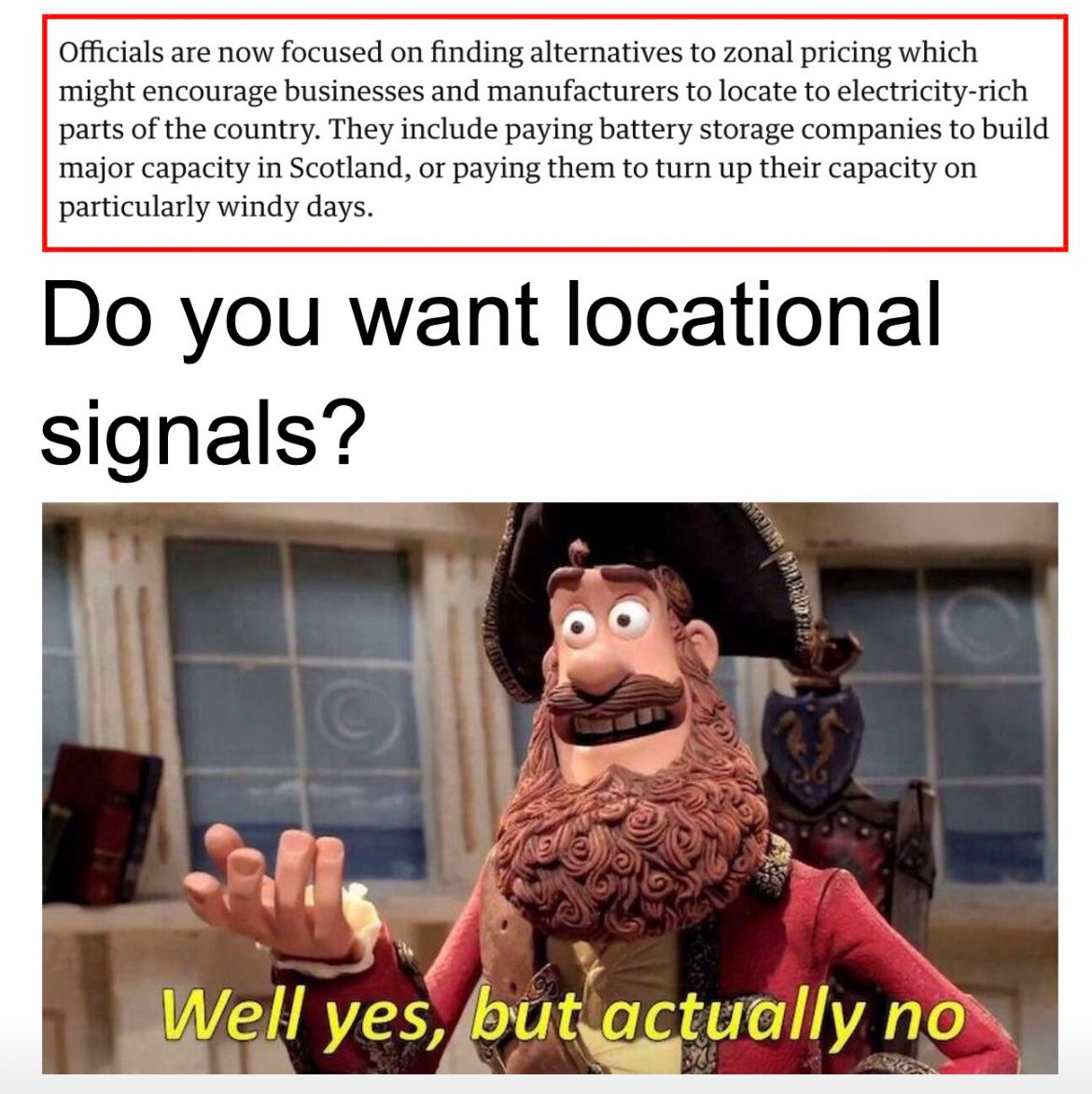
@jackrdsn If we cant give the proper price signals via wholesale markets, 2nd best is likely to guide their siting via central planning and give over their operational control to NESO. All the stuff in the middle will likely create more damage than benefits. Is that the 2nd best we want?
English
0
0
0
41
Jack Pardoe
Jack Pardoe@pardoejw·
Subsidies to tell batteries when to charge and where to locate is just weird, unnecessary, and likely expensive
Jack Pardoe tweet media
English
1
0
2
945
Alistair McGirr
Alistair McGirr@alistairmcgirr·
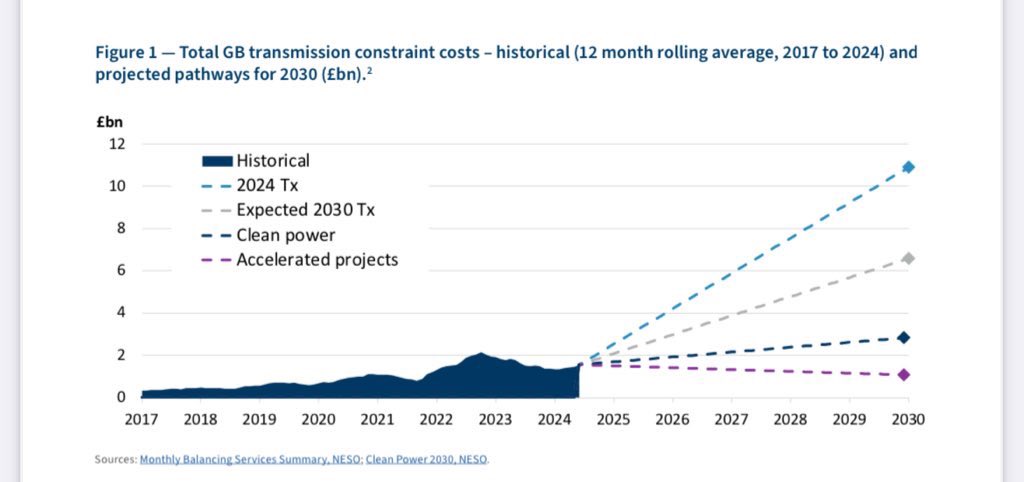
@jackrdsn @ClemCowton Constraints in 2030 are being dealt with the grid plans in the Clean Power Action Plan. Zonal can’t be implemented until 2032 at the earliest. So what’s the rationale?
Alistair McGirr tweet media
English
2
0
1
304
Clem Cowton
Clem Cowton@ClemCowton·
Very dangerous for vested corporate interests to claim that “the costs of the system will be exactly the same” regardless of market design policy. Not only untrue, it puts the entire Net Zero project at risk by laying the political ground for the claim the UK cannot afford it.
Greg Jackson@g__j

Interesting to hear the arguments against zonal pricing on @BBCr4today. One huge error “it’s just the same costs spread differently”. Absolutely not- we’d need 1/3 less new Grid, hugely reduce cost of wind curtailment and build new infrastructure where it’s most efficient 1/n

English
2
7
20
6.2K
Tim Schittekatte retweetledi
Sam Richards
Sam Richards@sjarichards·
Renewable energy is cheap - so why doesn't that feed into lower bills? Energy market reform sounds intensely boring - but it's crucial to getting bills down. Local pricing would cut bills across Britain - and slash them in the places that actually build new clean energy.
Britain Remade@BritainRemade

The Government should back cheaper local energy. By slashing the cost of energy for those who live close to where it’s produced we can cut bills for everyone, putting more money in people’s pockets and encouraging businesses to invest and create jobs.

English
41
34
125
80.6K
Kris Voorspools ©
Kris Voorspools ©@KVoorspools·
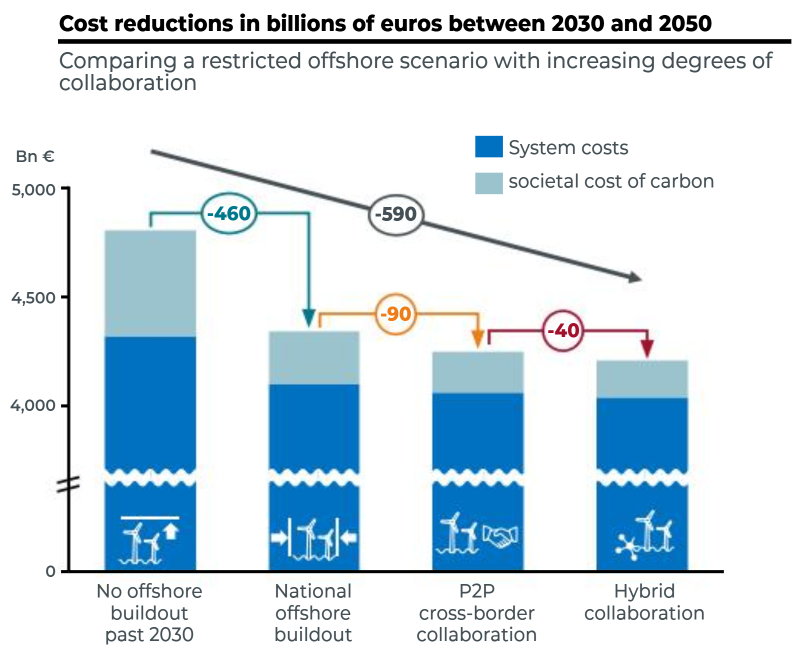
Uitbouw van een goed verbonden net voor offshore wind betekent besparing van 90 tot 130 miljard. De kostprijs van het energie-eiland is peanuts tegenover de baten.
Kris Voorspools © tweet media
Nederlands
63
14
51
10.5K
Tim Schittekatte retweetledi
Sam Hamels
Sam Hamels@SamHamels·
📢What's next in Flexibility?⚡️ 🗓️Registrations are now open for our event in Ghent on 03/09 🤩Keynote speaker from Octopus UK! 💁‍♂️More info: energhentic.be/nextinflex2024
English
3
15
24
3.4K
Tim Schittekatte retweetledi
Jesse D. Jenkins
Jesse D. Jenkins@JesseJenkins·
For those interested in learning more about the network subscription charges I discussed on the pod, check out this @mitceepr working paper by @SchTim1 & others ceepr.mit.edu/workingpaper/d… I also didnt get into this on the pod, but one could also offer discounted subscriptions for those who sign up for managed charging/aggregation programs that can confidently avoid local & system-wide network peaks.
English
1
1
5
1.7K
Jesse D. Jenkins
Jesse D. Jenkins@JesseJenkins·
On this week's SHIFT KEY: how to fix our electricity bills! @robinsonmeyer & I dig in to why we pay for electricity the way we do now, why that's a big problem and how we might fix it. We also wrap up our discussion on how to unlock the full potential of rooftop solar. Listen ⤵️
Jesse D. Jenkins tweet media
English
6
8
34
28.1K
Tim Schittekatte
Tim Schittekatte@SchTim1·
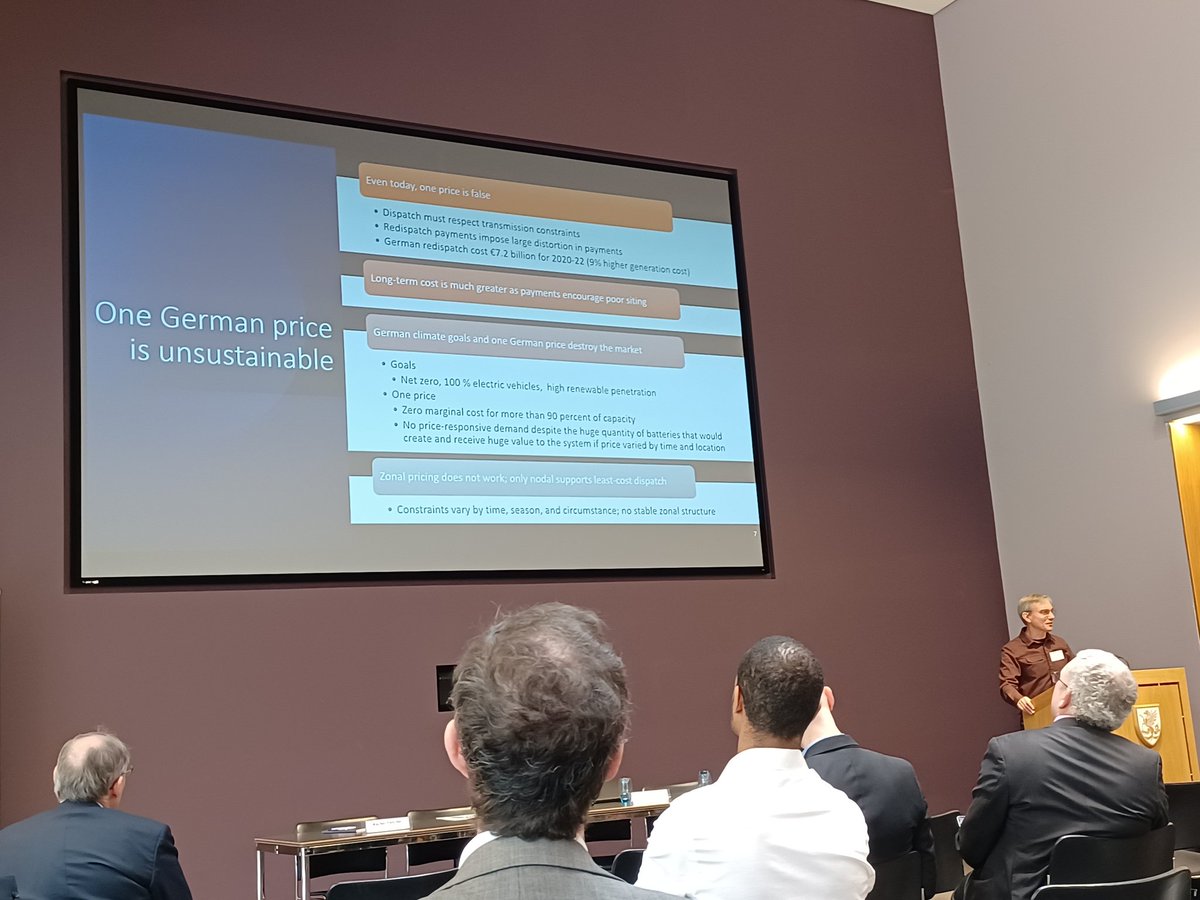
Now that the EU energy crisis is winding down, the attention is slowly shifting again to one of the key electricity market design debates being locational wholesale pricing. Good to see @pcramton reminding us of the current status and way forward @eprgcambridge
Tim Schittekatte tweet media
English
1
4
20
1.2K
Tim Schittekatte
Tim Schittekatte@SchTim1·
@ingmarschlecht Dont get me wrong, obv these production independent CfDs are a no-regret. But to get scheduling right, there is much more reforming of the current market design to be done.
English
1
0
2
67
Ingmar Schlecht
Ingmar Schlecht@ingmarschlecht·
@SchTim1 And while there are many problems with conventional CfDs that can be fixed in minor tweaks, the problem with distorted bids for shortest-term power markets like intraday and balancing is one that can only be solved by production independent CfDs. That's why it's so important.
English
1
2
2
456
Tim Schittekatte
Tim Schittekatte@SchTim1·
@ingmarschlecht Agreed it would help but it is not fundamental solution to this issue, nor is LMP - combine those plus some inertia requirement in the DA clearing (you need central scheduling for that) and we're almost there
English
1
0
0
70
Ingmar Schlecht
Ingmar Schlecht@ingmarschlecht·
@SchTim1 And given the renewable subsidies which prevent a market reaction, generators keep producing even though prices are negative. With better CfDs, renewables would simply reduce generation when prices go below 0, making life easier for the TSO in such cases.
English
1
0
1
91
Tim Schittekatte
Tim Schittekatte@SchTim1·
@ingmarschlecht Is it only about inertia? Often its a combo. If you would have locational pricing you would likely fire up some sync gens in the south already via the wholesale market as the wind would be more directly curtailed at DA, reducing the likelihood of this occuring.
English
1
0
0
69
Ingmar Schlecht
Ingmar Schlecht@ingmarschlecht·
@SchTim1 Inertia is a synchroneous system thing, not a locational issue. So no, it's a short-term intervention by NationalGrid to increase spinning reserve system wide, and they use short-term markets to make room for these extra spinnings plants.
English
2
0
1
180
Tim Schittekatte
Tim Schittekatte@SchTim1·
@fnbillimoria @chris___neumann Fully agreed and GB can go that way as it is an island with one ISO. This would be much harder in continental EU with many TSO running their own OPFs, at least for now (movement in that direction with the regionalisation of some SO tasks).
English
0
0
2
58