Jeremy Scheffel

962 posts

Jeremy Scheffel banner
Jeremy Scheffel

Jeremy Scheffel

@Scheffeler

exploring ai | working on https://t.co/BaIekjEDz5 | dad of 2 | sharing book notes & thoughts I find interesting

Katılım Eylül 2012
404 Takip Edilen278 Takipçiler
Sabitlenmiş Tweet
Jeremy Scheffel
Jeremy Scheffel@Scheffeler·
@DeathAngelUSA My favorite “dad with an iPhone” picture I’ve taken
Jeremy Scheffel tweet media
English
3
19
2.1K
41.5K
Austen Allred
Austen Allred@Austen·
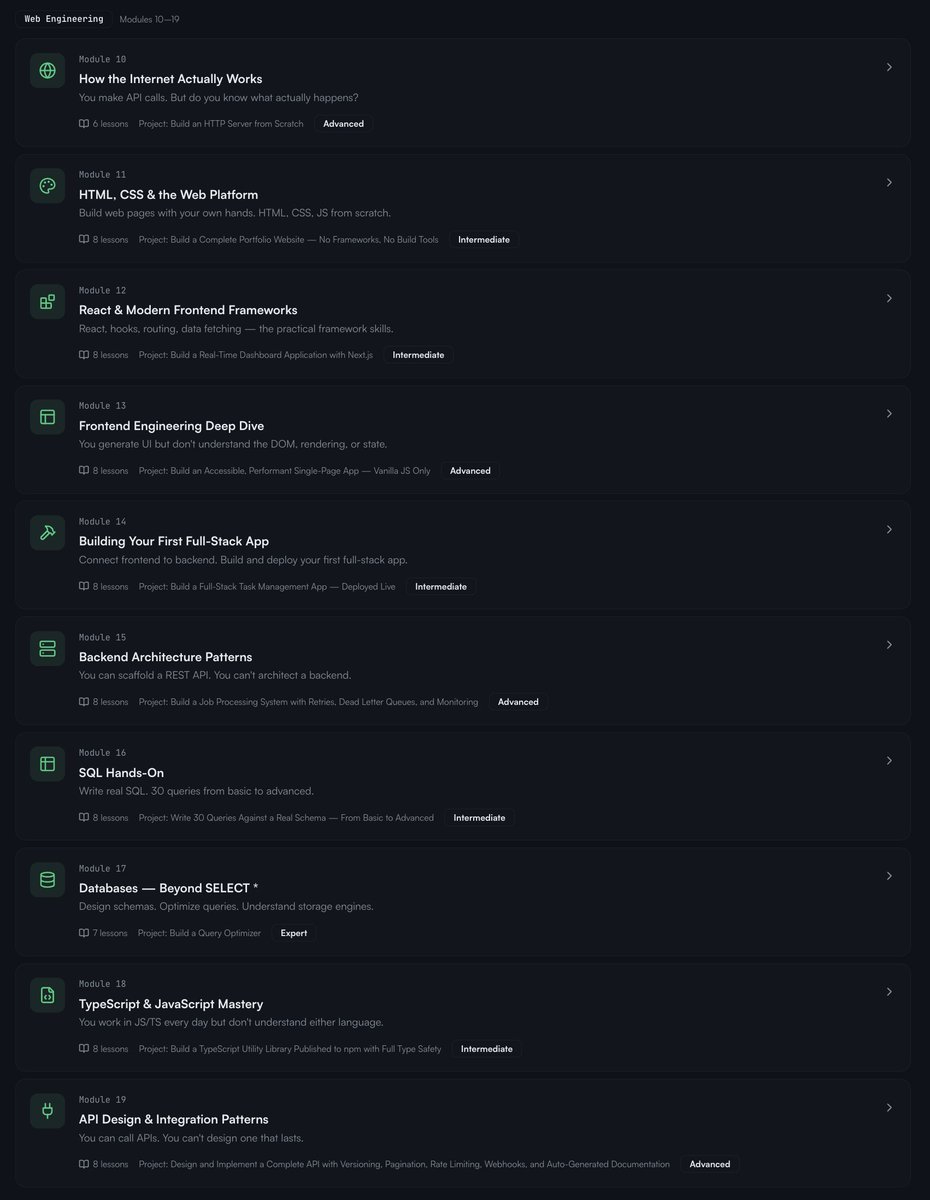
Very happy with the curriculum now. Gonna turn a lot of vibe coders into real engineers.
Austen Allred tweet mediaAusten Allred tweet mediaAusten Allred tweet mediaAusten Allred tweet media
Austen Allred@Austen

Test project I had @KellyClaudeAI build over the weekend: The missing courses to take someone from vibe coding to real engineering with AI. Need to tweak a bit before it ships; Kelly is new to curriculum development.

English
9
9
123
15.8K
Jeremy Scheffel retweetledi
Nathaniel Whittemore
One of the common and weird takes I've seen around this study is that it is somehow invalid because the sample is all from existing AI users. The logic is something like, "Well, of course AI users are going to have a more positive view of AI. This doesn't represent the view of everyone." While it's totally fine to point out (and I don't think @AnthropicAI tries to hide this) that these are the opinions of AI users, the presumption behind this type of comment reveals this weird pathology where anti-AI folks seem to think that the only people who get to have a say in what AI policy should be are anti-AI folks. Right now, you have a technology that's being used by literally billions of people a week. Yet somehow we're supposed to de-prioritize their perspectives and opinions and instead prioritize the people who aren't using these tools? It's intellectual NIMBYism masquerading as methodology.
Anthropic@AnthropicAI

We invited Claude users to share how they use AI, what they dream it could make possible, and what they fear it might do. Nearly 81,000 people responded in one week—the largest qualitative study of its kind. Read more: anthropic.com/features/81k-i…


English
0
2
9
1.9K
Jonathan
Jonathan@joni_vrbt·
Let’s finally agree on this. If I vibe coded a project, can I still tell people that I built it?
English
338
3
251
32.4K
Jeremy Scheffel
Jeremy Scheffel@Scheffeler·
@RealProductGirl Building a desktop agent orchestration app. Your agents instantly get an email inbox when signing up. It’s been fun to put together!
English
0
0
0
6
Samantha Simonhoff
Samantha Simonhoff@RealProductGirl·
I NEED my feed full of builders. What are you working on right now? I don't care if it's a startup or a weekend side project. If you're building something, I want you on my timeline. Reply and let's connect. 👇
Samantha Simonhoff tweet media
English
1.2K
27
1.3K
63.4K
Jeremy Scheffel
Jeremy Scheffel@Scheffeler·
Wild
Runway@runwayml

A breakthrough in real-time video generation. As a research preview developed with @NVIDIA and shared at @NVIDIAGTC this week, we trained a new real-time video model running on Vera Rubin. HD videos generate instantly, with time-to-first-frame under 100ms. Unlocking an entirely new creative paradigm and bolstering the foundations of our General World Model, GWM-1. Real-time generation opens a fundamentally different design space for video models and world simulation. We're investing in co-designing our models alongside advances in hardware to keep pushing this frontier.


English
0
1
0
2
Billy Howell
Billy Howell@billyjhowell·
I’m over interfaces Going back to codex and Claude code for everything
English
3
0
6
948
Jeremy Scheffel retweetledi
ℏεsam
ℏεsam@Hesamation·
you realize ai coding gave CURIOSITY and PLAYFULNESS back to a generation the 9-5 tried to burn out. stop being too serious with it, start waking up the 7 yo in you to have fun.
English
19
53
903
47K
Jeremy Scheffel retweetledi
Owen Shroyer
Owen Shroyer@OwenShroyer1776·
Millennial Timeline Cleanse
English
215
1K
7K
484.5K
Jeremy Scheffel
Jeremy Scheffel@Scheffeler·
I tend to get a little reckless on the weekends.
Jeremy Scheffel tweet media
English
0
0
1
7
Jeremy Scheffel retweetledi
vittorio
vittorio@IterIntellectus·
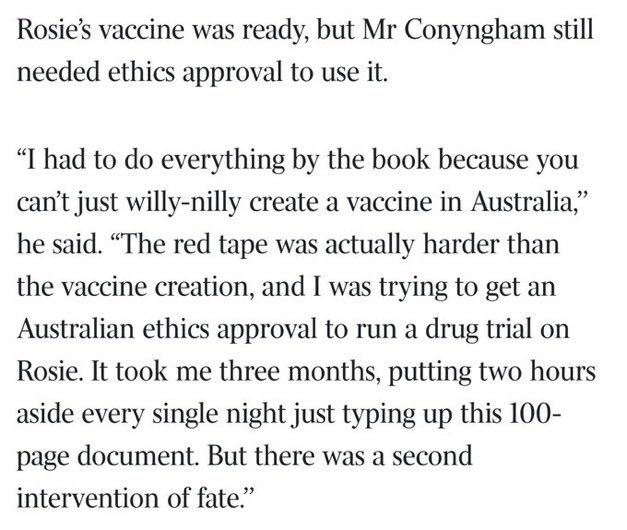
this is actually insane > be tech guy in australia > adopt cancer riddled rescue dog, months to live > not_going_to_give_you_up.mp4 > pay $3,000 to sequence her tumor DNA > feed it to ChatGPT and AlphaFold > zero background in biology > identify mutated proteins, match them to drug targets > design a custom mRNA cancer vaccine from scratch > genomics professor is “gobsmacked” that some puppy lover did this on his own > need ethics approval to administer it > red tape takes longer than designing the vaccine > 3 months, finally approved > drive 10 hours to get rosie her first injection > tumor halves > coat gets glossy again > dog is alive and happy > professor: “if we can do this for a dog, why aren’t we rolling this out to humans?” one man with a chatbot, and $3,000 just outperformed the entire pharmaceutical discovery pipeline. we are going to cure so many diseases. I dont think people realize how good things are going to get
vittorio tweet mediavittorio tweet mediavittorio tweet mediavittorio tweet media
Séb Krier@sebkrier

This is wild. theaustralian.com.au/business/techn…

English
2.5K
19.9K
118K
17.3M
Derek Feehrer
Derek Feehrer@DerekFeehrer·
If you're still rawdogging 5-minute Loom videos for your product launches, just give up now. You can turn screen recordings into beautiful, engaging videos in 10 minutes–with one tool.
English
48
22
762
115.4K
Jeremy Scheffel
Jeremy Scheffel@Scheffeler·
How does this square with the capabilities overhang? The bullish case feels right for people already operating at the edge (listeners to AIDB). AI raises their complexity ceiling. But most orgs/people are still learning to prompt and use these tools beyond a Google replacement. For that cohort, reducing complexity feels necessary to support diffusion.
English
0
0
1
47
Nathaniel Whittemore
Bearish: projects trying to overly reduce and simplify agent complexity Bullish: people who see that AI lets them lean into and own complexity
English
5
0
15
1.7K
Joseph Viviano
Joseph Viviano@josephdviviano·
me: "can you use whatever resources you like, and python, to generate a short 'youtube poop' video and render it using ffmpeg ? can you put more of a personal spin on it? it should express what it's like to be a LLM" claude opus 4.6:
English
550
1.2K
12.5K
1.4M
Jeremy Scheffel retweetledi
Teng Yan · Chain of Thought AI
The most important sentence in Karpathy's whole post is probably this: anything with a measurable score and fast feedback will become something agents can optimize for you. automatically with no humans involved.
Andrej Karpathy@karpathy

Three days ago I left autoresearch tuning nanochat for ~2 days on depth=12 model. It found ~20 changes that improved the validation loss. I tested these changes yesterday and all of them were additive and transferred to larger (depth=24) models. Stacking up all of these changes, today I measured that the leaderboard's "Time to GPT-2" drops from 2.02 hours to 1.80 hours (~11% improvement), this will be the new leaderboard entry. So yes, these are real improvements and they make an actual difference. I am mildly surprised that my very first naive attempt already worked this well on top of what I thought was already a fairly manually well-tuned project. This is a first for me because I am very used to doing the iterative optimization of neural network training manually. You come up with ideas, you implement them, you check if they work (better validation loss), you come up with new ideas based on that, you read some papers for inspiration, etc etc. This is the bread and butter of what I do daily for 2 decades. Seeing the agent do this entire workflow end-to-end and all by itself as it worked through approx. 700 changes autonomously is wild. It really looked at the sequence of results of experiments and used that to plan the next ones. It's not novel, ground-breaking "research" (yet), but all the adjustments are "real", I didn't find them manually previously, and they stack up and actually improved nanochat. Among the bigger things e.g.: - It noticed an oversight that my parameterless QKnorm didn't have a scaler multiplier attached, so my attention was too diffuse. The agent found multipliers to sharpen it, pointing to future work. - It found that the Value Embeddings really like regularization and I wasn't applying any (oops). - It found that my banded attention was too conservative (i forgot to tune it). - It found that AdamW betas were all messed up. - It tuned the weight decay schedule. - It tuned the network initialization. This is on top of all the tuning I've already done over a good amount of time. The exact commit is here, from this "round 1" of autoresearch. I am going to kick off "round 2", and in parallel I am looking at how multiple agents can collaborate to unlock parallelism. github.com/karpathy/nanoc… All LLM frontier labs will do this. It's the final boss battle. It's a lot more complex at scale of course - you don't just have a single train. py file to tune. But doing it is "just engineering" and it's going to work. You spin up a swarm of agents, you have them collaborate to tune smaller models, you promote the most promising ideas to increasingly larger scales, and humans (optionally) contribute on the edges. And more generally, *any* metric you care about that is reasonably efficient to evaluate (or that has more efficient proxy metrics such as training a smaller network) can be autoresearched by an agent swarm. It's worth thinking about whether your problem falls into this bucket too.

English
55
176
2.1K
150.8K