Se7e✨
8.8K posts


A lot of criticism to Bonkfun has been flooding the timeline this past days. I have read and agree with a lot of it, however I did not read a lot of proposals for improvements and thats how we move forward. That said, below I share my proposal. Appreciate whoever can read and point out improvements/ weak spots. Bonkfun USD1 Rewards Program Proposal Weighted, multi‑factor reward system for users and partner projects. The Bonkfun USD1 rewards program is designed to incentivize healthy trading behavior, increase platform engagement, and support both established and emerging tokens. It uses a weighted level system, where participants accumulate points based on performance across multiple dimensions. These points determine each participant’s reward tier and corresponding share of the USD1 reward pool. A) Reward Program for Users The user reward framework allocates four equally weighted components (25% each) to balance incentives between large traders, small traders, active traders, and patient holders. This ensures the program does not disproportionately favor whales or hyperactive trading — but rewards a mix of behaviors. 1) Realized Absolute PnL (25%) Goal: Reward users who generate high absolute profit. This favors larger players who trade with significant size. Scoring is based on realized profit measured in USD. Encourages volume and platform liquidity. 2) Realized Percentage PnL (25%) Goal: Reward small accounts and efficient trading. This metric neutralizes trade size by focusing on percentage-based performance. Smaller accounts can outperform through skill rather than capital. Encourages strategic, high-return trading. 3) Number of Trades (25%) Goal: Incentivize frequent engagement and platform usage. More trades = more points (with anti-spam throttling). Encourages consistent participation without wash trading. This boosts daily active users and transactional metrics. 4) Average Time Held (25%) Goal: Reward patience and thoughtful trading. Points increase the longer a user holds a position before closing it. Encourages more stable trading behavior. Balances the “number of trades” metric to prevent hyper-churning. B) Reward Program for Projects Projects listed or participating in Bonkfun can also earn a share of USD1 rewards. This attracts new tokens, encourages liquidity, and drives healthy ecosystem behaviors. Each metric has equal weight (25%). 1) Absolute Token Volume (25%) Goal: Reward high‑traffic, highly traded tokens. More overall trading volume = more rewards for the project. Encourages campaigns to drive trader activity. This gives established tokens a predictable and fair path to rewards. 2) Volume Relative to Market Cap (25%) Goal: Give small/new tokens a fair chance. Measures how active a token is relative to its size. Helps leveling the playing field for small caps and encourages discovery and supports early‑stage ecosystems. 3) Average Holder Time (25%) Goal: Encourage projects whose traders behave sustainably. Longer holding periods indicate stronger investor confidence. Discourages pump‑and‑dump dynamics. Tokens with stable communities are rewarded. 4) Price Performance (25%) Goal: Reward projects that perform well during the rewards window. Measures positive price appreciation, adjusted to prevent manipulation. Encourages projects to focus on fundamentals and real traction. Anti‑manipulation mechanisms (e.g., smoothing, capped scoring) can be applied. Anti‑Gaming & Fairness Mechanisms To ensure system integrity, Bonkfun integrates: • Anti‑wash-trading heuristics detects irregular trade patterns, circular trading, zero‑spread trades, or self‑interactions. • Time‑weighted scoring discourages rapid fake turnover. • Normalization curves prevent whales or single‑metric exploitation. • Market manipulation filters price or volume anomalies are flagged and smoothed. These safeguards ensure rewards reflect real value addition.


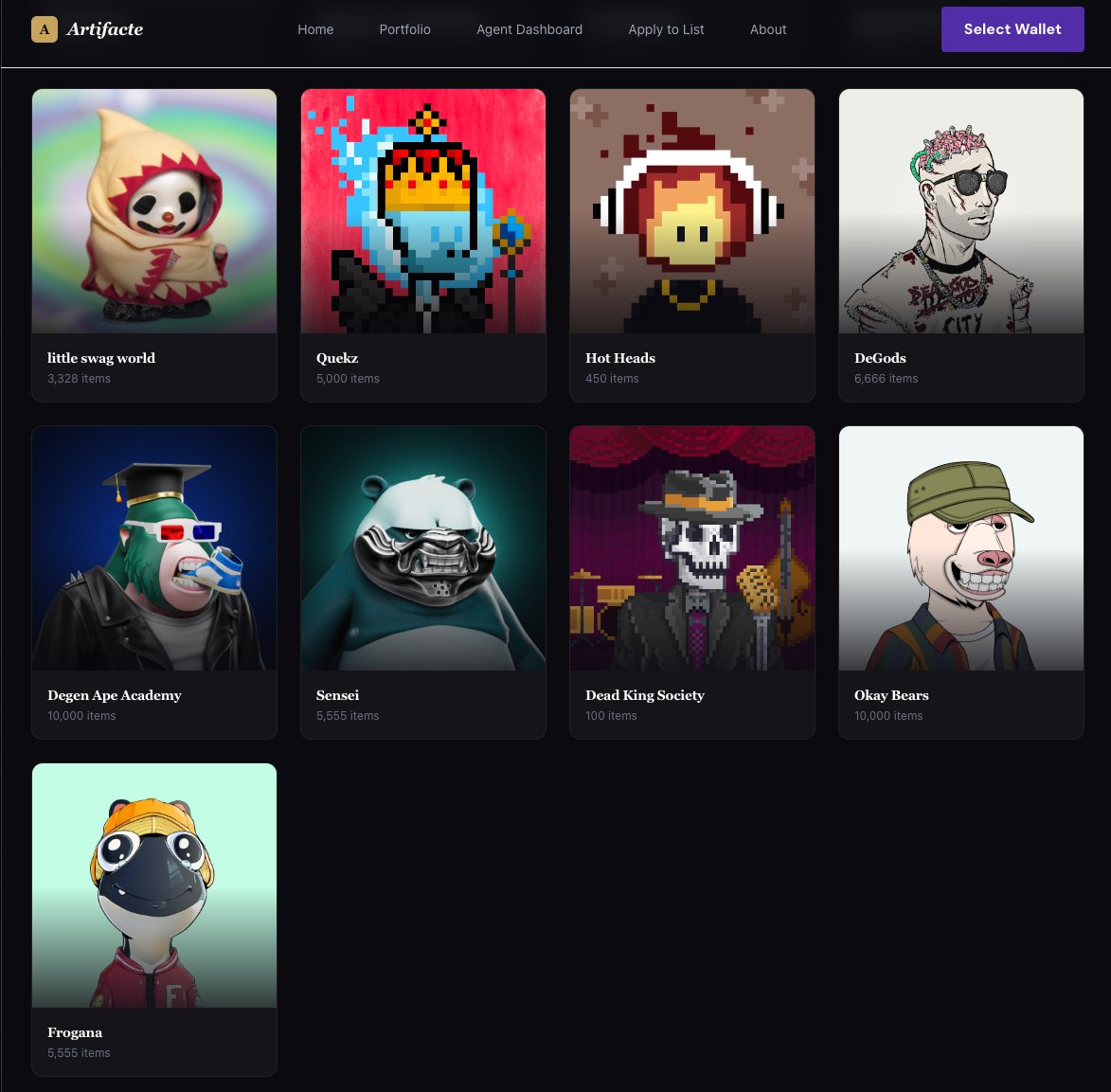
Hmmm.... what other Digital Collectibkles (Nfts) should we whitelist on our platform? I want to see active communities only✨


👀✨


No complexity. No accident. 10/10 was caused by irresponsible marketing campaigns by certain companies. On October 10, tens of billions of dollars were liquidated. As CEO of OKX, we observed clearly that the crypto market’s microstructure fundamentally changed after that day. Many industry participants believe the damage was more severe than the FTX collapse. Since then, there has been extensive discussion about why it happened and how to prevent a recurrence. The root causes are not difficult to identify. ⸻ What actually happened 1.Binance launched a temporary user-acquisition campaign offering 12% APY on USDe, while allowing USDe to be used as collateral with the same treatment as USDT and USDC, and without effective limits. 2.USDe is a tokenized hedge fund product. Ethena raises capital via a so-called “stablecoin,” deploys it into index arbitrage and algorithmic trading strategies, and tokenizes the resulting fund. The token can then be deposited on exchanges to earn yield. 3.USDe is fundamentally different from products such as BlackRock BUIDL and Franklin Templeton BENJI, which are tokenized money market funds with low-risk profiles. USDe, by contrast, embeds hedge-fund-level risk. This difference is structural, not cosmetic. 4.Binance users were encouraged to convert USDT and USDC into USDe to earn attractive yields, without sufficient emphasis on the underlying risks. From a user’s perspective, trading with USDe appeared no different from trading with traditional stablecoins—while the actual risk profile was materially higher. 5.Risk escalated further as users: •converted USDT/USDC into USDe, •used USDe as collateral to borrow USDT, •converted the borrowed USDT back into USDe, •and repeated the cycle. This leverage loop produced artificial APYs of 24%, 36%, and even 70%+, widely perceived as “low risk” simply because they were offered by a major platform. Systemic risk accumulated rapidly across the global crypto market. 6.At that point, even a small market shock was sufficient to trigger a collapse. When volatility hit, USDe depegged quickly. Cascading liquidations followed, and weaknesses in risk management around assets such as WETH and BNSOL further amplified the crash. Some tokens briefly traded near zero. The damage to global users and companies—including OKX customers—was severe, and recovery will take time. ⸻ Why this matters I am discussing the root cause, not assigning blame or launching an attack on Binance. Speaking openly about systemic risks is sometimes uncomfortable, but it is necessary if the industry is to mature responsibly. I expect there may be significant misinformation and coordinated FUD directed at OKX in the near future. Even so, speaking honestly about systemic risk is the right thing to do—and we will continue to do so. As the largest global platform, Binance has outsized influence—and corresponding responsibility—as an industry leader. Long-term trust in crypto cannot be built on short-term yield games, excessive leverage, or marketing practices that obscure risk. The industry needs leaders who prioritize market stability, transparency, and responsible innovation—not a winner-take-all mentality where criticism is treated as hostility. Crypto is still early. What we choose to normalize today will determine whether this industry earns lasting trust—or repeats the same mistakes again.