ETH bulls coming back into the fold
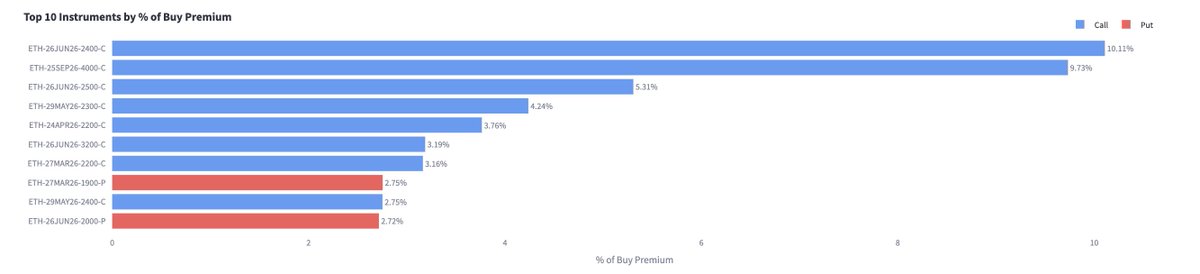
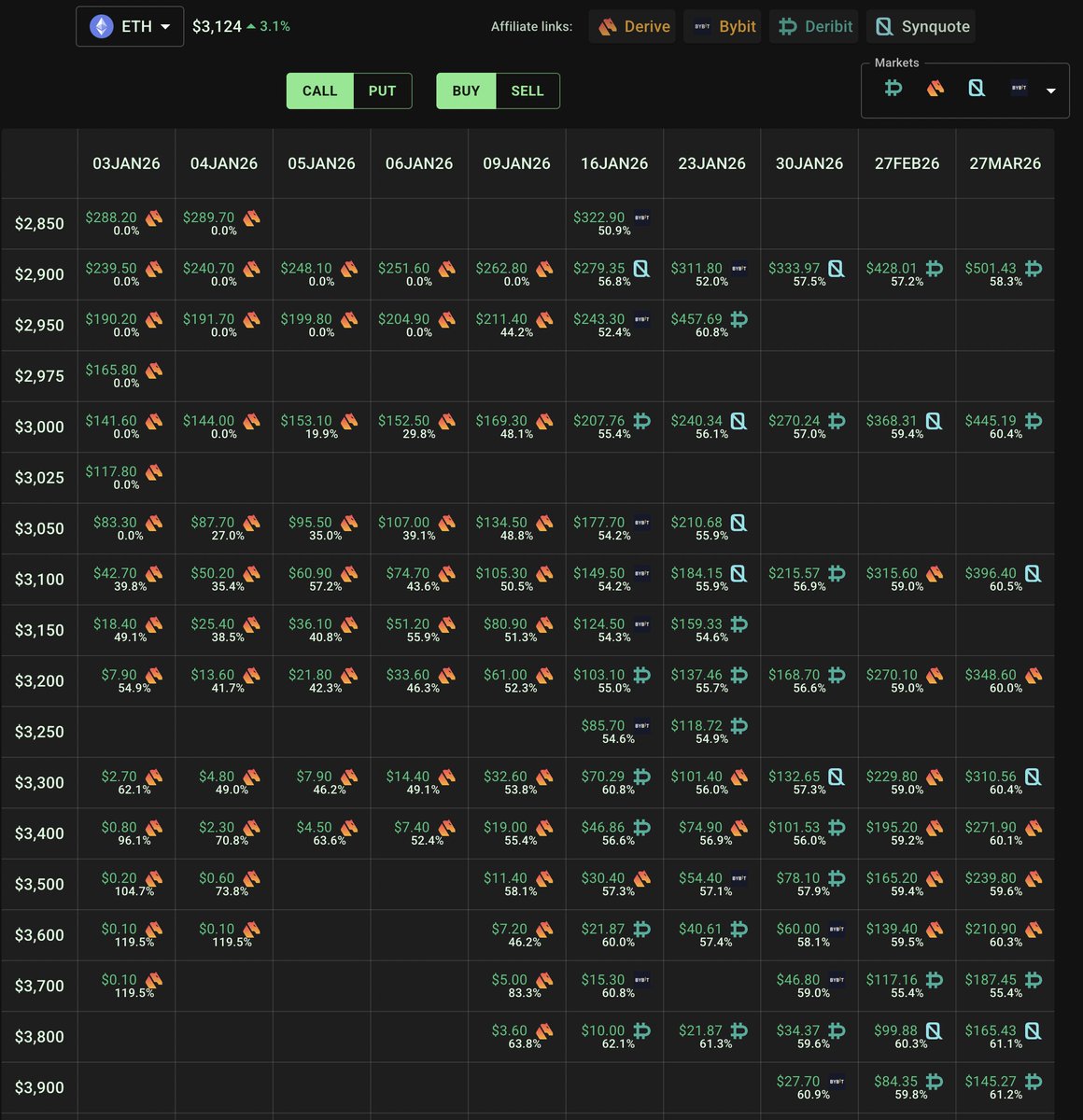
9 of the top 10 options (sorted by premiums bought) in the last week were calls. Seems these traders are betting on $2500 ETH as early as May, and a super recovery to $4000 by the end of Sept.
English
Sean | Derive
584 posts

@SeanNotShorn
Head of Research @derivexyz


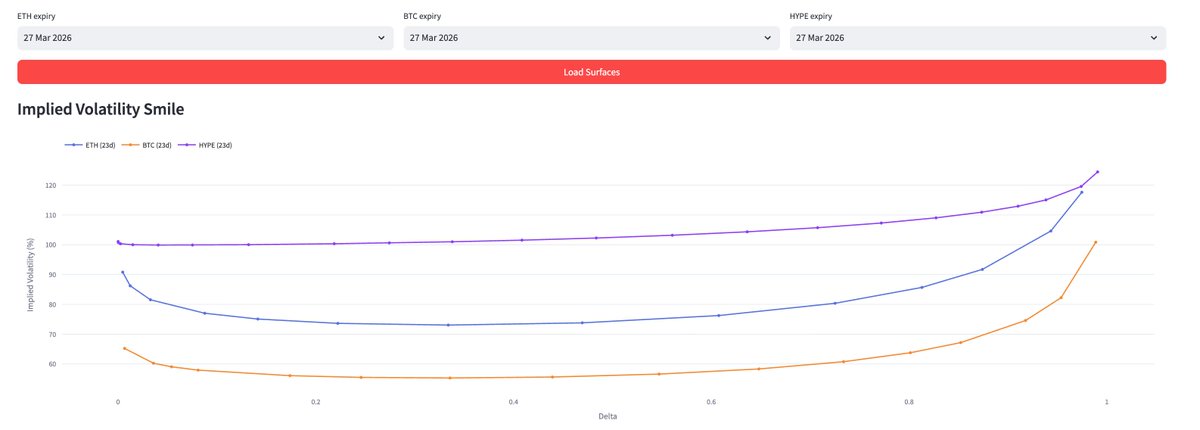
$HYPE vol selling accelerating on @DeriveXYZ as vols continue to rise, currently sitting at ~105% annualized, implying a 5.5% daily move. As yields get crushed, volatility farming remains one of the last untapped sources of market beating yield.

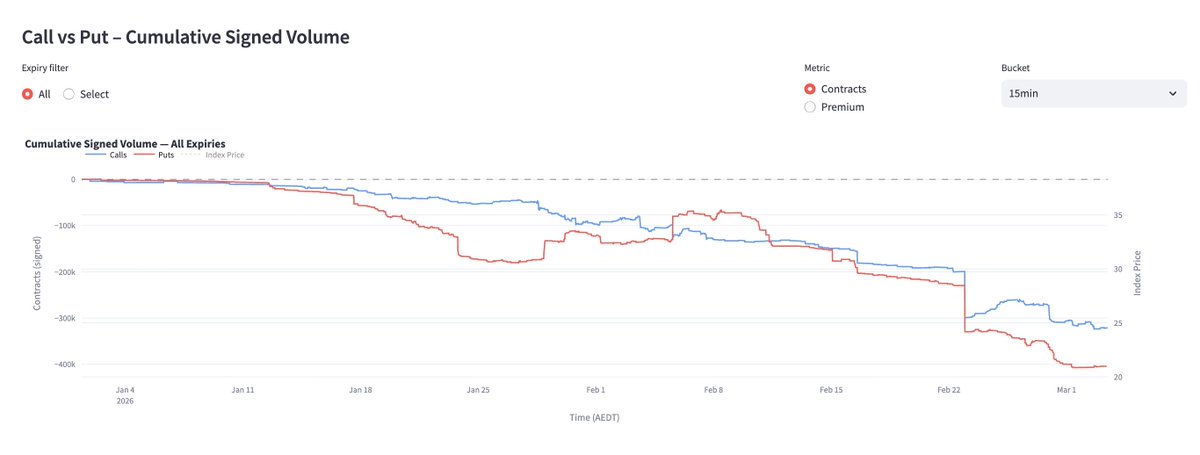

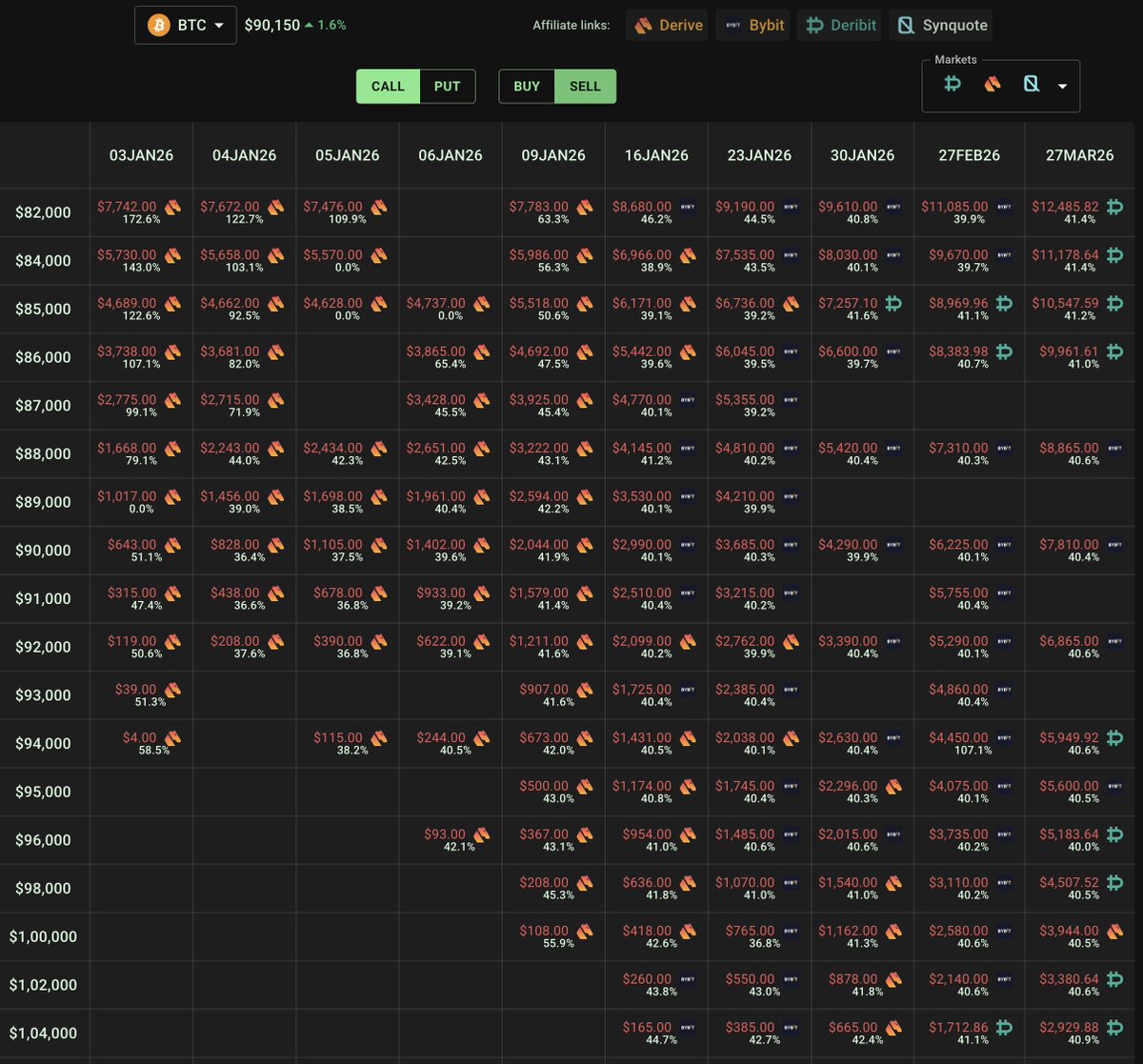
Bulls return despite the war in Iran. Over the last 24 hours, almost 15% of premiums on Deribit were selling the $60K 27MAR puts and a further 10.8% buying the $75K calls of the same expiry. Is the bottom in? Starting to look like it


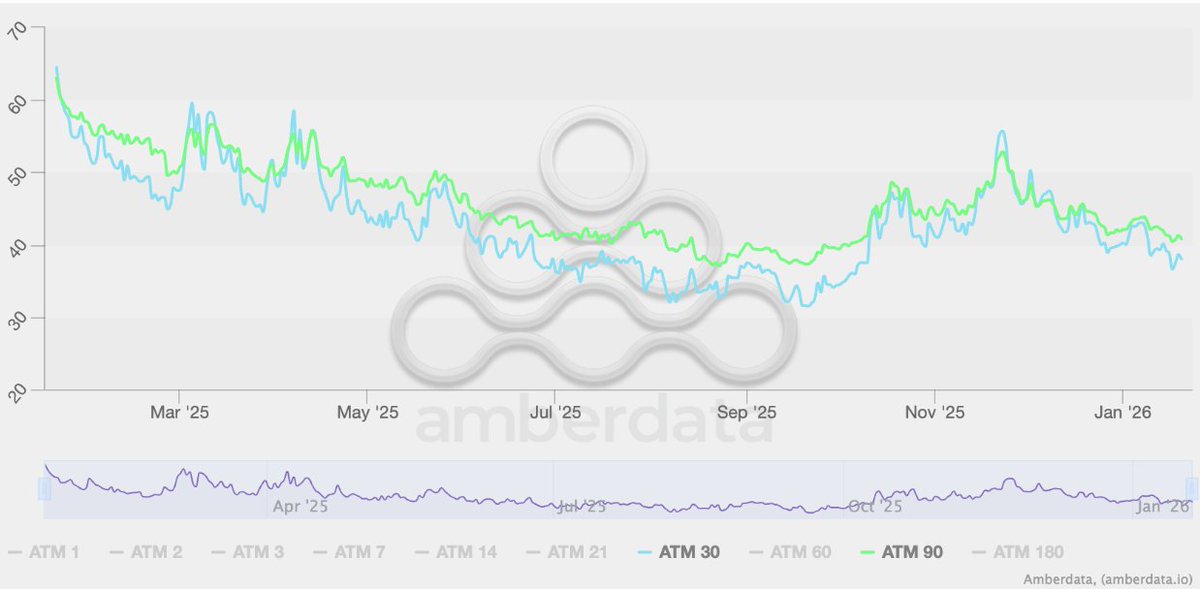
We’ve been monitoring spreads across venues, and @DeriveXYZ has tightened significantly lately. On most of the instruments, they’re now among the best we track. Less slippage and one more real reason to trade onchain instead of CEXs.



In 1945, Friedrich Hayek outlined the Knowledge Problem that any society faces: The central economic problem is not resource allocation - it is how to use knowledge that is dispersed among millions of individuals. He argues that information is fragmented, local, dynamic, and often hidden. He explains that no government or central planner can ever fully possess it, which makes them inefficient resource allocators. He proposes markets as the solution: knowledge is decentralized and prices are how society aggregates it. This idea is the intellectual foundation of modern prediction markets. Decades later, in 1988, the University of Iowa launched the Iowa Electronic Markets (IEM), which allowed small size trades on US elections and macro events. The results: even thin, low-capital markets outperformed polls. This was the first credible empirical proof that market prices are effective aggregators of public beliefs. A variety of corporate and policy experiments followed in the 2000s. Google, HP, and Microsoft all tried their own internal versions of prediction markets to forecast product launches and sales targets. DARPA built its own to forecast geopolitical events. The results were consistent: broad participation with monetary incentives led to accurate forecasts. Then, in 2015, Philip Tetlock published Superforecasting. The book, which is the culmination of decades of research into human judgment, shows that groups of curious and humble “forecasters” dramatically outperformed intelligence analysts and domain experts at forecasting. By showing that smart amateurs can outperform experts, Tetlock put into question authority figures and whether we should trust them for predictions about the future. Today, Kalshi is sitting on one of the largest repositories of high quality market data in the world. For the first time, public beliefs across a variety of domains - from economics, to politics and culture - are aggregated at scale through market prices and updated in real-time as new information arrives. Our data contains answers to open questions held about prediction markets - why they outperform traditional belief aggregation methods, how to detect shifts in collective sentiment, and which players drive market accuracy. This proprietary data has been closed to the public. We are launching @KalshiResearch to change that. We invite academics, researchers, economists, philosophers, and interested parties to work with us to study and uncover the fundamentals underpinning belief formation and prediction markets. Like Hayek proposed 80 years ago, prediction markets have the potential to improve society's collective decision making and resource allocation. The goal for Kalshi Research is to fulfill his vision.
Last week we've had the honor to invite Hasu ( @hasufl ) into our podcast! Crypto OG: walks through his poker to crypto journey, why MEV is really “ordering power” (from swaps to Taylor Swift tickets), how MEV protection has evolved, and what better market structure means for options and DeFi treasuries. Hosted by @SeanNotShorn and @CptRandlelwa Also available on Spotify and Apple. See links in comments