🌴ioaqvin secvndvs maximvs🌴

4.4K posts

🌴ioaqvin secvndvs maximvs🌴 banner
🌴ioaqvin secvndvs maximvs🌴

🌴ioaqvin secvndvs maximvs🌴

@SecundusJoaquin

Restitutor Orbis Invictus!!

Lake Placid, Fl Katılım Kasım 2024
399 Takip Edilen232 Takipçiler
🌴ioaqvin secvndvs maximvs🌴 retweetledi
ArchaeoHistories
ArchaeoHistories@histories_arch·
More than four thousand years ago, before the idea of an “author” even existed, one woman stepped forward and signed her name.... Enheduanna lived around 2300 BC, in a world where writing was primarily administrative—lists, laws, inventories scratched into clay. She transformed it into something radical: personal voice. Not myth anonymously handed down, not royal propaganda spoken about gods, but words spoken to them, from an individual soul. As high priestess of the moon god Nanna in the city of Ur, Enheduanna stood at the intersection of religion and empire. She was also the daughter of Sargon of Akkad, architect of the world’s first known empire. Her role was political as much as spiritual: through ritual and poetry, she helped bind conquered Sumerian cities to Akkadian rule. But her writing went far beyond statecraft. In her hymns—especially those devoted to the goddess Inanna—she did something unprecedented. She wrote in the first person. She described fear, humiliation, exile, rage, devotion, and spiritual collapse. When she was violently removed from her temple during a political uprising, she did not record it as history. She wrote it as lived experience: a woman cast down, pleading with a goddess who embodied power, sexuality, destruction, and renewal. This was theology infused with autobiography. Politics braided with prayer. Power examined from the inside. Enheduanna’s language shaped religious thought across Mesopotamia for centuries. Later hymns to gods echoed her structure, her metaphors, her emotional intensity. Scribal schools copied her work long after her death, treating it as a model of literary excellence. Her influence is not hypothetical—it’s traceable in clay tablets found hundreds of miles apart, over generations. What makes her extraordinary is not only that she was first, but how she was first. She claimed authorship. She declared that these words came from her mind, her devotion, her suffering. In doing so, she introduced a concept that underpins all literature that followed: that a single human voice, honestly expressed, can shape culture, belief, and power itself. © Women In World History #archaeohistories
ArchaeoHistories tweet media
English
48
198
973
43.2K
🌴ioaqvin secvndvs maximvs🌴 retweetledi
Paroles d'auteurs
Paroles d'auteurs@Paroles_auteurs·
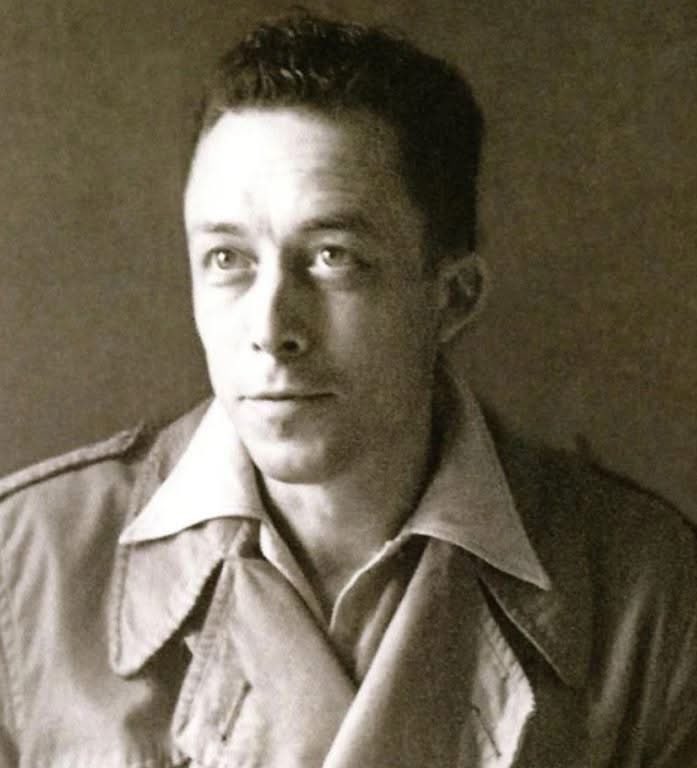
"Au milieu de la haine, J'ai trouvé qu’il y avait en moi un amour invincible. Au milieu des larmes, j'ai trouvé qu’il y avait en moi un sourire invincible. Au milieu du chaos, j'ai trouvé qu’il y avait en moi un calme invincible. J’ai réalisé à travers tout cela que, Au milieu de l’hiver, il y avait en moi un été invincible, et cela me rend heureux." Albert Camus
Paroles d'auteurs tweet media
Français
35
487
1.5K
45K
🌴ioaqvin secvndvs maximvs🌴 retweetledi
Archaeo - Histories
Archaeo - Histories@archeohistories·
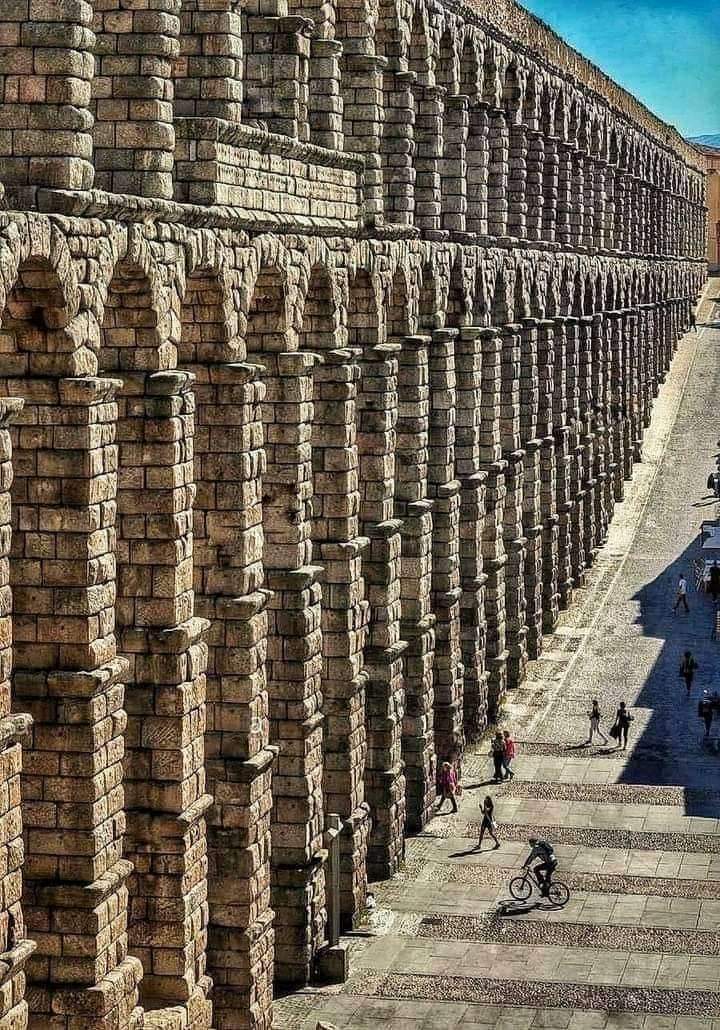
Roman Aqueduct in Segovia, Spain 🇪🇸 Aqueduct is thought to have been built during Flavian Dynasty (69-96 AD), from second half of 1st Century to early 2nd Century AD, under Roman Emperors Vespasian (9-79 AD) and Trajan (53-117 AD) in order to carry water of the River Acebeda to the city. This impressive work of engineering, still in excellent condition, begins near the Palace of La Granja, with single arches bringing the water to the tank known as El Caserón. Then, a stonework channel carries it to a second tower, and when it arrives at Plaza de Díaz Sanz, it begins to form two monumental rows of arches, one on top of the other. There is no mortar or cement between 20,400 blocks of stone, which remain standing solidly in a perfect balance of forces. The highest point of the construction is on Plaza del Azoguejo, where it is 28.10m high, with a total of 167 arches. The remaining portion of the structure stands 28.5m tall at its maximum height and nearly 6 additional meters deep in the main section. Along 14km of rolling landscape, aqueduct adjusts to contours of the valley, hills, and city and creates a sense of grandeur and monumentality. Pillars and arches of its tall, two-story arcades are made of solid blocks of stone fit closely together with little or no mortar, and lower arches alternate in height according to structure’s adaptation to contours of the land. Aqueduct of Segovia, an unique structure from Roman Empire that still conveys its original character and remains a prominent and evocative feature of regional landscape. It represents both the expansion of Roman Empire during 1st Century AD, and attention to aesthetics and functionality that are so strongly associated with engineering prowess of Roman world. Aqueduct of Segovia functioned for many centuries after the fall of Roman Empire and served communities of Segovia well into the modern era. Today, it is one of features of landscape of Castilla y León that gives character to the region and is well-deserving of the attention it is receiving for its continued protection and stabilization. Detrimental reconstruction occurred in 15th-16th Centuries AD, and not until 1970s and 1990s was there urgent conservation intervention. Aqueduct was inscribed on the World Heritage list in 1985 and stands prominently in the urban landscape of Segovia. Aqueduct of Segovia remains one of most intact Roman aqueducts in Europe. Aqueduct of Segovia was placed on 2006 World Monuments Watch, drawing international attention to overall condition of the structure. Although, aqueduct remains intact there was no comprehensive management plan or funding to address the erosion of the stones, the increase of vibrations and pollution from cars, and heavy vegetation. Municipality of Segovia proposed a comprehensive conservation project at aqueduct that not only focused on the entire structure, but also its context and surrounding environment. In February 2006, an initial meeting was held in Segovia to discuss the implementation of conservation plan and how best to protect the integrity of hydraulic works and their surroundings. In November 2009, a technical workshop was held in Segovia in collaboration with World Heritage Center of UNESCO. The workshop confirmed the urgent need to implement a management plan to protect and maintain monument.  Aqueduct was highlighted in exhibition, Treasures along Route of Santiago de Compostela in Castile-León, at Queen Sofia Spanish Institute in New York City in late winter 2010. Now, there is an Aqueduct Interpretation Centre in the Royal Segovia Mint, a modern interactive space with multimedia content that follows the journey of water, guiding visitors through 15km of the world's best-preserved Roman aqueduct, which is still considered as the masterpiece of engineering. 📷 : Credit to the Owner #archaeohistories
Archaeo - Histories tweet media
English
13
235
1.2K
27.8K
Massimo
Massimo@Rainmaker1973·
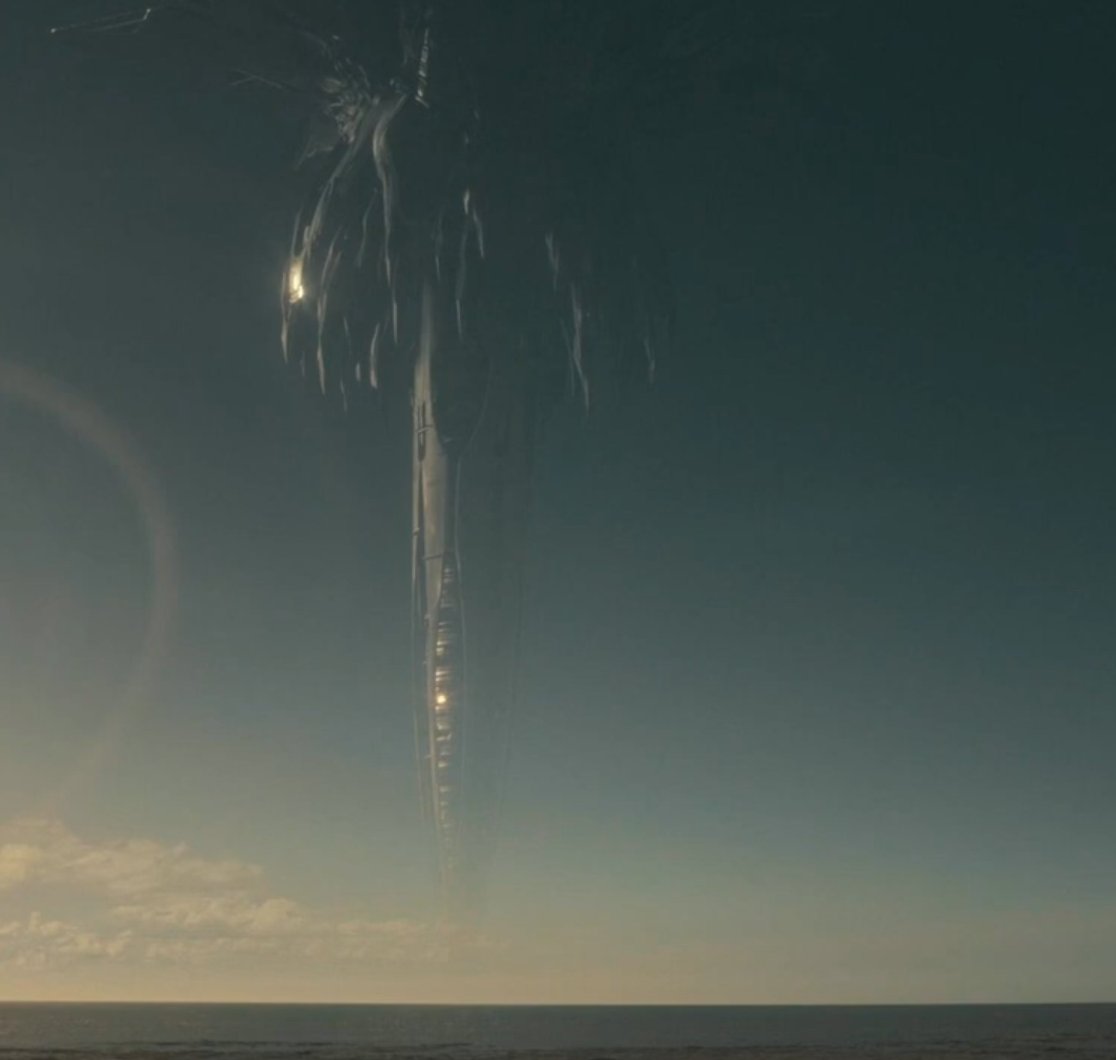
If aliens exist, why haven’t they visited Earth?
Massimo tweet media
English
1.8K
132
1.9K
261.4K
🌴ioaqvin secvndvs maximvs🌴 retweetledi
M+243
M+243@kedrickmutayi·
Logique
M+243 tweet media
Français
769
697
11.5K
279.8K
ADAM
ADAM@AdameMedia·
FBI Director Kash Patel Under Oath: “There’s no credible information that Jeffrey Epstein trafficked minors” 40 minors gave sworn testimonies that they’d been trafficked by Jeffrey Epstein. This is treason.
English
3.3K
15.4K
75.3K
2.7M
🌴ioaqvin secvndvs maximvs🌴
🌴ioaqvin secvndvs maximvs🌴@SecundusJoaquin·
When one is older, not shaving, dressing like crap, and in general looking unkempt makes one look homeless. Being out of shape adds to the look.
English
1
0
0
18