

Unstoppable
12.3K posts
Unstoppable
@SenatorAfeez
An Agropreneur, Public Administrator, visionary leader, social worker
Nigeria Katılım Ağustos 2011
1.8K Takip Edilen624 Takipçiler


Unstoppable retweetledi

The Debate That Lasted One Minute: When Imām al-Albānī Debated a Man Who Claimed to Know the Unseen!
Shaykh Waṣiyyullāh ʿAbbās حفظه الله
Català
Unstoppable retweetledi

Can I divorce my wife if the Doctor said she can't conceive anymore due to miscarriage that led to flushing of her womb??
Shaykh Dr Luqmaan Idrees Shekonii
Kindly retweet so others can benefit
English
Unstoppable retweetledi

@churchtalkative Congratulations to you. Your God was killed by his fellow tribes. Nobody can kill Allah.
English

Unstoppable retweetledi

This to those who left Islam
Allah is not in need of you, you're the one needs Allah..
If people turn away from Him, He will replace them with others who will worship Him
Evidence (surah maidah 5:54)
ISLAM WILL ENTER EVERY HOME 🫵🏾
English
@RepRileyMoore Agent of Devil masquerading as an agent of change (Moore). Ur allied are killing innocent children in Palestine, your Government kidnapped a sitting President. What was your take? Your heart of enmity will sink you.
English

Christians in Nigeria continue to face brutal violence and death at the hands of radical Islamic terrorists.
The government in Abuja must step up and protect their citizens in the Middle Belt.
It's past time to decentralize police authority so state governments can protect their citizens and stop this horrific persecution.
Sean Nelson@Sean_ADFIntl
Another Christian church in Nigeria 🇳🇬 destroyed by Fulani militants 😭 These are photos of St James the Great Catholic Church in Adu, Taraba. Just constant terrorism against these Christians.
English
@YusufAsunmogejo Ahki Yusuf, jazakumulahu Khairan, also educate @dipoaina1 about the two thieves who were crucified alongside Jesus. To clear his face on fabricated story
English

Good evening Dipo Aina,
I know you won’t rest. I won’t either.
You typed all this just to prove my point. You fell right into the trap and handed me the textual contradiction I have been pointing out to you. I owe you no apology because your own copy-and-paste job destroyed your argument.
Firstly, look closely at the verses you proudly posted. You quoted Mark 15:40 saying the women were watching from a distance. Then you quoted John 19 claiming they were standing right near the cross having a direct conversation with Jesus. Which one is it? Were they far away, or were they right next to him?
This is the textual evolution I warned you about. Mark is the earliest historical account, and it puts everyone far away. Decades later, the anonymous author of John decides to move the women right to the foot of the cross and inserts a male disciple. That is a theological invention. It can never be the truth.
Again, look at your list of authors. You admitted Paul never met Jesus. You admitted Luke never met Jesus. You claim Mark was recording Peter's teachings. But we already established from your own book in Mark 14:50 that all the disciples fled, and later in Mark 14:66-72, Peter denied Jesus three times and ran away for his life.
How can Peter who ran for his life give an account of what he did not witness Dipo? Or which Peter did Mark got his teachings from? If you are not blind, you should know the truth already. Mark's account of the crucifixion is hearsay. It is not an eyewitness account. The disciples fled. All fled.
In addition, your entire claim of a disciple being at the cross rests on the Gospel of John. But serious biblical scholars know the gospels were written anonymously in Greek. The text never says I, John the Apostle, am writing this. The phrase “beloved disciple” is an anonymous figure. Claiming it was John the fisherman is a later church tradition created to give the book authority. It was never the truth.
More so, your reliance on a Roman centurion —who is a pagan Roman executioner, as your reliable witness is a very desperate move. Let us take a look at this star witness of yours. Do you even know his name? The Bible does not give him one. He is just an anonymous pagan soldier. He did not write a sworn testimony. He did not author the Gospel of Mark neither.
So who recorded his words? The Gospel of Mark was written in Greek by an unknown author decades after the crucifixion. This means an unknown writer who was not at the cross invented a quote and gave it to a nameless Roman soldier who worshipped Jupiter.
You are building your core theology on a fabricated quote because you do not have the testimony of a Roman centurion. If that is not storytelling, I don’t know what it is. Mind you, I am not here for stories. You can reserve that for your minions.
All I see is your struggle to smuggle the truth in. You can’t even do it well. You want to build a historical case, and all you could do was to build it using authors who were not there, letters written decades later, and accounts that contradict each other on basic details such as where people were standing during the event.
The Quran cuts through all this confusion perfectly. Surah An-Nisa verse 157 is clear. The matter was made unclear to them. From a distance, in the chaos and trauma, they assumed they saw him crucified. Allah saved His messenger.
You are the one parading copy and paste apologetics as serious historical scholarship. You better read more and help yourself in this mess you have put yourself.
Thank you for learning something new.
Ainà Dipo 🇳🇬@dipoaina1
🚨 Two lies busted: 🥴 One thing I noticed about you guys is that you like picking the surface of the bible to justify whatever notion you have going on. You claim that there were no witness during the crucifixion of Jesus Christ is false, lies propaganda and fake news. - all in one 😅 Now let me explain: When you look at the crucifixion itself, the Gospels note a few specific people: 1. The women followers – Mary, the mother of Jesus, was present at the crucifixion. According to the Gospel of John (19:25-27), she stood near the cross with other women, including Mary Magdalene and her sister, Mary of Clopas. Jesus entrusted her care to the "disciple whom he loved" (John) while on the cross. • Mark 15:40: “Some women were watching from a distance. Among them were Mary Magdalene, Mary the mother of James the younger and of Joses, and Salome.” Key points: • Jesus’ mother (Mary) was present at the cross. She is explicitly mentioned. • The “disciple whom Jesus loved” was also standing near the cross. Traditionally, this is understood to be John the Apostle. • Jesus entrusts Mary to this disciple, which indicates trust and close relationship. •Roman soldiers and centurions – these are not disciples, but they were witnesses of the execution: • Mark 15:39 records the centurion declaring, “Truly this man was the Son of God!” after Jesus died. 😎******You said the gospel has no connection with the disciples . Yusuf you are very wrong, just say you are ignorant of this part and you want to learn and I will happily educate you. Here are scriptural references showing the connections each author had to Jesus or his disciples, keeping it in a clear bulletin style: •Mark – Companion of Peter; closely associated with him; likely recorded Peter’s teachings. •Scripture hinting at connection to Peter: 1 Peter 5:13 (“She who is in Babylon, chosen together with you, sends you her greetings, and so does my son Mark”). • Acts 12:12, 25 (Mark works with Peter and Barnabas). • Luke – Physician and companion of Paul; probably never met Jesus; collected stories from eyewitnesses. • Scripture hinting at connection to Paul: Colossians 4:14 (“Luke, the beloved physician, and Demas, greet you”). • Acts 16:10–17, Acts 20–28 (Luke travels with Paul). • He references eyewitness accounts indirectly in Luke 1:1–4. •John – “Beloved Disciple”; close follower; may have had direct contact with Jesus and his family (Mary). • Scripture hinting at direct contact: John 19:26–27 (Jesus entrusts Mary to the disciple), John 13:23 (described as reclining next to Jesus). •Paul – Never met Jesus during his ministry; met Peter, James, and other disciples. •Scripture for meeting Peter: Galatians 1:18–19 (“Then after three years I went up to Jerusalem to visit Cephas [Peter] and stayed with him fifteen days. I saw none of the other apostles except James, the Lord’s brother”). •Acts 9:26–28 (Paul meets apostles in Jerusalem). •James – Brother or close relative of Jesus; leader in Jerusalem church; likely had firsthand knowledge of Jesus’ life. •Scripture hinting at relationship: Galatians 1:19 (James, “the Lord’s brother”). • Acts 15:13–21 (James leads Jerusalem council). • James 1:1 (Letter from James, servant of God and of the Lord Jesus Christ). • Jude – Brother or close relative of Jesus; connected to Jesus’ family; letters reflect early church connections. •Scripture hinting at relationship: Jude 1:1 (“Jude, a servant of Jesus Christ and brother of James”). • Other apostolic letters (Peter, John, etc.) – Written by direct disciples; based on personal experience with Jesus. • 1 Peter 5:1–2 (Peter calls himself a witness of Christ’s suffering). • 1 John 1:1–3 (John emphasizes firsthand experience with Jesus). So will you apologize for lying or you’ll will deflect and move to another "surface subject of Christianity".
English
Unstoppable retweetledi

Unstoppable retweetledi
Men, take good care of your women and overlook their excesses.
Dr. Imrān AbdulMajīd Eleha
Kindly retweet so others can benefit
English
@MasterMaliq Does shouting Allah Akbar automatically make them a Muslim? Saying shahadah and perpetuating evils does not make you a Muslim. What makes you a Muslim is Sincerity in Allah and following the Noble Prophet.
English

@MasterMaliq This guy is being mischievous. So if a Christian reads the Qur'an does that make him as authentic as Muslims? Ìf a Christian wears a Jalabab or niqab to do evil and she is caught. Does that make her Muslim?
English
@ZagazOlaMakama @DHQNigeria @HQNigerianArmy If he had repented, he should have left the bandits alone to encounter what he encountered after the 1980 bank robbery. Baba should face charges ooo
English

Zagazola Makama - Cleric recounts past involvement in 1980 bank robbery, claims spiritual transformation
@DHQNigeria
@HQNigerianArmy
zagazola.org/index.php/brea…
English
Unstoppable retweetledi

Could this be a printing error, or am I mistaken?
If you notice any mistake, please let me know.
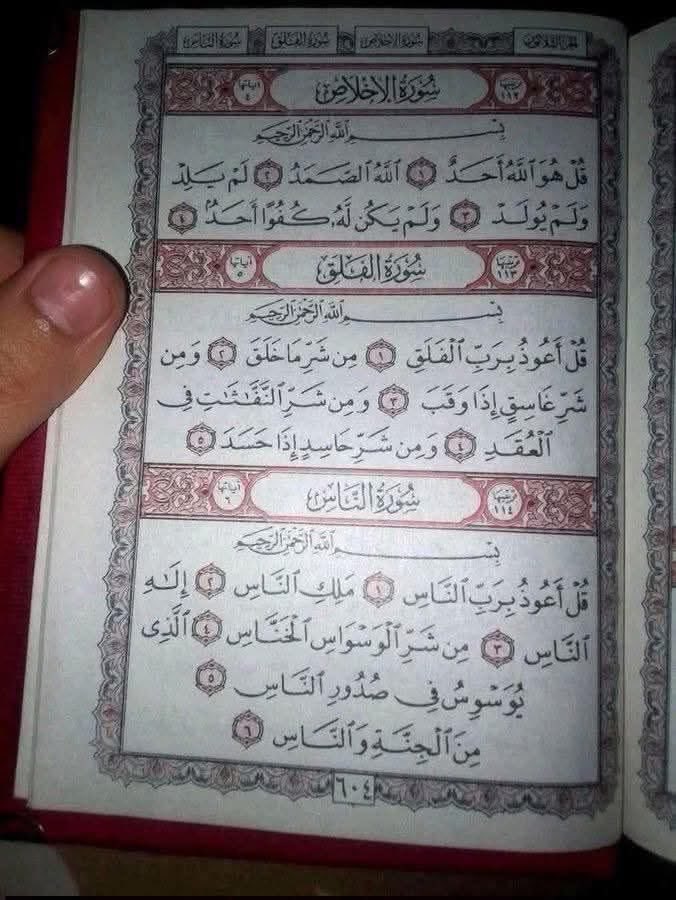
English
@OREZEE153995 @Ihunanya_chi Better still, show me in the Bible where it is enjoined to fast personally, as a congregation, or as a family. As for A Muslim, we have adequate evidence to fast either personally or in congregation
English

Who’s talking about lent fasting ?? Uncle sit your ass down jare. Lent fasting is only for Catholics. We as Christians don’t need any general reason to fast. We fast personally, as a congregation or a family. Not waiting for one worldwide call. You can’t relate cuz if it’s not Ramadan yall don’t fast. Still trying to argue.
English

Muslim: You Christians don’t fast. Your religion is weak. No prayer, no fasting, just sin everywhere: prostitution and clubs.
Me: Let’s start with the fasting first. We’ll get to the other accusations later. Did you say Christians don’t fast?
Muslim: Yes. Christians don’t fast. Look around, Muslims are fasting right now.
Me: Oh, Christians fast. We just don’t make noise about it like you all do.
Muslim: What do you mean “make noise”? Who told you Muslims make noise?
Me: Literally the whole world knows Muslims are fasting. It’s on TV, radio, social media, newspapers, everyone knows.
Muslim: Yes, we announce it so people won’t provoke us.
Me: Provoke you how?
Muslim: Like eating in public or eating in front of us.
Me: Wait… so because you’re fasting, hungry people shouldn’t eat?
Muslim: It’s about respect. When Christians fast, we wouldn’t eat in front of them either.
Me: Hold on. I thought you just said Christians don’t fast.
Muslim: Well… I’ve never seen any Christian fasting in my life.
Me: Exactly. That’s because they don’t announce it. They don’t even tell their family or friends. Jesus taught us that, fasting should be done quietly. The only time people know is during a church-wide fast, and even then it’s just the church members, not the whole public.
Muslim: Hmm… how can someone fast and not show it? Look at me, I’m fasting now. I’m weak. Anyone who sees me will know.
Me: That’s the difference. And funny enough, many Christians don’t eat anything at all until the time they break their fast.
Muslim: What do you mean?
Me: You Muslims eat early in the morning and just skip lunch. To us, that’s not really fasting. In Christianity, someone might fast for a whole week, breaking each day at 6 p.m., no food all day, and you still wouldn’t know they were fasting.
Muslim: Why are the authors of the Bible anonymous, and why didn’t Jesus write the gospel?
Me: That’s not the topic. Please stay on the subject.
Muslim: I knew you wouldn’t answer. You people don’t even have the original Bible. Sorry for you.
Me: Hello… stay on topic. We were talking about fasting.
Muslim: Christians don’t fast. You people like freedom too much.
Me: Alright… take care. 😅

English
@OREZEE153995 @Ihunanya_chi Is Lent for Catholics not Christians? Whao. This is great. Which congregation are you that you are fasting? Come and fast for 30 days, I mean dry fast. You will not eat anything or drink anything for those days
English
Good afternoon Dapo Aina,
I couldn’t stop laughing while reading what you wrote. You typed a lot of words just to shoot yourself in the foot again.
Let me help you because I believe you need it.
First of all, let’s take your point about the Trinity developing in the Middle East. Yes, I agree early theological debates happened in places such as Alexandria and Antioch.
However, it took Roman Emperors to enforce it. Emperor Constantine at the Council of Nicaea in 325 AD and Emperor Theodosius in 381 AD used Roman state power to exile early Christians who believed Jesus was a subordinate creation. Jesus spoke Aramaic. So, he never used Greek philosophical concepts like "homoousios" to explain himself. Yet, you are here confusing the geographical birth of an idea with how it became a mandated state doctrine. You need to revise your history again.
Then you argued Jesus is divine because he ascended to heaven and performed miracles. Are you reading the same Bible you are quoting? 2 Kings 2:11 states Elijah ascended to heaven in a whirlwind. Genesis 5:24 says God took Enoch. By your logic, Enoch and Elijah are divine beings too abi?. Just so you know, miracles are signs of the Creator's power given to His messengers. They do not turn a man into God.
Your most embarrassing point is your claim about eyewitnesses to the crucifixion. It’s indeed laughable. You claimed his disciples were eyewitnesses. Go read Mark 14:50. This time around slowly. When Jesus was arrested, your text clearly says "And they all left him and fled." Peter denied him and ran away.
How can men who fled for their lives be reliable eyewitnesses to a crucifixion Aina? The Gospels you see today were written decades later in Greek by anonymous authors, not by Aramaic speaking fishermen who were not even there.
You went further and quoted Surah An-Nisa 4:158 saying "Allah raised him to Himself" and tried to say this proves Jesus has authority over life and death. Read the sentence again. This time around as I used to say, Slowly.
"Allah raised him." Jesus did not raise himself. Allah performed the action. A being who needs to be rescued and raised by the Almighty is a servant. So, claiming the infinite can willingly experience limitation is a pagan Greek concept. The Creator does not become a limited creation.
Funnily, you even tried to dismiss Bart Ehrman. This shows you do not understand textual criticism. Ehrman is a world class expert that analyzed the very same Papyrus 66 and Codex Sinaiticus you are bragging about. He documented how early scribes altered those texts to make Jesus look more divine over time. Codex Sinaiticus alone has thousands of corrections made by different scribes over centuries.
You can keep appealing to Orthodox traditions and church councils. I will stick to the pure monotheism that every single prophet preached.
I will not rest until all your falsehoods are exposed. You can bring it on.
Thank you for your attention.
Ainà Dipo 🇳🇬@dipoaina1
Yusuf, you cannot have it both ways. In the same tweet, you assume I pick my doctrines from the Middle East, then claim the Trinity was “forced” later 😅. Bro, Christianity started in the Middle East, not Rome, and the Trinity developed within early Christian communities there in palestine, Jerusalem, 🇵🇸 Judea, Galilee, Syria 🇸🇾, Phoenicia, North Africa (Egypt), and parts of Ethiopia 🇪🇹. Early Christians, were artisans, farmers, and some elites who believed Jesus was the Messiah and awaited God’s Kingdom. so claiming it was “forced” later ignores its true Middle Eastern origins and theological development. I hope you learnt something here.😎 ****I don’t expect you to behave like the average European Christian. And Yes, the Hebrew Bible uses “son of God” metaphorically for kings, prophets, and Israel as a people. But Jesus is unique: he was miraculously conceived (Luke 1:35), claimed to be the Messiah, and ascended to heaven (Acts 1:9; Luke 24:51). None of the Old Testament figures had these attributes. He explicitly said, “I am the way, the truth, and the life. No one comes to the Father except through me” (John 14:6), preserved in early manuscripts like Papyrus 66 and Codex Sinaiticus. This shows early Christians recognized his divine authority, not a metaphorical sonship. You say the Qur’an claims someone else was crucified. But that’s a lie!!🥱 Qur’an 4:157 only says, “They did not kill him, nor crucify him, but it was made to appear so to them.” It does not name a replacement person, later (tafsir) speculates, but the text itself is ambiguous. Christian eyewitness like his disciples accounts, however, show Jesus was crucified, resurrected, and ascended, witnessed by disciples and other close followers who ate with him and recorded these events. The Qur’an aligns partially, saying he was raised by God but lacks these firsthand details. The Qur’an says: Allah raised Jesus Christ alive. Based on Surah An-Nisa 4:158: “Allah raised him to Himself.” Meaning: •he was taken by Allah •not killed then •remains alive by Allah’s will So His resurrection and how he was miraculously conceived prove his authority over life and death, showing that the infinite can willingly experience limitation without ceasing to be divine. Furthermore: 🤣Speaking of sources, Bart Ehrman (born 1955) cannot replace manuscripts and eyewitness records from the first centuries. Early texts like Papyrus 66 and Codex Sinaiticus document Jesus’ teachings, miracles, and resurrection reliably, while tafsir speculation about “replacement” theories is secondary.😑 Orthodox traditions, like Coptic, Armenian, Ethiopian, and Greek Orthodox Churches, preserve this understanding historically. Early manuscripts and eyewitness testimony carry far more weight than modern scholars or secondary interpretations. Finally, evidence from early Middle East theologians and religious scholars says; Jesus is uniquely the Son of God: miraculously conceived, crucified, resurrected, and ascended. No other messenger or prophet in history was raised alive and remains alive by divine will. The Qur’an 4:157–158 captures part of the story but does not name a replacement, explain the resurrection, or preserve eyewitness testimony. Christianity preserves these details, showing the unique and divine identity of Jesus Christ. I will base all submissions with the Middle East Christianity and not Rome and pentecostal churches. 📌
English

The Holy Bible:
- 1500 years
- 66 books
- 40 authors
- 0 contradictions

English
Unstoppable retweetledi
𝗖𝗮𝗻 𝗜 𝗳𝗼𝗹𝗹𝗼𝘄 𝗺𝘆 𝗖𝗵𝗿𝗶𝘀𝘁𝗶𝗮𝗻 𝗳𝗿𝗶𝗲𝗻𝗱𝘀/𝗻𝗲𝗶𝗴𝗵𝗯𝗼𝗿 𝘁𝗼 𝗰𝗵𝘂𝗿𝗰𝗵 𝗳𝗼𝗿 𝘁𝗵𝗲𝗶𝗿 𝗰𝗲𝗹𝗲𝗯𝗿𝗮𝘁𝗶𝗼𝗻𝘀 𝗮𝗻𝗱 𝗲𝘃𝗲𝗻𝘁𝘀, 𝘀𝘂𝗰𝗵 𝗮𝘀 𝗮 𝗻𝗮𝗺𝗶𝗻𝗴 𝗰𝗲𝗿𝗲𝗺𝗼𝗻𝘆? 𝗔𝗻𝗱 𝗰𝗮𝗻 𝗜 𝗴𝗶𝘃𝗲 𝘁𝗵𝗲𝗺 𝗺𝗼𝗻𝗲𝘆 𝘁𝗵𝗲𝗿𝗲 ?
Shaykh Luqmān Idris Sekoni Ph.D
Kindly retweet so others can benefit
English
Unstoppable retweetledi
Mr Aina said we shouldn't call Jesus Christ alayhi salaam a prophet, is he going against the Bible, is this version incorrect, is that confusing?
English