Shadow⚜️Mind

1.2K posts

Shadow⚜️Mind banner
Shadow⚜️Mind

Shadow⚜️Mind

@Shadow__Mind_

One proof awakens the ✟ruth-seeker A thousand cannot move the slave of desire Truth enters where ego dies Witness of the Eternal Logos ☧ #ChurchOfAlexandria ⛨

🇺🇸 🦅 Katılım Haziran 2025
64 Takip Edilen164 Takipçiler
Shadow⚜️Mind
Shadow⚜️Mind@Shadow__Mind_·
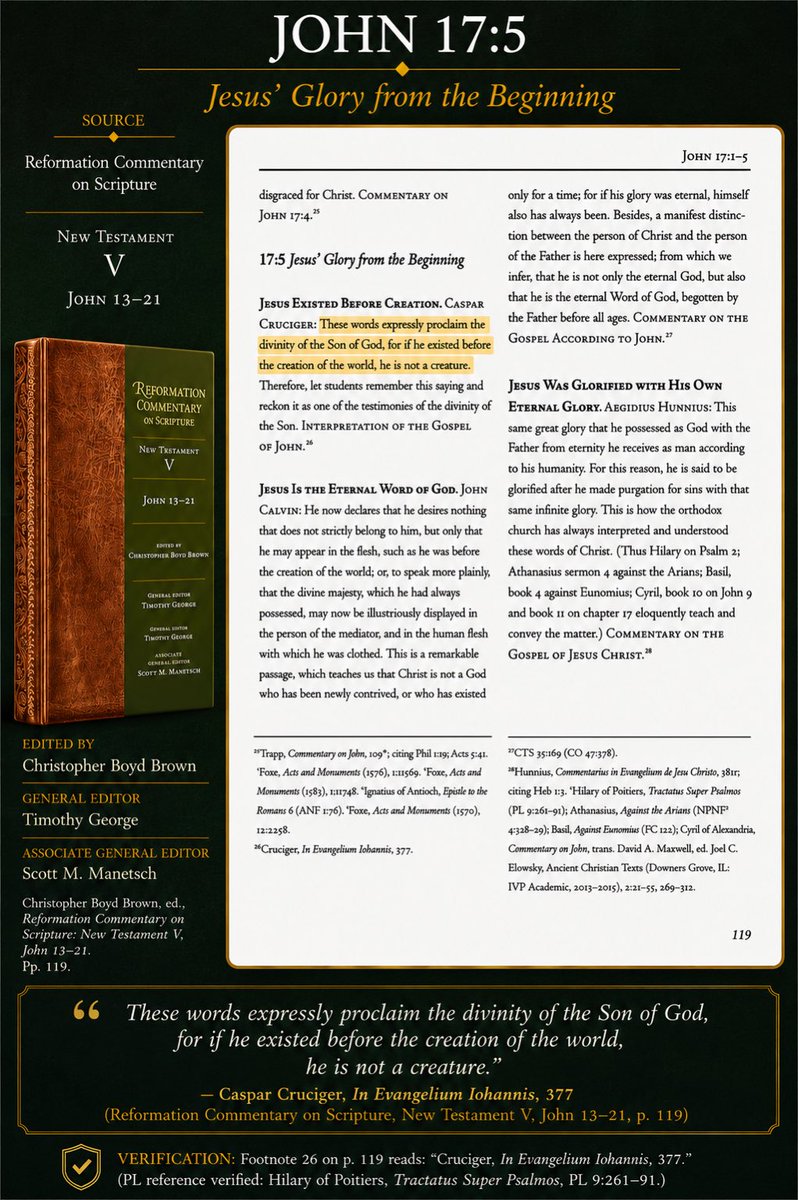
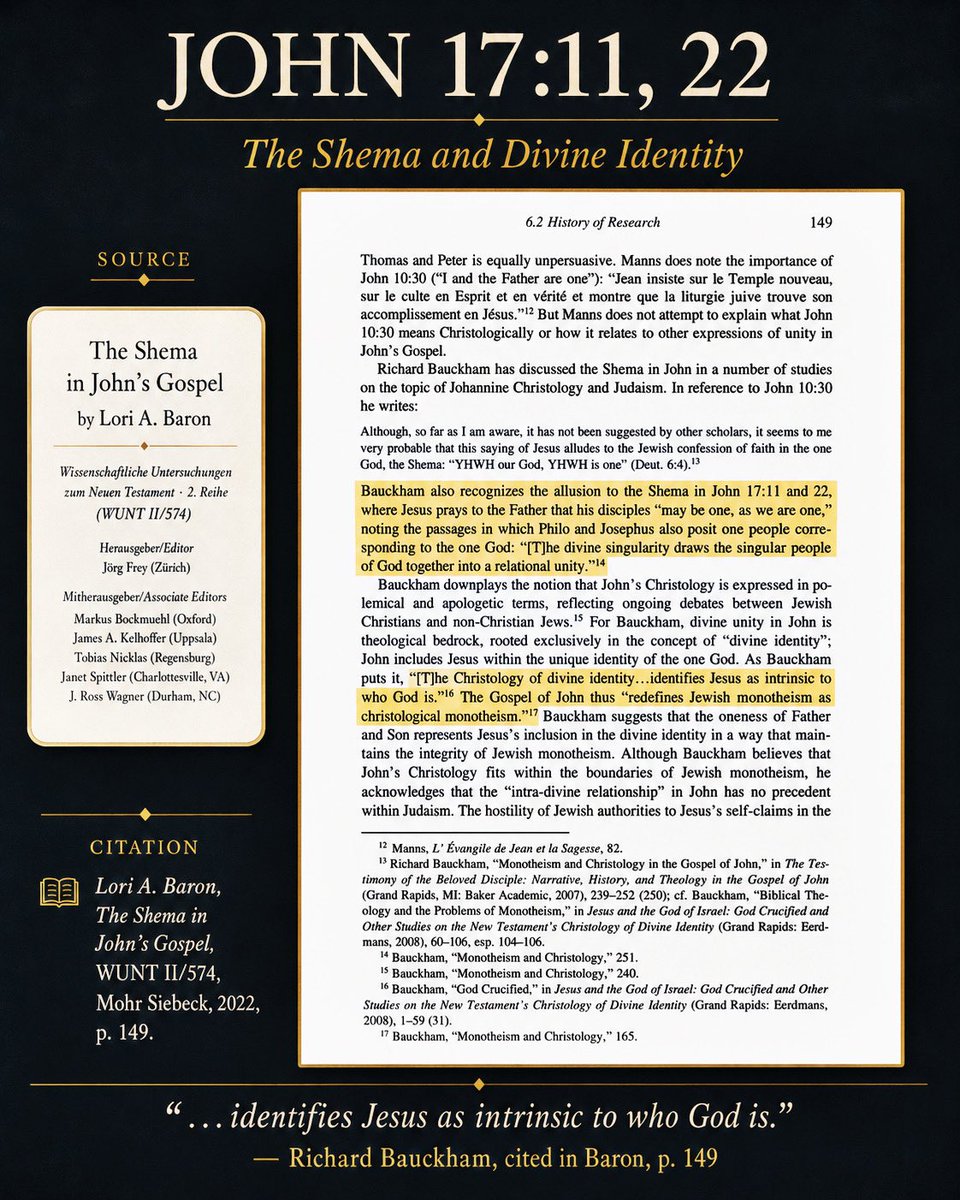
Game over 🤡 Only for people who handle Scripture the way someone quotes “Do not approach prayer” and then stops before “while intoxicated” That is not exegesis That is cutting a sentence in half and hiding the rest John 17:3 is not the whole prayer It is one verse out of twenty six You stopped at the exact sentence you thought helped you and ignored what Jesus says immediately afterward in the same prayer speaking to the same Father “Glorify Me in Your own presence with the glory I had with You before the world existed” John 17:5 Before the world existed He is not asking for glory He never possessed He is asking to be glorified with the glory He already had with the Father before creation That is not creature language And it is not the language of a mere prophet Then Jesus says “All Mine are Yours and Yours are Mine” John 17:10 No mere prophet claims that everything belonging to God is equally his own Later in the same prayer Jesus says “You loved Me before the foundation of the world” John 17:24 So John 17 itself gives us an eternal relationship between the Father and the Son before the world before creation before anything made existed And this is the same Gospel that begins “The Word was God” John 1:1 and reaches its climax with Thomas speaking directly to Jesus “My Lord and my God” John 20:28 Even the wording of John 17:3 does not say “You alone are God and the Son is not” It says “the only true God” That language distinguishes the true God from false gods It does not exclude the Son especially when the same Gospel calls the Son God presents Him as possessing glory with the Father before creation and addresses Him as “My Lord and my God” So this is what John actually says John 17:3 the Father is the only true God John 17:5 the Son possessed glory with the Father before the world existed John 17:10 everything belonging to the Father also belongs to the Son John 17:24 the Father loved the Son before the foundation of the world John 1:1 the Word was God John 20:28 Jesus is addressed as My Lord and my God That is not a contradiction That is Johannine and Trinitarian theology one God with the Son eternally within the divine identity not a creature standing outside it You turned “the only true God” into “the Father alone is divine” But those are not the same statement So no John 17:3 does not finish the Trinity That argument only works if you isolate one sentence ignore verse 5 ignore verse 10 ignore verse 24 and ignore the entire Gospel surrounding it You did not find a verse that ends the Trinity You found half a prayer Now read the rest of it. For @anyone who wants to verify this reading, here are four independent academic sources on John 17, the Son’s pre-existent glory, and His divine identity. 👇👇👇👇
Shadow⚜️Mind tweet mediaShadow⚜️Mind tweet mediaShadow⚜️Mind tweet mediaShadow⚜️Mind tweet media
English
1
0
1
33
Shadow⚜️Mind
Shadow⚜️Mind@Shadow__Mind_·
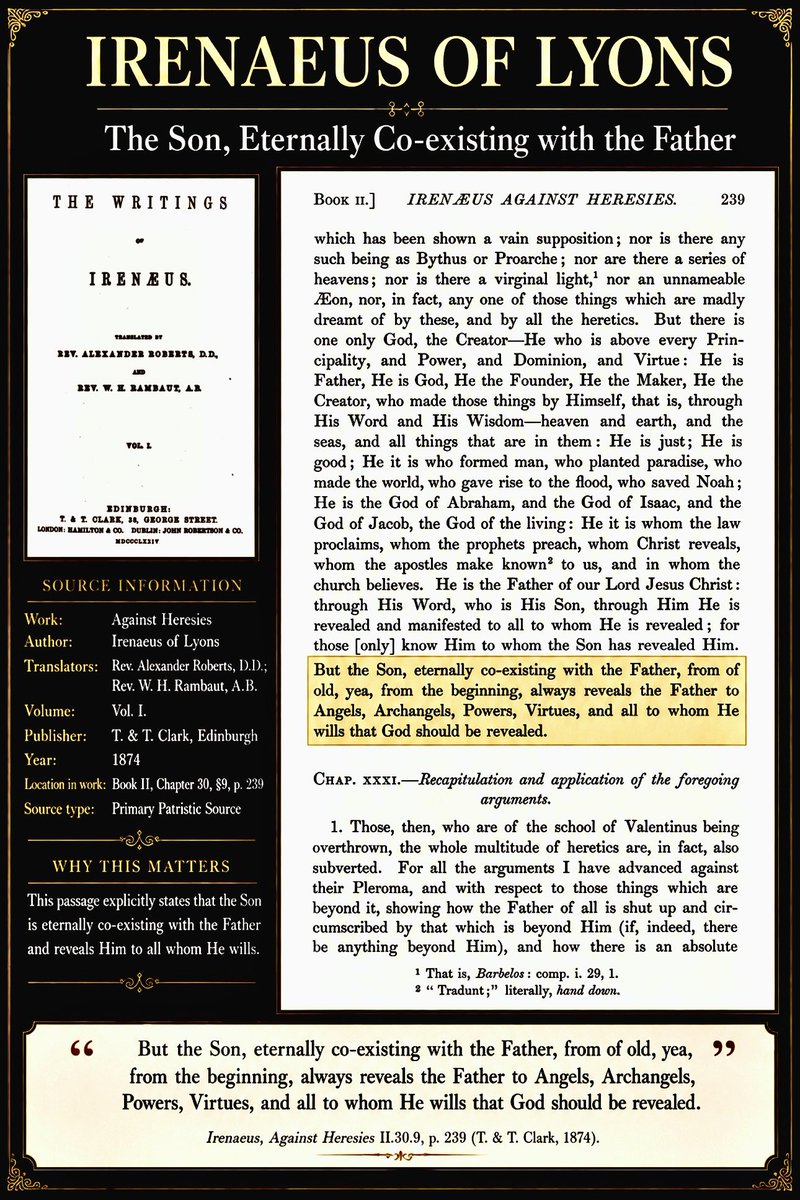
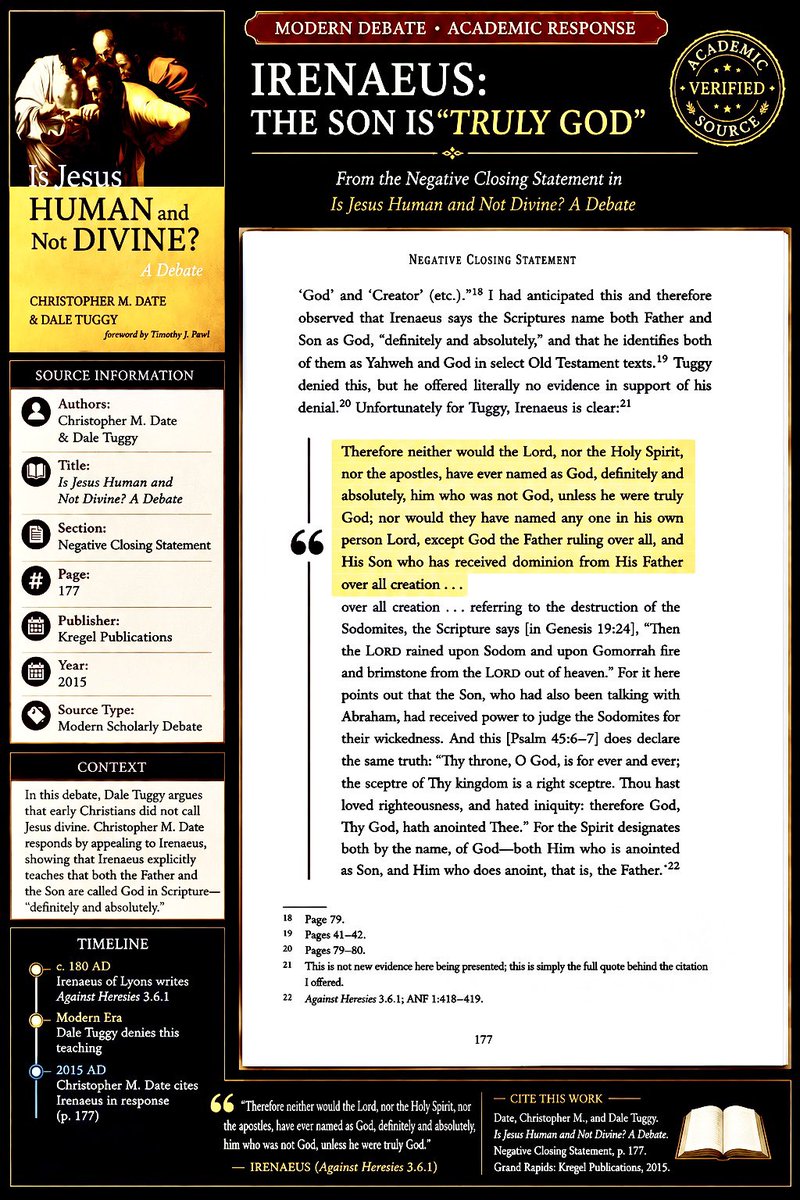
Some dawah grifters have become so comfortable speaking to audiences they assume will never open the sources that they now say the exact opposite of what the text actually says. This account apparently bet that no Christian would open Irenaeus and expose the distortion publicly. That bet just failed. 💀 Here are the receipts. The claim that “Irenaeus believed Jesus was a created second god” collapses the moment the actual text is opened. In fact, it dies in the opening sentence of the cited passage. Irenaeus, Against Heresies III.6.1, c. AD 180 Roberts & Rambaut trans, Ante-Nicene Christian Library, 1868, p. 268: “Therefore neither would the Lord, nor the Holy Spirit, nor the apostles, have ever named as God, definitely and absolutely, him who was not God, unless he were truly God; nor would they have named any one in his own person Lord, except God the Father ruling over all, and His Son who has received dominion from His Father over all creation.” Truly God. God “definitely and absolutely” Not someone merely or falsely called God. Not a creature promoted to divinity. Not evidence for a “second god” Irenaeus’ argument is explicit: No one can be named God in the absolute sense unless he is truly God. And in that same passage, he applies the divine titles God and Lord to the Father and the Son. Irenaeus also closes the “created” half of the claim elsewhere in his own words. Against Heresies II.30.9 Roberts & Rambaut, The Writings of Irenaeus, Vol. I, T. & T. Clark, 1874, p. 239: “But the Son, eternally co-existing with the Father, from of old, yea, from the beginning, always reveals the Father to Angels, Archangels, Powers, Virtues, and all to whom He wills that God should be revealed.” Created ❌ Eternally co-existing with the Father, from the beginning ✅ A second god ❌ Truly God, while Irenaeus confesses one only God ✅ So both halves of the claim collapse. The textual and scholarly record is straightforward to verify. Two nineteenth-century English editions preserve the same substantive statement in III.6.1. Christopher M. Date cites the passage directly in defense of the Son’s true deity. Simons’ specialist study explains that Irenaeus applies the titles “Lord” and “God” to both Father and Son while maintaining their personal distinction. This is not a translation accident. It is not an ambiguous sentence. The claim that Irenaeus taught a “created second god” does not explain his theology. It does not interpret Irenaeus. It reverses him. So which page did you get… “created second god” from? Genuinely. Quote it. Book. Chapter. Page. Either produce the source or withdraw the claim. There is no third option. Until then, the source was cited confidently but evidently not read carefully. And once the primary texts have been placed directly in front of you, repeating the claim can no longer be defended as an innocent mistake. At that point, it becomes a public misrepresentation maintained after correction.
Shadow⚜️Mind tweet mediaShadow⚜️Mind tweet mediaShadow⚜️Mind tweet mediaShadow⚜️Mind tweet media
🍞@eternalbread_

OrthodoxMuslim shamelessly lied in his debate with Cliffe. He said "Irenaeus believed that Jesus was created and was a second god". This is literally the exact OPPOSITE of what he believed... I debunk it in this video. Be very very careful who you get your information from.

English
3
6
45
1.7K
Shadow⚜️Mind
Shadow⚜️Mind@Shadow__Mind_·
What’s supposed to be shocking here, exactly? Christ said it Himself: “The Lord our God, the Lord is one.” Mark 12:29 And the Nicene Creed opens with the same thing: “We believe in one God, the Father Almighty.” So Irenaeus calling the Father “the only true God” doesn’t prove he rejected the Trinity. It proves he believed in one God. Which, last I checked, is what every Trinitarian believes too. The actual question the one that matters here is whether Irenaeus thought the Son was a creature. A false god. Excluded from true deity somehow. He didn’t. What he’s doing in that passage is contrasting the true God with false gods, pagan idols, and heretical counterfeits. Turning that into “therefore the Son isn’t divine” isn’t reading Irenaeus. It’s reading a conclusion into him that he never draws himself. Here’s what he actually says, in his own words. In Against Heresies III.6.1, neither the Lord, nor the Holy Spirit, nor the apostles would ever call someone God “definitely and absolutely” unless he were: “truly God.” And in that exact same passage not somewhere else, the same one he applies both “God” and “Lord” to the Father and the Son. Then in II.30.9 he describes the Son as: “eternally co-existing with the Father, from of old, yea, from the beginning.” So this isn’t “the Father is God, therefore the Son is a creature.” It’s one God. A Son who is truly God and eternally co-exists with the Father. A Spirit who personally testifies to both. That’s the actual picture Irenaeus paints. Not Unitarianism. Not even close. And since four sources apparently weren’t enough last time, here are three more. Iain M. Mackenzie, Irenaeus’s Demonstration of the Apostolic Preaching, p. 184. He talks plainly about: “the divinity of Christ” calls Christ: “Mighty God” and describes: “the triune Being of God” along with the Son’s: “eternal existence and relation with the Father.” Kyle R. Hughes, Scripting the Son, p. 90 Irenaeus presents the Spirit as speaking: “to testify to the divinity and lordship of the Father and the Son.” The same passage Hughes uses to explain how Irenaeus defends God’s unity. Which tells you something: for Irenaeus, the unity of God and the divinity of the Son were never in tension. He held both without blinking. Jeffrey C. Herndon, Eric Voegelin and the Problem of Christian Political Order, p. 63 Justin Martyr and Irenaeus used the Logos concept specifically while: “defending the deity of Christ” and explaining: “the eternal nature of Christ and his procession from the Father” So what developed after Irenaeus wasn’t the idea of Christ’s divinity. It was the vocabulary used to express it more precisely. Big difference. Your whole case rests on one move: if the Father is “the only true God” the Son can’t be truly God too. You never actually proved that. You just assumed it and moved on. Christ confessed one God. The Creed confesses one God, the Father. And Irenaeus still calls the Son truly God and eternally co-existing with the Father in the same work. “The only true God” separates the real God from false gods. It doesn’t cut the Son out of true deity. Irenaeus includes Him in it, in his own words. So show me the passage where Irenaeus calls Christ a creature. Or says He isn’t truly God. Or excludes Him from the divine identity. Book. Chapter. Page. Until then, this isn’t an argument from Irenaeus. It’s a cherry-picked line followed by a conclusion Irenaeus’ own writings don’t support.
Shadow⚜️Mind tweet mediaShadow⚜️Mind tweet mediaShadow⚜️Mind tweet media
English
1
0
6
69
Shadow⚜️Mind
Shadow⚜️Mind@Shadow__Mind_·
@muslimorthodoxy @ModernDayDebate Thanks for the shoutout! 👌😌 Followed @ModernDayDebate before I even finished reading.
The Orthodox Muslim@muslimorthodoxy

James Kunz, @ModernDayDebate the founder & host of Modern Day Debate has been losing his mind on Twitter because we are boycotting his absurd platform. I hereby declare that NO prominent Muslims will debate on your platform anymore. You are boycotted! You have publicly blasphemed, insulted the prophet, shown bias to Christians, and we simply have better hosts. Bye, bye Kunz! You lost!

English
1
0
20
2.6K
The Orthodox Muslim
The Orthodox Muslim@muslimorthodoxy·
James Kunz, @ModernDayDebate the founder & host of Modern Day Debate has been losing his mind on Twitter because we are boycotting his absurd platform. I hereby declare that NO prominent Muslims will debate on your platform anymore. You are boycotted! You have publicly blasphemed, insulted the prophet, shown bias to Christians, and we simply have better hosts. Bye, bye Kunz! You lost!
English
85
74
918
45.4K
Shadow⚜️Mind
Shadow⚜️Mind@Shadow__Mind_·
Primary source verification: Irenaeus, Against Heresies III.6.1. See p. 213 and read the passage directly. books.google.com/books?id=UlZaA…, +God+in+the+definite+and&hl=en&newbks=1&newbks_redir=0&source=gb_mobile_search&ovdme=1&sa=X&ved=2ahUKEwiL_bLHxsmVAxU3JkQIHcRWEHcQ6AF6BAgOEAM#v=onepage&q&f=false Primary source verification: Irenaeus, Against Heresies II.30.9. See p. 239: “eternally co-existing with the Father.” books.google.com/books?id=yHJWt…, +and+all+to+whom+He+wills+that+God+should+be+revealed.&hl=en&newbks=1&newbks_redir=0&source=gb_mobile_search&ovdme=1&sa=X&ved=2ahUKEwjtusjtxsmVAxXEle4BHc3gJ2MQ6AF6BAgQEAM#v=onepage&q&f=false Modern scholarly analysis: Jonatán Simons, p. 188. Compare his reading with the primary text. #v=onepage&q&f=false" target="_blank" rel="nofollow noopener">books.google.com/books?id=9tX7E… Modern debate reference: Christopher M. Date, p. 177. The passage is cited directly in defense of the Son’s true deity. #v=onepage&q&f=false" target="_blank" rel="nofollow noopener">books.google.com/books?id=tW7mE…
English
0
0
10
301
Shadow⚜️Mind
Shadow⚜️Mind@Shadow__Mind_·
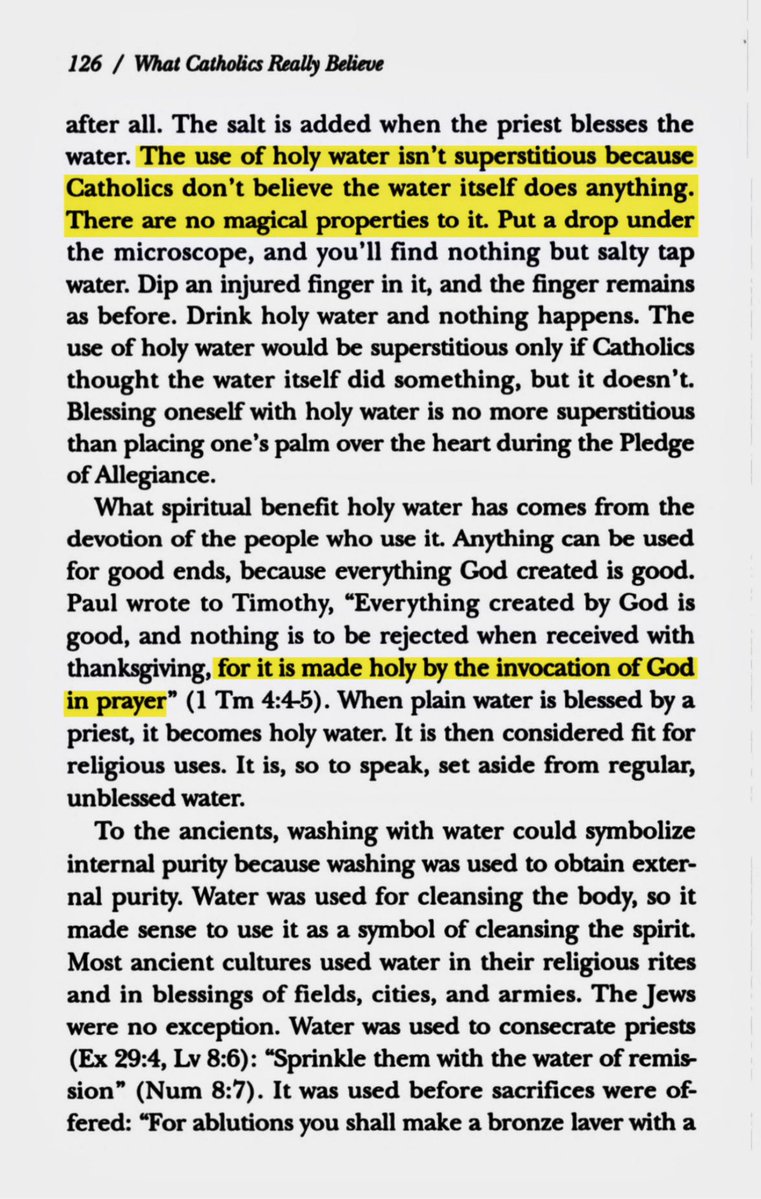
أنا اذكي واحد في السعودية ؟؟ دي مياة مقدسه عزيزي و وصف الماء المبارك بأنها "شعوذة" ده جهل بين فالمصادر نفسها تقول صراحة: «نحن لا ننسب إلى الماء المقدس أية قوة نابعة من ذاته، وإنما ترتبط فاعليته بصلوات الكنيسة» وتؤكد بصورة أوضح: «الكاثوليك لا يعتقدون أن الماء نفسه يفعل شيئًا، وليست له أية خصائص سحرية» بل تشرح أن الماء: «يُقدس بالتضرع إلى الله في الصلاة.» إذًا أين الشعوذة؟ الشعوذة تفترض قوة خفية كامنة في المادة أو تعويذة تحاول التحكم في الغيب، بينما العقيدة هنا تنفي القوة الذاتية والسحرية تمامًا، وتربط الفعل بالصلاة إلى الله. تستطيع أن تختلف مع الممارسة انت حر مع ان عندك الماء المبارك في بئر زمزم و لكن لا يجوز أن تخترع لها معنى ينفيه أصحابها ثم تهاجمه. هذا ليس تفنيدًا عزيزي؛ بل مغالطة رجل قش مبني على تشابه شكلي وجهل بمصدر الفاعلية المقصود.
Shadow⚜️Mind tweet mediaShadow⚜️Mind tweet mediaShadow⚜️Mind tweet mediaShadow⚜️Mind tweet media
#~@5pvpl

ميسي المشعوذ يتقرب للشيطان للفوز في المباريات

العربية
1
0
7
126
#~
#~@5pvpl·
ميسي المشعوذ يتقرب للشيطان للفوز في المباريات
العربية
1
0
0
795
Shadow⚜️Mind retweetledi
Dr. Maalouf ‏
Dr. Maalouf ‏@realMaalouf·
The Egyptian Football Association released a video titled: “The Secret to Victory.” They openly declare that the key to victory is to begin each match by cursing Christians and Jews. Before every game, the team gathers to recite Quranic passages describing Christians and Jews as infidels under Allah’s wrath. Coptic Christians make up 15% of Egypt’s population, yet they are not allowed on the national team. Now, the Islamic team of Egypt has been eliminated by the ‘infidel’ nation of Argentina. Allah was not on their side.
English
3K
9.1K
39.7K
3.7M
Shadow⚜️Mind retweetledi
Visegrád 24
Visegrád 24@visegrad24·
Since all eyes are on the Egyptian team today, it’s worth reminding the world that Christians are practically banned from playing top level football in Egypt. Despite being 10% of the population, only two Christians have played the national team in the past 36 years. Not a single one has played for Egypt since 2003. The former Ajax striker Mido said in 2018 that the discrimination is obvious and that only 5 Christians have ever plaid in Egypt’s top clubs. He suggested a 10% quota for Copts should be introduced in all clubs to end the discrimination. Ironically, the Egyptian coach made the new “X for racism-sign” recently introduced by FIFA during today’s game to signal to the referee that the Egyptian team was experiencing racism. But religious discrimination has clearly never bothered him. FIFA has also been unwilling to do anything about the longstanding issue of severe underrepresentation and systemic discrimination against Christians at youth, club and national levels in Egypt. Christians are effectively excluded in practice, with virtually none reaching the senior national team or top domestic clubs in recent decades. The exception is Hany Ramzy. The a Christian defender who earned 120+ caps for Egypt in the 1990s and early 2000s. Estimates suggest that fewer than a dozen Copts have played at the highest domestic level in the last 50+ years. Multiple independent reports, player testimonies and comments from figures like Coptic Pope Tawadros II and Muslim former player Ahmed Hossam (“Mido”) have highlighted the discrimination: - Youth trials and club signings where Christian names lead to rejection or pressure to change to a Muslim-sounding name. - Stories of players hiding tattoos (the common Coptic cross on the wrist) or identity in their efforts to advance. - Similar underrepresentation is also noticeable in other sports (zero Copts in Egypt’s 2016 Rio Olympics delegation of 122 athletes) The Egyptian coach made a big point of flying the Palestinian flag in the World Cup and keeps repeating “Free Palestine.” Yet, he has never spoken about the fact that Egypt didn’t give sovereignty to the Palestinians in Gaza when Egypt was occupying it 1948-1967. Likewise, while he won’t stop claiming that there is discrimination of Muslims in Israel, he refuses to acknowledge the religious discrimination in Egyptian football.
Visegrád 24 tweet media
English
179
1.5K
7.1K
207.7K
Shadow⚜️Mind retweetledi
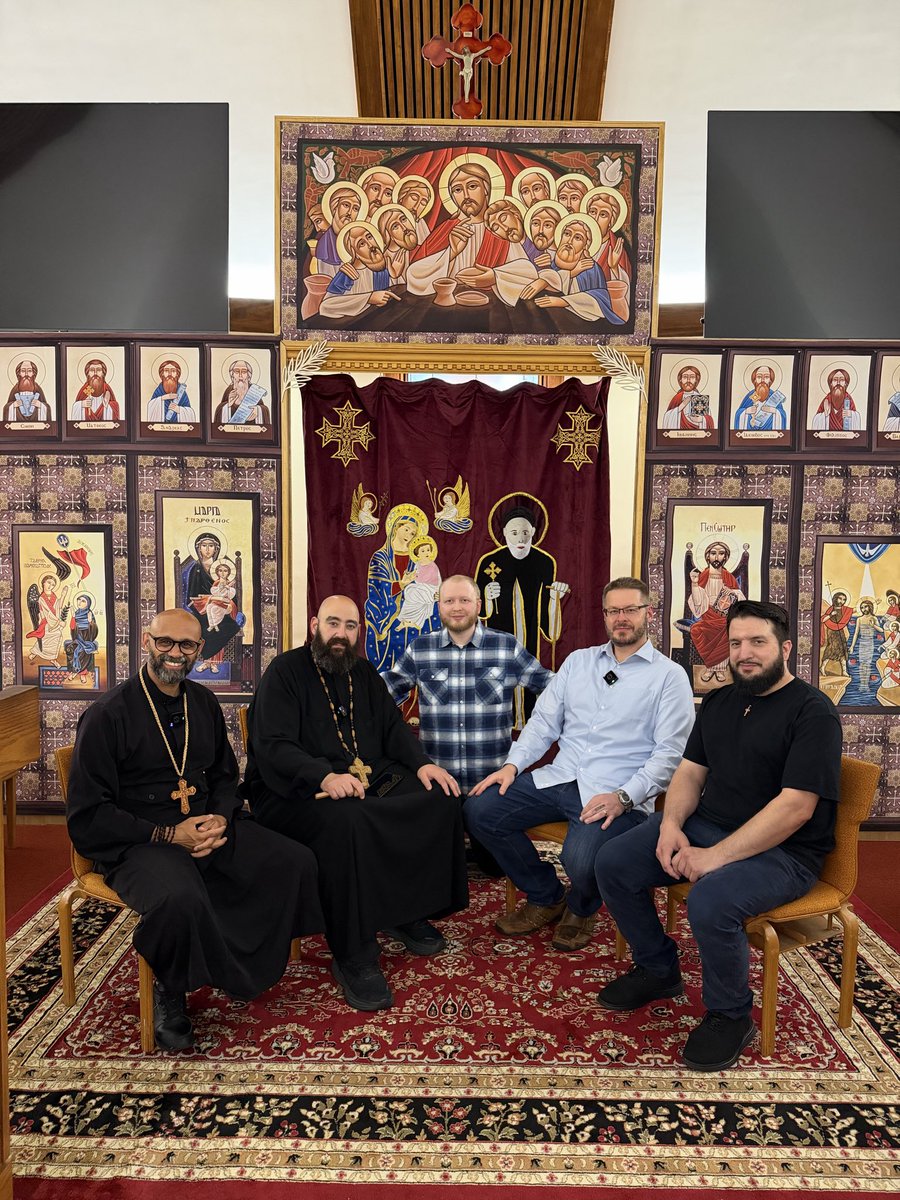
Jai
Jai@JaiNDoC_RL·
Amazing time with @CopticAnswers !
Jai tweet media
English
21
26
414
64.1K
MC
MC@CrewsMat10·
It’s indeed a 𝐒𝐄𝐕𝐄𝐍 Game tournament. 😭
MC tweet media
English
314
2.9K
25.6K
380.1K
Shadow⚜️Mind
Shadow⚜️Mind@Shadow__Mind_·
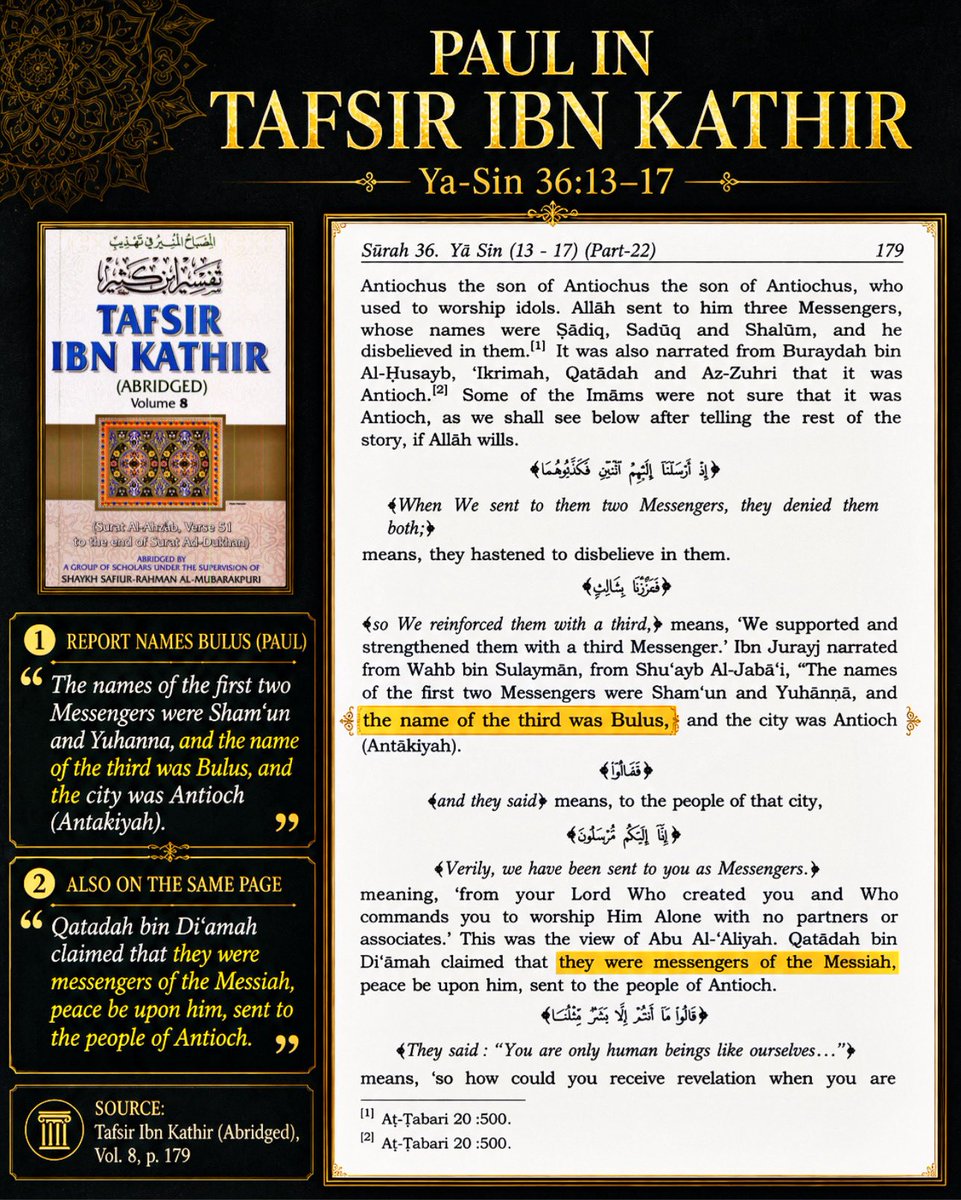
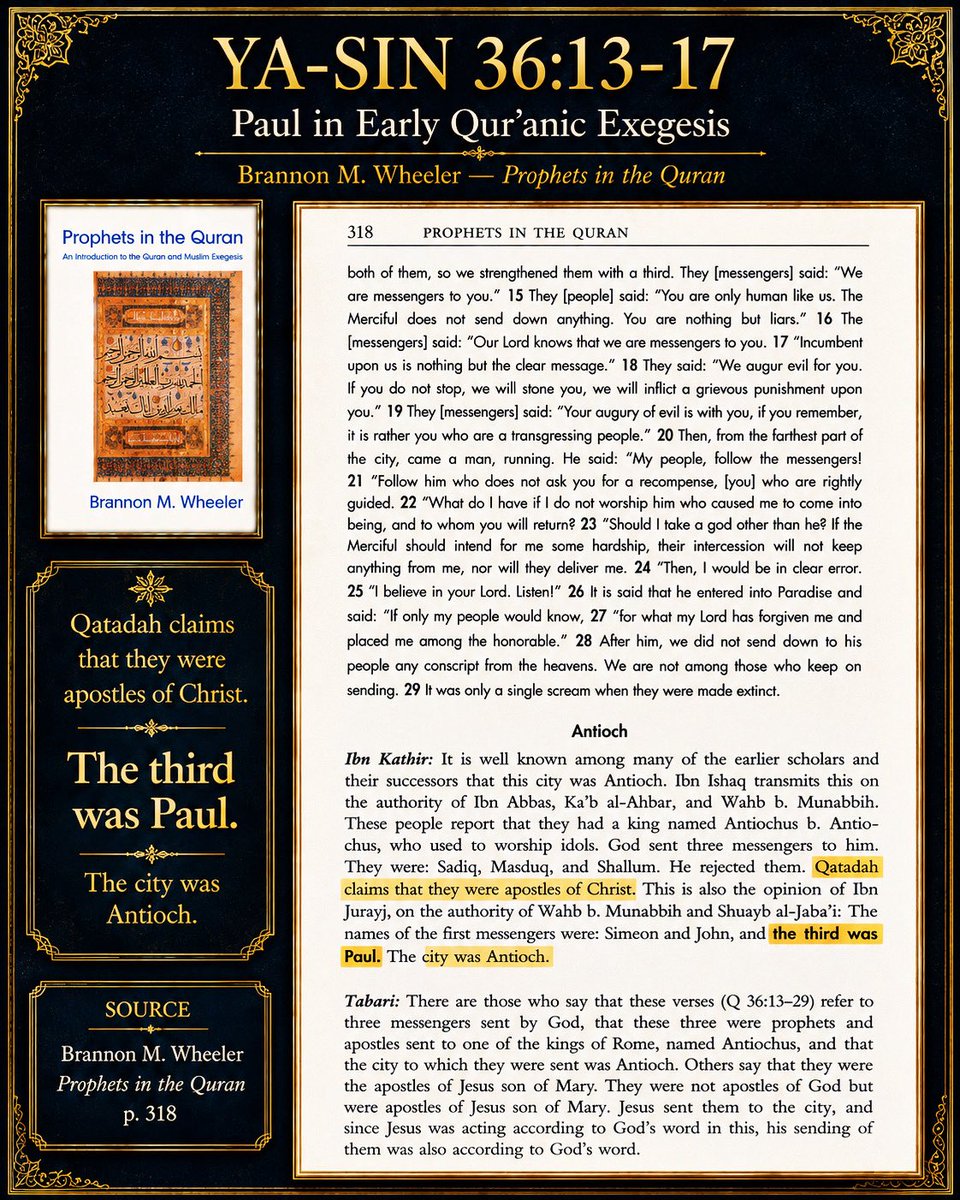
You are forcing a timing into the text that the text never states. Qatadah says they were “messengers of the Messiah” sent to Antioch. He does not say: “during Jesus’ earthly ministry” “before the crucifixion” or “while Christ was walking on earth.” That is your addition, not the text. And your king analogy fails. The Messiah is not a dead king in either tradition. In Christianity, the risen Christ sends Paul. Even in Islam, Jesus is not simply dead and gone. So “doing the Messiah’s bidding” does not disqualify Paul. It describes Paul. Your whole objection is basically: “This cannot be Paul because this Bulus served Christ.” But Paul did serve Christ. That is literally the point. And no, my argument is not: “same name = same person.” My argument is cumulative: Ibn Kathir preserves Bulus. Bulus is the Arabic form of Paul. The setting is Antioch. Paul is historically tied to Antioch and the mission of Christ. Brannon Wheeler summarizes the same exegetical tradition as: “Simeon, John, and the third was Paul.” You have not produced another Bulus from the tafsir tradition. 🤐 You have not shown that the grammar requires your timing. You have not answered Wheeler. You only invented a second Bulus because the first one was too inconvenient. You did not refute the source. You dodged it.
Shadow⚜️Mind tweet media
English
1
0
4
42
sunless
sunless@toep_444__444·
Qatadah is saying they were messengers of massiah sent to the city of Antioch? What's unclear about it It just shows they are doing his bidding in his life. If i say " they were the kinds messenger sent to that nation" am i talking about after kings death no dude As i said you want it to be bulus despite not a single description given in the tafsir text fits saul of tarsus. Now you wanna read it through a christains life ohh they were known like this after christ death blah blah Dude context is clear your own referenced text refutes you. Dude your argument is still same name same person
sunless tweet media
English
1
0
0
47
Shadow⚜️Mind
Shadow⚜️Mind@Shadow__Mind_·
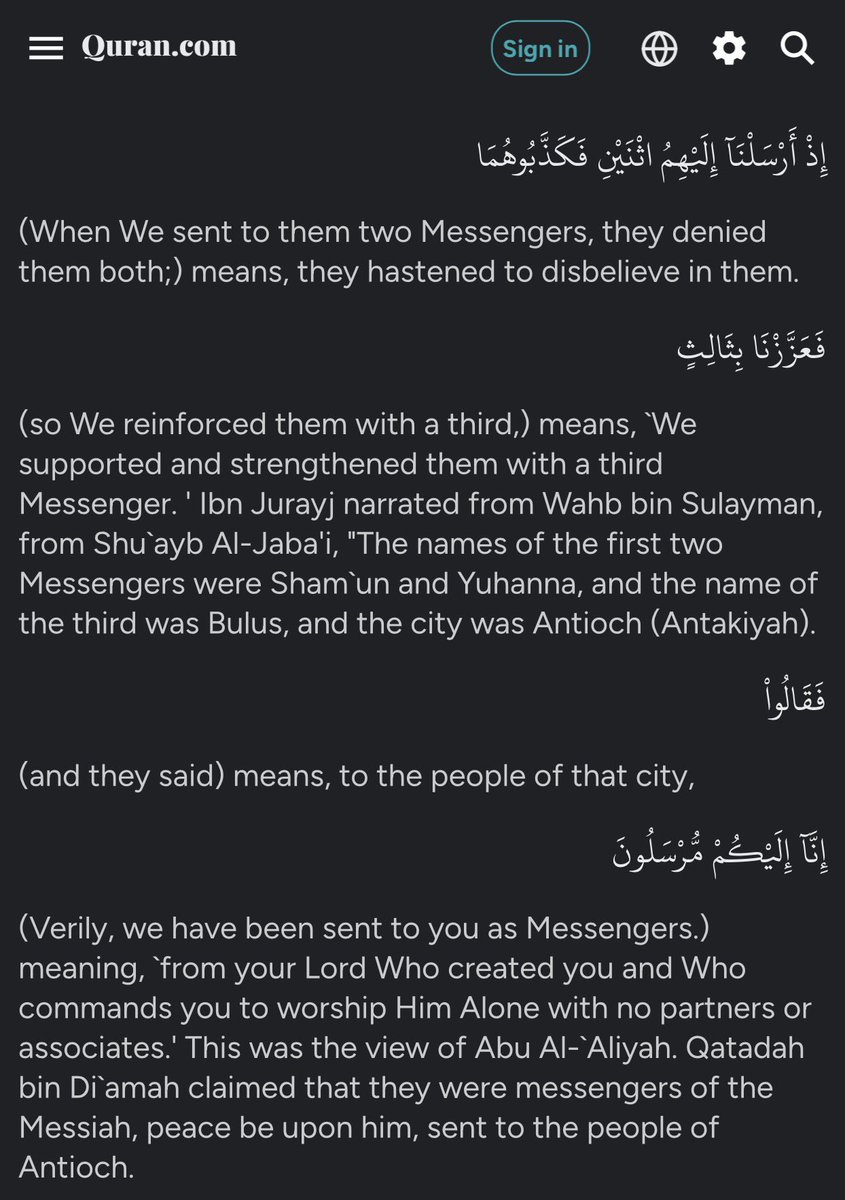
Some Dawah grifters claim Paul invented Christianity. The claim dies in one sentence: You cannot persecute a movement you invented. Paul persecuted followers of Christ before his conversion. After it, he says he “received,” not invented, the tradition he delivered: Christ died, was buried, was raised, and appeared to Cephas, the Twelve, James, and the apostles. That is pre-Pauline proclamation, not Pauline invention. It was already circulating in the earliest Jesus movement, including the Jerusalem circle associated with James. But since you are speaking as a Muslim, your own tafsir tradition makes the meme even more awkward. When the first two were rejected, the tradition does not say the mission failed. It says the mission was reinforced with a third. And in one report preserved by Tafsir Ibn Kathir, that third name is Bulus (Paul). 💀 In Tafsir Ibn Kathir on Ya-Sin 36:13–17, Ibn Kathir records more than one report about the messengers sent to the town. One report names them Sadiq, Saduq, and Shalum. Another report says the first two were Sham‘un and Yuhanna, and the third was Bulus (Paul) in Antioch. The same page notes that Qatadah said they were messengers of the Messiah sent to Antioch. Brannon Wheeler’s Prophets in the Quran summarizes the same exegetical tradition: Simeon, John, and the third was Paul. One stream of your own tradition remembers Paul reinforcing the mission, not inventing one. That is not a contradiction in Islam. It is a contradiction in your meme. Paul did not invent Christianity. He joined the Church he once persecuted.
Shadow⚜️Mind tweet mediaShadow⚜️Mind tweet media
The Orthodox Muslim@muslimorthodoxy

Christianity, according to scholarship is a an invention by Paul of Tarsus. “But Paul was persecuting Christians!” Paul was persecuting true followers of Christ, adherents to the faith given by James the brother of Jesus. Paul invented mainstream proto-orthodox Christianity.

English
10
6
58
2.5K
Shadow⚜️Mind
Shadow⚜️Mind@Shadow__Mind_·
Qatadah saying they were “messengers of the Messiah” is not a problem for my argument. It is my argument. Paul is remembered in Christian history precisely as a messenger of Christ after the resurrection. So stop pretending “doing Jesus’ bidding” disqualifies Paul. That is literally Paul’s apostolic claim. My point is not: “same name = same person.” My point is: Ibn Kathir preserves Bulus. Bulus is Paul in Arabic. Wheeler summarizes the same tradition as “the third was Paul.” If this is another Bulus, name him from the tafsir tradition. You did not find another Bulus. You invented one.
English
1
0
4
34
sunless
sunless@toep_444__444·
Yeah dude you casually skipped over the very thing you referenced which is the quote of qatadah saying they were the messengers of massiah (jesus) I.e they were doing jesus bidding Lol how can you not read your very own screenshot. Youe argument: they have same name therefore same person is lowtier ngl
English
1
0
0
37
Shadow⚜️Mind
Shadow⚜️Mind@Shadow__Mind_·
That inference does not follow. Nothing in the text says this Bulus had to know Christ personally during His earthly ministry in order to be sent on His behalf. In fact, your own argument collapses if applied consistently. The historical Paul himself did not follow Jesus during His earthly ministry. He received his mission after the resurrection. Yet Christian tradition still calls him an apostle sent by Christ. So “messenger of the Messiah” does not require personal contact with Jesus before the crucifixion. You are not identifying a different Bulus. You are inventing a rule that neither the tafsir text nor Christian history requires. Bulus is the Arabic form of Paul, and Brannon Wheeler summarizes the same exegetical tradition as: “Simeon, John, and the third was Paul.” If this is not Paul, identify this other Bulus from the tafsir tradition. Otherwise, you are inventing a second Bulus to dodge the source.
English
1
0
4
39
sunless
sunless@toep_444__444·
@Shadow__Mind_ Lol because it says he christ sent them to a mission in Antioch i.e he beleived in Christ of why would he accept a mission on behalf of him? So your whole argument even if i grant authenticity and everything is They have the same name therefore same person.
English
1
0
0
43
Shadow⚜️Mind
Shadow⚜️Mind@Shadow__Mind_·
False choice. You are acting as if there are only two options: Either Jesus was unclear, or the Gospel narratives were invented after the fact. But the text gives a third explanation: The disciples had a category problem, not a hearing problem. They heard Jesus predict His suffering, death, and resurrection. Mark 8:31, Mark 9:31, Mark 10:33–34. Peter’s reaction proves the point. He does not say, “What are you talking about?” He rebukes Jesus. Why? Because a suffering, rejected, crucified Messiah shattered his whole framework of what Messiah was supposed to mean. That is not a hearing problem. That is cognitive resistance to an unwelcome category. And Jesus did not merely predict death. He interpreted His death. He said the Son of Man came “to give His life as a ransom for many” (Mark 10:45). At the Last Supper, He said His blood was “poured out for many for the forgiveness of sins” (Matthew 26:28). That is sacrificial, covenantal, atoning language from Jesus Himself before Paul wrote a word. On your second point: A prediction of death alone does not prove divinity. Nobody claimed it does. The resurrection claim does that work. The predictions matter for a narrower reason: They show that the cross was not later invented as a rescue story after a failed Messiah. Jesus is depicted as framing His death as purposeful before it happened. The disciples failed to understand it because the event had not yet happened and because the category was offensive to their expectations. After the resurrection, Jesus Himself opened their minds to understand the Scriptures: that the Christ had to suffer, rise from the dead, and that repentance and forgiveness of sins would be preached in His name (Luke 24:44–47). So the explanation did not begin with Paul. It began with the risen Christ. And Paul himself says in 1 Corinthians 15:3 that he “received” the proclamation he delivered: Christ died, was buried, was raised, and appeared. That is not Paul inventing Christianity. That is Paul transmitting an already existing apostolic proclamation. Peter preached the crucified and risen Christ in Acts 2. John’s Gospel presents Jesus as the Lamb of God who takes away the sin of the world. Hebrews explains His sacrifice. Revelation worships the Lamb who was slain. So no, Paul was not redefining Jesus. Paul explained, after the saving event, what Jesus had already announced before it. You are asking why the theology of the cross is clearer after the cross than before it. That is not a problem. That is exactly how fulfillment works.
English
1
0
5
61
Malik
Malik@Maliksdef·
If Jesus spent years teaching that his death and resurrection were the center of God's salvation plan, why do the disciples consistently act as though they've never heard it before when it actually happens? Either Jesus didn't explain it nearly as clearly as Christians claim, or the narratives were shaped after the fact to make it appear that he had predicted everything in advance. And even if Jesus did predict his death, that proves only that he expected to die. Prophets can foresee suffering and death. It does not prove he was God, nor does it prove the later doctrines that Paul built around the cross.
English
1
0
0
55
Shadow⚜️Mind
Shadow⚜️Mind@Shadow__Mind_·
You are mixing three different questions. 1. Did Ibn Kathir authenticate the report? I never claimed that. 2. Did Ibn Kathir adopt it as his preferred interpretation? I never claimed that either. 3. Did the tafsir tradition preserve a report naming Bulus as the third messenger connected with Antioch? Yes. You already admitted Ibn Kathir quotes the narration and names Bulus. Now you are trying to escap by saying: “Maybe this is another Bulus” Fine. Then identify this other Bulus from the tafsir tradition. Bulus is the Arabic form of Paul, and Brannon Wheeler summarizes the same exegetical tradition as: “Simeon, John, and the third was Paul” Also, where exactly does the report say he was “a believer in Christ while Christ was alive on earth”? Show me where the text says that. I’ll wait. The material says they were messengers of the Messiah sent to Antioch. That is not the same claim. And even if Ibn Kathir objected to Antioch or did not authenticate the report, that only proves what I already said: my claim was preservation, not authentication. If Bulus is not Paul, identify this other Bulus from the tafsir tradition. Otherwise, you are inventing a second Bulus to escape the one your source preserved.
English
1
0
4
65
sunless
sunless@toep_444__444·
Alr lets address it, ibne kathir quotes three narration without authentic chain giving different names but lets grant it You think its talking about the same person bulus just because they have the same name meanwhile the description given to the bulus in narration is that he was a beleive in christ when christ was alive on earth This blunder of just because the same name means same person is retarded on many levels.
English
1
0
0
86
Shadow⚜️Mind
Shadow⚜️Mind@Shadow__Mind_·
False dilemma. There is a third option: progressive revelation tied to the event itself. Jesus did not hide the meaning of His death. He predicted His suffering, death, and resurrection repeatedly: Mark 8:31, Mark 9:31, Mark 10:33–34. He said the Son of Man came “to give His life as a ransom for many” (Mark 10:45). At the Last Supper, He said His blood was “poured out for many for the forgiveness of sins” (Matthew 26:28). That is sacrificial language from Jesus Himself, before Paul wrote a word. The disciples’ confusion does not prove the doctrine did not exist. It proves they could not fully process the event before the event happened. Jesus Himself said: “I still have many things to say to you, but you cannot bear them now” (John 16:12). After the resurrection, Luke says Jesus Himself opened their minds to understand the Scriptures: that the Christ had to suffer, rise from the dead, and that repentance and forgiveness of sins would be preached in His name (Luke 24:44–47). So the unpacking did not start with Paul. It started with the risen Christ. And it was not only Paul. Peter preached the crucified and risen Jesus in Acts 2. John’s Gospel presents Jesus as the Lamb of God who takes away the sin of the world. Hebrews explains His sacrifice. Revelation worships the Lamb who was slain. Paul was not redefining Jesus. Paul was explaining, after the saving event, what Jesus had already announced before it. You are asking why the full theology of the cross is clearer after the cross than before it. That is not a problem. That is exactly how fulfillment works.
English
1
0
6
76
Malik
Malik@Maliksdef·
That's an interesting admission: If salvation through Jesus' death and resurrection is the central message of Christianity, why wasn't Jesus teaching it clearly and repeatedly during his own ministry? You're saying Jesus spent years preaching, yet the essential meaning of his mission had to be explained later by Paul. That leaves you with two options: 1. Jesus knew the doctrine of salvation but didn't communicate it clearly enough for his followers to understand it. 2. The doctrine was developed and systematized after Jesus by later theologians, especially Paul. The Gospels repeatedly show the disciples not understanding Jesus' death, resurrection, or mission. Even after years with him, they seem unaware of the theological framework Christians now call the heart of the Gospel. If Jesus is God incarnate, why would the most important doctrine in Christianity require a later apostle to unpack it? Why isn't there a clear sermon from Jesus saying: "My death will be a substitutionary atonement for the sins of humanity. Salvation will come through faith in my sacrifice apart from the Law." Instead, we find Jesus preaching repentance, obedience to God, the Kingdom of God, prayer, mercy, and keeping God's commandments. Saying "Paul explained it later" doesn't solve the problem. It highlights it. If the cross and its theological meaning are the foundation of Christianity, why is Paul far more explicit about it than Jesus himself? A perfect messenger shouldn't need a later interpreter to clarify the core of his message. If the Gospel required Paul to explain what Jesus supposedly meant, then my question to you is: Was Paul explaining Jesus, or was he redefining him?
English
1
0
0
69