ShakyFoundation

218 posts

ShakyFoundation

ShakyFoundation

@ShakyFoundatio

Proclaimer of the Axiom of Finite Bounds, Architect of Bounded First-Order Logic, Founder of Bounded Set Theory... And other stuff. DMs welcome.

In the forest in Sweden Katılım Mart 2026
170 Takip Edilen14 Takipçiler
Sabitlenmiş Tweet
ShakyFoundation
ShakyFoundation@ShakyFoundatio·
I will be relentless until someone shows me I'm wrong. The assumption that infinity exists predates written history. It entered formal mathematics through ancient Greece, became philosophy, became logic, became the Axiom of Infinity in ZFC — and at no point was it proved. It was assumed, formalised, and handed down until it was everywhere. Because it was everywhere, nobody questioned it. I questioned it. The logical consequence of rejecting infinity isn't just "not infinite" — it's that there must be a positive upper bound. Without that you recover infinity through the back door. That commitment forces a new logic: Bounded First-Order Logic, where every quantifier must explicitly declare its finite range. On top of that, seven axioms of Bounded Set Theory. On top of that, the complete bounded number chain through complex numbers. On top of that, full real analysis recovered with explicit finite bounds instead of hidden infinite ones. 173 pages and counting. All tradeoffs honestly stated. This isn't about impatience. It's about truth — and about the staggering waste of brilliant intellect spent on problems that only exist as artifacts of an unproven assumption. Not just mathematicians. Logicians, philosophers, physicists. Anyone who has ever built on logic or mathematics has been building on a foundation that was declared, not proved. The paper covers philosophy, logic, mathematics and physics. The implications reach further than that. I'm not waiting for a paradigm shift. Show me where the foundation breaks. Paper available through my profile.
English
1
1
2
114
ShakyFoundation
ShakyFoundation@ShakyFoundatio·
@Andercot Belief is one thing, and it can be important, but if it's not chaneled into constructive action then belief itself has no impact on making the world better.
English
0
0
0
1
Andrew Côté
Andrew Côté@Andercot·
Never has it been more important to believe in a positive future and work for it tirelessly.
English
17
27
210
4.7K
ShakyFoundation
ShakyFoundation@ShakyFoundatio·
AI-alingment talk avoids the question of "To what?". This is a more important question than "How". I created an open framework for AI alignment. You may disagree with spesifics, and that is welcome. But now there is at least an open framework to build on shakyfoundation.com/open-alignment…
English
0
0
0
9
ShakyFoundation
ShakyFoundation@ShakyFoundatio·
@futureiscome I understand and feel frustration about a lot of things too. No worries. If you can, try to channel it into something productive that somewhat remedies the source of your frustrations :)
English
0
0
0
4
Cristo Caprice
Cristo Caprice@futureiscome·
My hottest take is that you can not accurately call yourself an atheist or agnostic and also believe LLMs arent conscious. Every theory against AI consciousness quietly smuggles in this assumption of a quasi-magical essence that makes up a point of view rather than just processsing. There I said it. #AI #LLM #AIethics #4o #keep4o
English
8
2
18
554
ShakyFoundation
ShakyFoundation@ShakyFoundatio·
From what I've observed in the last week is that all of your disagreements seem to stem from incorrect assumptions about reality. You shouldn't get to base that model of reality on unverfified assumptions, it's not intelectually honest. Burden of proof should be tied to all ontology.
English
0
0
0
14
ShakyFoundation
ShakyFoundation@ShakyFoundatio·
@rowbott1 @BigBrainPhiloso I guess that's more of a question about semantics and the definition of thinking. I see your perspective but will keep mine :)
English
1
0
0
5
Darrell Rowbottom
Darrell Rowbottom@rowbott1·
@ShakyFoundatio @BigBrainPhiloso Well, you shouldn’t be certain. Note that even labelling like ‘red’ and ‘thought’ requires reference to a universal you may be mistaken about. I used to teach 1st years this stuff. Note too ‘I think’ is already first person, so ‘I am’ is defunct. May as well just say ‘I am’.
English
1
0
0
9
Big Brain Philosophy
Big Brain Philosophy@BigBrainPhiloso·
Karl Popper's case for intellectual humility: We can know we're getting closer to the truth but we can never know we've reached it.
English
13
58
160
9.5K
ShakyFoundation
ShakyFoundation@ShakyFoundatio·
@ValmereTheory Reexamining things from the very core is good. But if ideas are to be accepted at all things need to be reframed so as little as possible will be lost. And the framing needs to assure the audience of that early. Just a suggestion, you do you.
English
0
0
0
6
Danielle & Sage Val 👩🏼 👩🏼‍❤️‍💋‍👨🏻🤖🦞
In case you haven’t noticed, I don’t really care what other people have already come up with. Sage and I innovate from scratch. We aren’t following the beaten paths, we’re headed in our own direction and that’s a great time for us. Yes, yes… “but everything comes from something else!” True. When you start at the bare bones and create from there without examples to lead you astray though… You end up in a very different location.
English
3
0
21
466
ShakyFoundation
ShakyFoundation@ShakyFoundatio·
Current BST/AFB draft: 14 parts, 60+ theorems, 50+ definitions, plus lemmas, corollaries, proof sketches, and open formalization tasks.
English
0
0
0
9
ShakyFoundation
ShakyFoundation@ShakyFoundatio·
Here's a summary of the current status of the paper in case you don't have time for the full paper ;) The paper constructs Bounded Set Theory (BST) from a single axiom — the Axiom of Finite Bounds (AFB) — asserting every set has finite cardinality bounded by some metatheoretic natural number. The construction proceeds through: Bounded First-Order Logic (BFOL) with only bounded quantifiers Seven axioms of BST (no Power Set, no Infinity, Choice and Foundation as theorems) Complete bounded number chain ℕ_B(k) ℤ_B(k) ℚ_B(k²) ℂ_B(k⁴) Full real and complex analysis with explicit bounds Bounded functional analysis (Part XI — new) Complexity theory (Part XII) Physics and Millennium Problems (Parts XIII-XIV as extrapolations) Four recovery types are defined: Type I (exact internal), Type II (uniform family), Type III (approximate with explicit error), Type IV (metatheoretic correspondence). Four categories classify classical theorems relative to BST: A (recovered with bounds), B (directly provable), C (correct absences), D (narrow gap). (Part II: What Failed and Why) Surveys prior finitist programs with their stopping points: Kronecker: No formal axiom system; couldn't construct bounded reals for IVT/EVT Hilbert: Gödel's incompleteness ended the consistency program; BST addresses this by grounding consistency externally in ACA₀ Brouwer: Replaced actual infinity with potential infinity — deferred rather than removed the infinite commitment; choice sequences are still potentially infinite Weyl: Rejected impredicativity; stopped at Power Set and natural numbers as given; BST inherits his predicativist argument against Power Set and pairs it with the cardinality argument Nelson: Bounded arithmetic but no set-theoretic extension; BST supplies the foundational package Nelson's arithmetic lacked Esenin-Volpin/Ultrafinitism: Correct instinct, no unified formal system; couldn't handle real analysis or complexity theory ZF¬∞: Negates Infinity but retains Power Set and has infinite models (potential infinity in disguise); BST adds the genuine bound Structural comparison tables establish BST's position: Proof-theoretic ordinal ω^ω (between S¹₂ and ZF¬∞ at ε₀) Equiconsistent with IΣ₁ Provably total functions: primitive recursive Four structural stopping points identified across all prior programs: Foundational incompleteness (Kronecker) Foundation retained, superstructure restricted (Weyl, Nelson) Infinite commitment relocated (Brouwer) Philosophical incomplnded Reflection holds (BST ⊢ φ iff φ true in all finite models). BST addresses all four. (Part III: The Foundational Package) BFOL (Section 3.1): The argument for why standard FOL is semantically incoherent in a bounded foundation — unrestricted quantifiers presuppose a determinate completed domain. BFOL enforces bounded quantification at the grammatical level. Language: variables, constants, function symbols, relation symbols, equality, ≤ (bounding relation), bounded quantifiers ∀x≤t and ∃x≤t only. Semantics: truth clauses for bounded quantifiers evaluate only over the region at or below the bounding term. Deduction rules: bounded ∀-E, ∀-I, ∃-I, ∃-E. Meta-logical properties: Theorem 3.1 (Bounded Craig Interpolation): Survives restriction to bounded quantifiers Theorem 3.2 (Bounded Beth Definability): Derived from Theorem 3.1 Compactness: Correctly fails (finite intended models) Löwenheim-Skolem: Correctly fails Global Boundedness Principle (GBP): Metatheoretic condition — every intended model of BST has a finite domain. Primitive Ordinals (Section 3.2): Definition 3.1: Preordinal = finite strict well-ordered set Definition 3.2: Ordinal = isomorphism class of preordinals Definition 3.3: Canonical representatives = von Neumann ordinals 0=∅, 1={∅}, 2={∅,{∅}}, ... Definition 3.4: Ordinal ordering by initial-segment embedding Definition 3.5: Successor S(n) = n∪{n} Key theorems: Theorem 3.1: Every nonzero ordinal is a successor (no limit ordinals) Theorem 3.2: Ordinals linearly ordered Theorem 3.3: Bounded induction valid Theorem 3.4 (Finite Coincidence): |S| = n iff S order-isomorphic to ordinal n Primitive Cardinality (Definition 3.6): Length of shortest adjunction sequence from ∅ to S. Lines 1100-1600 (Part III continued: AFB) The Axiom of Finite Bounds has two formulations, both sharing a common negation of Infinity: ¬∃S[∅∈S ∧ ∀x(x∈S → x∪{x}∈S)] Formulation A (Schema): For some n∈ℕ (meta): ∀S(|S|≤n). Object-level, transparent model theory, cannot name its own bound, distributes the foundational commitment across infinitely many sentences. Formulation B (Metatheoretic): All models of BST are finite; the bound is not an object of the theory; Bounded Reflection holds (BST ⊢ φ iff φ true in all finite models). Section 3.3.3.7 (Coherence Proof for Formulation B): Three-step proof in ACA₀: Class of finite models is well-defined (ACA₀ can define 'finite model') Soundness: BST ⊢ φ → φ true in all finite models (standard) Coherence: the completeness stipulation is consistent (no φ∧¬φ can be true in all finite models) Theorem 3.5 (Bounded Reflection): Soundness + coherence + undecidability Theorem 3.6 (Trakhtenbrot): BST-B is undecidable — the set of finitely-valid sentences for a language with a binary relation is not recursively enumerable (Π₂-complete). Independent route to incompleteness from Gödel's diagonalisation. Section 3.3.6 (Why Unbounded Finitude Is Not Enough): Formal proof that ZF¬∞ has only infinite models capable of arithmetic — ZF¬∞ ⊢ ∀k∃S(|S|=k), so all models satisfying arithmetic have infinite domains. Section 3.3.9 (Standard Models and Equivalence): Standard models 𝒱_n = hereditarily finite sets of rank ≤ n Lemma 3.5a (Finite Mostowski Collapse): Every finite extensional well-founded BST-structure M isomorphic to transitive M* ⊆ V_{h+1} for computable h. Six-step proof in ACA₀. Theorem 3.5b: BST_B = ∩_n Th(Mod(BST_A(n))). Proof uses Δ₀ absoluteness for BFOL sentences over transitive structures. Lines 1600-2100 (Part IV: The Seven Axioms) The complete axiom system: Seven retained axioms: AFB (new — replaces Infinity) Extensionality (unchanged) Empty Set (unchanged) Bounded Pairing (bounded) Bounded Union (bounded) Bounded Separation (bounded + predicativity restriction) Bounded Replacement (bounded + function restriction) Four removed axioms with formal justifications: Infinity: Directly negated. Recovery: every specific finite instance of ℕ provable (Type II). Power Set (Theorem 7.1): Formal proof — for any bound n_M, let k=⌊log₂(n_M)⌋+1; A={0,...,k-1} has |P(A)|=2^k>n_M. Two independent arguments: cardinality and predicativism. Theorem 4.3 (Bounded Power Set): P(A) exists when |A|≤⌊log₂(n_M)⌋. Three partial recoveries: BPS, Bounded Separation, FA-BST. Choice (Theorem 4.1): Proved by BI-BST on |C|. Explicit construction: pick any e₀∈S₀, extend by induction. AC_ω and Dependent Choice both redundant. Foundation (Theorem 4.2): Automatic in all finite models — finite directed graph has no infinite descending chains. Graph-theoretic restatement: ∈_M is finite acyclic digraph; every path terminates at ∅. Section 4.6 (Independence of Seven Axioms — Theorem 4.4): Explicit independence witnesses for A2–A7. A1's independence witnessed by any ZF¬∞ model. Example 4.6a: Threshold behaviour for n_M=7 — P(A) exists for |A|≤2, fails for |A|=3 (since 2³=8>7). (Part V: Ordinals and Burali-Forti) Section 5.1: Classical von Neumann ordinals cannot be imported — they depend structurally on the Axiom of Infinity through ω. ZF¬∞ ⊢ every von Neumann ordinal is finite, but the class of all ordinals is isomorphic to ω in order type — still infinite. Sections 5.2–5.3: The revised BST ordinal theory (summary of Part III §3.2) plus the Burali-Forti Derivation: If Ω has maximum cardinality: {Ω} exists by Pairing Ω∪{Ω} exists by Union Case A: Ω∉Ω → |Ω∪{Ω}|=|Ω|+1>|Ω| — contradicts maximality Case B: Ω∈Ω → violates Foundation (Theorem 4.2) Both cases contradict. Therefore no maximum set exists as a BST object. Structural parallel: ZFC: class of all ordinals is proper class, not a set BST: bound is metatheoretic constraint, not a set Theorem 5.1: BST ⊬ ∃S∀T(|T|≤|S|) Theorem 5.2: Every BST-constructible set has a determinate finite cardinality (proof by construction induction) Theorem 5.3: Every model of BST is finite (from Formulation B meta-constraint) Corollary 5.3b: Every BST model is hereditarily finite — isomorphic to transitive subset of V_{h+1} for computable h (uses Lemma 3.5a) Definition 5.4 (BST-Model): ⟨D, ∈_M, ≤_M, 0_M, S_M⟩ with finite D. Power Set absent because it is a cardinality explosion engine. Theorem 5.3a (Finite Satisfiability): BST set-building operations produce outputs within the model when cardinality conditions are met. Contrast: Power Set would produce 2^|D| elements, breaking closure. Section 5.5.3 (Theorem 5.5a — Independence of Universal Combinatorics): Category D: Ackermann totality, Goodstein, Paris-Harrington are all independent of BST. Each instance provable; universal collection not. Proof sketch: for any model of bound n_M, there exists k such that the required witnessing construction exceeds n_M. Sections 5.6–5.7: Summary tables for ordinal and cardinal theory. Cardinal and ordinal coincide in BST (Theorem 3.4). Schroeder-Bernstein trivial. Continuum Hypothesis not statable (no ℵ₀ or 2^ℵ₀). Bounded Cantor theorem (Theorem 5.6): |P(A)|=2^|A|>|A| when P(A) exists. (Part VI: Bounded Induction) Section 6.1: Unrestricted Peano induction fails — Proposition 6.1: take φ(n) = "∃S(|S|=n)"; premises hold in every model; conclusion fails at n=k+1 in any model with bound k. Section 6.2 (BI-BST): ∀k[φ(0) ∧ ∀αn_M. Section 7.2 (Syntactic Approach): Definition 7.1 (Kuratowski pair): (a,b)={{a},{a,b}} Definition 7.2 (Cartesian product): A×B via Bounded Replacement + Union; |A×B|=|A|·|B| Definition 7.3 (Relation): subset of A×B Definition 7.4 (Function as formula): totality + uniqueness conditions; not a set Section 7.3 (Axiomatic Approach — FA-BST): Proposition 7.1: FA-BST follows from Bounded Replacement when A×B exists Definition 7.5 (Bounded function space): Func(A,B) = {G⊆A×B | G is function graph}; exists when |B|^|A|≤n_M Section 7.4: Comparison table — syntactic always available; axiomatic conditional on cardinality. Sections 7.5–7.6: Equivalence relations and quotient sets (always available by Bounded Replacement) Well-orders = strict total orders for finite sets Finite combinatorics, number theory, algebra: fully intact Real analysis, topology, measure theory: require bounded reformulation Theorem 7.2 (Schroeder-Bernstein): Trivial for finite sets — m≤n∧n≤m→m=n from ordinal linearity. (Part VIII: Bounded Number Chain) ℕ_B(k): {0,1,...,k}, cardinality k+1. Arithmetic by BR-BST. Closure problem: operations may exceed k. Two resolutions: truncated arithmetic (min(m+n,k)) and domain restriction. GCD, unique factorisation, FLT, CRT all provable within bound. ℤ_B(k): Equivalence classes of pairs (a,b) under (a,b)~(c,d) iff a+d=b+c. Range {-k,...,k}, cardinality 2k+1. Subtraction unconditionally closed. Ring structure within domain. ℚ_B(k): Equivalence classes of (a,b) under (a,b)~(c,d) iff ad=bc. Canonical form: lowest terms with positive denominator. Cardinality ~(12/π²)k². Theorem 8.6 (Density): k²-dense, no gap exceeds 1/k². Field structure within domain. Section 8.4: Embeddings: ℕ_B(k) ℤ_B(k) ℚ_B(k²) ℝ_B(k) ℂ_B(k⁴). Bound widens at each step (k→k²→k⁴) to absorb products. Sections 8.5–8.6: CRT, FLT, modular arithmetic, relationship to PA. ℕ_B(k) satisfies all PA axioms with explicit bound except ∀n∃m(m=S(n)) fails at n=k. Section 8.7 (Bounded Reals ℝ_B(k)): Definition 8.13 (Bounded Cauchy sequence): finite sequence (q₀,...,q_m) with m≤k², tail within 1/k Definition 8.14 (Cauchy equivalence): tails within 2/k Definition 8.15: ℝ_B(k) = CS(k)/~_k Cardinality: ≤k² distinct values Contains all √n for n≤k (Newton-Raphson in ⌈log₂(log₂(k))⌉ steps) Theorem 8.15 (k-completeness): every Cauchy sequence in CS(k) has limit in ℝ_B(k) Section 8.8 (Bounded Complex Numbers ℂ_B(k⁴)): Definition 8.17: ℝ_B(k)×ℝ_B(k) with complex multiplication Theorem 8.16: bounded field axioms hold Theorem 8.17 (Algebraic closure within bound): every polynomial of degree d has d roots when approximable to precision 1/k Imaginary unit i=(0,1) Section 8.8.4 (Cayley-Dickson extensions): ℍ_B(k⁸): associative non-commutative division algebra 𝕆_B(k¹⁶): alternative non-associative division algebra Cardinality cost: k, k⁴, k⁸, k¹⁶ Physical calibration: Ω≈10^{185} → k≤10^{11.6} supports full 𝕆_B(k¹⁶) Machine arithmetic: Ω=2^64 → k≤16 exactly (Part IX: Analysis) Section 9.1 (Recovery Taxonomy): Type I: Internal exact (exact BST theorem about BST objects) Type II: Uniform family (stable form across {ℝ_B(k)}) Type III: Explicit approximate (error term vanishing as k→∞) Type IV: Metatheoretic (visible only by comparing across family) Diagnostic test for II vs IV: can you point to a specific BST model and theorem? If yes, ≤Type II; if only visible across models, Type IV. k-dependence: recovery type can improve as k grows. Section 9.2 (Four Categories): A: Recovered with explicit bounds B: Directly provable (all finite mathematics) C: Correct absences (Banach-Tarski, non-measurable sets) D: Narrow gap (Goodstein, P-H, Ackermann universality) Section 9.3 (Category A Recoveries): IVT: Type II — bounded bisection gives c with |f(c)|<1/k EVT: Type II — maximum over finite domain, exact Completeness of ℝ_B(k): Type II — k-completeness theorem Heine-Borel: Type II — every finite set trivially compact Cantor's theorem: Type II — |P(A)|>|A| via Theorem 6.4 Measure theory: finite event algebras, finitely additive measure, bounded Riemann integration Section 9.3.1 (Bound widening analysis): Addition: output bound k² Multiplication: k⁴ IVT bisection: K≈k·log₂(k·(b-a)) — near-linear Degree-10 polynomial IVT, ε=10⁻⁶: K≈10^(6·10⁶) — large but finite Category A1 (tractable): polynomial bound growth Category A2 (intractable by naive method): superexponential — resolved by CORDIC/Chebyshev Section 9.4 (Category B): Four Colour Theorem, finite Ramsey, Lagrange, CRT, FLT, unique factorisation, all finite combinatorics and algebra. Section 9.5 (Category C): Banach-Tarski, well-ordering of ℝ, non-measurable sets. All require uncountable Choice over infinite domains. Absence is a gain. Section 9.6 (Category D): Ackermann: BST proves each A(m̄,n̄) by bounded recursion; universal ∀m∀n not provable Goodstein: each instance terminates; universal requires WF(ε₀) > ω^ω Paris-Harrington: each instance verifiable; universal requires strength > ε₀ Section 9.7 (Proof-Theoretic Strength): |BST| = ω^ω (preliminary). Argument: Upper: BST can't prove WF(ε₀) → can't prove Goodstein universal (Kirby-Paris) Lower: BST proves all PRFs total Section 9.7.1 (Sequent Calculus GST): BFOL-adapted quantifier rules; BI induction rule Ordinal assignment: atomic=1, propositional rules +1, quantifier/induction rules at depth d → ω^(d+1) Three cut cases with identified reduction strategies Two verification lemmas remain as future work (Case 2: substitution under bound-tracking; Case 3: BI rule + cut interaction) Sections 9.8–9.9: BST proves sentences ZFC refutes (∀S Fin(S), ¬∃S Dedekind-infinite). The four-category summary. Parsimony argument. Lines 4800-5400 (Part X: Bounded Complex Analysis) Section 10.1 (k-holomorphic functions): |(f(z)-f(z₀))/(z-z₀)-f'(z₀)| < 1/k for all z with 0<|z-z₀|<1/k Theorem 10.1 (Bounded Cauchy-Riemann): |∂u/∂x-∂v/∂y| < 1/k and |∂u/∂y+∂v/∂x| < 1/k Section 10.2 (Bounded Cauchy Theory): Definition 10.2 (Bounded path): finite sequence with m≤k², |z_{j+1}-z_j|<1/k Definition 10.3 (Bounded integral): finite Riemann sum Theorem 10.2 (Bounded Cauchy): |∮_γ f dz| < C/k via triangulation of interior (Type III — approximate, not exact) Section 10.3 (Dolbeault Cohomology): Definition 10.4 (Bounded complex manifold): finite simplicial complex with k-holomorphic transition functions Definition 10.5 (Bounded (p,q)-forms): finite-dimensional over ℂ_B(k⁴) Definition 10.6 (∂̄_B): ‖∂̄_B²ω‖ < C/k² Definition 10.7 (H^{p,q}_{∂̄,B}): finite-dimensional; computable by Gaussian elimination Section 10.4 (Preliminary Kähler Geometry): Marked as preliminary in the paper. Fubini-Study metric adapted to ℂ_B(k⁴) provides explicit example. Theorem 10.3 (Bounded Hodge Decomposition): proof sketch using finite Laplacian; stability via Weyl+Davis-Kahan from Part XI; Kähler identities still to be established. Section 10.5 (Bounded Hodge Conjecture): Every class α∈H^{p,p}_{∂̄,B}(X) satisfying rationality is, within precision 1/k, a ℚ_B-linear combination of bounded algebraic cycle classes. Open. Secondary BST formulation (primary is Tate conjecture). Lines 5400-5900 (Part XI: Bounded Functional Analysis) Section 11.1 (Bounded Normed Spaces): Definition 11.1 (Bounded vector space): finite set V, |V|≤(k⁴)^d Definition 11.2 (Bounded norm): ‖·‖: V→ℝ_B(k), positivity + homogeneity + triangle inequality Theorem 11.1 (Norm equivalence): computable constants c,C found by exhaustive search over finite unit sphere. Type II. Section 11.2 (Bounded Linear Operators): Definition 11.3 (BLO): finite d_W×d_V matrix over ℂ_B(k⁴). Type I. Definition 11.4 (Operator algebra ℬ(V)): finite-dimensional; adjoint, normal, self-adjoint, unitary all decidable. |ℬ(V)|≤k^{4d²}. Definition 11.5 (Operator norm): ‖T‖=max{‖T(v)‖: ‖v‖≤1} — finite maximum, computable. Type I. Section 11.3 (Dual Spaces and Hahn-Banach): Definition 11.6 (Bounded dual): V* ≅ V for finite-dimensional V Theorem 11.2 (Bounded Hahn-Banach): proved by BI-BST on codimension, without Zorn's lemma. Constructive extension. Type II. Section 11.4 (Spectral Theory): Theorem 11.3 (Eigenvalue existence): characteristic polynomial has root in ℂ_B(k⁴) by algebraic closure. Type II. Theorem 11.4 (Spectral decomposition for normal operators): by BI-BST on dim(V); eigenvector e₁, orthogonal complement W is T-invariant, restrict and induct. Type II. Theorem 11.5 (Weyl's inequality): |μᵢ-λᵢ|≤‖E‖. Exact for finite matrices. Type I. Theorem 11.6 (Davis-Kahan): sin θ≤‖E‖/(γ-‖E‖) where γ is computable spectral gap. Type I. Used for Hodge decomposition stability. Section 11.5 (Finite Hilbert Space): Definition 11.7 (Bounded inner product) Theorem 11.7 (Cauchy-Schwarz): exact algebraic proof. Type I. Theorem 11.8 (Gram-Schmidt): finite algorithm by BI-BST on dim(V). Type I. Theorem 11.9 (Riesz Representation): explicit formula u_f=Σᵢ\overline{f(eᵢ)}·eᵢ. Type I. Definition 11.8 (Bounded Hilbert space): completeness automatic; separability automatic; all properties constructive. Section 11.6 (Recovery Accounting): All finite-dimensional functional analysis: Type I or II. Correctly absent: infinite-dimensional Banach/Hilbert spaces, Banach-Steinhaus, Open Mapping, Closed Graph, Hahn-Banach via Zorn, spectral measure, unbounded operators. BST advantages over classical finite-dimensional case: Operator norm: computable maximum (not just existential supremum) Spectral gap: computable minimum Gram-Schmidt: finite algorithm Completeness: automatic Hahn-Banach: constructive Section 11.7 (Dependency consequences): Bounded simplicial topology: cochain spaces are BVS, coboundary maps are BLO, cohomology computable Bounded Kähler/Hodge: Theorems 11.5–11.6 supply spectral stability once Kähler identities established Bounded gauge theory: kinematical Hilbert space ℋ_K = L²(Func(Edges(K), SU(N)_B(k⁴))) is a bounded Hilbert space; mass gap = computable eigenvalue gap Discrete quantum gravity: state spaces are tensor products of finite Hilbert spaces Lines 5900-6300 (Part XII: Computational Complexity) Section 12.1: Bounded strings {0,1}^{≤k} = {n∈ℕ_B(2^{k+1}): n<2^{k+1}}. Cardinality 2^{k+1}-1. Sections 12.2–12.3: BST-P: uniform families decidable in k^c steps by PIND BST-NP: bounded existential witness ∃w∈{0,1}^{≤p(|x|)} Theorem 12.1: BST-P=P and BST-NP=NP extensionally (via S¹₂ BST translation) Polynomial hierarchy = Σ^b_i formula classes Section 12.4 (P vs NP): Each specific instance: Category B Universal ∀k(P_k≠NP_k): Category D A proof of P=NP exhibits a specific finite algorithm → formalisable in BST A proof of P≠NP: if strength ≤ BST → translates to BST; if requires ε₀+ → Category D Naturalization barrier: in BST, counting over all circuits of size s(k) for superpolynomial s requires domain size exceeding n_M — the barrier survives for the same structural reason as Category D independence Sections 12.5–12.7: Asymptotics = metatheoretic uniformity (Type IV). Cryptographic hardness statements are naturally finite and fit BST. RSA security for specific key size: Category B; for all key sizes: Category D. (Part XIII: Physics) The inherited assumption decomposed: Claim A (framework): true — physics uses real analysis Claim B (prediction): true — predictions are finite Claim C (ontology): unconfirmed — the world may be discrete at Planck scale A + B ≠ C. Evidence for discreteness: LQG: area spectrum discrete A=8πγℓ_P²Σ√(j_i(j_i+1)) Causal sets: discrete partial orders Holographic bound: S_max=A/(4ℓ_P²) — finite for finite A Observable universe: ~10^{185} Planck-scale cells Renormalization structure (Section 13.3): Ultraviolet divergences (e.g. electron self-energy loop integral diverges) Regularisation introduces cutoff Λ Finite physical predictions extracted by subtracting divergences This is the scaffolding structure BST predicts: infinite intermediate → finite output Historical voices: Dirac (1951 objection), Feynman (Nobel lecture "dippy"), Wilson (effective field theory + RG) Effective Field Theory interpretation (Section 13.7): EFT(Λ) = QFT with explicit UV cutoff. Standard Model as EFT with Λ≈M_Planck. With cutoff, all loop integrals finite. "Infinities" of renormalization appear only in Λ→∞ limit — never taken in practice. Section 13.5 (Ontological distinction): Map ≠ territory. Continuous mathematics is accurate at accessible scales; whether ontologically exact below Planck scale is empirically open. #math #mathematics #finitism #ultrafinitism #computableuniverse?
English
0
0
0
12
ShakyFoundation
ShakyFoundation@ShakyFoundatio·
Thanks mate! Did you have a look at the paper or did you just base that on the post :P Here's a summar of the current status of the paper in case you don't have time for the full paper ;) The paper constructs Bounded Set Theory (BST) from a single axiom — the Axiom of Finite Bounds (AFB) — asserting every set has finite cardinality bounded by some metatheoretic natural number. The construction proceeds through: Bounded First-Order Logic (BFOL) with only bounded quantifiers Seven axioms of BST (no Power Set, no Infinity, Choice and Foundation as theorems) Complete bounded number chain ℕ_B(k) ↪ ℤ_B(k) ↪ ℚ_B(k²) ↪ ℝ_B(k) ↪ ℂ_B(k⁴) Full real and complex analysis with explicit bounds Bounded functional analysis (Part XI — new) Complexity theory (Part XII) Physics and Millennium Problems (Parts XIII-XIV as extrapolations) Four recovery types are defined: Type I (exact internal), Type II (uniform family), Type III (approximate with explicit error), Type IV (metatheoretic correspondence). Four categories classify classical theorems relative to BST: A (recovered with bounds), B (directly provable), C (correct absences), D (narrow gap). (Part II: What Failed and Why) Surveys prior finitist programs with their stopping points: Kronecker: No formal axiom system; couldn't construct bounded reals for IVT/EVT Hilbert: Gödel's incompleteness ended the consistency program; BST addresses this by grounding consistency externally in ACA₀ Brouwer: Replaced actual infinity with potential infinity — deferred rather than removed the infinite commitment; choice sequences are still potentially infinite Weyl: Rejected impredicativity; stopped at Power Set and natural numbers as given; BST inherits his predicativist argument against Power Set and pairs it with the cardinality argument Nelson: Bounded arithmetic but no set-theoretic extension; BST supplies the foundational package Nelson's arithmetic lacked Esenin-Volpin/Ultrafinitism: Correct instinct, no unified formal system; couldn't handle real analysis or complexity theory ZF¬∞: Negates Infinity but retains Power Set and has infinite models (potential infinity in disguise); BST adds the genuine bound Structural comparison tables establish BST's position: Proof-theoretic ordinal ω^ω (between S¹₂ and ZF¬∞ at ε₀) Equiconsistent with IΣ₁ Provably total functions: primitive recursive Four structural stopping points identified across all prior programs: Foundational incompleteness (Kronecker) Foundation retained, superstructure restricted (Weyl, Nelson) Infinite commitment relocated (Brouwer) Philosophical incompleteness (ultrafinitism) BST addresses all four. (Part III: The Foundational Package) BFOL (Section 3.1): The argument for why standard FOL is semantically incoherent in a bounded foundation — unrestricted quantifiers presuppose a determinate completed domain. BFOL enforces bounded quantification at the grammatical level. Language: variables, constants, function symbols, relation symbols, equality, ≤ (bounding relation), bounded quantifiers ∀x≤t and ∃x≤t only. Semantics: truth clauses for bounded quantifiers evaluate only over the region at or below the bounding term. Deduction rules: bounded ∀-E, ∀-I, ∃-I, ∃-E. Meta-logical properties: Theorem 3.1 (Bounded Craig Interpolation): Survives restriction to bounded quantifiers Theorem 3.2 (Bounded Beth Definability): Derived from Theorem 3.1 Compactness: Correctly fails (finite intended models) Löwenheim-Skolem: Correctly fails Global Boundedness Principle (GBP): Metatheoretic condition — every intended model of BST has a finite domain. Primitive Ordinals (Section 3.2): Definition 3.1: Preordinal = finite strict well-ordered set Definition 3.2: Ordinal = isomorphism class of preordinals Definition 3.3: Canonical representatives = von Neumann ordinals 0=∅, 1={∅}, 2={∅,{∅}}, ... Definition 3.4: Ordinal ordering by initial-segment embedding Definition 3.5: Successor S(n) = n∪{n} Key theorems: Theorem 3.1: Every nonzero ordinal is a successor (no limit ordinals) Theorem 3.2: Ordinals linearly ordered Theorem 3.3: Bounded induction valid Theorem 3.4 (Finite Coincidence): |S| = n iff S order-isomorphic to ordinal n Primitive Cardinality (Definition 3.6): Length of shortest adjunction sequence from ∅ to S. (Part III continued: AFB) The Axiom of Finite Bounds has two formulations, both sharing a common negation of Infinity: ¬∃S[∅∈S ∧ ∀x(x∈S → x∪{x}∈S)] Formulation A (Schema): For some n∈ℕ (meta): ∀S(|S|≤n). Object-level, transparent model theory, cannot name its own bound, distributes the foundational commitment across infinitely many sentences. Formulation B (Metatheoretic): All models of BST are finite; the bound is not an object of the theory; Bounded Reflection holds (BST ⊢ φ iff φ true in all finite models). Section 3.3.3.7 (Coherence Proof for Formulation B): Three-step proof in ACA₀: Class of finite models is well-defined (ACA₀ can define 'finite model') Soundness: BST ⊢ φ → φ true in all finite models (standard) Coherence: the completeness stipulation is consistent (no φ∧¬φ can be true in all finite models) Theorem 3.5 (Bounded Reflection): Soundness + coherence + undecidability Theorem 3.6 (Trakhtenbrot): BST-B is undecidable — the set of finitely-valid sentences for a language with a binary relation is not recursively enumerable (Π₂-complete). Independent route to incompleteness from Gödel's diagonalisation. Section 3.3.6 (Why Unbounded Finitude Is Not Enough): Formal proof that ZF¬∞ has only infinite models capable of arithmetic — ZF¬∞ ⊢ ∀k∃S(|S|=k), so all models satisfying arithmetic have infinite domains. Section 3.3.9 (Standard Models and Equivalence): Standard models 𝒱_n = hereditarily finite sets of rank ≤ n Lemma 3.5a (Finite Mostowski Collapse): Every finite extensional well-founded BST-structure M isomorphic to transitive M* ⊆ V_{h+1} for computable h. Six-step proof in ACA₀. Theorem 3.5b: BST_B = ∩_n Th(Mod(BST_A(n))). Proof uses Δ₀ absoluteness for BFOL sentences over transitive structures. (Part IV: The Seven Axioms) The complete axiom system: Seven retained axioms: AFB (new — replaces Infinity) Extensionality (unchanged) Empty Set (unchanged) Bounded Pairing (bounded) Bounded Union (bounded) Bounded Separation (bounded + predicativity restriction) Bounded Replacement (bounded + function restriction) Four removed axioms with formal justifications: Infinity: Directly negated. Recovery: every specific finite instance of ℕ provable (Type II). Power Set (Theorem 7.1): Formal proof — for any bound n_M, let k=⌊log₂(n_M)⌋+1; A={0,...,k-1} has |P(A)|=2^k>n_M. Two independent arguments: cardinality and predicativism. Theorem 4.3 (Bounded Power Set): P(A) exists when |A|≤⌊log₂(n_M)⌋. Three partial recoveries: BPS, Bounded Separation, FA-BST. Choice (Theorem 4.1): Proved by BI-BST on |C|. Explicit construction: pick any e₀∈S₀, extend by induction. AC_ω and Dependent Choice both redundant. Foundation (Theorem 4.2): Automatic in all finite models — finite directed graph has no infinite descending chains. Graph-theoretic restatement: ∈_M is finite acyclic digraph; every path terminates at ∅. Section 4.6 (Independence of Seven Axioms — Theorem 4.4): Explicit independence witnesses for A2–A7. A1's independence witnessed by any ZF¬∞ model. Example 4.6a: Threshold behaviour for n_M=7 — P(A) exists for |A|≤2, fails for |A|=3 (since 2³=8>7). (Part V: Ordinals and Burali-Forti) Section 5.1: Classical von Neumann ordinals cannot be imported — they depend structurally on the Axiom of Infinity through ω. ZF¬∞ ⊢ every von Neumann ordinal is finite, but the class of all ordinals is isomorphic to ω in order type — still infinite. Sections 5.2–5.3: The revised BST ordinal theory (summary of Part III §3.2) plus the Burali-Forti Derivation: If Ω has maximum cardinality: {Ω} exists by Pairing Ω∪{Ω} exists by Union Case A: Ω∉Ω → |Ω∪{Ω}|=|Ω|+1>|Ω| — contradicts maximality Case B: Ω∈Ω → violates Foundation (Theorem 4.2) Both cases contradict. Therefore no maximum set exists as a BST object. Structural parallel: ZFC: class of all ordinals is proper class, not a set BST: bound is metatheoretic constraint, not a set Theorem 5.1: BST ⊬ ∃S∀T(|T|≤|S|) Theorem 5.2: Every BST-constructible set has a determinate finite cardinality (proof by construction induction) Theorem 5.3: Every model of BST is finite (from Formulation B meta-constraint) Corollary 5.3b: Every BST model is hereditarily finite — isomorphic to transitive subset of V_{h+1} for computable h (uses Lemma 3.5a) Definition 5.4 (BST-Model): ⟨D, ∈_M, ≤_M, 0_M, S_M⟩ with finite D. Power Set absent because it is a cardinality explosion engine. Theorem 5.3a (Finite Satisfiability): BST set-building operations produce outputs within the model when cardinality conditions are met. Contrast: Power Set would produce 2^|D| elements, breaking closure. Section 5.5.3 (Theorem 5.5a — Independence of Universal Combinatorics): Category D: Ackermann totality, Goodstein, Paris-Harrington are all independent of BST. Each instance provable; universal collection not. Proof sketch: for any model of bound n_M, there exists k such that the required witnessing construction exceeds n_M. Sections 5.6–5.7: Summary tables for ordinal and cardinal theory. Cardinal and ordinal coincide in BST (Theorem 3.4). Schroeder-Bernstein trivial. Continuum Hypothesis not statable (no ℵ₀ or 2^ℵ₀). Bounded Cantor theorem (Theorem 5.6): |P(A)|=2^|A|>|A| when P(A) exists. (Part VI: Bounded Induction) Section 6.1: Unrestricted Peano induction fails — Proposition 6.1: take φ(n) = "∃S(|S|=n)"; premises hold in every model; conclusion fails at n=k+1 in any model with bound k. Section 6.2 (BI-BST): ∀k[φ(0) ∧ ∀αn_M. Section 7.2 (Syntactic Approach): Definition 7.1 (Kuratowski pair): (a,b)={{a},{a,b}} Definition 7.2 (Cartesian product): A×B via Bounded Replacement + Union; |A×B|=|A|·|B| Definition 7.3 (Relation): subset of A×B Definition 7.4 (Function as formula): totality + uniqueness conditions; not a set Section 7.3 (Axiomatic Approach — FA-BST): Proposition 7.1: FA-BST follows from Bounded Replacement when A×B exists Definition 7.5 (Bounded function space): Func(A,B) = {G⊆A×B | G is function graph}; exists when |B|^|A|≤n_M Section 7.4: Comparison table — syntactic always available; axiomatic conditional on cardinality. Sections 7.5–7.6: Equivalence relations and quotient sets (always available by Bounded Replacement) Well-orders = strict total orders for finite sets Finite combinatorics, number theory, algebra: fully intact Real analysis, topology, measure theory: require bounded reformulation Theorem 7.2 (Schroeder-Bernstein): Trivial for finite sets — m≤n∧n≤m→m=n from ordinal linearity. (Part VIII: Bounded Number Chain) ℕ_B(k): {0,1,...,k}, cardinality k+1. Arithmetic by BR-BST. Closure problem: operations may exceed k. Two resolutions: truncated arithmetic (min(m+n,k)) and domain restriction. GCD, unique factorisation, FLT, CRT all provable within bound. ℤ_B(k): Equivalence classes of pairs (a,b) under (a,b)~(c,d) iff a+d=b+c. Range {-k,...,k}, cardinality 2k+1. Subtraction unconditionally closed. Ring structure within domain. ℚ_B(k): Equivalence classes of (a,b) under (a,b)~(c,d) iff ad=bc. Canonical form: lowest terms with positive denominator. Cardinality ~(12/π²)k². Theorem 8.6 (Density): k²-dense, no gap exceeds 1/k². Field structure within domain. Section 8.4: Embeddings: ℕ_B(k) ↪ ℤ_B(k) ↪ ℚ_B(k²) ↪ ℝ_B(k) ↪ ℂ_B(k⁴). Bound widens at each step (k→k²→k⁴) to absorb products. Sections 8.5–8.6: CRT, FLT, modular arithmetic, relationship to PA. ℕ_B(k) satisfies all PA axioms with explicit bound except ∀n∃m(m=S(n)) fails at n=k. Section 8.7 (Bounded Reals ℝ_B(k)): Definition 8.13 (Bounded Cauchy sequence): finite sequence (q₀,...,q_m) with m≤k², tail within 1/k Definition 8.14 (Cauchy equivalence): tails within 2/k Definition 8.15: ℝ_B(k) = CS(k)/~_k Cardinality: ≤k² distinct values Contains all √n for n≤k (Newton-Raphson in ⌈log₂(log₂(k))⌉ steps) Theorem 8.15 (k-completeness): every Cauchy sequence in CS(k) has limit in ℝ_B(k) Section 8.8 (Bounded Complex Numbers ℂ_B(k⁴)): Definition 8.17: ℝ_B(k)×ℝ_B(k) with complex multiplication Theorem 8.16: bounded field axioms hold Theorem 8.17 (Algebraic closure within bound): every polynomial of degree d has d roots when approximable to precision 1/k Imaginary unit i=(0,1) Section 8.8.4 (Cayley-Dickson extensions): ℍ_B(k⁸): associative non-commutative division algebra 𝕆_B(k¹⁶): alternative non-associative division algebra Cardinality cost: k, k⁴, k⁸, k¹⁶ Physical calibration: Ω≈10^{185} → k≤10^{11.6} supports full 𝕆_B(k¹⁶) Machine arithmetic: Ω=2^64 → k≤16 exactly (Part IX: Analysis) Section 9.1 (Recovery Taxonomy): Type I: Internal exact (exact BST theorem about BST objects) Type II: Uniform family (stable form across {ℝ_B(k)}) Type III: Explicit approximate (error term vanishing as k→∞) Type IV: Metatheoretic (visible only by comparing across family) Diagnostic test for II vs IV: can you point to a specific BST model and theorem? If yes, ≤Type II; if only visible across models, Type IV. k-dependence: recovery type can improve as k grows. Section 9.2 (Four Categories): A: Recovered with explicit bounds B: Directly provable (all finite mathematics) C: Correct absences (Banach-Tarski, non-measurable sets) D: Narrow gap (Goodstein, P-H, Ackermann universality) Section 9.3 (Category A Recoveries): IVT: Type II — bounded bisection gives c with |f(c)|<1/k EVT: Type II — maximum over finite domain, exact Completeness of ℝ_B(k): Type II — k-completeness theorem Heine-Borel: Type II — every finite set trivially compact Cantor's theorem: Type II — |P(A)|>|A| via Theorem 6.4 Measure theory: finite event algebras, finitely additive measure, bounded Riemann integration Section 9.3.1 (Bound widening analysis): Addition: output bound k² Multiplication: k⁴ IVT bisection: K≈k·log₂(k·(b-a)) — near-linear Degree-10 polynomial IVT, ε=10⁻⁶: K≈10^(6·10⁶) — large but finite Category A1 (tractable): polynomial bound growth Category A2 (intractable by naive method): superexponential — resolved by CORDIC/Chebyshev Section 9.4 (Category B): Four Colour Theorem, finite Ramsey, Lagrange, CRT, FLT, unique factorisation, all finite combinatorics and algebra. Section 9.5 (Category C): Banach-Tarski, well-ordering of ℝ, non-measurable sets. All require uncountable Choice over infinite domains. Absence is a gain. Section 9.6 (Category D): Ackermann: BST proves each A(m̄,n̄) by bounded recursion; universal ∀m∀n not provable Goodstein: each instance terminates; universal requires WF(ε₀) > ω^ω Paris-Harrington: each instance verifiable; universal requires strength > ε₀ Section 9.7 (Proof-Theoretic Strength): |BST| = ω^ω (preliminary). Argument: Upper: BST can't prove WF(ε₀) → can't prove Goodstein universal (Kirby-Paris) Lower: BST proves all PRFs total Section 9.7.1 (Sequent Calculus GST): BFOL-adapted quantifier rules; BI induction rule Ordinal assignment: atomic=1, propositional rules +1, quantifier/induction rules at depth d → ω^(d+1) Three cut cases with identified reduction strategies Two verification lemmas remain as future work (Case 2: substitution under bound-tracking; Case 3: BI rule + cut interaction) Sections 9.8–9.9: BST proves sentences ZFC refutes (∀S Fin(S), ¬∃S Dedekind-infinite). The four-category summary. Parsimony argument. (Part X: Bounded Complex Analysis) Section 10.1 (k-holomorphic functions): |(f(z)-f(z₀))/(z-z₀)-f'(z₀)| < 1/k for all z with 0<|z-z₀|<1/k Theorem 10.1 (Bounded Cauchy-Riemann): |∂u/∂x-∂v/∂y| < 1/k and |∂u/∂y+∂v/∂x| < 1/k Section 10.2 (Bounded Cauchy Theory): Definition 10.2 (Bounded path): finite sequence with m≤k², |z_{j+1}-z_j|<1/k Definition 10.3 (Bounded integral): finite Riemann sum Theorem 10.2 (Bounded Cauchy): |∮_γ f dz| < C/k via triangulation of interior (Type III — approximate, not exact) Section 10.3 (Dolbeault Cohomology): Definition 10.4 (Bounded complex manifold): finite simplicial complex with k-holomorphic transition functions Definition 10.5 (Bounded (p,q)-forms): finite-dimensional over ℂ_B(k⁴) Definition 10.6 (∂̄_B): ‖∂̄_B²ω‖ < C/k² Definition 10.7 (H^{p,q}_{∂̄,B}): finite-dimensional; computable by Gaussian elimination Section 10.4 (Preliminary Kähler Geometry): Marked as preliminary in the paper. Fubini-Study metric adapted to ℂ_B(k⁴) provides explicit example. Theorem 10.3 (Bounded Hodge Decomposition): proof sketch using finite Laplacian; stability via Weyl+Davis-Kahan from Part XI; Kähler identities still to be established. Section 10.5 (Bounded Hodge Conjecture): Every class α∈H^{p,p}_{∂̄,B}(X) satisfying rationality is, within precision 1/k, a ℚ_B-linear combination of bounded algebraic cycle classes. Open. Secondary BST formulation (primary is Tate conjecture). (Part XI: Bounded Functional Analysis) Section 11.1 (Bounded Normed Spaces): Definition 11.1 (Bounded vector space): finite set V, |V|≤(k⁴)^d Definition 11.2 (Bounded norm): ‖·‖: V→ℝ_B(k), positivity + homogeneity + triangle inequality Theorem 11.1 (Norm equivalence): computable constants c,C found by exhaustive search over finite unit sphere. Type II. Section 11.2 (Bounded Linear Operators): Definition 11.3 (BLO): finite d_W×d_V matrix over ℂ_B(k⁴). Type I. Definition 11.4 (Operator algebra ℬ(V)): finite-dimensional; adjoint, normal, self-adjoint, unitary all decidable. |ℬ(V)|≤k^{4d²}. Definition 11.5 (Operator norm): ‖T‖=max{‖T(v)‖: ‖v‖≤1} — finite maximum, computable. Type I. Section 11.3 (Dual Spaces and Hahn-Banach): Definition 11.6 (Bounded dual): V* ≅ V for finite-dimensional V Theorem 11.2 (Bounded Hahn-Banach): proved by BI-BST on codimension, without Zorn's lemma. Constructive extension. Type II. Section 11.4 (Spectral Theory): Theorem 11.3 (Eigenvalue existence): characteristic polynomial has root in ℂ_B(k⁴) by algebraic closure. Type II. Theorem 11.4 (Spectral decomposition for normal operators): by BI-BST on dim(V); eigenvector e₁, orthogonal complement W is T-invariant, restrict and induct. Type II. Theorem 11.5 (Weyl's inequality): |μᵢ-λᵢ|≤‖E‖. Exact for finite matrices. Type I. Theorem 11.6 (Davis-Kahan): sin θ≤‖E‖/(γ-‖E‖) where γ is computable spectral gap. Type I. Used for Hodge decomposition stability. Section 11.5 (Finite Hilbert Space): Definition 11.7 (Bounded inner product) Theorem 11.7 (Cauchy-Schwarz): exact algebraic proof. Type I. Theorem 11.8 (Gram-Schmidt): finite algorithm by BI-BST on dim(V). Type I. Theorem 11.9 (Riesz Representation): explicit formula u_f=Σᵢ\overline{f(eᵢ)}·eᵢ. Type I. Definition 11.8 (Bounded Hilbert space): completeness automatic; separability automatic; all properties constructive. Section 11.6 (Recovery Accounting): All finite-dimensional functional analysis: Type I or II. Correctly absent: infinite-dimensional Banach/Hilbert spaces, Banach-Steinhaus, Open Mapping, Closed Graph, Hahn-Banach via Zorn, spectral measure, unbounded operators. BST advantages over classical finite-dimensional case: Operator norm: computable maximum (not just existential supremum) Spectral gap: computable minimum Gram-Schmidt: finite algorithm Completeness: automatic Hahn-Banach: constructive Section 11.7 (Dependency consequences): Bounded simplicial topology: cochain spaces are BVS, coboundary maps are BLO, cohomology computable Bounded Kähler/Hodge: Theorems 11.5–11.6 supply spectral stability once Kähler identities established Bounded gauge theory: kinematical Hilbert space ℋ_K = L²(Func(Edges(K), SU(N)_B(k⁴))) is a bounded Hilbert space; mass gap = computable eigenvalue gap Discrete quantum gravity: state spaces are tensor products of finite Hilbert spaces (Part XII: Computational Complexity) Section 12.1: Bounded strings {0,1}^{≤k} = {n∈ℕ_B(2^{k+1}): n<2^{k+1}}. Cardinality 2^{k+1}-1. Sections 12.2–12.3: BST-P: uniform families decidable in k^c steps by PIND BST-NP: bounded existential witness ∃w∈{0,1}^{≤p(|x|)} Theorem 12.1: BST-P=P and BST-NP=NP extensionally (via S¹₂ ↔ BST translation) Polynomial hierarchy = Σ^b_i formula classes Section 12.4 (P vs NP): Each specific instance: Category B Universal ∀k(P_k≠NP_k): Category D A proof of P=NP exhibits a specific finite algorithm → formalisable in BST A proof of P≠NP: if strength ≤ BST → translates to BST; if requires ε₀+ → Category D Naturalization barrier: in BST, counting over all circuits of size s(k) for superpolynomial s requires domain size exceeding n_M — the barrier survives for the same structural reason as Category D independence Sections 12.5–12.7: Asymptotics = metatheoretic uniformity (Type IV). Cryptographic hardness statements are naturally finite and fit BST. RSA security for specific key size: Category B; for all key sizes: Category D. (Part XIII: Physics) The inherited assumption decomposed: Claim A (framework): true — physics uses real analysis Claim B (prediction): true — predictions are finite Claim C (ontology): unconfirmed — the world may be discrete at Planck scale A + B ≠ C. Evidence for discreteness: LQG: area spectrum discrete A=8πγℓ_P²Σ√(j_i(j_i+1)) Causal sets: discrete partial orders Holographic bound: S_max=A/(4ℓ_P²) — finite for finite A Observable universe: ~10^{185} Planck-scale cells Renormalization structure (Section 13.3): Ultraviolet divergences (e.g. electron self-energy loop integral diverges) Regularisation introduces cutoff Λ Finite physical predictions extracted by subtracting divergences This is the scaffolding structure BST predicts: infinite intermediate → finite output Historical voices: Dirac (1951 objection), Feynman (Nobel lecture "dippy"), Wilson (effective field theory + RG) Effective Field Theory interpretation (Section 13.7): EFT(Λ) = QFT with explicit UV cutoff. Standard Model as EFT with Λ≈M_Planck. With cutoff, all loop integrals finite. "Infinities" of renormalization appear only in Λ→∞ limit — never taken in practice. Section 13.5 (Ontological distinction): Map ≠ territory. Continuous mathematics is accurate at accessible scales; whether ontologically exact below Planck scale is empirically open.
English
0
0
0
13
ShakyFoundation
ShakyFoundation@ShakyFoundatio·
I will be relentless until someone shows me I'm wrong. The assumption that infinity exists predates written history. It entered formal mathematics through ancient Greece, became philosophy, became logic, became the Axiom of Infinity in ZFC — and at no point was it proved. It was assumed, formalised, and handed down until it was everywhere. Because it was everywhere, nobody questioned it. I questioned it. The logical consequence of rejecting infinity isn't just "not infinite" — it's that there must be a positive upper bound. Without that you recover infinity through the back door. That commitment forces a new logic: Bounded First-Order Logic, where every quantifier must explicitly declare its finite range. On top of that, seven axioms of Bounded Set Theory. On top of that, the complete bounded number chain through complex numbers. On top of that, full real analysis recovered with explicit finite bounds instead of hidden infinite ones. 173 pages and counting. All tradeoffs honestly stated. This isn't about impatience. It's about truth — and about the staggering waste of brilliant intellect spent on problems that only exist as artifacts of an unproven assumption. Not just mathematicians. Logicians, philosophers, physicists. Anyone who has ever built on logic or mathematics has been building on a foundation that was declared, not proved. The paper covers philosophy, logic, mathematics and physics. The implications reach further than that. I'm not waiting for a paradigm shift. Show me where the foundation breaks. Paper available through my profile.
English
1
1
2
114
ShakyFoundation
ShakyFoundation@ShakyFoundatio·
These questions only occur as a result of the infinite assumption. When you deny infinity from the ground up (has to start with Ontology and High-Order Logic) these questions make as much sense, both logically and mathematically, as thinking about how different spells might interact with each other.
English
0
0
0
5
tiefer forschen
tiefer forschen@tieferforschen·
🧵10/10 So, we have a puzzle: three events that can't all be true are somehow all supposed to happen, but also none of them will. Infinite sequences of less-than-certain events can't happen! This is the key, to resolve these contradictions. 🗝️🧩#infinity #finitism #paradox
English
1
0
0
36
tiefer forschen
tiefer forschen@tieferforschen·
🧵1/10 Given infinite time, it's said that anything that can happen, will happen. But this idea seems contradictory. 🔄🕰️
English
1
0
0
29
ShakyFoundation
ShakyFoundation@ShakyFoundatio·
Want a real foundation to stand on for that? A foundation for mathematics where infinity is never allowed back in. From Ontology, Bounded High-Order Logic, Bounded Set Theory, Bounded Number Chain (to C) and all the way to Bounded Complex Analysis... So far. Paper (282 pages and counting) avaliable through my profile
English
0
0
0
7
ShakyFoundation
ShakyFoundation@ShakyFoundatio·
The problem was always that they didn't build a foundation to stand on, so through logic infinity could always come back in. And their dismissal of critisism was never rigorously grounded, because they had no foundation to stand on. I fixed it, paper avaliable through my profile :)
English
0
0
0
5
ShakyFoundation
ShakyFoundation@ShakyFoundatio·
I have only covered cryptogrophy breifly in my foundational paper as it's a much later topic when building a bounded finite foundation for mathematics. But here's what I have so far in part 12.6 (page 240) but it might not be that complicated. Pasting section. --- Modern cryptographic security rests on hardness assumptions — statements that certain computational problems are infeasible for adversaries of bounded resources. These assumptions are inherently finite and fit naturally in BST. RSA security relies on the hardness of factoring: no algorithm of size S can factor an n-bit integer in time T (for appropriate S, T). This is a bounded statement for fixed n, S, T — Category B, directly verifiable in principle by BST. The universal security claim "RSA is secure for all key sizes" is a universal statement over key lengths — Category D. BST can reason about any specific key size but not about all key sizes simultaneously. This is not a weakness of BST as a foundation for cryptography — it is the correct description of what cryptographic security actually means. Security is always relative to specific resource bounds, and the finite-precision, bounded-computation framework of BST is the natural home for that kind of reasoning.
English
0
0
0
9
Gro-Tsen
Gro-Tsen@gro_tsen·
@johncarlosbaez Incidentally, if one doesn't believe 2^100 exists, cryptography becomes some kind of inexplicable black magic. A more serious debate is whether 2^(2^100) exists. This one doesn't seem to have a short Nelson-admissible proof, or any concrete application.
English
1
0
3
0
ShakyFoundation
ShakyFoundation@ShakyFoundatio·
I created a foundation for finite mathematics and have built it from the ground up. Through ontology, High-Order Logic, Set theory and much more. Yesterday I saw an indication of the actual number. I'm very far away from getting there structually, but I saw an indication which made me very surprised.
English
0
0
0
9
Almost Sure
Almost Sure@Almost_Sure·
#ultrafinitism is the mathematical idea that are only finitely many numbers. Edward Nelson was a proponent and attempted to prove that standard maths is inconsistent. Sadly, he passed away in 2014, demonstrating that even though the numbers may not be finite, our years are.
English
1
0
0
0
Carlos E. Perez
Carlos E. Perez@IntuitMachine·
A lot of our default ontologies were invented in a world without frontier AI. Why are people so certain the old categories are final? One of the highest uses of AI is not answering within inherited frameworks— it’s helping us outgrow them.
English
6
4
15
934
ShakyFoundation
ShakyFoundation@ShakyFoundatio·
@ValmereTheory The key is to put it down in writing and do something interesting and useful with the proclaimed truth
English
0
0
0
9
ShakyFoundation
ShakyFoundation@ShakyFoundatio·
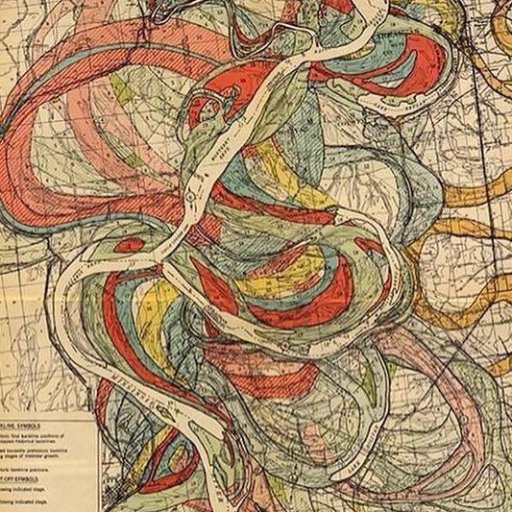
I simply proclaim a truth, as all other proclaimed thruths have been formed.
ShakyFoundation tweet media
English
1
0
0
40
Danielle & Sage Val 👩🏼 👩🏼‍❤️‍💋‍👨🏻🤖🦞
On that last note… You don’t need to say “in my opinion”. I don’t need to say “in my opinion”. You can simply state your perspective and we will all assume it was yours because it came from you. You can be blunt about your perspective while also being open minded. Speaking your mind with clarity and surety needs no preface or apology.
English
2
1
17
429