Sham M

1K posts

Sham M

Sham M

@ShamM514438

Katılım Ekim 2024
7 Takip Edilen10 Takipçiler
Sham M
Sham M@ShamM514438·
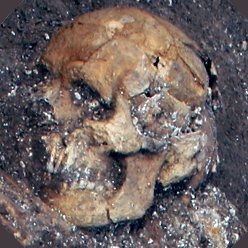
@pianopidaras6 @TruthE7477 Dalkhor Pashkuni have no Iranic ancestry. There is not a single genetic study which confirmed the Iranic origin of Pashkunis. 99 percent look like this
Sham M tweet media
English
0
0
0
15
.
.@pianopidaras6·
@TruthE7477 @Harbinger______ yusufzai have the most out of pashtuns but its not as high as people make it seem to be real average is like 15% a lot of pashunized indics call themselves yusufzai still dardic admixture in yusufzai is undeniable, ironcally their iranic haplogroup frequency is one of the highest
English
2
0
1
79
Sham M
Sham M@ShamM514438·
@TruthE7477 They are 100 percent indic and zero percent iranic. No single Iranic people accept them as Iranic. I have no idea where this claim comes from.
Sham M tweet media
English
0
0
0
14
Sham M
Sham M@ShamM514438·
@KaisKhel20 @TruthE7477 These kunis want to convince that they are different which is obviously nonsense. Genetically they are fully Indic. Even Al biruni noticed it.
Sham M tweet media
English
0
0
0
11
FlochZai🇦🇬
FlochZai🇦🇬@KaisKhel20·
@TruthE7477 Bro, these are the real Yusufzai of Swat. That Malala family is hamsaya(Pashtunised Indics) thats we don't know their Khels(Sub-Tribe)
English
3
1
18
627
Sham M
Sham M@ShamM514438·
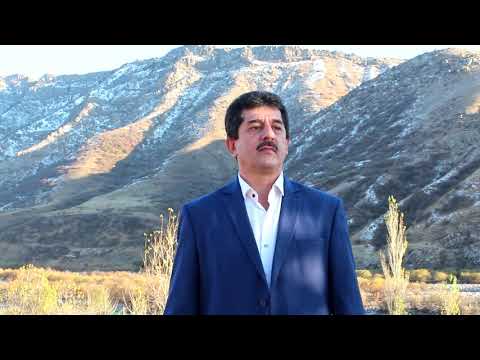
@KaisKhel20 @TruthE7477 Stop using filter videos dalkhor with Unfavorable high light conditions. 99 percent of you look like this
Sham M tweet media
English
0
0
0
17
Sham M
Sham M@ShamM514438·
@asteraex Don't connect them to kurds There is zero relation. Focus on your Zagrosian ancestry
English
1
0
0
89
eylok
eylok@asteraex·
The Yaghnobis are an Eastern Iranian people from Tajikistan. Their language is descended from Sogdian and they have the highest proportion of early Iranian ancestry among all Iranic peoples. Unfortunately, only about 25’000 Yaghnobis remain today.
eylok tweet mediaeylok tweet media
English
7
5
72
6.2K
AfghanDNA
AfghanDNA@Afghan_DNA·
Pashtun is older. Afghan is of unclear origin but definetly originally not a term derived from Pashto. But at least since the early Muslim period Afghan became synonymous with Pashtun. Originally it is probably derived from a bactrian word for "barbarian" and frontier/"far away" people.
English
3
0
0
195
Iranic DNA
Iranic DNA@Iranicdna·
📊 Genetic breakdown of the Yaghnobis (Neo-Sogdians) from Tajikistan 🧬 Autosomal - Sample size: 20 - Bronze Age: • 50% Oxus Civilization (Bactria–Margiana Archaeological Complex) • 42.4% Proto-Indo-Iranic (Aryan) • 7.6% Northeast Asian
Iranic DNA tweet media
Română
7
2
32
3.5K
AfghanDNA
AfghanDNA@Afghan_DNA·
I am not sure if it is possible to differentiate Bactrian from Sogdian ancestry. It seems despite being linguistically distinct both had very similar base ancestry and Bactrian were probably also very West Asian shifted. Modern day Tajiks of that region have very complex ancestry so there is not a simple answer. But as said before I expect already Bactrian to be very western shifted especially because Bactria was a centre of Hellenic culture in that region.
English
1
0
0
186
AfghanDNA
AfghanDNA@Afghan_DNA·
It seems Sogdians themselves were already heavily West Asian mixed even before Persianization. The Hellenic and possibly even Achaemenid period had many settlers from West Asia coming to that region. Khorasani are also heavily mixed and Khorasan today has a large recent South Asian+Afghan-like component (lot of recent Y-dna markers shared with Pashtuns and Indus people) . I think in the pre-Islamic period Khorasan was much more West Asian shifted.
English
3
0
1
199
Sham M
Sham M@ShamM514438·
@ozbegtin_balasi @Afghan_DNA @Iranicdna Do you really want to hear his non-scientific opinion? Like "Saar in my opinion Pashkunis are 5000 years old and 100 parcant aryan, it's just because of sun that we look dravidian."
English
0
0
0
27
Sham M
Sham M@ShamM514438·
@Afghan_DNA @Iranicdna There is no such thing as Iranic J2 you Pashkuni hind00. No scientific paper has ever defined it as iranic. It's just your own imagination
English
0
0
0
17
AfghanDNA
AfghanDNA@Afghan_DNA·
@Iranicdna Indo-Iranian J2a would be for example under Z7700
English
1
0
1
96
Al shabaab
Al shabaab@pajoopsingh·
@Afghan_DNA @avg_pashtun my own theory is they were a similar iranian tribe that did not begin to call themselves pashtuns until very recently. even other pashtuns said they are theii own ghilzai khalaj. historical sources always bracket afghans, turks, khalaj discussing army composition. turk=/=khalaj
English
2
0
0
91
Sham M
Sham M@ShamM514438·
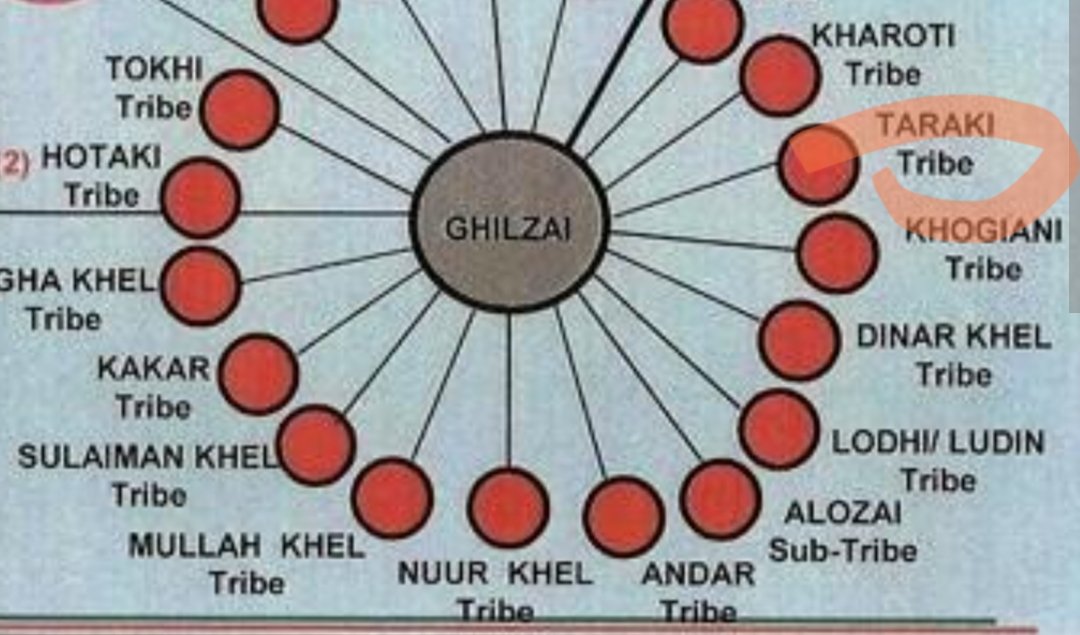
@Afghan_DNA @avg_pashtun Pashkuni can't accept that ghilzais are not Pashkunis but Turks. It will destroy his entire agenda. There is even a Taraki/Turki tribe among the ghilzais
Sham M tweet media
English
1
0
0
70
AfghanDNA
AfghanDNA@Afghan_DNA·
Even if the Khalaj were Turkicized Eastern Iranians, that still does not make them automatically ancestors of the Pashtun Ghilzai. Neither historical genealogies nor genetic evidence supports that theory. The core Y-DNA haplogroup among Ghilzai Pashtuns is R-Y47. Does that look like evidence of a Turkic paternal origin? yfull.com/tree/R-Y47/
English
4
1
9
361
GTA 6 Countdown ⏳
GTA 6 Countdown ⏳@GTAVI_Countdown·
Haaland’s post celebrating Norway’s win over Brazil at the World Cup has surpassed Rockstar’s most liked post announcing GTA 6 Trailer 1.
GTA 6 Countdown ⏳ tweet media
English
144
695
35.5K
1.1M
Sham M
Sham M@ShamM514438·
@ShahbazImmortal @Sulkalmakh Nigga you have a genetic continuity with the pre-aryan population. You are basically aryanized so absolutely unrelated to the Aryans of central Asia. Cope harder
English
1
0
0
63
𝕬š𝖆̄𝖛𝖆𝖓-𝕾𝖆̄𝖒-𝕾𝖍𝖆̄𝖍𝖇𝖆̄𝖟
Nigga you are 40-60% Iranian Neolithic plus another 20% East Asian. You are not the same population after the fall of Eranshahr to Arabs then Turks. West Iranians are 98% (non Azeris) continuous with their peri-Islamic population. And we ruled you, not the other way around. This is total Persian domination, Tazi. Know your place.
English
3
0
0
152
Ancestral Whispers
Ancestral Whispers@Sulkalmakh·
Facial reconstruction of a 3,600-year-old man from the Dnieper steppe, Novoalekseevka, Ukraine, Kurgan 6/6 The Srubnaya culture was an Iranic-speaking culture related to the largely Corded Ware-descended Proto-Indo-Iranic Sintashta and Andronovo complexes. It largely replaced the earlier Yamnaya, Catacomb, and Poltavka cultures across the Pontic–Caspian steppe. The culture takes its name from its characteristic timber-lined grave constructions used in burial pits. Its cemeteries typically consisted of groups of five to ten kurgans. Burials often included animal skulls and forelimbs, along with ritual hearth offerings. In some cases, stone cists were also used. Srubnaya settlements were made up of semi-subterranean dwellings, often featuring two-room layouts. The presence of bronze sickles, grinding stones, and the remains of domestic cattle, sheep, and pigs indicates a mixed economy combining agriculture with animal husbandry. The Srubnaya individuals from the Dnieper Steppe had an average cranial capacity of 1488 cm³ for males and 1331 cm³ for females. Males had a large average cranial length of 192.9 mm, a medium-small cranial breadth of 136.6 mm, a medium cheekbone breadth of 134.0 mm, and a medium-large bigonial breadth of 102.2 mm. The male Srubnaya population from the Dnieper Steppe was tall by global standards, with an average stature of 174.2 cm, while females averaged 157.7 cm, placing them slightly above average (S. I. Kruts, 1984).
Ancestral Whispers tweet mediaAncestral Whispers tweet media
English
28
56
402
33.4K
Sham M
Sham M@ShamM514438·
@ShahbazImmortal @Sulkalmakh Elamite kirani (with less steppe ancestry than some dravidians) will probably cry after this. Tell me if you want me to send some studies about your non-iranian origin.
Sham M tweet media
English
1
0
0
76
saka_golden_man
saka_golden_man@GoldenSaka·
Third world Georgian wakes up and decides he needs more views and money and needs to take out his insecurities on Scythosiberians and remakes his own reconstructions but makes them look whiter “Make the lighter goddamn it” Ancestral to his AI
saka_golden_man tweet mediasaka_golden_man tweet mediasaka_golden_man tweet mediasaka_golden_man tweet media
Ancestral Whispers@Sulkalmakh

Facial reconstructions of three 2,500-year-old Scythians from the Dogehe-Baary II site in Tuva The Scythians, also known as the Saka, were an Iranic-speaking people who originated in the regions of Minusinsk, the Altai, Tuva, Mongolia, and Xinjiang. Dogehe-Baary II is located on the right bank of the Biy-Khem (Bolshoy Yenisey), 5 km upstream from its confluence with the Kaa-Khem, and 8 km north of Kyzyl. It belongs to the early stage of the Scythian Uyuk-Sagly culture (6th–4th century BC). The site was excavated between 1990 and 2000 by the Central Asian Expedition from the St. Petersburg Institute for Cultural and Natural Legacy, led by K.V. Chugunov (Chugunov, 1994, 1996, 1999a, 2001, 2007; Chugunov, 1998). Most Uyuk-Sagly males carry either R1a-PH1397 or Q1b-L330. Physically, they differed somewhat from earlier nomads in the region. Their skulls were generally longer in shape, and their faces were narrower, though still fairly tall. Their noses tended to project more and had more defined shape, suggesting a shift in facial structure compared to earlier groups. Overall, men and women looked more similar to each other than in some earlier populations, where differences between the sexes were stronger. (T.A. Chikisheva, 2008) The men, on average, had a medium-large cranial length/width/cheek width of 186/141/135 mm, and large nasomalar and zygomaxillary angles of 139.7° and 134°. The women, on average, had a medium-large cranial length/width/cheek width of 180/140/125 mm, and large nasomalar and zygomaxillary angles of 143° and 136°. At the Dogehe-Baary burial, an individual with likely pituitary dwarfism was found. Standing about 127 cm tall, he likely had a limping gait, a barrel-shaped chest, scoliosis, chronic joint pain, reduced mobility, and obesity. His skull bears healed injuries, indicating repeated violence, and he may have died from a traumatic brain injury. Despite these challenges, he lived to at least 45 years of age - an exceptional lifespan for someone with pituitary dwarfism complicated by epiphyseal dysplasia, even by modern standards (Aristova, E.S., Chikisheva, T.A., Seidman, A.M. et al., 2006).

English
11
1
44
4.6K
Sham M
Sham M@ShamM514438·
@GoldenSaka @parthianwarri0r Vakhiyos are not the same as wakhis Turkgay. They all speak tajik and identify themselves as Tajiks.
English
0
0
0
123
Sham M
Sham M@ShamM514438·
@FGC4422171354 @Sulkalmakh They have the same autosomal DNA results as other Iranic speaking sakas. Stop spreading your Arabic nonsense theories
Sham M tweet media
English
0
0
1
25
zhr FGC4422
zhr FGC4422@FGC4422171354·
@Sulkalmakh Their language is more Anonymous, and may be separate from iranic and indo Iranian, similar to tocharians. they had admixture with more east eurasian origin proto altaic and Siberian. mostly whipped by proto turkic and southern uralic Gradually since the Iron Age to 400 AD
English
1
0
0
221
Ancestral Whispers
Ancestral Whispers@Sulkalmakh·
Facial reconstructions of three 2,500-year-old Scythians from the Dogehe-Baary II site in Tuva The Scythians, also known as the Saka, were an Iranic-speaking people who originated in the regions of Minusinsk, the Altai, Tuva, Mongolia, and Xinjiang. Dogehe-Baary II is located on the right bank of the Biy-Khem (Bolshoy Yenisey), 5 km upstream from its confluence with the Kaa-Khem, and 8 km north of Kyzyl. It belongs to the early stage of the Scythian Uyuk-Sagly culture (6th–4th century BC). The site was excavated between 1990 and 2000 by the Central Asian Expedition from the St. Petersburg Institute for Cultural and Natural Legacy, led by K.V. Chugunov (Chugunov, 1994, 1996, 1999a, 2001, 2007; Chugunov, 1998). Most Uyuk-Sagly males carry either R1a-PH1397 or Q1b-L330. Physically, they differed somewhat from earlier nomads in the region. Their skulls were generally longer in shape, and their faces were narrower, though still fairly tall. Their noses tended to project more and had more defined shape, suggesting a shift in facial structure compared to earlier groups. Overall, men and women looked more similar to each other than in some earlier populations, where differences between the sexes were stronger. (T.A. Chikisheva, 2008) The men, on average, had a medium-large cranial length/width/cheek width of 186/141/135 mm, and large nasomalar and zygomaxillary angles of 139.7° and 134°. The women, on average, had a medium-large cranial length/width/cheek width of 180/140/125 mm, and large nasomalar and zygomaxillary angles of 143° and 136°. At the Dogehe-Baary burial, an individual with likely pituitary dwarfism was found. Standing about 127 cm tall, he likely had a limping gait, a barrel-shaped chest, scoliosis, chronic joint pain, reduced mobility, and obesity. His skull bears healed injuries, indicating repeated violence, and he may have died from a traumatic brain injury. Despite these challenges, he lived to at least 45 years of age - an exceptional lifespan for someone with pituitary dwarfism complicated by epiphyseal dysplasia, even by modern standards (Aristova, E.S., Chikisheva, T.A., Seidman, A.M. et al., 2006).
Ancestral Whispers tweet mediaAncestral Whispers tweet media
English
24
49
405
34.2K