
thee leo
10.6K posts


thee leo retweetledi

thee leo retweetledi




thee leo retweetledi

thee leo retweetledi

Dats why I pay attention to soft spoken ppl. They be crazy as hell. Dats not even they real voice. Dats a coverup for a demon
ѕєиɪ@zalatwicc
no one tells you if your rage builds up enough it turns you gentle
English
thee leo retweetledi


thee leo retweetledi

Tolerating always turns to resentment. At first, you call it patience, then love. But what it really is, is self-abandonment. Every time you swallow a boundary, excuse a pattern or silence your discomfort, something inside you keeps score. Likes And eventually, the bill comes due.
quote@itsmubashi
Hit me with the harshest reality truth.
English
thee leo retweetledi

The research behind this is wild. If you spent years bottling your feelings, huge chunks of your life were probably never recorded in the first place. Every time you push down a feeling, your brain has to choose: save the memory of what's happening, or shut the emotion up. It picks the emotion.
In 2000, a team at Stanford tested this. They showed people a surgical film. Half were told to react naturally, the way they would if they were alone. The other half were told to hide their reactions, like someone trying not to look upset at the dinner table. Then everyone took a surprise memory test. The suppressors did worse on every measure, on what they'd seen and on what they'd heard. The same pattern held in two more experiments in the same paper.
Brain scans later explained why. Your brain has three jobs when something emotional happens: tag the feeling, put what's happening into words, and save the scene to memory. When you reframe a feeling instead of suppressing it, all three regions fire together as a team. When you suppress, that teamwork falls apart. The memory-saving region goes quiet while the brain fights its own emotional response.
And it compounds over time. Suppression keeps cortisol (the stress hormone) high, and cortisol shrinks the part of your brain that saves memories. People under chronic stress can lose 10 to 15 percent of the volume there. Even three weeks of elevated cortisol shrinks the wiring between brain cells by about 20 percent. The damage can partly reverse once the stress drops. But not always.
The long-term cost shows up in the dementia data. A Finnish study followed 1,137 older adults for about a decade. People who said they habitually suppressed their emotions had nearly five times the risk of developing dementia. The researchers accounted for genetics, smoking, obesity, and education, and the gap still held.
There's a way out. It's called cognitive reappraisal. Instead of shoving a feeling down, you change the story you're telling yourself about what caused it. A tough meeting becomes practice. A short-tempered friend becomes a tired friend. Same event, new frame. And because reappraisal kicks in before the emotion fully fires, your brain never has to fight itself. A 2003 study from Stanford and UC Berkeley found reappraisers ended up with more positive emotion, better relationships, and higher wellbeing. Zero memory cost.
So when you say you don't remember half your life, you might be right about that. The part of you that saves the record had other orders the whole time.
323@Ggod323
I genuinely dont remember half my life
English
thee leo retweetledi

thee leo retweetledi

thee leo retweetledi

thee leo retweetledi

thee leo retweetledi

For all those still feeling the moon joy—Artemis II was brought to you by public schools and publicly funded science. Copy that! 👩🚀🚀💕
*All four astronauts went to public schools!
English
thee leo retweetledi

thee leo retweetledi
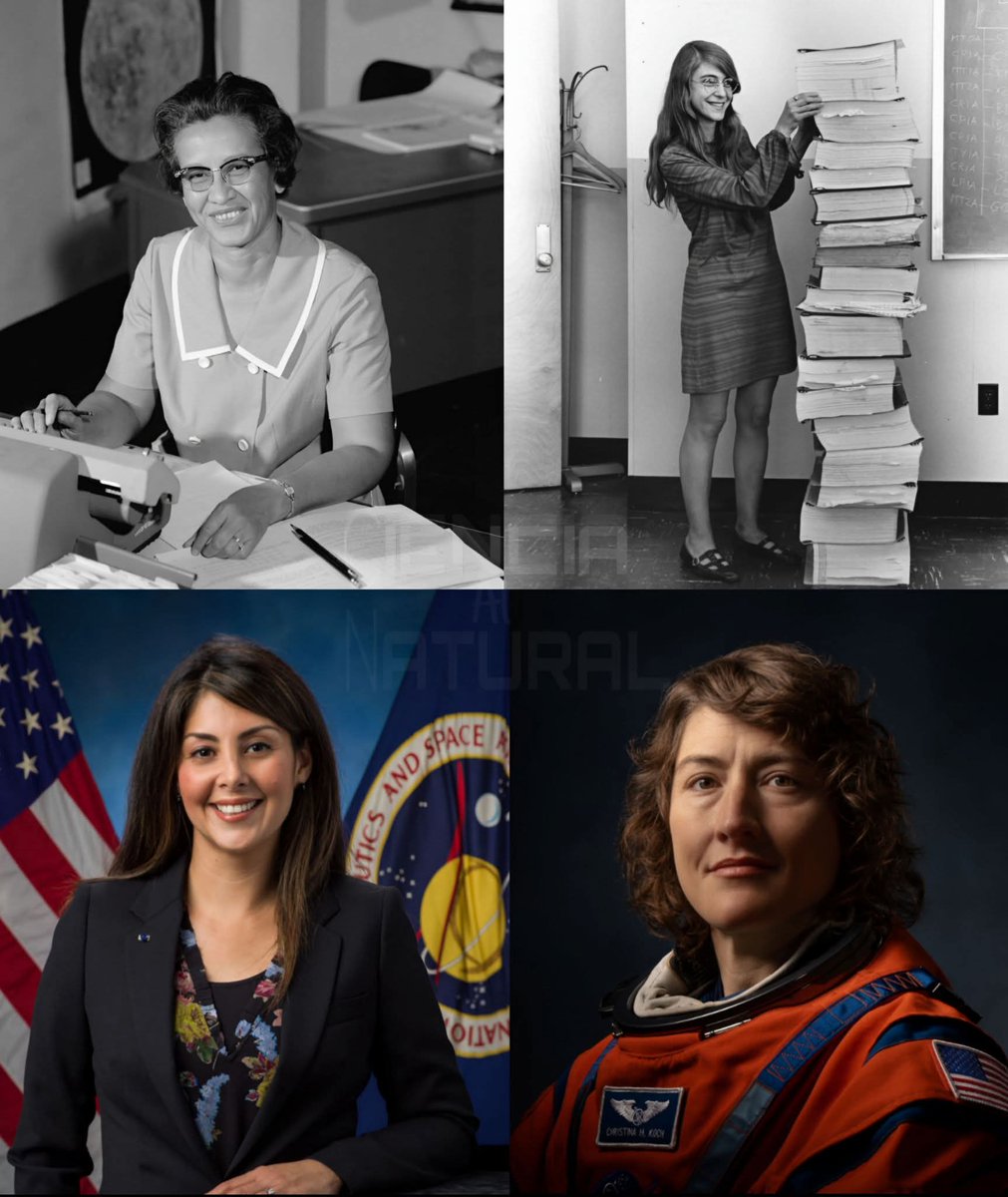
Everyone Should Meet Them: WOMEN OF SPACE
These four women represent different generations of space science, from paper calculations to digital systems and the exploration of other planets.
Katherine Johnson: A key mathematician at NASA, she calculated orbital trajectories for historic missions. At a time when computers were still limited, her hand calculations were so reliable that astronauts asked to check the results before launch.
Margaret Hamilton: She led the development of software for the Apollo program. Their work allowed the onboard computer to prioritize tasks during the Apollo 11 lunar landing, avoiding potential failure. It also helped lay the foundations for modern software development.
Diana Trujillo: A Colombian aerospace engineer who participated in the Perseverance rover mission to Mars, where she led the team responsible for the vehicle's robotic arms, a critical system for collecting and analyzing high-precision Martian rock samples. She also led the first Spanish-language broadcast of the Mars landing.
Christina Koch: The NASA astronaut holds the record for the longest continuous stay in space by a woman, at 328 days. She participated in the first all-female spacewalk. And recently, she became the woman who has been farthest from Earth.
English