Shantam || शान्तम् ||

177 posts

Shantam || शान्तम् || banner
Shantam || शान्तम् ||

Shantam || शान्तम् ||

@ShantamOjha

Wildlife biologist

Katılım Temmuz 2022
238 Takip Edilen30 Takipçiler
Shantam || शान्तम् || retweetledi
Nature Unedited
Nature Unedited@NatureUnedited·
The Red and white flying squirrel (Petaurista alborufus) is one of the largest flying squirrels on Earth
English
6
54
441
15.8K
Shantam || शान्तम् || retweetledi
Oceaiii🐋🐬
Oceaiii🐋🐬@oceaiii·
You don't see this everyday. Playful dolphin testing the limit of a gliding giant
English
52
522
6.4K
1.1M
Shantam || शान्तम् || retweetledi
Ausarchosaur
Ausarchosaur@ausar_the·
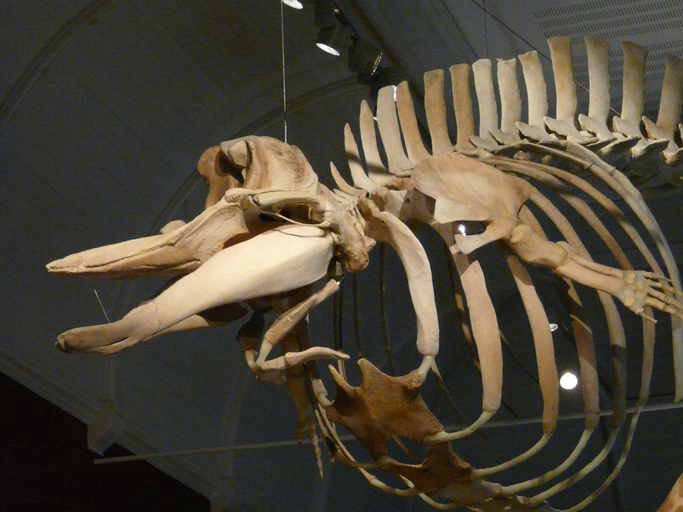
The massive ribcage of this Cuvier’s beaked whale skeleton makes it look almost pin-headed from this angle. (Photo by Simon J. Tonge)
Ausarchosaur tweet media
English
2
18
188
2.3K
Lokinder Bisht
Lokinder Bisht@BishtLokinder·
Kalibangan Civilisation rather than Harappan? The Kalibangan pre-historic site of Sindhu- Saraswati Civilisation was originally discovered by Luigi Pio Tessitori, an Italian Indologist (1887–1919) much before the discovery of the Harappan Site. He was doing some research in ancient Indian texts and was surprised by the character of ruins in that area. He sought help from Sir John Marshall. At that time the ASI was conducting excavations at Harappa, but they were unaware of the significance of the ruins. In fact, Tessitori was the first person to recognize that the ruins were 'Prehistoric' and pre-Mauryan. He had discovered three seals from the region. However, he could not communicate the same to Marshal as he died while in Italy. He died five years before the Harappan culture was formally recognized. The knowledge of the seals was buried with him, and was recovered only when Hazarimal Banthia, a Kanpur businessman, brought back copies of his correspondence from Italy.
Lokinder Bisht tweet media
English
1
13
58
2K
Shantam || शान्तम् || retweetledi
Michael Button
Michael Button@MichaelButtonX·
We teach that agriculture 'began' in the Fertile Crescent. But it also began independently in China, New Guinea, Mesoamerica, and the Andes - all at roughly the same time. Why did everyone suddenly start farming at once, after 290,000 years of not doing so?
Michael Button tweet media
English
366
104
2.2K
229.3K
Shantam || शान्तम् || retweetledi
Nature Unedited
Nature Unedited@NatureUnedited·
The speed and agility of a dolphin as it catches a fish 🐬
English
12
188
4.2K
169.6K
Shantam || शान्तम् || retweetledi
Damn Nature You Scary
Damn Nature You Scary@AmazingSights·
A romp of otters surrounding a saltwater crocodile presumably trying to mob it and hoping to drive it away
English
7
62
1.5K
216.9K
Shantam || शान्तम् || retweetledi
Nature Clips
Nature Clips@NatureCanvas8·
This majestic lion playing with his favorite ball in the snow
English
11
237
2.3K
34K
Shantam || शान्तम् || retweetledi
Multipolar Press / Constantin von Hoffmeister
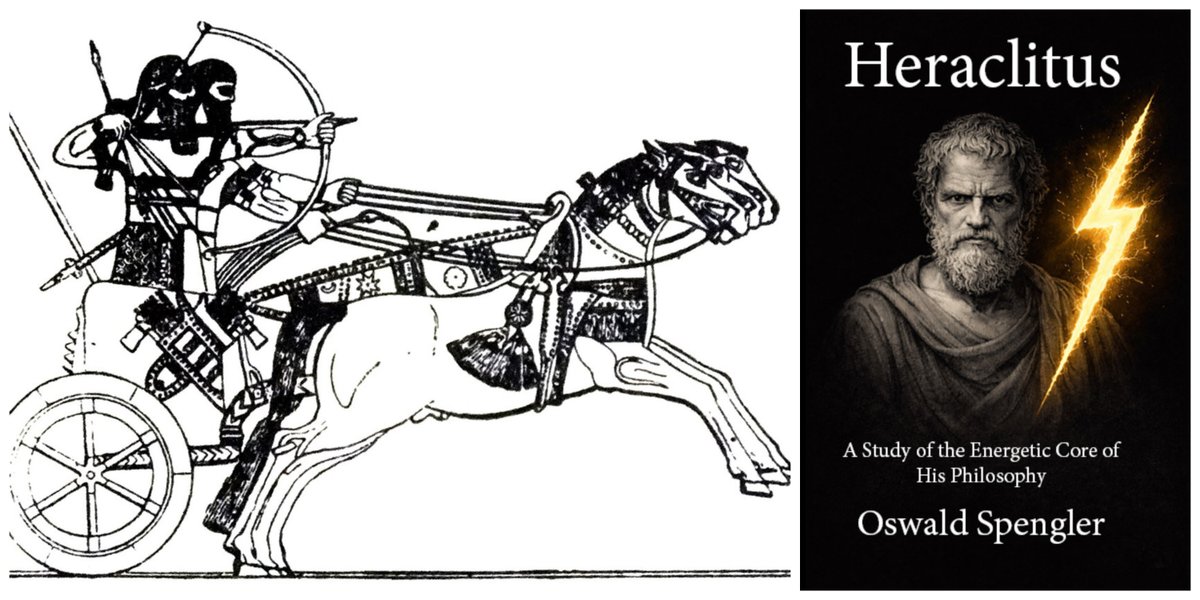
"No weapon has been as world-transforming as the chariot, not even firearms. It is the key to world history of the second millennium BC, which has changed the world the most in all of history. It is the first complex weapon: the chariot, the steering of a tamed animal, the long training of professional warriors, for whom this fight from above was their sole vocation, come together. Above all, speed enters world history here for the first time as a tactical means. The emergence of cavalry, in the same context, is only the consequence of chariot warfare. This represents a unique invention, born from the innermost life urge of an entirely new type of people." — Oswald Spengler, "The Chariot and Its Significance in the Course of World History" From Heraclitus: A Study of the Energetic Core of His Philosophy This edition presents a new English translation with scholarly annotations and a preface by Constantin von Hoffmeister, along with a foreword by Astral. Get the book now (link below)!👇
Multipolar Press / Constantin von Hoffmeister tweet media
English
4
18
104
18.3K
Shantam || शान्तम् || retweetledi
John Oldman
John Oldman@PrasunNagar·
Arthashastra has mentioned the rules of municipal regulations in Mauryan age. These regulations were very strict, but were necessary for public good in those times: 1. Guests: Masters of households must make report of their guests arriving or departing. Otherwise, they will be held responsible for any crimes committed during the night they accomodated the unknown persons, & in the case of uneventful nights also. 2. Liability of Surgeons and House Owners: Surgeons treating patients suffering from suspicious wounds & masters of house finding persons preparing dangerous or deadly drugs must report the matter to ‘Gopas’ or ‘Sthanikas’. Otherwise, they were liable to same punishment as the guilty persons themselves. 3. Suspect Activities : Suspected characters and Fifth Column agents were held under check by a series of regulations. Way- farers along highways or by – paths , either within or outside the town, were charged with responsibility of arresting suspects or undesirable persons frequenting temples & holy places, forest & crematories. Under this description came persons who suffered from suspicious wounds, carrying harmful materials, carrying a load beyond their capacity,had a suspicious appereance or were discovered sleeping beyond time , fatigued from long journeys or absolute strangers ; These signs marked out criminal persons. 4. Curfew Order: The movements of citizens were forbidden at night. The period of restriction was from 9 PM to 3.30 AM. A trumpet ( yama – turyam) was sounded to announce the hours when the curfew commenced & ended all movements between these hours, especially in the vicinity of the palace( rajno grihabhayse), were punished with fines. Inconvenience to the public caused by this restriction was relaxed in case of: a) Persons attending delivery cases, b) Medical practitioners , c) Carriers of dead bodies, d) Persons moving about with lanterns, e) Person going to meet city officials; f) Persons called out of their houses by emergencies such as outbreak of fire, g) Persons moving with passes after time.
John Oldman tweet media
English
2
17
95
3.6K
Shantam || शान्तम् ||
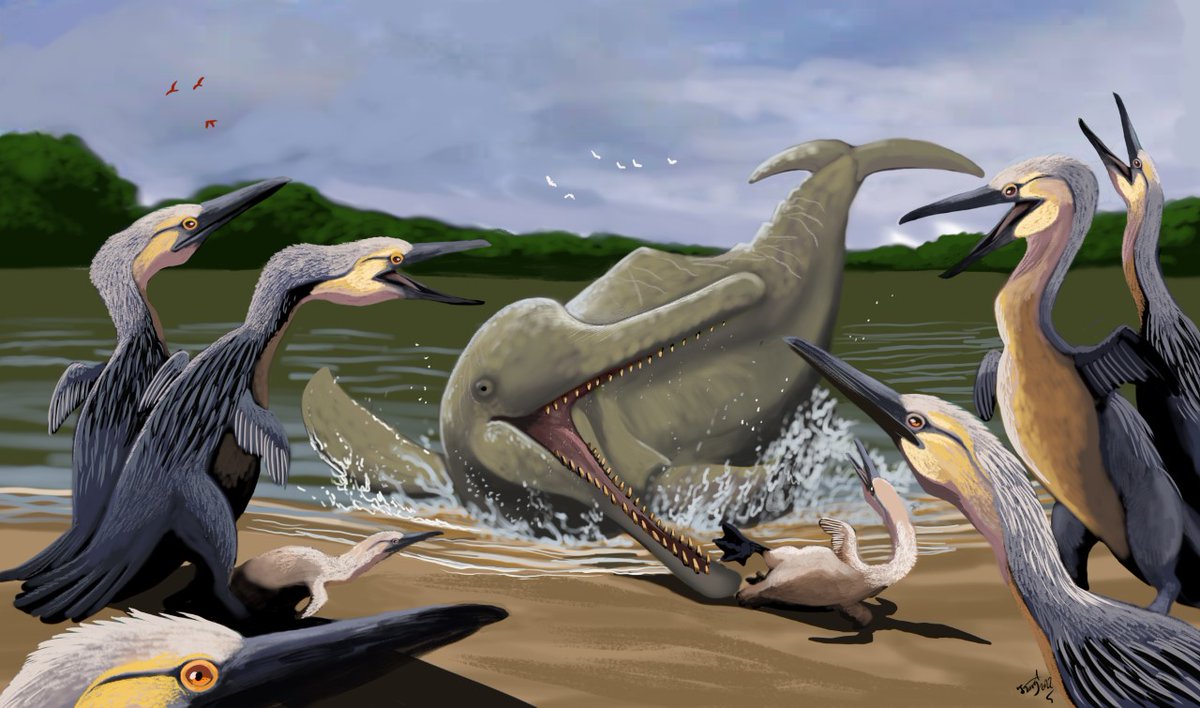
@HodariNundu Fish obviously. The fishes try to escape to the shallow sections of the river, but dolphins have specialised chasing them even there, and I assume that during such pursuits, they sometimes perform these Orca type hunting feats.
English
0
0
1
23
Hodari Shadowalker ❄️🐆
A large river dolphin (Saurocetes??) attempts to snap a chick from a colony of Giganhinga (flightless darters that approached the largest living penguins in size). Giganhinga is believed to have nested in islands away from land predators, but there is no such thing as 100% safe..
Hodari Shadowalker ❄️🐆 tweet media
English
12
193
1.1K
0
ಸಳ
ಸಳ@TumkurKannadiga·
@ShantamOjha @BishtLokinder It dried up even before Steppes entered India, Rigveda mentioned Saraswathi is Afganistan Helmond river
English
1
0
0
36
Shantam || शान्तम् ||
@TumkurKannadiga @BishtLokinder Exactly, now everyone knows how the left-leaning historians worked and how they have manipulated masses, how they have shaped narratives in the past. But the truth cannot remain hidden. The Saraswati was always there, and we are all products of its fertility.
English
1
0
1
24
ಸಳ
ಸಳ@TumkurKannadiga·
@ShantamOjha @BishtLokinder We know how they worked, how they manipulate the topics, ASI trying to prove Sanskrit is the Lang of that civilization but can't get any proof yet , they are trying hard again and again, Saraswathi is the new thing added by them nothing else
English
1
0
0
31
KBP Reviews🏹
KBP Reviews🏹@KshitizCritic·
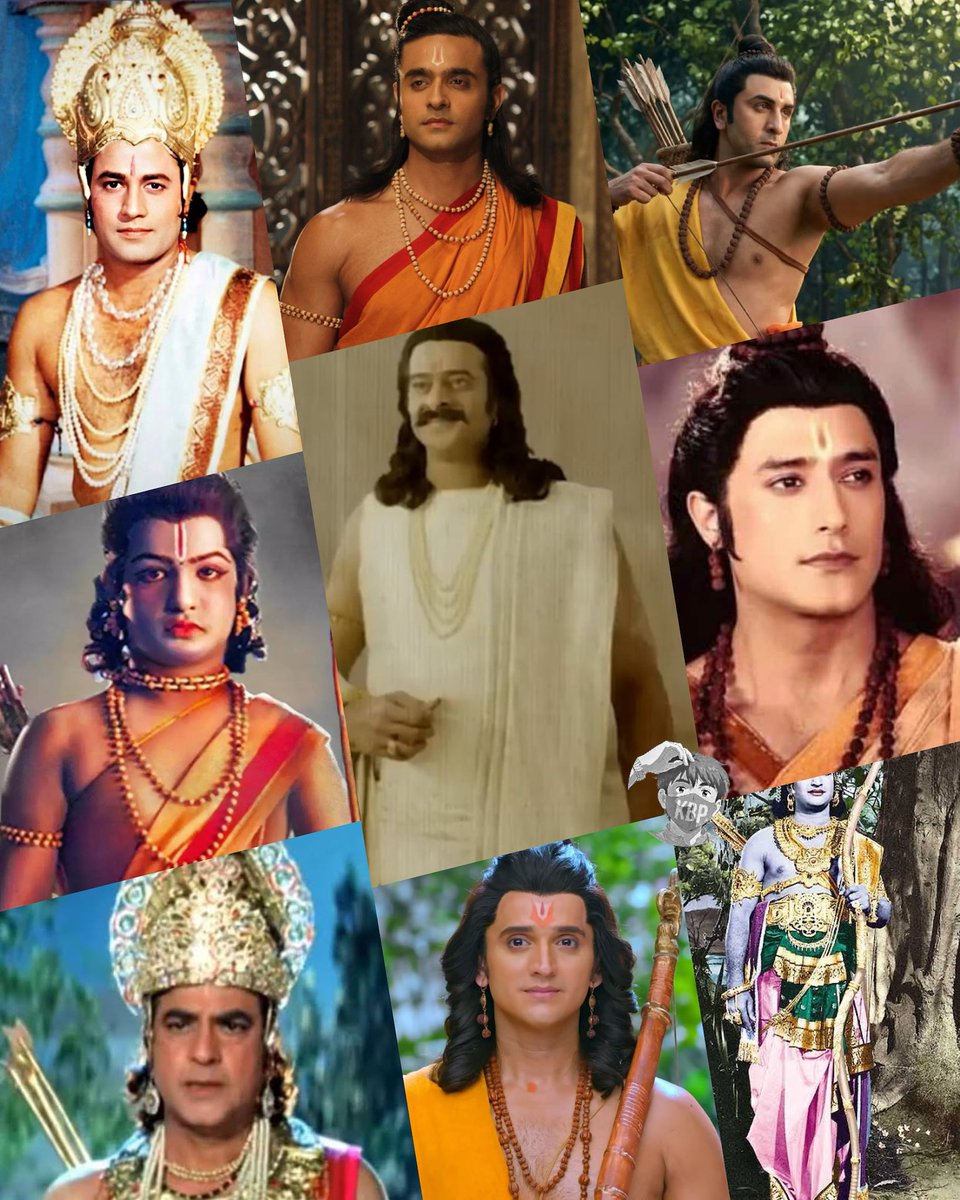
Who is the Best Actor to ever portray Bhagwan Shri Ram on screen??
KBP Reviews🏹 tweet media
English
52
10
305
15.8K