Steve P.

1.1K posts

Steve P.

Steve P.

@SharesSteem

remlaps and remlaps-lite on Steem sites like https://t.co/8dtwX8VGBz.

Katılım Eylül 2019
507 Takip Edilen300 Takipçiler
Sabitlenmiş Tweet
Steve P.
Steve P.@SharesSteem·
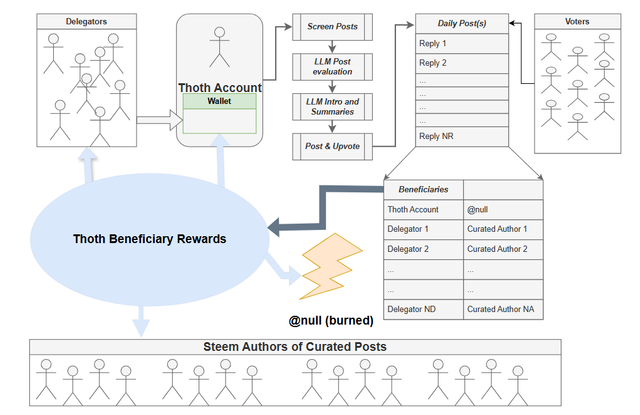
On the #Steem blockchain, I think the potential for value creation by harnessing delegation and beneficiary rewards is massively underappreciated. Especially in combination with LLMs and other forms of AI. Here's why - @remlaps/here-is-a-complete-framework" target="_blank" rel="nofollow noopener">steemit.com/steem-dev/@rem@steemit @SteemNetwork
Steve P. tweet media
English
0
0
3
718
Steve P. retweetledi
Daniel Lemire
Daniel Lemire@lemire·
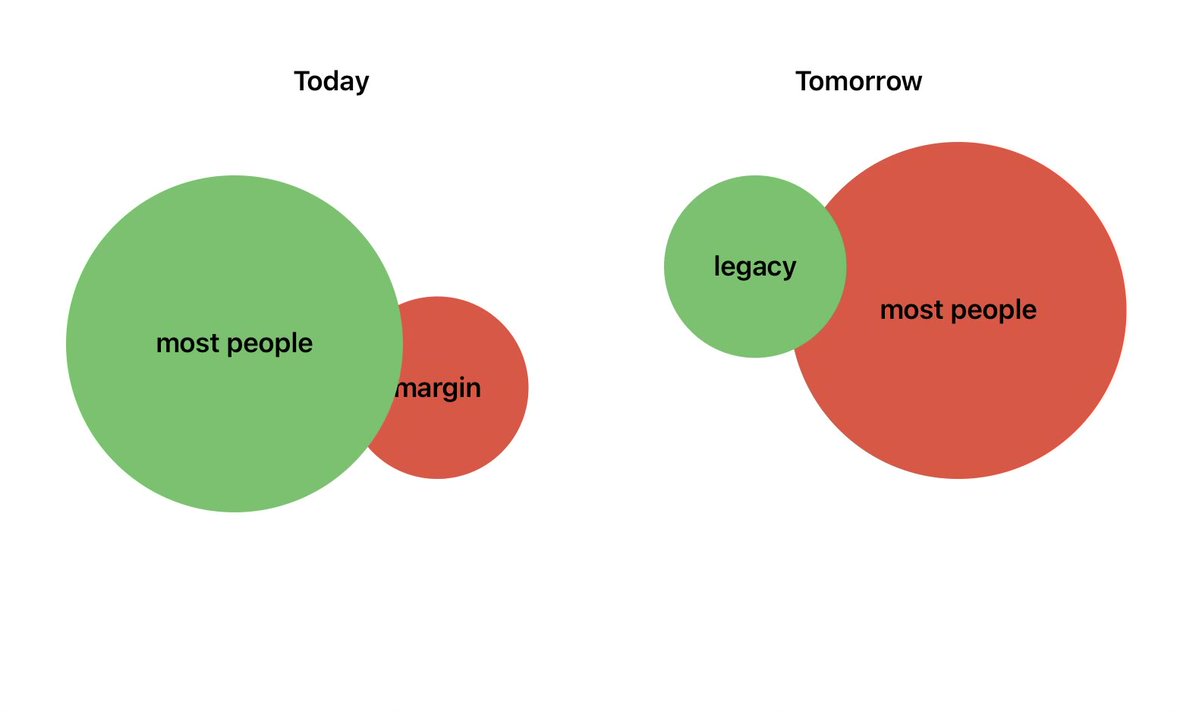
What happens at the margin is often more important than you think — because it is usually a sign of what is to come. I was an early adopter of the web. I had a home page in 1995–1996. I met my wife online in 1997. Back then, we didn’t post pictures; we mailed them (actual physical mail). Bandwidth was scarce, and we connected to the Internet through phone lines. When I talked to people about the web’s potential, I came across as weird. “You met a girl online? What kind of crazy story is that?” I posted essays about how this changed how science worked, because you could not just post and read PDFs online, you no longer needed a library subscription. Decades later, the campus librarians are still around, but few people care. For the longest time, the web simply didn’t matter to most people. So journalists and pundits ignored it. In 1998, Nobel Prize-winning economist Paul Krugman wrote: “By 2005 or so, it will become clear that the Internet’s impact on the economy has been no greater than the fax machine’s.” To people like me, this was infuriating. I see the same scenario around AI. The mainstream press has little interesting to say. I remember during the rise of the web, a famous journalist in Quebec wrote a long essay to mock the idea that the Web might affect newspapers. The idea that people would go online for news was ridiculous to him. We are in 2026, and many journalists still don't understand what happened to them. Here is a common fallacy: “If something (good or bad) directly affects only a few people right now, then you can safely ignore it.” I call it the reverse-canary fallacy. Miners once took canaries into coal mines. When the canary died, they knew the air was toxic and it was time to get out. Many people draw the opposite conclusion: “It only affects the canaries.” Like most fallacies, the reverse-canary fallacy contains a grain of truth. You can safely ignore most things that affect only a few people. But the fact that something is happening at the margin is not a reason to dismiss it. For example, if a woman is murdered on your street — the first in twenty years — and you are not a woman, why should you care? You should care a great deal. It may signal gangs in the area or that it’s time to sell your house. Similarly, when a handful of people suddenly started online businesses in the mid-1990s, it was easy to dismiss them. Yet some were on the verge of becoming very wealthy. The same pattern is playing out today with AI. Early adopters already use it daily for coding, writing, research, and decision-making. Most people and decision-makers still see it as a toy and ignore it. It looks insignificant now, but it is likely the leading edge of massive economic and social change — just like the web in 1995. Or maybe not, I can't predict the future. What I can urge you to do though is to not dismiss what is happening at the margin because it is at the margin.
Daniel Lemire tweet media
English
14
5
54
5.3K
Steve P.
Steve P.@SharesSteem·
Here's my next installment of backyard wildlife photography from March. Small birds & one small mammal. @remlaps/citizen-science-observations-of-small-birds-and-animals-in-south-eastern-pennsylvania-from-march-of-2026" target="_blank" rel="nofollow noopener">steemit.com/american-steem…
English
0
0
0
14
Steve P. retweetledi
Perry E. Metzger
Perry E. Metzger@perrymetzger·
I strongly support this take. Computer security has been in a continuous crisis since the Morris worm in 1988. Finally, we have the capacity to actually fix the problem, not only through automated audits, but with automated formal verification. People are instead treating this like it’s terrible because they are inclined to only see the “finds bugs” side and ignore the “fixes bugs” side.
Marc Andreessen 🇺🇸@pmarca

The state of cybersecurity has been dismal forever. At one point a major vendor even enabled direct execution of arbitrary x86 binaries in any web page. Nobody cared. The number of hacks and breaches has been uncounted. Finally we have the catalyst and the tools to fix it all.

English
9
22
146
8.6K
Steve P.
Steve P.@SharesSteem·
@darrylsden Exactly. No travel headaches and no admission fees.😉
English
0
0
0
27
Steve P.
Steve P.@SharesSteem·
My new hobby learning photography by photograping wildlife (mostly) in my back yard. @remlaps/backyard-photography-in-chester-county-pennsylvania-during-march-2026-warm-up-shots" target="_blank" rel="nofollow noopener">steemit.com/american-steem…
English
1
0
0
47
Steve P. retweetledi
Michael Hla
Michael Hla@hla_michael·
I trained an LLM from scratch on pre-1900 text to see if it could come up with quantum mechanics and relativity. While the model is too small to do meaningful reasoning, it has glimpses of intuition. When given observations from past landmark experiments, the model can declare that “light is made up of definite quantities of energy” and even suggest that gravity and acceleration are locally equivalent. I’m releasing the dataset + models and leave this as an open problem to the research community. I also include what this project has taught me about intelligence in a mini essay linked below. 🧵(1/n)
English
116
260
2K
306.5K
Steve P. retweetledi
Sooraj
Sooraj@iAnonymous3000·
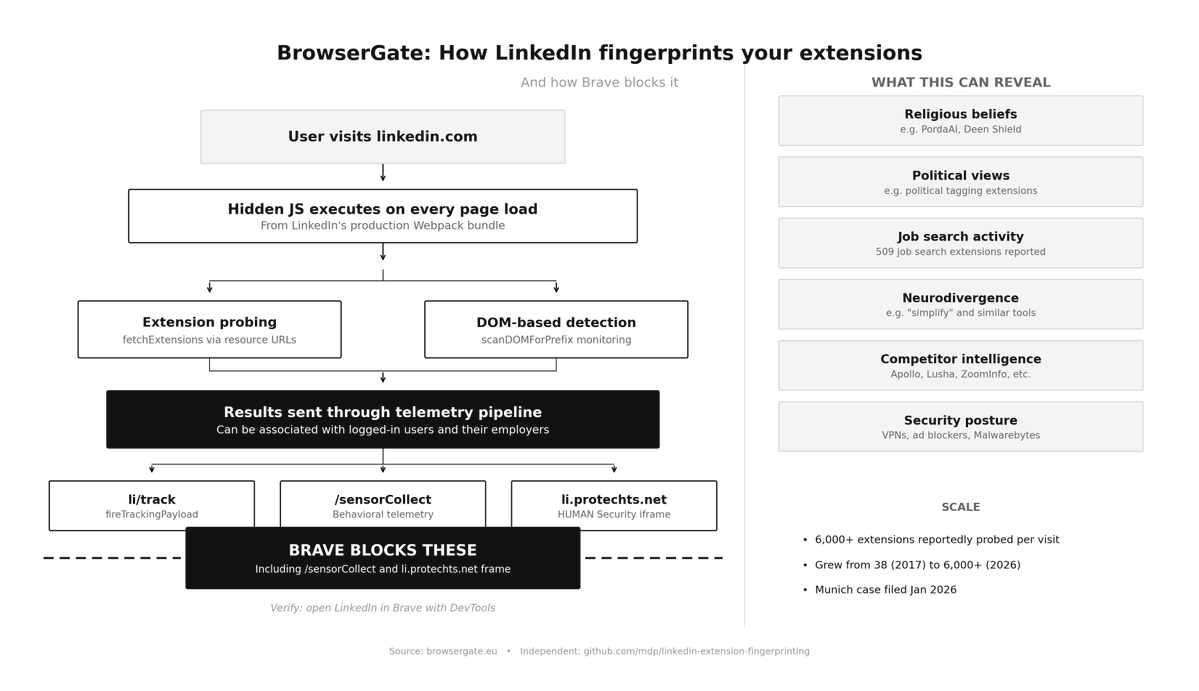
BrowserGate documented something serious. LinkedIn silently fingerprint installed Chrome/Chromium extensions on page load - using extension probing and DOM-based detection, then send those results through its telemetry pipeline. The scanned list reportedly includes competitor sales tools, job-search extensions, and privacy/security software. Detecting those extensions can reveal political views, religious beliefs, neurodivergence-related usage, or that someone is actively looking for a new job. That matters more on LinkedIn than almost anywhere else, because LinkedIn already knows who you are, where you work, and who your employer is. Brave already blocks the relevant LinkedIn tracking endpoints - including /sensorCollect and the hidden li.protechts.net frame. Open LinkedIn in Brave with DevTools open and check the requests yourself. A Munich case is now on file. This deserves real regulatory scrutiny.
Sooraj tweet media
English
11
147
588
34.6K
Steve P. retweetledi
TFTC
TFTC@TFTC21·
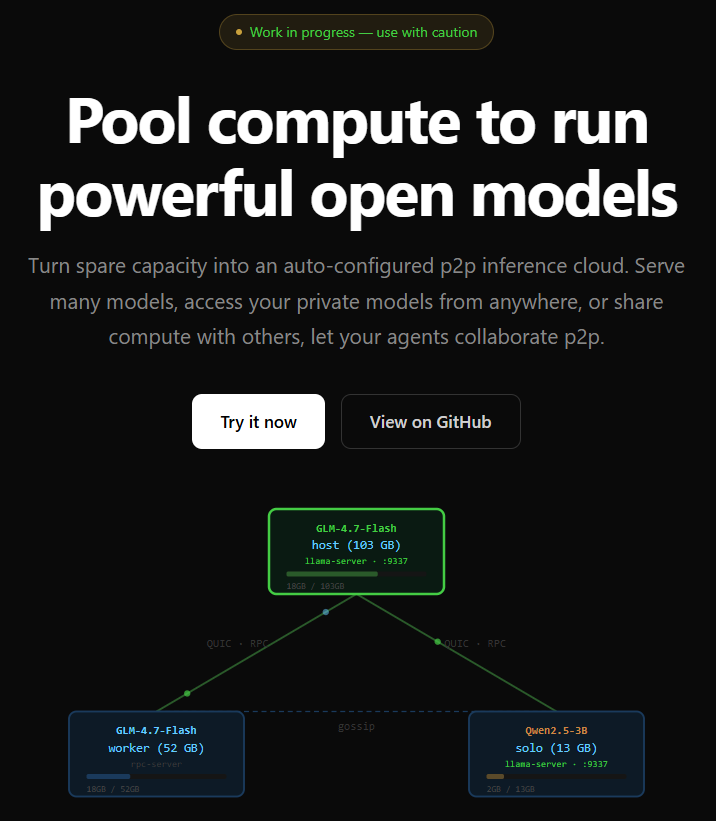
Block just open-sourced mesh-llm, a peer-to-peer system that lets anyone pool spare GPU compute to run large open-source AI models without relying on any cloud provider. If a model fits on your machine, it runs locally at full speed. If it doesn't, the system automatically splits it across multiple machines on the network. Dense models get split by layers. Mixture-of-experts models like DeepSeek and Qwen3 get split by experts. Zero configuration required. Discovery happens over Nostr. Nodes find each other through relays, score by region and VRAM, and self-organize. No central server coordinates anything. Weights are read from local files, never sent over the network. Dead nodes get replaced in 60 seconds. It exposes a standard OpenAI-compatible API on localhost, meaning any existing AI tool can plug in without modification. Block is building infrastructure for AI that doesn't route through OpenAI, Google, or Anthropic. Frontier-class open models running across a mesh of commodity hardware, discovered via Nostr, with no cloud dependency. That's the direction AI needs to go.
TFTC tweet media
English
42
129
576
80.8K
Steve P. retweetledi
Marc Andreessen 🇺🇸
The idea that “AI safety” could be based on secrecy and control has been fatally falsified.
English
197
140
1.6K
111.1K
Steve P.
Steve P.@SharesSteem·
Citizen Science: Using @inaturalist and photography to learn about wildlife in suburban Pennsylvania. @remlaps/six-lessons-from-backyard-wildlife-walks-in-the-month-of-march" target="_blank" rel="nofollow noopener">steemit.com/american-steem…
English
0
0
0
48
Steve P.
Steve P.@SharesSteem·
If you combine it with platforms like @inaturalist and @GLOBEatNight , the $Steem blockchain starts to look like a powerful tool for advancing Citizen Science and Free Market Environmentalism (as described by @perctweets). @remlaps/citizen-science-another-way-that-steem-photographers-and-bloggers-can-help-to-advance-science-and-protect-wildlife" target="_blank" rel="nofollow noopener">steemit.com/popular-stem/@…
English
0
0
0
72
Steve P. retweetledi
Eric S. Raymond
Eric S. Raymond@esrtweet·
Announcing open-adventure release 1.21 Your system package manager probably knows this as 'open-adventure' Colossal Cave Adventure, the 1995 430-point version. This is the last descendant of the original 1976 Colossal Cave Adventure worked on by the original authors - Crowther & Woods; it is shipped with their permission and encouragement. It has sometimes been known as Adventure 2.5. The original PDP-10 name 'advent' is used for the built program to avoid collision with the BSD Games version. New in this release: Code hardening with ChatGPT 5.2, cppcheck, and pylint. All text spellchecked. The crown jewel in my collection of heritage games. The very first adventure game. The very first dungeon crawler. The very first game featuring a map with irregular topology. Progenitor of at least half of all AAA videogames ever written - every gamer should play this at least once. gitlab.com/esr/open-adven…
English
11
12
132
5.8K
Steve P. retweetledi
Michael Levin
Michael Levin@drmichaellevin·
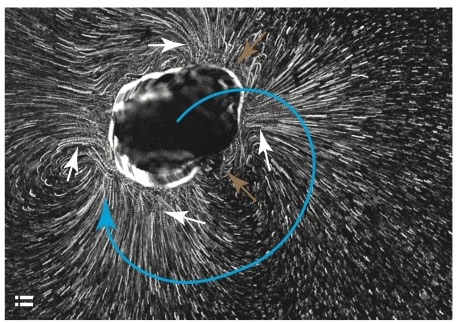
New preprint, memory in Xenobots! First round of our efforts to understand behavioral properties of novel beings (Xenobots, Anthrobots, and more). @pai_vaibhav , James A. Traer, Megan M. Sperry, Yuxin Zheng biorxiv.org/content/10.648… "Behavioral, Physiological, and Transcriptional Mechanisms of Memory in a Synthetic Living Construct" "Synthetic living constructs, which lack the long histories of selection in ecological contexts that shape behaviors of conventional organisms, offer an important complement to traditional studies of learning. Could novel biobots exhibit sensing and memory of experiences? Here, we investigated the effects of chemical stimuli on basal Xenobots – autonomously motile entities derived from Xenopus embryonic ectodermal explants (with no additional sculpting or bioengineering). We quantified and characterized the coordinated ciliary activity that generates fluid flow fields guiding the trajectory of Xenobot motion. We also show distinct and specific changes in Xenobot behavior after brief exposure to Xenopus embryonic cell extract and to ATP. These two experiences produced distinct, long-term, stimulus-specific memories, detectable through both transcriptional and physiological signatures. Exposure to specific environmental stimuli induced alterations in the spatiotemporal patterns of calcium signaling across Xenobots. Together, these data lay a foundation for characterizing the capabilities of synthetic cellular collectives to sense and discriminate among stimuli, as well as store functional information in a non-neural context. Understanding behavioral competencies in novel, non-neural systems have broad implications across evolutionary biology, behavioral science, bioengineering, and bio/hybrid robotics."
Michael Levin tweet mediaMichael Levin tweet media
English
27
109
540
32.5K
Steve P. retweetledi
jack
jack@jack·
this is excellent
sarah guo@saranormous

Caught up with @karpathy for a new @NoPriorsPod: on the phase shift in engineering, AI psychosis, claws, AutoResearch, the opportunity for a SETI-at-Home like movement in AI, the model landscape, and second order effects 02:55 - What Capability Limits Remain? 06:15 - What Mastery of Coding Agents Looks Like 11:16 - Second Order Effects of Coding Agents 15:51 - Why AutoResearch 22:45 - Relevant Skills in the AI Era 28:25 - Model Speciation 32:30 - Collaboration Surfaces for Humans and AI 37:28 - Analysis of Jobs Market Data 48:25 - Open vs. Closed Source Models 53:51 - Autonomous Robotics and Atoms 1:00:59 - MicroGPT and Agentic Education 1:05:40 - End Thoughts

English
83
224
3.1K
607K
Steve P.
Steve P.@SharesSteem·
@80strolls I mute aggressively for clickbait, misleading political posts (from both sides), and stale news repackaged as new. After some months of that, I see much less of those things in my feed.
English
1
0
1
17
Steve P.
Steve P.@SharesSteem·
Here's a blog post about my experience contributing to @GLOBEatNight last week. It's a "citizen science" initiative to measure light pollution around the world. The March campaign runs until Thursday. @remlaps/citizen-science-the-night-sky-in-south-eastern-pennsylvania" target="_blank" rel="nofollow noopener">steemit.com/popular-stem/@…
English
0
0
0
30
Steve P. retweetledi
templar
templar@tplr_ai·
We just completed the largest decentralised LLM pre-training run in history: Covenant-72B. Permissionless, on Bittensor subnet 3. 72B parameters. ~1.1T tokens. Commodity internet. No centralized cluster. No whitelist. Anyone with GPUs could join or leave freely. 1/n
English
217
934
6.2K
1.8M