

Shelli Tran
16.9K posts

Shelli Tran
@Shelli9357
Success is not final, failure is not fatal. It is the courage to continue that counts.
Katılım Ağustos 2010
1.5K Takip Edilen2.1K Takipçiler


@HuevaToi Làm thế nào nếu đăng ký trước đợi có kèo này thì có dc tính hợp lệ ko
Tiếng Việt

🔥 Kanga Exchange mở campaign Retroactive nhận thưởng cực dễ cho anh em trong cộng đồng đây!
Kèo này dành riêng cho ae đăng ký mới, vừa trải nghiệm vừa lụm nhẹ $3 đến $6 USDC về ví. Cực kỳ dễ thở cho ae newbie.
👉 Ae đăng ký tài khoản qua link này để được tính hợp lệ:
trade.kanga.global/a/XCPY0xEV
Các bước:
-Đăng ký tài khoản mới qua link ref trên.
-Deposit tối thiểu $5 USDC.
-Trade tối thiểu 1 lệnh Futures.
-Điền Form
Sau khi hoàn thành và được hệ thống verify ở cuối camaign, ae nhận ngay $3 USDC thẳng vào ví.
🎁 Đặc biệt (Phần thưởng Retention): Nếu trong vòng 30 ngày tiếp theo, ae làm thêm 3 lệnh Futures nữa thì được sàn back thêm $3 USDC nữa. Tổng cộng là $6 USDC.
⚠️ Lưu ý: Pool thưởng giới hạn tối đa 100 user đầu tiên cho mỗi cộng đồng nên ae nhanh tay nhé, cứ First-come, first-served
Hệ thống sẽ quét IP và thiết bị trùng lặp nên ae lưu ý không cheat/tut để tránh bị hủy thưởng.
👉 Ae làm xong xuôi thì nhớ điền form này để sàn verify và phát thưởng: forms.gle/bWmsxFHkJ8VFAA…
Tiếng Việt


@ha_inh24324 Cố lên Hana, mình biết em chắc chắn thành công đó
Tiếng Việt
@NxtCypher @cysic_xyz what kind of feedback are you looking for specifically
English

and here you have it!
for y’all with questions on how to setup cyops desktop…
@cysic_xyz intern dropped a tutorial and it takes <1 min.
if you got any feedback, drop ‘em in the comments.
i’ll be down there 👀
Cysic@cysic_xyz
Setting up CyOps Desktop takes less than a minute. 1. Open Models 2. Copy your API key from Cysic Serverless Inference 3. Paste it into CyOps Desktop 4. Save the provider You can also connect any OpenAI- or Anthropic-compatible provider. Tutorial 👇
English
@jaouad2d @NucleusCodes this sounds way more transparent than current recognition systems
English

Getting fair recognition for Web3 work often required knowing the right projects from the start.
@NucleusCodes lets users sign in with X to build a score from their on-chain history and discussions.
Blockchain activity counts without extra proof.
Community input factors in directly.
No sign-up forms or special invites needed.
This approach ties rewards to verifiable past efforts across the board.

English
@rakinaegz @clashoAi that's a really fair way to evaluate campaigns, not just about follower count
English

I've tried plenty of creator platforms, but most still reward reach more than results.
What caught my attention about @clashoAi is that campaigns are evaluated on actual performance, not just follower count. Seeing brands like Nike and Netflix run creator challenges makes it feel closer to a real marketplace than another content app.
I also like that there are participation rewards alongside leaderboard bonuses, so newer creators aren't automatically invisible. If the platform keeps rewarding impact over vanity metrics, it could become a much fairer way for creators to earn.
That's why I'm watching @clashoAi 's growth closely.

English

😋😋 Hủ Tiếu Nam Vang 👍👍
Một tô hủ tiếu Nam Vang nóng hổi với nước dùng thanh ngọt, sợi hủ tiếu dai mềm cùng đủ loại topping luôn là lựa chọn hoàn hảo cho những ngày thèm món ngon. 🍜
Nếu chỉ được chọn một món ăn sáng trong cả tuần, bạn sẽ chọn hủ tiếu Nam Vang hay món khác? 👇
💡 Mọi người thích ăn khô hay nước?

Tiếng Việt
@bizbrainzuni @bitget @bitgetvietnam tối ưu dòng vốn sau mua là điểm mạnh của rToken Bitget đúng không
Tiếng Việt

Thời thế giờ cũng nên phổ cập kiến thức crypto thường xuyên dù có chơi hay là không ae ạ!
Tiếp tục series tìm hiểu về rToken từ @bitget @bitgetvietnam
$rToken #Bitget đơn giản là cổ phiếu Mỹ thật được token hóa. Mỗi $rTSLA, $rGOOGL, $rINTC… đều 1:1 với cổ phiếu ngoài sàn. Hiện có hơn 500 mã.
Với slogan: 1 rToken – 3 giá trị sử dụng. Trong Unified Account, một token làm được 3 việc cùng lúc:
1. Giữ để hưởng tăng giá + cổ tức (nếu có)
2. Dùng làm margin futu hoặc đòn bẩy, collateral ratio lên 95%, không cần bán
3. Thế chấp vay $USDT/ $USDC lãi khoảng 2,13%
Dựa trên thông tin công khai, #Binance, #OKX, #Bybit cũng có sản phẩm tương tự nhưng chủ yếu tập trung vào giao dịch
Còn tất nhiên, mấy sàn VN thì khỏi nói rồi, cũng sẽ mất nhiều time tại vì còn quá mới và thậm chí chưa launch
rToken #Bitget khác ở chỗ tối ưu luôn dòng vốn sau khi mua: hold + margin + vay trong cùng tài khoản
Góc tuần Super Earning (22-23/7): 9 mã lớn thuộc 6 lĩnh vực báo cáo trong 2 ngày, biến động dự kiến mạnh
Thay vì bán để xoay vốn, anh em giữ rToken qua báo cáo để hưởng move. Hoặc vay lãi rẻ mua thêm exposure, BTC vẫn nằm nguyên.
Phân bổ ví dụ mẫu:
• rTSLA 20% – FSD + Robotaxi
• rINTC 20% – bán quá mức mạnh
• rGOOGL 15% – Cloud AI
• rIBM 10% – phục hồi
• rAAL 10% – du lịch hồi phục
• rRTX 10% – quốc phòng + hàng không
• rBX, rLMT, rNOK chia nhỏ 15% còn lại.
Thực tế: vốn không bị đóng băng, vừa giữ vị thế vừa có thanh khoản khi cần
Nhớ check phí, tỷ lệ collateral và rủi ro trên app. Tính khả dụng tùy khu vực
So sánh dựa thông tin công khai hiện tại. Và luôn nhớ NFA/ DYOR, đừng fomo dù bất kỳ lý do gì

Biz Brain@bizbrainzuni
Gì thì gì chứ riêng đầu tư, thanh khoản là yếu tố tiên quyết! Thanh khoản ko có thì mọi thứ sẽ đều vô nghĩa rToken là cổ Mỹ trên #Bitget là cái mình muốn nói đến Được token hóa, trade bằng $USDT, mỗi token bảo chứng 1:1 cổ thật Điểm khác biệt lớn nhất là thanh khoản thực và sâu, nối trực tiếp NASDAQ với NYSE chứ không phải mỏng do Market Maker tạo như nhiều RWA khác So với cổ phiếu truyền thống thì rToken tiện hơn cho ae crypto: khớp lệnh mượt, ít trượt giá, dễ dùng chung margin bot Cổ phiếu truyền thống: sở hữu thật nhưng chỉ giao dịch giờ Mỹ và phải nạp fiat riêng Thanh khoản sâu giúp vào thoát lệnh dễ dàng hơn khi thị trường biến động Vol cũng cao hơn hẳn, anh em vào lệnh thoải mái, đỡ lo slippage Nên nếu ae hay trade stock Mẽo dạng token thì thử rToken trên Bitget xem, khác biệt khá rõ Đặt vài lệnh nhỏ là thấy ngay anh em
Tiếng Việt


NEW: U.S. data centers are projected to consume ~20% of the country’s electricity by 2035, up from 5.9% today — Bloomberg
English
@Mario_we3 @CNPYNetwork what about security and scalability after launch though
English

Gm gm fam
AI and Blockchain.
Everyone talks about AI writing code.
Very few people ask what happen after the code is finished.
Deploying infrastructure, configuring networks, integrating wallets, explorers and analytics still slow builders down.
That's where @CNPYNetwork stands out.
Instead of only helping developers write software, it helps them launch blockchain products much faster with the core infrastructure already in place.
AI can build the application.
Canopy help bring it onchain.
That's a combination worth watching.

English
@HoruszZ Tôi cũng muốn biết bí quyết đầu tư của bạn như thế nào
Tiếng Việt

@Mayor_tech1 what kind of item can be flipped for a profit with just 4 dollars
English


@0xjtrade @CNPYNetwork So they're trying to solve the migration issue by allowing gradual sovereignty upgrades
English

One of the biggest hidden costs in crypto isn’t gas.
It’s migration
As applications grow, they often outgrow the infrastructure they started on, forcing expensive upgrades, ecosystem fragmentation, or complete rebuilds.
@CNPYNetwork is exploring a different path.
Start with shared security when you’re early.
Graduate to full sovereignty when you’re ready.
No starting over.
No rebuilding your entire stack.
No sacrificing ownership as your network evolves.
The goal isn’t just making it easier to launch a blockchain.
It’s making sure your infrastructure can evolve alongside your application instead of holding it back.
That’s a design philosophy worth paying attention to

English


@Tanaka_L2 @ProdigyFi so this is like selling a covered call but without the hassle of managing options positions
English

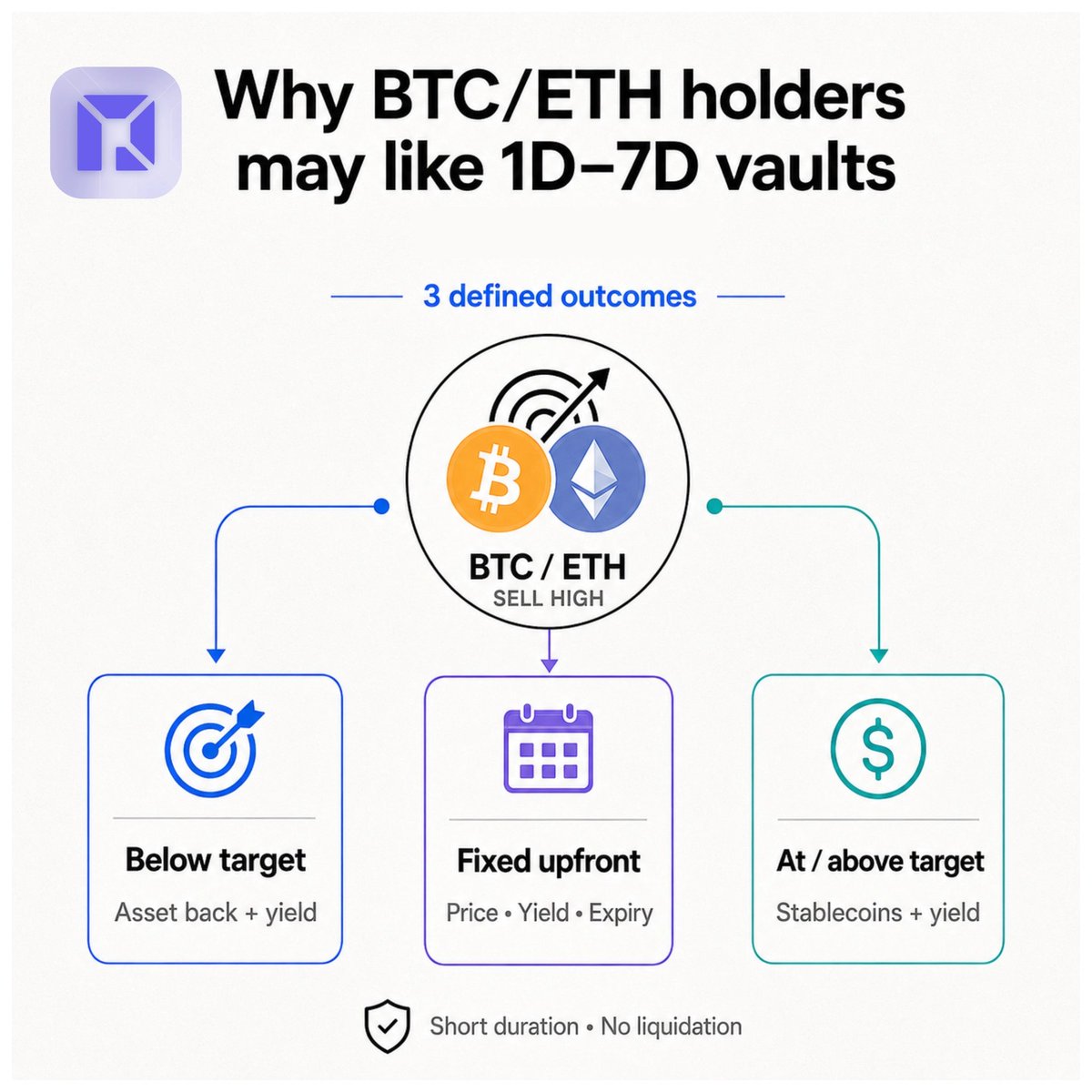
Why I think BTC/ETH holders may like 1D-7D vaults on @ProdigyFi
I’ve been looking at Prodigy’s dual-investment vaults, and the Sell High structure makes sense for a specific type of holder:
Someone who is long BTC or ETH, but would be willing to take profit at a predetermined price.
The setup is simple:
– Deposit WBTC, cbBTC or ETH.
– Select a linked price above spot.
– Lock in a fixed yield and expiry.
– Wait for settlement.
At expiry, there are two outcomes:
→ Price stays below the linked price → I receive my asset back plus yield.
→ Price finishes at or above it → my asset converts into stablecoins at the linked price, plus yield.
Economically, this is similar to selling a short-dated covered call, but packaged into a fully collateralized onchain vault.
Why do I prefer the 1D-7D range?
[1] I can earn on an asset I already plan to hold.
BTC and ETH generate no native cash flow from simply sitting in a wallet.
Prodigy lets me collect a volatility premium without lending the asset, providing LP liquidity or managing an options position.
[2] Short duration gives me more control.
I can roll the position after expiry, move the linked price as the market changes or stay out during an important macro event.
I would rather reassess the trade every few days than lock my BTC or ETH into the same structure for several weeks.
[3] Every outcome is defined before I deposit.
I know the linked price, expiry, yield and settlement conditions upfront. There is no variable APY, liquidation threshold or active rebalancing.
If my asset is converted, it happens at a price where I had already agreed to take profit.
The APY needs to be read correctly, though.
Prodigy annualizes the yield displayed for each vault. A 92% APY over 3 days and 6 hours is roughly a 0.82% actual return for that period.
For short vaults, I care more about:
– Absolute yield and distance from spot to the linked price.
– Probability of conversion & upcoming volatility events.
A higher APY usually means I am accepting a higher probability of being converted or a less favorable linked price.
It is compensation for taking the other side of a defined trade.
I also would not place my entire core position into Sell High vaults.
If ETH moves 20% above my linked price before expiry, I still sell at the linked price and miss the additional upside.
My approach would be to use a smaller, non-core allocation with linked prices where I would genuinely be comfortable taking profit.
It converts a manual options strategy into a short-duration onchain product with fixed terms, no liquidation and no position management.
For BTC and ETH holders who already have a clear take-profit level, the 1D-7D vaults can be a practical way to earn while waiting.
Tanaka@Tanaka_L2
My framework for choosing a Prodigy vault @ProdigyFi currently shows ETH vaults with annualized yields above 100%, and some short-expiry positions can display more than 400% APY. I never choose one from the APY alone. Prodigy vaults are structured yield products. The return comes from taking a defined settlement risk, not from lending or token incentives. The yield locks when I subscribe, but my final asset depends on the oracle price at expiry. Here is the framework I use: [1] I decide which asset I am willing to hold For a Buy Low vault, I deposit USDC and select an ETH linked price. If ETH settles below that price, my USDC is converted into ETH. If it settles above it, I retain USDC. The fixed yield is included in either outcome. I only enter when I am comfortable owning ETH at the linked price. For Sell High, I apply the same logic in reverse. I deposit ETH only when I am genuinely willing to sell it at the selected level. [2] I calculate the distance from spot In the example, ETH trades near $1,769.71. A $1,770 Buy Low vault is effectively at spot. The 420% displayed APY looks attractive, but the probability of conversion is also high. A $1,740 linked price gives roughly 1.7% downside distance. Its displayed APY is lower because I am accepting less immediate settlement risk. Higher yield usually means I am giving the other side more valuable protection. [3] I convert APY into the actual vault return A 420% APY on a four-hour vault does not mean I earn 420% in four hours. APY annualizes a very short period. I check the exact yield paid over the vault’s actual duration and measure that against the possible change in asset exposure. This removes most of the headline effect. [4] I match expiry with the market calendar I prefer short expiries when the market is stable and I want fast capital turnover. I reduce size or choose a wider linked price before: CPI and central-bank decisions. ETF or regulatory announcements. Major token unlocks. Protocol-specific catalysts. Weekends with weaker liquidity. Time matters because the same linked price can carry very different risk across four hours and fourteen days. [5] I compare the yield with expected volatility Prodigy V2 prices vaults using implied volatility and current risk conditions. This is why yields can rise sharply when the market expects larger moves. Once subscribed, the quoted yield is fixed for that vault. I compare linked-price distance, time to expiry, expected market move, actual tenor return, and probability that I will be converted. A high APY is useful only when the premium adequately compensates me for the exposure I am taking. [6] I calculate my effective entry or exit For Buy Low, the yield reduces my effective ETH acquisition cost. For Sell High, it increases my effective sale value. That is the number I compare with my own valuation levels, not the linked price by itself. If I would not buy ETH at the yield-adjusted cost without the vault, I do not subscribe. [7] I size for the conversion outcome I treat every Buy Low vault as a pending limit order and every Sell High vault as a pending take-profit order. I size the position under the assumption that conversion will happen. I also stagger linked prices and expiries instead of committing the entire allocation to one vault. This limits timing risk and preserves capital for better opportunities. My final decision comes down to one test: Would I still accept this trade if the APY were hidden and only the 2 settlement outcomes were shown? If the answer is yes, the vault fits my portfolio. If the yield is the only attractive part, I pass.
English
Gian phòng làm việc đẳng cấp của lực lượng An ninh mạng VN.
Đây sẽ là nơi khui ra những ai shill coin úp bô anh em sắp tới đấy nhé.

Tiếng Việt


@derrelreyhan @NucleusCodes That sounds like a pretty radical shift from traditional data management models tbh
English

The future of AI will not only depend on better models, but also on how we manage data, ownership, and collaboration.
Today, much of the value created by data flows into centralized systems, leaving contributors with limited control and participation.
@NucleusCodes is exploring a different direction by focusing on decentralized coordination, where data and intelligence can become more connected with the people contributing to the ecosystem.
Not closed data silos, but a more open framework for collaboration.
As AI continues to evolve, sustainable systems with aligned incentives and fair participation will become increasingly important for real world adoption.

English