Shinobi
210 posts


Shinobi
@ShinobiShiller
this is an old/alt account now @nicodotfun



We're unveiling our chosen participants for November's Gas Grant Program! ✨ This initiative supports projects with gas fee incentives and aims to fuel their growth in our ecosystem. bnbchain.org/en/blog/gas-gr…
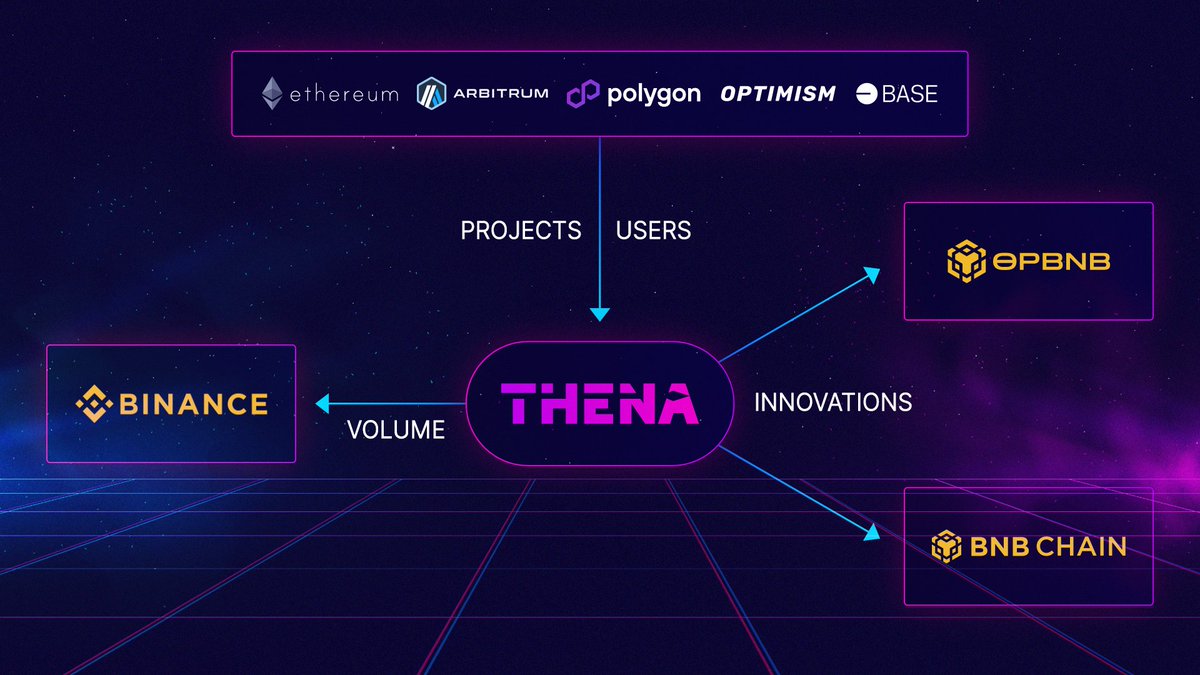
Intents are going to take decentralized trading by storm Here’s how you can use them to save money 👇 With an intent-based architecture in DeFi, Solvers play the role of your personal travel agent, thinking up clever ways to fulfill your various trade requests The best part? Unlike a real-life travel agent, this actually saves you money With intents, all you need to do is say something like, “I want to buy 0.1 ether at a maximum price of $180,” and a swarm of Solvers jump into action, competing to execute your order at the best possible rates Solvers source liquidity from onchain & offchain sources, finding the most cost-effective & efficient way to fulfill your request This is a significant improvement in the user experience for those involved in crypto transactions & is a step toward increasing onchain activity AMMs have worked well enough thus far, but with the evolution of DeFi sufficiently underway, the shortcomings of AMMs have become all too obvious Toxic order flow and impermanent loss make it difficult for retail users to come out ahead vAMMs and CLOBs Virtual AMMs (vAMMs) and Central Limit Order Books (CLOBs) emerged as alternatives to the vanilla AMM, each with its own selling points vAMMs allow liquidity providers to act as the counterparty to traders Traders can leverage trade against the isolated liquidity pools with guaranteed execution and predictable slippage – a nice upgrade over the basic AMM The big drawback of vAMMs, outside of liquidity constraints and the diminutiveness of tradable assets, is the reliance on oracle price feeds CLOBs seem like an apparent eventuality for onchain trading After all, they are the go-to architecture for trading both digital assets & traditional securities on centralized platforms They also offer true internal price discovery, which can’t be said of the vAMM design Sounds nice, right? But when we try to construct a CLOB onchain, we run into some hurdles Centralized order books, like on Binance, don’t have to worry about gas fees or 12-second block times, which all but squash CLOBS on Ethereum Even on high-TPS chains such as Solana, the 400 ms block times are a snail's pace when Binance is ordering millions of transactions per second Projects such as dYdX have taken the approach of creating their own application-specific blockchains in pursuit of the CLOB dream - but it doesn't come for free In order to achieve a CEX-like CLOB experience, blockchains would have to become increasingly centralized, either relying on enterprise-level computing infrastructure and/or moving order matching offchain Both of these paths are being investigated, but neither sits quite well with the decentralization-maxis among us If only there were a way to achieve the coveted CEX-like experience on-chain without having to compromise on the hardware and infrastructure requirements… Intents & RFQ Apps that utilize an Intent-based architecture offer their users a powerful way to express their preferences and then rely on Solvers, often referred to as "searchers," "fillers," or Market Makers, to fulfill those preferences These "intents" can range from the straightforward, such as "I want to swap 1 ETH for at least 1600 USDC," to the highly complex, like "I want to take a 10x leveraged short position on UNI on the mainnet, using AVAX on Avalanche as collateral" The possibilities truly are endless Now, before we dive into the technical nitty-gritty, it's important to distinguish between Intent-based and Request for Quote (RFQ)-based designs RFQ is a specific category of intent where users request a price quote from the protocol, and Solvers, often Market Makers, compete to provide the best quote The user can then choose to accept or reject these quotes In the realm of RFQ, Solvers are typically recognized (whitelisted) entities that are authorized to generate quotes for users An intent-based design basically allows all liquidity to be accessible onchain, whether liquidity is sourced from: - A centralized exchange (e.g., Binance or Coinbase) - A decentralized exchange (e.g., Uniswap or Curve) - An over-the-counter (OTC) desk - A filler's inventory It doesn't matter -- a Solver can utilize it for liquidity Think of Solvers as digital asset liquidity aggregators, and where substantial liquidity exists, users can expect better price execution Let's take UniswapX's architecture as an example of how this works in practice A user wishing to sell their ETH sends a trade through UniswapX, which then opens up an auction to fill their order This is notably different from a standard Uniswap order because now, Solvers aren't limited to pools within Uniswap but could use a Balancer pool, a Coinbase market, an OTC desk, or just fill from their own inventory of USDC to make the swap - Before: sell_price = max(Uniswap pools) - After: sell_price = max(All DEXs, CEXs, OTC, etc.) You could even imagine scenarios where Solvers would be incentivized to undercut their competition This scenario would never play out naturally on a DEX before intents Moving price discovery onchain Today, price discovery for major digital assets is confined to centralized exchanges, namely Binance It is a chicken-and-egg dilemma since market makers (who facilitate the price discovery process) are encouraged to use the marketplace with the most liquidity And where does the liquidity come from? The market makers themselves, of course David mentioned in his "5 Big Questions" article that "if decentralized systems are going to 'win,' we need that trophy" of price discovery to take place onchain Intents offer a new solution With intent-based DEXs, market makers can leverage any source of liquidity, which opens their aperture of potential money-making strategies – a provable improvement over being limited to centralized exchanges So, while it is likely true that early iterations of intent-based DEXs will source most liquidity and price discovery from CEXs… This is only the beginning Long-tail assets (i.e., tokens outside of the top 50) already house most of their liquidity onchain Now, with intent-based markets being housed and run on crypto rails, price discovery can start shifting more and more toward decentralized arenas Moving towards further abstraction DeFi, no doubt, is a labyrinth of complexity Expecting your Aunt Cheryl to effortlessly start swapping tokens in this world is like asking someone to build a rocket from scratch There are formidable hurdles that need to be broken down before we can truly open the doors to the masses Enter "Intents" These nifty innovations take the complexity burden off the user's shoulders and place it squarely on the backs of sophisticated market makers These market wizards are motivated by incentives to provide users with the best prices, essentially acting as the DeFi guides that your Aunt Cheryl (and countless others) desperately need Alongside this, technologies like Intents and ERC-4337 Account Abstraction wallets are diligently working to lay down the infrastructure for the next billion crypto users It's incredibly heartening to see a plethora of teams enthusiastically forging the path towards an intent-based future We've got the likes of @CoWSwap, @Uniswap X, and @1inch Fusion, focusing on spot trading @thenafi, @IntentX_, and @pear_protocol are diving headfirst into the world of derivatives Flashbot's SUAVE is busy taming the ever-elusive Maximal Extractable Value (MEV), while @anoma, @symm_io, and @portals_fi are busy bolstering intent-based infrastructure The enthusiasm for this new DeFi primitive is nothing short of exhilarating Now, let's face it The DeFi aficionados among us might find joy in juggling multiple wallets, hopping across bridges, and seamlessly navigating through a maze of DEXs and lending platforms But they are the exception, not the rule For the majority, especially those outside the crypto inner circle, the tech that simplifies their user experience isn't just a nice bonus; it's an absolute necessity If we genuinely aspire to see mainstream adoption of these powerful tools, user-friendly technology is the name of the game So, what's the deal with Intents? Can they single-handedly solve the liquidity fragmentation issues plaguing digital assets? Well, that's a question only time can answer But one thing's for sure: we're absolutely pumped about their potential These innovations have the promise to not only simplify the DeFi landscape but also bring it within reach of those who've been standing at the threshold, waiting for an invitation Article by @563defi
The $COIN Bull Case 📈 Even though it's down 80% from ATHs, we believe $COIN will be a major beneficiary going into the next bull market... Let's dive into our thesis... 🧵 👇


Christmas came early as @fraxfinance dropped $sFRAX today with a 10% initial APY🤑 In 12 hours, 100 users have staked $24M+ including heavyweights like fraximaxi.eth, @C2tP, and @0xSifu, with one whale depositing $5M📈 Follow along in my Dune dashboard: dune.com/stablescarab/s…
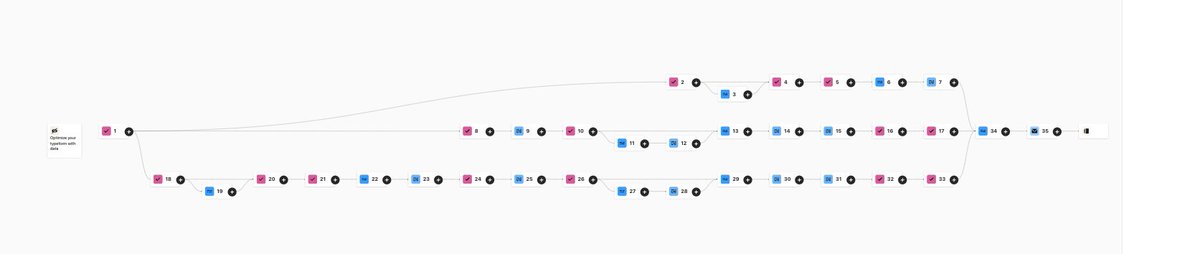
How many Projects whose users you will be able to target 🎯 with Pr3sence. 👀 Also input a custom contract to target if its not supported, and once you do, it will be added to our system for other to also take advantage of. 💪



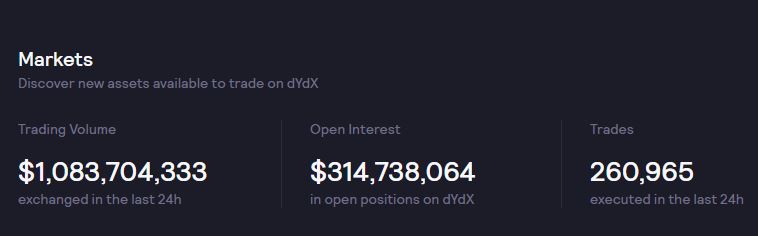

Good morning everyone, I'm going on a weekend cruise today, so I won't be as available. I usually don't trade on weekends, so that's fine. Yesterday, we posted a potential short. And we got a $300 move from $btc no biggi! There is some liquidation at 27,500$, which could be the target today before they pull the price down again. Have a nice day everyone!