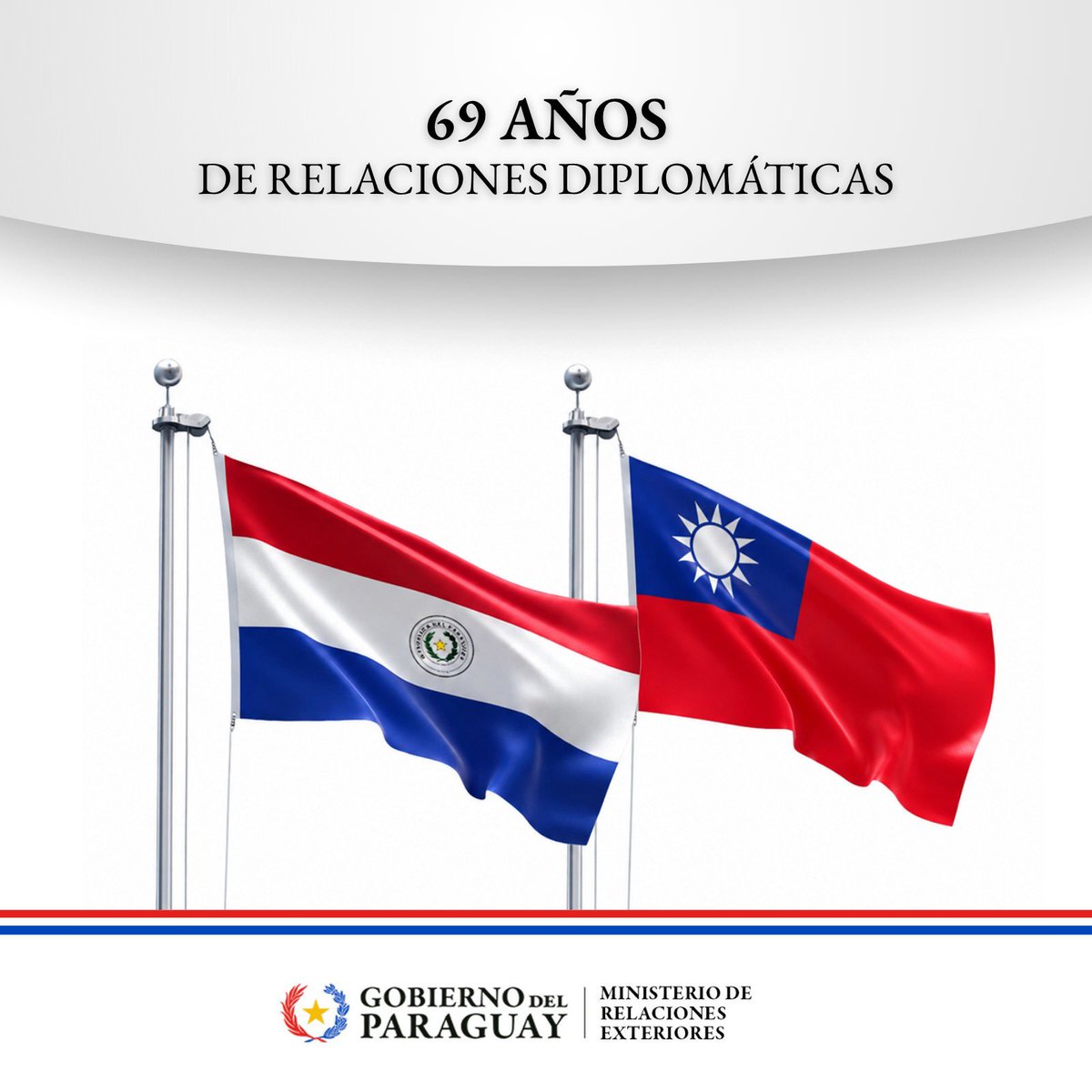
Hoy conmemoramos 69 años de una relación de hermandad y cooperación con la República de China (Taiwán), una sólida alianza que se sustenta en principios compartidos y en el firme compromiso de trabajar juntos por el bienestar de nuestros pueblos.
en.wikipedia.org/wiki/Jinan_inc…
China engages in a despicable, ceaseless, and relentless campaign to spread negative publicity about Japan worldwide. China will tell any lie to disparage Japan!
July 7, 1937—a date from seventy years ago—marks an incident orchestrated by the Chinese Communist Party to provoke a conflict between Japan and the then-ruling Kuomintang government.
Japan had no strategy to initiate a war prior to the incident. At the time, the total strength of Chinese forces around Beijing was approximately 153,000 troops, whereas the Japanese garrison consisted of a mere 5,600 soldiers. How, then, could Japan possibly have been preparing for an invasion?
It was only after several weeks—or in some cases, more than a month—had passed since the outbreak of the Marco Polo Bridge Incident that Japan finally made the reluctant decision to engage in hostilities.
They are completely unaware of the truth. China consistently and relentlessly portrays Japan as the villain, engaging in persistent and unending anti-Japanese propaganda.
Incidents occurred in China in which Japanese people were massacred by Chinese civilians or the Chinese military with a level of brutality that defies Japanese sensibilities. These incidents are known as the Jinan Incident and the Tongzhou Incident.
photograph of a Japanese woman—who was subjected to an exceptionally brutal massacre at the hands of Chinese criminals during the Jinan Incident—is currently being utilized as evidentiary proof to substantiate the atrocities committed by the Japanese military's Unit 731. ❗❗❗
The victim depicted in the image is wearing *tabi*—traditional Japanese split-toe socks. This body is, beyond any doubt, that of a Japanese person. wear the *tabi* worn by the Japanese, nor do they wear Japanese kimonos; this is just as true as the fact that Japanese people—unless acting as spies—do not wear Chinese clothing.
The Jinan Incident and the Tongzhou Incident actually occurred; in these events, Japanese people were brutally massacred by Chinese forces.
Shockingly, photographs of the bodies of these Japanese victims are frequently misappropriated as evidence of war crimes—such as human experimentation—allegedly committed by the Japanese military's "Unit 731."
However, the bodies in these photos are wearing *tabi*—traditional Japanese socks worn exclusively by Japanese people. The victim in question was a Japanese woman brutally murdered in China during the 1928 Jinan Incident.
Her name was Kin Tojo; she was 24 years old at the time. She was killed by Chinese soldiers during the Jinan Incident, and the manner of her death was utterly horrific: her arms were severed, her breasts were gouged out, her abdomen was slashed open, and her genitals were pierced.
As a Japanese person myself, I have never once read about such methods of killing in Japanese history textbooks. These acts are not part of Japanese tradition; they are unimaginable atrocities that are completely incompatible with the Japanese sensibility. Astonishingly, photographs of Japanese victims from these incidents are being used as evidence for the "Nanjing Incident"—allegedly perpetrated by the Japanese military—and for human experiments conducted by Unit 731.
Chinese perpetrators killed Japanese people using barbaric and cruel methods that defy all imagination—methods utterly alien to Japanese traditions and sensibilities. This gave rise to a grim lesson in Japan: if one were to be captured by the Chinese and subjected to unspeakable atrocities and excruciating suffering, it was better to choose suicide beforehand. It embodies the adage of dying rather than enduring the humiliation of captivity.
89 years ago on this day, Japan launched their full scale invasion of China. Their aim was genocide.
89 years later, most Japanese are still not acknowledging the genocidal nature of their war. Many Japanese call the war. "The China incident".
The idea of portraying Japan as the victims of World War 2 seem preposterous for any person with a brain, but this is the mainstream view in Japan, in public at least. They may be smart enough to know this is total nonsense, but in public they either feign ignorance, or outright lie about the war their country had started.