Signal to Alpha

294 posts

Signal to Alpha banner
Signal to Alpha

Signal to Alpha

@SignalToAlpha

AI • Tech • Productivity Turning signals into clarity ✨

Katılım Eylül 2025
458 Takip Edilen50 Takipçiler
Signal to Alpha
Signal to Alpha@SignalToAlpha·
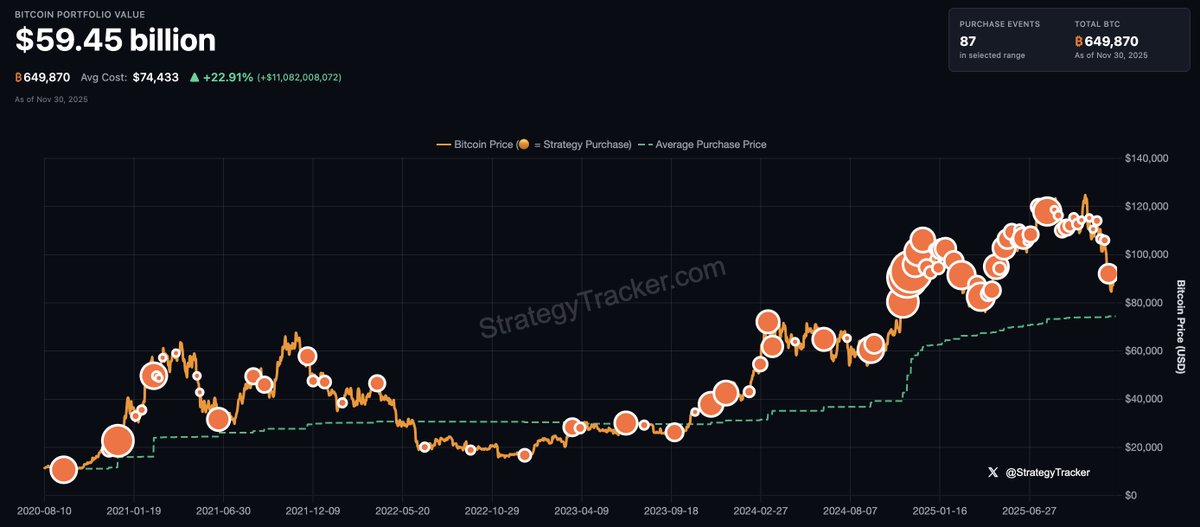
Strategy: Attack with BTC, Defend with USD 🛡️⚔️ $1.44B cash cushion secured while continuing BTC accumulation at 650K (3.1% of total supply). Acknowledging volatility (BTC $85-110K assumption), but no compromise on targets (BTC Yield 22-26%). This is what Treasury Company maturity looks like.​​​​​​​​​​​​​​​​ assets.contentstack.io/v3/assets/bltf…
English

0
0
0
26
Michael Saylor
Michael Saylor@saylor·
What if we start adding green dots?
Michael Saylor tweet media
English
3.4K
1.7K
18.9K
6.7M
🇿🇦Mathapelo
🇿🇦Mathapelo@SalimoAnne·
Up and Grateful Say Hi 👋 Lets Connect"
English
627
73
357
19.1K
Signal to Alpha retweetledi
IREN
IREN@IREN_Ltd·
$IREN is pleased to announce the signing of a $9.7bn AI Cloud contract with @Microsoft Key details of the transaction: - $9.7bn AI Cloud contract value - 5-year average term - 20% prepayment - 200MW (IT load) data centers - NVIDIA GB300 GPU deployments Refer to the press release and accompanying presentation below for further information Press Release: iren.gcs-web.com/static-files/0… Presentation: iren.gcs-web.com/static-files/a…
IREN tweet media
English
293
1.2K
6.9K
1.7M
Signal to Alpha
Signal to Alpha@SignalToAlpha·
Chapter 11: Conclusion - Follow the Currencies What looked like random Asian currency volatility was actually: A structured symptom of China’s offshore dollar shortage, using regional markets as emergency funding channels. The sequence: 1.China’s traditional dollar pipelines constricted 2.Emergency channels opened through Korea/Singapore/Taiwan 3.Created currency weakness despite capital inflows 4.U.S. detected the pattern 5.APEC signaled temporary tolerance 6.Markets stabilized immediately But the underlying structure remains: •China still needs dollars ✓ •Traditional channels still limited ✓ •Asian markets still serving as infrastructure ✓ •U.S. policy still controls the valve ✓ The big question: Is this sustainable or just buying time? Watch the coming anomaly: When you see “foreign outflows” but currency strength in Korea, Singapore, and Taiwan—that’s your signal that China’s liquidity situation is normalizing. Until then, remember: Asia’s FX markets are telling us more about U.S.-China financial relations than any official statement. Follow the currencies. They reveal what the diplomatic cables conceal. End of thread. What’s your take? Are markets correctly pricing China’s offshore dollar risks, or is there still an information gap? Drop your thoughts below. 👇
English
0
0
0
31
Signal to Alpha
Signal to Alpha@SignalToAlpha·
Chapter 10: Investment & Policy Implications For U.S. investors: Asian FX markets now embed a China liquidity risk premium invisible to conventional models. What to monitor: 🔍 Currency-Flow DivergenceWhen capital flows and FX moves decouple = China factor active 🔍 Synchronized MovesKRW, SGD, TWD moving together = China liquidity signalIdiosyncratic moves = local factors 🔍 China Dollar Stress Indicators •PBOC reserve shifts •CNH offshore spreads •Hong Kong dollar pressures 🔍 Policy StatementsU.S.-China bilaterals mentioning these countries = market-moving events Traditional Asia FX analysis is now incomplete without the China liquidity overlay. For U.S. policymakers: This reveals uncomfortable truths about financial leverage: The leverage reality: •U.S. controls dollar liquidity = leverage over China ✓ •But China’s dollar needs run through U.S. allies ✗ •Can’t isolate China without destabilizing partners ✗ The policy trilemma: You can’t simultaneously have: 1.Financial pressure on China 2.Stable allied financial markets 3.Unregulated cross-border flows Pick two. APEC showed Washington choosing #1 and #2—which means accepting some murky flows through #3. This is complex financial statecraft, not simple decoupling.
English
1
0
0
35
Signal to Alpha
Signal to Alpha@SignalToAlpha·
Chapter 1: Introduction - Something’s Wrong in Asia Thread: Asian Currency Crisis Decoded 🧵 Recent weeks saw synchronized currency weakness across South Korea, Singapore, and Taiwan—three of Asia’s strongest economies. But here’s what makes this unusual: All three saw heavy foreign capital inflows while their currencies weakened. That shouldn’t happen. Ever. This thread explains what’s really going on—and why it matters for U.S. investors and policymakers. Spoiler: It’s not about Japan. It’s about China’s hidden dollar crisis using Asian markets as emergency ATMs. Let’s dig in. 👇
English
1
0
0
92
Signal to Alpha
Signal to Alpha@SignalToAlpha·
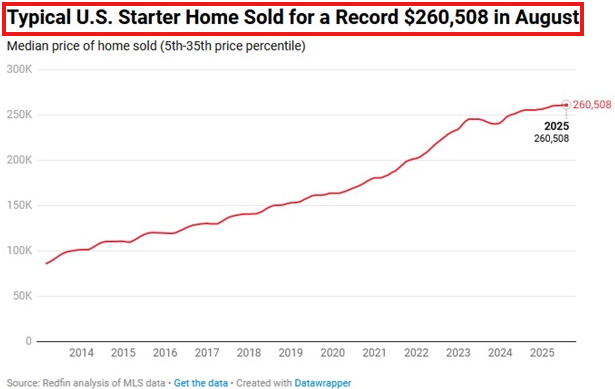
@KobeissiLetter Cheapest homes at record high = First rung of ladder is highest Mid/high homes not selling Starter homes 12 months straight growth This isn’t choice. This is desperation.
English
0
0
0
83
The Kobeissi Letter
The Kobeissi Letter@KobeissiLetter·
Starter homes have never been more expensive: The median sale price of a typical starter home rose +2.2% YoY in August, to a record $260,508. Meanwhile, prices for mid- and high-priced homes increased +1.4% and +2.7%, to near all-time highs of $370,000 and $575,000, respectively. This comes as starter-home sales grew +3.8%, to the highest August level in 3 years. This also marked the 12th consecutive monthly increase in sales. By comparison, sales of mid- and high-priced homes declined -0.6% and -1.2%, respectively. Housing affordability is at record lows.
The Kobeissi Letter tweet media
English
68
84
655
112.4K
Signal to Alpha
Signal to Alpha@SignalToAlpha·
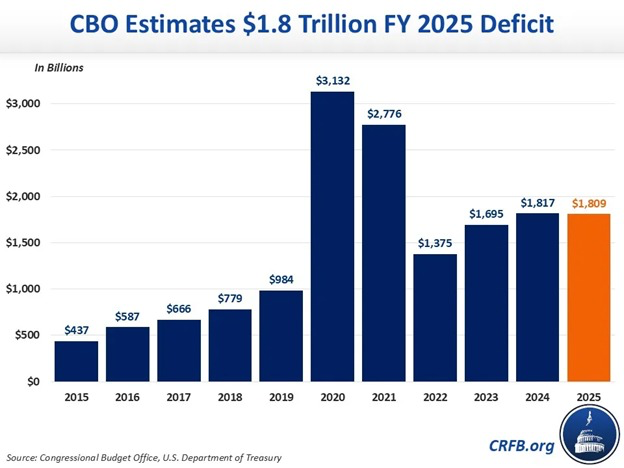
@KobeissiLetter Peacetime record deficit = System failure Interest alone $1T = Entire defense budget level = 3.5% GDP Borrowing to pay debt Borrowing to pay interest Nation-state Ponzi.
English
0
0
0
49
The Kobeissi Letter
The Kobeissi Letter@KobeissiLetter·
BREAKING: The US federal deficit reached $1.8 trillion in FY2025, according to CBO estimates. This equals 6.0% of GDP, one of the highest readings outside of WWII, the 2008 Financial Crisis, and the 2020 Pandemic. It marks the 4th-largest budget gap on record, behind the $3.1 trillion and $2.8 trillion deficits during the pandemic response in 2020 and 2021. Interest payments alone rose by +$80 billion, surpassing $1 trillion for the full year for the first time in history. The US debt crisis has reached another level.
The Kobeissi Letter tweet media
English
122
351
1.3K
178.1K
Signal to Alpha
Signal to Alpha@SignalToAlpha·
@KobeissiLetter During shutdown everything stops CPI released exactly 5 days before Fed meeting •Friday release (first in 7 years) •‘Bullish’ speculation circulating This isn’t transparency. It’s theater.
English
0
0
0
393
The Kobeissi Letter
The Kobeissi Letter@KobeissiLetter·
Something unusual is happening this week: On Friday, we are receiving CPI inflation data DURING the US government shutdown. Not only is it 5 days before the October 29th Fed meeting, but it is the first time CPI data will be reported on a Friday since January 2018. The Labor Department has said that NO OTHER releases will be rescheduled or produced until the shutdown ends. This comes during a highly pivotal time for the Fed as they debate whether to continue rate cuts or not. This is drawing speculation of a "bullish" September CPI report. What's happening here?
English
173
436
3.7K
615K