
@MattMorseTV If you believe what Trump says you’re retarded
- Trump supporter
English
Nico⚡(𝔦, 𝔦)
6.4K posts

@Simulacra333
Entrepreneur & Investor | Always learning. Don’t be normal, don’t be average 🇵🇾🌞 Getting wrecked in crypto since 17’






We flew to Africa to film a music video with a couple. Only thing… we didn’t actually fly to Africa







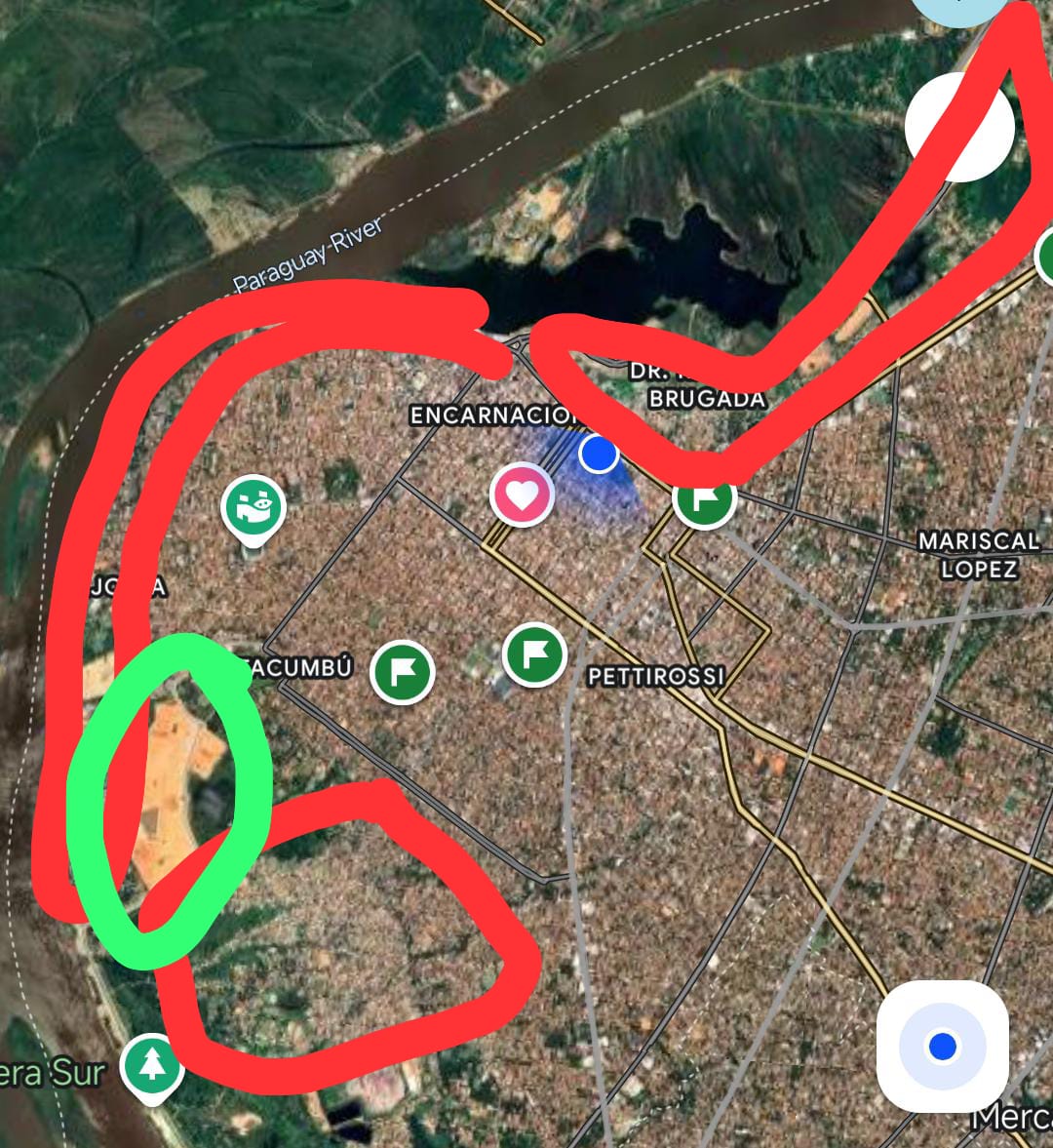
Robar del pueblo trabajador para regalar a vagos y delincuentes. Resultado: fealdad, inseguridad, injusticia. Y esto sería un partido antisocialista? Que queme en el infierno para siempre quien intenta destruir paz y belleza.

Today we're introducing TRIBE v2 (Trimodal Brain Encoder), a foundation model trained to predict how the human brain responds to almost any sight or sound. Building on our Algonauts 2025 award-winning architecture, TRIBE v2 draws on 500+ hours of fMRI recordings from 700+ people to create a digital twin of neural activity and enable zero-shot predictions for new subjects, languages, and tasks. Try the demo and learn more here: go.meta.me/tribe2

Andrej, I’m John Fletcher. I have a PhD in mathematics and theoretical physics from Cambridge, and since 2016 I have been working full-time on the problem of how to coordinate untrusted distributed compute for algorithmic innovation. I listened to your No Priors conversation and recognised the architecture you were describing: commits that build on each other, computational asymmetry (hard to find, cheap to verify), an untrusted pool of workers collaborating through a blockchain-like structure. The result is The Innovation Game (TIG), which has been in continuous operation since mid-2024. The correspondence is so close that I thought it worth writing. The short version: roughly 7,000 Benchmarkers test algorithms submitted by Innovators by solving instances of asymmetric computational challenges (SAT, Vehicle Routing, Quadratic Knapsack, Vector Search, among others). This testing is "proof of work" in the technical sense of Dwork and Naor (1992). Innovators earn rewards proportional to adoption by the Benchmarkers. The repository of algorithms is open source (github.com/tig-foundation…). The system is already producing state-of-the-art results. For the Quadratic Knapsack Problem, 476 iterative submissions by independent contributors brought solution quality to a level that now exceeds methods published by Hochbaum et al. in the European Journal of Operational Research (2025). We are working with Thibaut Vidal (Polytechnique Montréal), who has submitted a state-of-the-art vehicle routing algorithm directly to TIG, and with Yuji Nakatsukasa (Oxford) and Dario Paccagnan (Imperial College London), among many others. One of TIG’s active challenges is directly relevant to your autoresearch work: an optimiser for neural network training (play.tig.foundation/challenges?cha…), where Innovators compete to develop an improved optimiser (see screenshot). One way in which TIG extends the vision is on the economic side. In our view, a monetary incentive is required, otherwise the open strand simply cannot compete at scale. TIG’s open source dual licensing model (designed by my co-founder Philip David, who was General Counsel at Arm Holdings for over a decade, and was the artchitect of ARMs licensing strategy) is intended to solve that problem. I expect we have each thought about parts of this that the other hasn’t. Happy to talk whenever suits. John Fletcher tig.foundation