
Rushil
95 posts



Can someone tell me how to make this type of animation, is it using svg ?
Using this new agent in ClickUp you can totally leapfrog the IDE, Cursor, Claude Code... Codegen is now available in ClickUp. "Hey @codegen, fix this bug" - me "PR submitted & ready for review!" - Codegen "Sweet, ship it" - me We've always believed that the future of AI value will be realized in horizontal software - today is a huge realization of this vision. Real example: This week our customer support reps started fixing features in real time. Product managers are now prototyping features themselves. You can mention @Codegen or assign a task, and all of the optimized context is passed to the Agent to solve bugs and ship improvements with one shot. Available for everyone today.

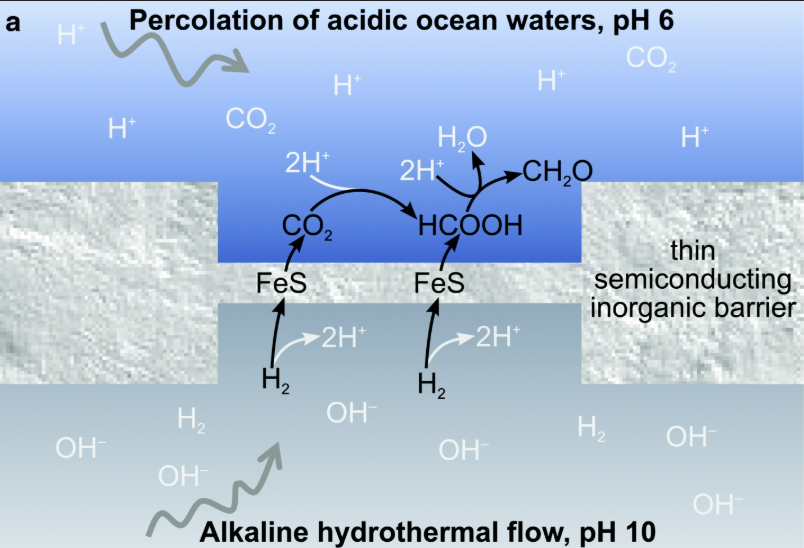


Notes from Chapter 1 of The Vital Question by future guest Nick Lane. In the intro he lists out the motivating questions: Why are bacteria so relatively simple despite being around for 4 billion years? Why is there so much shared structure between all eukaryotic cells despite the enormous morphological variety between animals, plants, fungi, and protists? Why did the endosymbiosis event that led to eukaryotes happen only once, and in the particular way that it did? And why is all life powered by proton gradients? Nick says all these questions are connected. Chapter 1: Lane says there’s 2 different philosophies on what bottlenecks evolutionary exploration: the niches made available by the environment, OR the internal structure necessary to exploit those niches. Textbook view is that the environment constrains exploration, whereas structure is flexible and can accommodate once the right environment is in place. Nick Lane thinks it’s the opposite. There’s been 2 big oxidation events - the first one (2.4 billion years ago) paved the way for eukaryotic cells. The second one (600 million years ago) led to the Cambrian explosion, resulting in all the variety in animals and plants and other complex life we see. So it seems the environment is central. Once you get a bunch of oxygen up in the air and into the oceans, you can start making all kinds of cool shit. But hold on. Here's what you'd expect to see if the environment was the key constraint: With this key unlock of aerobic respiration, different brands of bacteria independently evolve towards greater complexity to fill the new niches opened up (one masters osmotrophy and branches off into fungi, another photosynthesis, another phagocytosis, etc). However, you don’t see this. Instead you see that all complex life emerges from a single common eukaryotic ancestor (2.2 billion years ago). There is no independent convergent evolution towards this kind of complexity (bacteria have had 4 billion years to evolve this kind of complexity, and have stayed remarkably similar through the whole time). In fact, once you do get this key structural unlock, eukaryotic organisms proliferate widely, filling niches ranging from 100 feet long blue whales to 0.8 meter long picoplankton. What’s more: - The amount of shared structure between all eukaryotic cells is remarkable. They have almost all the same organelles and components. Nick writes: “Most of us couldn’t distinguish between a plant cell, a kidney cell and a protist from the local pond down the electron microscope.” - There’s no intermediate proto-eukaryotes, which have some, but not all, of the functionality available to eukaryotic cells. This is wild given how evolution works. We have an extensive record of the incremental upgrades between photoreceptive amoebas and mammalian eyes. Why don’t we have proto-eukaryotic cells which reproduce via meiosis but don’t have compartmentalized nucleuses, or have mitochondria but no cytoskeleton? Nick argues that the fact that no such subset of eukaryotic traits exists suggests that it is not structurally possible to survive with only some fraction of eukaryotic equipment - you need the whole package all at once. Obviously this raised the question of how the whole package was evolved at once. Which I think he will address in future chapters. Some questions for Nick: - If his view is that structure was the main bottleneck, and we’ve had eukaryotes for 2.2 billion years, then why didn't we have all these animals and shit for 2 billion years? Why did they only arise 600 million years ago (aka the Cambrian explosion)? - Nick argues that eukaryotic cells are a much more significant unlock than multi-cellularity. Multi-cellularity evolved independently dozens of times, but we only have evidence of one event like the emergence of the first eukaryotic cell. If multi-cellularity evolved independently so many times (between fungi, slime molds, algae, etc etc), do we see interesting differences based on the situations in which they evolved? Do they regulate the differentiation of cells, the organization of the body differently, and communication between tissues differently? TODO look it up later. A tangential thought. This whole debate about whether structure or environment matters more seems analogous to the discussion in ML of whether architecture or data matters more. And there it seems like data is quite crucial, but for meta-learning and generality to kick off, the architecture has to make it possible for information to flow in the right way. For example, in context learning is a kind of meta-learning that arises only once the model has the capability to attend to hundreds of previous tokens, which became tractable with transformers.



We recently started using @codegen to go straight from a PR in @linear to production in @AgreeHQ — it's one of the most incredible things to watch live. We started by seeing if we could knock-off one of our longest outstanding low-hanging feature requests, "Login with Microsoft 360" ... and, it did it in under 45-seconds!




Example: PR: github.com/outline/outlin… Bundle size: -5.28% initial JS loaded app.relative-ci.com/projects/TMquf… Build: 47.27s -> 5.40s (8.8x faster!) Installing deps now takes longer than the actual build 😂
Video to PR in minutes @Codegen now supports video! - Attach a video in Slack or Linear - @codegen uses @GeminiApp to extract insights from the video - @codegen crushes UI bugs on your behalf Cheers
