@andrewchen Honestly who cares about the difference though?
Just make something your users want. Don’t force AI because of your anxiety.
English
SocialFi Panda
1.1K posts


There have recently been some discussions on the ongoing role of L2s in the Ethereum ecosystem, especially in the face of two facts: * L2s' progress to stage 2 (and, secondarily, on interop) has been far slower and more difficult than originally expected * L1 itself is scaling, fees are very low, and gaslimits are projected to increase greatly in 2026 Both of these facts, for their own separate reasons, mean that the original vision of L2s and their role in Ethereum no longer makes sense, and we need a new path. First, let us recap the original vision. Ethereum needs to scale. The definition of "Ethereum scaling" is the existence of large quantities of block space that is backed by the full faith and credit of Ethereum - that is, block space where, if you do things (including with ETH) inside that block space, your activities are guaranteed to be valid, uncensored, unreverted, untouched, as long as Ethereum itself functions. If you create a 10000 TPS EVM where its connection to L1 is mediated by a multisig bridge, then you are not scaling Ethereum. This vision no longer makes sense. L1 does not need L2s to be "branded shards", because L1 is itself scaling. And L2s are not able or willing to satisfy the properties that a true "branded shard" would require. I've even seen at least one explicitly saying that they may never want to go beyond stage 1, not just for technical reasons around ZK-EVM safety, but also because their customers' regulatory needs require them to have ultimate control. This may be doing the right thing for your customers. But it should be obvious that if you are doing this, then you are not "scaling Ethereum" in the sense meant by the rollup-centric roadmap. But that's fine! it's fine because Ethereum itself is now scaling directly on L1, with large planned increases to its gas limit this year and the years ahead. We should stop thinking about L2s as literally being "branded shards" of Ethereum, with the social status and responsibilities that this entails. Instead, we can think of L2s as being a full spectrum, which includes both chains backed by the full faith and credit of Ethereum with various unique properties (eg. not just EVM), as well as a whole array of options at different levels of connection to Ethereum, that each person (or bot) is free to care about or not care about depending on their needs. What would I do today if I were an L2? * Identify a value add other than "scaling". Examples: (i) non-EVM specialized features/VMs around privacy, (ii) efficiency specialized around a particular application, (iii) truly extreme levels of scaling that even a greatly expanded L1 will not do, (iv) a totally different design for non-financial applications, eg. social, identity, AI, (v) ultra-low-latency and other sequencing properties, (vi) maybe built-in oracles or decentralized dispute resolution or other "non-computationally-verifiable" features * Be stage 1 at the minimum (otherwise you really are just a separate L1 with a bridge, and you should just call yourself that) if you're doing things with ETH or other ethereum-issued assets * Support maximum interoperability with Ethereum, though this will differ for each one (eg. what if you're not EVM, or even not financial?) From Ethereum's side, over the past few months I've become more convinced of the value of the native rollup precompile, particuarly once we have enshrined ZK-EVM proofs that we need anyway to scale L1. This is a precompile that verifies a ZK-EVM proof, and it's "part of Ethereum", so (i) it auto-upgrades along with Ethereum, and (ii) if the precompile has a bug, Ethereum will hard-fork to fix the bug. The native rollup precompile would make full, security-council-free, EVM verification accessible. We should spend much more time working out how to design it in such a way that if your L2 is "EVM plus other stuff", then the native rollup precompile would verify the EVM, and you only have to bring your own prover for the "other stuff" (eg. Stylus). This might involve a canonical way of exposing a lookup table between contract call inputs and outputs, and letting you provide your own values to the lookup table (that you would prove separately). This would make it easy to have safe, strong, trustless interoperability with Ethereum. It also enables synchronous composability (see: ethresear.ch/t/combining-pr… and ethresear.ch/t/synchronous-… ). And from there, it's each L2's choice exactly what they want to build. Don't just "extend L1", figure out something new to add. This of course means that some will add things that are trust-dependent, or backdoored, or otherwise insecure; this is unavoidable in a permissionless ecosystem where developers have freedom. Our job should make to make it clear to users what guarantees they have, and to build up the strongest Ethereum that we can.


Stripe's new frontpage shows the scope of their ambition. A ticker for percent of global GDP! This is not a gimmick. Patrick and John have always thought in these terms.


Hayden Adams, mechanical engineer fired from Siemens -- created Uniswap Rune Christensen, biochemist founder of a recruiting firm -- created MakerDAO/Sky Stani Kulechov, law degree -- founded Aave Shayne Coplan, computer science dropout -- founded Polymarket None of the founders of DeFi's pillar protocols had any previous finance experience. (Bullish)
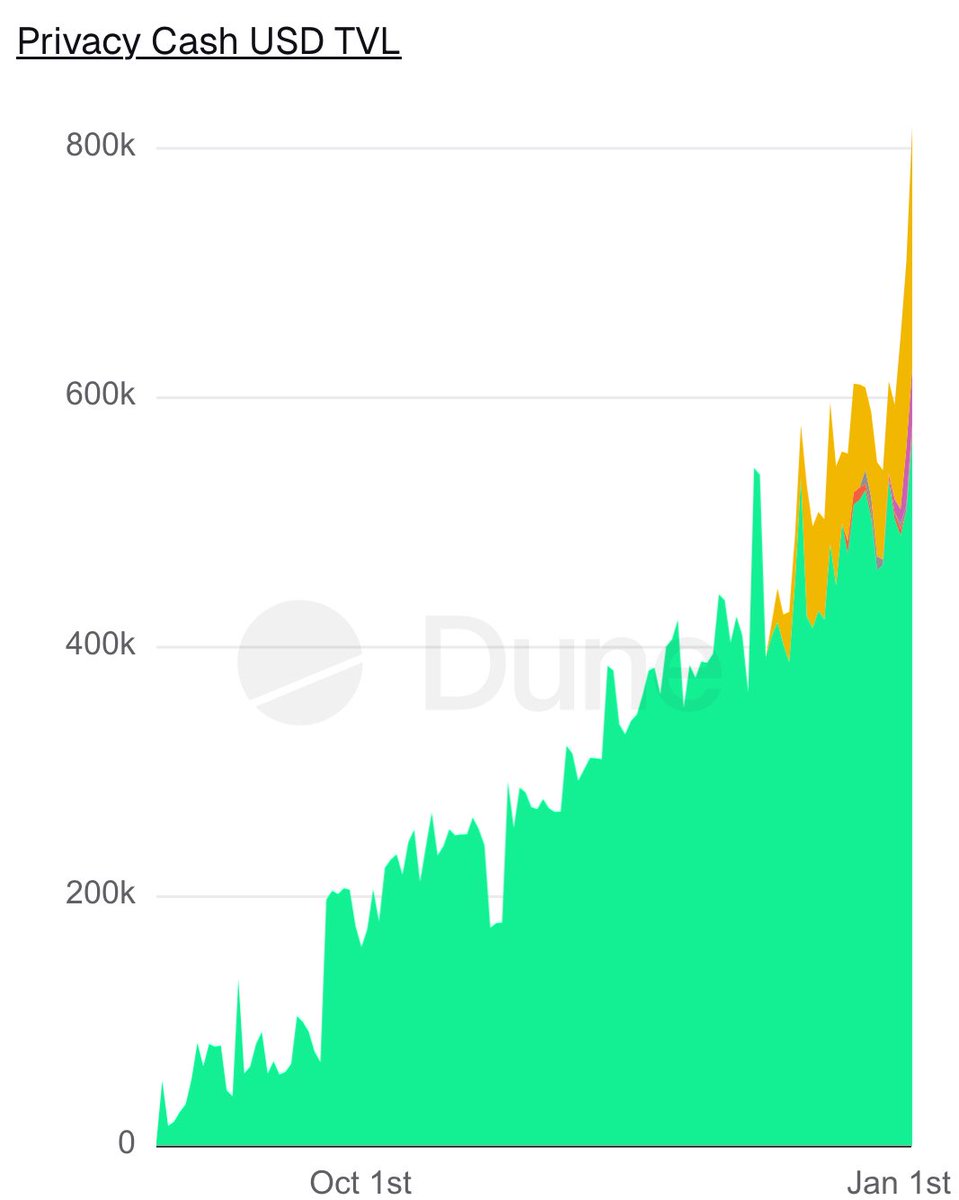
Privacy Hack starts Jan 12 🔒 Build private payments, privacy tooling, or anything with privacy on Solana $70,000 in prizes across 3 tracks 👇

JUST IN: The Zama Protocol is on mainnet. We just completed the first confidential stablecoin (cUSDT) transfer on Ethereum.

Manus is entering the next chapter: we’re joining forces with Meta to take general agents to the next level. Full story on our blog: manus.im/blog/manus-joi…
Today marks a moment I'll remember for the rest of my life. When we started Manus, few believed that general AI agents could work. We were told it was too early, too ambitious, too hard. But we kept building. Through the doubts, the setbacks, and the countless nights wondering if we were chasing the impossible. We weren't. This isn't just an acquisition. It's validation that the future we've been building toward is real, and it's arriving faster than anyone expected. But this is not the end. The era of AI that doesn't just talk, but acts, creates, and delivers, is only beginning. And now, we get to build it at a scale we never could have imagined. To everyone who believed in us before it was obvious: thank you. The best is yet to come.

Selling to your friends is the ultimate hack. If they buy and retain, your company might have legs. If not then you either have fake friends or a fake product. pmxliquid.
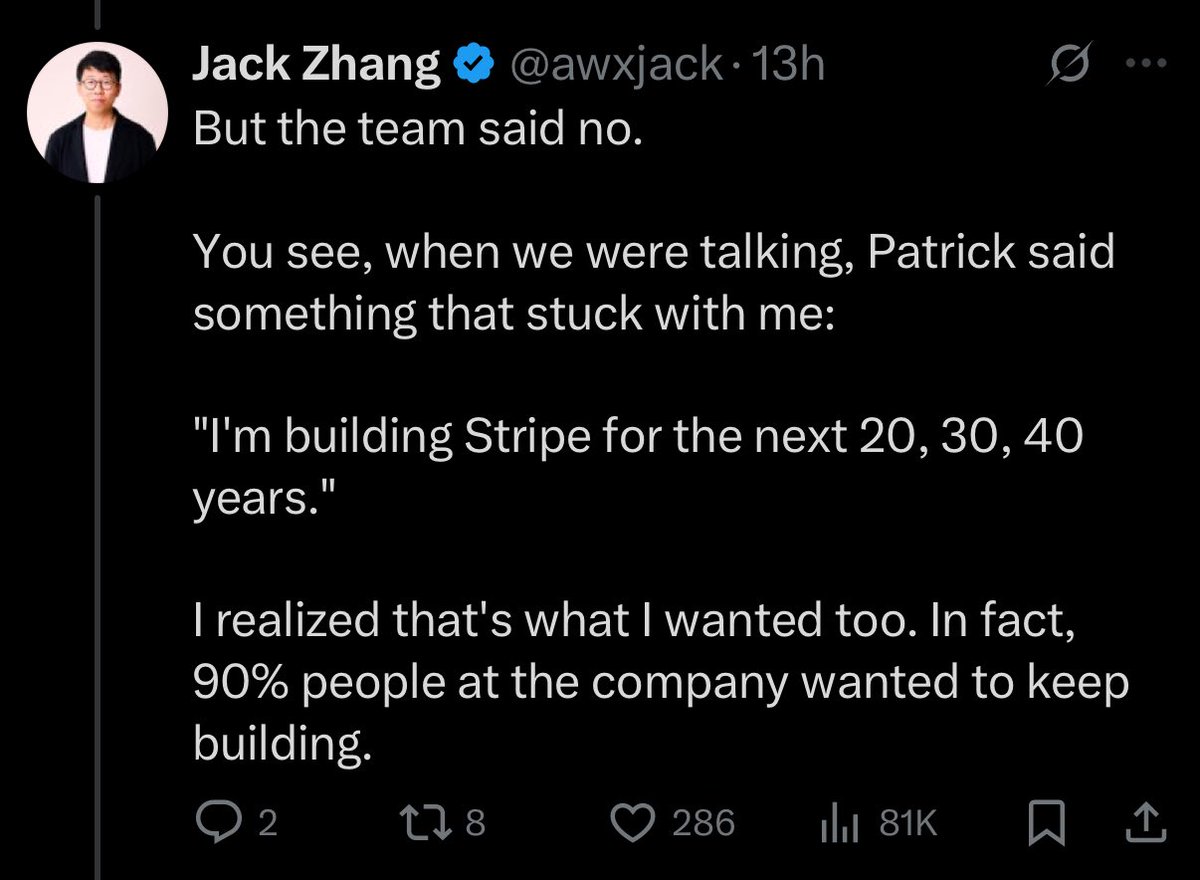

Stripe offered to acquire us for $1.2 billion when we had $2M in revenue. Today, we've raised $330M at an $8B valuation and reached $1B ARR. We could've died three times during this journey. This is the story I've never told anyone before:

We’re doubling down on @Solana. Coinbase is acquiring @VECTORDOTFUN, an onchain trading platform built on Solana, whose tech will plug directly into Coinbase to help better serve one of crypto’s most active ecosystems.