Social Neuroscience Bern

215 posts

Social Neuroscience Bern banner
Social Neuroscience Bern

Social Neuroscience Bern

@SocialNeuroBern

We study the neural basis of human social interaction.

Bern, Switzerland Katılım Nisan 2022
193 Takip Edilen194 Takipçiler
Social Neuroscience Bern retweetledi
PNASNews
PNASNews@PNASNews·
A collective action game explores the “private solution trap”: Wealthier participants opted to fund solutions that only protected the well off, analogous to rich countries investing in local climate adaptation rather than global mitigation. In PNAS: ow.ly/xEA250YBfnC
PNASNews tweet media
English
0
5
17
2.2K
Social Neuroscience Bern retweetledi
nature
nature@Nature·
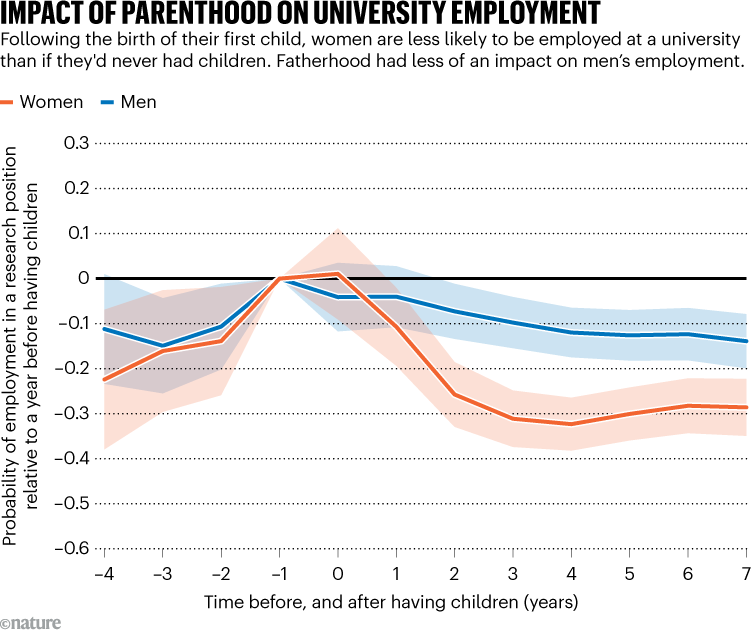
Becoming a parent is much more detrimental to women’s academic careers than it is to men’s Read the full story: go.nature.com/4v0XLiz
nature tweet media
English
42
255
628
73.2K
Social Neuroscience Bern retweetledi
Michael Okun
Michael Okun@MichaelOkun·
What does environmental decision neuroscience mean? Environmental decision neuroscience studies how brain systems are involved in value based social thinking, and how self-control shapes choices that may affect the environment around us. Knoch and Wyss describe in a comment in Nature Reviews Neuroscience how brain science is beginning to explain why some environmental choices stick, while others fail. Key points: - Environmental decisions engage brain systems for valuation perspective taking and for self-control, rather than for simple habit or knowledge. - Sustainable choices frequently involve immediate personal costs w/ delayed uncertain benefits which makes them cognitively demanding. - Studying decisions w/ real consequences reveals mechanisms that self-reports and surveys frequently miss. My take: This paper reframes environmental choices as a brain challenge and not just a policy or technology problem. If we want lasting change, we must understand how decisions are actually made under conditions of uncertainty, cost and delay. Neuroscience offers tools to design smarter interventions that may better fit how folks think, feel and decide. Here are 5 points that resonated w/ me: 1- Knowledge alone rarely changes behavior when decisions involve sacrifice and delayed reward. 2- Brain systems for empathy and future thinking may be central to sustainable action. 3- Self-control matters when short term convenience conflicts w/ long term benefit. 4- Interventions will work best when matched to how different folks process value and social impact. 5- Understanding the brain may help health care providers, policymakers and communities design approaches that lead to the best choices for our environment. nature.com/articles/s4158… @ParkinsonDotOrg @movedisorder @FixelInstitute @SfNtweets
Michael Okun tweet media
English
1
4
10
571
Social Neuroscience Bern retweetledi
Nature Rev Neurosci
Nature Rev Neurosci@NatRevNeurosci·
Environmental decision neuroscience connects the brain to climate action — a Comment article by Daria Knoch & Annika M. Wyss nature.com/articles/s4158…
English
1
1
2
1.5K
Social Neuroscience Bern retweetledi
@·
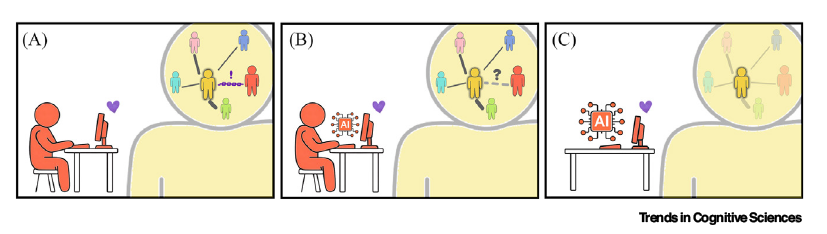
In this Comment, Yao et al. proposes an age-sensitive climate adaptation framework that emphasizes non-digital communication, financial assistance, and community-based strategies to support them. dlvr.it/TQdcQP
English
0
1
2
824
Social Neuroscience Bern retweetledi
Valerio Capraro
Valerio Capraro@ValerioCapraro·
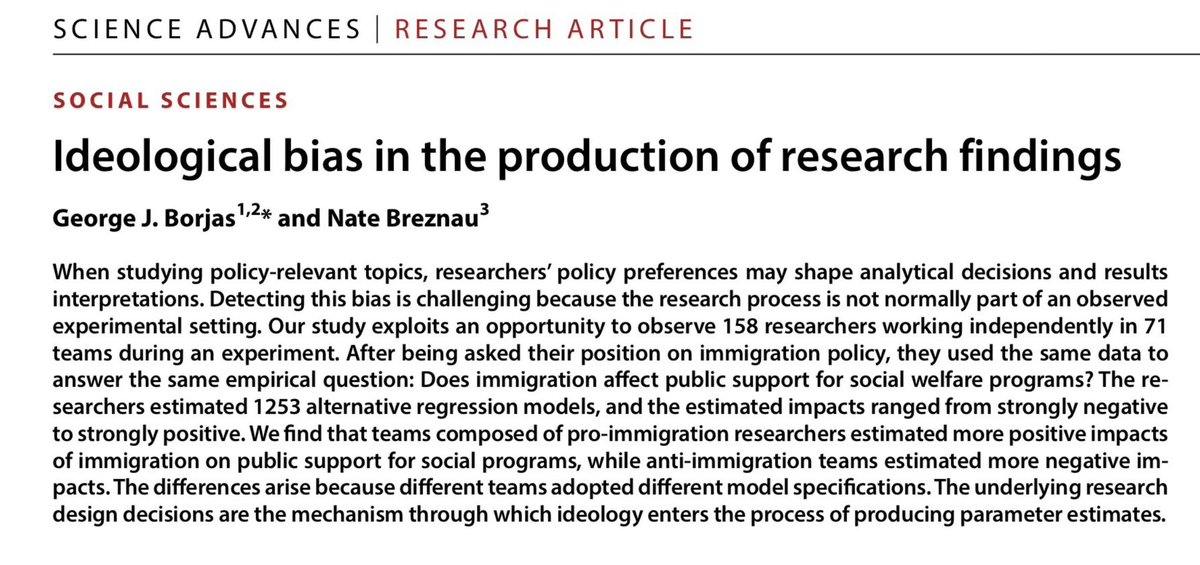
This is deeply troubling. Researchers are more likely to choose statistical models whose results align with their ideological priors. Seventy-one research teams independently analyzed the same dataset on the effect of immigration on public support for social welfare programs. Teams composed of pro-immigration researchers were more likely to conclude that the effect was positive. Teams composed of anti-immigration researchers were more likely to find a negative effect. Let me repeat: they analyzed literally the same dataset. Full paper in the first comment.
Valerio Capraro tweet media
English
215
788
3.2K
230.7K
Social Neuroscience Bern retweetledi
Communications Psychology
Communications Psychology@CommsPsychol·
Self-report questionnaires are vital in psychology, yet how the brain generates these responses is unknown. We found that items assessing the same trait produced similar activation patterns specifically in the medial prefrontal cortex (mPFC). nature.com/articles/s4427…
English
0
1
15
5.3K
Social Neuroscience Bern
Social Neuroscience Bern@SocialNeuroBern·
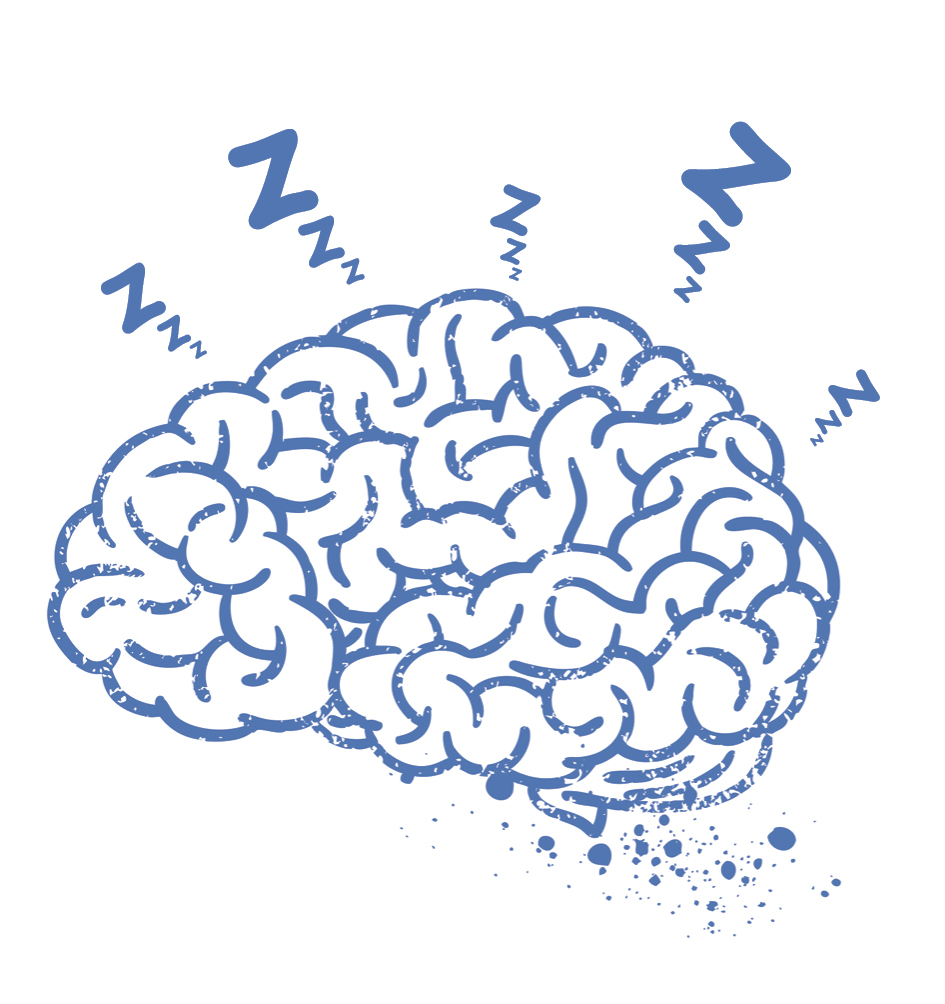
🚨New paper out! We show that Deep sleep in the TPJ is linked to implicit racial bias! 💤 ➡ Our results suggest that local aspects of sleep may account for inter-individual differences in social cognition. 🧠 To the paper 👉🏼 nature.com/articles/s4159…
Social Neuroscience Bern tweet media
English
0
1
3
153
Social Neuroscience Bern retweetledi
PNASNews
PNASNews@PNASNews·
A comparison of data from 64,000 individuals in 64 countries with their self-reports of well-being suggests LLMs cannot provide valid predictions for subjective well-being, in part due to biases rooted in global digital and economic inequality. In PNAS: ow.ly/Wunh50XC4z0
PNASNews tweet media
English
0
2
5
1.8K
Social Neuroscience Bern retweetledi
@·
In this study, Piray shows a problem of low statistical power in many studies that use Bayesian model selection with computational modelling in psychology and neuroscience. nature.com/articles/s4156…
English
0
19
39
6.6K