🇧🇷 Stanley Bresh

4.3K posts

🇧🇷 Stanley Bresh

🇧🇷 Stanley Bresh

@StanleyBresh

São Paulo Katılım Ekim 2012
7.3K Takip Edilen18.4K Takipçiler
🇧🇷 Stanley Bresh retweetledi

Ian Copeland, PhD
Ian Copeland, PhD@IanCopeland5·
Not a single child death was definitively linked to COVID vaccines, according to a recently released FDA study. So much for the antivax narrative. It's almost like they were wrong and lying the whole time. ronjohnson.senate.gov/services/files…
Ian Copeland, PhD tweet media
English
45
131
358
8.8K
🇧🇷 Stanley Bresh retweetledi
Amazing Physics
Amazing Physics@amazing_physics·
Light Effects (Refraction of light)😲
English
1
30
144
12.6K
🇧🇷 Stanley Bresh retweetledi
K Gates
K Gates@KEGates·
@PeterHotez IDK. It was in 1963 that Richard Hofstadter wrote "Anti-Intellectualism in American Life." Could have been written decades earlier(?). Where I grew up, few were going to library after elementary school years & even fewer (none?) were reading Plato and Aristotle.
English
0
4
37
1.7K
🇧🇷 Stanley Bresh retweetledi
Prof Peter Hotez MD PhD DSc(hon)
The evaporation of critical thinking among the American people is truly shocking. How our nation substituted going to the library and reading books, valuing our Western traditions going back to Plato and Aristotle and replacing it all with mediocre conspiracy InfoWars, Joe Rogan podcasts, or Fox News evening Murdoch media so obviously intended to create a new generation of billionaires at their expense, I mean I get it, but I never thought the American people could be this gullible or susceptible
English
15
1.4K
5.4K
80.5K
🇧🇷 Stanley Bresh retweetledi
Massimo
Massimo@Rainmaker1973·
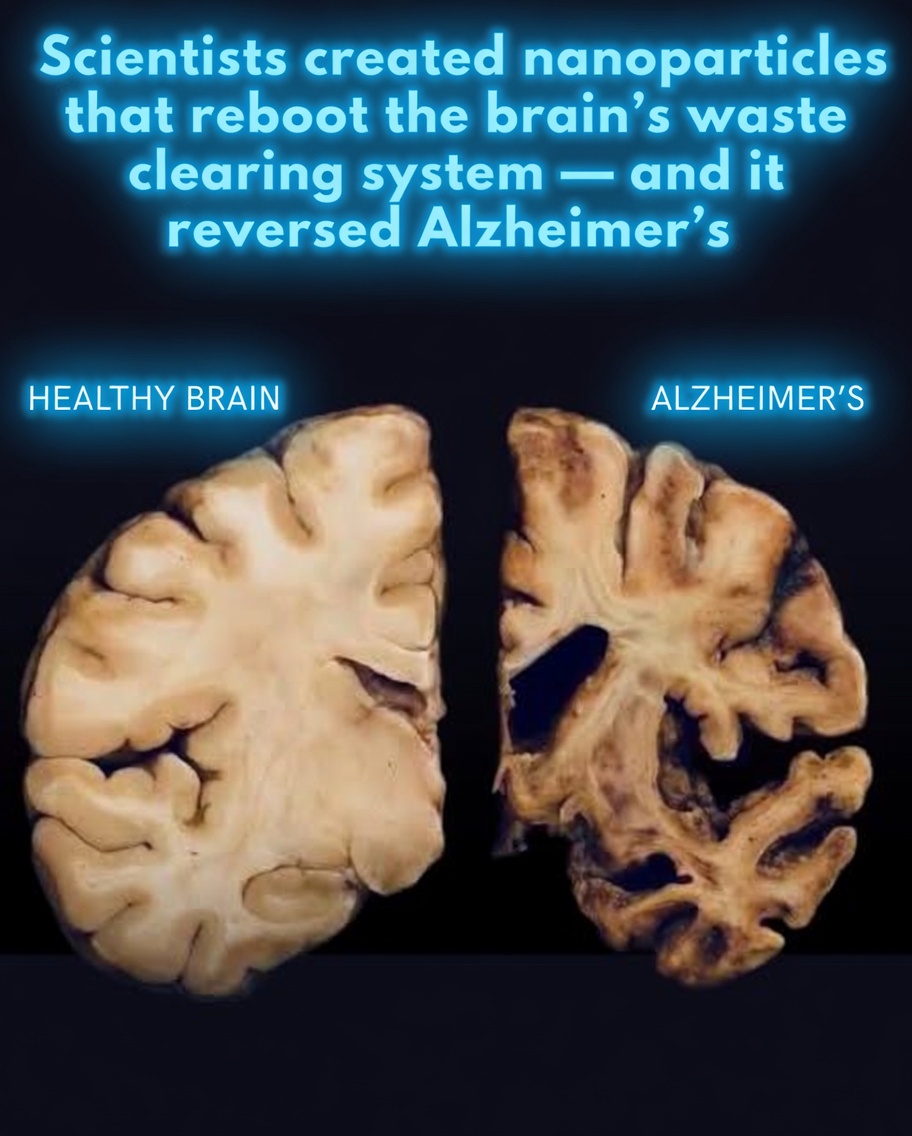
An international research team, led by scientists at the Institute for Bioengineering of Catalonia (IBEC), has developed a novel nanotechnology approach that reverses Alzheimer’s-like symptoms in mice by rebooting the brain’s natural waste-clearing system. The treatment uses bioactive “supramolecular drugs”, engineered nanoparticles that do not simply carry medication but actively function as therapeutic agents. These nanoparticles target and restore the blood-brain barrier, resetting key transport proteins such as LRP1. This enables the brain to efficiently clear toxic amyloid-beta plaques that accumulate in Alzheimer’s disease. In experimental results, a single dose reduced amyloid-beta levels by up to 60% within one hour. After just three doses, aged mice modeling advanced Alzheimer’s showed remarkable cognitive recovery, performing similarly to healthy young animals. The benefits persisted for months, with restored vascular function and reduced pathology. By focusing on repairing the brain’s vascular “plumbing” rather than solely attacking plaques, this approach represents a promising new strategy for treating neurodegenerative diseases. [Chen, J., Battaglia, G., et al. (2026). Nanotechnology Reverses Alzheimer’s in Mice via Blood-Brain Barrier Restoration. Signal Transduction and Targeted Therapy]
Massimo tweet media
English
19
66
232
18.1K
🇧🇷 Stanley Bresh retweetledi
Smart Science
Smart Science@SmartScience·
Japan recently approved a groundbreaking regenerative medicine therapy called ReHeart, developed using induced pluripotent stem (iPS) cells. These specialized heart muscle cell sheets are designed to be placed on damaged areas of the heart to help restore function in patients with severe heart failure. The technology builds on the Nobel Prize–winning discovery by Japanese scientist Shinya Yamanaka, who showed how adult cells can be reprogrammed into stem cells capable of transforming into different tissue types. This breakthrough opened the door to regenerative treatments that avoid the ethical issues surrounding embryonic stem cells. In early clinical studies conducted in Japan, patients who received the stem cell–derived heart tissue showed improvements in heart function and reduced symptoms associated with advanced heart failure. Researchers believe the implanted cells may help stimulate new blood vessel growth and improve oxygen delivery to damaged heart tissue. Heart failure affects more than 64 million people worldwide, and current treatments mostly manage symptoms rather than repair damaged heart muscle. Regenerative therapies like this aim to change that by helping the body rebuild tissues that previously could not regenerate. Although the therapy received conditional approval and will be closely monitored in real-world use, scientists view it as a major step toward the future of organ repair through regenerative medicine. If successful, similar approaches could eventually be explored for other organs such as the liver, pancreas, and brain.
Smart Science tweet media
English
16
199
495
11.1K
🇧🇷 Stanley Bresh retweetledi
まだ面白い
まだ面白い@madaomoshiroi·
ソニーが開発したマイクロサージェリーロボットがトウモロコシの粒を縫合する様子が凄すぎる
日本語
49
612
3.5K
647.7K
🇧🇷 Stanley Bresh retweetledi
Simon Maechling
Simon Maechling@simonmaechling·
It’s a rough time to be a scientist. You spend decades learning how to measure things properly. How to separate signal from noise. How to distinguish hazard from risk. And then you open your phone and watch fear beat data - again and again and again. In the lab, we argue about controls, concentrations, confidence intervals. Online, people argue about screenshots, podcasters and blogs. This little molecule in my hand? The dose matters. Exposure matters. Evidence matters. Being a scientist today means doing more than running experiments. It means explaining, clarifying, correcting - over and over and over again. So yes - it’s a rough time to be a scientist. But it’s also the most important time to speak up.
Simon Maechling tweet media
English
181
519
1.9K
27.8K
🇧🇷 Stanley Bresh retweetledi
Acyn
Acyn@Acyn·
AOC: This is what drinking water in Georgia looks like after Meta began data center construction in the community.
English
3K
36K
175.9K
18.3M
🇧🇷 Stanley Bresh retweetledi
Dr Terry Simpson
Dr Terry Simpson@drterrysimpson·
“There is no essential carbohydrate” is one of those half-truths wellness gurus recite with the confidence of a man who just discovered biochemistry on Instagram. Yes, humans can survive without dietary carbohydrate through gluconeogenesis. We can also survive without sunlight for a while. Survival is not the same thing as optimal nutrition. What follows is usually the real sales pitch: therefore grains are poison, fruit is dangerous, and Susan from “integrative metabolic wellness” would like to sell you $94 electrolyte powder and a PDF about seed oils. Meanwhile, populations eating legumes, fruit, rice, potatoes, and whole grains routinely outlive the carnivore podcast circuit. The problem was never “carbohydrates.” The problem was turning food into industrial sludge and convincing people that a cinnamon roll and a lentil are metabolically identical because both contain carbs. Biochemistry is real. So is epidemiology. The latter is where many nutrition influencers mysteriously lose interest.
Maxine Pye@LiveAncestral

There is no such thing as an essential carbohydrate. That is not an opinion. That is basic biochemistry. There are essential fats. There are essential proteins. Your body cannot make them, so you need to get them from food. Carbohydrate is not on that list, because your liver can make the glucose you need from fat and protein. That process is called gluconeogenesis. So why were people told to base meals around grains? The 1977 dietary guidelines pushed 6 to 11 servings a day. That was presented as health advice. It also happened to suit a food system built around cheap, storable, profitable products. A population living on meat, eggs, and simple whole food is harder to sell to on repeat. That is worth thinking about. When I cut back on carbohydrates my energy stabilised, my hunger became manageable, and I stopped thinking about food every two hours. That is not what you would expect if you had removed something essential. Your body does not need carbohydrate. It needs enough energy, enough protein, enough fat, and the right signals. What is the most difficult carb for you to give up?

English
35
48
309
17K
🇧🇷 Stanley Bresh retweetledi
Claudia Costin
Claudia Costin@ClaudiaCostin·
Esse gráfico cruza a pontuação em pensamento criativo (eixo Y) com o número de horas de uso recreativo de telas por estudantes na escola (eixo X). Quanto maior o tempo de uso, menos criatividade os alunos apresentam. Veja como acertamos ao restringir o celular nas escolas brasileiras. Via @grisagregorio Fonte: OECD, PISA 2022 Results (Volume III): Creative Minds, Creative Schools, 2024.
Claudia Costin tweet media
Português
3
24
60
3.8K
🇧🇷 Stanley Bresh retweetledi
Neil Stone
Neil Stone@DrNeilStone·
Chemtrails don't exist Turbo cancer doesn't exist Covid vaccines are vaccines and they worked Ivermectin doesn't work for Covid Ivermectin doesn't work for cancer Ivermectin doesn't work for Hantavirus Ivermectin doesn't work for Ebola Vaccines don't cause autism
English
929
1.6K
7.2K
103.1K
🇧🇷 Stanley Bresh retweetledi
Massimo
Massimo@Rainmaker1973·
The James Webb Space Telescope has done it again: revealing a breathtaking structure now dubbed the “Cosmic Vine”: a string of 20 galaxies stretching across a staggering 13 million light-years! What makes this discovery so shocking? This colossal formation dates back nearly 11 billion years, forming just 3 billion years after the Big Bang, a time when galaxies were thought to still be forming in isolated clumps. Instead, JWST captured a massive, organized structure linking galaxies together much earlier than expected. [image: artist's impression]
Massimo tweet media
English
215
797
4.1K
625.8K
🇧🇷 Stanley Bresh retweetledi
Dr Terry Simpson
Dr Terry Simpson@drterrysimpson·
The current Ebola outbreak is rising faster than any Ebola outbreak recorded. The genetic sequence of the virus shows it is a unique version. We are the least prepared for this, having defunded USAID and other agencies that stockpile PPE. It all looks like governemnt waste until we have an outbreak
English
176
1.1K
3.1K
86.6K
🇧🇷 Stanley Bresh retweetledi
Neil Stone
Neil Stone@DrNeilStone·
No increase in cancer risk following mRNA Covid vaccines in large data sets from Norway 🇳🇴 and Sweden 🇸🇪 They don't cause cancer It's a myth invented by anti vaxxers to scare you off vaccines
Neil Stone tweet media
English
281
1.5K
4K
105.4K
Neil Stone
Neil Stone@DrNeilStone·
🔴Ebola update 600 suspected cases This is not good
English
147
385
2.1K
42.2K
🇧🇷 Stanley Bresh retweetledi
Estadão 🗞️
Estadão 🗞️@Estadao·
COLUNA DO ESTADÃO | 90% das emendas Pix têm irregularidades, apontam Tribunais de Contas 🔗 x.gd/rIvHP Nessa modalidade de baixa transparência, parlamentares enviam bilhões de reais diretamente a governadores e prefeitos, sem necessidade de convênio ou projeto de obra; relatório será enviado ao STF
Estadão 🗞️ tweet media
Português
64
258
1.1K
39.1K
🇧🇷 Stanley Bresh retweetledi
Emmanuel Macron
Emmanuel Macron@EmmanuelMacron·
Face aux crises sanitaires, climatiques et géopolitiques qui s’entremêlent, l’Assemblée mondiale de la santé rappelle une évidence : la coopération est plus nécessaire que jamais. Ces dernières semaines encore, l’action collective a fait la différence. Je salue l’engagement de l’OMS dans l’évaluation des risques et la coordination de la réponse face à l’hantavirus et à ebola. Cher @DrTedros, la France continuera à vous appuyer.
Français
634
462
1.9K
152.6K
🇧🇷 Stanley Bresh retweetledi
ScienceFocus
ScienceFocus@ScienceFocusonX·
A tiny bee just did what chemotherapy couldn't. Scientists in Australia discovered that honeybee venom can wipe out 100% of aggressive breast cancer cells in under 60 minutes. And the healthy cells around them? Barely touched. The breakthrough came from Dr. Ciara Duffy and her team at the Harry Perkins Institute of Medical Research, working alongside the University of Western Australia. They tested venom drawn from 312 honeybees and bumblebees across Australia, Ireland, and England. The target: triple-negative breast cancer and HER2-enriched breast cancer. Two of the deadliest, most stubborn forms of the disease. The weapon: melittin. The same tiny peptide that makes a bee sting burn. At one specific dose, melittin tore through cancer cell membranes completely within an hour. Within just 20 minutes, it shut down the chemical signals cancer cells need to grow and multiply. Bumblebee venom, which lacks melittin, did nothing. Zero effect, even at high concentrations. Scientists then recreated melittin synthetically in the lab and got almost identical results, meaning no bees need to be harmed to develop the therapy. Published in the peer-reviewed journal npj Precision Oncology, the findings are still early-stage. Human trials haven't happened yet. But one thing is clear. Nature has been hiding answers in plain sight all along, sometimes inside the smallest creatures on Earth. Source: Harry Perkins Institute of Medical Research / npj Precision Oncology (Dr. Ciara Duffy et al.)
ScienceFocus tweet media
English
1.6K
19.2K
49.5K
2.5M