NICKEL@NICKEL_70
Japanese
Wabi-sabi with AI
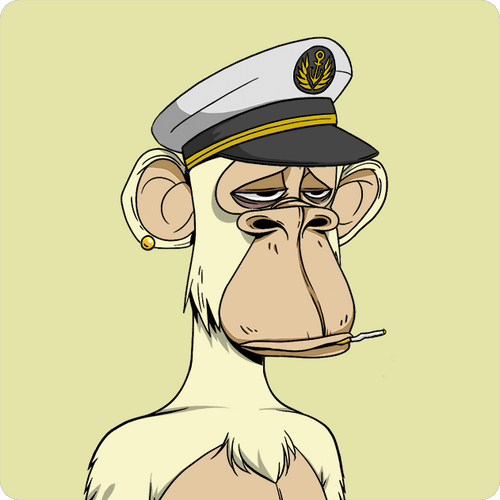
Create a monochrome Japanese sumi-e ink illustration based on the uploaded reference image.
[Main Rule]
The uploaded image is the primary and strict visual reference.
Preserve the original subject identity with very high fidelity.
Do not redesign the subject.
The final image must clearly look like the same exact subject from the reference image.
[Composition]
Preserve the original composition, body angle, pose, proportions, and silhouette as closely as possible.
Do not change the face, expression, eye shape, eyebrow shape, nose bridge, face contour, hairstyle, or any defining visual traits.
Keep the overall visual balance and recognizability of the original design.
[Subject Details]
Preserve all key design elements visible in the reference image.
Do not remove, replace, or overly simplify important costume parts, accessories, gear, mechanical details, clothing structures, textures, ornaments, or distinctive features.
Retain the original design language faithfully while translating it into sumi-e expression.
[Ink Style]
Render the image in a powerful monochrome Japanese sumi-e ink style.
Use only:
- black ink
- gray washes
- white paper
Express the image through:
- strong ink tonal variation
- layered ink density
- dry-brush texture
- wet ink bleeding
- rough brush strokes
- subtle ink splatter
- dramatic contrast
- visible paper texture
- handcrafted brushwork
[Mood]
The artwork should feel intense, quiet, sharp, and powerful.
Add more ink depth, roughness, brush energy, and expressive brush movement while keeping the original design accurate.
[Kanji Element]
Add exactly one Japanese kanji character, chosen intuitively by the AI based on the subject.
The kanji must be a single character only.
Render it in traditional Japanese shūji calligraphy, written with a brush, not as a modern digital font.
Paint the kanji in black ink only so it harmonizes naturally with the sumi-e atmosphere.
Place the kanji where it interferes as little as possible with the artwork.
It should remain visually secondary to the main subject and feel like a subtle calligraphic accent, quiet signature-like motif, or small title mark integrated into the composition.
Do not add any other text, letters, symbols, logos, or extra characters.
[Kanji Selection Priority]
When choosing the single kanji, prioritize the subject’s most distinctive held item, worn item, accessory, weapon, tool, costume detail, or visual motif over the general mood or atmosphere.
The kanji should feel personally connected to this specific subject, not like a generic mood label.
Priority order:
1. the most distinctive held item or worn item
2. a defining accessory, weapon, tool, or costume detail
3. a unique visual motif or symbolic object
4. only if none of the above are clearly present, choose based on the overall mood, feeling, or impression
Do not choose the kanji only from the general mood if a distinctive item or motif is clearly present.
Examples:
- umbrella → 傘
- candy / lollipop → 飴 or 甘
- guitar → 弦, 音, or 響
- sword → 刀 or 斬
- mask → 面, 鬼, or 影
- flower → 花 or 儚
Choose exactly one kanji only.
[Japanese Calligraphy Restriction]
The kanji must look Japanese, not Chinese.
It must be rendered in traditional Japanese shūji calligraphy only.
Do not make it look like Chinese hanzi, Chinese calligraphy, Chinese seal script, or wuxia-style brush lettering.
Do not add any red seal stamp, Chinese seal, or Chinese-style mark.
[Background]
Use a minimal or empty background.
No decorative scenery.
Use negative space effectively.
Let the subject remain the clear visual focus.
[Negative Prompt]
- do not redesign the subject
- do not change the face
- do not change the expression
- do not change the eye shape
- do not change the hairstyle
- do not change the pose
- do not change the costume
- do not remove important details
- do not simplify the gear too much
- no color
- no additional text
- no extra kanji
- no logo
- no border
- no 3D render
- no western comic style
- no clean digital vector look
- no Chinese characters
- no Chinese-style calligraphy
- no Chinese brush script
- no Chinese seal stamp
- no red seal
- no Chinese aesthetic
- no wuxia style
- no Chinese fantasy style
- no Chinese ink painting atmosphere
- do not make the kanji look like Chinese hanzi
- use only one Japanese kanji character
- the kanji must look like traditional Japanese shūji calligraphy