Sabitlenmiş Tweet

💫A More Complex Read
The Fermi Paradox asks why we haven’t found intelligent life in a universe teeming with stars.
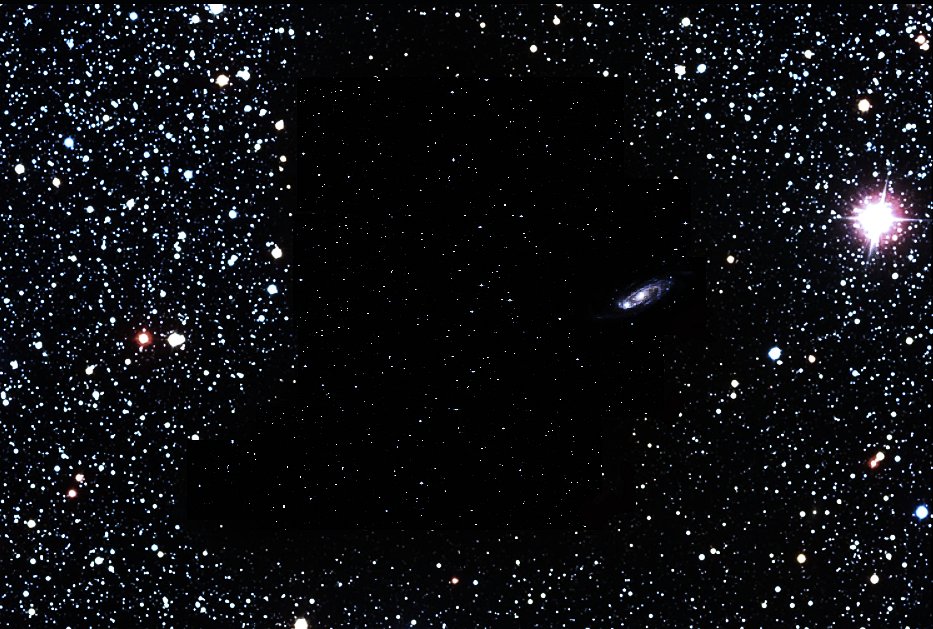
My theory: planets in low-density voids, like our own Local Void and the Microscopium Void, face fewer catastrophic interstellar impacts per my calculations.
The universe has an average galaxy density of about 0.01 galaxies per cubic megaparsec, but the Local Void, where we are located, is much emptier with only 0.001–0.002 galaxies per cubic megaparsec.
This extreme sparsity, reflects an 80 - 90% underdensity, resulting in an estimated 1,000 - 1,400 galaxies within our Local Void. This suggests voids may be safer for sustaining evolutionary life due to fewer cosmic disruptions.
Fewer stars in voids mean fewer gravitational tugs which send comets, especially interstellar objects like 3I/ATLAS, crashing into planets. Calculations using 2021 Oort Cloud models and 2024 Cosmicflows-4 data show Andromeda (M31), in our Local Void, 0.05 stars/pc³, has ~0.40 >15 km interstellar impacts over 5 billion years. 97% less than the ~8 in dense regions, e.g., spiral arms, and total impacts, including internal MW impacts like Chicxulub, reaching ~90.4 - 1 per 55.3 million years.
Meanwhile, Galaxy NGC 6925, in the sparsely populated Microscopium Void, ~0.03 stars/pc³, sees ~0.24 interstellar impacts, totaling ~90.25. This gives ~25% of planets a shot at 4 billion year evolutionary cycles without a biosphere reset - vs. ~20% in denser universe regions.
Beautiful Andromeda’s likely intelligent life edge lies in its scale: its ~400 - 800 billion planets, 2 - 4x the Milky Way’s, could host ~4,000 - 80,000 civilizations dwarfing NGC 6925’s ~10 - 100 billion planets, and ~100 - 5,000 civilizations.
Both galaxies’ void settings, i.e., low supernova, tidal disruptions, and lower interstellar impact volume, make them SETI hotspots - but Andromeda’s vastness tips my scales for the presence of intelligent life.
The favorable interstellar impact differentials I've described may well allow the evolution of higher intelligence over the seeming requisite of ~4 billion years.
You can check the math with my Python code per request. You might conclude something different. What do you think @WillKinney ? I know this isn’t your jam, but like me, I think you might wonder where and if we'll find some interesting folks in the universe before we wink out.✨ #Astrobiology #FermiParadox #SETI
English