Hodhodata@statistics

8.8K posts

Hodhodata@statistics

Hodhodata@statistics

@Statisticizer

Statistical Data Analyst , Statistical programmer, Applied statistician & Bio-statistician. ⛔No Private messages 👉 🚫📩❌.

Irbid city Of Jordan Katılım Ekim 2017
2K Takip Edilen7.9K Takipçiler
Sabitlenmiş Tweet
Hodhodata@statistics
Hodhodata@statistics@Statisticizer·
How would you rate the accuracy and practical usefulness of my long-range forecasts for Autumn 2025 and Winter 2026 so far? (Rating Scale): (5🌟) Excellent (Highly accurate & very useful) (4🌟) Good (Mostly accurate & useful) (3🌟) Moderate (Mixed performance) (2🌟) Low accuracy (Limited usefulness ) (1🌟) Not useful / Missed expectations Your feedback helps refine future outlooks and improve regional targeting. Please also mention your country/region in the comments so I can prioritize areas of highest relevance and usability .
Hodhodata@statistics tweet media
English
16
2
15
5.6K
Hodhodata@statistics
Hodhodata@statistics@Statisticizer·
@Canalcienciaym Very Interesting and intuitive! Thank you for sharing this information.
Hashemite Kingdom of Jordan 🇯🇴 English
0
0
1
14
Cienciaclimática
Cienciaclimática@Canalcienciaym·
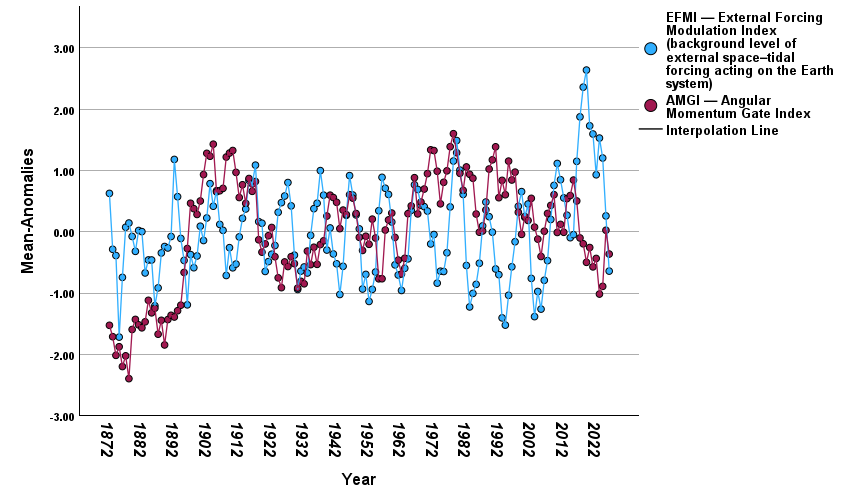
Es una pieza fundamental para entender por qué eventos como el del Mar de Bismarck no son aislados, sino parte de una "danza" sistémica planetaria. La correlación entre el EFMI (Índice de Modulación de Forzamiento Externo) y el AMGI (Índice de Puerta de Momento Angular) explica mecánicamente cómo la Tierra responde a influencias externas, incluyendo la actividad solar. La actividad solar no solo afecta al clima, sino que mediante el acoplamiento electromagnético y de momento angular: Inducción de Corrientes: Las tormentas solares inducen corrientes en el magma y el manto (piezoelectricidad), reduciendo la viscosidad en ciertos puntos críticos. Sincronía: El video de @StefanBurnsGeo del 4 de mayo (youtu.be/o8WHTO5olk8) comenta que estamos en el pico del Ciclo Solar 25. La gráfica confirma que este ciclo solar está actuando sobre un sistema terrestre que ya tiene un "índice de forzamiento externo" (EFMI) en niveles récord. Bajo esta lógica, la erupción submarina en Nueva Guinea es una válvula de escape mecánica: El forzamiento externo (EFMI alto) altera la rotación terrestre (LOD). La fricción interna aumenta en los límites de placa. El magma, influenciado por el cambio de momento angular y la actividad solar, busca salida en los puntos de menor resistencia (centros de expansión como Bismarck o volcanes inestables como Mayón). En conclusión: No parece coincidencia. Estamos atravesando un periodo donde la Tierra está intentando reajustar su rotación y equilibrio interno frente a un bombardeo de energía externa sin precedentes en los últimos 150 años. El hecho de que la erupción de Bismarck sea tan profunda (1,299m) refuerza la idea de que la forzante viene desde muy abajo en el sistema, no solo de procesos superficiales.
YouTube video
YouTube
GIF
Español
1
0
2
21
Hodhodata@statistics
Hodhodata@statistics@Statisticizer·
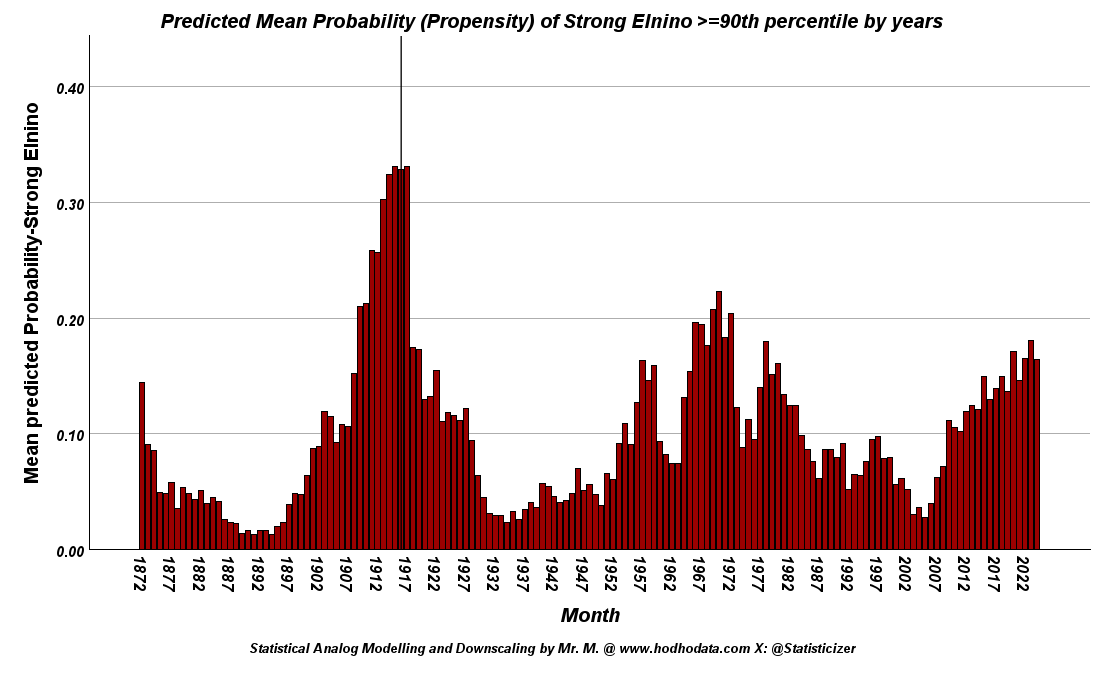
#Strong Elninos of the period (1909-1925 AC) : Based on a multivariable model incorporating climatic, atmospheric, oceanic SST, tidal, internal and external forcing, and astronomical factors like GLAAM and Cosmic Rays proxies , the period from approximately 1909–1925 appears to show elevated predicted propensity for strong El Niño conditions. However, the instrumental climatic records do NOT clearly confirm the occurrence of multiple super or very strong #ElNiño ( >=90th percentile on ONI and/ MEI) events during that interval 1909-1925 AND even up to the 1940's . In this analysis, I used monthly standardized time-series indices data designed to characterize the odds of super El Niño development, while accounting for climatic reference points and treating the modern warm era as a possible lurking/confounding factor in the multivariable framework. Based on the provided chart, the risk of super #elnino or even strong canonical #elnino that exceeded the 90th percentile on the MEI, ONI and even extended RONI index was much higher during the 1909-1925 period compared to both modern era and earlier late 18th century years. Does anyone have a clue why this mismatch may exist? Could it reflect limitations in early observational records, SST reconstruction uncertainty, changes in baseline climatology, missing atmospheric coupling, volcanic/solar interference, or model over-sensitivity to non-oceanic predictors? Any sources that support or debunk this interpretation would be highly appreciated. I am fully receptive to both positive and negative scientific input.
Hodhodata@statistics tweet media
Hashemite Kingdom of Jordan 🇯🇴 English
1
2
9
627
Hodhodata@statistics
Hodhodata@statistics@Statisticizer·
Coincidentally : That period was highlighted with outstandingly high Planetary Atmospheric Angular Momentum, the GLAAM forcing is directly related to the earths LOD length of the day Variability, which in turn happens to be related to the solar activity and the volcanic activity is Not separated from external forces, so is the atmospheric angular momentum .
Hodhodata@statistics tweet media
Hashemite Kingdom of Jordan 🇯🇴 English
1
0
2
23
Cienciaclimática
Cienciaclimática@Canalcienciaym·
@Statisticizer Estamos ignorando gran parte de los datos sobre la actividad volcánica submarina en esas décadas. Apenas había tráfico aéreo por muchas partes del planeta. Sospecho que alimentando el modelo con esos datos se explicaría buena parte de los resultados.
Español
1
0
1
22
Hodhodata@statistics
Hodhodata@statistics@Statisticizer·
A big wolf Howling : I am not afraid, never!
The American Storm@BigJoeBastardi

Who’s afraid of the big bad El Niño wolf? cfact.org/2026/04/24/who… The meteo media and others are whipping up pre nino hysteria. Here is a bit of perspective, including the fact that the measurement they use is not the gold standard, the MEI is (MULTIVARIATE ENSO INDEX implies a more detailed view of the total picture, not just one thing)

Hashemite Kingdom of Jordan 🇯🇴 English
0
0
1
427
Hodhodata@statistics
Hodhodata@statistics@Statisticizer·
Thank you, Javier for your valuable input. To be honest the Arctic Oscillation was Not considered. I will incorporate it in the same very model and see how things will change. The association between AO and the strong elnino is negative but weak association in general , r=-0.10, p-value<0.050.
Hashemite Kingdom of Jordan 🇯🇴 English
1
0
1
43
Cienciaclimática
Cienciaclimática@Canalcienciaym·
La discrepancia no invalida tu modelo, más bien sugiere que entre 1909 y 1925 el planeta experimentó un "potencial de Super El Niño" que fue amortiguado por un estado base oceánico diferente o por un déficit de acoplamiento atmósfera-océano que los registros de SST de baja resolución no pudieron reconciliar. ¿Has considerado si la inclusión de la Oscilación Ártica (AO) como variable de ruido podría explicar por qué esa propensión no se tradujo en una señal tropical superficial tan clara en esos años?
Español
1
0
1
63
Hodhodata@statistics
Hodhodata@statistics@Statisticizer·
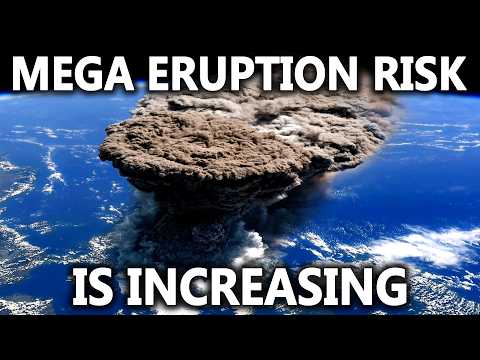
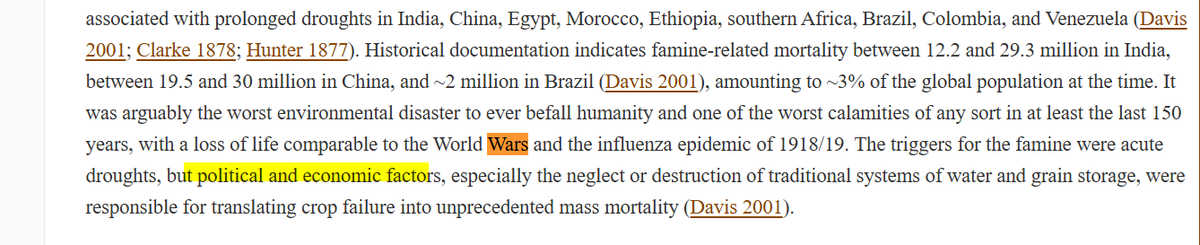
Do Super #ElNiño events kill people? No. What kills people are wars, invasions, colonization, political corruption, crop confiscation, social collapse, and unrest that accompany or amplify drought crises. El Niño itself acted mainly as a powerful stress multiplier. During major drought periods, crops were often seized or redirected toward war zones while local populations suffered famine and instability. Historical evidence also shows that the droughts of 1909–1922 were associated with mass mortality in the levant when French and British troops confiscated crops from Egypt, Syria, Palestine and Lebanon and sending for the war fronts at No return, the deeper underlying drivers of mass deaths during those elnino droughts included wars, political turmoil, economic disruption, and social unrest . It is political corruption, war, and the invasion and exploitation of other nations that can transform El Niño-related drought into a humanitarian catastrophe, if you just don't put your nose into other nations business they would not die massively from climate related problems . Wars and uprisings during 1874–1878 included: • Serbian–Ottoman and Montenegrin–Ottoman Wars (1876–1878) • Epirus Revolt of 1878 and Balkan uprisings • Russo–Turkish War • 1878 Kanak Revolt • Mahdist Revolt • Third Carlist War (1872–1876) – Spain • Ninth Xhosa War (1877–1878) • Saga Rebellion (1874) • Herzegovina Uprising (1875–1877) Conflicts in 1873–1879: en.wikipedia.org/wiki/Category:… Climate and the Global Famine of 1876–1878: 👉DOI: doi.org/10.1175/JCLI-D…
Hodhodata@statistics tweet media
Ryan Maue@RyanWeather

Upcoming "mega El Niño" raising alarms around the world -- and now in the Washington Post -- comparing to the 1877 event that "wiped out 4% of the Earth's population" Prepare now for the potential of the "worst environmental disaster in human history" wapo.st/4d43jSC

Hashemite Kingdom of Jordan 🇯🇴 English
0
1
2
369
Hodhodata@statistics
Hodhodata@statistics@Statisticizer·
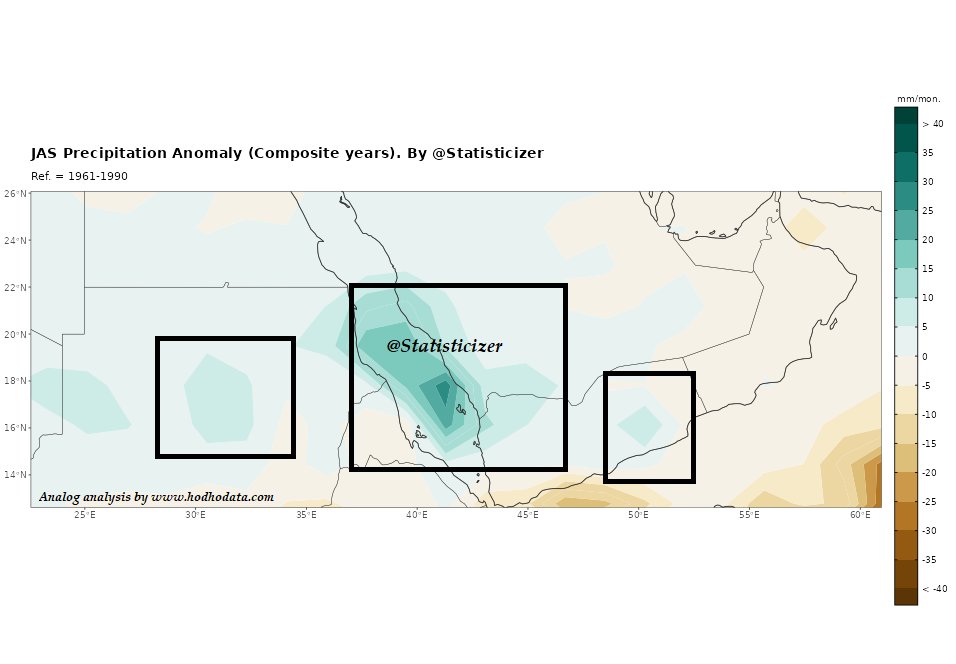
🌍🚨📊 Early Warning Signals for Summer 2026: Potential ITCZ-Driven Flood Risk due to northward shift of the ITCZ. This is One of my earliest long-range forecasts pointing toward summer 2026 signals . It is Interim but requires follow up and attention. During the summer of 2023, the ITCZ shifted unusually far north, leading to widespread flooding across large parts of the Sahara and Sub-Saharan Africa. Exceptional rainfall events were recorded in several countries, including Sudan, Chad and Yemen, where multiple dams and flood-control structures failed, and in Chad, where floods left over 100,000 people displaced—a humanitarian crisis that received limited global attention. Notably also during that episode many desert Oases and Lakes that dried like 30-40 years ago were resurrected with water, followed by enhanced Locus invasions in African countries due to improvised soil moisture & green cover in arid and semi-arid regions . Many International weather forecasters flagged that event in 2023 as rare and odd but in reality it isn't rare or even odd but rather a recurrent pattern that emerges from time to then and goes unnoticed due to relying on modern archives that lack this pattern or imprint . My work as a statistician focuses on simulating the occurrence and recurrence of these events. 🟢 New composite analyses for current year 2026 suggests a high potential recurrence of this pattern in forthcoming summer . The attached JAS (July–September) precipitation anomaly maps indicate a renewed northward extension of the ITCZ and enhanced monsoonal moisture transport during June–October 2026, with the peak risk between July and September. The green shaded anomalies highlight regions where above-normal rainfall and elevated flood risk may materialize, potentially leading to severe hydrological impacts, particularly if combined with weak infrastructure, saturated soils, or rapid runoff conditions. 📌 Regions and countries showing notable positive precipitation anomalies include: #Sudan #SouthSudan #Chad #Niger #Nigeria #Mali #Mauritania, #Libya and S #Algeria and Morocco. #Ethiopia #Eritrea #Yemen #SaudiArabia (southwest) #Sahel #HornOfAfrica #WestAfrica These signals point to a heightened probability of intense rainfall episodes, flash floods, and riverine flooding during summer and early autumn 2026. ➡️ I will be monitoring and refining these risks through updated forecasts during spring 2026, focusing on regional impacts, flood likelihood, and early-warning signals as seasonal drivers become clearer. — @Statisticizer 🌍📊 @Recretos @severeweatherEU
Hodhodata@statistics tweet mediaHodhodata@statistics tweet media
English
4
2
15
3.4K
Hodhodata@statistics
Hodhodata@statistics@Statisticizer·
Hi Pablo, nice talking to you too. The below outlook/warning was made in january 2026 with possible ITCZ migration abit nortward during summer-autumn months. I will soon be updating this post when we have entered June. the international S2S models have started to agree with this forecast as of yet. x.com/Statisticizer/…
Hashemite Kingdom of Jordan 🇯🇴 English
1
0
2
32
MeteoMelilla
MeteoMelilla@meteo_melilla·
@Statisticizer Nice to talk to you again dear friend. Do you think ZCIT is responsable of the positive rain sign shown by models throughout summer in North Africa?
English
1
0
2
51
Hodhodata@statistics
Hodhodata@statistics@Statisticizer·
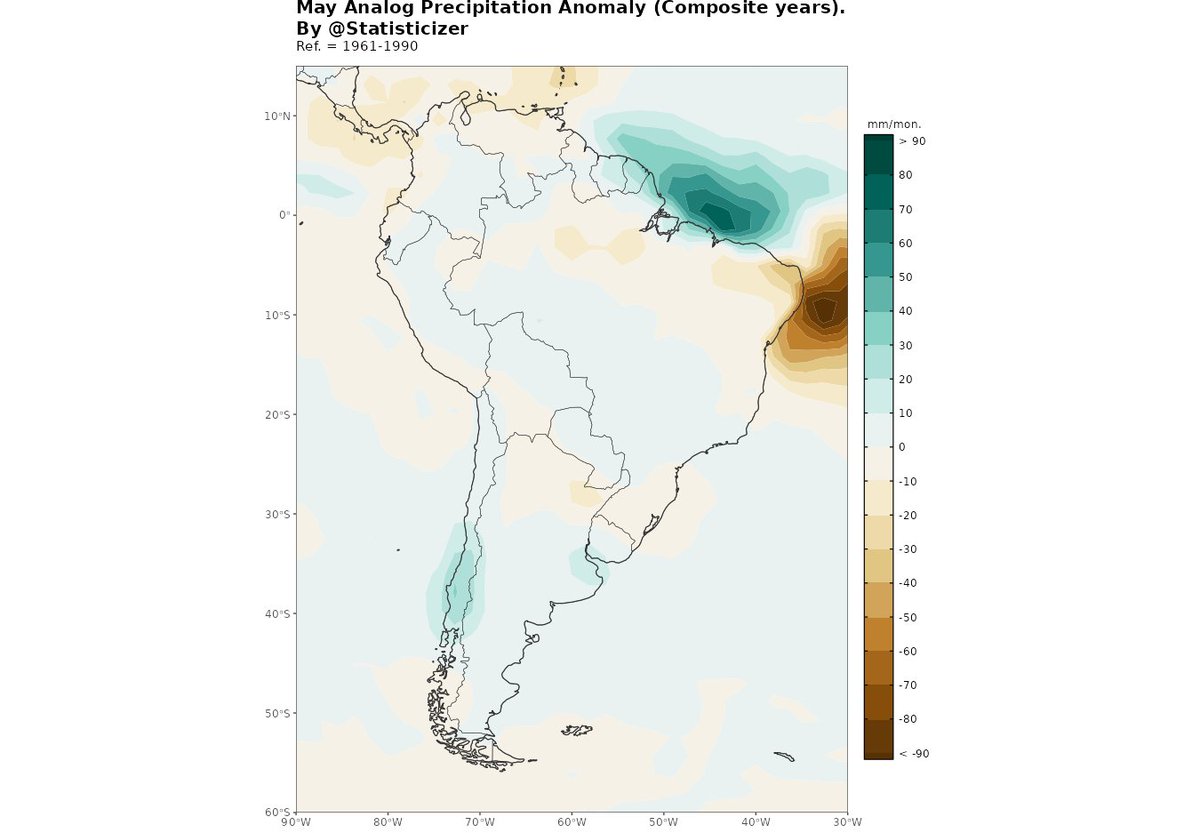
🌎📉🌧️ South America | May–June 2026 Analog-Based Climate Outlook (Statistical & AI-Assisted Downscaling Analysis) The attached May–June precipitation and temperature anomaly composites were generated using long-range analog ensembles spanning 1866–2025, combined with AI-assisted statistical downscaling and multivariable atmospheric pattern recognition methods. These analog sets include several historical canonical and Super El Niño episodes that may have occurred between 1870-1985, yet the resulting regional impacts across South America appear far more nuanced than simplistic “El Niño = droughts or floods everywhere” assumptions. One important point: The climatological baseline used here is 1961–1990. When shifted toward a more modern climatology (1979–2008), the cold contrasts and cooling signals become even sharper in several regions in SE and E south America, rainfall also sharpen for central South America and Chile as well as Argentina. 🌧️ Potential Above-Normal Rainfall / Flood-Prone Regions (May–June): #Guyana #Suriname #FrenchGuiana #SouthernBrazil #Uruguay #NorthernArgentina #Patagonia ⚠️ Some localized flood or waterlogging risks may emerge in: #RioGrandedoSul #SantaCatarina #Uruguay #NortheastArgentina 🌵 Potential Drier-Than-Normal Regions: #NortheastBrazil #EasternBrazilianCoast Parts of tropical eastern South America may experience suppressed rainfall and increasing soil moisture stress. 🌡️ Temperature Signals: Most of tropical and subtropical South America show relatively modest thermal anomalies overall, with transient cool intrusions possible across southern sectors due to amplified Rossby-wave activity and dynamic jet stream oscillations. 🌾 Implications for Farmers & Agribusiness: • Monitor drainage conditions carefully in southern agricultural belts • Localized flooding may temporarily disrupt harvesting/logistics • Wetter conditions may favor pasture growth in parts of the south • Drier eastern Brazil may require careful irrigation management • Strong short-term variability remains possible despite seasonal signals These are probabilistic pattern-based outlooks, not deterministic forecasts. Regional and short-term meteorological variability can still substantially modify local outcomes. Above All, thanks to my friend @Lapacho57876443 from Argentina for sharing the Elnino Profile for South America. It was very useful!🙏🫶🇦🇷 #SouthAmerica #ElNiño #Climate #FloodRisk #Agriculture #Weather #Brazil #Argentina #Uruguay #ClimateRisk #Meteorology #AgriBusiness
Hodhodata@statistics tweet mediaHodhodata@statistics tweet mediaHodhodata@statistics tweet mediaHodhodata@statistics tweet media
Lapacho@Lapacho57876443

@Statisticizer Muchas gracias!!, yo vivo en el NEA argentino, una zona dónde el fenómeno el Niño suele inundarnos desde Noviembre a Abril. Aquí le dejo una imagen ilustrativa de como suele afectar el Niño en América del Sur. Si, hay mucha propaganda del "Super Niño" venidero.

Hashemite Kingdom of Jordan 🇯🇴 English
3
2
13
1.5K
Hodhodata@statistics
Hodhodata@statistics@Statisticizer·
repost
Hodhodata@statistics@Statisticizer

🌍🚨📊 Early Warning Signals for Summer 2026: Potential ITCZ-Driven Flood Risk due to northward shift of the ITCZ. This is One of my earliest long-range forecasts pointing toward summer 2026 signals . It is Interim but requires follow up and attention. During the summer of 2023, the ITCZ shifted unusually far north, leading to widespread flooding across large parts of the Sahara and Sub-Saharan Africa. Exceptional rainfall events were recorded in several countries, including Sudan, Chad and Yemen, where multiple dams and flood-control structures failed, and in Chad, where floods left over 100,000 people displaced—a humanitarian crisis that received limited global attention. Notably also during that episode many desert Oases and Lakes that dried like 30-40 years ago were resurrected with water, followed by enhanced Locus invasions in African countries due to improvised soil moisture & green cover in arid and semi-arid regions . Many International weather forecasters flagged that event in 2023 as rare and odd but in reality it isn't rare or even odd but rather a recurrent pattern that emerges from time to then and goes unnoticed due to relying on modern archives that lack this pattern or imprint . My work as a statistician focuses on simulating the occurrence and recurrence of these events. 🟢 New composite analyses for current year 2026 suggests a high potential recurrence of this pattern in forthcoming summer . The attached JAS (July–September) precipitation anomaly maps indicate a renewed northward extension of the ITCZ and enhanced monsoonal moisture transport during June–October 2026, with the peak risk between July and September. The green shaded anomalies highlight regions where above-normal rainfall and elevated flood risk may materialize, potentially leading to severe hydrological impacts, particularly if combined with weak infrastructure, saturated soils, or rapid runoff conditions. 📌 Regions and countries showing notable positive precipitation anomalies include: #Sudan #SouthSudan #Chad #Niger #Nigeria #Mali #Mauritania, #Libya and S #Algeria and Morocco. #Ethiopia #Eritrea #Yemen #SaudiArabia (southwest) #Sahel #HornOfAfrica #WestAfrica These signals point to a heightened probability of intense rainfall episodes, flash floods, and riverine flooding during summer and early autumn 2026. ➡️ I will be monitoring and refining these risks through updated forecasts during spring 2026, focusing on regional impacts, flood likelihood, and early-warning signals as seasonal drivers become clearer. — @Statisticizer 🌍📊 @Recretos @severeweatherEU

Hashemite Kingdom of Jordan 🇯🇴 English
0
1
8
848
Hodhodata@statistics
Hodhodata@statistics@Statisticizer·
How would you rate the accuracy and practical usefulness of my long-range forecasts for Autumn 2025 and Winter 2026 so far? (Rating Scale): (5🌟) Excellent (Highly accurate & very useful) (4🌟) Good (Mostly accurate & useful) (3🌟) Moderate (Mixed performance) (2🌟) Low accuracy (Limited usefulness ) (1🌟) Not useful / Missed expectations Your feedback helps refine future outlooks and improve regional targeting. Please also mention your country/region in the comments so I can prioritize areas of highest relevance and usability .
Hodhodata@statistics tweet media
English
16
2
15
5.6K