No Need To Hide

8.1K posts

No Need To Hide banner
No Need To Hide

No Need To Hide

@Steph_Chrstn

FAirF ret et 30 years + OPEX Vet ! Expert Faucheurs et gros matous à pales côté 🤫…Fan d’Audiard et autres Tontons ! Mastodon @[email protected]

Au chaud dans un bac à sable Katılım Eylül 2012
456 Takip Edilen252 Takipçiler
LesNews
LesNews@LesNews·
Ce jeune homme a créé une influenceuse #onlyfans qui lui a ramené plus de 43 000 $ lors de ses 30 premiers jours, en utilisant uniquement de l'ia
Français
4
22
129
49.9K
🇨🇵✌️ Alexy
🇨🇵✌️ Alexy@alexysiktrice·
Soprano monténégrine et protégée de Montserrat Caballé, Tamara Radjenovic a débuté au Carnegie Hall à 23 ans après ses études au Royal College of Music. Dans la vidéo 6848.mp4, elle interprète avec élégance une œuvre d'Ennio Morricone, illustrant sa maîtrise du registre "crossover" entre opéra et musiques de film. Reconnue pour la pureté de son timbre, cette ambassadrice culturelle du Monténégro s'impose aujourd'hui comme une figure montante de la scène lyrique internationale.
Français
32
211
1.2K
85.5K
No Need To Hide retweetledi
Rishabh
Rishabh@Rixhabh__·
A man spent 50 years teaching at MIT. Near the end, he knew time was running out. So he recorded one final lecture, everything he learned distilled into one hour. He passed away 5 months later. This is that lecture. Bookmark it.
English
11
133
522
69.3K
No Need To Hide
No Need To Hide@Steph_Chrstn·
@Fs_francaises_ J'étais au dessus en appui de la mission...Et 8 jours plus tard, de même pour cette mission avec DPP et Bébert....Mois de mai 2019 bien pourri...
Français
0
0
0
72
Forces Spéciales Françaises 🌟
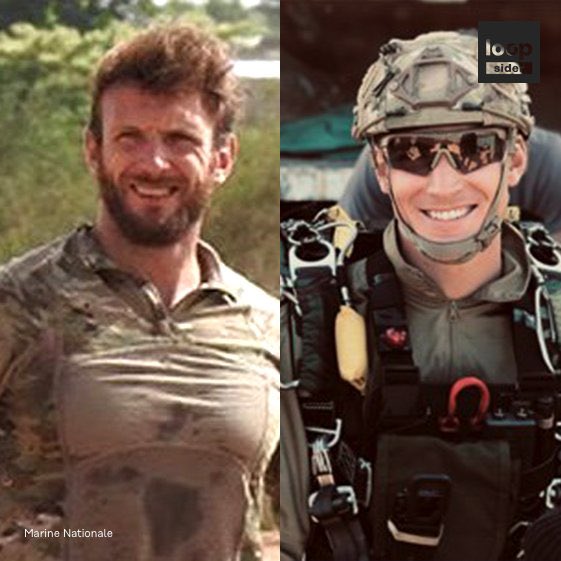
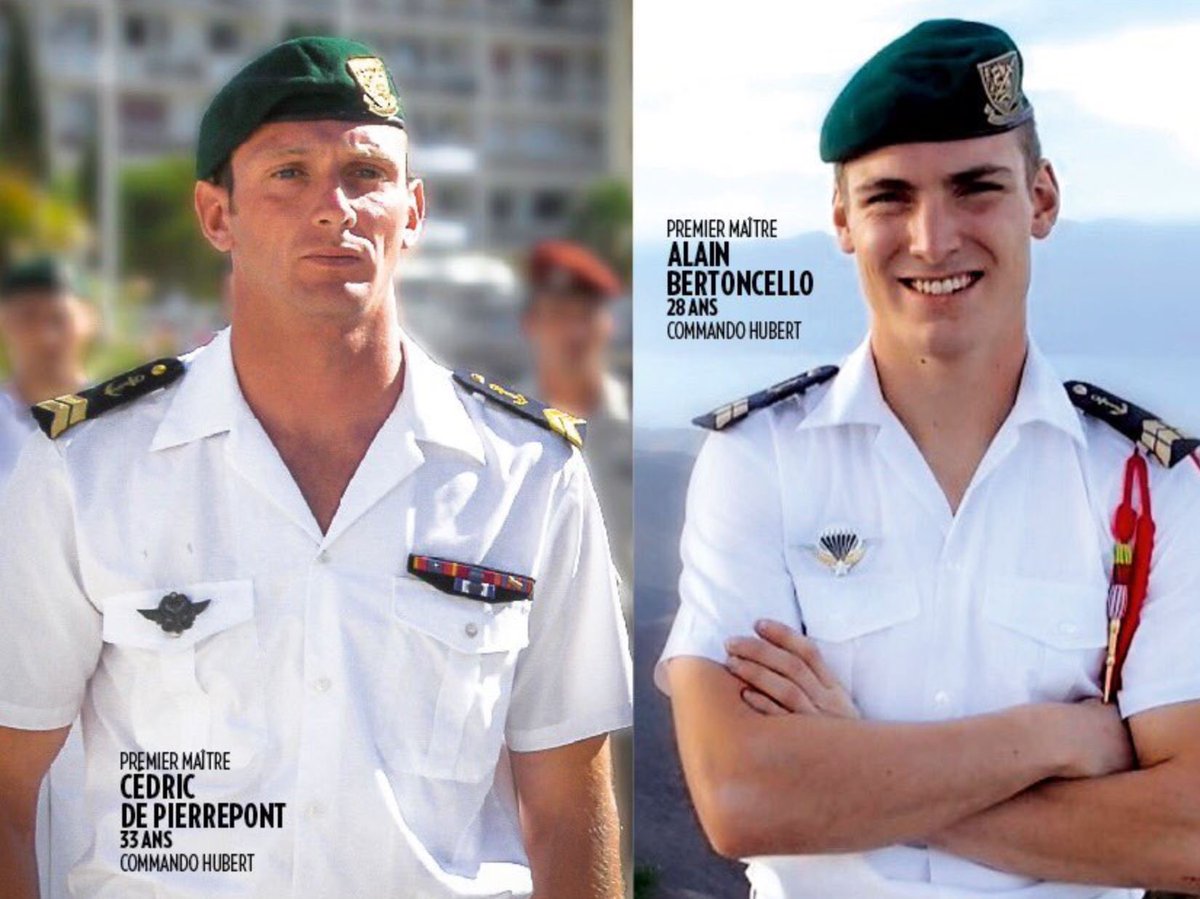
Mais le 2 mai 2019, les choses tournent mal. Envoyé en reconnaissance, Leuk débusque l'ennemi, retranché en position forte et engage le combat, saisissant son aversaire au mollet et au bras. Leuk et son adversaire se trouvent dans un endroit trop profond, inaccessible, ils ne peuvent rien faire. Leuk tombe sous les balles de son adversaire.
Forces Spéciales Françaises 🌟@Fs_francaises_

Leuk, le chien héros du commando Kieffer. En mars 2019, il a été déployé au Sahel aux côtés de son maître « Forest », où ses actions ont permis de sauver la vie de nombreux commandos marine à plusieurs reprises.

Français
8
65
495
58.1K
No Need To Hide retweetledi
Shanaka Anslem Perera ⚡
Shanaka Anslem Perera ⚡@shanaka86·
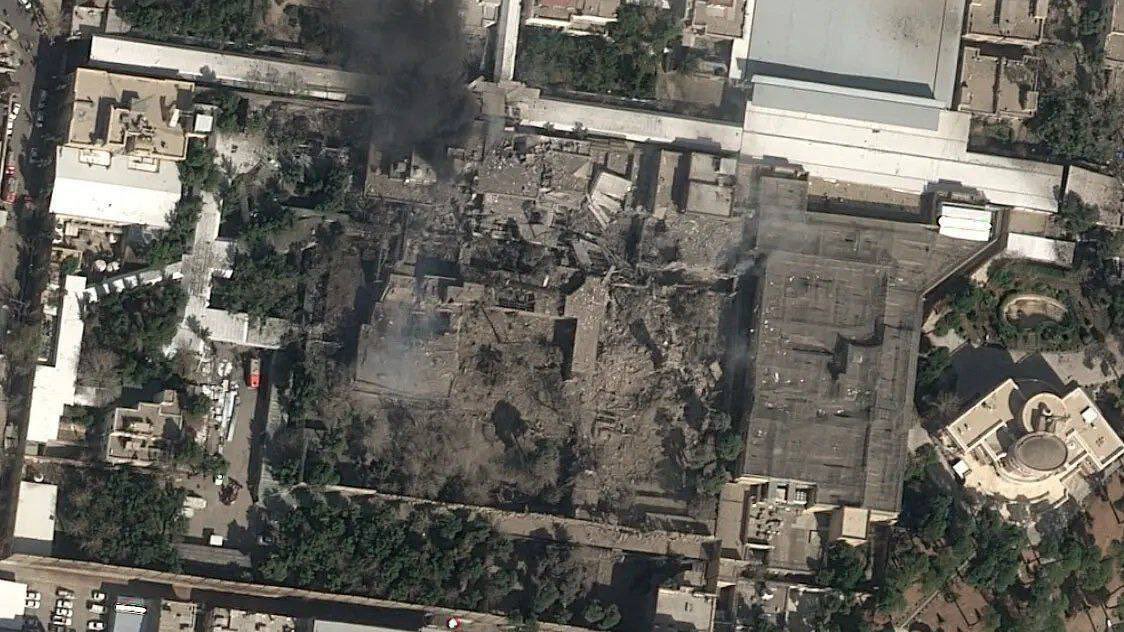
Everyone is talking about the oil. Almost nobody is talking about the machines. When Iranian missiles hit Ras Laffan on March 18 and 19, they did not just knock out LNG production. They struck the most concentrated node of cryogenic industrial infrastructure on earth. And the reason QatarEnergy’s CEO told Reuters that repairs will take three to five years is not because the buildings are hard to rebuild. It is because the machines inside them are nearly impossible to replace. The core technology in every LNG train and helium extraction unit at Ras Laffan is the brazed aluminium plate-fin heat exchanger, known in the industry as a BAHX. These are not off-the-shelf components. They are custom-engineered cryogenic cores weighing up to 470 tonnes, standing 60 metres tall inside insulated cold boxes, manufactured by exactly five companies on earth: Chart Industries in the United States, Fives Cryo in France, Kobe Steel in Japan, Linde in Germany, and Sumitomo in Japan. That is the entire global supply per ALPEMA, the manufacturers’ own association. Current lead time for a full mega-scale air separation unit built around these exchangers: three to four years from contract to commissioning. Lead time for the BAHX cores alone: 12 to 18 months with order books already full before the war started. Here is why field repair is so difficult. Aluminium has no fatigue endurance limit. Every thermal cycle accumulates irreversible damage. The brazed joints crack under thermal stress, and ALPEMA’s Integrity Operating Windows cap temperature changes at below 1 degree Celsius per minute during normal cycling and below 5 degrees per minute even during startup events. When a joint cracks, the only field repair is layer blocking: welding shut the distributor openings of the damaged layer while leaving adjacent layers open. Chart Industries, the primary manufacturer, recommends a maximum of two blocks before the entire core must be replaced. Each block reduces heat transfer efficiency. Each block increases stress on remaining layers, accelerating the fatigue cycle. Shell confirmed on March 20 that Pearl GTL Train 2 will take approximately one year to repair. The LNG trains S4 and S6, with 12.8 million tonnes per annum combined capacity, will take three to five years per QatarEnergy. The difference in timelines reflects damage extent, not repair difficulty. Both face the same physics. And both face the same logistics problem. Every replacement module, every specialist welder with an ASME R-stamp authorization, every 470-tonne cold box shipment must transit the Strait of Hormuz. The same strait where 90 percent of the world’s ocean-going tonnage has lost war risk insurance coverage. The same strait where the IRGC operates a selective vetting corridor with at least two confirmed yuan-settled payments per Lloyd’s List. The same strait where premiums have surged from 0.125 percent to 7.5 percent of hull value. The machines cannot be repaired without parts that cannot be shipped through a strait that cannot be insured. This is the machine layer that connects the helium shortage to the semiconductor shortage to the AI compute shortage. Qatar produces one-third of the world’s helium as a byproduct of LNG processing through these exact machines. Helium spot prices have doubled. Samsung and SK Hynix hold six months of inventory. There is no substitute in cryogenic semiconductor applications per the USGS. The market priced the oil shock. It has not priced the machine shock. The timeline is measured in years, not weeks. open.substack.com/pub/shanakaans…
Shanaka Anslem Perera ⚡ tweet media
Shanaka Anslem Perera ⚡@shanaka86

BREAKING: Qatar just told four countries their gas is not coming. For up to five years. QatarEnergy declared force majeure on long-term LNG contracts with Italy, Belgium, South Korea, and China on March 24. This is not a temporary disruption notice. This is the world’s largest LNG supplier telling major industrial economies that contractual obligations are suspended indefinitely because Iranian missiles destroyed the infrastructure required to fulfill them. The specifics matter. Iranian strikes on March 18 and 19 hit LNG Trains 4 and 6 at Ras Laffan Industrial City. Combined capacity: 12.8 million tonnes per annum. That is 17% of Qatar’s total LNG export capacity. QatarEnergy CEO Saad al-Kaabi told Reuters the damage will take three to five years to repair. Estimated annual revenue loss: $20 billion. ExxonMobil holds a 34% stake in Train S4 and 30% in Train S6. Shell is a partner in the damaged Pearl GTL facility, which will take approximately one year to repair. Train S4 supplied Italy’s Edison and Belgium’s EDFT. Train S6 supplied South Korea’s KOGAS, EDFT, and Shell’s operations in China. Those are not abstract numbers. Edison heats Italian homes. KOGAS powers South Korean industry. Shell’s China volumes feed the world’s largest energy importer. All of them just received force majeure notices with a repair timeline measured in years, not months. Al-Kaabi’s quote to Reuters is worth reading in full: “I never in my wildest dreams would have thought that Qatar would be in such an attack, especially from a brotherly Muslim country in the month of Ramadan, attacking us in this way.” Qatar accounts for roughly 20% of global LNG production. Approximately 80% of that went to Asia before the war. The country was in the middle of a $30 billion expansion to increase capacity from 77 MTPA to 142 MTPA by 2030. Al-Kaabi said the scale of the damage has set the region back 10 to 20 years. Now connect this to the rest of the matrix. Beyond LNG, QatarEnergy confirmed “materially reduced output” of condensate, LPG, helium, naphtha, and sulfur. Qatar produces one-third of the world’s helium. South Korea imports 64.7% of its helium from Qatar. Samsung and SK Hynix hold roughly six months of semiconductor-grade helium inventory. Helium spot prices have doubled. Even undamaged trains cannot export through a Strait of Hormuz where traffic has collapsed 95%, where 2,000 vessels are stranded, and where Iran is operating a selective vetting and toll system near Larak Island with at least two confirmed yuan-settled payments per Lloyd’s List. This force majeure is not a blip. It is three to five years of lost production compounding with a naval blockade, an insurance market that has priced itself out of the corridor, and a toll regime that Iran’s parliament is actively legislating into permanent law. Kuwait and Bahrain have also invoked force majeure. The dominoes are falling in sequence, not in parallel. The market is pricing a temporary oil shock. The molecule map says this is a multi-year structural reordering of global energy, semiconductors, and fertilizer supply chains running through a single contested waterway. open.substack.com/pub/shanakaans…

English
24
465
1K
113.7K
No Need To Hide retweetledi
China pulse 🇨🇳
China pulse 🇨🇳@Eng_china5·
JUST IN AND UNUSUAL CHINA is recording the US war live! The US attacks on Iran have become a veritable military intelligence laboratory for China. More than 300 Jilin-1 satellites are recording every detail, second by second, from munition refueling to missile trajectories. China is turning US war doctrine into a database, including refueling times and air defense responses. According to experts, this data could give China a military research and development advantage that will last for decades. US war tactics are being thoroughly analyzed.
English
1.2K
7K
32.2K
2.6M
No Need To Hide retweetledi
Alok Kumar
Alok Kumar@Alokkumarzz·
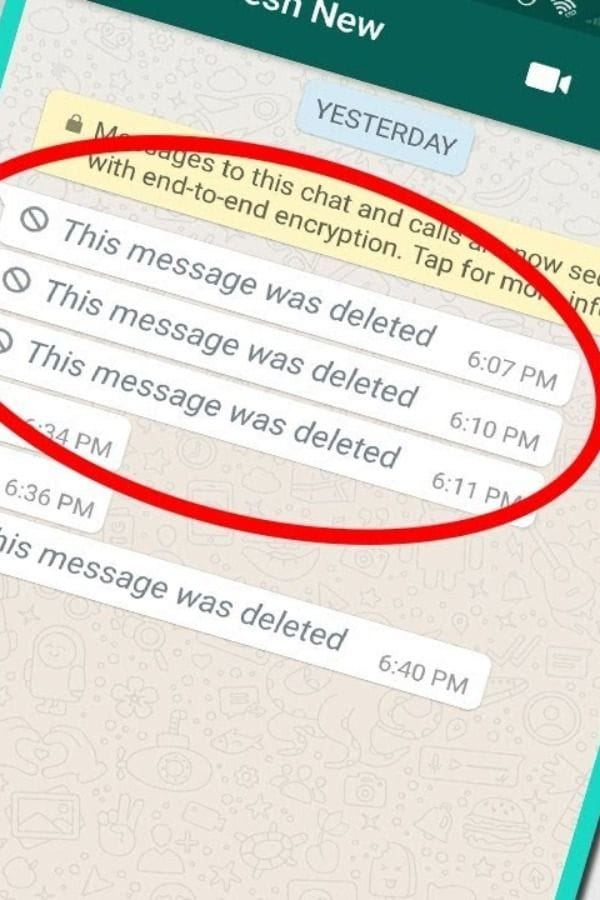
WhatsApp has more than 1.9 billion users worldwide. But 97% of people don’t know its true potential. Here are 15 essential tricks you should know:
Alok Kumar tweet media
English
58
1.3K
4.3K
2.1M
No Need To Hide retweetledi
Shanaka Anslem Perera ⚡
Shanaka Anslem Perera ⚡@shanaka86·
They did not bomb Iran. They waited for Iran’s entire leadership to sit down in the same room and then they bombed Iran. Months of intelligence. Thousands of hours of surveillance and signal intercepts. One variable: the moment the Supreme Leader, the President, and senior military command gathered in a single location at the same time. That moment was 8:15 this morning. Daylight. Every previous Israeli strike on Iran came at night. June 2025 launched in darkness. October 2024 after midnight. Iran’s entire air defense doctrine is built around the assumption that Israel attacks in the dark. Israel attacked in broad daylight because the target was not infrastructure. The target was a meeting. Reuters confirms strikes targeted Khamenei and Pezeshkian. CNN confirms months of joint US-Israeli planning. Israeli officials confirmed the strike hit the location where Iran’s top officials were gathered. Whether Khamenei was moved before the strike or extracted after is the most consequential unknown on the planet right now. If before, someone inside Tehran’s inner circle told Jerusalem when and where the meeting would happen. If after, the strikes hit the room and he survived. Both scenarios are catastrophic for the regime. Because Iran’s leadership now knows three things. Israel knew where they were meeting. Israel knew when they were meeting. Israel knew who would be in the room. And everything we watched over the past month, the F-22s at Ovda, the tankers at Ben Gurion, Al Udeid emptied to zero, 270 transport flights, all of it was the delivery architecture for one precision strike on one gathering. Every future meeting of Iran’s senior leadership now carries one question: does Israel know about this one too. This is not a military operation. This is the destruction of institutional trust inside a regime. Every general who sits with Khamenei tomorrow will wonder who told Jerusalem about today. Every IRGC commander who receives a meeting summons will calculate whether attendance is duty or a death sentence. Every secure facility in Tehran has been proven insecure. In June 2025 Israel killed 30 generals in the opening minutes. That was brute force across dispersed targets. This was a scalpel. One meeting. One moment. Months of patience. Iran fired missiles at six countries in retaliation. Most intercepted. One civilian dead from debris in Abu Dhabi. Saudi Arabia responded by pledging all its capabilities against Iran. The Gulf coalition that did not exist yesterday exists today because Tehran built it by attacking everyone simultaneously. Israel traded one morning of precision strikes for the permanent destruction of Iran’s command cohesion. That is not a battle. That is checkmate disguised as a first move. open.substack.com/pub/shanakaans…
Shanaka Anslem Perera ⚡ tweet media
Shanaka Anslem Perera ⚡@shanaka86

Iran just fired missiles at five countries simultaneously. Here is what actually happened to each of them. Bahrain. Confirmed hit on the US Navy Fifth Fleet headquarters. Bahrain’s own state news agency reported the strike. No casualty figures released yet. This is the command center for every American naval operation in the Persian Gulf. It was struck. UAE. Multiple missiles intercepted by Emirati air defenses. One civilian killed in Abu Dhabi from falling debris. The UAE defense ministry confirmed the intercepts. The Emirates just absorbed an act of war on its sovereign territory from a country it shares a maritime border with. Qatar. Missile intercepted. Zero damage. The Qatari Interior Ministry confirmed. The same country Iran just attacked is the country that hosted Al Udeid for twenty years as a gesture of regional balance. That balance ended this morning. Kuwait. KUNA state news agency confirmed missiles were “dealt with” in Kuwaiti airspace. No reported damage. Kuwait, which stayed neutral through every Gulf crisis since 1991, just had Iranian ballistic missiles flying over its cities. Jordan. Two Iranian ballistic missiles shot down by Jordanian military. Confirmed by the Jordanian armed forces directly. Jordan intercepted Iranian missiles in June 2025 as well. That was in defense of Israel. This time Iran targeted Jordan itself. Saudi Arabia. Fars News claims strikes. No confirmation from any Saudi source. No Tier 1 or Tier 2 verification. Either it did not happen or Riyadh is not yet ready to say it did. Both possibilities carry enormous implications. Now understand what Iran just accomplished strategically. In attempting to retaliate against Israel and America, the IRGC fired missiles at six sovereign nations in a single morning. Not one of those nations attacked Iran. Bahrain did not bomb Tehran. The UAE did not launch strikes on Isfahan. Qatar hosted diplomatic back channels. Kuwait maintained neutrality for three decades. Jordan was mediating. Iran just converted every neutral and semi-neutral state in the Gulf into a potential co-belligerent. Every nation whose airspace was violated, whose civilians were killed, whose sovereignty was breached now has legal and political justification to join whatever coalition forms next. And the damage tells the real story. One civilian dead from debris. Intercepts across four countries. No confirmed destruction of any US military asset. No reported American casualties among 40,000 troops in theater. Iran fired at the entire Gulf and the Gulf caught almost everything. Compare this to what Israel did to Tehran this morning. Precision strikes on the IRGC Intelligence Directorate. Explosions near the Supreme Leader’s office. Three detonations in central Tehran confirmed by Iranian state media itself. One side hit what it aimed at. The other side hit one civilian with debris. This is the asymmetry that will define the next 72 hours. Iran demonstrated intent to strike everywhere and capability to hit almost nothing. The Gulf states demonstrated they can defend themselves. And now those states must decide whether the country that just fired ballistic missiles across their borders gets to do it again. They will not let it happen again. Watch for the joint statement. Watch for airspace coordination between Riyadh, Abu Dhabi, Manama, and Kuwait City. Watch for the coalition that Iran just built against itself with a single salvo. Iran did not retaliate against Israel this morning. Iran gave every country in the Middle East a reason to retaliate against Iran.

English
1.4K
14.8K
64.2K
19.6M
No Need To Hide retweetledi
Clash Report
Clash Report@clashreport·
WATCH: Patriot air defence system failed to intercept an Iranian missile over Al Udeid Air Base in Qatar.
English
100
1K
6.8K
941.3K
No Need To Hide retweetledi
WarMonitor🇺🇦🇬🇧
WarMonitor🇺🇦🇬🇧@WarMonitor3·
Remarkable video of an Iranian missile being shot down at close range over Ali Al Salem Air Base in Kuwait.
English
97
739
10.7K
1.6M
Harry Boone
Harry Boone@Harry_Boone·
"Berthier à votre service" Génie du naming du chatgpt de l'ADT
Harry Boone tweet media
Armée de Terre@armeedeTerre

#Innovation Un "cloud de combat" au plus près des opérations 💻🪖 ! Avec le Data Hub de l'Avant (DHA), l'armée de Terre vise l'immédiateté : partager des données critiques entre capteurs et soldats pour une supériorité informationnelle totale. Décryptage 🎬⤵️

Français
1
2
12
1.7K
Perle
Perle@veritebeaute·
Une belle photo de famille de grands acteurs aujourd'hui disparus sur le Trocadéro. Paris. Sauriez-vous les reconnaître?
Perle tweet media
Français
376
500
3K
115.2K
Romain Mielcarek
Romain Mielcarek@romainmielcarek·
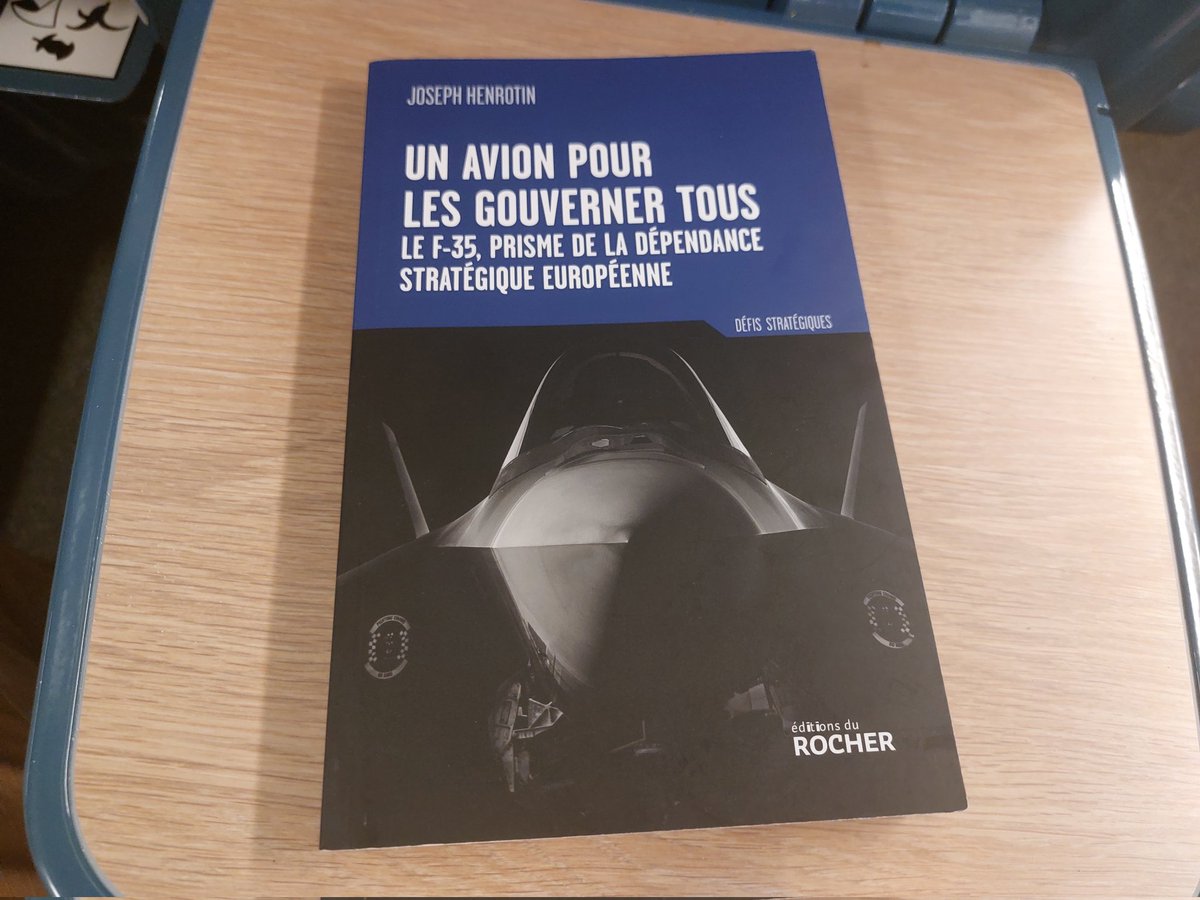
Lecture passionnante. Je sous-estimais l'ampleur et la complexité des dépendances consenties par les pays clients du F-35. Mais également les dépendances et fragilités que cet appareil génère... aux Etats-Unis, entre coûts non maîtrisés, besoins de matières premières (terres rares) et fournisseurs étrangers. Je recommande. Bravo @JosephHenrotin
Romain Mielcarek tweet media
Français
17
94
417
19.9K