Ada Czerwonogora @[email protected]

14.1K posts
Ada Czerwonogora @adita@mastodon.social banner
Ada Czerwonogora @adita@mastodon.social

Ada Czerwonogora @[email protected]

@StephaniMangano

Bióloga, paleontóloga, tecnóloga educativa, estudiante de filosofía (por orden de aparición). Docente universitaria. Investigadora. #PhD2 #OpenScience #GO_GN

Rocha, Uruguay Katılım Nisan 2010
445 Takip Edilen868 Takipçiler
Ada Czerwonogora @[email protected] retweetledi
nature
nature@Nature·
Graduate students increasingly use artificial-intelligence tools to draft, code and search — but many fear it could erode the very skills a doctorate is meant to build go.nature.com/4sPERJH
English
15
167
588
86.4K
Ada Czerwonogora @[email protected] retweetledi
SADAF
SADAF@SADAFArgentina·
Workshop "Desacuerdos, lenguaje e injusticias" — lunes 9/3, 14 a 19 hs. en SADAF (Bulnes 642), formato híbrido. Abierto a la comunidad filosófica. Inscripción obligatoria: forms.gle/Md2XugRUBFrPgx…
SADAF tweet media
Español
0
1
3
98
Ada Czerwonogora @[email protected] retweetledi
OEI
OEI@oeidigital·
Que los jóvenes no leen es una de las afirmaciones que más se ha instalado en el debate educativo. Sin embargo, los datos más recientes invitan a matizarla: según un estudio de la OEI, cerca del 60 % de los jóvenes se consideran lectores y casi la mitad afirma que la lectura forma parte de su vida cotidiana. En su artículo para @el_pais, nuestra directora general de Educación y Formación Profesional, @TamaraFouz, analiza las claves de este estudio, que sirve de base para orientar políticas públicas y estrategias educativas. 👉 Lee el artículo completo aquí elpais.com/proyecto-tende…
Español
0
18
27
2.3K
Ada Czerwonogora @[email protected] retweetledi
Datysoc
Datysoc@datysoc·
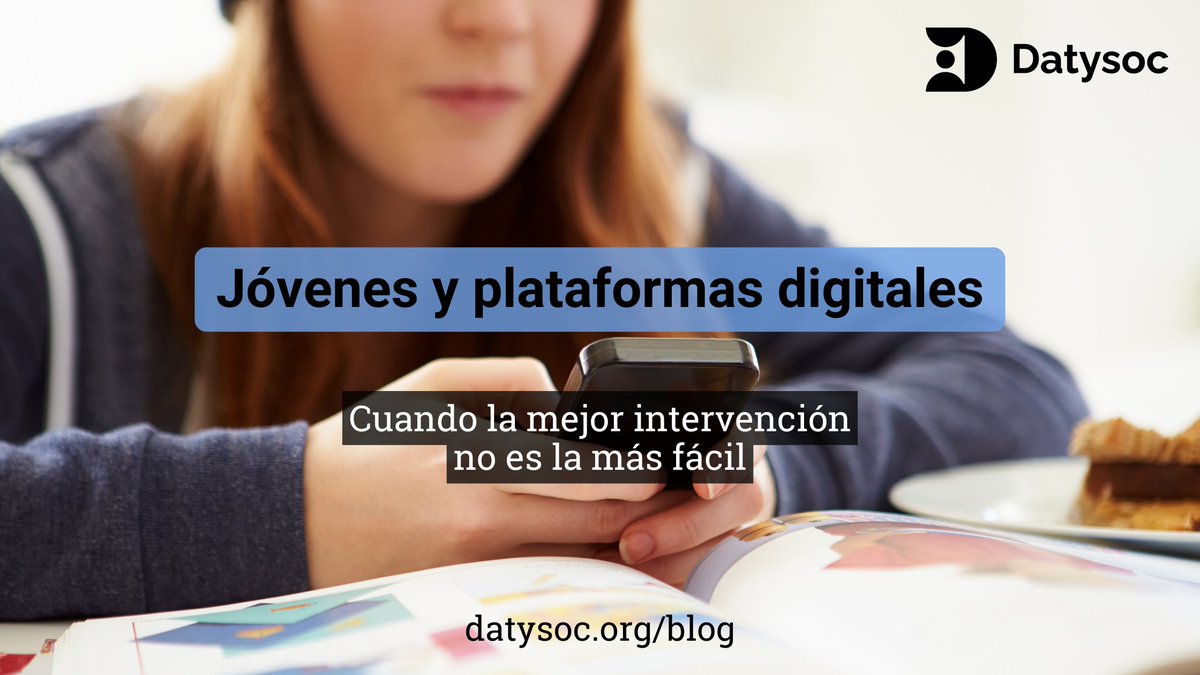
La preocupación sobre los posibles riesgos que enfrentan niñxs y adolescentes en Internet no es nueva. La novedad hoy es el protagonismo que viene ganando una intervención específica: el establecimiento, por ley, de una edad mínima para acceder a las redes sociales. 🧵
Datysoc tweet media
Español
1
8
5
322
Ada Czerwonogora @[email protected] retweetledi
John LeFevre
John LeFevre@JohnLeFevre·
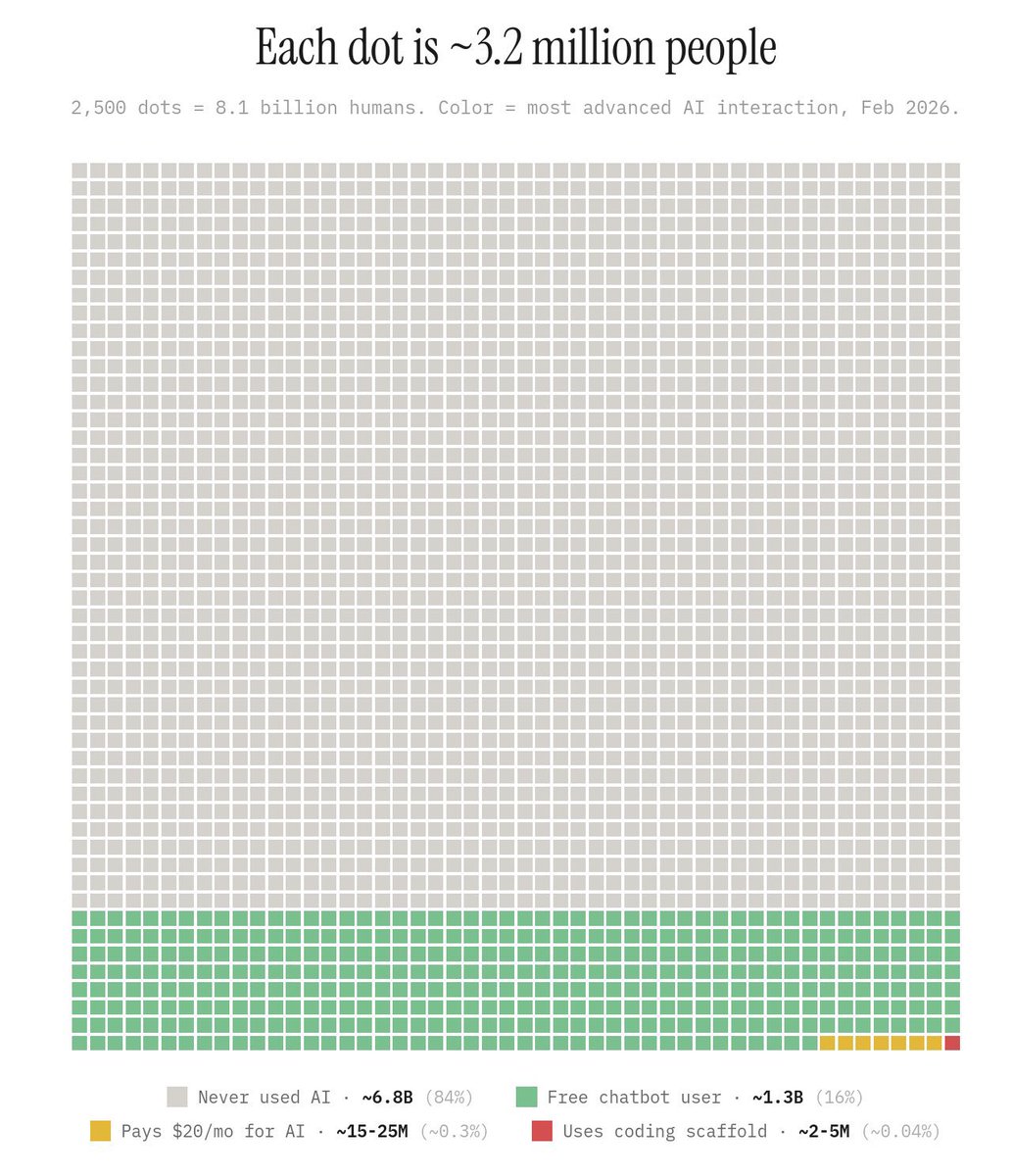
84% of people have never used AI, and just 0.3% of users pay for premium services. Anyone who thinks AI is a bubble isn't paying attention.
John LeFevre tweet media
English
563
679
3.8K
1.6M
Ada Czerwonogora @[email protected] retweetledi
Juan Luis Hortelano
Juan Luis Hortelano@jlhortelano·
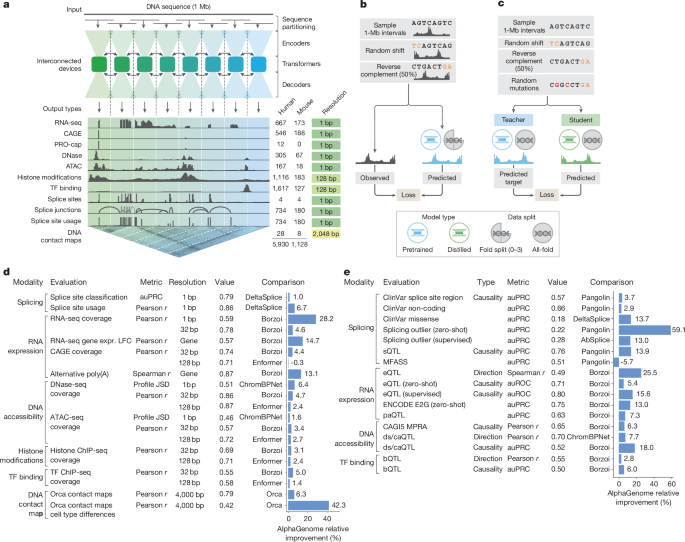
La mayor parte del genoma humano ha sido considerada históricamente "materia oscura", una incógnita para la ciencia. Hoy Nature publica esto sobre AlphaGenome de Google Deepmind. Este nuevo modelo de IA logra predecir el impacto patológico de variantes genéticas en regiones no codificantes con una precisión sin precedentes. Y su impacto puede ser tremendo Este avance demuestra que la Inteligencia Artificial es ya el motor indispensable para descifrar la complejidad biológica y acelerar la próxima era de la medicina de precisión. nature.com/articles/s4158…
Juan Luis Hortelano tweet media
Español
11
350
1.2K
57.7K
Ada Czerwonogora @[email protected] retweetledi
Jay Van Bavel, PhD
Jay Van Bavel, PhD@jayvanbavel·
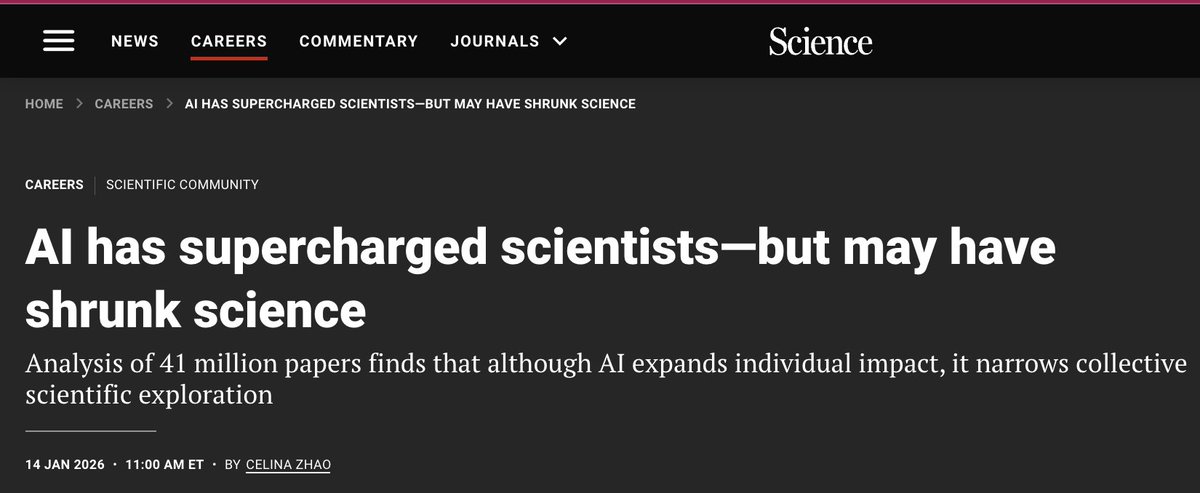
Scientists who use AI have published three times more papers, received five times more citations, and reach leadership roles faster than their AI-free peers. But science as a whole is paying the price, the study suggests. Not only is AI-driven work prone to circling the same crowded problems, but it also leads to a less interconnected scientific literature, with fewer studies engaging with and building on one another. It's a classic social dilemma: what's good for individuals is bad for the collective. science.org/content/articl…
Jay Van Bavel, PhD tweet media
English
66
376
1.4K
96.1K
Ada Czerwonogora @[email protected] retweetledi
Jeffrey West
Jeffrey West@mathoncbro·
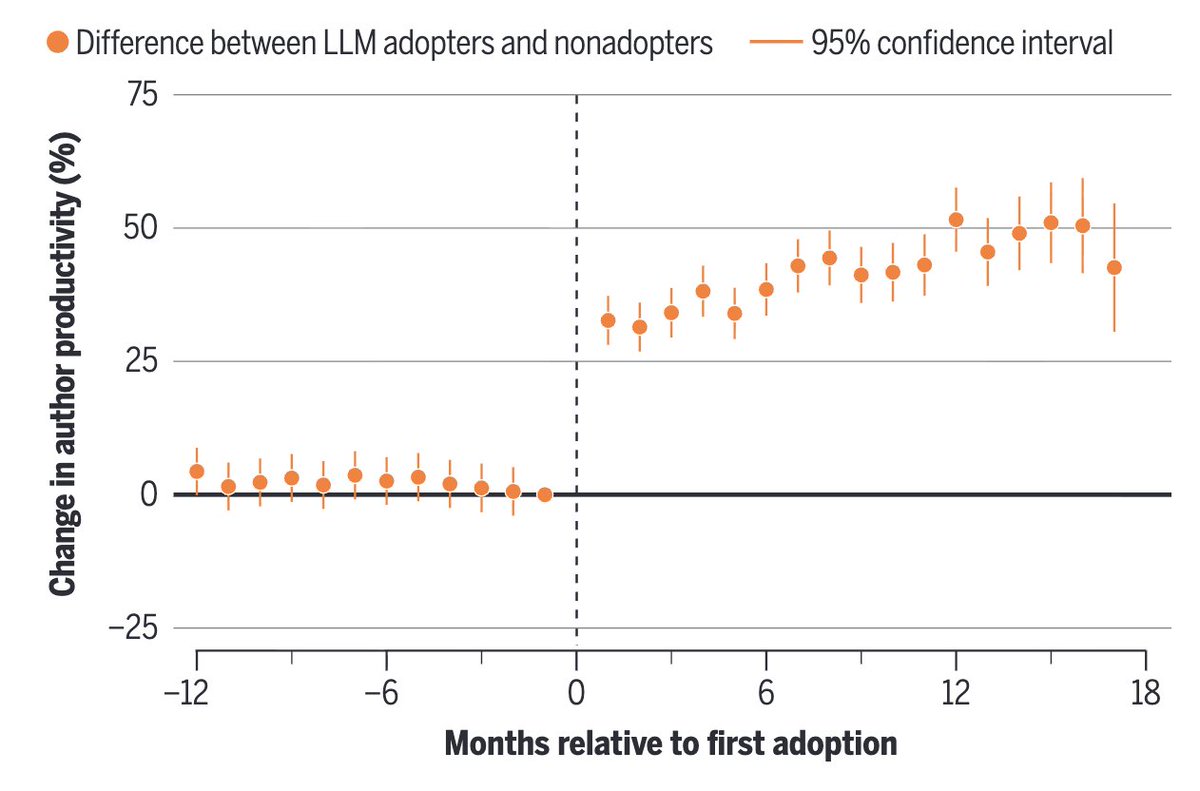
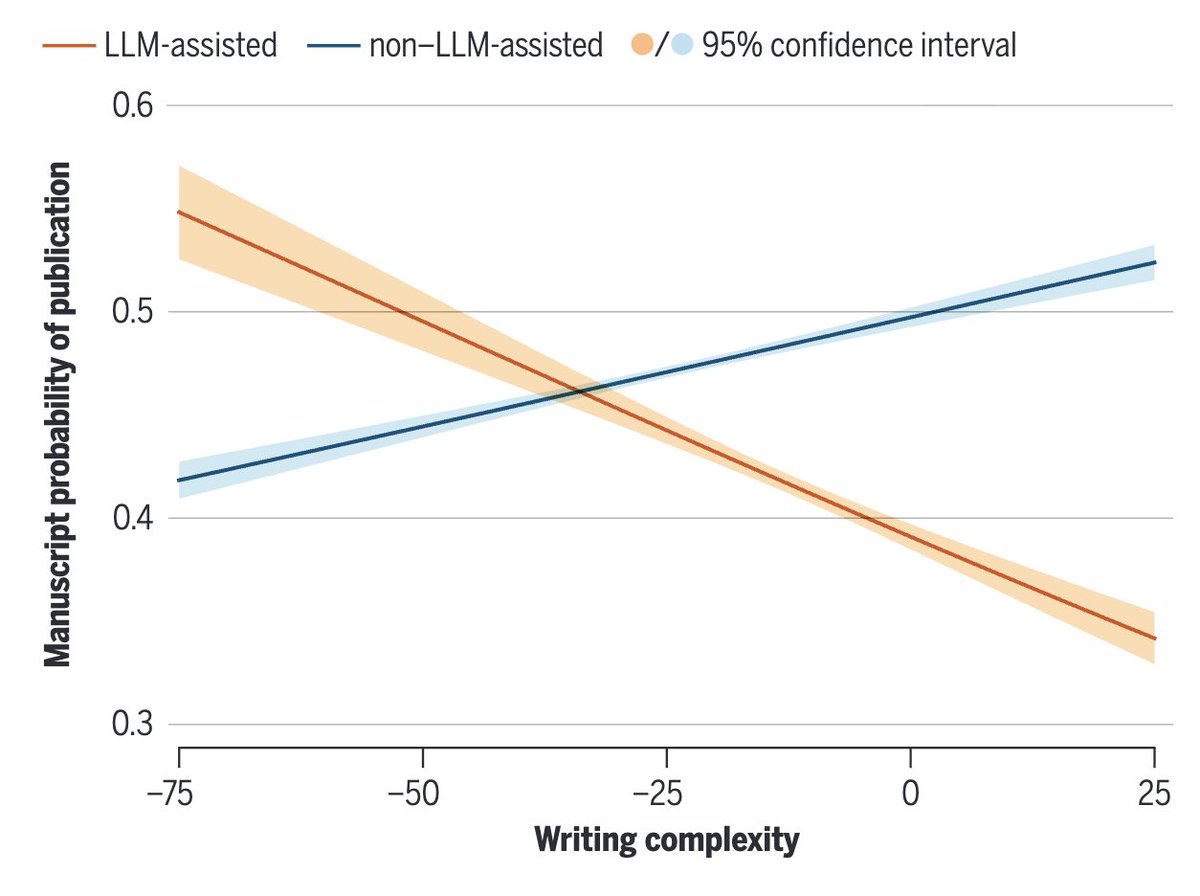
Fascinating (& terrifying) article published in Science, on AI-assisted writing of scientific manuscripts. Authors find evidence of: 1) accelerated research output due to LLMs 2) especially true of non-native English speakers 3) a complete reversal in correlation between writing complexity and publishability (!) science.org/doi/abs/10.112…
Jeffrey West tweet mediaJeffrey West tweet mediaJeffrey West tweet media
English
33
258
1.1K
133.9K
Ada Czerwonogora @[email protected] retweetledi
Chris Laub
Chris Laub@ChrisLaubAI·
R.I.P Google Scholar. I'm going to share the 10 Perplexity prompts that turn research from a chore into a superpower. Copy & paste these into Perplexity right now:
Chris Laub tweet media
English
28
828
4K
374.4K
Ada Czerwonogora @[email protected] retweetledi
Carlos A. Scolari
Carlos A. Scolari@cscolari·
El sistema de peer-review es lento, complicado y está al borde del colapso. Ahora bien, la mayor parte de los papers sobre #IA (sobre todo aquellos que comparan modelos diariamente y exaltan sus pretendidas disrupciones) son publicados en @arxiv. Sin embargo, ... (sigue)
Carlos A. Scolari tweet media
Español
1
10
31
4.8K
Ada Czerwonogora @[email protected] retweetledi
Mushtaq Bilal, PhD
Mushtaq Bilal, PhD@MushtaqBilalPhD·
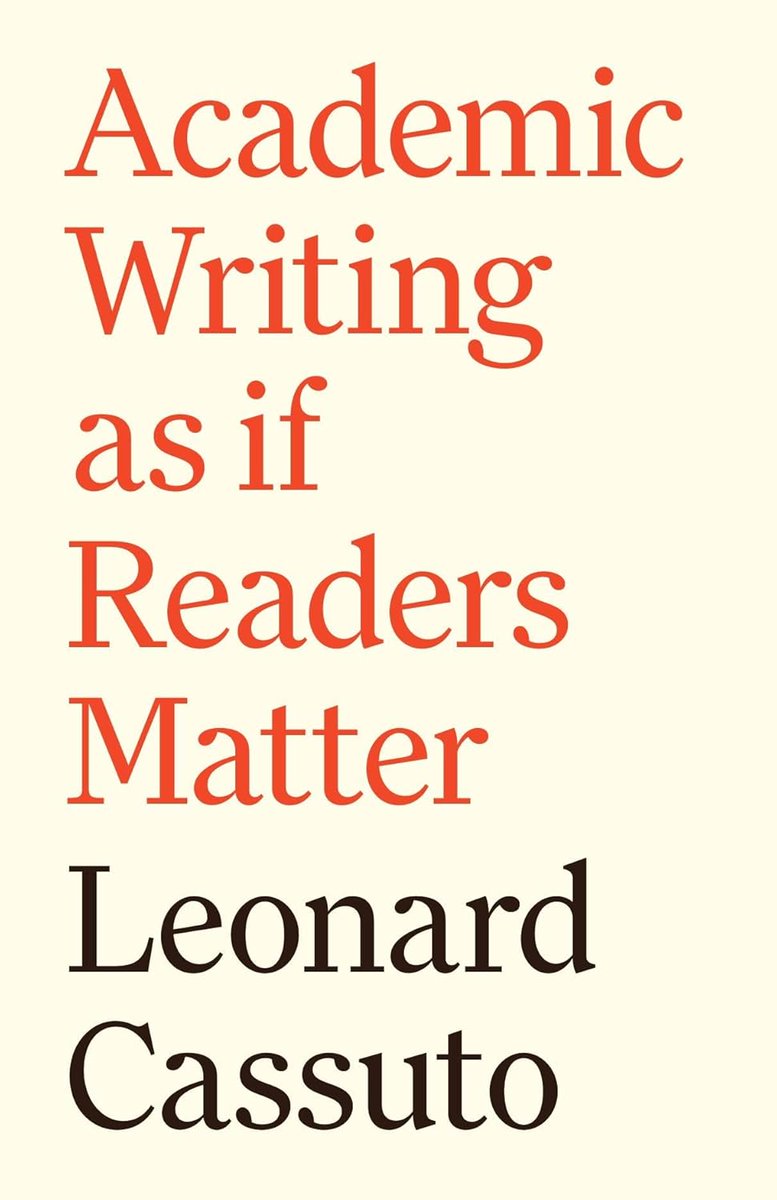
10 books to help you become a better academic writer so you can write a lot and publish a lot: 1. Academic Writing as if the Reader Matters by Leonard Cassuto Practical tips on how to make your academic writing more engaging and readable. Examples from the arts and sciences.
Mushtaq Bilal, PhD tweet media
English
4
215
965
62.6K
Ada Czerwonogora @[email protected] retweetledi
Demis Hassabis
Demis Hassabis@demishassabis·
Yann is just plain incorrect here, he’s confusing general intelligence with universal intelligence. Brains are the most exquis​ite and complex phenomena we know of in the universe (so far), and they are in fact extremely general. Obviously one can’t circumvent the no free lunch theorem so in a practical and finite system there always has to be some degree of specialisation around the ​target distribution that is being learnt. But the point about generality is that in theory, in the Turing Machine sense​, the architecture of ​s​uch a general system is capable of learning anything computable given enough time and memory​ (and data), and the human brain (and AI foundation models) are approximate Turing Machines. Finally, with ​regards to ​Yann's comments about chess players, it’s amazing that humans could have invented chess ​in the first place (and all the other ​a​spects ​o​f modern civilization ​from science to 747s!) let alone get as brilliant at it as someone like Magnus. He may not be ​strictly optimal (after all he has finite memory and limited time to make a decision) but it’s incredible what he and we can do with our brains given they were evolved for hunter gathering.
Haider.@slow_developer

Yann LeCun says there is no such thing as general intelligence Human intelligence is super-specialized for the physical world, and our feeling of generality is an illusion We only seem general because we can't imagine the problems we're blind to "the concept is complete BS"
English
817
1.2K
11.7K
13.4M