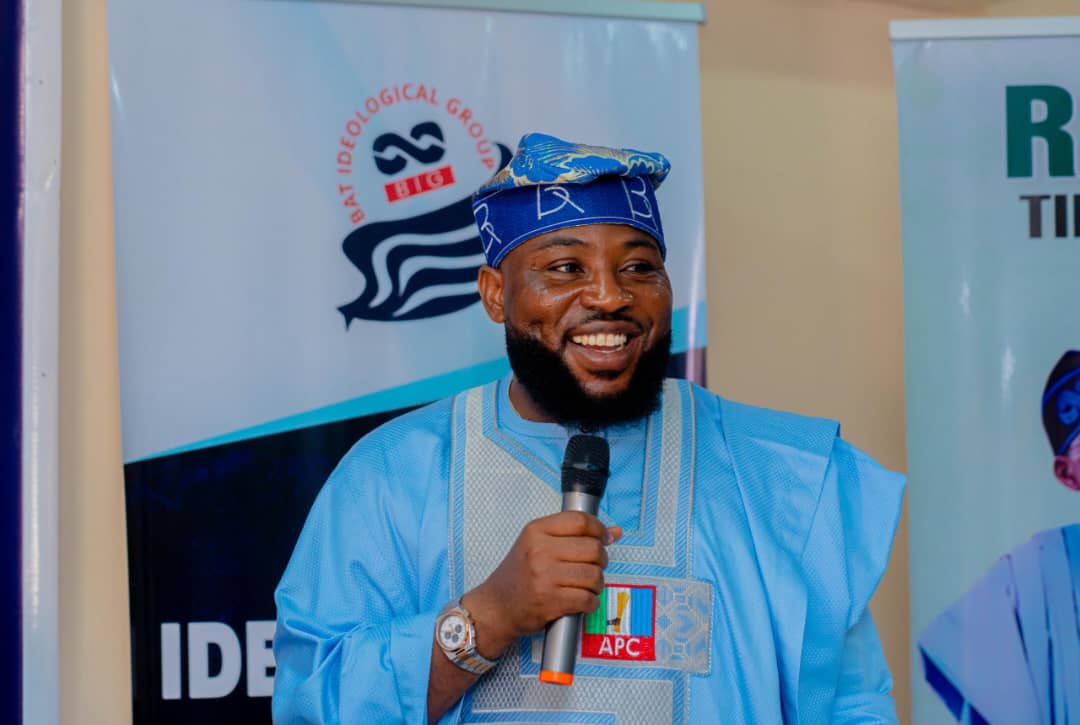
@AtoyebiPaulB Leadership > clout. Socrates called it 2,400 years ago and we’re still arguing with the scoreboard. If governance is like surgery, you want the guy who’s done the operation, not the one who went viral talking about scalpels. Well said @AtoyebiPaulB
Leadership, Not Noise of Baby Politicians Defines Politics, Democracy, Says Atoyebi
Concerns have been raised over the quality of leadership produced by democratic systems, as modern politics increasingly rewards popularity and emotional appeal over competence and technical expertise.
This submission was made by Bamidele Atoyebi, convener of the Bola Ahmed Tinubu Ideological Group, while speaking on the philosophical skepticism of Socrates to frame his argument, warning that democracy risks becoming “a ship steered by the loudest voices rather than the most skilled navigators.”
At the heart of his critique is what he describes as an “equal voice paradox,” where both informed and uninformed voters wield the same electoral power.
According to him, this dynamic creates an environment where persuasive rhetoric often triumphs over demonstrable expertise, allowing less qualified individuals to ascend to leadership positions.
Atoyebi likened governance to specialised professions such as medicine and law, where competence is non-negotiable. “In emergencies, society turns to experts,” he argued, “yet at the ballot box, that logic is frequently abandoned.”
He further criticized the rise of what he termed “baby politicians”—a new wave of actors driven by social media influence rather than political experience or institutional knowledge.
These individuals, he said, capitalise on online popularity and public sentiment despite lacking a verifiable track record in governance.
The commentator illustrated his concerns with a personal encounter at a government agency, where a staff member wearing a campaign emblem of President Bola Ahmed Tinubu was confronted and mocked by colleagues over economic conditions. Atoyebi described intervening to defend the individual’s right to political expression, calling the incident reflective of declining tolerance and informed engagement in political discourse.
Turning to leadership comparisons, Atoyebi contrasted the professional and academic backgrounds of Tinubu and former Anambra State governor Peter Obi. He argued that Tinubu’s training in accountancy and experience as a corporate auditor provided a stronger foundation for fiscal management, while Obi’s academic background in philosophy, though intellectually valuable, may not directly translate to economic governance.
Assessing governance records, Atoyebi pointed to Tinubu’s tenure as governor of Lagos State, crediting him with transforming the state into a major economic hub. In contrast, he criticised Obi’s administration in Anambra State, citing issues such as labour unrest, absence of local government elections, and disputed claims about fiscal legacy.
He referenced statements attributed to Obi’s successor, Willie Obiano, alleging that significant debt obligations were left behind despite public claims of financial prudence.
Atoyebi concluded by advocating for a more structured pathway into politics, drawing parallels with the Eastern apprenticeship model, where individuals undergo rigorous mentorship and gradual progression before assuming leadership roles. He warned that without such discipline, democracy risks becoming a platform where “the salesman overshadows the strategist.”
The opinion underscores an ongoing debate in Nigeria’s political landscape over the balance between mass participation and merit-based leadership, as the country continues to navigate the complexities of democratic governance in the digital age.
Honourable Bamidele Atoyebi, the convener of the Bola Ahmed Tinubu Ideological Group, also serves as the national coordinator of Accountability and Policy Monitoring PR and a publisher of Unfiltered and Mining reports.
@batideologicalg
@AtoyebiPaulB Kwara’s “charter of equity” vs performance debate isn’t new, but security + illegal mining can’t wait for 2027 politics. Zoning or not, Kwara North deserves its turn and Kwara South needs unity. Decentralizing Ifelodun LGA actually makes sense for governance.
Kwara Faces Equity Debate as Zoning Tensions Resurface, Says Atoyebi
Bamidele Atoyebi, the convener of the Bola Ahmed Tinubu Ideological Group (BAT-IG), has called for a renewed commitment to the “charter of equity” in Kwara State, warning that deviations from the state’s long-standing power-sharing arrangement are fueling political tension and social imbalance.
In a detailed political commentary, Atoyebi said Kwara, historically known as the “State of Harmony,” is facing a critical moment as debates intensify over the rotation of political power among its three senatorial districts—Kwara Central, Kwara South, and Kwara North.
He explained that for decades, the state operated an unwritten but widely respected zoning system that ensured equitable access to the governorship. This arrangement, he noted, was evident in the transition from former governor Abubakar Bukola Saraki of Kwara Central to Abdulfatah Ahmed of Kwara South, creating expectations that Kwara North would produce the next governor.
However, Atoyebi said the political landscape shifted dramatically following the 2019 “Otoge” movement, which led to the emergence of Governor AbdulRahman AbdulRazaq from Kwara Central. While the movement was widely celebrated as a break from entrenched political dominance, he argued that it disrupted the expected rotation and sidelined Kwara North, contributing to current political discontent.
As preparations for future elections gather pace, Atoyebi noted that multiple aspirants from all three districts have entered the race, with renewed agitation over fairness and representation. He observed that continued interest from Kwara Central contenders has raised questions about equity, particularly among stakeholders who believe other regions are yet to complete their turn.
Supporters of the current administration, however, maintain that leadership should be based on performance rather than zoning. Atoyebi acknowledged claims pointing to Governor AbdulRazaq’s policies, including a 35 percent women’s inclusion in appointments and infrastructure development in Ilorin, as justification for continuity.
Despite this, he argued that internal divisions within Kwara South have weakened its political influence, allowing other regions to dominate. He described the fragmentation as a major factor limiting the district’s chances, despite its population strength and landmass.
Beyond politics, Atoyebi raised concerns over worsening insecurity across the state, particularly in rural communities. He cited areas such as Igbomina, Ifelodun, Woro, Nuku, and Kemanji as increasingly affected by banditry and kidnapping, warning that the situation has eroded Kwara’s reputation as a peaceful state.
He further questioned the effectiveness of the state’s security strategy, suggesting that reliance on external interventions rather than localised solutions, has limited progress. While initiatives like Operation Savannah Shield have recorded some success, Atoyebi argued that such gains are largely attributable to federal security efforts, including contributions from top military officials of Kwara origin.
To address governance and security challenges, Atoyebi proposed administrative reforms, including the decentralisation of large local government areas. He cited Ifelodun LGA as an example, noting that its vast size complicates effective governance and security management. Creating Local Council Development Areas (LCDAs), he said, would bring governance closer to the people and improve oversight.
He also linked the rising insecurity to illegal mining activities, describing them as a major driver of violence in resource-rich communities.
According to him, weak regulation and enforcement have allowed criminal elements to exploit mineral deposits, intensifying conflicts across Kwara North and South.
Atoyebi stressed that resolving the crisis requires stricter oversight of mining operations and better enforcement of licensing and
Grove Field Notes: Grove and @withAUSD, with @AesPoker and @Nick_van_Eck.
Grove Financing deploys capital across DeFi lending markets, liquidity pools, tokenized credit products, and offchain-originated credit strategies.
Onchain liquidity at issuance.
CEO of METATRONICS - Bradley Peak took the stage during a prime-time panel at the largest Bitcoin conference in Las Vegas.
Alongside top global experts, he broke down the key shifts of the current cycle, with a core focus on:
“Squeezing Profit from the Margins” — the exact principle behind the METATRONICS AI engine.
Key takeaways:
• Efficiency is the new moat
• Institutions are scaling at the intersection of energy + compute
• Active management > passive exposure
“In this cycle, the winners are those who extract maximum performance where others see only costs.” — Bradley Peak
This is no longer about trends.
This is about dominance.
If the car I was driving in 2023 collided after much turning over on the express way , I won’t have been here , ThanK God for another chance to live #grind
Hi Dunny,I want you to curate ₦20k packages for 50 people. Can you deliver today?
Me: I deliver like magic💯
Send your orders blessed people 🙌
Location: Ikorodu Lagos.
Delivers to: Lagos Ibadan Ogun Ekiti and Osogbo
@painthesage@twitgameboy@opoji1stson@omoktp
@AtoyebiPaulB Fair point. Procedure matters. If someone’s been in the system for decades and still can’t work it, maybe it’s time we question if “experience” is the right metric.
If career politicians are unable to effectively navigate politics by adhering to established procedures, and you still wish to entrust the governance of the entire country to them, then you are being extremely foolish and may need to have your mental state evaluated.
@AtoyebiPaulB Patience as strategy is underrated in Nigerian politics. Tinubu’s long game is a masterclass, whether you agree with his policies or not. Waiting ≠ weakness when it’s calculated . Well said sir @AtoyebiPaulB
Adopt Tinubu's Patience Model, “Wait for Your Turn”: Atoyebi Counsels Politicians
The Convener of the Bola Ahmed Tinubu Ideological Group (BAT-IG), Bamidele Atoyebi, has urged Nigerian politicians to embrace patience, strategic thinking and mentorship as core principles of leadership, citing the political journey of President Bola Ahmed Tinubu as a model.
Atoyebi argued that Tinubu’s rise to power reflects a deliberate approach rooted in timing, calculated decision-making, and long-term planning rather than haste or opportunism.
He said these qualities are often lacking among many Nigerian politicians, particularly as the country approaches another election cycle.
According to him, Tinubu’s political philosophy centers on the belief that leadership positions should be attained only when the timing is right, a mindset he described as critical to sustainable success. He referenced the President’s history of stepping aside at various points in his career and supporting others, including former President Muhammadu Buhari, before eventually contesting and winning the presidency.
“Patience is not passive but a form of concentrated strength,” Atoyebi noted, echoing martial artist, Bruce Lee, whose philosophy he said aligns with Tinubu’s political style.
The analyst traced Tinubu’s early political development to his association with late business mogul and politician, Moshood Kashimawo Olawale Abiola, describing it as a formative period marked by mentorship and observation.
He also highlighted Tinubu’s role in building alliances and positioning loyalists in strategic roles over time.
Atoyebi criticised what he described as a prevailing culture among Nigerian politicians who equate visibility with leadership, arguing that being “at the front” does not necessarily translate to effective governance or lasting impact. He said many leaders fail because they lack patience, ignore political timing, and prioritse personal gain over public service.
To illustrate his point, Atoyebi cited the career trajectory of Lagos State Deputy Governor, Obafemi Hamzat, who he said demonstrated political patience by remaining within the system despite missing out on key opportunities, eventually rising to prominence and securing future prospects.
He contrasted this with unnamed politicians who, according to him, damaged their careers by defecting between parties in pursuit of immediate ambitions, rather than waiting for favourable conditions within their original platforms.
Atoyebi also referenced political developments in Oyo State, pointing to Senator Teslim Folarin as an example of a politician whose earlier decisions may have hindered his long-term prospects. He argued that contesting against an incumbent at the wrong time can weaken future opportunities, regardless of personal ambition or resources.
The commentary further warned of what Atoyebi described as a “political virus” spreading among aspirants ahead of elections, characterised by desperation, lack of ideological grounding and a focus on personal enrichment rather than service delivery.
He emphasised that true leadership requires calculated moves, mentorship, and a willingness to serve in subordinate roles before ascending to top positions.
According to him, politicians who fail to recognise these dynamics often leave office without meaningful legacies.
Atoyebi concluded that patience remains the “lifeblood of politics,” adding that Tinubu’s career offers a practical blueprint for aspiring leaders seeking to build enduring influence and deliver value to citizens.
Bamidele Atoyebi is the Convener of BAT Ideological Group, National Coordinator of Accountability and Policy Monitoring and a publisher at Unfiltered and Mining Reporting
@batideologicalg