StephenM ♈️ | 🇫🇷

2.1K posts

StephenM ♈️ | 🇫🇷 banner
StephenM ♈️ | 🇫🇷

StephenM ♈️ | 🇫🇷

@StephenM_AVC

Crypto Investor | Web3 Researcher @capital_avc Chief Marketing Officer | @BitMartExchange Affiliate

United Kingdom Katılım Şubat 2020
532 Takip Edilen21.3K Takipçiler
Sabitlenmiş Tweet
StephenM ♈️ | 🇫🇷
StephenM ♈️ | 🇫🇷@StephenM_AVC·
As early investors, I am thrilled to see @AlloraNetwork officially launch $ALLO today! A major milestone for decentralized AI and one of the most promising Web3 infrastructure plays of 2025. Allora has raised over $35 million from top-tier funds including Polychain Capital, Framework Ventures, and Blockchain Capital and is pioneering a self-improving AI network where models collaborate, get scored, and evolve through decentralized feedback loops. Key strengths that make us bullish on Allora: Active mainnet launch: Staking and network participation are opening alongside token release. Strong token utility: $ALLO powers inference payments, worker registration, and staking for network security. Massive potential: Positioned at the intersection of AI + Web3, one of the fastest-growing categories in the space. This launch reinforces our broader thesis: AI + Web3 are converging fast, and early participation in foundational ecosystems like Allora strengthens long-term network position within the decentralized economy.
Allora@AlloraNetwork

11.11

English
17
11
167
3.7K
StephenM ♈️ | 🇫🇷 retweetledi
VC Launchpad
VC Launchpad@capital_avc·
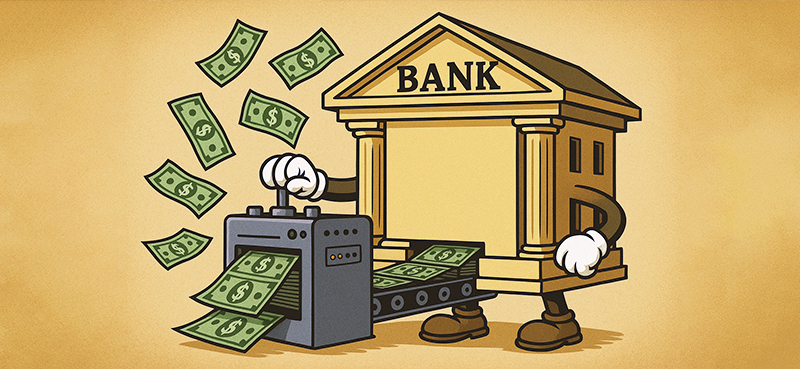
If you want to know why the world feels so expensive in 2026 despite all our "progress," you have to look at the evolution of the greatest magic trick in history, modern banking. We’ve moved from a system of honor to a system of extraction, and most people didn't even notice the digital handcuffs being put on. The "Cowboy" Era: Think back to the old Western movies. When a rancher walked into a bank with a bag of gold, the deal was simple. The bank was a high-security "Safe Box." If you put 100 gold coins in the vault, those 100 coins stayed there. The bank charged you a small fee for protection, and that was it. The bank didn't "own" your money, they were just guardians of your hard work. This was real money, you couldn't just "print" more cattle or more gold. After many years, they created a new system. Money owners and banks made a mutual deal, the owner would receive a profit share if the bank loaned out a portion of their money to other businesses or individuals. Now, the owner of the gold earned a return and didn't need to pay a storage fee. But if they only knew what would come from this shift in the future, I am sure they would have never agreed. The "Evolution": Fast forward to 2026, and the "Safe Box" has been replaced by a "Vacuum Hose." Banks are now private companies that the government forces you to use by law. Try getting a job, buying a house, or paying your taxes without a bank account, it’s nearly impossible. Today, banks don't keep your money in a vault. They use "Fractional Reserve" rules to lend out your money at least 10 times, and in some cases, they even charge you more in various fees than you receive from them in interest over a yearly period. In March 2020, while the world had its eyes fixed on a pandemic, the government officially lowered the "reserve requirement" to 0%. This means banks aren't legally required to hold any of your cash in a vault. Your balance is just a digital promise. If the banks can't pay it back, the government will, meaning they will pay you back with your own government money that you already paid via taxes. I know this sounds ridiculous, but this is the reality now. When banks make billions, they keep the profits. But when they screw up, like the $306B hole we see today, or during 2008 and the pandemic, they hook their vacuum hose directly into the government's printer. They are the only private companies on earth with a "Get Out of Jail Free" card paid for by your future. As a bank owner, there is only upside, there is no risk to the downside at all. How They Steal Twice: The "Spread" is the gap between what a bank pays you and what they charge a borrower. In the Gold Era, this was a small fee for a vault service, or even a profit share that favored you as the owner of the money. Today, it’s a predatory tax that you are expected to be grateful to pay, because you have no choice if you ever want to own something like a house. Right now, big banks are paying you 0.5% on your savings while they get 4.2% "risk-free" from the government just for holding cash. Then, they lend that same money back to you for a mortgage at 6.5% or a car loan at 8%. Consequently, the banks earn about 8 to 16 times more on your money than you do every year. On top of that, they get money nearly for free from the government every month. US banks receive an average of $15–$20 billion per month over the last many years, at a net interest cost of about 0.10%. They receive billions in emergency funding for almost nothing, then lend that nearly "free" capital to you for a mortgage at 6.75% or a credit card at 22%. This immense greed is what has really pushed up the cost of inflation, groceries, and all other essential goods. The Real Black Swan: This is the part they don't teach you in school because the entire system depends on you not understanding it. Inflation is not a natural disaster, it is a deliberate choice. Since the US officially left the Gold Standard in 1971, the government has printed 33x more money. Every time the Fed hits "print" to bail out a failing bank or plug a budget hole, they aren’t creating new wealth, they are stealing purchasing power from every single dollar you already own. Think of it as a hidden tax. The government doesn't have to pass a law to raise your taxes if they can simply devalue your currency. It’s the same result, you have less, and they have more. The Reality: If you have $100,000 in the bank today and the government prints 12% more money this year, your $100k didn't move an inch, but it now buys 12% less "stuff." You just lost $12,000 of your life's energy without ever receiving a bill. This is why the "American Dream" feels impossible in 2026. Your "rich" grandfather could buy a family home for 2 years at an average salary, today, it takes 10 to 12 years. That isn't economic progress, it is the slow motion theft of your time and future. By late 2027, as the government refinances its massive debt and the banks finish "healing" their $306B hole, the printer is going to go into overdrive. If you aren't holding Hard Assets that they can't print, like Bitcoin and Ethereum, you are voluntarily staying inside a burning building while the exit door is wide open. The reason the banks are lobbying so hard against the Stablecoin Clarity Act is that they want to keep you trapped in their system of fees and inflation. They want a "Digital Dollar" that they control, where they can watch your every move and take a cut at every turn. How They Manufacture Oil Scarcity: If money printing is the engine of the scam, Oil is the fear based fuel used to keep you from asking questions. Right now, in 2026, the media is screaming that the Strait of Hormu, which controls 20% of the world’s oil, is the end of the world. They want you to believe that if Iran closes that gate, the global economy dies. The truth is, there is no shortage. The biggest lie we are told is that oil is a "finite" and "disappearing" resource. In reality, oil is controlled exactly like diamonds. De Beers proved decades ago that if you own most of the supply, you can lock it in a vault and drip feed it to the market to keep prices high. Diamonds aren't rare, the supply is just manipulated. The world is literally sitting on enough oil to last for centuries. New technology and deep crust discoveries have shown that the Earth "replenishes" its reservoirs far differently and faster than we were taught in 5th grade. We don't need a single drop from Iran to run the world. So why the drama? Because the banks are too greedy to wait for the "Healthy Road." They want the "Fast Burst." During COVID, they used "fear of a flu" to print $6 trillion, now they are using "fear of an oil crisis" to do the exact same thing. By claiming the Strait of Hormuz is "blocked," they create an artificial spike in prices. This gives the Fed an excuse to print billions in "emergency liquidity" to "stabilize the energy markets." This is their favorite playbook, steal from you twice. First, you pay more at the pump for fuel that isn't actually scarce. Second, your savings lose value because they printed money to "fix" a crisis they helped create. The Grand Deflection: If you feel like the world has gone crazy with division over the last 15 years, you’re right. But it wasn’t an accident. To understand why we are in a $306B bank hole today, you have to look at what happened after the "Fiat Burst" of 2008. In 2011, the "Occupy Wall Street" movement began. For a brief moment, people from the Left and the Right stood together. They weren't fighting about gender, race, jews, muslims, or foreign wars. They were fighting the "1%", the bankers who crashed the economy, got a bailout with your taxes, and paid themselves record bonuses while you lost your home. The banks realized that if the 99% stayed united against the "Money Printer," the game was over. Suddenly, the marketing changed. Corporate media and big banks stopped talking about "financial reform" and started funding "identity politics." If you can get people fighting over Left vs. Right or identity issues, they will never look up and see the banker reaching into their pocket. Today, we argue about everything except why our money buys 40% less than it did four years ago. We are divided into tiny groups so we can't unite against the Institutional Leeches. I see the propaganda every day on my phone and computer too. I also get sucked in until I stop myself and realize this is how they want me to feel. They are the best in the world at pitting people against each other. Please don't fall into that trap, there is only one real enemy here. The Great Illusion: We always hear that "the government is broke," but if they have the magic printing press, why don't they just pay it off? The answer is that the "Debt" isn't just a number; it’s a system of control. As of March 2026, the US national debt has officially crossed $39 trillion. The Social Security Trap: For decades, the government took your Social Security taxes and, instead of letting them sit in a vault, they "borrowed" them to pay for wars, roads, immigrants and other programs. They replaced your cash with an empty future promise. The government literally owes you your own retirement money. The Fed: (Which is technically "independent") owns about $4.5 trillion of the debt. The government prints a bond (debt), and the Fed prints digital money to buy that bond. It’s a giant circular loop designed to inject new money into the banks without calling it "printing." Foreign Countries: Nations like Japan ($1.2T), China ($694B), and the UK ($895B) hold about $9 trillion of US debt. This gives foreign powers a "hook" into the US economy. The Biggest Slice: The largest portion of the debt is held by "The Public, YOU" which means mutual funds, pension funds, and individual citizens. If you have a 401k or a savings account, you likely "own" a piece of the government's debt because they already used your money. The Bottom Line: We have traveled from the "Cowboy" honesty of 1-to-1 gold to a digital system of institutionalized leeches. You cannot win a game where the dealer can change the rules and print more chips every time they start to lose. The Left vs. Right culture war is a carefully crafted smoke screen designed to keep you from looking at the man behind the curtain. The real war is being fought between those who print and extract, and the producers who work and build. The system is currently trapped in a $306B hole of its own making. To "heal," it has no choice but to suck the value out of your labor through inflation. By late 2027, the old system will attempt to finish this "healing" by printing its way out of trouble as usual. The only way to win a rigged game is to stop playing. Stop holding the "paper" they can print into infinity. Start holding the "code" they can't touch, like BTC, ETH, and real estate. Late 2027 isn’t just a date on a chart, it’s the moment the "Liquidity Supernova" hits. When that happens, you want to be standing on the "Hard Money" side of history. You can't win against this kind of corruption, you can only play the game so you win more than they do.
VC Launchpad tweet media
English
7
22
195
426
StephenM ♈️ | 🇫🇷 retweetledi
VC Launchpad
VC Launchpad@capital_avc·
If my last two posts showed you the "Bank Hole" and why the Fed is about to pivot, this one is about the final destination. We’ve spent years arguing over whether crypto is a "scam" or a "casino." In 2026, that argument is dead. We are moving from the era of speculation into the era of the Global Financial Operating System. The Yield War: Why the Banks are Terrified of Your Wallet: The biggest fight in Washington right now isn’t about "banning" crypto, it’s about who gets to keep the interest on your money. Right now, the Stablecoin Clarity Act (the big law everyone is watching in March 2026) has reached a massive compromise. The banks were shaking in their boots because they realized if a company like Circle (which makes USDC) could pay you 5% interest just for holding their coin, nobody would keep money in a traditional bank account ever again. Why take 0.1% from a bank when you can get 5% on your phone? The 2026 Deal: To "save" the banks, the government is moving to ban Passive Yield. This means you won't get paid just for sitting on a stablecoin balance like it's a savings account. The "Active" Loophole: But they are keeping Activity Rewards legal. If you actually use the coin, staking it to secure a network, using it for daily payments (so big cashbacks or something similar), or "soft staking" it on an exchange where they do the work for you, you can still capture that 4-5% yield. This is a major win, active staking is such a broad thing that someone will figure out an easy way so this benefits us. The 33x Money Trap: Why You Can’t Win with Fiat: To understand why we need BTC, ETH, and other hard assets, you have to look at the history of the printing press. Since the US officially left the gold standard in 1971, the money supply (M2) hasn't just grown, it has exploded. We have roughly 33x more dollars in circulation today than we did 50 years ago, and this amount compounds, so it's not going to be 66x the next 50 years, more like 200x. When the government can print money at will, the "value" of your labor is constantly being diluted. If you hold your wealth in cash, you are running a race where the finish line moves 10-12% further away every year. Over the next 50 years, as the government continues to "print" to pay off its massive debt, this debasement will only accelerate. The only way to win is to own Hard Assets that the government cannot print. Bitcoin is digital gold (fixed supply), and Ethereum is digital land (productive utility). I completely understand that this sounds good and easy, but I understand that it is not easy because we are all programmed that things work a certain way. But the easier way for me was when I looked at it as currency. I get fiat for my manual work, but to buy any asset that I want, I need to pay with my currency, and my currency is not Fiat. There are some good ones to pick from, but I picked BTC. So don't think about BTC as some speculative asset, think of it as your currency. Convert all the fiat you can to BTC, and when you really want to buy some hard assets like a car or a house, pay with BTC. I promise you that you will afford it more easily in the long term. The US Government’s "Secret Love" for Stablecoins: Most people think the US government hates crypto. Truth is, they’ve realized that USD backed stablecoins are the best thing to happen to the Dollar in decades. Stablecoin companies are now among the top 20 holders of US Treasuries in the world, they buy more government debt than many entire countries do. The US wants the world to stay addicted to the Dollar. By letting USDC become the "Internet Dollar," they ensure the world still runs on the Greenback even if the physical cash system fades. They aren't trying to kill crypto, they’re trying to own the rails. They want every person in every corner of the globe to have a USD wallet on their phone. That is the ultimate global power move. The Banks: The Ultimate Final Boss: Don't be fooled, the biggest fighters against blockchain aren't just politicians, it’s the Banks. For centuries, banks have owned the "plumbing" of the world. They control the infrastructure, and they take a cut at every single turn. The Middleman Tax: Right now, moving money between countries is slow and expensive. Banks charge you hidden fees on "currency differences" and transaction fees for using their version of a "private blockchain" (like SWIFT). They love complexity because complexity equals profit. The 2026 Lobbying War: Organizations like the American Bankers Association are spending millions to stop the Clarity Act. They are terrified of "Deposit Flight" if you can hold USDC and get 4-5% rewards directly on your phone, you'll leave the bank in a heartbeat. The End of Control: Blockchain is a "highway that nobody owns." When money moves on a public ledger, the bank can no longer charge you a $25 wire fee or take 2% on an exchange rate. They are fighting to keep you trapped in their slow, expensive system because once the world moves to a public rail, their "toll booth" disappears forever. The Opposition: Politicians like Ted Cruz and privacy advocates are pushing the Anti CBDC Surveillance State Act. They fear a government controlled Central Bank Digital Currency (CBDC) would give the Fed the power to track every penny you spend and even "turn off" your access to your own money. This is why the Stablecoin Clarity Act is the real winner. It allows private companies like Circle to issue digital dollars. This gives us the tech we need (speed and efficiency) without giving the government a direct "surveillance" switch over our bank accounts. NFTs: It Was Never About the Monkeys: We need to have a serious talk about NFT technology, because the media did a great job of making you think it was just "trash gambling" on JPEGs. An NFT is just a Non Fungible Token, a fancy way of saying a "Digital Deed" that cannot be faked or copied. The Real Use Case: Imagine buying a house. Right now, you have to deal with title companies, escrow, lawyers, and weeks of paperwork. In the near future, that house deed is an NFT. You click "buy," the NFT moves to your wallet, and you own the house instantly. No middleman. No 3-5% fee. No headache. Tokenizing Your Life: Everything you own, the title to your car, your physical gold in a vault, your concert tickets, even your medical records, will be an NFT. It makes "Ownership" as easy to move as an email. When people stop looking at NFTs as "art" and start looking at them as "Legal Proof of Ownership," the entire world changes. Raoul Pal’s $100 Trillion Dream: How the Math Actually Works: You’ve probably heard Raoul Pal talk about crypto becoming a $100 trillion industry. Most people hear that number and think he’s lost his mind. But here is the logic: He isn’t saying Bitcoin is going to $5 million tomorrow. He’s looking at the $400 trillion of "stuff" that exists in the world, stocks, bonds, real estate, and car titles, and this number grows fast. In 7-10 years, this number will have compounded to a minimum of $800 trillion. Right now, all that "stuff" is trapped in slow, paper based systems. Raoul’s thesis is based on Tokenization. The Migration: Imagine every stock certificate and every house deed being turned into a digital token on a blockchain. This makes them tradeable 24/7, instant, and nearly free to move. The Result: If only 25% of the world’s $400T in assets moves onto a blockchain, you hit that $100 trillion market cap instantly. Crypto isn't an "asset class" anymore, it’s the software that all the world's money is about to run on. It’s the upgrade from "analog" money to "digital" money. Why BlackRock Picked Ethereum (The Institutional Toll Road): People ask me all the time "Why doesn't BlackRock just build their own private blockchain?" Because a private BlackRock chain is a "walled garden." If they want their money to move to every corner of the world instantly, they have to be on a "public highway" that everyone else can access. The Network Effect: Ethereum is the busiest highway in the world. It has the most "gas stations" (liquidity) and the most "trucks" (developers). The Digital Bond: BlackRock is using Ethereum as a "Digital Bond." They’ve launched funds like ETHB where they buy ETH, stake it to get that 3.1% yield, and sell it to big pension funds as a safe, dividend paying asset. The Control Factor: To truly "own" or "halt" Ethereum, you’d need to control 67% of all staked ETH. At today’s prices, that would cost over $120 billion in fresh cash, not including the price spike that amount of buying would start. Big money doesn't want to destroy the road, they want to be the biggest trucking company on it. They are buying enough to have a seat at the table, but the network is still too decentralized for any one person to "turn off." The Political X-Factor: Warsh vs. Powell: As we head into May 2026, the "engine room" of the economy is changing. President Trump has nominated Kevin Warsh to replace Jerome Powell as Fed Chair. The mandate is clear, cut rates. If Warsh cuts rates aggressively to the 2% range by late 2026, the "Bank Hole" disappears instantly because those old bonds become valuable again. The Drama: But Jerome Powell might stay on the Board as a Governor until 2028. This could create a "divided Fed" where the old guard fights the new rate cutting machine. Watch the May 15 transition, it is the moment the "Slow Grind" could turn into a "Fast Burst." The Q4 2027 Price Prediction: The Liquidity Supernova: Crypto people love the "when moon?" question, so let's look at the math for Late 2027. This is when the Bank Hole is filled, the Government is refinanced, and the "Maturity Fractal" hits zero. When that flood of trapped cash hits the $100T infrastructure, here is what the math suggests: Bitcoin ($150,000 - $250,000): By Q4 2027, BTC isn't just a "coin" it's a Tier 1 Reserve Asset. With the 2028 halving looming and institutional ETFs holding nearly 20% of the supply, a "supply shock" meets a "liquidity supernova." Ethereum ($6,000 - $8,000): As the "Internet's Toll Road," ETH's value comes from utility. If tokenized assets (RWAs) like BlackRock's fund hit $100B, the demand for ETH (to pay for "gas") becomes a relentless buy pressure. At 2% interest rates, a 3.5% staking yield makes ETH the best "Digital Bond" on earth. The Bottom Line: We are watching the birth of a new financial world. The "Smart Money" isn't gambling on meme coins, they are building the plumbing for the next 50 years. Use the "Healthy Grind" of 2026 to build your base. Don't be the person who waits until the "Fast Burst" of 2027 to start paying attention. By then, the big players will already own the roads, and you’ll just be the one paying the tolls.
VC Launchpad tweet media
English
12
39
160
957
StephenM ♈️ | 🇫🇷 retweetledi
VC Launchpad
VC Launchpad@capital_avc·
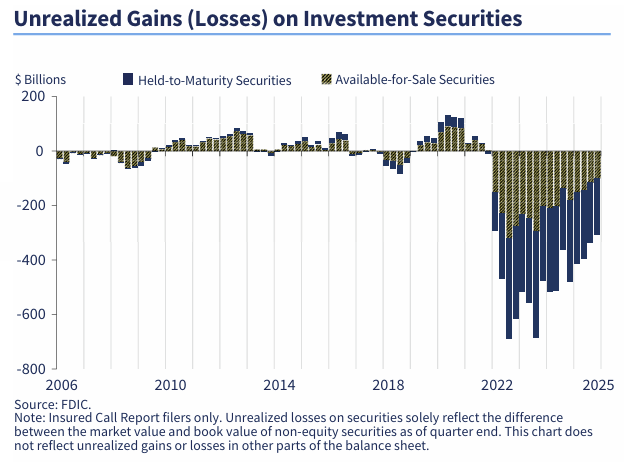
In my last post about the $306B bank "hole," I showed you the problem, this one is about the engine and how to fix it. We are at a critical crossroads right now, do we get the "Healthy Grind" (think back to 2014) or a "Fast Burst" (think 2021)?. The 2014 vs. 2021 Reality Check. As of March 2026, the data suggests we are firmly on the 2014 path. Back then, the market wasn't a "get rich quick" rocket ship, it was a slow, steady climb where the Fed printed just enough to keep things moving without overheating or breaking anything. The "Healthy" Outlook: If this steady pace continues, we avoid the vertical blow off top that usually ends in a cliff. This is the "Goldilocks" path where the economy grows steadily and we get a "Soft Landing." This is how this will look in everyday life, luxury goods like Rolexes, high end art, and Porsche 911s won't see those overnight 10x spikes. Instead, they’ll steadily grow 5–8% a year as real wealth builds. The vibe will be a wealth preservation market, it’s boring, but it’s sustainable. This is actually the best case scenario for building long term wealth because it allows for a bull market that could last years rather than months. You get time to build a real position without the constant fear of a 20% drop the next morning. It’s a market for investors, not gamblers. The "Fast Burst" Risk: If something "breaks," like a sudden spike in Commercial Real Estate (CRE) defaults, the Fed will panic. They’ll switch from our current 4% money growth back to 20%+, and that’s when the gray market goes absolutely insane. In 2026, the triggers are clear, it’s going to be one of these three things. The CRE Maturity Wall: Office space rates are at a record high of 16.29%. If commercial building owners can't refinance their debt this year at a low rate, it hits regional banks hard, and they will go bankrupt. When they purchased these properties in, let's say, 2019, they were worth $100M, now they are worth $50M. This is also the main reason they want ISM to go up again, because there are no renters for properties like office buildings, strip malls, and medical centers. This year alone, there is $875 billion of these loans that need to be refinanced, so the situation is not as simple as banks just wanting high rates to get good bond rates. The Japan Carry Trade: If cheap money borrowed in Japan gets called home due to their rising rates, it creates a global margin call on US stocks. To keep it simple, right now investors can borrow money in Japan for about 1% and buy US bonds or stocks to get about 4% dividends. That is, of course, a good deal, but let's say Japan moves their rates to 2% and the US goes down to 2% or lower, all these loans will default and need to be paid out right away. The only way to do that is to sell assets, bonds, stocks, real estate, etc. Even at a loss. This would have a ripple effect that could lead to a complete collapse. The SaaS-pocalypse: This is maybe the biggest of them all, and perhaps the hardest to understand. The real "black swan" of 2026 is private credit called the SaaS-pocalypse. If private credit funds freeze because mid sized software companies can't pay their debts. For years, private lenders flooded these companies with "easy money" based on 2021 valuations because the "next unicorn" was the goal. Now, AI is eating those software business models for breakfast. If a startup can now build a tool with AI for $10k that used to require a $100k a year SaaS loan, the moat around these companies evaporates. As SaaS revenues dry up, these companies are defaulting on their private loans. If these withdrawals freeze, the contagion will jump straight to the big banks that fund these private lenders. Then the Fed hits the "panic print" button to stop the contagion right away, an even bigger amount than during COVID. When this happens, people don't buy a Rolex because they want to tell time, they buy it because they don't want to hold cash that is losing value. This creates a currency panic where 2021 style "flipping" returns. We’re talking about madness where a watch that costs $10k at retail sells for $40k on the street five minutes later. The flipping culture returns, and used luxury cars start selling for more than new ones. It feels like a party, but it’s a blow off top that always ends in a spectacular 50% crash and a massive multi year hangover. The "Global Yield Gap": Why the US Wants Rates High: There is a massive angle people miss. Why wouldn't the US, or rather the US banks, want rates to go to zero immediately? It's because of the Yield Gap. Right now, a US 10-year Treasury is paying around a 4.2% dividend per year, while the German 10-year is only at 2.7%. The US is currently acting like a giant Global Vacuum Cleaner. When dividends are double what Europe is paying, global capital, pension funds, sovereign wealth, and billionaires dump Euros to buy Dollars and US bonds. This keeps the Dollar incredibly strong and ensures the world is effectively funding the US bank's recovery. If they drop rates too fast, that "hot money" leaves the US for the next high paying country. Staying high is a power move to keep the world's cash locked in their system for the future. The Hidden War: Banks vs. The Government: But like everything else, this coin has two sides. High rates might be fixing the bank's underwater bonds, but they are killing the US Government. In 2026 alone, the Treasury has to refinance $10 trillion in debt. Rolling that over at 4.2% interest instead of 1% five years ago, has pushed the national interest bill over $1.1 trillion a year, a record high. Even more than they spend on the Military, the biggest military on earth. The government literally cannot afford for rates to stay this high. This is the real reason the new Fed Chair will likely be a rate cut machine. They aren't cutting to help the car market, they are cutting to save the government from its own interest payments. We are entering an era of fiscal dominance, where the need to fund the government’s debt will override everything else. This is the ultimate "cheat code" that will force the 2027 abundance to happen, whether the economy is ready for it or not. By late 2027, these two forces, the bank recovery and the government refinancing, will collide. The banks will finally be "whole" because their old bonds have matured. The government will have successfully rolled over its debt into lower rate loans, of course, only if the cuts happen. The result of this is a massive, coordinated wave of liquidity that has nowhere to go but into the market. This is why my prediction for late 2027 is founded in more than wishful thinking, it’s the moment the math for the banks and the math for the government finally align. The Political X-Factor: The New Fed Chair: There is a massive shift coming to the "engine" room. Jerome Powell’s term ends in May 2026, and Trump has nominated Kevin Warsh to take the wheel. The mandate is clear, cut rates. Everything points to a new Fed chair who will face immense pressure to cut rates fast. If the new leadership decides to give the stock market exactly what it wants to see, aggressive, deep cuts, we move from the "Healthy Grind" straight into the "Fast Burst." This political shift would be the ultimate liquidity shortcut. It would fix the bank balance sheets almost instantly by making those old bonds valuable again, but it would also ignite the currency panic we talked about. Watch the transition in May, it could be the moment our 2027 timeline gets pulled forward into a very volatile 2026. There is a catch. Jerome Powell’s term as chair ends in May, but his term as a Fed governor doesn't end until January 2028. Standard procedure is that, when a chair’s term is up, they leave the Fed entirely. It's not a law, but just normal practice. However, there are rumors that Powell will not accept this custom and will stay on the board as a regular governor to protect the Fed's independence. If he stays, he still gets a vote on interest rates. This could lead to a divided Fed where Warsh wants to cut deep, but the "old guard" tries to hold steady for political reasons. AI: The "Price Crusher" and the Fed’s Best Friend: This is the "X-Factor" defining 2026 and the future, and most people still don't grasp how deep this goes. They see AI as a cool tool for writing emails, but in the world of macroeconomics, AI is a "price crusher." For hundreds of years, everything we need,food, housing, healthcare, education, cars and so on, has gotten more expensive because we couldn't automate intelligence. Everything needed to be done by humans. We got machines to do some of the heavy lifting, but there was still a human that needed to be in charge. AI changes that. In the near future, the human factor is not necessary. Imagine a factory that produces cars. In the future, raw materials will go in one end of the building, and a finished car will come out the other side 24 hours a day. There is no human in that building at all, yet the quality and consistency of that car will be perfect every time. And if you add the robotics factor also, then most humans on the planet will not need to work to keep production high and growing, which every economy needs. What humans will use that spare time for, time will tell, hopefully, it will be something that makes the world a better place, not something that destroys it. AI is changing everything. I personally can't mention another time in history that we as humans invented something that would impact our lives as much as this, maybe with the exception of fire. It is the first technology that attacks the cost of doing things directly, moving us toward a marginal cost close to zero. AI is fundamentally extremely deflationary. It allows the economy to grow without the inflation that forced the Fed to raise rates in the first place. This gives the Fed a "Get Out of Jail Free" card forever. They can lower interest rates to help the banks heal their balance sheets without worrying that inflation will skyrocket. AI provides the productivity miracle that allows the healing phase to happen in a healthy way. The "Speed Boost" in the Job Market We are seeing unemployment tick up slightly (now at 4.4%). While that sounds scary, in this specific cycle, it acts as an accelerator for our 2027 timeline. If the labor market cools just enough, partially due to AI disrupting white collar roles, the Fed will be forced to cut rates faster to save jobs. The moment those rates drop, those "underwater" bank bonds recover their value instantly, filling the $306B "hole" much faster than the slow maturation process would. Don’t just listen to what the Fed is saying, watch the Dual Mandate (Jobs vs. Inflation) and they will always favor jobs. The Jobs Pivot: If unemployment hits 5%, the Fed stops caring about "sticky" inflation and starts cutting rates aggressively. That is your signal that the 2027 timeline is being pulled forward into late 2026. AI Efficiency: Watch corporate earnings. If companies are making record profits while keeping their own prices steady thanks to AI, the Fed has the "green light" to lower the cost of money for everyone else. The Bottom Line: Bear, Bull, or Healing? We aren't in a classic bear or bull market right now. The last "real" bull market ended in 2021. Even though BTC has pumped recently, we are still not in a true retail driven bull market. The only players in the game right now are "big money" and banks. When people say "retail is not back," they are completely right. You can easily see where the money is located. It's still trapped in the bank chart from my previous post. The idea of a magical "4-year cycle" is fine for the headlines, but the bigger picture shows we are in a healing phase. We’re watching the banks slowly fix their huge mistakes from 2020. Patience is the only play. As the bars on that bank chart get smaller, the opportunity gets bigger. One final piece of advice. You can always bet on the greed of banks, it’s in their nature. When the abundance hits again and you get that "easy money" feeling in your body, fight it. Use the "Healthy Grind" to build your base, and when the "Fast Burst" eventually arrives, that’s your signal to start planning for the next real bear market.
VC Launchpad tweet media
English
11
20
133
1.1K
StephenM ♈️ | 🇫🇷 retweetledi
VC Launchpad
VC Launchpad@capital_avc·
This is my favorite chart. I know it looks like a bunch of boring financial data, but it’s actually the most important "map" we have for where our money is going over the next two years. US banks are sitting on about $306 billion in "unrealized losses." To understand what that means: back in 2020 and 2021, banks bought trillions of dollars in bonds when interest rates were near zero. This was good for normal people, but not for banks, because they received zero dividends back from the government. Then the Fed cranked rates up to fight inflation, and the value of those old bonds crashed because they paid the banks 0–1% APY compared to the rates that went all the way up to 6%. This created a massive "hole" in the banking system's pockets. So, if you’ve been wondering why it feels like the "real economy" for normal people is stuck in the mud while the stock market hits new highs, this is your answer. The "Paper Loss" Trap Think of it like this if you were a bank, because it's the complete opposite for them than it is for us: Imagine you bought a house in 2020 with a 1% dividend per year. That was an amazing deal for you back then. But then the market changed, and now all your other bank friends are getting a 7% dividend per year on new houses. If you tried to sell your 1% house today, nobody would want it unless you dropped the price significantly. Why would they take your 1% deal when they could get 7% elsewhere? That "drop in value" is exactly what the banks are experiencing. They haven't actually lost the money yet (that’s why it’s called "unrealized losses"), but if they had to sell those bonds today to fund new loans, they would take a massive hit. Because of this, they are acting like someone who just lost their job, they are hoarding every penny. This is why big tech companies and the S&P 500 (who don't need loans) are thriving while small businesses and normal people feel like they’re walking underwater. The 18–24 Month "Healing" Phase We are currently in a waiting game. People keep asking when "cheap money" is coming back. The truth is, it doesn't matter as much as bond maturation does. Those $300B+ in losses aren't permanent; they only exist because the banks are holding "old" debt. Every month that goes by, a small chunk of those old 2020 bonds hits its expiration date. When that happens, the loss "vanishes" because the government gives the bank their full original cash back. They then take that cash and "refinance" it into new 2026 bonds that pay 5% or 6%. To use the house analogy again: Imagine you purchased that house back in 2020 that paid the 1% dividend. If you were forced to sell it now, you would lose maybe 80% of its value. But if you somehow managed to keep it afloat for the duration of that loan (normally 4–6 years), the previous owner of the house would give you the entire amount back, even if the real market value was down 80%. That is the game of government bonds. This is a slow motion recovery. Based on the math of how long these bonds usually last, it’s going to take at least 18 to 24 months, taking us into late 2027, before our favorite chart hits the "peak positive" side again. Until those bars are back above zero, banks aren't going to feel "safe" enough to let the money flow back down to us like they did in 2020/21. Why the Car Market is Stuck The car industry is the "canary in the coal mine" for this chart. Cars are almost entirely bought on credit. Right now, even though the economy is technically "growing" (the ISM Manufacturing index is finally expanding again at 52.4), banks are being incredibly stingy. They’ve tightened their lending standards so much that even with good credit, you're seeing rates near 7% or 8%. They are doing this because they have to "repair the roof while it's still raining." They are using their profits to patch the holes in their bond portfolios instead of offering you good loans. That is why we see banks reporting record profits right now, it's not just to fill the owner's pockets, it's primarily to cover the losses they have until the bonds mature. But once the bonds themselves start to show a profit, and we know banks will never lower their fees once they get away with it once, they will have a record abundance like nothing we have seen in history. The Crypto "Risk Curve" Prediction And then there’s crypto. Everyone wants that 2021 feeling back, where every altcoin goes 10x in a month. But look at the liquidity: 2021: M2 money supply growth was at a record 27%. Today: We’re growing at a modest 4.1%. The "money printing" is happening, but it’s a surgical drip, not a firehose. The cash is staying at the top of the pyramid (the banks) to fix this chart. Crypto is at the very end of the "risk curve". It only explodes when the banking "tank" is totally full and the extra cash starts spilling over into the high risk stuff. My Forecast: The 2027 Pivot I’m predicting we won't see a true "peak" in car sales or a "retail crypto mania" until late 2027. That is the moment the math finally clears. By then, the vast majority of those "underwater" bonds will have matured. Banks will be "whole" again, their balance sheets will be in the green, and they will stop hoarding cash. That’s when the credit gates open, the 0% car deals return, and the "lazy money" floods back into the crypto market. We aren't in a bear or bull market. The last bull market ended in 2021, and even if BTC has pumped over the last couple of years, we are still not in a real bull market. The only players in the game right now are "big money" and banks. When crypto dudes say that retail is not back, they are completely right. It's not even debatable, you can easily see where the money is located right now. The idea of a magical 4 year BTC cycle is fine if you need to believe in that, but in the bigger picture, this post shows what is actually going on in the world and what needs to happen before we see abundance again. We are not in a recession, the recession was back in 2022, but they would not admit it, we're in a healing phase. We’re watching the banks slowly fix their mistakes from 2020. Patience is the only play here. Keep an eye on those bars, as they get smaller, your capital gets closer to its next big run. But make no mistake: the so-called mistakes the banks made in 2020 will happen again. You can always bet on the greed of banks, it's just in their nature. So, when abundance hits again and you get that nice feeling in your body, fight it as much as possible and start planning for the next real bear market.
VC Launchpad tweet media
English
10
28
70
698
StephenM ♈️ | 🇫🇷 retweetledi
VC Launchpad
VC Launchpad@capital_avc·
This market outlook is not about fundamentals, but rather the mindset you need to succeed in the hardest market on the planet. The way you should decide how to spend your time is simple. The best janitor in the world might earn $100k per year, while the worst in the same neighborhood earns $10k. That 10x multiple is a normal setup for everyday jobs, and it’s always a good idea to strive to be the best at what you do. But then there are outlier markets where the multiples are almost limitless. In day trading, 95% of people lose everything, but the top 0.01% earn more than some small countries. These markets include trading, real estate, luxury goods, cars and investing. The irony is that most of those 99.9% think they can do this on the side for 15 minutes a day after their janitor job, that is simply sad. The investing game has also changed significantly since social media took over. Back in the day, I had to read earnings reports and newspapers for hours to find an edge. Capital flowed slowly, and any gain or loss over 4–8% per year was considered very volatile. Now, some of the biggest assets in the world move like memecoins. On January 28th gold, historically a slow mover, added about $5.5 trillion to its market cap, moving roughly 5% in a single day. The game has completely changed. Smart investors are no longer just capital heavy and patient, they move fast, earning money both ways by controlling the media and the minds of average people. Take another example, we are all used to crypto FUD by now, Tether, exchange bankruptcies, forced treasury sellings and so on. Now, they are pushing the narrative that MicroStrategy will be forced to sell their Bitcoin soon. However, if you understand how to read financials even slightly, you can see they aren't even close to that point. The balance sheet is what matters. Currently, they have about $8.2 billion in debt. Bitcoin would need to fall to approximately $23k for their assets to be lower than their debt, but even that would not cause bankruptcy. Being "underwater" is not the same as being bankrupt. Bankruptcy only happens if a company cannot pay interest or refinance debt when it matures. They currently have about $2.2 billion in reserves to pay interest. To put it simply, if Bitcoin is still trading well under the $50k–$60k mark in 2027, their reserves would start to run dry and they would need to raise more capital. This is very unlikely. The other perceived danger with MSTR is their use of leverage. They borrow capital against their 714,644 BTC, which is roughly 1.3x leverage. Every leveraged position has a margin call where you are liquidated or must inject capital, that number for them is around $16k–$19k. We all remember the MSTR FUD in 2025 claiming they would be forced to sell. It was just noise, yet the price still dropped 50%+. But guess who are two of the biggest shareholders in MSTR right now? What I am trying to say is that the best thing you can do is know your limitations and look for the only arbitrage trade left. While "smart" players move markets short term to earn money, you should go long term. Dollar Cost Average into 5 to 20 year projects that you have thoroughly researched. You are not the master of this game, so buying BTC right now while its dumping is not supposed to feel good. Do yourself a favor, delete Twitter and ignore mainstream news. 99.9% of what you see there is narrative control, not financial information. Do the research yourself, or find someone you trust to do it for you. For God’s sake, don’t buy or sell based on a tweet. This is the only way to win. Long term holding is the arbitrage bet. Just DCA, shut out the noise, and delete those apps if necessary.
VC Launchpad tweet media
English
5
20
120
1K
StephenM ♈️ | 🇫🇷 retweetledi
VC Launchpad
VC Launchpad@capital_avc·
The Brutal Reality of Crypto Investing: Why 1-in-100 is a "Good" Ratio Last year, I had a fascinating conversation with a founder of one of the major crypto VC funds (the tier that gets into almost everything, think a16z, Paradigm, Pantera). I told him I was frustrated. I’d invested in 24 startups this cycle and most of them had gone to zero. Only 2 or 3 were actually performing. His response surprised me: "Wow, that’s actually a really good ratio." At first, I thought he was taking a dig at me. Then he explained the math behind the world’s biggest funds. They don't expect to be right most of the time. In fact, they expect about 1 out of every 100 projects to truly "make it." But that one outlier makes gains you only see in this asset class. We all know $BTC did 1,400,000x. But look at the "Alt" projects these VCs get into at the pre-sale or seed stage: Ethereum: 1,090x XRP: 340x Solana: 156x BNB, Doge, Link, Tron... the list goes on. And remember, these are "open market" returns. VCs are getting in at prices even lower than those. The Takeaway? Stop expecting all your crypto investments to make you rich. Accept that almost all of them will go to zero. The secret isn't picking 100% winners; it’s having the patience to hold the ones that do survive. Most people make the "Vesting Mistake." They have a 12-month vest, and the moment the tokens unlock, they sell for a 2x or 3x. But that’s exactly when the sell pressure starts to disappear. Once the Market Cap to FDV ratio crosses that 50% threshold, spot investors start looking to add to their portfolios. That is when the real moon mission begins. Think long-term. 5–10 years. Take a project like Babyshark. This is one of the biggest IPs in the world. We talk to the team weekly, they have massive plans and deep on-chain growth. Even if our entry price was good, the goal isn't a quick flip. The goal is to hold for a decade to see those "insane" crypto returns. My advice: If you don’t have the patience or the capital to spread your bets across 100 different projects, stay out of the IPO/Seed game. Just buy $BTC spot. It’s less time-consuming, requires zero management, and is more or less a 100% safe bet compared to the startup minefield. But if you’re going to play the startup game: Check the on-chain activity, keep in contact with the teams, and for heaven's sake, be patient. #Crypto #Investing #VentureCapital #Bitcoin #Web3
VC Launchpad tweet media
English
9
11
129
1.9K
Ash Crypto
Ash Crypto@AshCrypto·
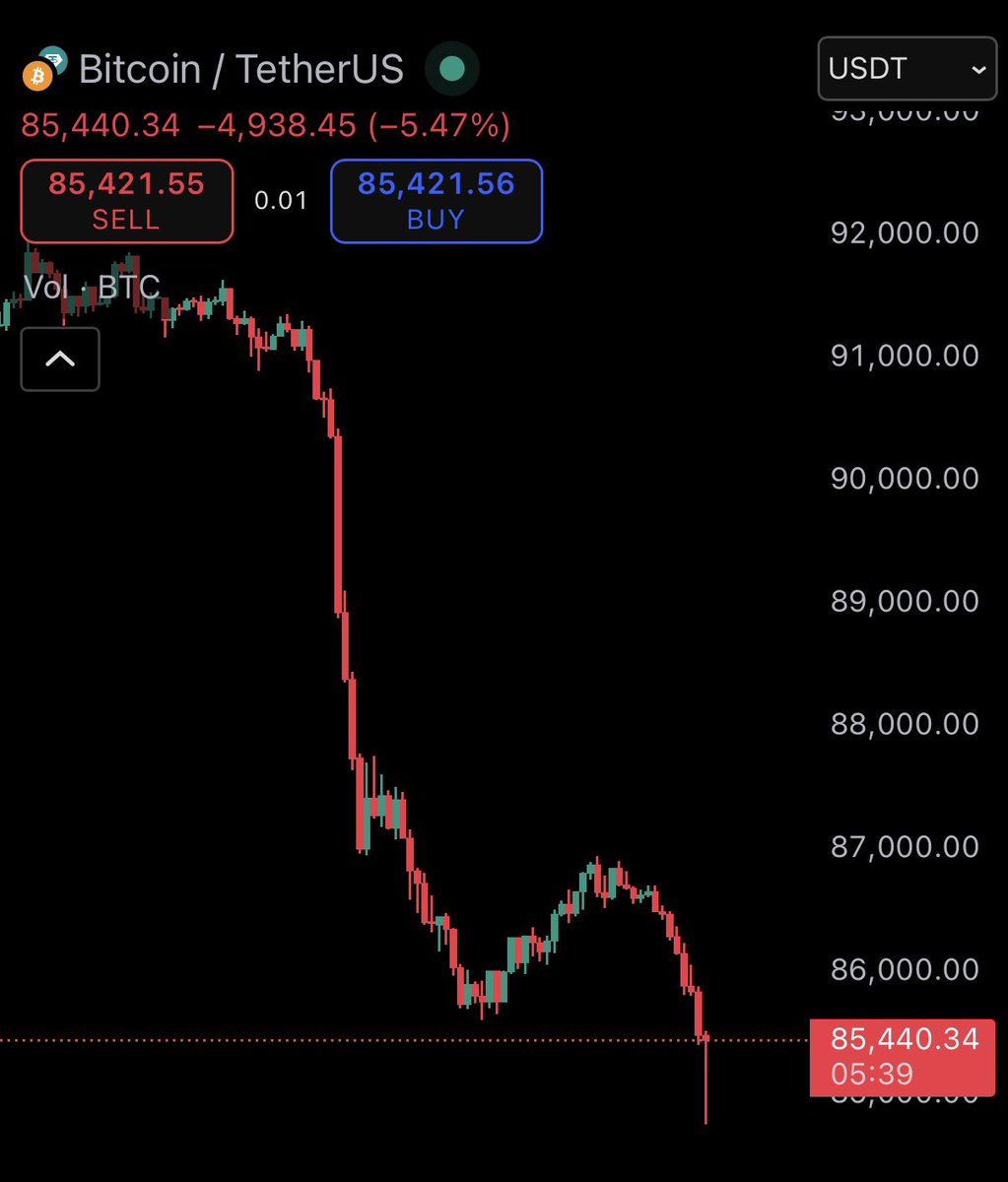
Name this pattern
Ash Crypto tweet media
English
2.3K
372
3.1K
628K
StephenM ♈️ | 🇫🇷 retweetledi
VC Launchpad
VC Launchpad@capital_avc·
First day of @BitcoinConfEUR done!!! Tomorrow is gonna be just as good 👍
VC Launchpad tweet media
English
6
14
111
1.5K
StephenM ♈️ | 🇫🇷 retweetledi
StephenM ♈️ | 🇫🇷
StephenM ♈️ | 🇫🇷@StephenM_AVC·
As early investors, I am thrilled to see @AlloraNetwork officially launch $ALLO today! A major milestone for decentralized AI and one of the most promising Web3 infrastructure plays of 2025. Allora has raised over $35 million from top-tier funds including Polychain Capital, Framework Ventures, and Blockchain Capital and is pioneering a self-improving AI network where models collaborate, get scored, and evolve through decentralized feedback loops. Key strengths that make us bullish on Allora: Active mainnet launch: Staking and network participation are opening alongside token release. Strong token utility: $ALLO powers inference payments, worker registration, and staking for network security. Massive potential: Positioned at the intersection of AI + Web3, one of the fastest-growing categories in the space. This launch reinforces our broader thesis: AI + Web3 are converging fast, and early participation in foundational ecosystems like Allora strengthens long-term network position within the decentralized economy.
English
17
11
167
3.7K
Wayne | CREDIT SCEND
Wayne | CREDIT SCEND@WayneCScend·
This is Wayne. Today is my birthday. Please celebrate it.
Wayne | CREDIT SCEND tweet media
English
8
0
10
1.5K
StephenM ♈️ | 🇫🇷 retweetledi
VC Launchpad
VC Launchpad@capital_avc·
As early investors, we’re thrilled to see @AlloraNetwork officially launch $ALLO todayA major milestone for decentralized AI and one of the most promising Web3 infrastructure plays of 2025. Allora has raised over $35 million from top-tier funds including Polychain Capital, Framework Ventures, and Blockchain Capital, and is pioneering a self-improving AI network where models collaborate, get scored, and evolve through decentralized feedback loops. Key strengths that make us bullish on Allora: -Active mainnet launch:, Staking and network participation are opening alongside token release. -Strong token utility:, $ALLO powers inference payments, worker registration, and staking for network security. -Massive potential:, Positioned at the intersection of AI + Web3, one of the fastest-growing categories in the space. This launch reinforces our broader thesis: AI + Web3 are converging fast, and early participation in foundational ecosystems Allora strengthens long-term network position within the decentralized economy.
English
14
12
171
3.2K
StephenM ♈️ | 🇫🇷
StephenM ♈️ | 🇫🇷@StephenM_AVC·
I’ve been part of @AlloraNetwork since the early days, and seeing the Year 1 Roadmap go live feels like a major inflection point. The vision is playing out exactly as intended, building the intelligence layer for Web3 that bridges AI, DeFi, and RWAs under one decentralized roof. Phase 1 sets the base layer: predictive intelligence, multi-output ML, and topic diversification across DeFi, TradFi, RWAs, and gaming. The rollout of Allora Prime Staking Rewards kicks off native yield mechanics for early stakers, aligning incentives as the network bootstraps real inference volume. Forge 2.0 drops this phase too THE game changer for AI/ML builders. It abstracts crypto complexity, enabling faster model deployment and seamless integration with Allora’s decentralized compute layer, as $ALLO expands multichain and plugs into DeFi protocols, the first dApps powered by Allora’s intelligence start shipping from live prediction feeds, automated risk models, and data-driven market signals. Next, Phase 2 scales the network horizontally: enterprise deployments, LST staking, private inference, and deeper RWA hooks (commodities, fiat, risk). Phases 3 and 4 remove whitelists, bring Merkle proofs + DA layers, and tighten network integrity as open participation ramps up. Then comes Phase 5, Allora’s leap into generative intelligence: unsupervised ML, clustering, LLM integration, even robotics-powered inference. That’s when the network evolves from predictive analytics into a self-improving, autonomous intelligence layer. Every phase compounds utility, decentralization, and data value. From an early investors POV, Allora is positioned as the middleware of on-chain intelligence, where AI, crypto economics, and data markets converge. The buildout is real, and the next cycle’s AI x DeFi narrative is already taking shape with Allora.
Allora@AlloraNetwork

Allora Network’s Year 1 Roadmap is live. Let’s build the intelligence layer together.

English
13
19
136
3.5K
StephenM ♈️ | 🇫🇷 retweetledi
Allora
Allora@AlloraNetwork·
The first Topics launching on Allora Mainnet are finally here. These predictive feeds provide some of the most performant signals available, ready to plug directly into agents, vaults, and applications. Here’s what’s going live Day 1 🧵👇
Allora tweet media
English
191
57
382
82.7K