Steve

1.4K posts

Steve

Steve

@Steve_Sule

building @realfastai

Singapore Katılım Kasım 2014
1.1K Takip Edilen296 Takipçiler
Steve retweetledi
svs recruiting
svs recruiting@svsrecruiting·
My friends at @realfastai have hit some sort of growth spurt and are hiring for Lead FDEs. Realfast of course is founded by @ponnappa and @aakashd and is building the CNC machines and Heavy Engineering rigs for the AI century. Both of them are amongst the best operators you can hope to work with and you'd do very well to end up with them as mentors. In other words I heartily recommend that you click this link and apply for the job! svsrecruiting.com/jobs/eb1cp2g
English
1
6
54
19.2K
Steve retweetledi
Lydia DePillis
Lydia DePillis@lydiadepillis·
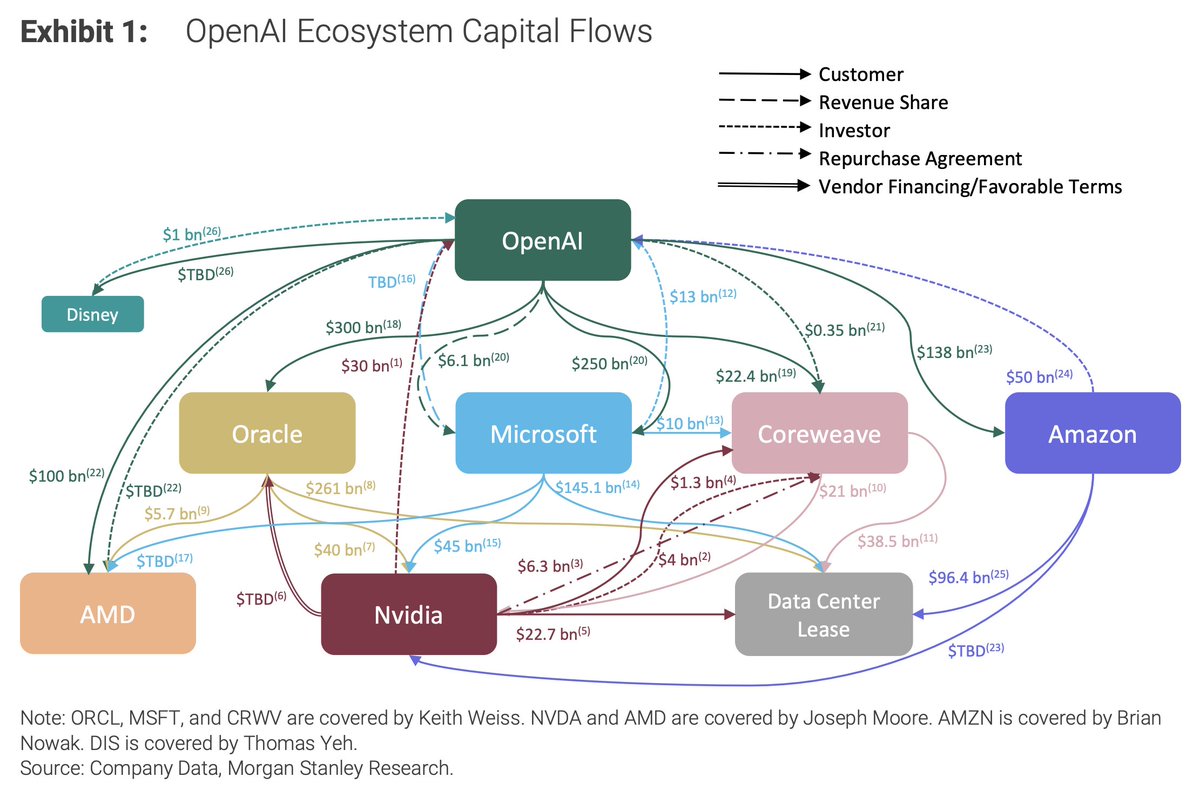
Hell of a graphic from Morgan Stanley
Lydia DePillis tweet media
English
118
1.2K
6.3K
943K
Steve retweetledi
Anand C
Anand C@anandc·
@tejeshwi_sharma Not if the incumbents don’t get past their innovators’ dilemma (supplying labor)
English
0
1
2
471
Mingta Kaivo 明塔 开沃
Mingta Kaivo 明塔 开沃@MingtaKaivo·
@ponnappa the flip side: whoever used to own that queue had leverage. 400-question compliance backlogs aren't accidental — they're how orgs signal importance and extract patience. AI doesn't just speed up the answers, it removes the power structure that made slowness valuable.
English
1
0
2
71
Sidu Ponnappa
Sidu Ponnappa@ponnappa·
i think an underappreciated side effect of AI is that the era of gatekeeping by human bureaucracies is coming to an end. any number of questions, clarifications and requests for docs can now be fulfilled in no time. we now process ~400 question IT compliance requests in days instead of months.
English
13
3
115
7.4K
Steve
Steve@Steve_Sule·
@ponnappa Please bro. Just embrace uncle vibes
English
0
0
1
25
Steve retweetledi
Anshumani Ruddra
Anshumani Ruddra@baboonzero·
Invisible Threads is now live on threads.anshumani.com It is an attempt to mine deep insights across a large corpus of work (a podcast, blog/ collection of essays or books) and discover the invisible connection (threads) between these insights. The idea started when @clairevo published the entire repository of @lennysan's podcast transcripts. The project now has both Lenny's Podcast and Paul Graham's essays. This was a great opportunity to refresh topics like chunking, embedding, similarity graphs, etc. And then a whole lot of time was spent in scaling the system for both transcripts and blogs. I love the aesthetics of what one can now do with Replit design (lots of nuances and spit and polish). You can read more details on the project in the About section. I need some shuteye!
Anshumani Ruddra tweet media
English
9
13
191
10.3K
Steve retweetledi
Sidu Ponnappa
Sidu Ponnappa@ponnappa·
we've been building our thesis on AI Transformation based on active engagements (ymmv, caveat emptor, small dataset), and the first step is interesting and obvious in hindsight it isn't strategy it isn't roadmaps it isn't process mining it isn't stakeholder interviews it starts with taking leadership AI-Native *personally* in their daily workflows accelerate the core decision makers first, otherwise it is the bottleneck to everything else
English
2
4
49
3K
Steve
Steve@Steve_Sule·
“When Odysseus finally returns, he reminds everyone in Ithaca of a simple truth: a man’s home is not truly his unless he is willing to fight for it.”
Athenaeum Book Club@athenaeumbc

A powerful scene in the Odyssey happens when Odysseus finally returns to Ithaca after twenty years of war and wandering. You would expect the story to end with celebration, with the hero coming home, the family reunited, and order restored. Homer does something far stranger. Odysseus arrives disguised as a beggar, because Athena warns him that the palace has been taken over by more than a hundred suitors who have been living there for years, eating his food, drinking his wine, and pressuring his wife Penelope to marry one of them. They believe Odysseus is dead and in their minds the kingdom is already theirs. So the king of Ithaca walks through his own halls dressed in rags while the men stealing his house sit comfortably at his tables. They mock him, throw scraps at him, and one of them even strikes him, and Odysseus takes it. That is the remarkable part, because the same man who blinded the Cyclops and survived twenty years of disasters now stands quietly while strangers insult him in his own home. Homer tells us his heart burns inside his chest and that he wants to attack them immediately, yet he restrains himself and waits. Instead of striking, Odysseus studies the room carefully. He counts the men, watches their habits, and quietly observes which servants remain loyal and which have betrayed him. The hero of the Odyssey does something most people cannot do, which is delay revenge until the moment is right. Eventually Penelope announces a contest and brings out Odysseus’ great bow, declaring that she will marry the man who can string it and shoot an arrow through twelve axe heads lined up in a row. One by one the suitors try and fail, because none of them can even bend the bow. Then the beggar asks for a turn. The suitors laugh at first, but the bow is eventually handed to him. Odysseus takes it in his hands and strings it effortlessly. Homer says the sound of the bowstring tightening rings through the hall like the note of a swallow. Then he places an arrow on the string and sends it cleanly through all twelve axe heads. In that moment the beggar disappears. Odysseus turns the bow toward the suitors and reveals who he is. What follows is one of the most brutal scenes in Greek literature. The doors are sealed and the suitors realize too late that they are trapped inside the hall. Odysseus, his son Telemachus, and two loyal servants begin killing them one by one. There is no escape, no mercy, and no negotiation. The men who spent years consuming another man’s house die inside it. It is a violent ending, but Homer wants you to understand something important. The real danger to Odysseus was never just the monsters and storms on the long journey home. It was the possibility that someone else might take his place while he was gone. When Odysseus finally returns, he reminds everyone in Ithaca of a simple truth: a man’s home is not truly his unless he is willing to fight for it.

English
0
0
0
52
Steve retweetledi
TBPN
TBPN@tbpn·
"Go all the way until it hurts. If you're doing something and it's easy, it's not valuable." - @travisk "If anyone says a strategic thing was easy, I'm like, 'You messed up. You could have gone way further. More competitive advantage. More differentiation. Get it together.'"
English
51
449
3K
953.1K
Nisha Ramchandani ⏩
Nisha Ramchandani ⏩@Nisha123·
What is this AI ya I still have to come to work Attend meetings Productivity is the same Do something where I don’t have to come to work, i get paid more and my work time is halved
English
1
0
1
92
Steve retweetledi
Sidu Ponnappa
Sidu Ponnappa@ponnappa·
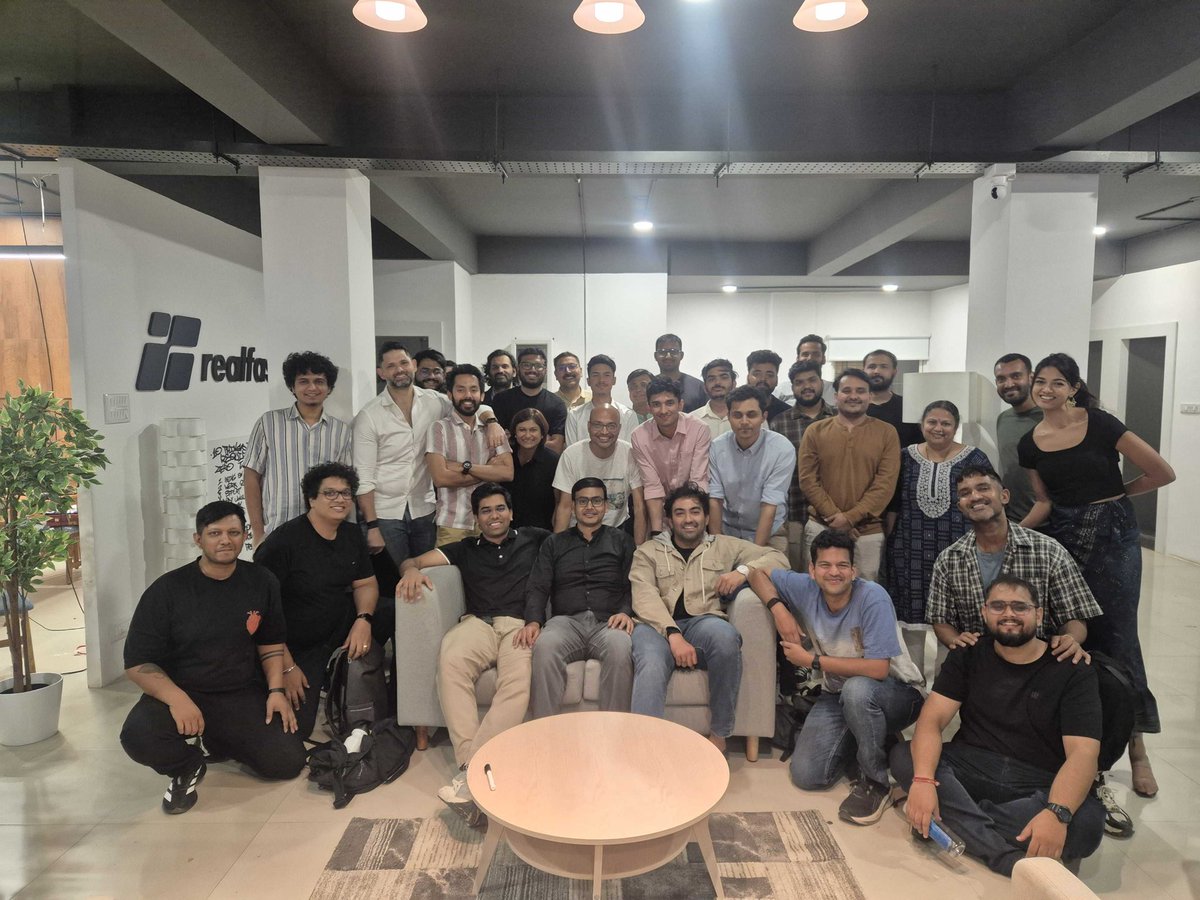
10 years ago I was a regular here because the first gojek sg office was here This year the @realfastai singapore office moved here, looking forward to being a regular here again
Sidu Ponnappa tweet media
English
7
2
132
6.4K
Steve
Steve@Steve_Sule·
@ponnappa You know something I don’t know
English
0
0
1
107
Sidu Ponnappa
Sidu Ponnappa@ponnappa·
Living within your means as a tenured employee means spending only after saving Living within your means as an entrepreneur means spending from your savings without irretrievably destroying them Totally different mindset
English
6
2
74
3K
Steve retweetledi
Max Gazor
Max Gazor@maxgazor·
Dear God, please give me the confidence of a 30 year old VC who has only lost money and blogs about conviction.
English
36
35
744
54K
Steve retweetledi
Tech Layoff Tracker
Tech Layoff Tracker@TechLayoffLover·
Mumbai and Bangalore outsourcing firms are scaling like I've never seen Infosys added 47,000 engineers in the last 9 months. TCS hiring 2,100 per week. Wipro opened 8 new delivery centers since January. American companies discovered something: Senior engineer in Austin making $180k can be replaced by two L4s in Hyderabad making $18k each plus AI tooling The quality gap closed overnight. Indian teams with Cursor and Claude are shipping features indistinguishable from SF teams at 85% cost savings Accenture's Bangalore office went from 12,000 to 31,000 headcount while their US operations dropped 6,200 people The arbitrage is insane. American mid-level making $140k replaced by Indian senior making $28k who's more productive because they actually use the AI tools instead of complaining about them Cognizant told their US clients: "Same deliverables, same timelines, 70% cost reduction" and enterprise buyers said yes to everything One Fortune 500 moved their entire platform engineering team offshore in October. 23 American engineers averaging $165k replaced by 31 Indian engineers averaging $24k The Indian teams are hungrier. They're learning the AI tools faster. They're not bitter about "being replaced by robots" - they're using the robots to replace American engineers HCL hired 15,000 people in Q3 alone specifically for "AI-augmented development" contracts American engineers spent two years debating whether Copilot would make them obsolete Indian engineers spent two years mastering Copilot to make American engineers obsolete
English
206
561
3.6K
482.7K
Steve retweetledi
Gaurav Sharma
Gaurav Sharma@GauravSharma·
Agents turn intelligence into an always-on organization that can think, build, and adapt without waiting for permission
Aaron Levie@levie

It’s pretty clear that the emerging paradigm of agents will be like if you had a human expert in any domain, and they had all the capabilities of a top engineer who could use any tool (or the write their own on the fly) to complete any task, along with unlimited compute and a file system to work with. That combination of skills and technology primitives provides you with somewhat limitless capability in AI. You’re no longer limited by only what the model was trained on, or the inherent context window limitations. The agent will simply spin up subagents to work on component parts of the workflow, and get expertise as needed throughout the process. For all known types of tasks that are frequently repeated, they have quick access to existing skills and tools to complete their work. We’re already seeing this in a range of fields where skills are being written for agents to follow either domain-wide or company-specific processes. Doing legal analysis in a specific way, running financial models, processing spreadsheets for complex data work, generating PowerPoints, and so on. And for areas they’ve never seen before, they can simply write code on the fly to do the work one-off. Imagine pairing an industry expert with an engineer that can code up any custom script whenever it wants. Compute is your only limiter. This approach seems to cover a fairly wide range of knowledge work. Obviously the first space to benefit the most from this has been in coding itself, but it’s clear that this go across all other areas of work and even personal agents. Kind of wild.

English
0
1
1
438