Steven
15 posts


Gold到顶了吗?黄金接下来会怎么走?
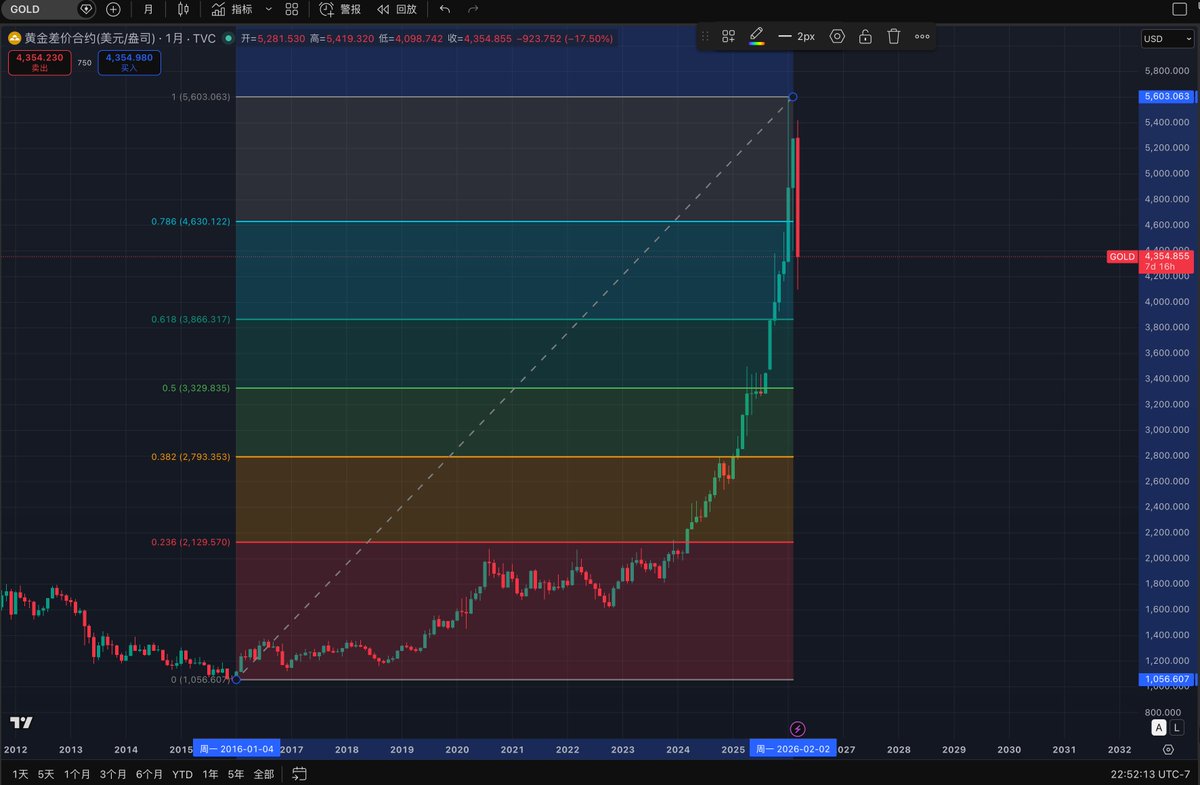
晚上和朋友聊黄金,个人判断黄金本轮差不多是到顶了,但是持有现货和多单的朋友也不用太恐慌。
黄金的体量太大了,就算5600是顶部,接下来也会有多次冲击5000以上的机会。唯一的问题是:如果冲上去以后你会不会又觉得牛回了舍不得卖?
从上一个周期的走势来看,黄金在1920附近到顶以后,在1500到1800之间盘整了整整一年,多次冲击1800。原因其实很简单,黄金的体量太大了,派发是需要时间的。
所以,刻舟求剑的话,接下来如果没有特殊情况,黄金的走势大概率是在0.618大约3860的位置到5600之间来回震荡盘整大约1年左右的时间。
你怎么看?
#Bitget 买黄金美股:秒级入场,丝滑交易
中文

屠龙学的地理五大定律:
第一定律:控制咽喉要道,比控制广阔领土更有价值。
霍尔木兹,台湾海峡,马六甲,苏伊士,巴拿马,每一个都是帝国兴衰的战略支点。
第二定律:地形把强者的优势变成弱者的机会。
温泉关,阿富汗山地,霍尔木兹水道,台湾海峡,狭窄的地形是历史上所有弱者的最大盟友,是外来强权的噩梦。
第三定律:纵深是最好的防御。
俄罗斯,中国,伊朗。有纵深的国家可以吸收打击,然后反弹。没有纵深的国家和地区,以色列,台湾,新加坡,一旦防线突破,没有缓冲空间。
第四定律:补给线的长度决定战争的持续性。
美国打阿富汗,补给线绕半个地球。伊朗守霍尔木兹,补给线是自己的海岸线。中国守台湾海峡,补给线是自己的海岸线,美国的补给线在太平洋的另一头,日本今天不肯为美国出军舰护航波斯湾,明天就不肯为美国出军舰护航台湾海峡。谁的补给线更短,谁的战争更可持续。
第五定律:温水煮青蛙,比硬打更有效率。
硬打触发防御本能,触发国际干预,触发历史叙事的反弹。温水慢慢改变经济依存,改变人口结构,改变政治生态,改变心理预期。等青蛙意识到水温的时候,已经跳不出去了。
温泉关,霍尔木兹,台湾海峡。三个地方,三个时代,同一个地理逻辑。咽喉要道永远是弱者的最大武器,强者的最大噩梦。伊朗用霍尔木兹教了全世界一课。
这堂课的最后一排,台蛙读书犯法,水温又高了一度。
rainbow7852@rainbow78521
🚨温泉关与油轮:伊朗在霍尔木兹海峡的控制力博弈 公元前480年,几千名希腊人驻守在一条狭窄的山隘,命令当时的超级大国波斯帝国排队等候。 这个地方名叫温泉关。斯巴达人拥有长矛。波斯人拥有帝国。 但希腊人拥有最重要的东西:一个咽喉要道。 隘口如此狭窄,以至于波斯军队无法发挥全部实力。他们的人数优势无济于事。他们的骑兵也难以发挥作用。他们压倒性的优势突然间就像刀剑交锋的交通堵塞。 快进2500年,同样的战略伎俩再次上演。 欢迎来到霍尔木兹海峡。 每天,全球约五分之一的石油都要经过这片狭窄的水域。而伊朗就坐落在它旁边。 伊朗无需在开阔的公海与美国海军展开一场公平的较量。相反,德黑兰采取的是温泉关战略。 在狭窄水域,规则会发生变化。 成群的快艇、水雷、无人机和反舰导弹突然间就成了堪比斯巴达盾墙的战略武器。 伊朗深知自己无法主宰海洋,但它绝对可以封锁世界上最重要的航道。 然而,历史也告诉我们,扼守咽喉要道的战略最终都会走向失败。 温泉关的陷落并非因为波斯人最终加大了攻势。 而是因为他们找到了绕过隘口的另一条路径。 一旦咽喉要道失去了其独特性,斯巴达人的奇迹般的防御就变成了英勇的最后抵抗,而非制胜的战略。 同样的危险也笼罩着伊朗在霍尔木兹海峡的豪赌。
中文

第一艘非伊朗的船在没关闭AIS信号的情况下通过了霍尔木兹海峡
是的,谁都知道如果长时间封锁,对于全球经济会造成破坏,知道这个因果关系不是市场里的信息优势或者见解优势。对于会不会长时间封锁的判断可以是一个优势,市场永远不会充分定价,所以才会慢慢走出来,关税不是一天就走到了终点。
战争没完,3月底前看看川普会不会拿到一些战果,找个下台阶来。
MarineTraffic@MarineTraffic
First non-Iranian cargo transits Strait of Hormuz with AIS on The Aframax tanker Karachi, carrying Abu Dhabi’s Das crude, has become the first non-Iranian cargo to transit the chokepoint while broadcasting its AIS signal, suggesting that select shipments may be receiving negotiated safe passage. According to #MarineTraffic data, the 237-metre crude oil tanker entered the Iranian Exclusive Economic Zone on 15 March at 11:33 UTC and crossed the Strait of Hormuz at 14:43 UTC. The vessel is currently sailing in the Gulf of Oman at around 9.6 knots, having successfully passed through the strait with AIS active. The transit follows weeks of significantly reduced traffic through the strategic waterway, with more than 20 long-range tankers reported to have exited the Gulf.
中文